
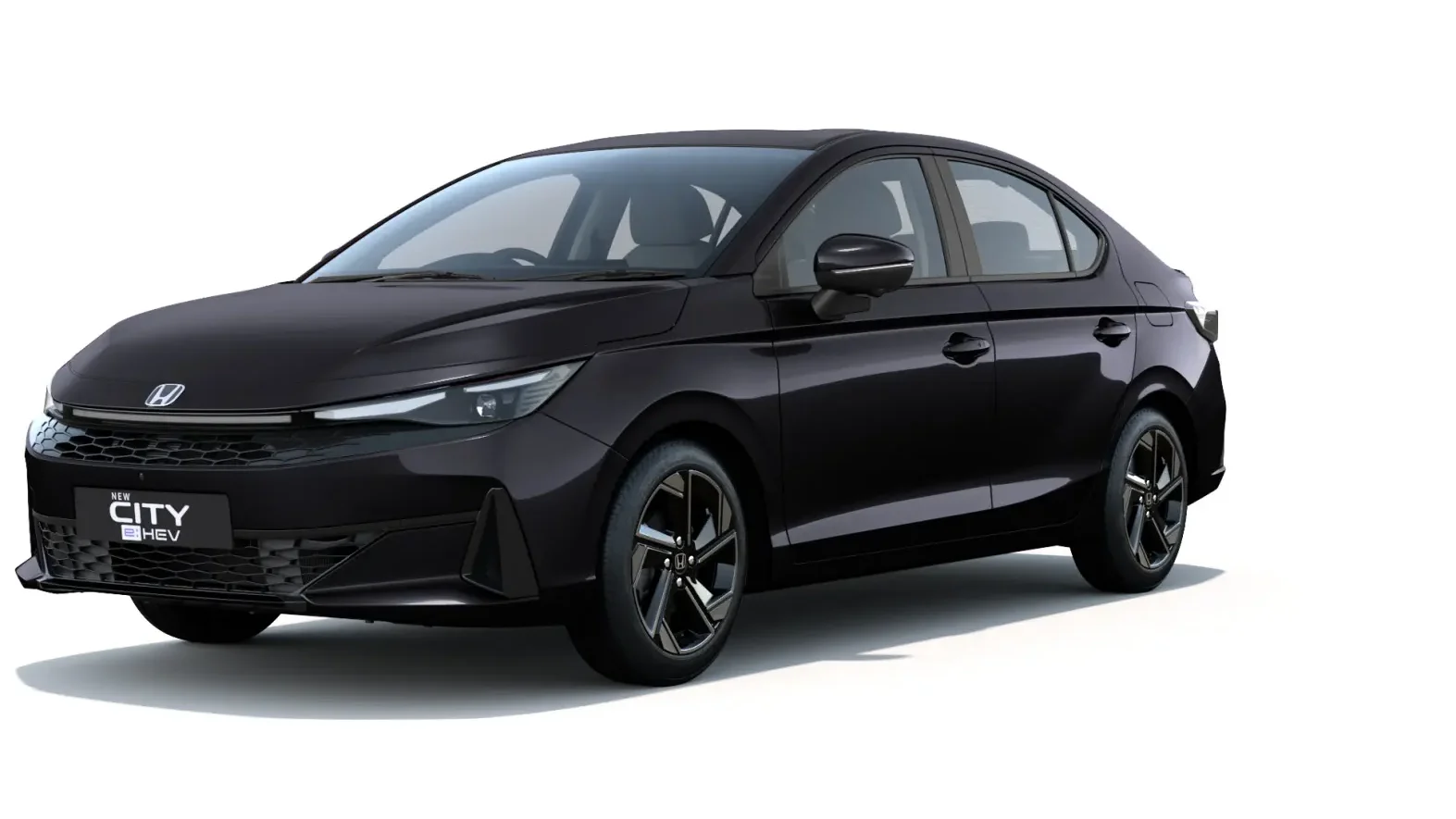
Have you heard about the new generation Honda City, the most exciting Sedan of 2026? If you have any doubts about whether it is worth your time and money, we will clear them up for you today.
Honda gave the City its biggest mid-cycle refresh ever this year – new exterior styling, new and improved interior, and some new technology features, but no changes were made to the powertrain. Here are the specifications for you to review.
What’s new in Honda City 2026?
Let us answer this first — what does Honda City 2026 has that the previous 2023 model did not?
Dimensions
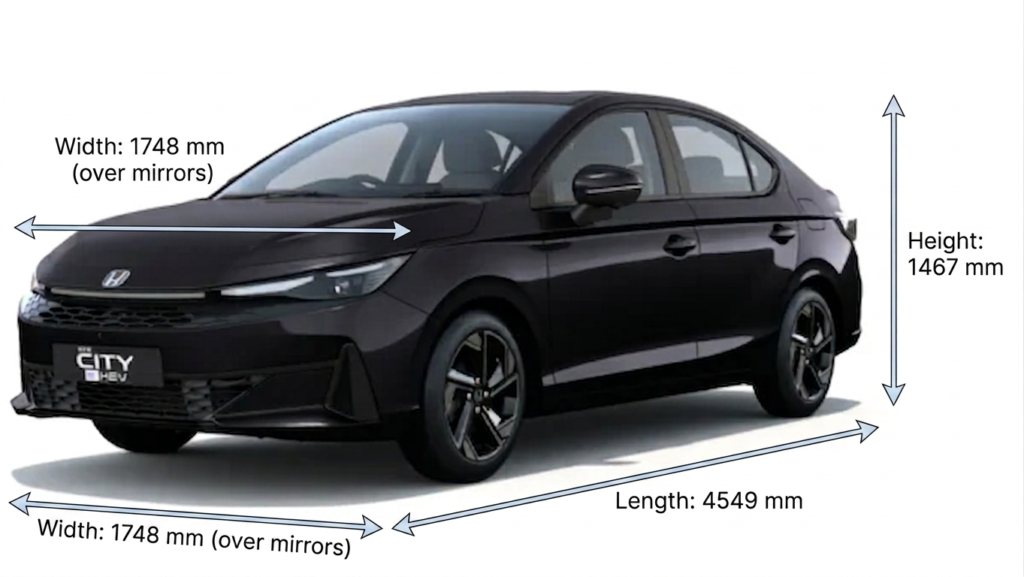
- Length: 4,594 mm
- Width: 1,748 mm
- Height: 1,467 mm
- Wheelbase: 2,600 mm
- Ground Clearance: 165 mm
- Boot Space: 506 litres
- Fuel Tank: 40 litres
- Tyre Size: 185/60 R16
Appearance and Build
The new Honda City is longer than its predecessor, at 4,594 mm – that’s 11 mm.
Also, it has a much bolder front-end design; many people think it’s the best looking version of City ever produced! So we are going to refer to this new well-regarded variant as “a facelift”!
The front of the vehicle has a honeycomb-grille layout with Bi-LED projector headlamps with an LED daytime running light resembling a ‘brow’ shape, and Z-shaped clear lensed rear taillights.
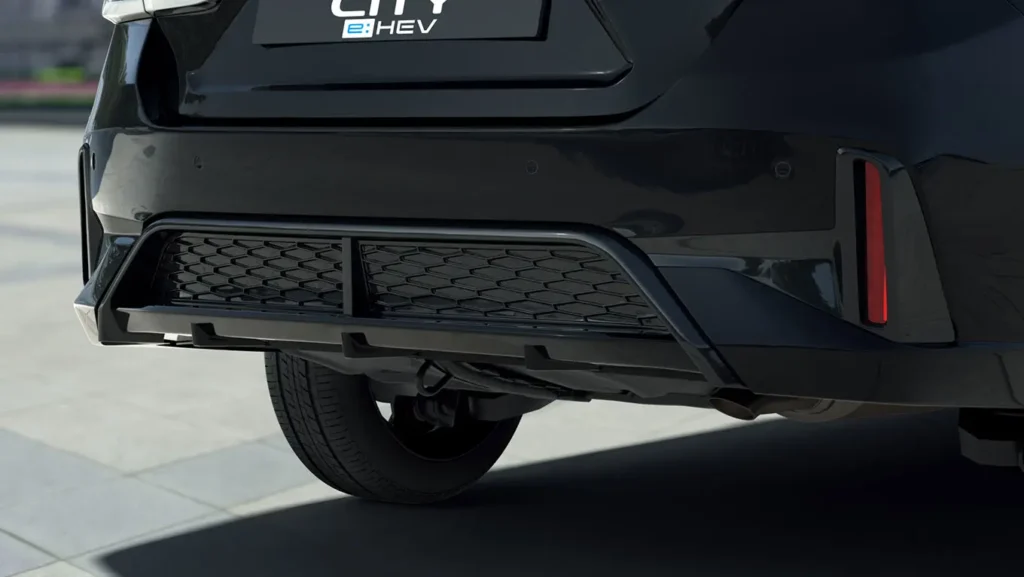
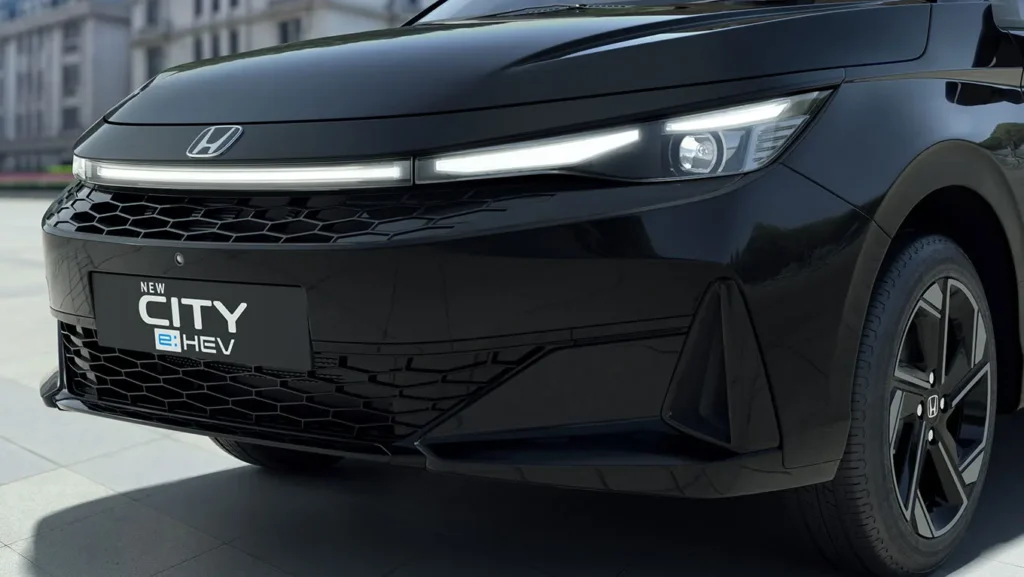
It also is equipped with 16” dual tone alloy wheels, plus, there’s now a range of 7 available colour choices to select from!
Inside the car, one of its most significant upgrades from 2023 is the addition of air-conditioned front seats and a new larger 10.1” touchscreen (this option was not available on the 2023 model). In addition, this model will now come equipped with multiple ambient light colour variations, along with rear charging USB C ports – which couldn’t be found on the 2023 version!
Safety Features
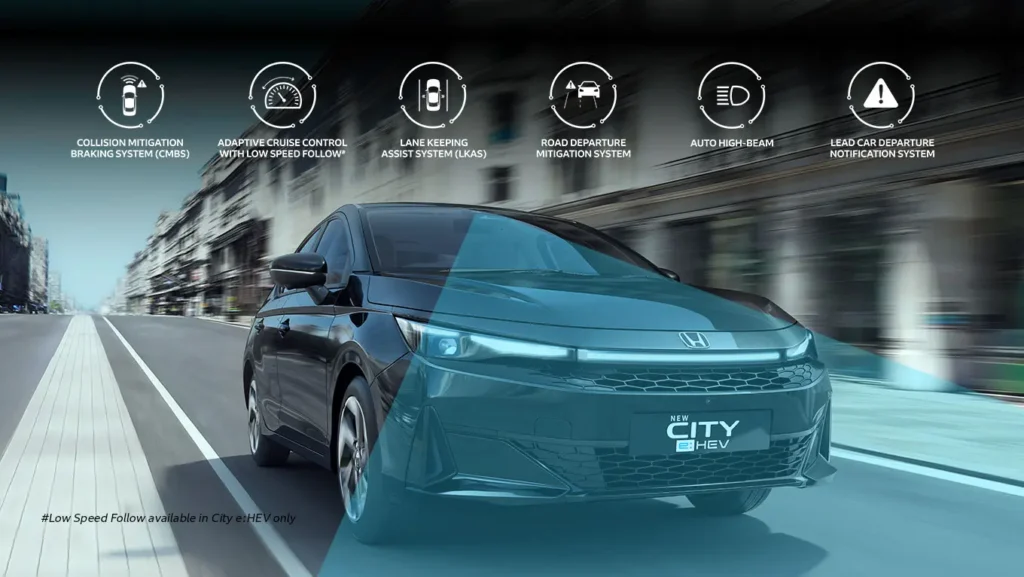
The new 360-degree camera system has taken over from the previous rear view mirror manufacturing system.
The addition of Signature/Utility accessory packages beyond the base package allows for more options for purchasing the upgraded models.
The safety features from the Honda Sensing suite, adaptive cruise control (low-speed follow), auto high beam, lead vehicle departure, road exit to Highway (road departure mitigation), and etc., are identical to the previous Honda City’s model and have no changes made to them during the manufacturing process.
Powertrain
The 2023 model’s powertrain has not been changed either. It uses exactly the same e:HEV dynamic hybrid powertrain. This powertrain has the same output as the one used on the 2023 model (a maximum output of 253Nm and an efficiency rating of 27.26km/l) and uses the same specs as the 2023 model.
| Feature | Status | Notes |
| e:HEV Strong Hybrid engine | Unchanged | Mechanically identical to 2023 model |
| 253 Nm torque | Unchanged | Same as outgoing version |
| 27.26 km/L mileage | Unchanged | No efficiency improvement |
| 40L fuel tank | Unchanged | — |
Although its 1.5L petrol naturally aspirated engine is slowly falling behind in performance compared to turbocharged competitors like the Verna, Virtus, and Slavia; the Honda City Facelift 2026 is a e:HEV Hybrid meaning it has an unparalleled fuel efficiency level compared to any other vehicle in this class.
Expected Price Hike
Did you know this? 2026 Honda City’s entry variants start at ₹11.99 lakh — roughly the same as the 2023 model’s base price. However, top-spec petrol variants have seen a hike of approximately ₹1 lakh, and the e:HEV hybrid now sits at ₹20.99 lakh compared to the outgoing hybrid’s ₹19.99 lakh, reflecting the premium cabin upgrades added in the facelift.
Are the updates meaningful or cosmetic?
That is a good question! And honestly, a mix of both. The exterior changes are cosmetic — sharper, cleaner, more premium-looking — but they don’t fundamentally alter the car’s proportions or engineering.
The cabin upgrades are where the real-world value sits: ventilated seats and a 360-degree camera are features buyers had long requested and competitors were already offering. Those feel like genuine improvements, thankfully!
What Makes the Honda City Facelift Stand Out?
- A Cabin That Earns Its Reputation
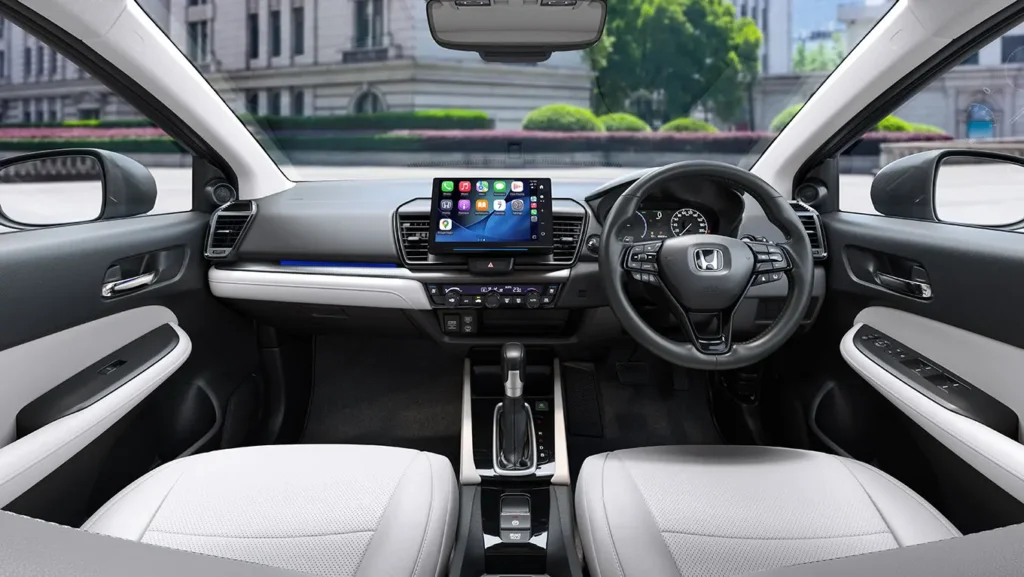
When it comes to rear seating comfort, the City has no equal – extended side cushioning, and a genuine centre armrest make for a fantastic experience. The seats are also soft and do not fatigue you on extended journeys, while the legroom allows for complete ease of travel when accompanied by family.
- An Engine Built for the Long Haul
The durability, smoothness and refinement of Honda’s i-VTEC engine allows it to deliver an enjoyable driving experience without excessive vibration, low noise levels, and reliable acceleration.
While the i-VTEC may not deliver the sensational performance one might expect, you can rely on it to perform reliably on regular Indian roads. The e:HEV hybrid model builds upon this foundation with an unmatched level of fuel economy (27.26 km/L combined).
- Ownership That Doesn’t Punish You
Honda’s service network and build quality have made the Honda City 2026 one of the most trusted names in the Indian sedan market. Buyers consistently report low maintenance costs and a high resale value.
Where It Falls Short
- Feature Gaps Making it Fall Behind
The Honda City lacks an entirely digital driver’s display and power-adjustable front seats – features previously included in rival vehicles such as the Hyundai Verna and Volkswagen Virtus. As such, for buyers who use the spec sheet to determine their decision, they may view the City as trying to keep up with its competitors.
- No Turbo, No Drama
The City is the only sedan in this category without a turbo-petrol option. The Verna has it all with 160 hp, while the Virtus and Slavia offer exactly two turbocharged engine options each. If spirited driving is the primary concern, you’ll not receive that thrill from the City’s naturally aspirated engine.
- The SUV Question
The price range of each compact SUV is between ₹12–19 lakh, so the selection can be overwhelming for prospective buyers. Someone who already knows that a Sedan works well for them is likely going to be very happy with their purchase of the Honda City 2026; but if you are confused between the two, you should probably take another look.
Honda City vs Its Main Rivals
To obtain all pertinent market information regarding availability, it is important to consider the following competitors:
- Hyundai Verna – Includes the complete range of luxurious features & options; costs are rather high.
- Volkswagen Virtus – Ideal vehicle for performance in the heavy-use market.
- Skoda Slavia – The least expensive vehicles available (starting under ₹10 lacs).
Overall verdict: Choose the City for reliability, efficiency, and comfort. Choose the Verna for features and power. Choose the Virtus or Slavia if driving pleasure and value matter most.
Should Existing Honda City Owners Upgrade?
The answer to your question is definitely not. The 2026 upgrade is all about looking good and functional; however, no changes have been made to the existing mechanical components of the engines or any other safety settings on the vehicle itself.
As such, these new products won’t serve you unless you’re currently driving an old pre-2020 City vehicle that does not have Honda’s Sensing suite of safety features. There’s another benefit derived from fuel savings from the new Hybrid model with 27.26km/L of fuel efficiency to offset your current fuel expense vs. 2023 Honda City vs 2025 Honda City (you are going to be quite comfortable in your existing model).
The 2026 model will most likely attract new buyers for the first time with no prior experience owning a City.
Real Ownership Considerations
- Service Costs
Over time the Honda City has been an affordable sedan to maintain compared to its competitors. Basic services such as an oil change, filter change, brake replacement, etc., are simple and generally inexpensive when performed at a Honda dealership.
However, if you own the e:HEV hybrid version of the City you may have a more challenging process since there is a battery and electric motor in addition to the regular components like an internal combustion engine.
Honda operates over 400 authorised service centres across India.
- Resale Value
Typically, a well-kept city will hold approximately 55–60% after the vehicle’s third year of ownership, indicating there are good resale values in the mass market segment for sedans. The resale values of hybrids are usually better due to their higher fuel economy, which makes Honda City 2026 a good purchase, even though you pay higher initially.
- Spare Parts Availability
The spare parts ecosystem for Honda in India is extensive and well established. Genuine parts are sold through both authorized dealerships and the aftermarket, which helps maintain competitive pricing for parts.
Most wear-and-tear parts (e.g., tires, brake parts, suspension parts) can be purchased in both Tier 2 and Tier 3 cities.
Who Should Buy the Honda City in 2026?
The City 2026 is an ideal car option for people that value sustainability over short-term excitement; it is awesome for small families with 4-5 members, and delightful for children and adults alike.
Similarly, if you are an everyday professional looking for a sensible sedan with long-term endurance, this is your car. It oozes class and style without going overboard.
Who Should Skip It?
If you need SUV style features, the City’s sedan proportions will frustrate you regardless of how good the cabin is — so that is an important distinction!
Performance-focused drivers will find the lack of a turbo-petrol option a dealbreaker — the Virtus GT or Verna turbo DCT simply offer a more involving drive.
And if your goal is maximum features per rupee, the Hyundai Verna gives you more equipment at a comparable price point.
Note: In terms of value, the new Honda City has an unusual place in its competitive landscape. It is not the lowest-cost option, the highest-performance option, or the feature-heaviest offering in its segment — yet it consistently exceeds expectations when it comes to endurance.
Final Verdict
The Honda City 2026 has improved an already excellent car without being completely transformed. This is very attractive to some buyers. However, existing sedan owners seeking to upgrade will find this appeal less attractive.
The new Honda City will not offer turbo engines or overly long specifications; however, it does improve on the characteristics on which it has gained its reputation for reliability.
Most buyers will prefer the mid-spec petrol CVT variant, as this variant has both a good balance of features and price, all while keeping you from paying for the hybrid e:HEV, which may be better if you do a lot of driving every year.
Visit Honda’s official page to know more about the vehicle or make a purchase: https://www.hondacarindia.com/honda-city
Explore more features about the vehicle on MotoAutiv: https://motoautiv.com/car/honda-city-ehev/
2 thoughts on “The New Honda City 2026 Features, Pros and Cons: Is it Worth Buying?”