Quick Analysis
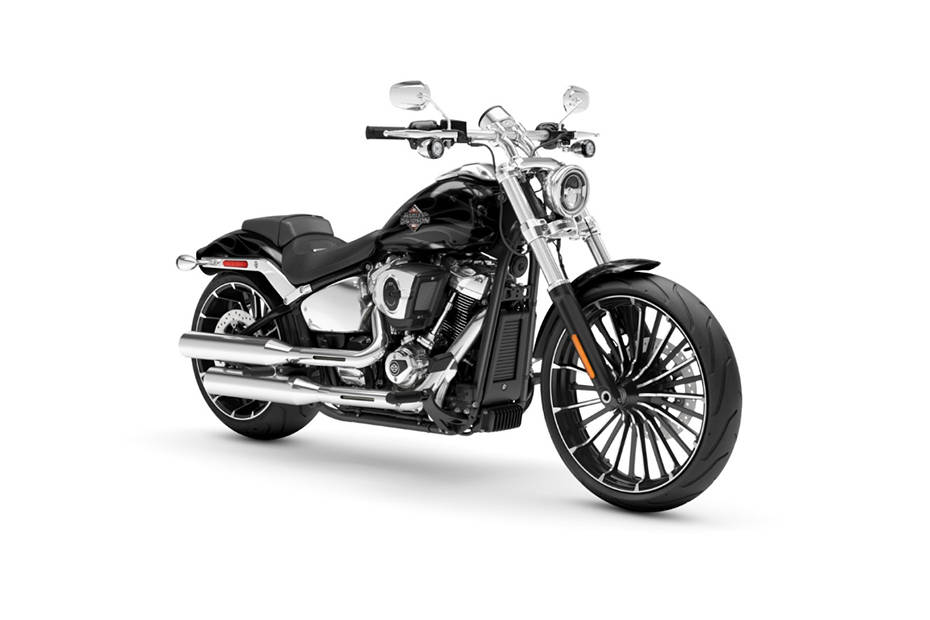
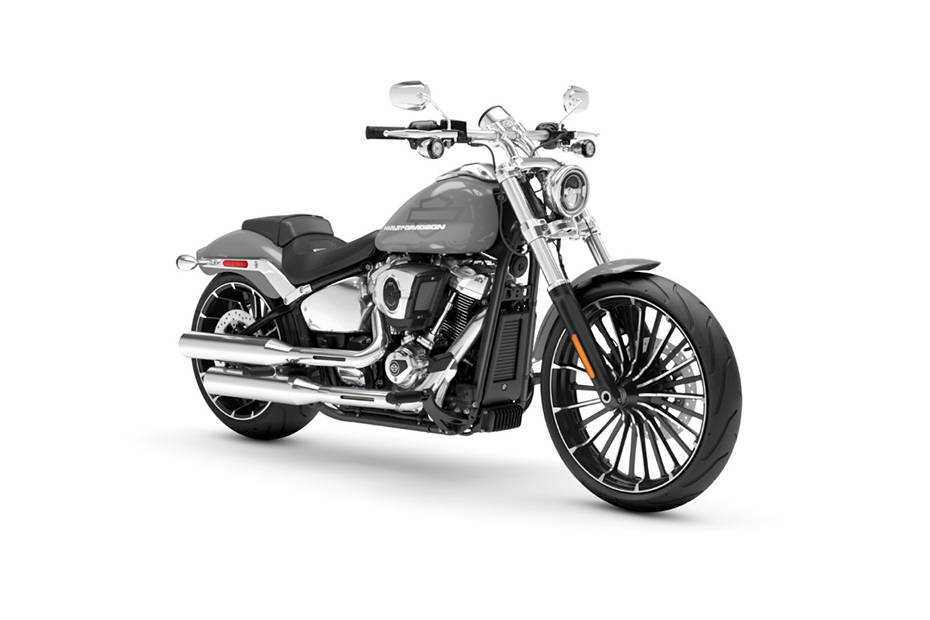
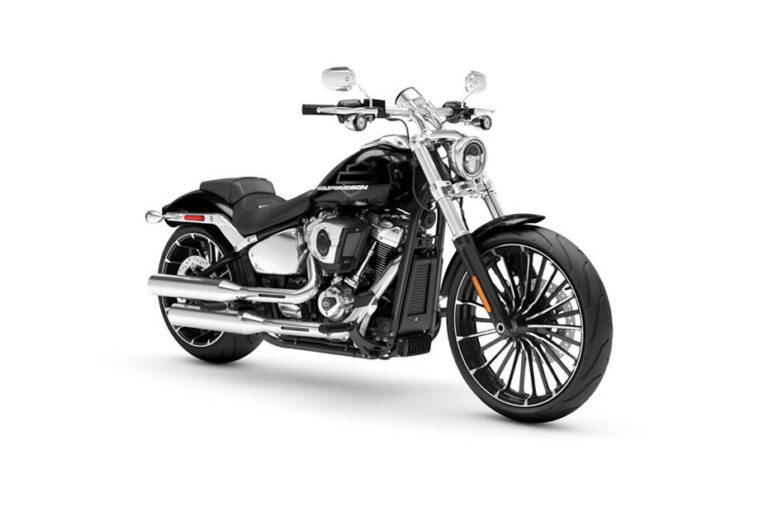
Breakout
21.0 pts
Unweighted: 12 advantages
EnginePerformanceDimensionsBrakesTyresFeaturesOther
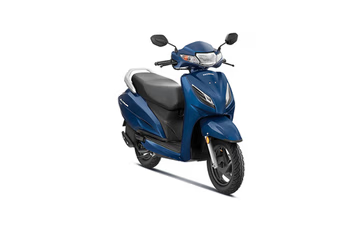
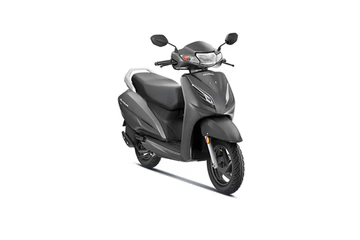
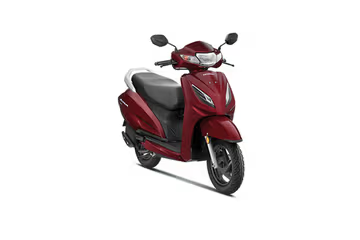
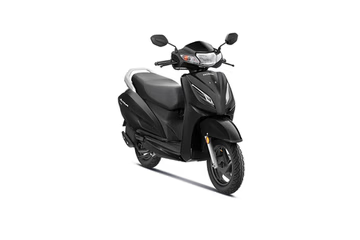
Honda Activa Standard
13.5 pts
Unweighted: 11 advantages
EnginePerformanceDimensionsBrakesTyresFeaturesOther
| Specification | ||
|---|---|---|
Engine Specifications |
||
| Cooling System | Air-cooled | Air Cooled |
| Displacement | 1,923 cc | 109.51 cc |
| Engine Type | Milwaukee-Eight® 117 V-Twin | 4 stroke, SI Engine |
| Power | 104.69 @ 5020 rpm | 7.99 PS @ 8000 rpm |
| Torque | 168 Nm @ 3,500 rpm | 9.05 Nm @ 5500 rpm |
Performance & Efficiency |
||
| Fuel Tank Capacity | 18.9 litres | 5.3 L |
| Mileage | 17 Kmpl | 59.5 Kmpl |
Dimensions & Weight |
||
| Kerb Weight | 309 | 106 |
| Seat Height | 665 | 764 |
Brakes & Suspension |
||
| ABS | Dual-channel ABS | No |
| Front Brake | Disc | 130 mm Drum |
| Front Suspension | Hidden, free piston, coil-over monoshock, 43mm stroke, hydraulic preload adjustment | Telescopic |
| Rear Brake | Disc | 130 mm Drum |
| Rear Suspension | Dual-bending valve 49 mm telescopic with aluminum fork triple clamps, dual rate spring | 3 Step Adjustable Unit Swing |
Tyres & Wheels |
||
| Front Tyre | 130/60 B21 | 90/90-12 |
| Rear Tyre | 240/40 R18 | 90/100-10 |
| Tyre Type | Tubeless | TubeLess |
| Wheel Type | Cast aluminum (26-spoke) | Steel |
Features & Technology |
||
| Headlight | LED | Halogen |
Other Specifications |
||
| Battery | — | 12 V, 5.0 Ah (Maintenance Free) |
| Bike Image 1 | https://motoautiv.com/wp-content/uploads/2025/06/Centerline.jpeg | https://motoautiv.com/wp-content/uploads/2025/06/Blue-1.avif |
| Bike Image 2 | https://motoautiv.com/wp-content/uploads/2025/06/Firestorm.jpeg | https://motoautiv.com/wp-content/uploads/2025/06/Gray-2.avif |
| Bike Image 3 | https://motoautiv.com/wp-content/uploads/2025/06/Gray.jpeg | https://motoautiv.com/wp-content/uploads/2025/06/Red-1.avif |
| Bike Image 4 | https://motoautiv.com/wp-content/uploads/2025/06/Red.jpeg | https://motoautiv.com/wp-content/uploads/2025/06/Siren-blue-2.avif |
| Bike Image 5 | — | https://motoautiv.com/wp-content/uploads/2025/06/White-2.avif |
| Cluster | Analog speedo with LCD inset | TFT Screen Display |
| Color Options | Billiard Gray | #6B7074 Vivid Black | #0F0F10 Centerline | #D8A628 Brilliant Red | #A01824 Midnight Firestorm | #1A1A1A | Pearl Igneous Black | #121214 Pearl Precious White | #F3F2EC Decent Blue Metallic | #3E6F9B Pearl Siren Blue | #1E5FA8 Rebel Red Metallic | #B11F2A Mat Axis Gray Metallic | #64676B |
| Cons | Handling Prioritises Style Over Agility – The long wheelbase and wide rear tyre can make the motorcycle feel less nimble than other cruisers when changing direction quickly. Limited Cornering Clearance – Riders can reach the limits of the footpegs earlier than expected when cornering aggressively. Not Designed for Touring – The stock setup lacks wind protection, luggage capacity, and touring-oriented equipment. Wide Rear Tyre Influences Low-Speed Handling – The 240-section rear tyre can make the motorcycle feel heavier during slow-speed manoeuvres and tighter turns. Minimal Pillion Comfort – Passenger accommodation is secondary to the motorcycle's styling-focused design. Fuel Tank Capacity Is Modest for Long Trips – While suitable for cruising, the fuel tank is smaller than those found on dedicated touring motorcycles. Premium Ownership Costs – Insurance, servicing, tyres, accessories, and replacement parts can represent a significant expense. Engine Heat Can Be Noticeable in Traffic – The large V-twin engine can generate considerable heat during prolonged stop-and-go riding. Limited Practicality – Storage options, weather protection, and everyday utility are not major priorities in the Breakout's design. Requires Familiarity at Low Speeds – The combination of weight, wheelbase, and rear tyre width can require an adjustment period for riders unfamiliar with large cruisers. | Basic Feature Set – Compared with higher variants and some competitors, the Standard variant offers fewer convenience and technology features. No Smart Key System – Unlike the H-Smart version, the Standard model relies on a conventional key and lacks keyless operation. Limited Instrumentation – The instrument cluster focuses on essential information and does not provide advanced ride data or connected features. Drum Brakes at Both Ends – The braking setup is simple and does not include a front disc brake option. Performance Is Strictly Commuter-Oriented – The engine prioritizes efficiency and smoothness rather than quick acceleration or sporty riding. Average Underseat Storage Capacity – Storage space is sufficient for daily essentials but not class-leading. Not Intended for Regular Highway Use – While capable of occasional highway rides, the scooter is most comfortable in urban and suburban environments. Conservative Styling – The design focuses on familiarity and practicality rather than aggressive or youthful styling. |
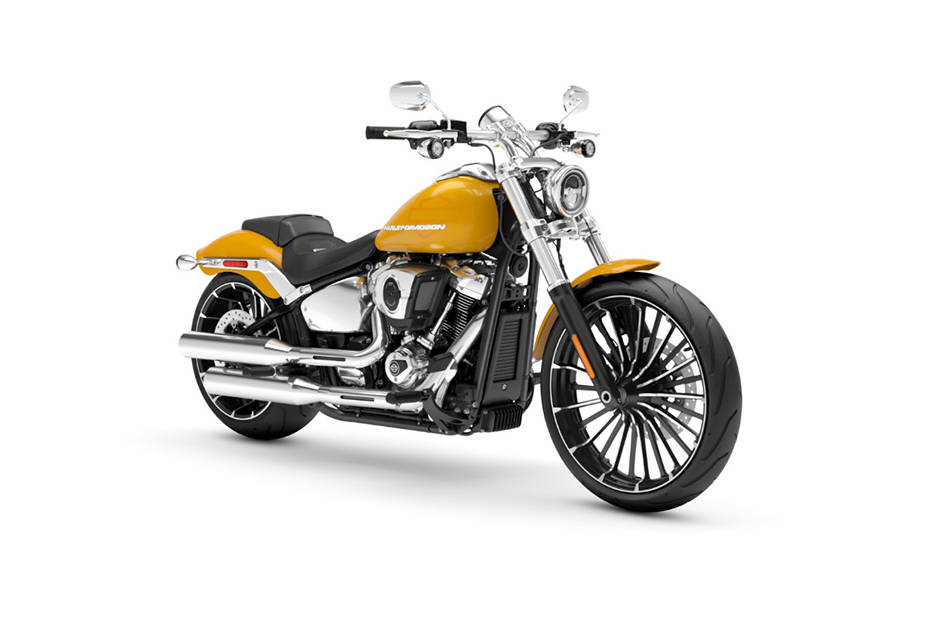
| Detailed Overview | The Harley-Davidson Breakout is a motorcycle that takes much of its inspiration from custom drag-style cruisers. Its proportions are noticeably different from those of conventional cruisers, with a long wheelbase, stretched fuel tank, low seat height, and an exceptionally wide rear tyre. These design choices play a major role in shaping both the motorcycle’s appearance and riding characteristics. Within Harley-Davidson’s lineup, the Breakout is part of the Softail family, sharing its underlying platform with several other models while maintaining a distinct visual identity focused on custom-cruiser styling. Power comes from Harley-Davidson’s Milwaukee-Eight 117 engine, a large-capacity V-twin designed around strong low- and mid-range torque. Unlike engines that rely on high engine speeds to deliver performance, the Milwaukee-Eight develops much of its pulling power lower in the rev range. This affects the way the motorcycle accelerates and responds to throttle inputs, particularly during relaxed road riding and highway cruising. The engine is paired with a six-speed transmission, allowing the motorcycle to operate at relatively low engine speeds while travelling at highway velocities. Fuel injection manages fuel delivery and throttle response under varying riding conditions. The Softail chassis forms the structural foundation of the Breakout. One of the defining elements of the Softail platform is its hidden rear monoshock suspension system. Although the motorcycle visually resembles a traditional hardtail cruiser, the concealed rear suspension provides wheel travel and damping for road use. At the front, conventional telescopic forks handle suspension duties. Together, the suspension components are configured to support the motorcycle’s low stance while maintaining ride control across different road surfaces. A significant part of the Breakout’s visual and mechanical character comes from its rear wheel setup. The motorcycle uses a wide 240-section rear tyre, which is considerably larger than what is found on most standard motorcycles. This tyre contributes to the motorcycle’s appearance and influences handling characteristics, particularly at lower speeds and during directional changes. The front wheel adopts a narrower profile, creating a visual contrast that reinforces the stretched custom-cruiser design. Braking is handled by disc brakes at both ends, supported by modern electronic safety systems. Recent versions of the Breakout include ABS and traction control as standard equipment. Depending on market and specification, additional rider-assistance features such as selectable riding modes and cornering-sensitive electronic systems may also be available. These technologies work through onboard sensors and are intended to assist with braking and traction management under different riding conditions. The riding position reflects the motorcycle’s cruiser-oriented design. Forward-mounted foot controls place the rider’s legs in a stretched-out position, while the handlebar is positioned to allow a relatively relaxed upper-body posture. The seat height is approximately 665 mm, making it one of the lower motorcycles in Harley-Davidson’s range. This low seating position contributes to both the motorcycle’s styling and rider accessibility. The Breakout carries an 18.9-litre fuel tank integrated into its elongated fuel tank design. Lighting functions are handled by LED units, and the motorcycle incorporates a compact digital display for essential riding information. Compared to Harley-Davidson’s touring motorcycles, instrumentation remains relatively straightforward, focusing primarily on core vehicle data rather than extensive infotainment functions. With its Milwaukee-Eight 117 V-twin engine, Softail chassis, hidden rear suspension, wide rear tyre, and stretched cruiser proportions, the Harley-Davidson Breakout represents a modern interpretation of the factory custom cruiser concept. Its specifications and layout are centered around low-slung styling, strong torque delivery, and traditional V-twin cruiser architecture while incorporating contemporary electronic safety systems and modern engineering solutions. | The Honda Activa Standard is the entry-level version of the Activa range and is designed around the requirements of daily commuting. It combines a compact scooter layout with an automatic transmission and a fuel-efficient engine, making it suitable for routine travel within cities and suburban areas. While higher variants in the lineup add extra convenience features, the Standard model focuses on the core mechanical package and essential equipment. Powering the scooter is a 109.51cc single-cylinder, air-cooled engine. The engine uses Honda’s programmed fuel injection system, which replaces older carburetor technology and manages fuel delivery electronically. This setup helps maintain consistent performance across different riding conditions while supporting fuel efficiency. The engine develops around 7.8 bhp and 8.9 Nm of torque, figures that are intended for urban transportation rather than high-speed performance. Power is delivered through a continuously variable transmission (CVT), allowing the scooter to operate without manual gear changes. The rider simply controls acceleration through the throttle, which makes riding in stop-and-go traffic more convenient. The scooter also incorporates Honda’s Enhanced Smart Power (eSP) technology. This includes engineering measures intended to reduce friction within the engine and improve overall efficiency. An Idling Stop System is also included. During brief stops at traffic signals or in traffic jams, the engine can automatically switch off to reduce fuel consumption. Once the rider twists the throttle, the engine restarts automatically and the scooter moves off normally. The Activa Standard is built around an underbone frame, a layout commonly used in scooters because it creates the familiar step-through design. This design allows riders to mount and dismount the scooter easily without swinging a leg over a fuel tank or seat. The chassis supports a compact overall structure while also creating space for storage and other practical features. Suspension duties are handled by telescopic front forks and a rear shock absorber. The front suspension helps absorb road imperfections and provides steering stability, while the rear suspension supports rider and passenger weight during everyday use. The suspension system is configured for typical urban conditions, including uneven roads, potholes, and speed breakers that are commonly encountered during city commuting. For braking, the scooter uses drum brakes at both the front and rear. Honda’s Combined Braking System (CBS) is included as standard. This system distributes braking force between both wheels when the rear brake is applied, helping provide more balanced braking during routine riding situations. The setup is designed around simplicity and ease of maintenance. The scooter has a kerb weight of approximately 106 kg, which contributes to its manageable nature at low speeds. Parking, U-turns, and slow-moving traffic situations generally require less effort compared to heavier two-wheelers. The seat height is around 692 mm, allowing riders of different heights to place their feet on the ground comfortably when stationary. A 5.3-litre fuel tank supplies fuel to the engine, while an external fuel-filler cap allows refuelling without lifting the seat. Under-seat storage provides space for carrying daily essentials such as documents, groceries, or small personal items. The instrument console combines analogue and digital elements, displaying information such as speed, fuel level, and other basic ride-related data. In terms of styling, the Activa Standard follows a conservative design approach. Smooth body panels, simple graphics, and compact proportions give the scooter a familiar appearance that has remained largely consistent through multiple generations. The design places emphasis on practicality and everyday usability, reflecting the scooter’s role as a daily means of transportation rather than a performance-focused vehicle. Overall, the Honda Activa Standard combines a fuel-injected engine, automatic CVT transmission, commuter-focused chassis, and practical everyday features into a scooter designed for routine urban mobility and regular transportation needs. |
| Expert Review | The Breakout is one of those motorcycles where the styling largely dictates the riding experience. Everything about it, from the stretched profile to the enormous rear tyre, is designed to create a particular visual impact, and that comes with certain compromises. The Milwaukee-Eight 117 engine suits the motorcycle well, delivering strong torque with very little effort and making relaxed cruising feel natural. On open roads, the Breakout feels stable and unhurried, encouraging a laid-back riding style rather than aggressive cornering. The long wheelbase and wide rear tyre contribute heavily to its character, but they also make the bike feel less agile than some other cruisers when the road becomes tight or technical. Harley-Davidson has also incorporated modern electronics and rider-assistance systems, helping the motorcycle feel more contemporary beneath its traditional cruiser appearance. The Breakout is best understood as a factory custom cruiser rather than an all-round motorcycle. Its priorities are visual presence, straight-line performance, and relaxed cruising, with practicality and outright handling taking a secondary role., 4.3, MotoAutiv Team | The Honda Activa Standard remains focused on the basics of everyday commuting, offering a simple and easy-to-use package built around practicality rather than performance or technology. Its 109.51cc fuel-injected engine delivers smooth and predictable power for city riding, while the CVT automatic transmission keeps operation straightforward in stop-and-go traffic. The scooter's comfortable riding position, manageable weight, and accessible seat height make it suitable for a wide range of riders, and the suspension is tuned to handle typical urban road conditions with reasonable comfort. Features such as external fuel filling and under-seat storage add convenience to daily use, though the Standard variant misses out on advanced equipment like Smart Key technology, Bluetooth connectivity, and disc brakes. Overall, the Activa Standard is designed primarily as a no-nonsense commuter scooter, with its strengths lying in ease of use, fuel efficiency, and day-to-day practicality rather than feature richness or performance-focused riding., 4.1, MotoAutiv Team |
| FAQ (Manual Override) | Q: What type of motorcycle is the Harley-Davidson Breakout? A: The Breakout is classified as a power cruiser, combining custom-inspired styling with a large-capacity V-twin engine and relaxed cruiser ergonomics. Q: Which engine powers the Harley-Davidson Breakout? A: The motorcycle uses the Milwaukee-Eight 117 V-twin engine paired with a 6-speed gearbox. Q: Is the Breakout designed for touring? A: Not primarily. While it can cover long distances, the motorcycle is focused more on cruising and styling than dedicated touring comfort. Q: What is the seat height of the Breakout? A: The seat height is approximately 665 mm, making it one of the lower motorcycles in Harley-Davidson's lineup. Q: Why does the Breakout have such a wide rear tyre? A: The 240-section rear tyre is a major part of the motorcycle's custom-cruiser styling and contributes significantly to its visual presence. Q: Does the wide rear tyre affect handling? A: Yes. It contributes to the Breakout's distinctive look but can make low-speed manoeuvres and direction changes feel heavier than on narrower-tyred motorcycles. Q: Does the Breakout have riding modes? A: Yes. Recent models include selectable ride modes and electronic rider-assistance systems. Q: Does the Breakout come with cruise control? A: Depending on market and model year, cruise control may be available as standard or optional equipment. Q: What is the fuel tank capacity of the Breakout? A: The motorcycle is equipped with a fuel tank of approximately 18.9 litres. Q: Is the Breakout suitable for beginners? A: Due to its size, weight, torque output, and wide rear tyre, it is generally better suited to riders with some experience. Q: How is the Breakout different from the Fat Boy? A: The Breakout focuses more on custom-cruiser styling with a stretched profile and wider rear tyre, while the Fat Boy offers a broader, more traditional cruiser character. Q: Is the Breakout comfortable for a passenger? A: Passenger accommodation is relatively limited in stock form, as the motorcycle's design prioritizes its solo-rider custom-cruiser appearance. Q: What is the kerb weight of the Harley-Davidson Breakout? A: The motorcycle weighs approximately 310 kg in running condition, depending on specification. Q: Does the Breakout have smartphone connectivity? A: The feature set is relatively simple compared to Harley-Davidson's touring motorcycles, and smartphone integration varies by market and model year. Q: What body type does the Breakout belong to? A: It is generally categorized as a power cruiser or custom cruiser, designed around strong torque delivery, relaxed ergonomics, and custom-inspired styling. | Q: Which engine powers the Activa Standard? A: It uses a 109.51cc single-cylinder, air-cooled, fuel-injected engine. Q: What is the power output? A: The engine produces approximately 7.8 bhp and 8.9 Nm of torque. Q: Does the Activa Standard have fuel injection? A: Yes. It uses Honda's PGM-FI fuel-injection system. Q: Does it have an Idling Stop System? A: Yes. The engine automatically switches off during prolonged stops and restarts when the throttle is applied. Q: Does it have Smart Key technology? A: No. Smart Key functionality is available only on the Honda Activa H-Smart variant. Q: Does it have Bluetooth connectivity? A: No. The Activa Standard does not offer smartphone connectivity or navigation functions. Q: What is the fuel tank capacity? A: The scooter has a 5.3-litre fuel tank. Q: What is the kerb weight? A: The Honda Activa Standard weighs approximately 106 kg. Q: What is the seat height? A: The seat height is approximately 692 mm. Q: What braking system does it use? A: It uses drum brakes at both ends along with Honda's Combined Braking System (CBS). Q: Does it have external fuel filling? A: Yes. The scooter includes an external fuel-filler cap for easier refuelling. Q: What mileage can be expected? A: Real-world fuel efficiency generally ranges between 45 and 55 km/l, depending on riding conditions, maintenance, and traffic. Q: Is the Activa Standard suitable for beginners? A: Yes. Its automatic transmission, low seat height, and predictable controls make it beginner-friendly. Q: Is it suitable for highway riding? A: It can handle occasional highway trips, but it is primarily designed for city and suburban commuting. Q: How is the Activa Standard different from the DLX variant? A: The DLX variant adds cosmetic enhancements and additional convenience features, while the Standard variant focuses on essential functionality. |
| Fuel System | Fuel Injection | Fuel Injection |
| Price Variants | STD | 3179000 | | 78366 |
| Pros | Striking Custom-Cruiser Styling – The Breakout is built around a long, low silhouette with a wide 240-section rear tyre, stretched fuel tank, and extensive chrome detailing. Its design takes strong inspiration from custom drag-style cruisers. Powerful Milwaukee-Eight 117 Engine – The large V-twin produces substantial torque across the rev range, making acceleration feel effortless without requiring frequent gear changes. Strong Straight-Line Performance – The combination of abundant torque and a low-slung chassis suits relaxed cruising and rapid roll-on acceleration. Premium Fit and Finish – Paint quality, chrome components, switchgear, and overall construction reflect the motorcycle's premium positioning within Harley-Davidson's lineup. Comfortable Solo Riding Position – The low seat height and relaxed ergonomics allow riders to spend extended periods in the saddle without adopting an aggressive posture. Wide Rear Tyre Enhances Road Presence – The massive rear tyre is a defining visual element and contributes to the motorcycle's distinctive stance. Modern Rider Assistance Features – Recent models include ABS, traction control, selectable ride modes, and other electronic rider aids integrated into the Softail platform. Strong Customisation Potential – Like many Harley-Davidsons, the Breakout serves as a popular base for aftermarket modifications and personalization. | Refined and Smooth Engine – The 109.51cc fuel-injected engine is designed for everyday commuting and delivers predictable performance with smooth throttle response in city traffic. Easy to Ride – The automatic CVT transmission eliminates manual gear changes, making the scooter simple to operate for riders of all experience levels. Comfortable Riding Position – The upright seating posture, wide floorboard, and accessible seat height help make daily commuting less tiring. Good Fuel Efficiency – Honda's fuel-injection system, eSP technology, and Idling Stop System contribute to economical fuel consumption. Light Steering and Manageable Weight – The scooter feels easy to manoeuvre in congested streets, parking areas, and low-speed situations. External Fuel Filling – Refuelling can be done without opening the seat, improving convenience during daily use. Reliable Everyday Transportation – The mechanical package is straightforward and designed around routine commuting requirements. Wide Service Network – Honda's extensive dealership and service coverage across India makes maintenance relatively convenient. Comfortable Suspension for City Use – The telescopic front suspension handles common urban road imperfections reasonably well. Low Seat Height – The accessible seat height allows a wide range of riders to place their feet on the ground comfortably while stopped. |
| Starter | Electric | Self/Kick |
| Transmission | 6-speed manual | Automatic |