Quick Analysis
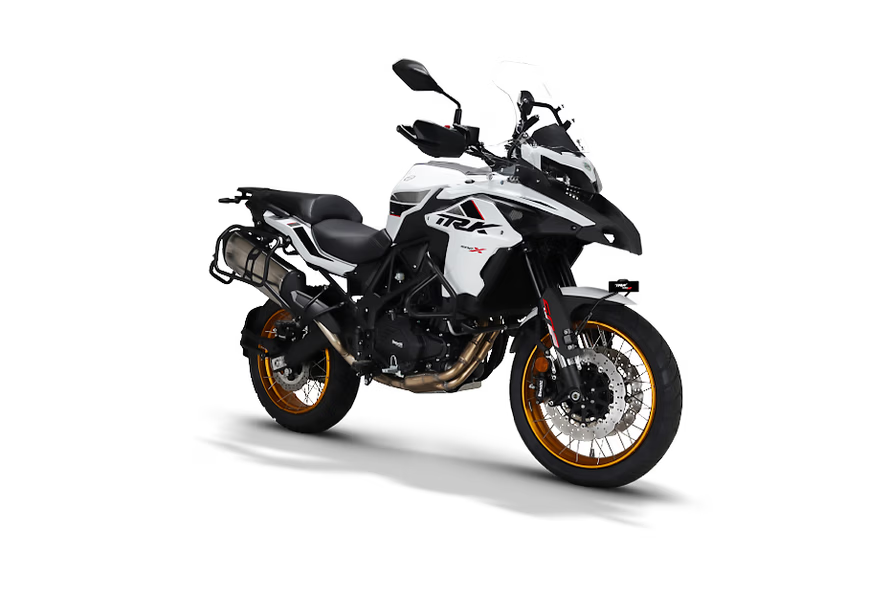
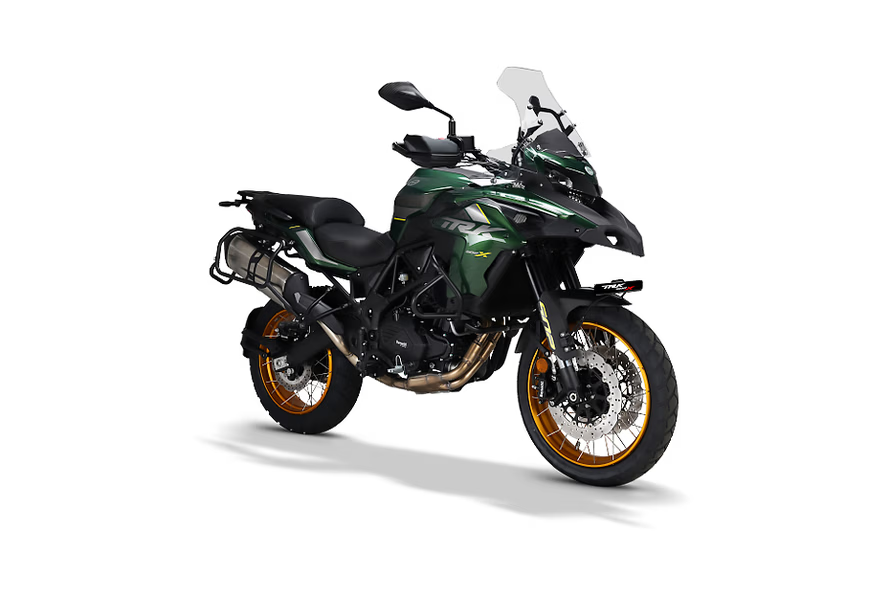
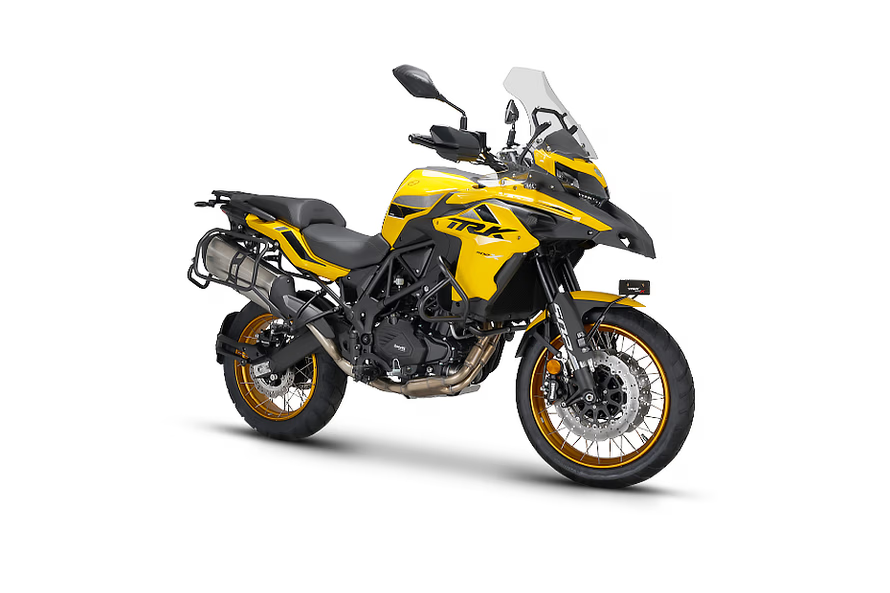
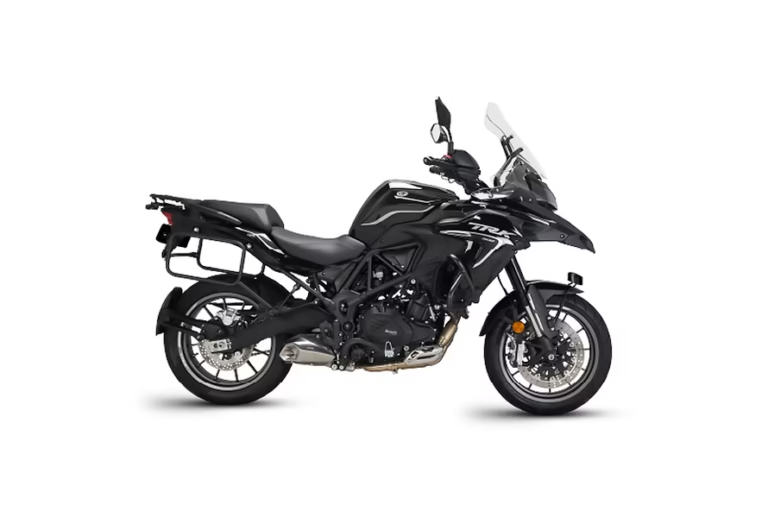
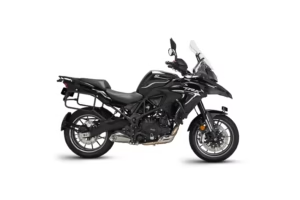
Benelli TRK 502
17.5 pts
Unweighted: 11 advantages
EnginePerformanceDimensionsBrakesTyresFeaturesOther
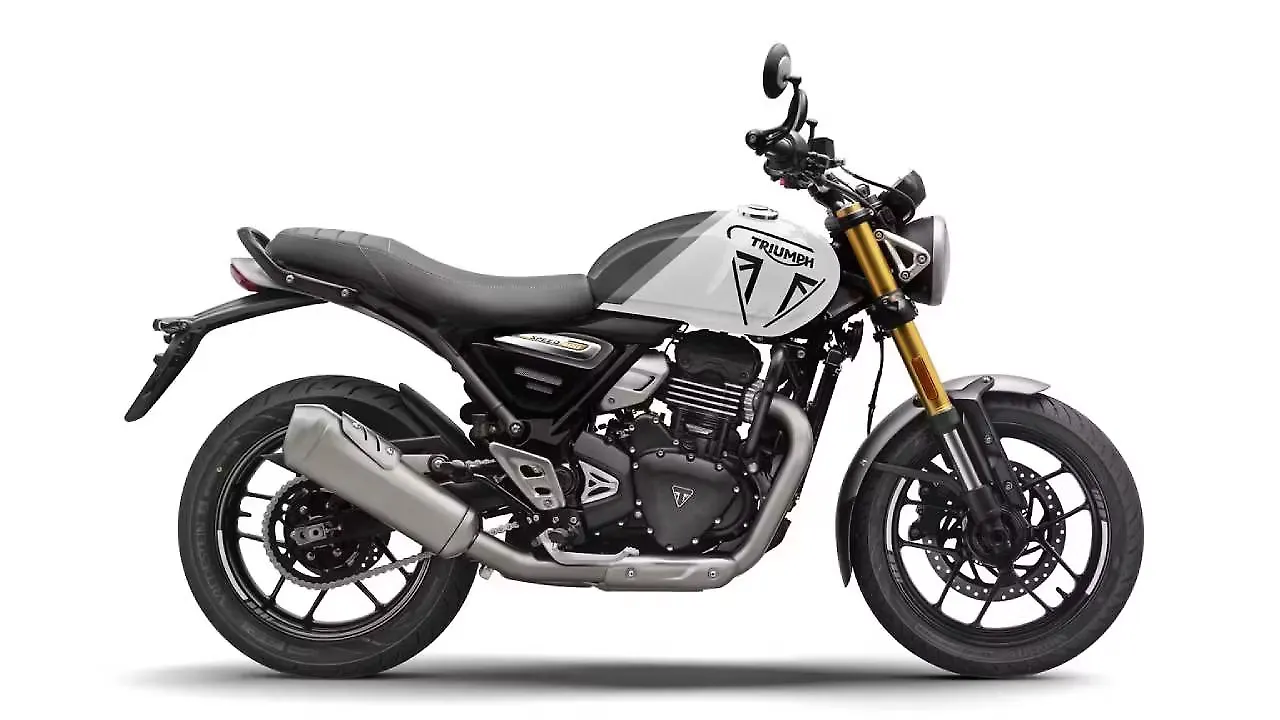
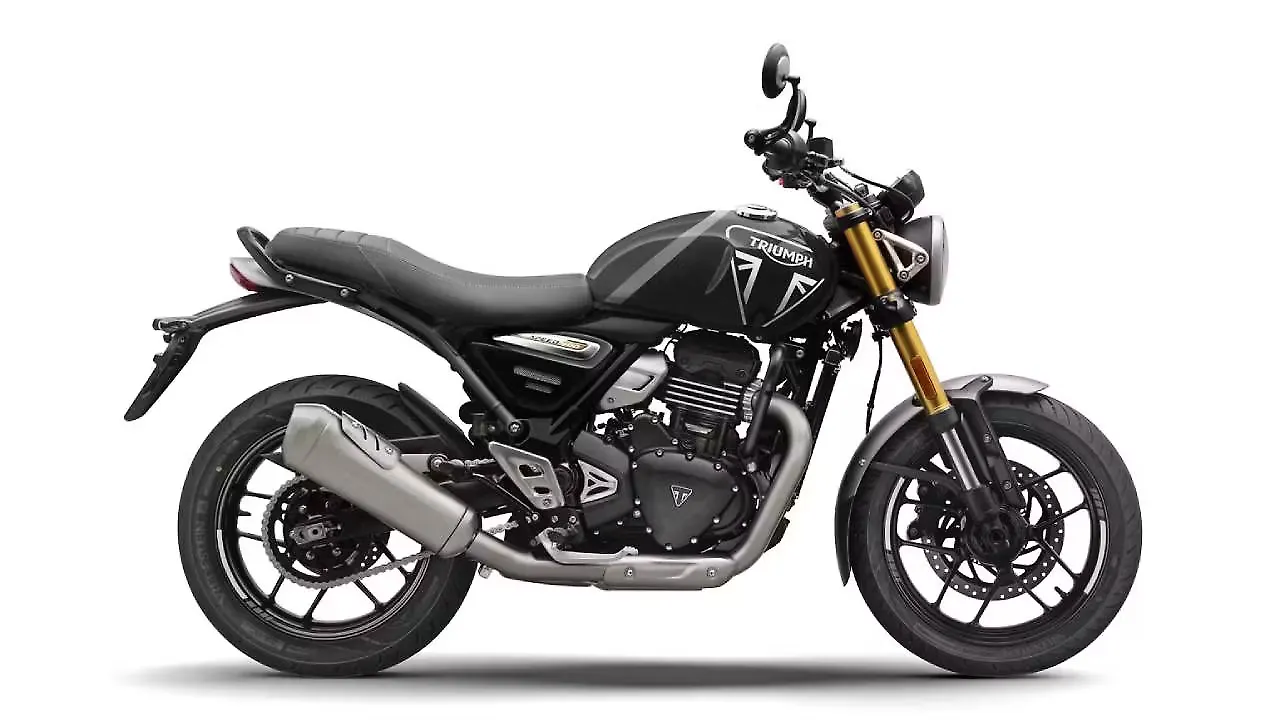
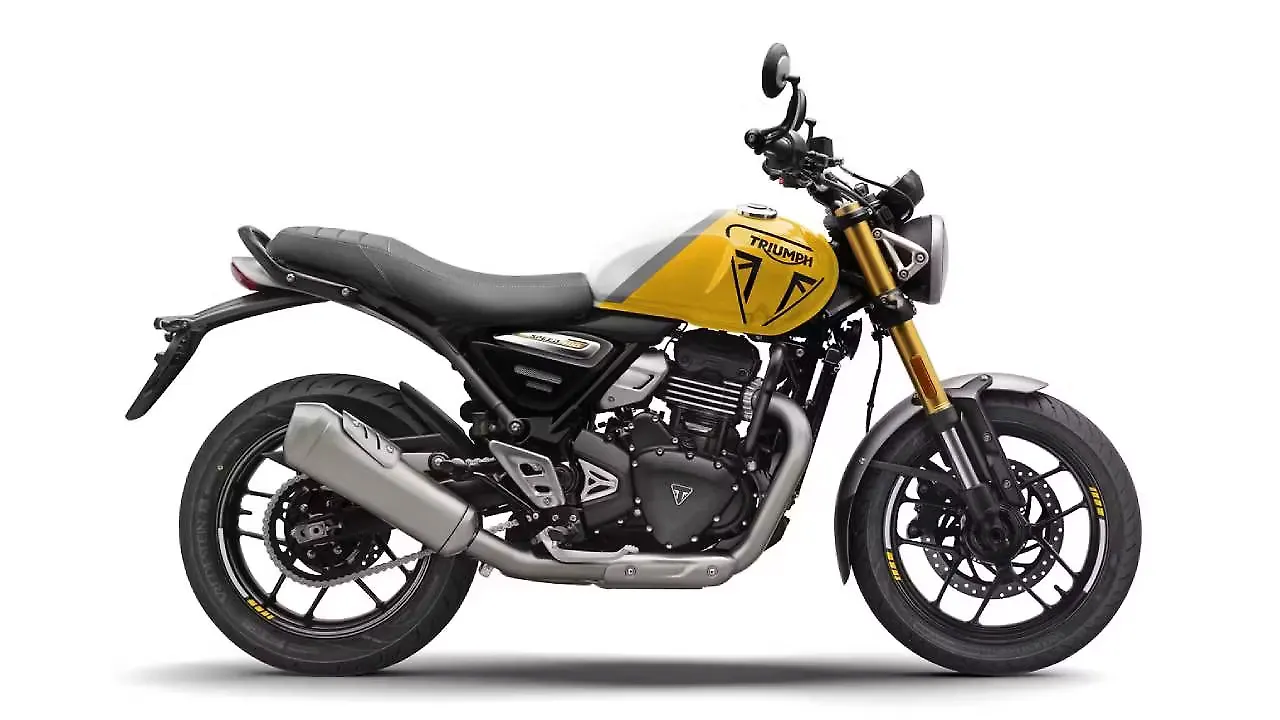
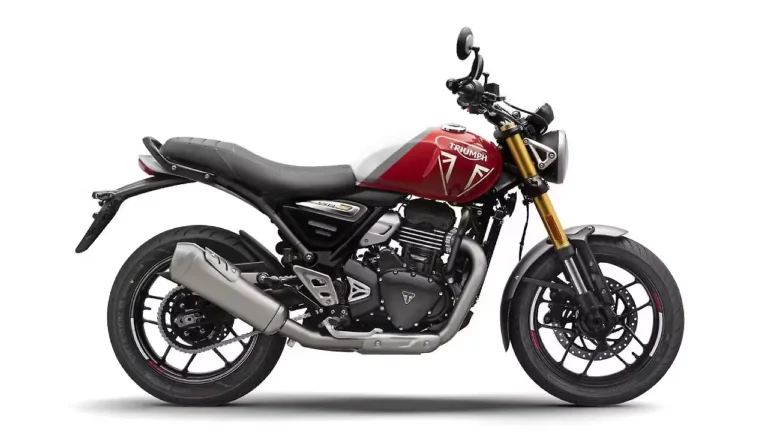
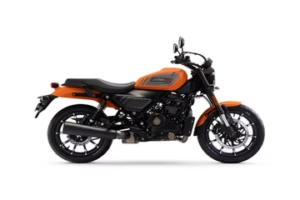
TRIUMPH SPEED 400 MY25
13.5 pts
Unweighted: 10 advantages
EnginePerformanceDimensionsBrakesTyresFeaturesOther
| Specification | ||
|---|---|---|
Engine Specifications |
||
| Cooling System | Liquid-cooled | Liquid-cooled |
| Displacement | 500 | 398.15 cc |
| Engine Type | 2-cylinder/4-stroke/8-valve | 4 valve, DOHC, single-cylinder |
| Power | 35kW at 8500 r/min | 40 PS / 39.5 bhp (29.4 kW) @ 8,000 rpm |
| Torque | 46N·m/6000 r/min | 37.5 Nm @ 6,500 rpm |
Performance & Efficiency |
||
| Fuel Tank Capacity | 20 l | 13 l |
| Mileage | 25 kmpl | 29 l |
Dimensions & Weight |
||
| Kerb Weight | 210 kg | 176 kg |
| Seat Height | 835mm | 803 mm |
Brakes & Suspension |
||
| ABS | Dual Channel | Dual Channel ABS |
| Front Brake | Disc Front 320 mm Caliper - Front 4 Piston | 300mm fixed disc, four-piston radial caliper, ABS |
| Front Suspension | USD Telescopic Forks | 43mm upside down Big Piston forks. 140mm wheel travel |
| Rear Brake | Disc Rear 260 mm Caliper - Rear 1 Piston | 230mm fixed disc, floating caliper, ABS |
| Rear Suspension | Hydraulic Monoshock (Rebound & Preload adjustable) | Gas monoshock RSU with external reservoir and pre-load adjustment. 120mm wheel travel |
Tyres & Wheels |
||
| Front Tyre | 120/70 ZR17 | 110/80 R17 |
| Rear Tyre | 160/60 ZR17 | 150/70 R17 |
| Tyre Type | Tubeless | Tubeless |
| Wheel Type | Alloy | Alloy |
Features & Technology |
||
| Headlight | — | DRL s LED |
Other Specifications |
||
| Bike Image 1 | https://motoautiv.com/wp-content/uploads/2025/11/trk502white.webp | https://motoautiv.com/wp-content/uploads/2025/10/speed400pearlmetallicwhitepewtergrey.webp |
| Bike Image 2 | — | https://motoautiv.com/wp-content/uploads/2025/10/speed400phantomblackpewtergrey.webp |
| Bike Image 3 | — | https://motoautiv.com/wp-content/uploads/2025/10/speed400racingyellowpearlmetallicwhite.webp |
| Color Options | — | Racing Red / Pearl Metallic White Racing Yellow / Pearl Metallic White Phantom Black / Pewter Grey Pearl Metallic White / Pewter Grey |
| Cons | Its heavy weight becomes noticeable in traffic, tight turns, and situations where quick direction changes are needed. While the suspension works well for moderate rough roads, very broken terrain can feel harsh or less controlled compared to more off-road-focused bikes. Maintenance and spare parts may cost more than typical mid-segment bikes, making long-term ownership slightly expensive. The power-to-weight ratio isn’t the strongest, so riders expecting a very punchy performance may find it a bit slow when accelerating hard. It lacks some modern electronic features that newer competitors now offer, which may disappoint riders looking for advanced tech and connectivity. | Lacks some modern features compared to rivals — no full TFT display, limited connectivity/smart features. Some owners report engine heat and vibration issues, especially in city traffic or at higher rpm. Braking feedback and road presence could be better according to some reviews — though decent, they don’t always match rivals in sharpness. Service and dealer network may not be as extensive as mass-market brands in some regions; parts/service cost can be higher. Mileage in heavy city usage can dip (~22‐25 km/l), which may be less than what some buyers expect from a 400 cc bike. |
| Detailed Overview | You swing a leg over the TRK 502 and you’re immediately aware that this is meant to be more than a city commuter; there’s a sense of presence, of readiness for longer roads. Under the tank sits a 500 cc, liquid-cooled, parallel-twin engine, running a DOHC layout with 8 valves. The bore and stroke (69 × 66.8 mm) and a compression ratio of 11.5:1 tell you that this engine is tuned for a healthy balance — it’s neither peaky and fragile, nor a torquey grinder. What you get instead is a smooth, flexible powerplant that builds revs steadily, giving enough grunt without being nervous or rough. At its peak, it delivers about 46.8-47.5 horsepower at 8,500 rpm and 46 Newton-metres of torque at around 6,000 rpm. That output, in plain riding, doesn’t mean blazing superbike sprints. It means confidence: enough urge to overtake on the highway, enough midrange torque for loaded touring or two-up rides, and smooth throttle response for city or mixed-road use. The 6-speed gearbox with chain final drive feels just right — shifts are predictable and the clutch (wet multi-plate / slipper clutch depending on region) handles starts and slow manoeuvres without fuss. Because this is meant for touring and everyday versatility, the chassis and suspension are built accordingly. A steel trellis frame acts as the backbone — sturdy enough to keep the bike stable at speed, yet with a bit of compliance to soak up normal road irregularities. Up front, there’s an upside-down telescopic fork (about 50 mm) with around 140 mm travel; at the rear a preload- and rebound-adjustable mono-shock with around 45 mm travel. What that gives on road is a setup that doesn’t punish you over bad surfaces but remains planted: potholes, imperfect tarmac or rough stretches are dealt with gracefully, while the bike stays composed even when you ask for speed or load it up with luggage and pillion. Physically the TRK 502 is substantial — long and purposeful. Its overall length is about 2200–2220 mm, width around 915 mm, and height roughly 1450 mm (slightly more depending on variant). The wheelbase of 1505 mm gives it stable tracking on highways and at speed, but that length and mass mean low-speed manoeuvres require some care — U-turns, tight corners, or dense traffic will need respect and a bit of strength. The seat height — roughly 800-835 mm depending on model/market — places you in a commanding riding posture: good for visibility and control, but may feel tall for shorter riders. Ground clearance around 190 mm means you’re also not too worried about speed-bumps or rough rural surfaces. When it comes to stopping and safety, TRK 502 doesn’t leave much to complaint. Twin 320 mm discs up front (with 4-piston calipers) and a 260 mm disc at the rear — both with dual-channel ABS — give you solid braking power and modulation. In everyday traffic or loaded touring, you get confident, progressive braking rather than abrupt grabs or fade, which is exactly what you want when you’re carrying luggage or a pillion. Fuel-wise, the 20-litre tank (with a bit of reserve) gives a decent riding range. Fill up and you can reasonably expect to tackle long rides or highway runs without constant fuel stops — an important detail if you plan to use this bike for touring or inter-city travel. Combined with the engine’s fuel injection and tuning, the balance between performance and range is well-struck. On the feature front, the TRK 502 comes decently equipped for its class. The instrument console mixes analogue and digital readouts (tachometer + digital speedo/fuel/odometer/trip) — enough to give you all the essential info clearly without overcomplicating the dashboard. Lighting, electrics and ergonomics are oriented toward usability: the riding position is upright, comfortable for long hours; footpegs and rider triangle are such that you don’t feel cramped even after a few hours of cruise. For everyday commuting, that means less fatigue; for touring, it means more hours in the saddle without strain. When you take it out on the open road — open highway, winding roads, rolling hills — the TRK 502 reveals what it is built for: stability, comfort, and controlled performance. It doesn’t feel underpowered even when carrying luggage or with a pillion; the twin’s smooth torque curve helps you manage traffic or overtakes with ease. On rough or uneven roads, the suspension soaks up the imperfections, and the frame feels secure. The overall setup makes it a comfortable, confident companion for trips that are more than just short city commutes. But there are trade-offs. Because the bike is fairly heavy and long, jockeying through tight city traffic or congested lanes means you’ll notice the bulk — quick zigzags or tight U-turns are not the bike’s forte. Seat height and weight can be challenging for shorter riders or those new to big bikes. The power-to-weight ratio is modest, so while it’s confident for touring or leisure riding, it doesn’t give the “sportbike thrill.” If you push it hard — say, frequent hard acceleration with two-up + luggage — you may find that intense use exposes the limits of a 500 cc twin configured for balance, not brute power. Overall, the TRK 502 feels like what you’d expect from a middleweight touring-oriented motorcycle — not a race-bred machine, not a lightweight commuter, but a capable all-rounder that lets you ride relaxed yet with enough substance. It’s ideal for those who want a single bike to handle everything: daily commuting when needed, weekend adventures, city-to-city travel, even occasional touring with a pillion and luggage, all without demanding sport bike instinct or compromising comfort. | The Triumph Speed 400 MY25 represents Triumph’s entry into the competitive mid-capacity roadster segment, developed in collaboration with Bajaj Auto to make the brand more accessible to Indian riders. This motorcycle combines classic British design language with modern engineering, offering a perfect balance of style, performance, and everyday usability. At its heart lies a 398.15 cc liquid-cooled, single-cylinder DOHC engine that produces 40 PS of power and 37.5 Nm of torque, paired with a six-speed gearbox. The engine is smooth and responsive, providing excellent mid-range performance ideal for both city commuting and highway cruising. In terms of design, the Speed 400 MY25 carries Triumph’s signature modern-classic aesthetic — a sculpted fuel tank, premium dual-tone paint finish, round LED headlamp, gold-anodized USD forks, and neatly integrated body panels. The attention to detail and build quality stand out clearly, giving it a premium presence that outshines many rivals in the sub-400 cc category. The ergonomics are well-balanced, with a seat height of 803 mm and a slightly upright handlebar position, ensuring comfort for both short and tall riders. The bike feels stable and planted, thanks to its well-tuned chassis and suspension setup that includes 43 mm Big-Piston upside-down forks at the front and a preload-adjustable monoshock at the rear. Feature-wise, Triumph has equipped the Speed 400 MY25 with several advanced components such as ride-by-wire throttle, switchable traction control, dual-channel ABS, slipper and assist clutch, and all-LED lighting. The semi-digital instrument cluster combines a classic analogue speedometer with a modern LCD display that shows essential ride information. These features make it a perfect blend of retro appeal and modern practicality. The bike’s wet weight of 179 kg and 13-litre fuel tank contribute to an accessible and manageable riding experience. On average, riders can expect a real-world mileage of around 29 km/l, depending on riding conditions. On the road, the Speed 400 impresses with its agility and smooth handling. The power delivery is linear, and the bike feels confident through corners, maintaining Triumph’s reputation for refined ride quality. The braking system, featuring a 300 mm front disc with a radial caliper and a 230 mm rear disc, provides excellent stopping power and control. Despite its strengths, the bike has a few trade-offs. The 13-litre fuel tank limits long-distance touring range, and while the engine is refined, it can generate noticeable heat in stop-and-go city traffic. Additionally, Triumph’s service network, though growing, is still smaller compared to established Indian brands, and maintenance costs are relatively higher. Overall, the Triumph Speed 400 MY25 stands out as a premium yet practical motorcycle for riders seeking an engaging and refined 400 cc experience. It offers a strong value proposition by combining British craftsmanship, robust performance, and modern technology at a competitive price point of around ₹2.33 lakh (ex-showroom). For enthusiasts who want a stylish, fun-to-ride, and easy-to-handle bike that carries Triumph’s prestige, the Speed 400 MY25 is one of the most compelling options in its segment. |
| Expert Review | MotoAutiv Team | MotoAutiv Team |
| FAQ (Manual Override) | Q: What engine does the TRK 502 use? A: It uses a 500 cc, liquid-cooled, parallel-twin DOHC engine with 8 valves. Q: What is the power and torque output? A: The engine puts out about 47.5 PS at 8,500 rpm and delivers around 46 Nm of torque at 6,000 rpm. Q: What kind of transmission does it have? A: It comes with a 6-speed manual gearbox and a chain final drive. Q: What is the fuel tank capacity? A: The fuel tank capacity is 20 litres. Q: What is the seat height and ground clearance? A: The seat height is roughly 800–835 mm (depending on variant/market), and ground clearance is about 190 mm. Q: What is the kerb (or wet) weight of the bike? A: The bike weighs around 228–235 kg (depending on specification and additional gear/load). Q: What are the brakes and wheels/tyres setup? A: Up front there are twin 320 mm disc brakes with 4-piston calipers; at the rear a 260 mm disc. Both front and rear tyres sit on 17-inch alloy wheels, with tubeless tyres. Dual-channel ABS comes standard. Q: What is the claimed mileage / fuel efficiency? A: Mileage typically ranges around 30–34 km per litre (city and highway use). Q: What kind of suspension does it have? A: It uses a 50 mm upside-down (USD) telescopic front fork (about 140 mm travel) and a rear mono-shock with preload adjustability and around 45 mm rear suspension travel. Q: What kind of instrumentation and features does it offer? A: The instrument console combines analogue (tachometer) and digital displays (speedometer, fuel gauge, trip meter, etc.). It includes electric start, digital fuel gauge, trip meter, passenger footrests, and typical adventure-tourer ergonomics. Q: What is its top speed / performance potential? A: The top speed is around 160–165 km/h, and it can do 0–100 km/h in approximately 7.5–8 seconds depending on load and conditions. | Q: What is the engine capacity of the Triumph Speed 400 MY25? A: The engine capacity is 398.15 cc, liquid-cooled, single-cylinder. Q: How much power and torque does the Speed 400 MY25 produce? A: It produces 40 PS (39.5 bhp) at 8,000 rpm and 37.5 Nm of torque at 6,500 rpm. Q: What is the seat height of the Speed 400 MY25? A: The seat height is 803 mm. Q: What is the ex-showroom price of the Speed 400 MY25 in India? A: The price starts from around ₹2.33 lakh (ex-showroom) in India. Q: What are the key features or technology onboard the Speed 400 MY25? A: It includes ride-by-wire throttle, switchable traction control, Bosch dual-channel ABS, LED lighting, analogue speedo with LCD display, torque-assist clutch and high-spec suspension components. ([91Wheels][3]) Q: What is the fuel tank capacity and wet weight of the Speed 400 MY25? A: The fuel tank capacity is 13 litres, and the wet weight is approximately 179 kg. Q: What kind of suspension and brakes does the Speed 400 MY25 have? A: It uses 43mm upside-down Big-Piston front forks and a preload-adjustable rear monoshock; braking is via a 300mm front disc with four-piston radial caliper plus a 230mm rear disc, both with ABS. Q: What is the fuel economy/mileage expectation of the Speed 400 MY25? A: Official fuel-consumption figures aren’t fully representative, but real-world owners report around 25-30 km/l depending on riding conditions (since Euro emissions data is cited). |
| Price Variants | | 662000 | Standard | 233754 |
| Pros | The TRK 502 is built for long rides, offering a relaxed riding position and a comfortable seat that help you stay fresh even after hours on the highway. Its suspension and chassis balance make it stable on rough patches, allowing it to handle mixed road conditions without feeling nervous. For its price, the bike comes loaded with practical touring features like hand guards, a large windscreen, good ergonomics, and a solid, confidence-inspiring build. The bike feels substantial on the road — its size and weight give it a strong presence, making it feel like a true adventure-tourer. The engine is smooth and predictable, making it friendly for newer riders while still offering enough power for everyday commuting and long-distance travel. | Excellent build quality, fit & finish — many owners appreciate the premium feel and attention to detail. Strong and tractable 398 cc engine generating ~39.5 bhp and 37.5 Nm torque — good mid-range punch and usable in city + highway riding. Good handling and agility; the chassis and suspension setup are well tuned for both traffic and open roads. Comfortable ergonomics for a variety of riders — the seat height (~803 mm) and riding position are more accessible than some larger bikes. Competitive pricing in its segment for what you get (premium brand, performance, features). |
| Starter | Electric | — |
| Transmission | 6-speed | 6 Speed Manual |