Quick Analysis
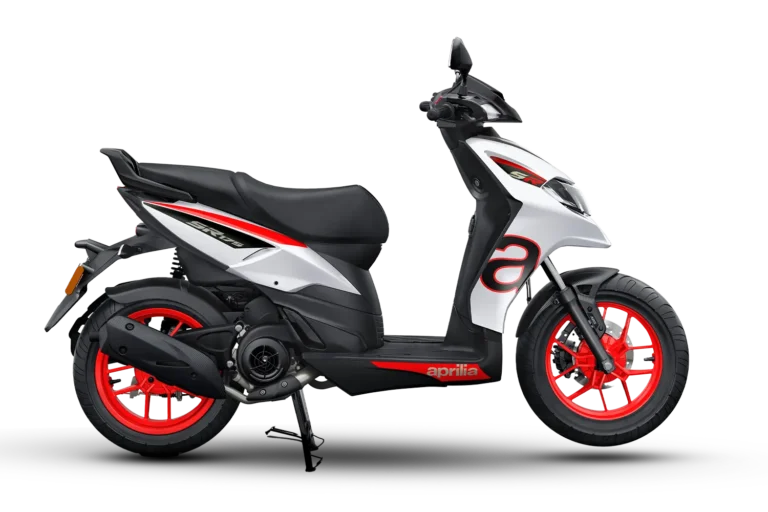
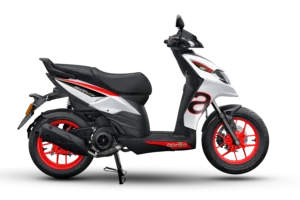
Aprilia SR 175
8.0 pts
Unweighted: 6 advantages
EnginePerformanceDimensionsBrakesTyresFeaturesOther
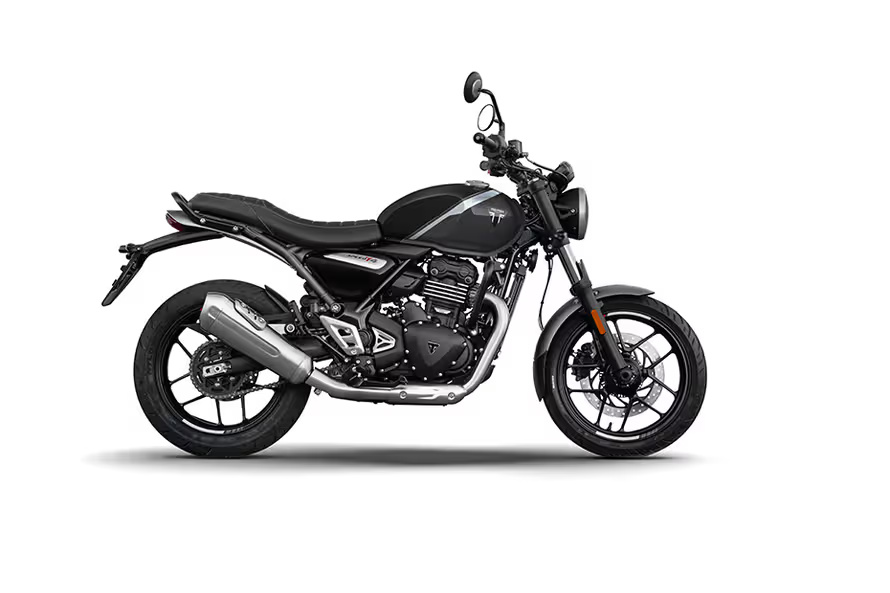
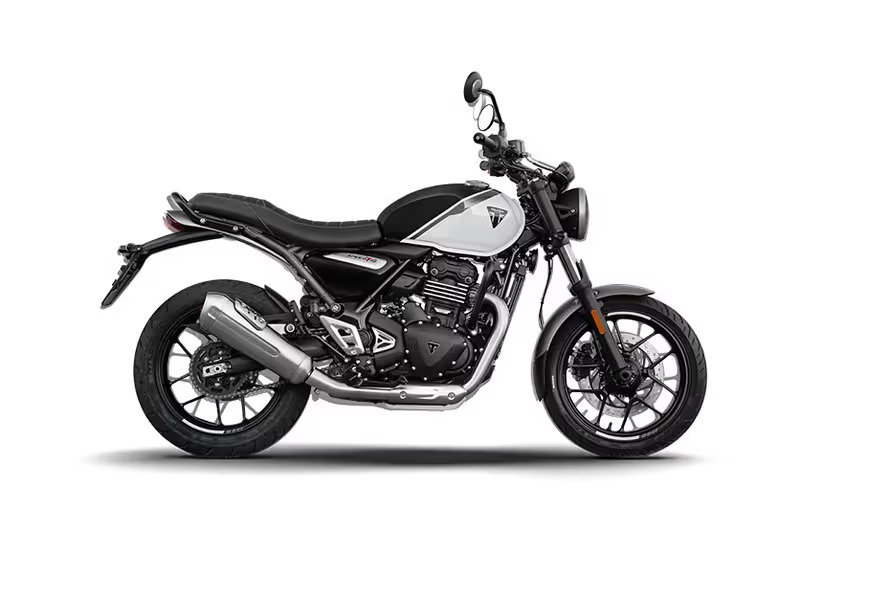
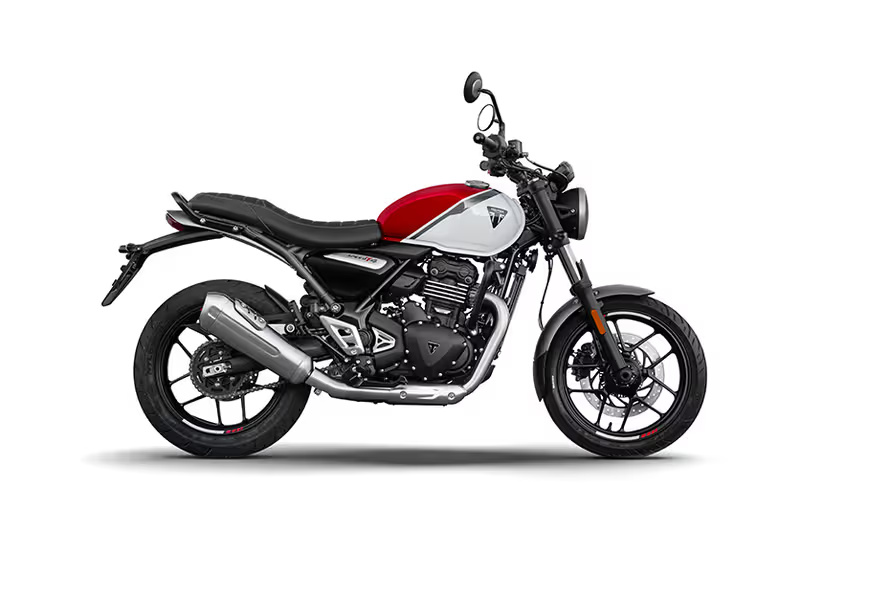
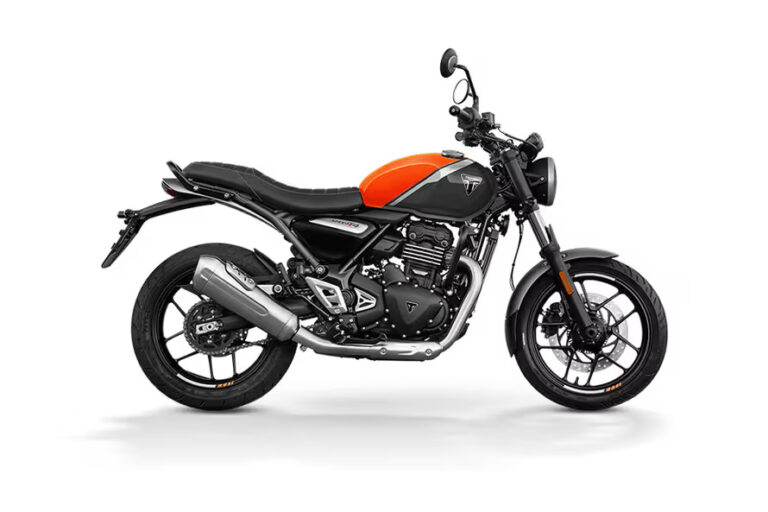
TRIUMPH NEW SPEED T4
21.5 pts
Unweighted: 15 advantages
EnginePerformanceDimensionsBrakesTyresFeaturesOther
| Specification | ||
|---|---|---|
Engine Specifications |
||
| Cooling System | Air‑cooled | Liquid-cooled |
| Displacement | 174.7 cc | 398.15 cc |
| Engine Type | Single‑cylinder, 4‑stroke, SOHC, 3‑valve, air‑cooled. | 4 valve, DOHC, single-cylinder |
| Power | 13.26 PS @ 7200 rpm | 31 PS / 30.6 bhp (22.8 kW) @ 7,000 rpm |
| Torque | 14.14 Nm @ 6000 rpm | 36 Nm @ 5,000 rpm |
Performance & Efficiency |
||
| Fuel Tank Capacity | 7 l | 13 l |
| Mileage | 40 kmpl | 29 l |
Dimensions & Weight |
||
| Kerb Weight | — | 180 kg |
| Seat Height | — | 806 mm |
Brakes & Suspension |
||
| ABS | Single‑channel ABS | Bosch dual-channel ABS |
| Front Brake | 220 mm disc | 300 mm fixed two-piston floating caliper, dual-channel ABS |
| Front Suspension | Telescopic front fork | 43mm Telescopic Fork. 140mm wheel travel |
| Rear Brake | Drum brake | 230mm fixed disc, floating caliper, ABS |
| Rear Suspension | Monoshock | Gas monoshock RSU with external reservoir and pre-load adjustment. 120mm wheel travel |
Tyres & Wheels |
||
| Front Tyre | — | 110/70-17 |
| Rear Tyre | — | 140/70-17 |
| Tyre Type | Tubeless | Tubeless |
| Wheel Type | Alloy | Alloy |
Features & Technology |
||
| Headlight | LED | DRLs LED |
Other Specifications |
||
| Bike Image 1 | https://motoautiv.com/wp-content/uploads/2025/12/sr_tech_175_banner2.webp | https://motoautiv.com/wp-content/uploads/2025/10/TVS-M1-S-1.webp |
| Bike Image 2 | — | https://motoautiv.com/wp-content/uploads/2025/10/TVS-M1-S-4.webp |
| Bike Image 3 | — | https://motoautiv.com/wp-content/uploads/2025/10/TVS-M1-S-2.webp |
| Cluster | Digital | — |
| Color Options | GLOSSY TECH WHITE MATT PRISMATIC DARK | Baja Orange Phantom Black / Pearl Metallic White Phantom Black / Storm Grey Caspian Blue / Pearl Metallic White Lava Red Gloss / Pearl Metallic White |
| Cons | The seat is firm and somewhat compact, making long rides or carrying a pillion less comfortable. The suspension is on the stiffer side, so rough roads and potholes can feel more pronounced than on commuter-focused scooters. Fuel tank capacity and mileage limit long-range practicality; frequent refuelling may be required for longer rides. Storage space is limited, restricting the ability to carry larger items or helmets comfortably. Taller or heavier riders may find the riding posture and legroom slightly restrictive, especially for longer commutes. | Reduced power & premium components: Compared to the Speed 400, the T4 lacks some features — no ride-by-wire throttle, no traction control, conventional telescopic forks instead of USD forks, and non-radial tyres. Performance compromises: With only 31 PS and 36 Nm, it is less punchy than competitors in the 400cc segment and may feel less exciting when pushed hard. Braking and suspension feedback: Some owners report the front suspension is a bit soft, and the braking or tyres do not inspire full confidence at higher speeds. Premium brand servicing & running cost: While upfront price is competitive, service/parts cost and the premium brand network may still imply higher ongoing costs than mass-segment brands. Weight & urban manoeuvrability concerns: Though seat height is moderate, some users feel the bike is a bit heavy for very tight urban U-turns or slow-speed traffic handling. |
| Detailed Overview | Riding the SR 175 feels like having a sporty, eager two‑wheeler in the city — there’s a sense of liveliness from the moment you twist the throttle. Under the bodywork lies a 174.7 cc, single‑cylinder, 4‑stroke, SOHC engine with a 3‑valve head and air cooling. That combination, while simple, is tuned to deliver a perceptible boost over smaller scooters. At around 7,200 rpm you get roughly 13.08 bhp, and peak torque — about 14.14 Nm — comes in at around 6,000 rpm. What this means on real roads is a respectable surge whenever you open up, enough to confidently overtake slow traffic or merge into faster streams without riding the clutch or worrying about sluggishness. The power flows through a CVT automatic transmission. That’s a big plus for city traffic — no manual shifting, no clutch to juggle. Just smooth, progressive acceleration whether you’re crawling through congested lanes or zipping past green lights. For someone commuting daily, this ease of use adds up over time: less fatigue, easier handling, especially in stop‑and‑go conditions. Underneath, the SR 175 rides on a steel frame with a conventional telescopic front fork and a rear monoshock suspension. The wheels are 14-inch alloys with wide 120-section tyres, both front and rear. This setup gives the scooter a planted feel: the tyres provide good grip and stability even when you take scooter‑above‑average corner speeds for fun, or when roads are wet and unpredictable. The suspension isn’t plush — it leans a bit toward firm — but that firmness helps the SR 175 stay composed during quick direction changes or under heavier loads. Bumps and potholes will remind you it’s not a cruiser, but the ride remains useably controlled, balancing stability and comfort in everyday commuting conditions. Braking is handled via a 220 mm disc up front and a drum at the rear, with single‑channel ABS in place. That front disc gives dependable stopping power that’s more confidence‑inspiring than typical scooter brakes — useful when you need to brake suddenly in city traffic. The ABS (even single‑channel) is a welcome safety net for unpredictable urban roads, ensuring the front wheel doesn’t lock under hard braking. For most riders, this means decent control and peace of mind in mixed traffic conditions or when road surfaces are slippery. On the practical side, SR 175 brings a modern set of features that lift it up from a basic commuter — most notably a 5.5‑inch full‑colour TFT instrument cluster, with Bluetooth connectivity for phone pairing, call & message alerts, music control (if supported), and navigation‑assisted info. That makes daily rides more convenient and modern: you get clearer readouts, easier navigation checks, and the general feel of a premium machine rather than a bare‑bones scooter. LED lighting and a USB charging port add to that convenience, making the SR 175 more usable for longer commutes or rides after dark. As for ownership realities: in city traffic, the SR 175’s combination of reasonable power, smooth automatic transmission, and manageable size make it a practical commuter that still feels fun when you want some punch. It isn’t over‑powered — you won’t mistake it for a bike — but within its class, it offers a lively, engaging ride that’s more premium than many other scooters. Its tyre-and-wheel setup paired with solid braking and a stable chassis makes traffic weaving, quick lane‑changes, and urban overtakes more assured. For those occasional weekend rides or city-to-suburb runs it gives enough grunt to stay composed without feeling strained. If you routinely carry a pillion or luggage, the SR 175’s firm suspension and 14‑inch tyre‑based setup will give decent stability — though comfort will be a bit sporty, not plush. If your commute includes rough roads or potholes, you’ll feel the firmness, but it won’t be harsh enough to become unbearable. And for daily city‑use, it’s a good balance between practicality and sportiness: easy start, automatic transmission, modern features, and a refined engine that doesn’t demand frequent maintenance. | The Speed T4 is the entry-point in the made-in-India 400 cc series from Triumph, built in collaboration with Bajaj Auto. It carries forward Triumph’s modern-classic styling but tuned to a more accessible price point and relaxed ride character. According to official specs, it uses a 398.15 cc, liquid-cooled, single-cylinder DOHC engine that delivers 31 PS @ 7,000 rpm and 36 Nm @ 5,000 rpm. The engine is tuned for better low and mid-range rideability, especially targeted at Indian usage. On the chassis and hardware side: it sits on 17″ alloy wheels front & rear, has 300 mm front / 230 mm rear disc brakes with dual‐channel ABS, a conventional 43 mm telescopic front fork (instead of USD) and a monoshock rear with preload adjustment. Seat height is around 806 mm and wet weight approx 180 kg. Tank capacity is 13 litres. In terms of pricing and value: Originally launched at ₹2.17 lakh (ex‐showroom) in India. Later price revisions lowered it to about ₹1.99 lakh in some cases. Colour options have also been updated with refreshed graphics and finishes. What it does well Affordability & brand access: As Triumph’s most affordable offering in India it opens the brand to a wider audience, giving the neo‐classic premium styling at a relatively accessible price. Beautiful styling & premium finish: Despite the lower cost, it retains the trademark Triumph look—sculpted fuel tank, minimalist modern‐classic silhouette, premium paint and detailing. Good low/mid-range usability: With the engine tuned for torque from low revs (claims like ~85% of peak torque available from ~2,500 rpm) it suits city use well, fewer gear shifts and smoother ride in traffic. Manageable ergonomics: Seat height at ~806 mm is relatively accessible compared to tall scramblers or adventure bikes, making it more friendly for many riders. Modern tech & spec for segment: Features like LED lighting, slipper clutch, dual‐channel ABS, decent chassis hardware give a respectable package for a 400cc neo‐classic. Where it compromises / trade-offs Reduced power & simpler hardware vs bigger siblings: Compared to its sibling (Speed 400) this model has less power (~31 PS vs 40 PS in Speed 400) and simpler suspension/brake/tyre hardware (telescopic fork instead of USD, non‐radial tyres in some cases). Performance may feel modest at higher revs: Some rider feedback notes that while the bike is very usable up to mid speeds, it may lack the punch and high‐end refinement rivals offer. For instance: “the bike feels strained after 6500 rpm … its best to ride between 2000 and 5500.” Premium brand costs & running‐cost expectations: Even though it is the “entry” Triumph, service/parts/maintenance may still cost more than mass market brands. Tank & range limitations: With only 13 litres tank capacity and a 400cc engine tuned for torque, long highway runs may require more frequent fuel stops or careful planning. Some features missing: For instance there is no traction control, ride-by-wire throttle (in T4) which the more expensive sibling offers. These are sacrifices made to hit the price point. In summary The Triumph Speed T4 is a compelling offering if you’re looking for a neo-classic motorcycle that offers strong styling, decent brand cachet, good city usability and manageable ergonomics, all at a price that (in premium bike terms) is relatively accessible. It nails the look, brand tone and day‐to‐day rideability. That said, if your priority is maximum performance, off‐road or weekend sporty riding, or you want the highest spec hardware (suspension, tyres, advanced features), then you may find the T4 is a “good all‐rounder” rather than a “top‐end performance” machine. In that case, consider stretching to siblings/higher models or different bikes. |
| Expert Review | MotoAutiv Team | MotoAutiv Team |
| FAQ (Manual Override) | Q: What is the engine type? A: The engine is a single-cylinder, 4-stroke, SOHC, 3-valve, air-cooled engine. Q: What is the engine displacement? A: The displacement is 174.7 cc. Q: What is the power output? A: The power output is approximately 13.08 bhp at 7200 rpm. Q: What is the torque? A: The torque is about 14.14 Nm at 6000 rpm. Q: What is the mileage? A: The mileage is around 40 km/l. Q: What type of cooling system does it have? A: It has an air-cooled system. Q: What type of transmission does it use? A: The scooter comes with a CVT automatic transmission. Q: What type of fuel system does it have? A: It uses electronic fuel injection. Q: What are the front and rear brakes? A: The front brake is a 220 mm disc, and the rear brake is a drum. Q: Does it have ABS? A: Yes, it comes with single-channel ABS on variants equipped with it. Q: What is the front suspension? A: The front suspension is a telescopic fork. Q: What is the rear suspension? A: The rear suspension is a mono-shock absorber. Q: What are the tyre sizes? A: Both front and rear tyres are 120/70-14 tubeless on alloy wheels. Q: What type of wheels does it have? A: The scooter has 14-inch alloy wheels. Q: What is the kerb weight? A: The kerb weight is not officially published. Q: What is the seat height? A: The seat height is not officially published. Q: What is the fuel tank capacity? A: The fuel tank capacity is 7 litres. Q: What type of headlight does it have? A: The scooter comes with a LED headlight. Q: What type of starter does it have? A: It has an electric start. Q: What type of instrument cluster does it have? A: It has a full-colour TFT digital cluster with features like Bluetooth connectivity, navigation support, and call/message alerts. Q: Is the Aprilia SR 175 suitable for city commuting? A: Yes, its combination of automatic transmission, stable handling, and responsive engine makes it excellent for urban traffic. Q: Does it have under-seat storage? A: Yes, it offers practical under-seat storage, suitable for a helmet or small items. | Q: What is the engine capacity of the Triumph Speed T4? A: The Triumph Speed T4 is powered by a 398 cc, liquid-cooled, single-cylinder engine. Q: How much power does the Triumph Speed T4 produce? A: The engine delivers 31 PS of power and 36 Nm of peak torque, tuned for strong mid-range performance. Q: What is the mileage of the Triumph Speed T4? A: The Speed T4 offers an approximate mileage of 30–35 km/l under mixed riding conditions. Q: What is the seat height of the Triumph Speed T4? A: The seat height is around 806 mm, making it accessible for most riders. Q: Does the Triumph Speed T4 come with traction control? A: No, the Speed T4 does not feature traction control, unlike the Speed 400. Q: What type of suspension does the Triumph Speed T4 use? A: It comes with a telescopic front fork and a monoshock at the rear, tuned for comfort and city riding. Q: What is the top speed of the Triumph Speed T4? A: The Speed T4 can achieve a top speed of around 140–145 km/h. Q: What is the price of the Triumph Speed T4 in India? A: The Triumph Speed T4 is priced at approximately ₹2.17 lakh (ex-showroom, India), making it the most affordable Triumph bike in the lineup. |
| Fuel System | Electronic fuel injection | — |
| Price Variants | 175 hp e | hp e Replica | | Standard | 192539 |
| Pros | The SR 175 delivers strong and responsive performance, making city commuting and occasional highway bursts lively and fun. It has a sporty, aggressive design that stands out, giving it a premium and performance-focused look compared with regular scooters. Handling feels confident thanks to 14-inch alloy wheels, wide tyres, and firm suspension, making it stable in corners and during quick lane changes. Front disc brake with ABS provides good stopping power and enhances rider confidence in traffic or sudden braking situations. Modern features like a full-colour TFT instrument cluster, LED lighting, and Bluetooth connectivity make the riding experience convenient and contemporary. | Excellent value for money: The Speed T4 is the most affordable bike from Triumph in India — launched at around ₹ 2.17 lakh ex-showroom. Strong mid-range rideability: While its peak power is lower than its siblings (31 PS / 36 Nm) it is tuned for low to mid-range torque, making it more usable in urban traffic and fewer gear shifts. Signature styling & robust build: It uses the same 398 cc single-cylinder engine as the Speed 400, and retains neo-retro Triumph styling cues which offer premium appeal in this price-segment. Good feature set for the price: You get dual-channel ABS, all-LED lighting, a six-speed gearbox with slipper clutch, and a USB port among other features. More accessible seat height and manageable ergonomics: It has a seat height of about 806mm (vs premium models often taller) and is reasonable for many riders. |
| Starter | Electric | — |
| Transmission | Automatic | 6 Speed Manual |