
Overview
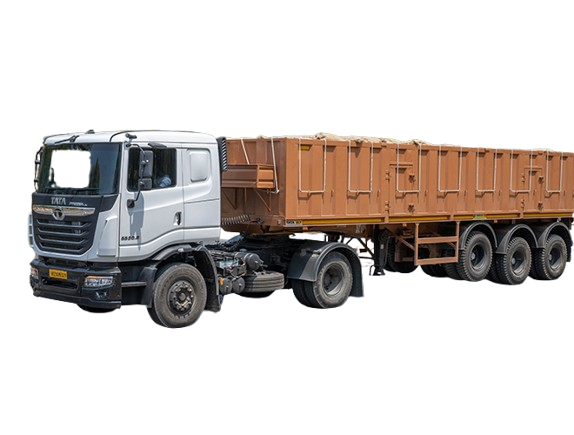
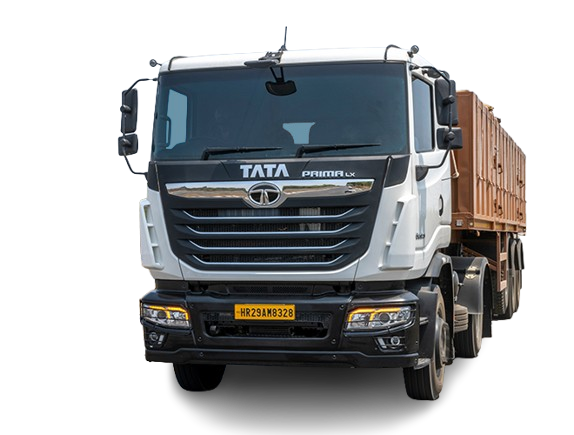
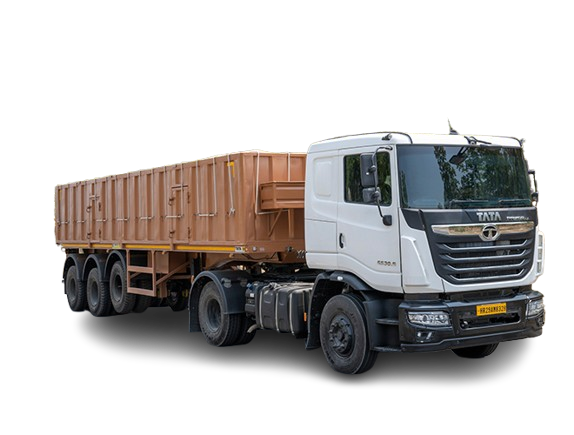
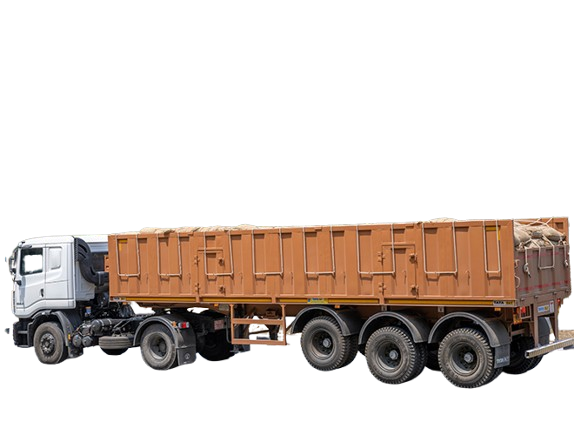
The Tata Prima 5530.S is a heavy-duty 6×4 tractor-trailer built for long-haul freight operations across Indian highways. Unlike the 4×2 Prima FL variant, the 6×4 configuration means four of the six wheels are driven, giving the truck meaningfully better traction under load — relevant on wet roads, loose surfaces, and gradient sections where a 4×2 would demand more careful throttle and gear management. It is deployed in container, tanker, steel, cement, and bulk material transport applications and is a commonly chosen platform among fleet operators running high-tonnage loads on mixed road quality corridors.
The truck runs on a Cummins ISBe 6.7L BS-VI engine producing 300 HP and 1,100 Nm of torque at 1,200–1,800 rpm, paired with a 9-speed synchromesh gearbox with overdrive. The Cummins ISBe is one of the most widely serviced diesel engines in the Indian CV market — parts availability is consistent across tier-1 and most tier-2 cities, and workshop familiarity reduces diagnosis and repair time compared to less common powertrains. 1,100 Nm arriving across a wide rpm band from 1,200–1,800 rpm means the truck pulls cleanly from lower gears without demanding aggressive throttle input — on a loaded climb the engine responds early and holds its pull through the gradient without requiring the driver to hunt for gears. The 9-speed synchromesh gearbox with overdrive provides sufficient ratio spread for both loaded low-speed work and efficient high-speed highway cruising, and the synchromesh design makes gear changes lighter and faster than older crash gearbox configurations, reducing driver effort on multi-hundred kilometre shifts.
Fuel tank capacity is 357 litres with a rated mileage of 2.5–3.5 kmpl. On a standard loaded highway run this typically covers 1,000–1,400 km before a fill stop, meaning on a Mumbai–Delhi corridor the truck is stopping once, if at all. Fewer fuel stops translate directly into fewer breaks in schedule and less time lost at pumps — for operators running time-sensitive loads, this compounds meaningfully over a month of operations. Real-world mileage varies with load, gradient, and driving behaviour, and the onboard driver assistance systems — particularly the Gear Shift Advisor and Fuel Economy Switch — help maintain consistent consumption across different drivers operating the same vehicle, which is a practical advantage for fleet managers dealing with driver variability.
Front suspension uses parabolic leaf springs with rubber bush. Rear uses a 2-spring balance beam bogie with torque rods and V-rod, plus bell crank suspension. The parabolic front springs with rubber bush mounting provide better vibration isolation than conventional metal-to-metal leaf spring setups, reducing the transmission of road shock into the cabin on broken surfaces. The bogie rear setup absorbs road shock more evenly than a standard tandem axle configuration — on state highways and broken stretches, cabin bounce is reduced and cargo shift is minimised, both of which make a 10-hour shift considerably less punishing on the driver’s body and reduce the risk of load damage on sensitive cargo. The bell crank suspension element actively redistributes load between rear axles during transit, which is particularly relevant for liquid tanker and loose bulk cargo that shifts with vehicle movement and can create uneven axle loading on conventional suspension setups.
Braking is handled by full air dual-circuit S-cam brakes with ABS as standard, supported by an engine exhaust brake as auxiliary. The dual-circuit air brake system provides redundancy — in the event of a partial system failure, braking function is retained, which is a critical safety feature on a vehicle operating at full GVW on open highways. ABS on a fully loaded tractor-trailer prevents wheel lockup during hard braking, which is the primary cause of jackknifing on wet or loose roads — a risk that is amplified on a 6×4 platform where the additional driven axle increases the vehicle’s mass and braking demand. The exhaust brake reduces reliance on the foot brake on long downhill sections, keeping brake temperature under control and extending pad and drum life over the ownership cycle, which is a meaningful maintenance cost saving on trucks covering high annual kilometres.
The cabin is fully suspended, hydraulically tiltable, with 4-point suspension, tilt and telescopic steering, a high headrest driver seat, and air conditioning as standard. The 4-point cabin suspension isolates the driver from chassis vibration — over a 600 km day this is the difference between arriving alert and arriving stiff, and over a working month it contributes to lower driver fatigue-related incidents and better retention among experienced operators. Tilt-telescopic steering allows the column to be set to the driver’s body position rather than requiring postural adaptation, reducing shoulder and wrist strain on longer shifts. Factory-integrated AC performs more reliably than aftermarket additions, particularly in high-temperature operating environments across central and western India where ambient temperatures regularly exceed 40°C during summer months. The hydraulic tilt mechanism allows the cabin to be raised for engine access without workshop equipment, simplifying routine checks and reducing scheduled maintenance turnaround time.
Driver assistance includes a Gear Shift Advisor, 3-mode Fuel Economy Switch, Hill Start Assist, Load-Based Speed Control, Vehicle Acceleration Management, Gear Down Protection, and Fleetedge telematics. Hill Start Assist removes the stress of rollback on loaded inclines — the driver does not need to balance clutch, brake, and throttle simultaneously on a ghat section, which reduces a common source of drivetrain wear and driver anxiety on mountain routes. The Gear Shift Advisor prompts optimal gear changes for fuel efficiency, and the 3-mode Fuel Economy Switch adjusts engine response based on load state — empty, partial, or full GVW — preventing over-fuelling on lighter runs. Load-Based Speed Control and Vehicle Acceleration Management limit speed and acceleration thresholds based on load conditions, reducing tyre wear and improving stability at highway speeds. Fleetedge telematics enables fleet managers to monitor location, engine health, fuel consumption, and driver behaviour in real time, supporting proactive maintenance scheduling and reducing unplanned downtime on active corridors.
Available Body Types
Tata Prima 5530.S Variants & Price
| Variant Name | Ex-Showroom Price | Action |
|---|---|---|
|
Tata Prima 5530.S Prima 5530.S (Cowl)
|
₹3,871,000 |
Get On-Road Price |
|
Tata Prima 5530.S Prima 5530.S (CAB)
|
₹4,024,000 |
Get On-Road Price |
|
Tata Prima 5530.S Prima FL 5530.S (BS6)
|
₹4,232,000 |
Get On-Road Price |
Technical Specifications
| Engine Model | Cummins 6.7L 300HP OBD-II |
| Displacement | 6,700 cc |
| Max Power | 300 HP |
| Max Torque | 1100 Nm |
| No. of Cylinders | 6 |
| Emission Norm | BS6 OBD II |
| Mileage | 2.5-3.5 kmpl |
| Fuel Tank Capacity | 365L/365L + 192 (Twin Fuel Tank) |
| Gross Vehicle Weight (GVW) | 55000 kg |
| Payload Capacity | 40000 kg |
| Gradeability | 33.3% |
| Max Speed | 90 km/h |
| Overall Width | 2500 mm |
| Wheelbase | 3890 mm |
| Turning Radius | 10500 mm |
| Transmission | 9-speed Eaton manual |
| Clutch | Dry single plate |
| Axle Configuration | 6x4 |
| Front Axle | Forged I-section |
| Rear Axle | Tandem fully floating single reduction |
| Front Suspension | Parabolic leaf spring with rubber bush |
| Rear Suspension | Semi elliptic multi-leaf spring |
| Front Brake | Air Brake |
| Rear Brake | Air Brake |
| Parking Brake | Yes |
| ABS | Yes |
| Front Tyre | 295/90R20 |
| Rear Tyre | 295/90R20 |
| No. of Tyres | 10 |
| Cabin Type | Prima sleeper cabin |
| Seating Capacity | 1 |
| Air Conditioning | Standard |
| Power Steering | Standard |
Tata Prima 5530.S Pros & Cons
- Proven Cummins ISBe engine with strong national parts availability
- 300 HP and 1,100 Nm adequate for sustained heavy-load highway operation
- 6×4 configuration provides better traction than 4×2 on wet and gradient roads
- Bogie rear suspension handles road shock and cargo shift effectively
- 4-point cabin suspension reduces driver fatigue on long shifts
- Engine exhaust brake extends friction brake life on downhill runs
- ABS standard across variants
- Gear Shift Advisor and Fuel Economy Switch improve consumption consistency
- Hill Start Assist reduces rollback risk on loaded ghat sections
- 357-litre tank on the smaller side for long northern corridor runs
- 6×4 drivetrain adds weight and reduces fuel efficiency vs 4×2 variants
- Higher unladen weight affects payload margin on weight-sensitive loads
- Cabin refinement is functional rather than premium
- Older platform compared to FL variant — fewer modern driver assistance updates
- Not suited for mining, construction site, or off-highway terrain
The Tata Prima 5530.S is a mature, well-sorted truck that has had enough time in the market for its rough edges to be ironed out — and it shows. The Cummins engine is the clearest strength here; it is a proven unit with wide service familiarity across India, and 1,100 Nm at low rpm makes it genuinely easy to drive loaded without constantly working the gearbox. The 9-speed transmission pairs well with the Gear Shift Advisor for drivers who are newer to the truck — experienced drivers tend to ignore it after a few trips, but it is useful during the settling-in period. The bogie rear suspension handles the punishment of bad road surfaces better than most in this segment, and the cabin isolation is noticeably better than older Prima variants — fatigue on a 700 km shift is measurably lower. The one consistent gripe among operators is that the 400-litre tank, while adequate, requires planning on longer northern corridor runs where pump access can be inconsistent.
EMI Calculator
Calculate Your Monthly EMI
Total Cost of Ownership (TCO)
Calculate 5-Year Operating Cost
Frequently Asked Questions
What is the GVW of the Tata Prima 5530.S?
The Tata Prima 5530.S has a Gross Vehicle Weight of 55,000 kg, making it suitable for heavy container, tanker, and bulk freight applications.
What gearbox does the Tata Prima 5530.S come with?
The Tata Prima 5530.S is equipped with a 9-speed synchromesh gearbox with overdrive, giving the driver sufficient range for varied load and terrain conditions.
What fuel tank capacity does the Tata Prima 5530.S have?
The Tata Prima 5530.S carries a 400-litre fuel tank, covering approximately 1,000–1,400 km on a standard loaded highway run.
What safety features are available on the Tata Prima 5530.S?
The Tata Prima 5530.S comes with ABS, Hill Start Assist, engine exhaust brakes, Load-Based Speed Control, and Gear Down Protection as standard.
What driver assistance technology does the Tata Prima 5530.S offer?
The Tata Prima 5530.S includes a Gear Shift Advisor, 3-mode Fuel Economy Switch, Vehicle Acceleration Management, and Fleetedge telematics as part of its standard driver assistance package.
What type of suspension does the Tata Prima 5530.S use?
The Tata Prima 5530.S uses parabolic leaf springs at the front and a 2-spring balance beam bogie with torque rods and V-rod at the rear for stable load distribution on uneven road surfaces.
What warranty does the Tata Prima 5530.S come with?
Tata Motors offers a 6-year or 6,00,000 km warranty on the Tata Prima 5530.S, whichever comes first.
What is the ex-showroom price of the Tata Prima 5530.S?
The Tata Prima 5530.S is priced between approximately ₹40.49 lakh and ₹47.34 lakh ex-showroom, varying by variant and state.