Quick Analysis
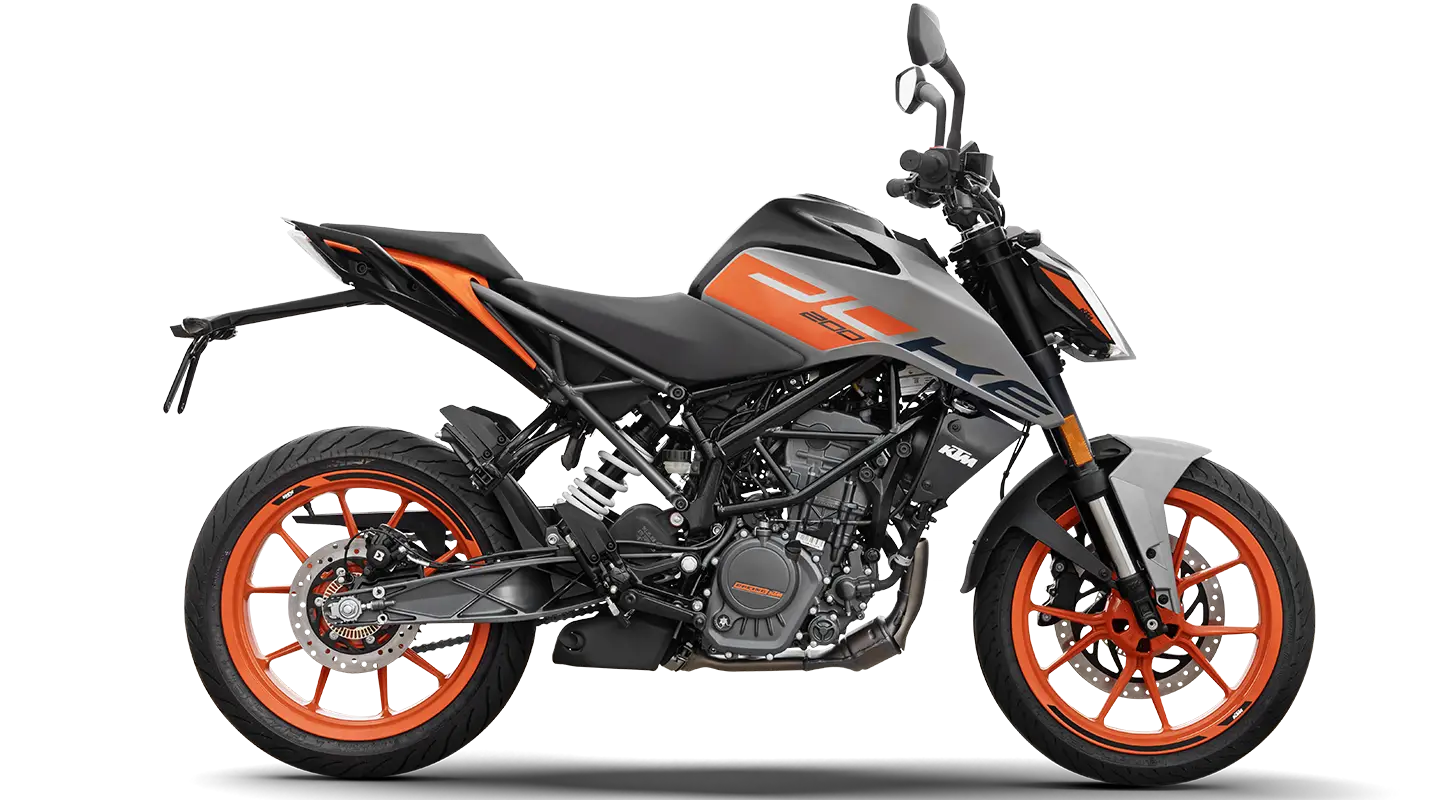
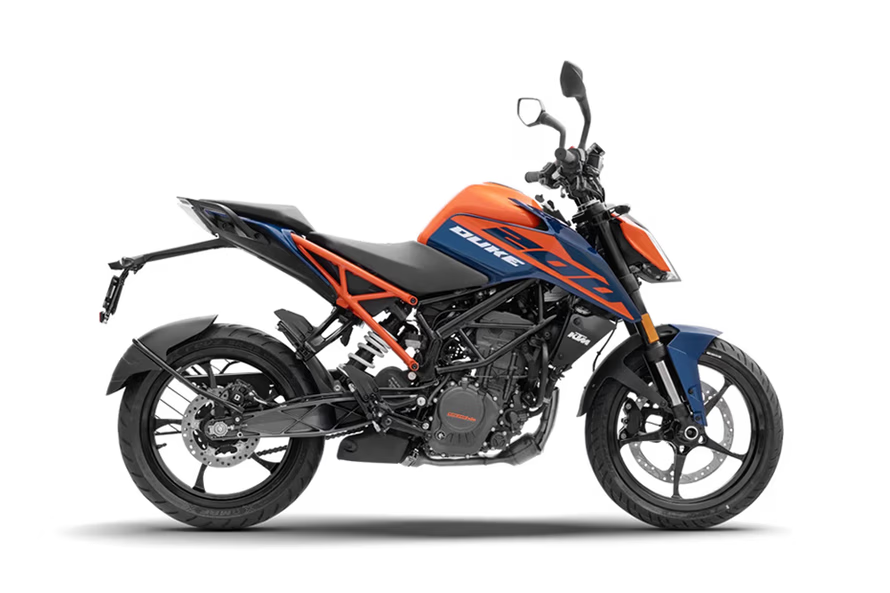
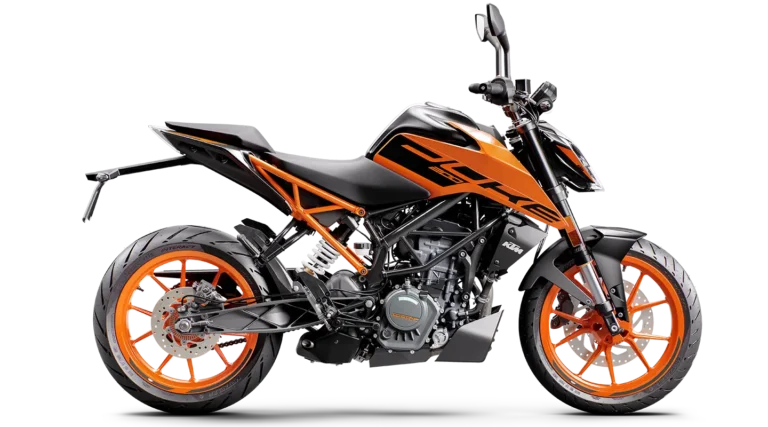
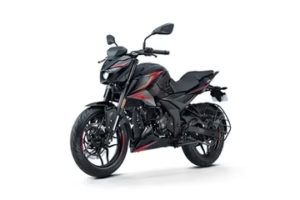
KTM 200 DUKE
13.0 pts
Unweighted: 9 advantages
EnginePerformanceDimensionsBrakesTyresFeaturesOther
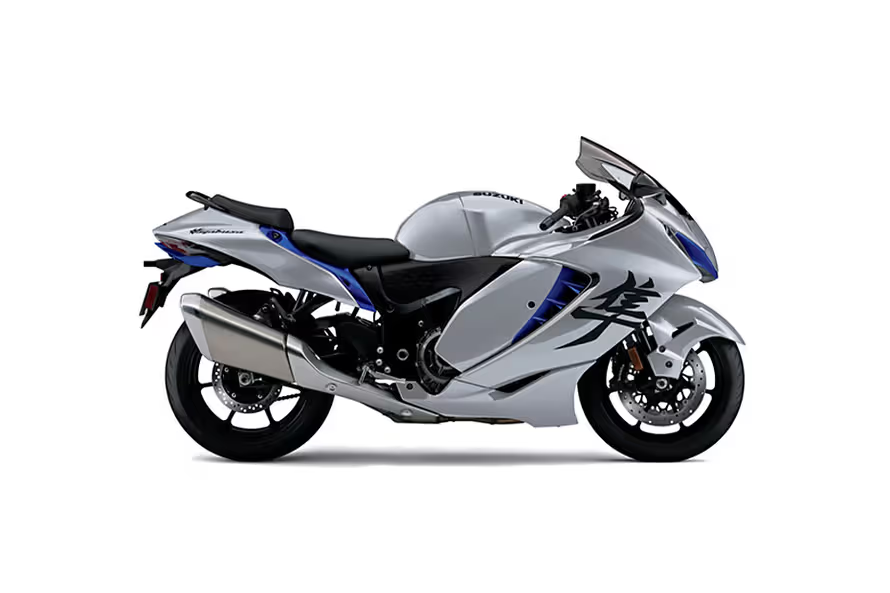
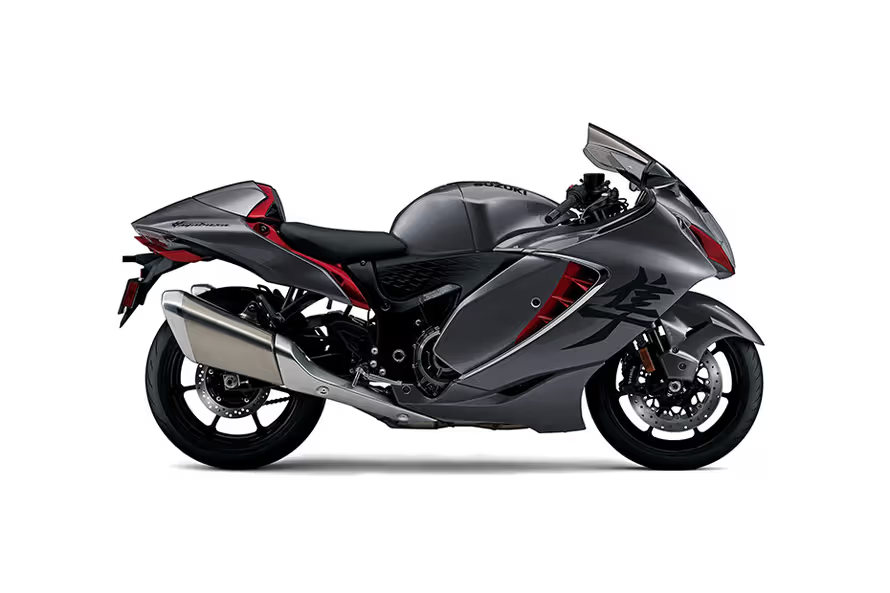
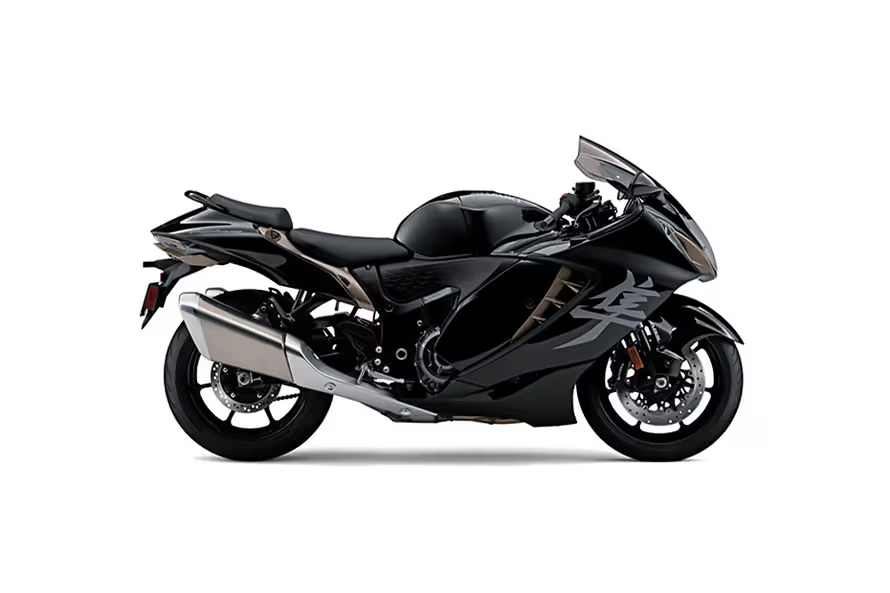
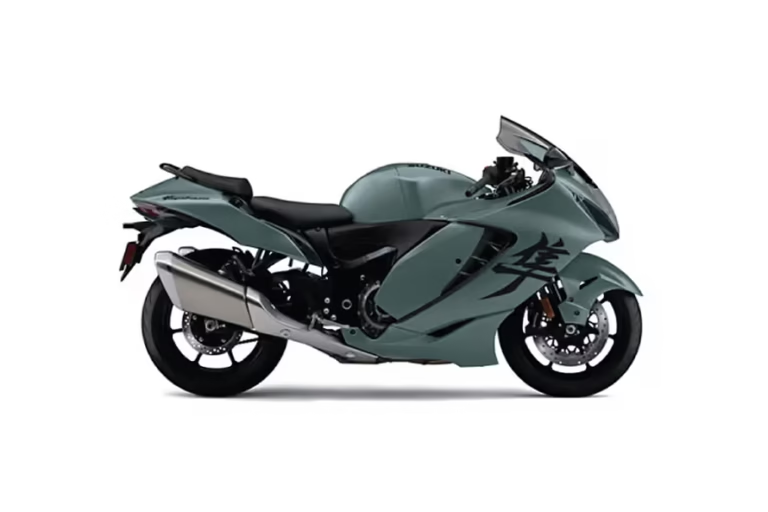
SUZUKI HAYABUSA
14.5 pts
Unweighted: 10 advantages
EnginePerformanceDimensionsBrakesTyresFeaturesOther
| Specification | ||
|---|---|---|
Engine Specifications |
||
| Cooling System | Liquid cooling with radiator | Liquid Cooled |
| Displacement | 199.5 cc | 1,340 cm³ |
| Engine Type | Single Cylinder, Liquid Cooled, DOHC, FI Engine | 4-Stroke, Liquid-cooled, DOHC,in-line four |
| Power | 25 PS @ 10000 rpm | 190 bhp @ 9700 rpm |
| Torque | 19.3 Nm @ 8000 rpm | 142 Nm @ 7000 rpm |
Performance & Efficiency |
||
| Fuel Tank Capacity | 13.5 L | 20 L |
| Mileage | 35 kmpl | 18 kmpl |
Dimensions & Weight |
||
| Kerb Weight | 159 kg | 266 kg |
| Seat Height | 822 mm | 800 mm |
Brakes & Suspension |
||
| ABS | Supermoto ABS | Switchable ABS |
| Front Brake | 300 mm Disc with Radially mounted calliper | Disc 320 mm Caliper - Front 4 Piston |
| Front Suspension | WP APEX USD forks, 43mm diameter | Inverted Telescopic, Coil Spring, Oil Damped |
| Rear Brake | 230 mm Disc with Floating calliper | Disc 260 mm Caliper - Rear 1 Piston |
| Rear Suspension | WP APEX Monoshock, 10 step adjustable | Link Type, Coil Spring, Oil Damped |
Tyres & Wheels |
||
| Front Tyre | 110/70 - 17 | 120/70ZR17M/C |
| Rear Tyre | 150/60 - 17 | 190/50ZR17M/C |
| Tyre Type | Tubeless | Tubeless |
| Wheel Type | Alloy | Alloy |
Features & Technology |
||
| Headlight | Twin LED headlights | — |
Other Specifications |
||
| Battery | 12 V, 8 AH MF battery | — |
| Bike Image 1 | https://motoautiv.com/wp-content/uploads/2025/11/dark-galvano-webp.webp | https://motoautiv.com/wp-content/uploads/2025/11/hayabusaglasssparkleblackmetallicmattitaniumsilver.webp |
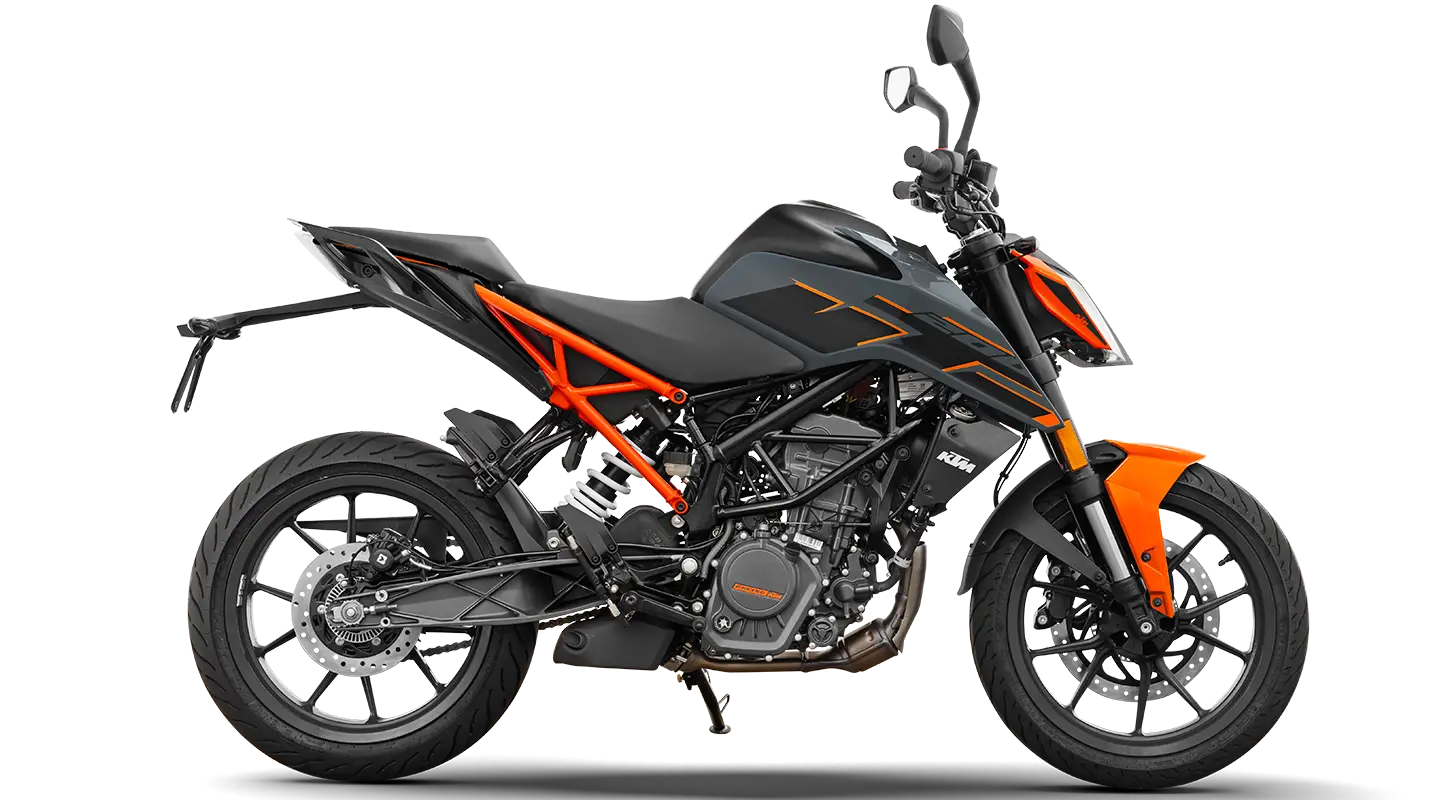
| Bike Image 2 | https://motoautiv.com/wp-content/uploads/2025/11/silver-metallic-duke-200.webp | https://motoautiv.com/wp-content/uploads/2025/11/hayabusametallicmysticsilverpearlvigorblue.webp |
| Cluster | 5" Color TFT Screen | — |
| Color Options | Electronic Orange Dark Galvano Silver Metallic | Mat Steel Green Glass Sparkle Black White |
| Cons | Vibration at High RPMs: Single-cylinder can get buzzy when pushed hard. Seat Comfort: The seat cushion is firm, which may get uncomfortable on long rides. Fuel Mileage: While decent, it's not the most frugal in its displacement class if ridden aggressively. Limited Top-End for Highway: Though fast for city, on highways it may feel stretched compared to bigger bikes. Maintenance Costs: Premium components and periodic servicing could be more expensive than a basic commuter bike. Pillion Comfort: Rear seat is not very cushioned and may not be ideal for long rides for a passenger. | Heavy and bulky — its mass and size make it less agile for slow-speed manoeuvres, tight city traffic, or U-turns; handling can feel unwieldy compared to smaller bikes. Not ideal for daily commuting — in urban traffic, congestion, or frequent stop-and-go situations, its power and size become impractical; it isn’t a city-friendly ride. Economy and upkeep aren’t modest — fuel consumption, tyre wear, servicing, and maintenance costs tend to be higher than regular commuter bikes. Can be intimidating for newer riders — the bike demands respect: its power delivery, weight and overall presence might overwhelm someone without adequate riding experience. Limited practicality — storage space, comfort for pillion riding, and ease of everyday use are compromised compared to more utilitarian bikes; it’s more about thrill than convenience. |
| Detailed Overview | The KTM 200 Duke remains one of the most compelling small-displacement naked bikes on the market. Designed for riders who want a motorcycle that’s both practical and thrilling, the 200 Duke brilliantly straddles the line between daily commuting and sporty weekend rides. Under the hood, it packs a 199.5cc, liquid-cooled single-cylinder engine that punches well above its weight. The power delivery is smooth in traffic, but when you twist the throttle, there’s enough excitement to make cornering and overtaking genuinely fun. KTM’s lightweight steel trellis frame gives the 200 Duke an agile and flickable character. Whether you’re weaving in city traffic or navigating twisty backroads, the bike responds with precision. The WP suspension setup—USD front forks and a rear monoshock—absorbs most irregularities while preserving a firm feel that enthusiasts appreciate. Braking is handled confidently with a front disc and rear disc (plus ABS in many variants), giving you strong stopping power under a variety of conditions. Styling is very much in KTM’s signature “Streetfighter” DNA: aggressive tank shrouds, sharp graphics, split seats, and a sporty tail all contribute to a bold appearance that stands out from typical commuter bikes. The fully digital instrument cluster is another highlight. It shows everything from trip information and fuel level to gear position, making it easy to stay informed without taking your eyes off the road. Comfort-wise, the riding posture leans sporty but isn’t punishing. The seat height is manageable for many riders, and the footpeg/fairing ergonomics allow for both city maneuvering and occasional longer rides. However, the seat padding is somewhat firm, so very long rides might feel less plush than some touring bikes. Also, while the 200 Duke delivers enough punch for highway stretches, it’s more at home in urban and suburban zones. Fuel efficiency is decent for a performance-oriented 200cc bike, especially when ridden sensibly. Ride aggressively, and mileage will drop, but for a mix of city and occasional highway, it’s quite reasonable. Maintenance is fairly standard for a premium small bike: not rock-bottom cheap, but worth it for the build quality and performance. Spare parts and service networks are generally good for KTM, which helps. Overall, the KTM 200 Duke offers a brilliant value proposition: it’s powerful, stylish, and fun to ride without being overly complex or expensive to maintain. For young riders or seasoned commuters who want something more engaging than a basic commuter bike, the 200 Duke is a fantastic choice. It’s “small” in displacement but big in spirit—and for many, that makes all the difference. | Riding the Hayabusa feels like holding a full-blown super-sport bike in your hands — it’s serious, but not brutal. At its heart sits a 1,340 cc, 4-stroke, liquid-cooled, DOHC inline-four engine. With a bore/stroke of 81.0 mm × 65.0 mm and a relatively high compression ratio of 12.5:1, this engine isn’t about meek city-cruising — it’s about confident thrust. What that means when you twist the throttle: a surge of torque and power, even before you’re deep into the rev-range. The newer design — with lighter pistons, refined internals, improved lubrication passages, and a “Twin Swirl Combustion Chamber” — helps make the power smoother, more usable and reliable — not just explosive at high revs. On paper, power output is rated at 190 bhp at 9,700 rpm, with peak torque of 150 Nm at 7,000 rpm. What’s special is that this power and torque are tuned so the engine behaves well even in everyday riding — not just on open highways. The ride-by-wire throttle, a 6-speed constant mesh transmission and a wet, multi-plate slipper/assist clutch help make gear shifts smooth and predictable, whether you are crawling in traffic or throttle-on for a highway burst. You won’t miss performance on the open road — Hayabusa easily unleashes enough grunt to surge forward cleanly from mid-range, letting overtakes and roll-on acceleration happen without fuss. But thanks to the way Suzuki tuned the intake, combustion, and throttle control, it also avoids the jerkiness some high-power bikes suffer from — meaning daily commuting or city bursts become more manageable than a “raw” race-focused bike. Movement and posture on the Hayabusa reflect its dual nature: part super-sport beast, part (almost) grand tourer. Overall, the bike spans 2180 mm in length, 735 mm in width and 1165 mm in height, with a wheelbase of 1480 mm. A kerb weight of 266 kg and a seat height of 800 mm give it a substantial feel — you know you’re riding something serious. The fuel tank holds 20 litres, which on long rides gives you decent range. What that translates to in real life: on smooth roads and highways, the long wheelbase and weight lend the Hayabusa a stable, planted feel even at high speeds. On city roads, while it’s more weighty than a typical commuter bike, the slipper clutch, broad low-to-mid power band, and smooth throttle help manage manoeuvring and stop-and-go traffic without turning it into a monster. The suspension setup reflects a nice balance for a big sportbike: front uses inverted telescopic forks (oil-damped, coil spring), rear has a link-type single shock (coil spring, oil-damped) — both capable of absorbing road irregularities while giving predictable feedback. On an Indian road — where surfaces can vary — this setup helps smoothen things out, so you get a ride that’s firm enough for sporty riding but forgiving enough for real-world roads. Braking and tyres are equally serious. Up front there’s a twin-disc setup with top-tier Brembo Stylema® calipers, and a single-disc Nissin caliper at the rear. Both are ABS-equipped. The wheels wear tubeless tyres (front 120/70ZR17, rear 190/50ZR17) which together with the chassis and suspension offer strong grip and stability — important when you push hard, lean into curves or deal with unpredictable road surfaces. Where Hayabusa really steps ahead of “raw-power” bikes is its suite of electronics. The bike gets a comprehensive control package via its intelligent ride system: adjustable power modes (for sharp response or gentle city-friendly throttle), a bi-directional quick-shifter allowing clutchless up and down shifts, engine-brake control options, traction control that uses a 6-axis IMU to monitor lean/pitch/yaw (i.e. works even in corners), anti-lift (to prevent wheelies under heavy throttle), launch control, slope-dependent ABS, and more. In practical terms, this means that whether you’re “going fast” on a highway sweep, carving corners, or just commuting daily — the Hayabusa adapts. If roads are rough or conditions tricky, softer throttle maps and traction/ABS interventions give you confidence; if you want raw performance, the electronics let you tap it with assurance. It’s a surprising but welcome versatility — making Hayabusa less of a “race-only toy” and more of a real-world (albeit high-performance) bike you can live with. To sum up: riding Hayabusa feels like commanding a beast that knows how to behave. It has the grunt and top-end potential of a superbike, but thanks to Suzuki’s engineering — in engine design, chassis balancing, suspension tuning, braking, tyres and electronics — it’s also manageable enough for non-racetrack roads. On open highways you’ll feel its power truly — but even in city traffic or on back-roads, you won’t be fighting the bike; instead, you’ll be in control, enjoying its presence. |
| Expert Review | MotoAutiv Team | MotoAutiv Team |
| FAQ (Manual Override) | Q: What is the engine capacity of the KTM 200 Duke? A: The KTM 200 Duke comes with a 199.5cc single-cylinder, liquid-cooled engine. Q: What is the mileage of the KTM 200 Duke? A: The bike delivers an average mileage of around 30–35 kmpl, depending on riding style and city/highway conditions. Q: What is the top speed of the KTM 200 Duke? A: The KTM 200 Duke can reach a top speed of approximately 135 km/h. Q: Does the KTM 200 Duke have ABS? A: Yes, the KTM 200 Duke is equipped with dual-channel or single-channel ABS depending on the variant and market. Q: Is the KTM 200 Duke suitable for beginners? A: Yes, it is suitable for beginners, but its aggressive throttle response may take some time to get used to. Q: Is the KTM 200 Duke good for long rides? A: It can handle long rides, but the firm seat and windblast may cause some discomfort on very long journeys. Q: What is the seat height of the KTM 200 Duke? A: The seat height is around 822 mm, making it accessible for most riders. Q: What type of display does the KTM 200 Duke have? A: It features a fully digital LCD instrument cluster with multiple ride metrics. Q: What is the price of the KTM 200 Duke? A: The price generally ranges between ₹1.95 lakh – ₹2.15 lakh (ex-showroom) depending on location and variant. Q: Is the KTM 200 Duke good for daily commuting? A: Yes, it is great for daily commuting, offering quick acceleration and nimble handling, though fuel economy may vary based on riding style. | Q: What is the mileage of the Hayabusa? A: The mileage of the Hayabusa is typically around 17–18 kmpl under normal riding conditions. Q: What is the fuel tank capacity? A: The Hayabusa has a 20-litre fuel tank. Q: What is the engine displacement? A: The engine displacement is 1,340 cc. Q: How much power does the engine produce? A: The Hayabusa produces up to 190 PS (or roughly 190 bhp) at 9,700 rpm. Q: What is the peak torque figure? A: The peak torque is 150 Nm at around 7,000 rpm. Q: What kind of brakes does it have? A: It uses twin 320 mm discs up front with Brembo Stylema®, 4-piston calipers and a single disc at the rear with a Nissin caliper — both discs are ABS-equipped. Q: What kind of tyres and wheels does it come with? A: It rides on tubeless alloy wheels — front tyre is 120/70ZR17 and rear is 190/50ZR17. Q: What are the suspension components? A: Up front there is an inverted telescopic fork (coil spring, oil-damped), and at the rear a link-type mono-shock (coil spring, oil-damped). |
| Price Variants | Standard | 207538 | | 1806107 |
| Pros | Excellent Power for 200cc: The 200 Duke’s 199.5cc single-cylinder engine delivers a healthy performance, making it one of the most fun 200cc bikes. Very Agile Handling: Lightweight trellis frame + sharp chassis = great cornering and nimble behavior in city traffic. Premium Components: High-quality WP suspension, rear monoshock, and decent braking setup. Sporty, Modern Design: Aggressive streetfighter styling, muscular tank, and sharp lines give it a bold look. Good for Commuting + Fun Rides: Powerful enough for highways, but economical for daily use. Digital Instrument Cluster: Fully digital console with useful readouts like fuel trip meter, gear indicator, and more. Dual-Channel ABS (in many markets): Enhances safety especially during sudden braking. | Incredible acceleration and performance — the Hayabusa gives a powerful burst of speed and a strong sense of thrust when you twist the throttle, which makes highway rides and open-road runs exhilarating. Stability and composure at high speeds — its weight, long wheelbase, and well-tuned chassis help the bike feel planted and confident even when cruising fast or cornering hard. Balanced enough for long rides — despite being a superbike, it doesn’t feel like a torture rack: the seating and suspension offer decent comfort for touring or long-distance travel. Strong braking & road-holding confidence — braking performance and tyre/grip setup give a reassuring sense of control, even when slowing down from high speeds. Prestige, style and presence — owning/riding a Hayabusa carries a certain status and charm; it draws attention and delivers that “superbike feel” many riders seek. |
| Starter | — | Electronic Ignition |
| Transmission | 6 Speed Manual | 6-Speed |