Quick Analysis
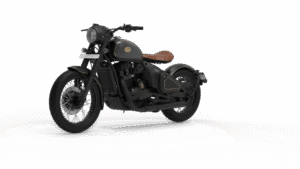
JAWA PERAK
6.0 pts
Unweighted: 4 advantages
EnginePerformanceDimensionsBrakesTyresFeaturesOther
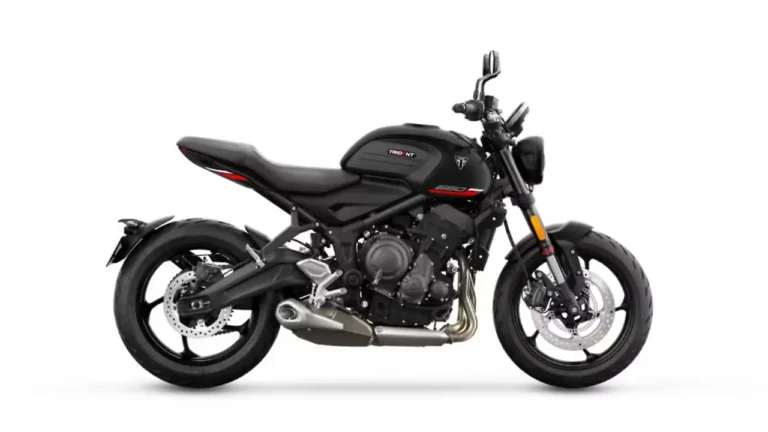
TRIUMPH NEW TRIDENT 660
32.0 pts
Unweighted: 20 advantages
EnginePerformanceDimensionsBrakesTyresFeaturesOther
| Specification | ||
|---|---|---|
Engine Specifications |
||
| Cooling System | — | Liquid-cooled |
| Displacement | 334 cc | 660 cc |
| Engine Type | Single Cylinder, 4 Stroke, Liquid Cooled, DOHC | 12 valve, DOHC, inline 3-cylinder |
| Power | 22.01 kW @ 7500 rpm | 81 PS / 81 bhp (59.6 kW) @ 10,250 rpm |
| Torque | 30.01 Nm @ 5500 rpm | 64 Nm @ 6,250 rpm |
Performance & Efficiency |
||
| Fuel Tank Capacity | 13.2 L | 14 L |
| Mileage | 30 kmpl | 15 kmpl |
Dimensions & Weight |
||
| Kerb Weight | 187 kg | 190 kg |
| Seat Height | 750 mm | 805 mm |
Brakes & Suspension |
||
| ABS | Dual Channel ABS | Dual Channel ABS |
| Front Brake | 280 mm | Twin Ø310mm discs, Nissin 2-piston sliding calipers, OCABS |
| Front Suspension | Telescopic Forks, Ø 35 mm | Showa 41mm upside down separate function big piston (SFF-BP) forks, 120mm Wheel travel |
| Rear Brake | 240 mm | Single Ø255mm fixed disc, single piston sliding caliper, OCABS |
| Rear Suspension | Mono Shock Absorber, Gas Filled with 7-Step Adjustable Preload | Showa monoshock RSU, with preload adjustment, 130mm Wheel travel |
Tyres & Wheels |
||
| Front Tyre | 100/90-18, 56H | 120/70R17 |
| Rear Tyre | 140/70-17, 66H | 180/55R17 |
| Tyre Type | Tube | Tubeless |
| Wheel Type | Spoke | Alloy |
Features & Technology |
||
| Headlight | — | DRLs LED |
Other Specifications |
||
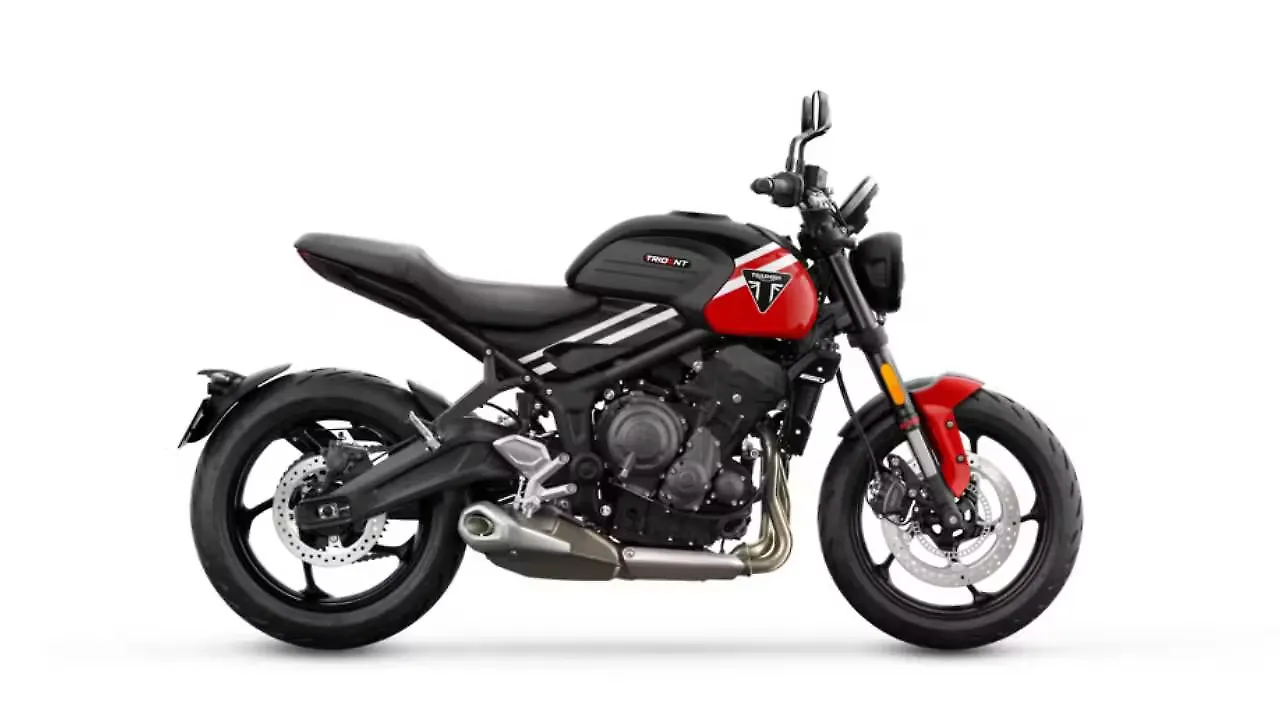
| Bike Image 1 | — | https://motoautiv.com/wp-content/uploads/2025/11/trident660diabloredsapphireblack.webp |
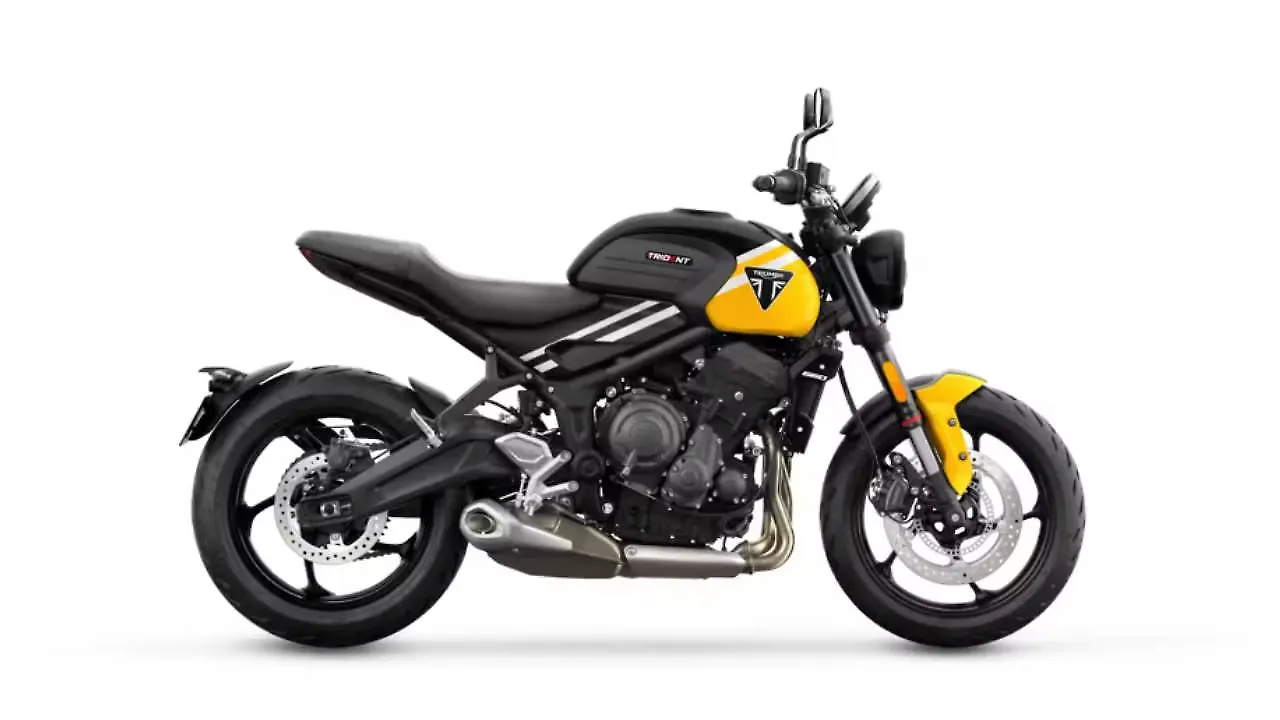
| Bike Image 2 | — | https://motoautiv.com/wp-content/uploads/2025/11/trident660cosmicyellowsapphireblack.webp |
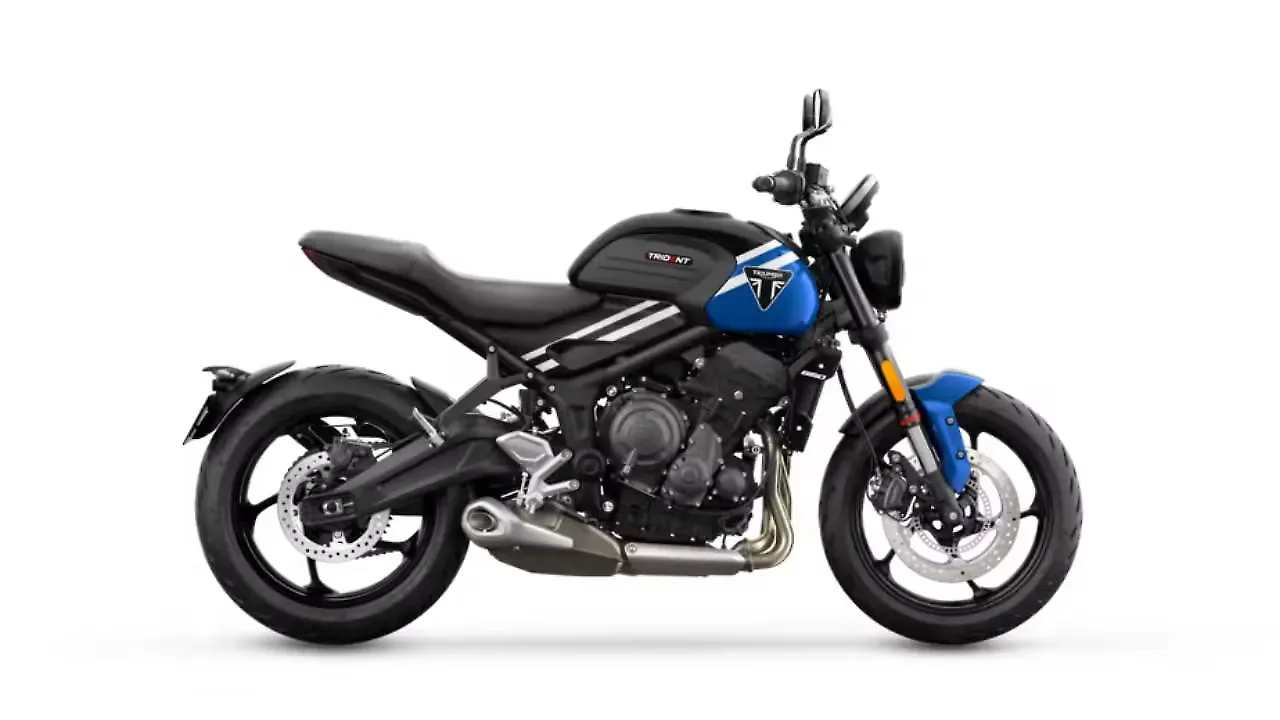
| Bike Image 3 | — | https://motoautiv.com/wp-content/uploads/2025/11/trident660cobaltbluesapphireblack.webp |
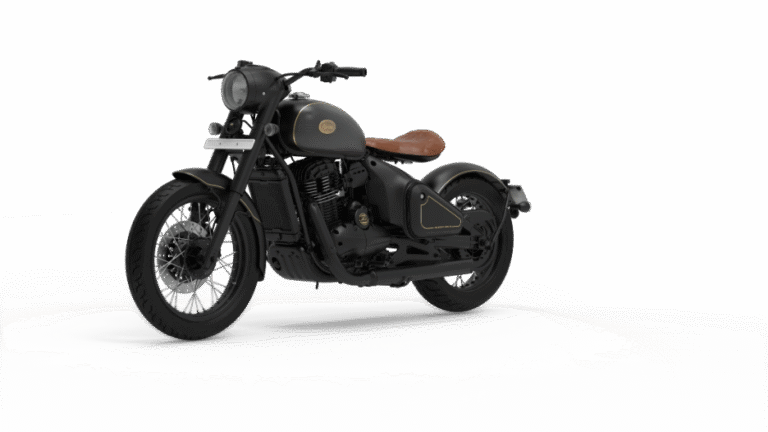
| Color Options | Stealth Matte Black & Matte Grey | Jet Black Diablo Red / Sapphire Black Cosmic Yellow / Sapphire Black Cobalt Blue / Sapphire Black |
| Cons | Single-seat restriction: The bike cannot carry a pillion, which limits practicality for riders who occasionally need two-up capability. Firm suspension: On broken or uneven roads, the rear suspension can feel a bit stiff, especially at lower speeds. Not ideal for long touring: The smaller fuel tank and single-seat setup make long-distance touring less convenient. Spoke wheels: Since the wheels are not tubeless, punctures can be more troublesome to deal with. Basic instrument cluster: The cluster provides only essential information and lacks modern features like a gear indicator or detailed trip data. Engine heat in traffic: In slow-moving urban traffic, the engine can generate noticeable heat, especially in warmer weather. | Suspension and comfort trade-offs: Several owners mention the rear shock is somewhat firm/stiff and long-ride comfort or rough surface compliance could be better. Limited touring/pillion comfort: The compact tail section and seating arrangement make pillion comfort or longer highway stints less relaxing compared to dedicated tourers. Some features/finishes feel “cost-managed”: While overall good value, a few components (e.g., non-adjustable lever, dashboard display mix) are considered entry-level for the price. Fuel tank/range and highway limits for some riders: The fuel capacity (14 litres) and the comfort envelope at high speeds may limit its appeal for serious long-distance highway touring. |
| Detailed Overview | Riding the Jawa Perak is more than just commuting — it feels like embracing a vintage-inspired bobber style with the soul of a modern 334 cc engine. At its core, the Perak packs a single-cylinder, four-stroke, liquid-cooled DOHC engine — a setup that blends classic simplicity with dependable performance. With 22.01 kW of power and about 30 Nm of torque on tap, it isn’t built for drag races, but it delivers a smooth, steady pull in everyday city riding and relaxed highway cruising alike. The mid-range punch makes life easy around traffic, while the 6-speed transmission and assist-and-slipper clutch keep gearshifts light and manageable — especially useful when you’re navigating congestion or downshifting for corners. What stands out immediately when you park the Perak and swing a leg over is its low, confident posture. The seat sits at roughly 750 mm, and paired with a wheelbase of 1,485 mm and a kerb weight around 187 kg, the bike feels grounded and stable — not twitchy, but firmly planted. That translates into real-life confidence whether you’re negotiating slow traffic or cruising along a highway. You don’t feel perched awkwardly: instead, there’s a sense of solidity under you. The fuel tank — about 13.2 litres — hits a good middle ground: enough for comfortable commutes or short weekend runs, though you’ll be keeping an eye out for fuel stations on longer rides. The ride quality reflects the bike’s bobber-cruiser DNA. Up front are telescopic forks (35 mm), and at the rear there’s a gas-filled mono-shock with 7-step preload adjustment. On smooth city roads or moderately good highways, this layout absorbs the usual bumps just fine. The preload adjustability helps if you’re carrying a bit more weight — handy if you fit a custom saddle bag or carry luggage occasionally. On rougher, potholed surfaces the ride gets firmer — which is expected from a cruiser-style bike — yet even then the Perak remains composed, without getting tossy or unpredictable. Braking is reassuring. Discs at both front and rear (280 mm front, 240 mm rear) paired with dual-channel ABS give you dependable stopping power. On sudden braking or slippery surfaces, the ABS helps prevent lock-ups, giving you confidence as you slow down or stop sharply — something important in unpredictable urban traffic or monsoon-slippery roads. Styling and ergonomics are where the Perak truly shines. It wears the bobber aesthetic unapologetically: a single floating seat, streamlined tank, minimalist bodywork, forward-set foot-pegs, and a stretched-out cruiser-like posture. There’s no clutter — no bulky rear seat, no excess frame — just a clean silhouette that turns heads. The riding stance feels laid-back and relaxed: wide handlebars, stretched legs, and that low seat make for an easy, comfortable ride for short to medium distances. If you value character and personality over pillion practicality, this design hits the spot. In terms of everyday usability, the Perak is geared more toward solo riders with style. It delivers a unique riding experience — one where you enjoy the engine’s calm power, the comfort of a cruiser stance, and the kind of presence only a bobber can offer. It may not be the most practical for two-up rides or long tours (fuel tank and single-seat limit that), but for daily rides, occasional weekend cruises or short solo trips, it balances usability with character quite nicely. Maintenance and ownership aren’t overly complex. The liquid-cooled engine and simple single-cylinder layout keep things reasonably straightforward. The 6-speed gearbox with slipper clutch helps avoid clutch-related hassles in heavy traffic. As long as you treat it like a proper cruiser — with regular servicing and mindful handling — it offers a refined, stress-free riding experience. At the end of the day, the Jawa Perak is a bike for those who value presence, style, and a certain mood — not simply raw speed or maximum practicality. It’s for the rider who wants to feel the road under them, enjoy smooth pulls and cruiser calm, and ride a machine that draws attention wherever it goes. If that’s your kind of ride, the Perak delivers a blend of old-school soul and modern engineering in a package that feels both timeless and relevant. | The **Triumph Trident 660** is Triumph’s entry-level roadster that beautifully balances performance, technology, and everyday practicality. Designed to attract both new and experienced riders, the Trident 660 offers the perfect introduction to the world of premium middleweight motorcycles while carrying Triumph’s signature British engineering DNA. It’s powered by a 660 cc liquid-cooled, inline three-cylinder engine that produces 81 PS of peak power at 10,250 rpm and 64 Nm of torque at 6,250 rpm, paired with a smooth six-speed gearbox and a slip-and-assist clutch. The triple-cylinder engine configuration offers the best of both worlds—strong low-end torque typical of twins and exciting top-end power associated with inline-fours—making it extremely versatile for both city commuting and highway runs. The Trident’s chassis is built around a tubular steel frame with high-quality components such as Showa 41 mm upside-down forks and a preload-adjustable rear monoshock. Its suspension setup is tuned for sporty yet comfortable riding dynamics, ensuring agility in corners and stability on straight roads. Braking duties are handled by twin 310 mm discs up front with Nissin two-piston sliding calipers and a 255 mm disc at the rear, all supported by dual-channel ABS. The lightweight chassis, combined with a kerb weight of just 189 kg, ensures quick handling and easy maneuverability, especially in urban environments. With an 805 mm seat height and comfortable upright ergonomics, the Trident 660 is accessible to a wide range of riders. When it comes to design, Triumph has given the Trident 660 a clean, minimalistic, and modern appeal with elements inspired by its larger Speed Triple siblings. The round LED headlamp, sculpted fuel tank, and sleek tail section exude a classic yet sporty presence. The build quality, fit, and finish are top-notch—something Triumph is well-known for. The motorcycle also comes with full LED lighting, a color TFT display with My Triumph connectivity, and ride-by-wire throttle. It offers two riding modes—Road and Rain—along with switchable traction control, ensuring safety and adaptability in different conditions. The newer 2025 update adds even more premium features, including a bi-directional quickshifter, cruise control, and a Sport riding mode, making the package even more complete. One of the key highlights of the Trident 660 is its approachable nature. The bike feels light and confidence-inspiring, making it an excellent option for riders upgrading from smaller displacement motorcycles. The engine is smooth, refined, and free-revving, offering linear power delivery that’s enjoyable in both city traffic and open highways. The compact dimensions make it ideal for daily commuting, while its strong mid-range power ensures an exciting weekend ride. However, the 14-litre fuel tank and slightly firm rear suspension limit its comfort for long-distance touring. In essence, the Triumph Trident 660 is an all-rounder in the middleweight segment—easy to ride, stylish, well-equipped, and loaded with performance. It bridges the gap between affordability and premium feel, offering riders a taste of Triumph’s world-class engineering without the intimidation of larger superbikes. For anyone looking for a blend of sporty performance, everyday usability, and iconic British styling, the Trident 660 stands out as one of the most compelling choices in its class. |
| Expert Review | MotoAutiv Team | MotoAutiv Team |
| FAQ (Manual Override) | Q: What is the engine capacity of the Jawa Perak? A: It comes with a 334cc, single-cylinder, liquid-cooled engine. Q: How much power does the Jawa Perak produce? A: It produces around 22.01 kW of power. Q: What is the torque output? A: The bike generates about 30 Nm of torque, giving it strong mid-range pull. Q: What is the mileage of the Jawa Perak? A: The mileage generally falls around 30–35 kmpl depending on riding style. Q: Does the Jawa Perak come with ABS? A: Yes, it has dual-channel ABS for safer braking. Q: What is the seat height? A: The seat height is approximately 750 mm, making it accessible for many riders. Q: Can the Jawa Perak carry a pillion? A: No, the Perak is strictly a single-seat bobber and does not support a pillion. Q: What is the fuel tank capacity? A: The tank holds around 13.2 litres of fuel. Q: Does it have a slipper clutch? A: Yes, it features an assist-and-slipper clutch for smoother downshifts. Q: Is the Jawa Perak suitable for long rides? A: It can handle short and moderate long rides comfortably, but its single seat and smaller tank make it less ideal for very long touring. Q: Are the suspension settings adjustable? A: The rear mono-shock offers 7-step preload adjustment. Q: What type of riders is the Perak best suited for? A: It’s ideal for solo riders who want a stylish, low-slung bobber with relaxed performance. | Q: What engine does the Triumph Trident 660 have? A: It uses a 660 cc, liquid-cooled, 12-valve DOHC inline 3-cylinder engine that delivers about 81 PS at 10,250 rpm and 64 Nm of torque at 6,250 rpm. Q: What is the seat height, kerb weight, and tank capacity of the Trident 660? A: The seat height is approximately 805 mm, the wet weight is around 190 kg, and the fuel tank capacity is 14 litres. Q: What features and electronics come standard on the Trident 660? A: Standard features include cast-aluminium 17″ wheels, full LED lighting, ride-by-wire throttle, switchable traction control, multiple riding modes (Road, Rain, and for newer model Sport), a TFT display with Bluetooth connectivity (My Triumph), quickshifter (in newer MY25 updates), cruise control (newer model) and Optimised Cornering ABS. Q: What is the 2025 India ex-showroom price for the Trident 660? A: For 2025, the Trident 660 is priced from around ₹ 8.49 lakh (ex-showroom, India) for the base version. Q: What is the service interval for the Trident 660? A: The service interval is 16,000 km (10,000 miles) or 12 months, whichever comes first. Q: Is the Trident 660 suitable for beginners or newer riders? A: Yes — with a manageable seat height (~805 mm), moderate weight (~190 kg) and user-friendly triple-cylinder engine tuned for smooth torque delivery, it is considered accessible for newer riders stepping up to a premium middleweight roadster. Q: What are the tyre and brake specifications on the Trident 660? A: It uses 17″ alloy wheels (120/70 R17 front, 180/55 R17 rear), twin 310 mm front discs with Nissin 2-piston sliding calipers and a 255 mm rear disc. Q: What’s new in the 2025 update of the Trident 660? A: The 2025 update brings new tech as standard — including Sport riding mode, bi-directional quickshifter, cruise control and My Triumph Connectivity via Bluetooth. |
| Fuel System | Electronic Fuel Injection | — |
| Price Variants | | 199000 | Standard | 899000 |
| Pros | Iconic bobber styling: The Jawa Perak has a unique, low-slung bobber design that instantly stands out. The floating seat, wide rear tyre, and minimalist bodywork give it a true custom-bike vibe straight from the factory. Strong mid-range performance: Its 334cc liquid-cooled engine offers smooth power delivery with plenty of torque in the mid-range, making city riding effortless and highway cruising relaxed. Confident braking: Dual-channel ABS and disc brakes at both ends provide strong, predictable braking, especially useful during sudden stops. Stable handling: The long wheelbase and low seat height give the bike a very planted feel. It remains stable at higher speeds and feels secure while cornering. Engaging solo-riding experience: The single-seat layout combined with the relaxed riding posture creates a pure, focused, enjoyable solo-rider feel. Good road presence: The Perak attracts attention wherever it goes, thanks to its proportions, blacked-out components, and distinctive stance. | Agile & fun handling: Owners repeatedly highlight the Trident 660’s confident chassis, lightish steering and the way it encourages spirited riding. Strong middleweight triple-engine character: The 660cc inline-3 motor offers a smooth power delivery, usable torque across the rev range, and the distinctive triple soundtrack that sets it apart. Excellent value & tech for the segment: For its class the bike brings in premium touches, modern electronics, good fit & finish and a compelling package. Manageable ergonomics: With a seat height around 805mm and relatively moderate weight (for its category) it appeals to many riders, including those not extremely tall. |
| Transmission | 6–Speed | 6 speed |