Quick Analysis
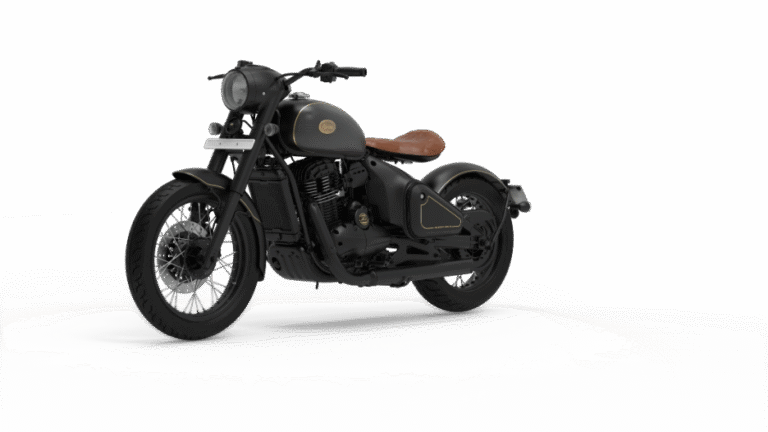
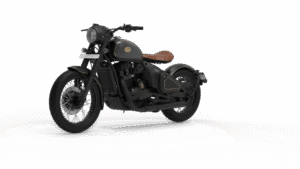
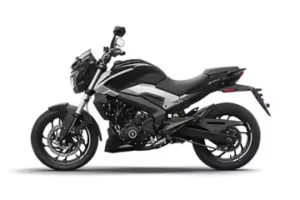
JAWA PERAK
19.5 pts
Unweighted: 13 advantages
EnginePerformanceDimensionsBrakesTyresFeaturesOther
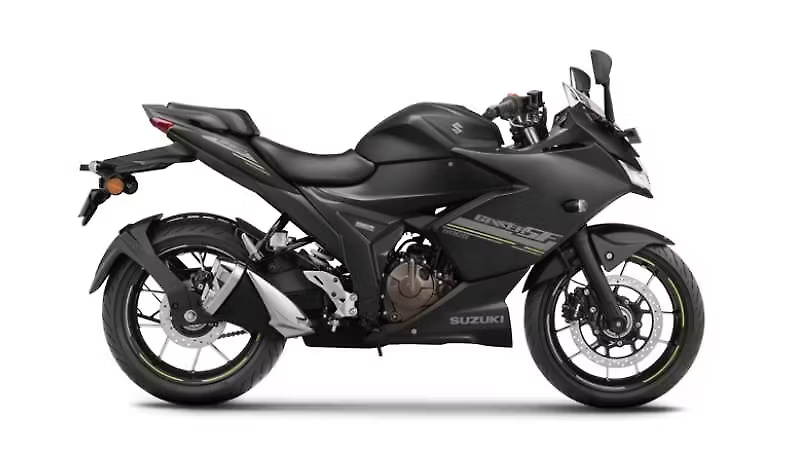
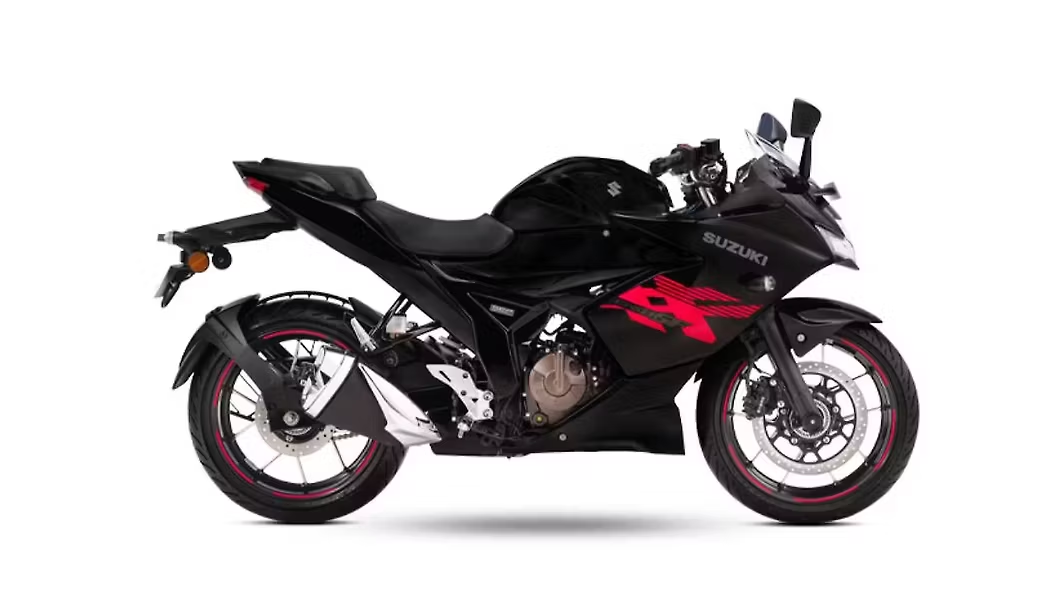
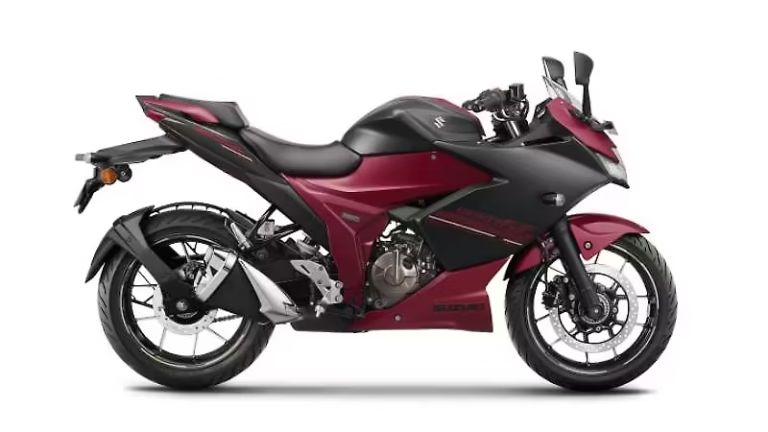
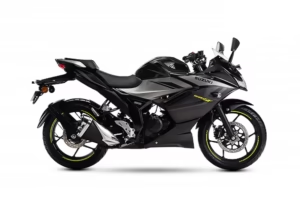
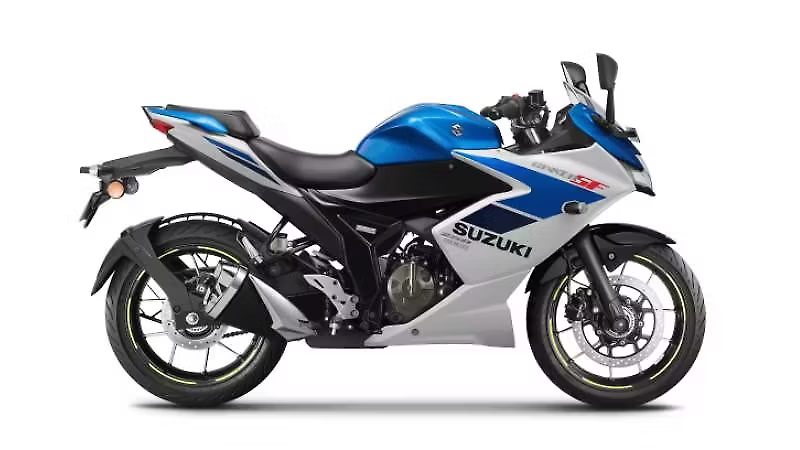
SUZUKI GIXXER SF 250/ GIXXER 250
11.0 pts
Unweighted: 10 advantages
EnginePerformanceDimensionsBrakesTyresFeaturesOther
| Specification | ||
|---|---|---|
Engine Specifications |
||
| Cooling System | Liquid Cooled | Oil Cooled |
| Displacement | 334 cc | 249cc |
| Engine Type | Single Cylinder, 4 Stroke, Liquid Cooled, DOHC | 4-Cycle, 1-cylinder, Oil cooled |
| Power | 22.01 kW @ 7500 rpm | 26.13 bhp @ 9300 rpm |
| Torque | 30.01 Nm @ 5500 rpm | 22.2 Nm @ 7,300 rpm |
Performance & Efficiency |
||
| Fuel Tank Capacity | 13.2 L | 12 L |
| Mileage | 30 kmpl | 38 kmpl |
Dimensions & Weight |
||
| Kerb Weight | 187 | 156-161 |
| Seat Height | 750 | 740-805 |
Brakes & Suspension |
||
| ABS | Dual Channel ABS | Dual Channel |
| Front Brake | Disc with Dual Channel ABS - 280 mm | Disc 300 mm Front 2 Piston |
| Front Suspension | Telescopic Forks, Ø 35 mm | Telescopic |
| Rear Brake | Disc with Dual Channel ABS - 240 mm | Disc 220 mm Real 1 Piston |
| Rear Suspension | Mono Shock Absorber, Gas Filled with 7-Step Adjustable Preload | Monoshock |
Tyres & Wheels |
||
| Front Tyre | 100/90-18, 56H | 110/70R17M/C 54S |
| Rear Tyre | 140/70-17, 66H | 150/60R17M/C 66S |
| Tyre Type | Tube | Tubeless |
| Wheel Type | Spoke | Alloy |
Features & Technology |
||
| Headlight | Halogen | LED |
Other Specifications |
||
| Battery | — | Maintenance free, 12V 6Ah |
| Bike Image 1 | — | https://motoautiv.com/wp-content/uploads/2025/12/Triton-Blue.avif |
| Bike Image 2 | — | https://motoautiv.com/wp-content/uploads/2025/12/Matte-Black.avif |
| Bike Image 3 | — | https://motoautiv.com/wp-content/uploads/2025/12/Glass-Sparkle-Black.avif |
| Bike Image 4 | — | https://motoautiv.com/wp-content/uploads/2025/12/Pearl-Glacier-White.avif |
| Color Options | Stealth Matte Black & Matte Grey | #1A1A1A, #4A4F55 | Met Triton Blue | #1F4FA3 Pearl Glacier White | #F2F2F2 Glass Sparkle Black | #0D0D0F Metallic Matte Black | #1C1C1C Met Mat Bordeaux Red/Metallic Matte Black | #6A1F2B, #1C1C1C |
| Cons | Single-seat restriction: The bike cannot carry a pillion, which limits practicality for riders who occasionally need two-up capability. Firm suspension: On broken or uneven roads, the rear suspension can feel a bit stiff, especially at lower speeds. Not ideal for long touring: The smaller fuel tank and single-seat setup make long-distance touring less convenient. Spoke wheels: Since the wheels are not tubeless, punctures can be more troublesome to deal with. Basic instrument cluster: The cluster provides only essential information and lacks modern features like a gear indicator or detailed trip data. Engine heat in traffic: In slow-moving urban traffic, the engine can generate noticeable heat, especially in warmer weather. | Fuel tank capacity is modest, which limits long-distance range between fill-ups. It’s not built for rough off-road or hardcore touring - more suited for smooth roads and occasional rough patches. As a 250-class bike, performance is modest compared to larger motorcycles - may feel underpowered for those seeking outright speed or heavy touring. Rear suspension setup and seat may feel basic for very long rides or heavy pillion + luggage combos. Fuel efficiency and mileage will depend heavily on riding style - aggressive riding can reduce the “balanced” efficiency benefit. |
| Detailed Overview | There are motorcycles that try to balance many roles, and then there are those that follow a very specific idea. The Jawa Perak belongs to the second group, and that approach is visible not just in its design but also in the way it is built and set up. At the centre of the bike is a 334cc, single-cylinder, liquid-cooled engine that produces around 30 bhp and 32.7 Nm of torque. It is paired with a 6-speed gearbox, and the engine uses fuel injection to manage power delivery. The response from the throttle feels steady and predictable, especially at lower and mid speeds, which suits regular riding conditions. The gearing is spaced in a way that allows the bike to move through traffic without needing constant gear changes, while still being able to handle slightly higher speeds when required. The Perak is built on a double cradle frame, which supports its structure and keeps the bike stable while riding. It has a kerb weight of around 185 kg and a fuel tank capacity of 13.2 litres. The seat height is lower than most bikes in this segment, at around 750 mm, which makes it easier for riders to place their feet on the ground. Ground clearance is close to 160 mm, which means the bike needs a bit more attention over speed breakers and uneven roads. The suspension setup is different from most other bikes in this category. At the front, it uses telescopic forks, but at the rear, it gets a monoshock that is positioned under the seat. This gives the bike its hardtail-style look while still providing some level of comfort. The Perak runs on spoke wheels with tube-type tyres, with an 18-inch wheel at the front and a 17-inch wheel at the rear. Braking is handled by disc brakes on both ends, with a 280 mm disc at the front and a 240 mm disc at the rear. The bike comes with dual-channel ABS as standard, which helps maintain control during braking, especially on uneven or slippery surfaces. The braking setup is designed to feel progressive, building up stopping power in a gradual manner. In terms of features, the Perak keeps things simple. It uses a single-pod instrument cluster that shows basic information such as speed, fuel level and warning lights. Lighting is mostly halogen, in line with its overall design theme. There are no advanced electronics or riding modes, and the focus remains on essential functions that support everyday riding. The overall design is what sets the Perak apart. It uses a low, stretched stance with a single floating seat, chopped fenders and minimal body panels. The bike is offered in a single dual-tone colour scheme, which adds to its consistent visual identity. While most motorcycles in this segment follow a more practical approach, the Perak’s setup reflects a different direction, where design and mechanical layout are closely tied to a specific riding style and purpose. | The Suzuki Gixxer 250 and Gixxer SF 250 are built around a 249cc single-cylinder, oil-cooled engine that produces around 26.5 PS of power and 22.2 Nm of torque. The engine uses Suzuki’s oil-cooling system instead of a full liquid-cooling setup, which helps in maintaining temperature while keeping the overall design simpler. In real use, the power delivery feels linear, meaning it builds gradually rather than coming in sudden bursts, which makes the bike easier to ride in mixed conditions like city traffic and highways. The engine is paired with a 6-speed gearbox, and the gear ratios are spaced in a way that supports both low-speed riding and steady cruising. At city speeds, the bike doesn’t feel stressed, and on highways, it can maintain a consistent pace without frequent gear changes. The throttle response is predictable, which helps in smoother riding, especially for those who prefer a controlled feel over aggressive acceleration. In terms of chassis, both bikes use a diamond-type frame, which is designed to balance rigidity and comfort. The suspension setup includes telescopic front forks and a rear monoshock. This setup is tuned more towards everyday road use rather than sporty or off-road riding. It absorbs regular road imperfections reasonably well, but sharper bumps and potholes are still noticeable, especially at higher speeds. Braking is handled by disc brakes at both ends, supported by dual-channel ABS. This adds a layer of safety during sudden braking or slippery conditions. The tyres are wide enough to provide decent grip on normal roads, though they are not specifically designed for aggressive cornering or track use. The main difference between the two versions lies in their design and riding posture. The Gixxer 250 is a naked motorcycle with a more upright seating position, making it feel slightly more relaxed in daily use. The Gixxer SF 250, on the other hand, comes with full fairing and clip-on style handlebars, which give it a slightly forward-leaning posture. However, it is not as aggressive as a typical supersport bike, so it remains manageable for longer rides. The bike comes with a fully digital instrument cluster that displays essential information such as speed, gear position, fuel level, and trip details. It also includes LED lighting for both headlamp and tail lamp. The fuel tank capacity is around 12 litres, which is average for this segment, offering a usable range for both city and occasional highway riding. Overall, the Gixxer 250 and SF 250 are built with a focus on simple engineering and usable performance, with specifications that aim to balance daily riding needs and occasional longer journeys. |
| Expert Review | The Jawa Perak occupies a very specific space in the Indian market, where most motorcycles are built for everyday practicality, but a few are designed to stand out for their style and character. Its factory bobber design, with a low stance, single seat and minimal bodywork, gives it a distinct identity that is not very common on Indian roads. While this styling limits its practicality for daily use, it reflects a growing interest among riders who are willing to trade some comfort and convenience for a more unique riding experience. The engine setup is based on a single-cylinder, liquid-cooled unit that is tuned for usable performance, making it manageable in city conditions despite its design focus. In a market dominated by conventional retro motorcycles, the Perak highlights how niche segments like bobbers are slowly finding space, especially among buyers who are looking for something different from the usual options available., 4.1, MotoAutiv Team | The Suzuki Gixxer 250 and Gixxer SF 250 come across as motorcycles that have been tuned with Indian usage clearly in mind, rather than chasing outright performance figures. The 249cc engine feels smooth and predictable, which makes a difference in daily traffic where sudden power isn’t always useful. What stands out is how easy the bike is to ride without demanding too much attention from the rider, whether in the city or on short highway runs. The ergonomics are fairly practical, even on the faired version, so it doesn’t feel uncomfortable over longer durations. At the same time, the suspension and overall setup feel more suited to regular roads than aggressive riding or rough conditions., 4.2, MotoAutiv Team |
| FAQ (Manual Override) | Q: What is the engine capacity of the Jawa Perak? A: It comes with a 334cc, single-cylinder, liquid-cooled engine. Q: How much power does the Jawa Perak produce? A: It produces around 22.01 kW of power. Q: What is the torque output? A: The bike generates about 30 Nm of torque, giving it strong mid-range pull. Q: What is the mileage of the Jawa Perak? A: The mileage generally falls around 30–35 kmpl depending on riding style. Q: Does the Jawa Perak come with ABS? A: Yes, it has dual-channel ABS for safer braking. Q: What is the seat height? A: The seat height is approximately 750 mm, making it accessible for many riders. Q: Can the Jawa Perak carry a pillion? A: No, the Perak is strictly a single-seat bobber and does not support a pillion. Q: What is the fuel tank capacity? A: The tank holds around 13.2 litres of fuel. Q: Does it have a slipper clutch? A: Yes, it features an assist-and-slipper clutch for smoother downshifts. Q: Is the Jawa Perak suitable for long rides? A: It can handle short and moderate long rides comfortably, but its single seat and smaller tank make it less ideal for very long touring. Q: Are the suspension settings adjustable? A: The rear mono-shock offers 7-step preload adjustment. Q: What type of riders is the Perak best suited for? A: It’s ideal for solo riders who want a stylish, low-slung bobber with relaxed performance. | Q: Is the Suzuki Gixxer 250 good for daily use in India? A: Yes, the Suzuki Gixxer 250 is commonly used for daily riding because the engine is smooth and the riding posture is manageable. It doesn’t feel too aggressive, which helps in city traffic. Q: What is the real mileage of the Suzuki Gixxer 250? A: In real Indian riding conditions, the Suzuki Gixxer 250 usually gives around 30–35 km/l, depending on traffic and riding style. Q: Is the Suzuki Gixxer SF 250 comfortable for long rides? A: The Suzuki Gixxer SF 250 has a slightly leaned-forward posture, but it is not extreme. Many riders find it comfortable for short to medium highway rides. Q: Does the Suzuki Gixxer 250 feel underpowered? A: The Suzuki Gixxer 250 is not built for aggressive performance. It focuses more on smooth and usable power, so it may feel calm rather than fast. Q: What is the top speed of the Suzuki Gixxer SF 250? A: The Suzuki Gixxer SF 250 can reach around 140–150 km/h under ideal conditions, though real-world speeds depend on road and riding conditions. Q: Is the Suzuki Gixxer 250 better than Yamaha R15 in daily use? A: The Suzuki Gixxer 250 is generally more comfortable and relaxed for daily riding, while the Yamaha R15 is more focused on sporty performance. Q: Does the Suzuki Gixxer 250 have heating issues? A: The Suzuki Gixxer 250 is generally well-managed in terms of heat, but like most bikes, some heat can be felt in heavy traffic. Q: What is the difference between Suzuki Gixxer 250 and Gixxer SF 250? A: The Suzuki Gixxer 250 is a naked bike, while the Suzuki Gixxer SF 250 is a fully faired version with slightly more wind protection. Q: Is the Suzuki Gixxer 250 good for beginners? A: Yes, the Suzuki Gixxer 250 is considered beginner-friendly because of its predictable power delivery and easy handling. |
| Fuel System | Electronic Fuel Injection | Fuel Injection |
| Price Variants | STD | 219950 | STD | 181517 Special Edition | 181976 |
| Pros | Iconic bobber styling: The Jawa Perak has a unique, low-slung bobber design that instantly stands out. The floating seat, wide rear tyre, and minimalist bodywork give it a true custom-bike vibe straight from the factory. Strong mid-range performance: Its 334cc liquid-cooled engine offers smooth power delivery with plenty of torque in the mid-range, making city riding effortless and highway cruising relaxed. Confident braking: Dual-channel ABS and disc brakes at both ends provide strong, predictable braking, especially useful during sudden stops. Stable handling: The long wheelbase and low seat height give the bike a very planted feel. It remains stable at higher speeds and feels secure while cornering. Engaging solo-riding experience: The single-seat layout combined with the relaxed riding posture creates a pure, focused, enjoyable solo-rider feel. Good road presence: The Perak attracts attention wherever it goes, thanks to its proportions, blacked-out components, and distinctive stance. | Smooth and manageable 249 cc engine - good balance of enough power for city and highway without being intimidating. Light, nimble handling and reasonable kerb weight make it easy to maneuver in traffic and tight spaces. Comfortable seat height and posture for both city rides and longer journeys. Suspension does a decent job of absorbing bumps and uneven surfaces, giving a comfortable ride even on rough roads. Disc brakes front and rear with dual-channel ABS provide dependable stopping power and added safety. A good balance of sporty feel and everyday usability - suitable for daily commutes as well as occasional spirited rides. |
| Starter | Self Start Only | ELECTRIC |
| Transmission | Constant mesh, 6–Speed | 6- speed |