VS

Quick Analysis

JAWA 42 J

11.5 pts
Unweighted: 9 advantages
EnginePerformanceDimensionsBrakesTyresOther

SUZUKI GSX-8R

16.5 pts
Unweighted: 9 advantages
EnginePerformanceDimensionsBrakesTyresOther
Specification
JAWA 42 J
JAWA 42 J
Jawa
SUZUKI GSX-8R
SUZUKI GSX-8R
Suzuki

Engine Specifications

Displacement 334 cc 776 cm3
Engine Type Single Cylinder, 4 Stroke, Liquid Cooled, DOHC 4-stroke, 2-cylinder, liquid-cooled, DOHC
Power 29.17 PS 81.8 bhp @ 8500 rpm
Torque 29.62 Nm 78 Nm @ 6800 rpm

Performance & Efficiency

Fuel Tank Capacity 12 L 14 L
Mileage 30 kmpl 23.8 kmpl

Dimensions & Weight

Kerb Weight 184 kg 205 kg
Seat Height 790 mm 810 mm

Brakes & Suspension

ABS Dual Channel ABS Dual Channel
Front Brake Disc With Floating Caliper 320 mm Disc 310 mm Caliper - Front 4 Piston
Front Suspension Telescopic Forks, Ø 41 mm Inverted telescopic, coil spring, oil damped
Rear Brake Disc With Floating Caliper 240 mm Disc Caliper - Rear 1 Piston
Rear Suspension Twin Shock Absorber With 5-step Adjustable Pre-load Link type, coil spring, oil damped

Tyres & Wheels

Front Tyre 100/90-18, 56H 120/70ZR17M/C (58W)
Rear Tyre 140/70-17, 66H 180/55ZR17M/C
Tyre Type Tube Tubeless
Wheel Type Spoke Alloy

Other Specifications

Battery MF Battery
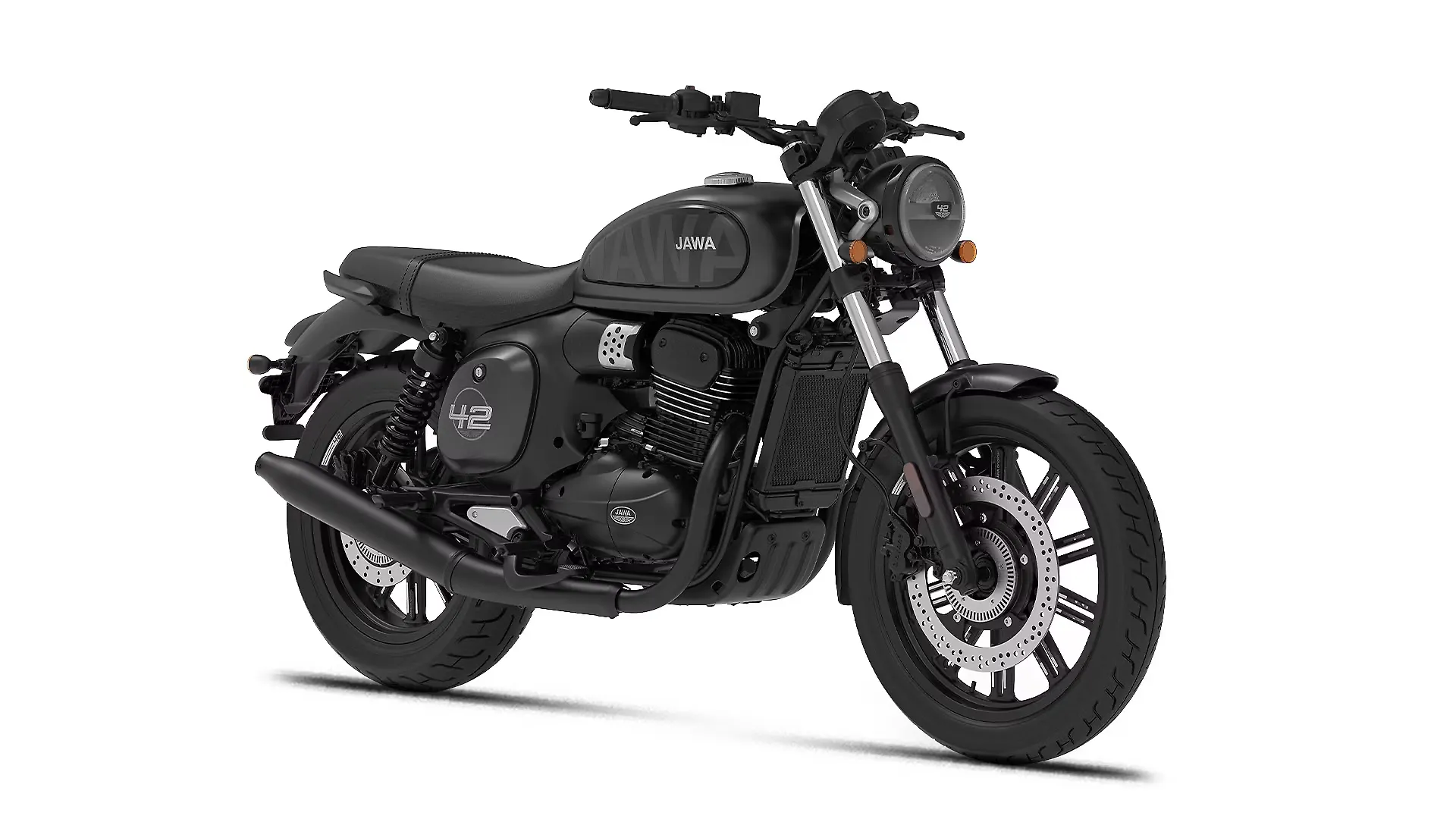
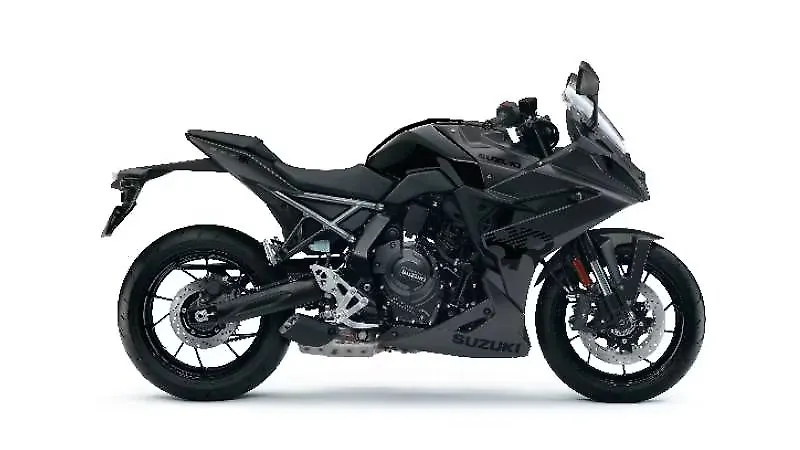
Bike Image 1 https://motoautiv.com/wp-content/uploads/2025/11/42fjdeepblackmatteblackclad.webp https://motoautiv.com/wp-content/uploads/2025/11/gsx8rmetallicmattblack.webp
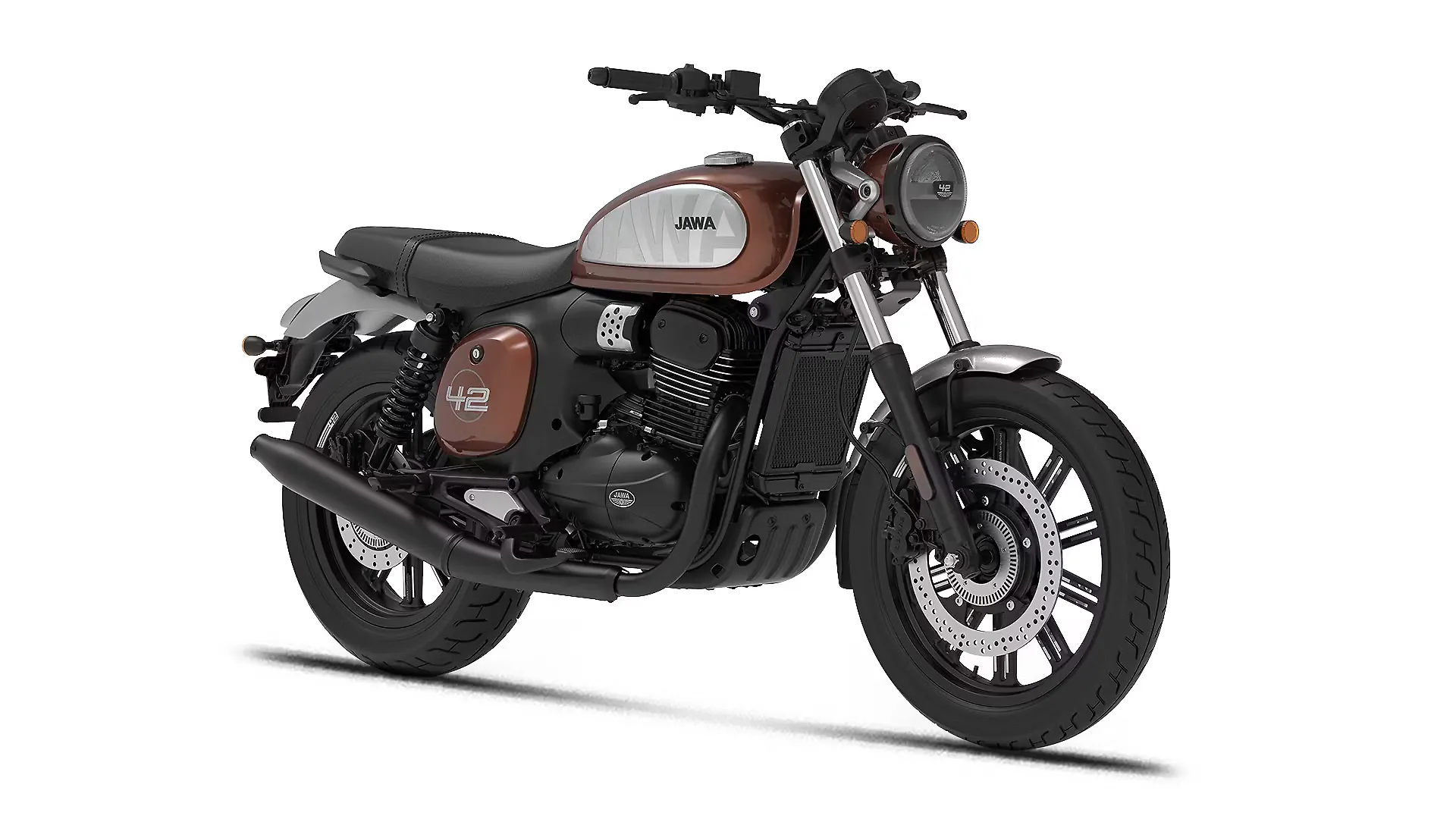
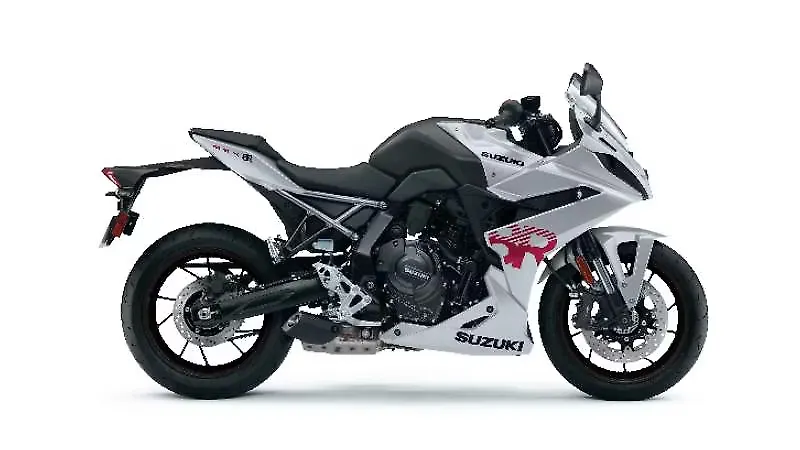
Bike Image 2 https://motoautiv.com/wp-content/uploads/2025/11/42fjmystiquecopper.webp https://motoautiv.com/wp-content/uploads/2025/11/gsx8rmetallicmattswordsilver.webp
Bike Image 3 https://motoautiv.com/wp-content/uploads/2025/11/42fjcosmobluematte.webp
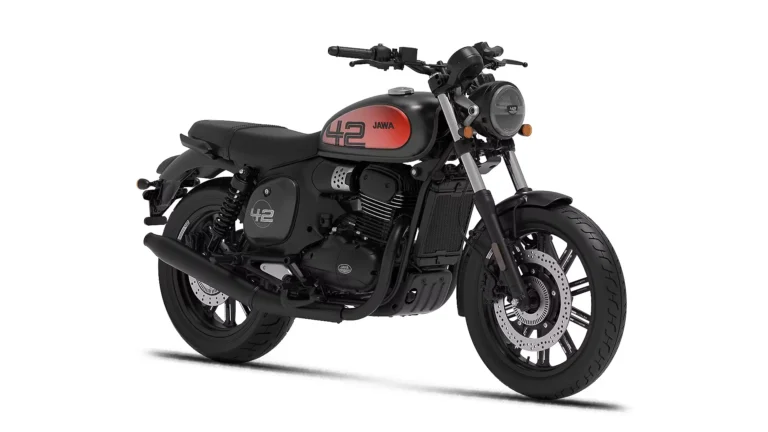
Color Options Mystique Copper Deep Black Matte Black Clad Aurora Green Matte Deep Black Matte Red Clad Cosmo Blue Matte Metallic Matt Black Metallic Matt Sword Silver Metallic Triton Blue
Cons Limited modern features – Lacks advanced electronics, ride modes, or connectivity options. Reliability concerns – Some owners report minor mechanical or electrical issues. After-sales and parts availability – Service centers may be limited in some areas, and spare parts can be hard to get. Comfort limitations for long rides – Pillion seat and luggage capacity are limited; not ideal for long-distance touring. Moderate fuel efficiency – Real-world mileage may be lower than expected in heavy traffic or aggressive riding. Doesn’t deliver the high-revving top-end excitement of inline-4 supersport motorcycles. Wind protection at very high speeds is modest and can feel tiring on long highway rides. Suspension tuning leans slightly firm, which can feel bumpy on rough roads. Weight is on the heavier side, noticeable at low speeds or during tight maneuvers. Not designed for hardcore track riders seeking extreme performance or razor-sharp handling. Fuel economy drops significantly when ridden aggressively.
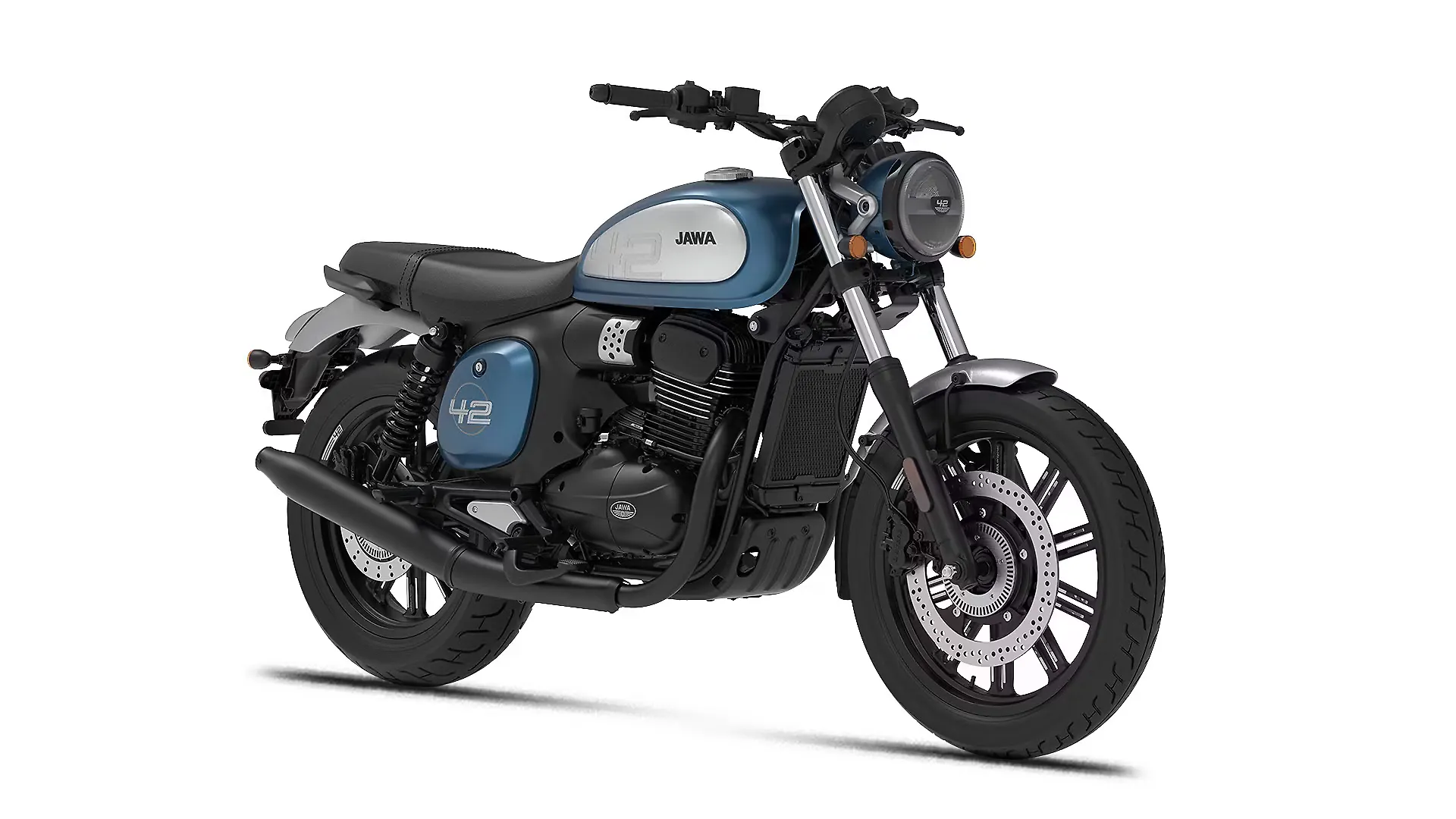
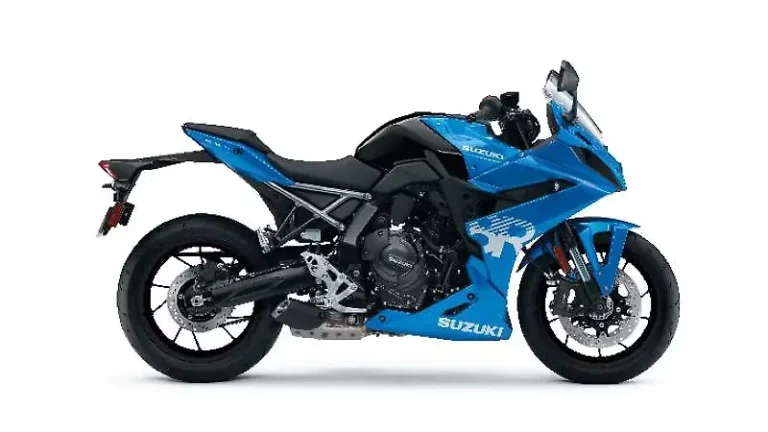
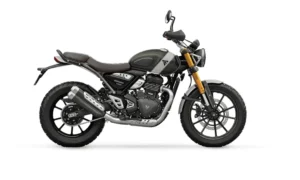
Detailed Overview Riding the Jawa 42 FJ feels like you’re commanding a machine that strikes a rare balance — it’s rugged without being raw, modern without giving up its classic soul. Under its skin lives a 334 cc, single-cylinder, liquid-cooled DOHC engine that’s tuned to generate about 29.17 PS of power and 29.62 Nm of torque. That power figure isn’t about wild acceleration; it’s about usable, confident torque right in the midrange — the kind that lets you surge past slow-moving traffic or carry speed comfortably once you’re out on open roads. Because the engine is liquid-cooled, it resists overheating even in stop-go traffic or during longer rides, which is a big plus for both city commuters and weekend travellers. Paired with that engine is a 6-speed constant-mesh gearbox, which gives the 42 FJ a flexibility that many retro-inspired bikes lack. In the city, lower gears help you navigate tight turns and slow zones; crank into the higher gears on the highway, and the bike relaxes into a smooth, sustained rhythm — it doesn’t feel stressed or out of breath. The assist-and-slipper clutch makes downshifts lighter and safer, especially when you’re slowing down hard or tackling steep terrain. This kind of setup means you don’t have to wrestle with clutch levers constantly — the bike does a lot of the work for you. On the road, the frame’s double-cradle design gives the bike a stable backbone. The front suspension is handled by telescopic forks (41 mm), while the rear uses twin shock absorbers with 5-step preload adjustment. In real-world terms, that means potholes and rough patches don’t slam into your spine — there’s just enough give to absorb most imperfections without turning the ride into a mushy mess. Once the road smooths out, the brakes — dual disc with floating calipers and dual-channel ABS — give strong, predictable bite. You feel secure braking hard, even when you’re leaning into a turn or coming down from highway speed. The motorcycle’s dimensions also contribute to its confidence-in-motion: a wheelbase of 1,440 mm gives it stability, while a seat height of 790 mm makes it accessible for many riders without feeling too compact. Ground clearance sits at 178 mm, which helps when you’re navigating over uneven terrain or clearing speed breakers — something very relevant in real-world road conditions. At a kerb weight of around 184 kg, it’s not feather-light, but once moving, it feels planted rather than ponderous. In city traffic, the weight is manageable; on highways, it adds to the sense that the bike is confident and steady. Fueling comes from injection, and though the claimed tank capacity is 12 litres, the real-world balance likely leans toward practicality over long-range touring. For regular commuting and moderate weekend rides, that tank paired with the efficient engine should work well, though it may not give you motorway-range without a stop. Riders who expect to do long-haul touring might need to plan fuel stops more carefully. The wheels are wrapped in road-friendly tyres (100/90-18 up front, 140/70-17 at the rear), which, along with the disc-brake setup, reinforce good grip and handling. The brakes feel responsive — not grabby, but confident. That’s exactly what you want when your speed is building or when traffic messes up your smooth ride. Electronics on the 42 FJ are minimal but practical: there’s a fully digital instrument cluster that shows speed, gear position, fuel, and trip details — all clearly visible so you don’t have to squint or guess. No flashy connectivity gimmicks, but the essentials are covered well. The exhaust comes in a twin layout, which gives the FJ a good exhaust note — neither too loud to be annoying in residential areas, nor too soft to sound uninspiring. In terms of design, the 42 FJ stands out. The brushed aluminium cladding on the tank gives it a distinctive, premium look. It’s not just retro for retro’s sake — the styling feels purposeful, with a bold, modern twist. Colours range from deep matte shades to dual-tone finishes, giving riders a variety of looks to express themselves. Price-wise, the ex-showroom figure starts at around ₹1.93 lakhs and can go to about ₹2.2 lakhs depending on variant and location. Riding one means committing to a machine that’s not just about show: you’re getting a bike with real substance — capable of daily commuting, capable of enjoyable weekend rides, and capable of delivering a retro-modern experience without too many compromises. Overall, the Jawa 42 FJ feels like a well-rounded partner on two wheels. It doesn’t demand constant attention or aggressive riding, but it rewards smooth, thoughtful throttle control and confident road use. For someone looking for a neo-classic bike that’s equally at home in city traffic and on open highways, it’s a choice that marries character with practicality. Riding the GSX-8R feels like Suzuki’s attempt to give you a middleweight sportbike that’s equally at home in everyday traffic, curvy mountain roads and spirited weekend runs. It packs a 776 cc liquid-cooled, 4-stroke parallel-twin engine with DOHC and a 270-degree crank. That means it’s not just about straight-line speed — the 270° crank gives the engine a throaty, V-twin–like rumble and a broad, usable torque band instead of a peaky, high-revving nature typical of many sport-bikes. The “cross-balancer” Suzuki uses helps keep vibration in check, meaning that even on longer rides or in stop-and-go city traffic, the engine stays smooth and more comfortable than you might expect from a half-litre-plus street-fighter. The motor is rated to produce around 81–82 bhp at about 8,500 rpm and a healthy 78 Nm of torque at around 6,800 rpm. In real-life terms, you get strong mid-range punch — meaning overtakes on highways or quick accelerations from a traffic light feel confident without needing to wring the engine out to the redline. That balance makes the GSX-8R versatile: capable of quick, enthusiastic blasts when you want sporty fun, but also manageable in city commutes or everyday riding. The 6-speed gearbox helps you extract that torque smoothly, and the bike comes with a bi-directional quick-shift system built in. In practice that means you can shift up or down without pulling in the clutch — a real bonus if you like brisk, crisp gear changes during sporty riding or just want ease while navigating traffic. Suzuki hasn’t compromised on the chassis: a steel frame built around the engine keeps the bike slim, compact, and well-balanced, while an aluminum swingarm adds to nimble handling and stability. The geometry — with a wheelbase of 1,465 mm, moderate rake/trail (25° / 104 mm), and a curb weight of 205 kg — positions the GSX-8R in that sweet spot where it feels stable at speed yet flickable enough when carving through corners. Suspension plays a big part in how the bike behaves on real roads. Up front there are inverted telescopic forks from SHOWA (oil-damped, coil-spring), and at the back a link-type mono-shock. That setup gives you a controlled, firm ride when pushing hard — helpful for sporty riding — but also enough compliance to absorb bumps, potholes or rough patches you might encounter on Indian roads or during longer rides. The balance leans toward sporty control without making the ride harsh. When it comes to tyres and wheels, the GSX-8R runs on 17-inch cast-aluminum wheels with 120/70 ZR17 front and 180/55 ZR17 rear tyres — high-performance radials from Dunlop (RoadSport 2) with good wet-grip and durability. That means cornering, braking and overall grip feel confident — even if road conditions are not ideal. The braking setup — twin discs up front and a rear disc, with ABS — helps ensure your stopping power matches the bike’s punch. As for packaging, the GSX-8R isn’t overly bulky: at 2,155 mm long, 770 mm wide, and 1,135 mm tall, with a seat height of 810 mm, it manages a sporty footprint without feeling unwieldy. For many riders, that translates into reasonably manageable maneuverability in city traffic or narrow roads — though at 810 mm seat-height and 205 kg weight, taller riders will feel more at home; beginners or shorter riders may find the seat quite firm and the weight noticeable when stationary. Fuel-wise, a 14-litre tank gives a decent range, and the bike returns, according to official WMTC figures, about 23.8 km per litre under mixed usage. That’s respectable for a middleweight sportbike — meaning for many of your urban rides, weekend joyrides or moderate touring, the fuel economy remains fairly practical rather than thirsty. The electronics and rider aids make a strong case for the GSX-8R being more than just raw hardware. A 5-inch colour TFT display serves as the meter console, giving essential info at a glance. The throttle is ride-by-wire, giving smooth control over power delivery, and there’s a selectable riding-mode system (with Active, Basic and Comfort modes) that lets you tailor throttle response and torque delivery to conditions — useful when switching between city traffic, wet roads, or spirited riding. Add in traction-control (adjustable), low-rpm assist to ease traffic starts, and an easy-start button — and you have a package that aims for practicality without stripping away sportiness. Styling and ergonomics matter too, and Suzuki seems to have paid attention. The GSX-8R carries a sharp, modern sportbike stance — aggressive fairing and front design, slim rear, exposed seat rails, compact proportions — that signals performance without going overboard. The riding position is slightly sporty: the forward-positioned “hip point” and mildly aggressive handlebars let you lean into corners confidently — but it’s not so extreme that city commuting becomes uncomfortable. Putting all this together — power, chassis, suspension, electronics and practicality — the GSX-8R feels like Suzuki’s answer for someone wanting a “do-it-all” middleweight bike: capable of daily commuting, fun weekend rides, spirited canyon runs or moderate touring without forcing you to compromise too much. It isn’t the most powerful in its class — but the balance it strikes, especially with torque-rich engine, rider aids, handling and usability, may make it a very compelling all-rounder, especially in markets like India where roads, fuel economy and versatility matter. Lastly, in terms of cost, the bike is priced at around ₹ 9.25 lakh (ex-showroom, for the base/standard variant). That positions it quite competitively in the mid-range sportbike segment, offering a lot of modern features and a usable engine without the premium price tag that heavy superbikes carry. If I were telling a friend which kind of rider this bike suits best: the GSX-8R is ideal for someone who wants a sporty, engaging ride — but not at the cost of everyday usability. If you commute, do city traffic, occasional highway runs, weekend joyrides or light touring, this one fits beautifully. If you’re after raw top-end speed or hardcore track performance, it might not blow away everything — but as a balanced, real-world sportbike, it’s one of the stronger contenders in its class right now.
Expert Review MotoAutiv Team MotoAutiv Team
FAQ (Manual Override) Q: What is the Jawa 42 FJ? A: It is a modern-styled version of the Jawa 42 with a brushed-metal tank, sporty detailing, and a more premium, neo-retro look. Q: What engine does the Jawa 42 FJ use? A: It uses a 334cc, liquid-cooled, single-cylinder DOHC engine. Q: How much power and torque does it produce? A: It delivers around 29.17 PS of power and 29.62 Nm of torque. Q: What is the mileage of the Jawa 42 FJ? A: Real-world mileage is around 28–32 kmpl depending on riding style. Q: Does the Jawa 42 FJ have a 6-speed gearbox? A: Yes, it comes with a 6-speed constant-mesh gearbox and a slipper clutch. Q: Does the Jawa 42 FJ come with ABS? A: Yes, it features dual-channel ABS for safer braking. Q: What is the seat height of the Jawa 42 FJ? A: The seat height is approximately 790 mm, making it comfortable for most riders. Q: What is the kerb weight of the bike? A: The Jawa 42 FJ weighs around 184 kg. Q: What is the fuel tank capacity? A: It has a 12-litre fuel tank. Q: Is the Jawa 42 FJ good for daily commuting? A: Yes, its smooth engine and comfortable ergonomics make it great for daily use. Q: Is the Jawa 42 FJ suitable for long rides? A: Yes, the stable frame, 6-speed gearbox, and comfortable seating make it capable of touring. Q: What type of brakes does it use? A: It comes with front and rear disc brakes paired with dual-channel ABS. Q: What are the tyre sizes of the Jawa 42 FJ? A: 100/90-18 at the front and 140/70-17 at the rear. Q: What makes the FJ edition different from the regular Jawa 42? A: The FJ gets a brushed-aluminium tank finish, sportier styling, and a more modern premium look. Q: What is the approximate price of the Jawa 42 FJ? A: The ex-showroom price starts around ₹1.93 lakh and varies by location. Q: What is the mileage? A: The mileage is about 23.8 km/l under mixed riding conditions. Q: What is the fuel-tank capacity? A: It has a 14-litre fuel tank. Q: What is the engine displacement? A: The engine displacement is 776 cc. Q: What type of engine does it have? A: It uses a liquid-cooled, 4-stroke, DOHC parallel-twin engine with a 270° crank. Q: What kind of transmission does it use? A: It has a 6-speed constant-mesh manual gearbox. Q: What are the tyre sizes? A: The front tyre size is 120/70 ZR17 and the rear is 180/55 ZR17. Q: What kind of suspension does it have? A: Up front there's an inverted telescopic fork (oil-damped, coil spring), and at the rear a link-type mono-shock (oil-damped, coil spring). Q: What is the kerb weight? A: The kerb weight is 205 kg. Q: What braking setup does it use? A: It features twin disc brakes at the front, a disc brake at the rear, and includes ABS. Q: What kind of electronics / riding aids does it offer? A: It includes ride-by-wire throttle, selectable riding modes, digital instrumentation, and rider-assist features for better control and usability.
Fuel System Electronic Fuel Injection Fuel injection
Price Variants | 193000 | 988550
Pros Retro-modern styling – Classic look with modern touches makes it stand out. Decent engine performance – The 294 cc engine with 6-speed gearbox provides good acceleration and city/highway usability. Comfortable ergonomics – Low seat height and upright riding stance make it accessible for most riders. Blend of old-school charm + modern basics – Features like disc brakes, ABS, and alloy/spoke wheel options balance nostalgia with practicality. Fun to ride – Lightweight and responsive, ideal for weekend rides or casual city commuting. Strong and usable mid-range torque that makes the bike easy to ride in the city and lively on open roads. Smooth engine character thanks to the 270° crank, giving a refined feel even at higher speeds. Comfortable yet sporty riding posture that works for daily use as well as weekend rides. Agile handling with good stability, making it confidence-inspiring for both new and experienced riders. Modern electronics like riding modes, traction control, ride-by-wire, and quick-shifter add convenience and safety. High-quality build and attractive, modern styling with a sharp fairing and sleek proportions. Versatile enough for commuting, spirited cornering, and even moderate touring.
Transmission 6–Speed 6 Speed Manual