VS

Quick Analysis

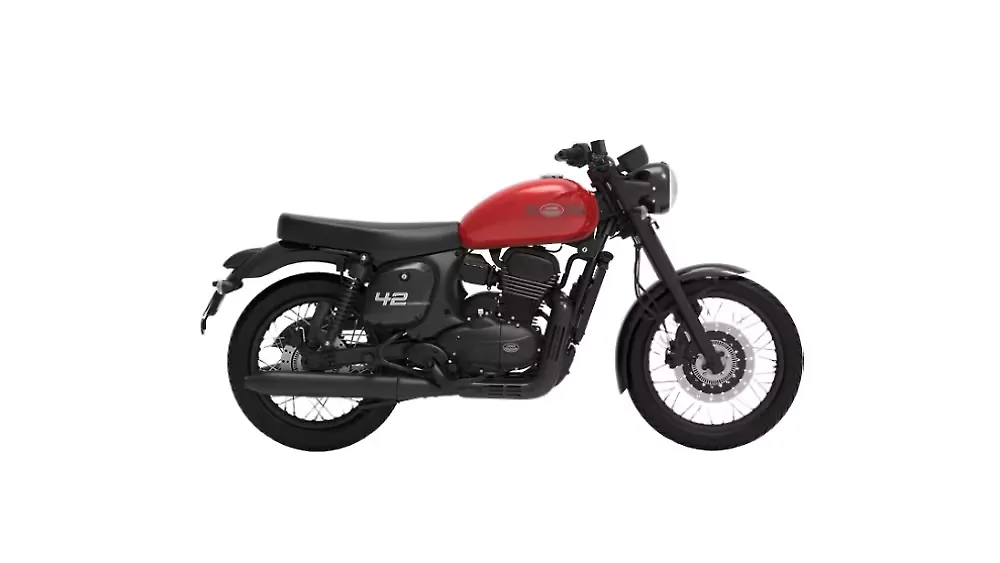
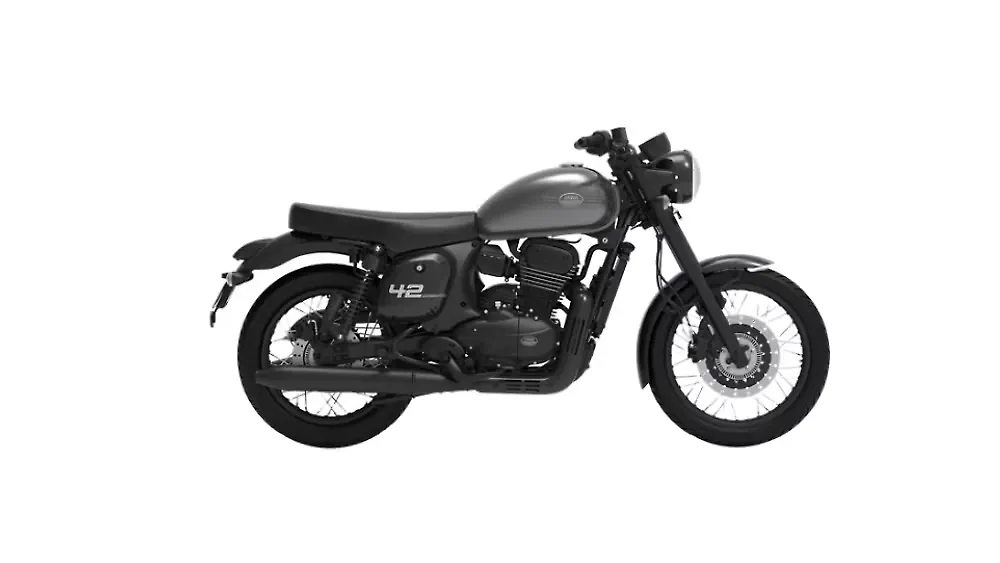
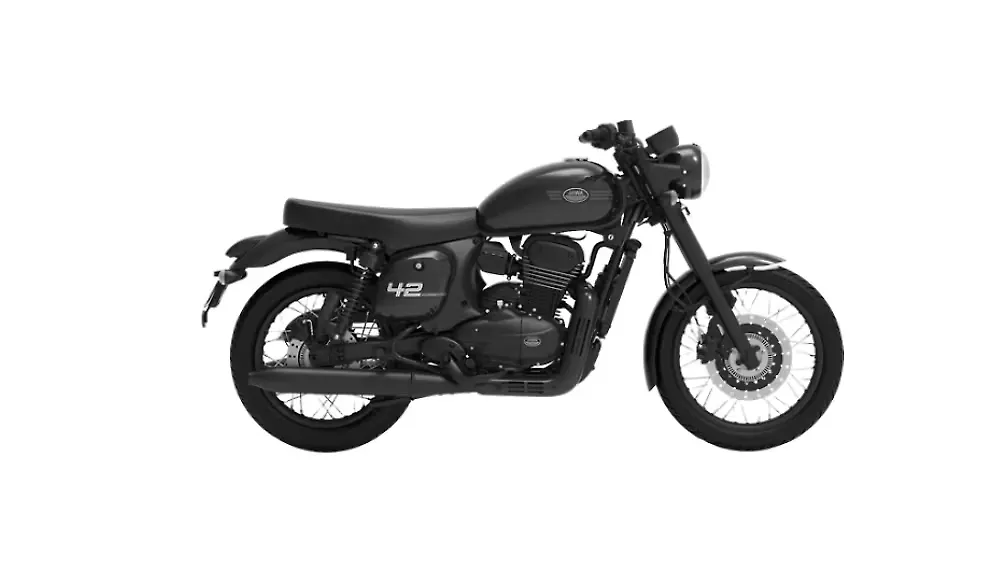
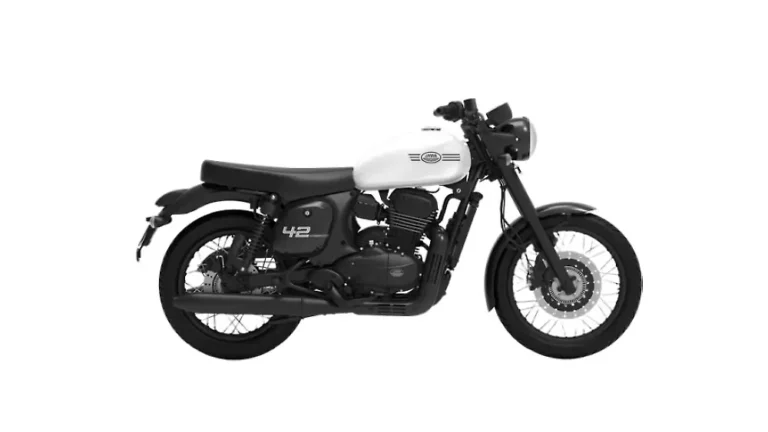
JAWA 42

26.0 pts
Unweighted: 21 advantages
EnginePerformanceDimensionsBrakesTyresFeaturesOther

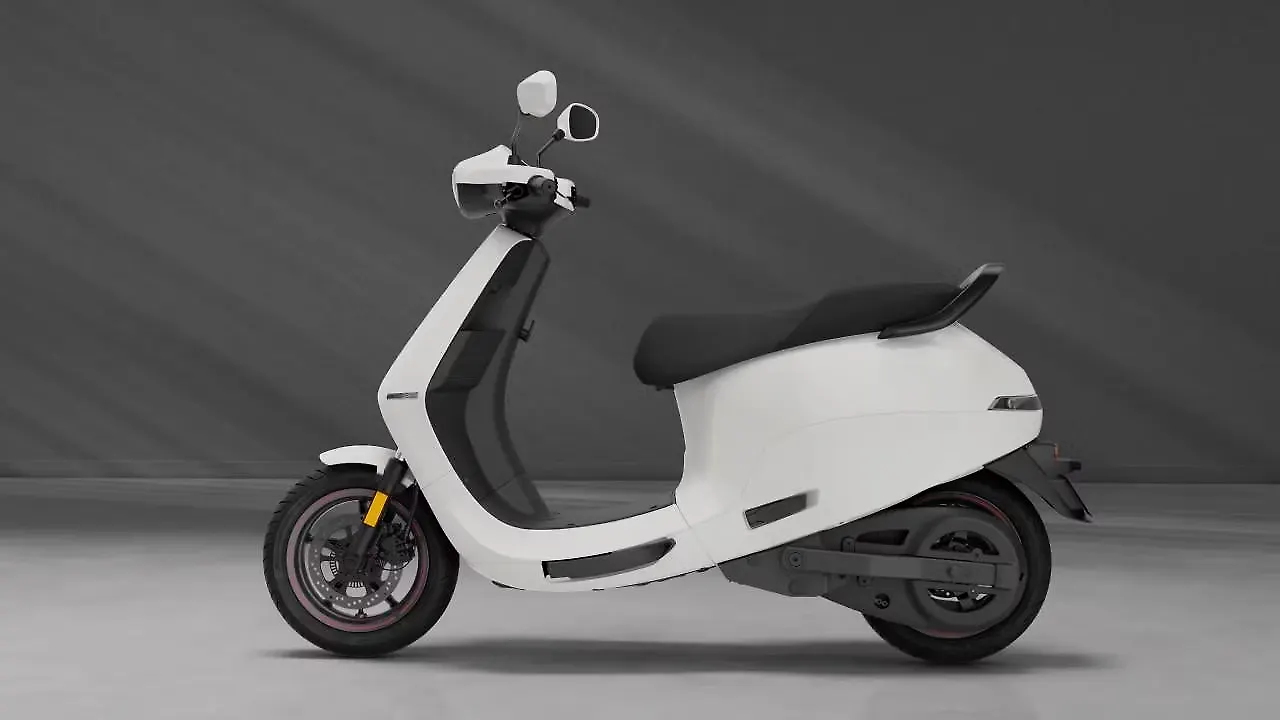
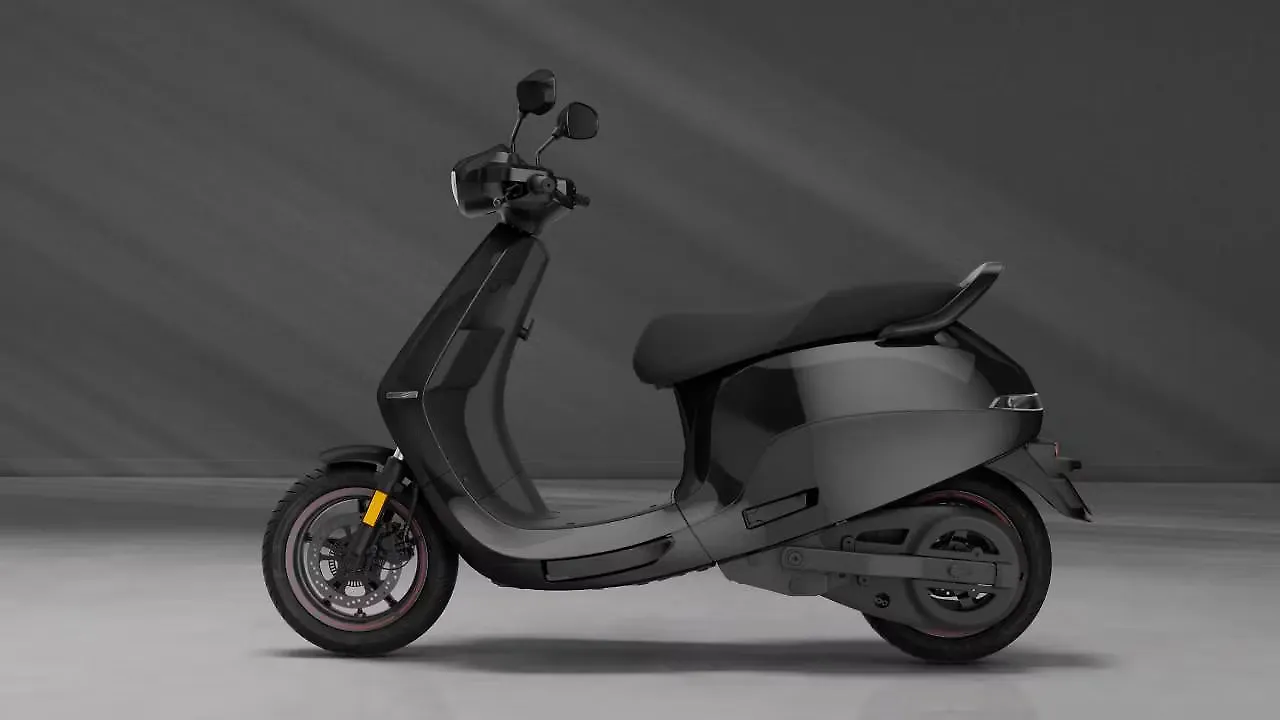
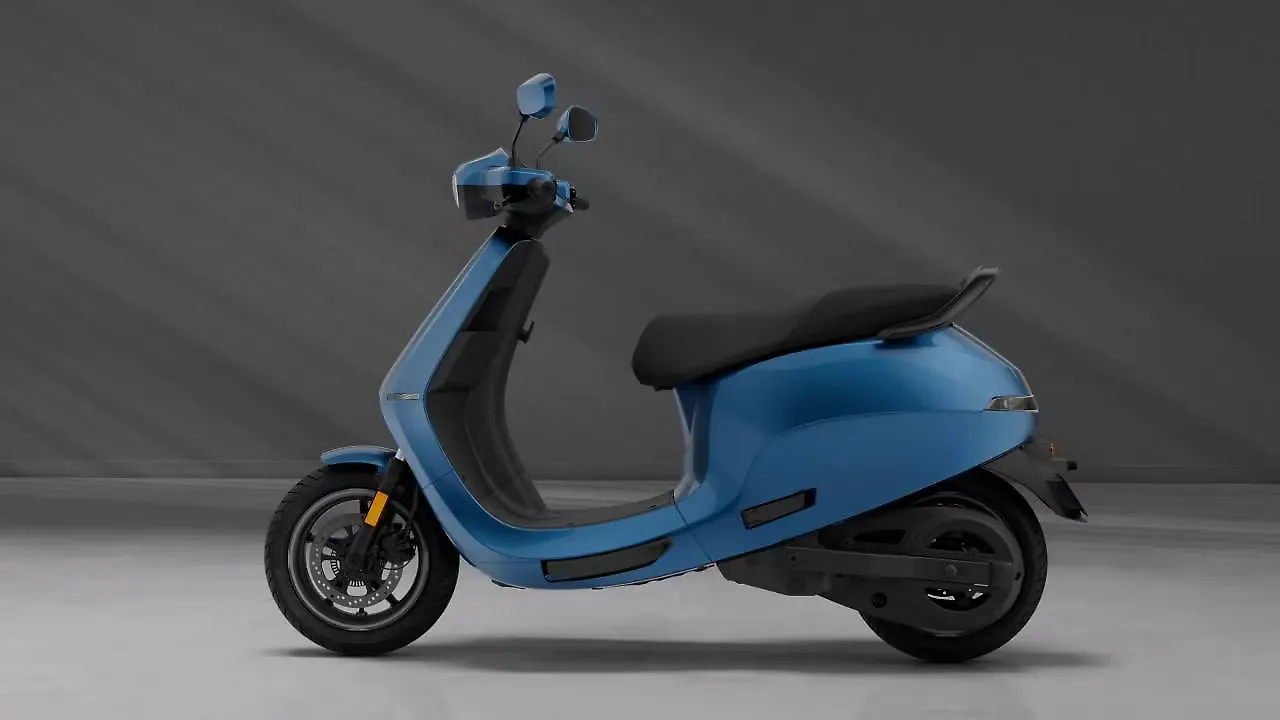
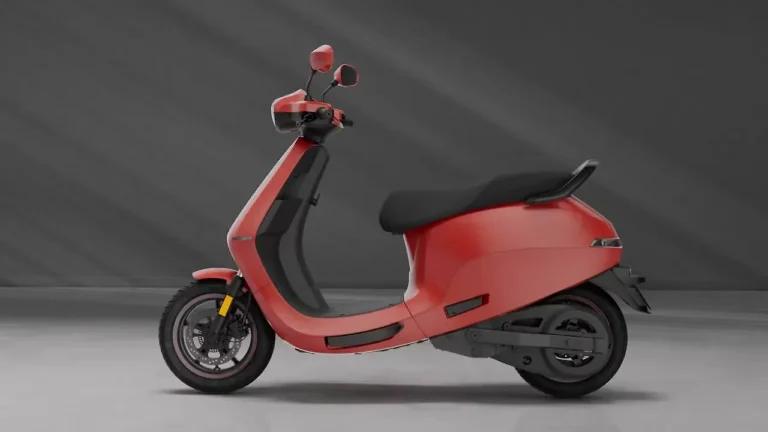
Ola S1 Pro

6.5 pts
Unweighted: 6 advantages
EnginePerformanceDimensionsBrakesTyresFeaturesOther
Specification
JAWA 42
JAWA 42
Jawa
Ola S1 Pro
Ola S1 Pro
Ola

Engine Specifications

Displacement 294.7 cc
Power 27.3 PS 11 kW
Torque 26.8 Nm 58 Nm

Performance & Efficiency

Fuel Tank Capacity 13.2 L
Mileage 32 kmpl

Dimensions & Weight

Kerb Weight 184 kg 109 kg
Seat Height 788 mm 791 mm

Brakes & Suspension

ABS Dual Channel ABS Dual ABS
Front Brake Disc Front 280 mm, Caliper - Front 2 Piston Disc 2 Piston
Front Suspension Telescopic Forks, Ø 35 mm Twin Telescopic
Rear Brake Disc Front 240 mm, Caliper - Rear 1Piston Disc 1 Piston
Rear Suspension Twin Shock Absorber, Gas Filled with Adjustable Preload Monoshock

Tyres & Wheels

Front Tyre Alloy wheel - 90/90-18, 51P 90/90 - R12
Rear Tyre Alloy Wheel - 120/80-17, 61P 90/90 - R12
Tyre Type Tubeless Tubeless
Wheel Type Alloy Alloy

Features & Technology

Headlight LED

Other Specifications

Battery MF Battery
Battery Capacity (kWh) 2.8
Battery Chemistry Li-ion
Bike Image 1 https://motoautiv.com/wp-content/uploads/2025/11/42voyagerred.webp https://motoautiv.com/wp-content/uploads/2025/12/s1proporcelainwhite-1.webp
Bike Image 10 https://motoautiv.com/wp-content/uploads/2025/11/42cosmicrockdt.webp
Bike Image 2 https://motoautiv.com/wp-content/uploads/2025/11/42asteroidgrey.webp https://motoautiv.com/wp-content/uploads/2025/12/s1projetblack-1.webp
Bike Image 3 https://motoautiv.com/wp-content/uploads/2025/11/42odysseyblack.webp https://motoautiv.com/wp-content/uploads/2025/12/s1prostellarblue-1.webp
Bike Image 4 https://motoautiv.com/wp-content/uploads/2025/11/42nebulablue.webp https://motoautiv.com/wp-content/uploads/2025/12/s1promidnightblue-1.webp
Bike Image 5 https://motoautiv.com/wp-content/uploads/2025/11/42celestialcoppermatte.webp
Bike Image 6 https://motoautiv.com/wp-content/uploads/2025/11/42allstarblackmatte.webp
Bike Image 7 https://motoautiv.com/wp-content/uploads/2025/11/42celestialcoppermattedt.webp
Bike Image 8 https://motoautiv.com/wp-content/uploads/2025/11/42starshipbluedt.webp
Bike Image 9 https://motoautiv.com/wp-content/uploads/2025/11/42infinityblackmattedt.webp
Charging Time (Standard) 6.5 hrs
Color Options Vega White Voyager Red Asteroid Grey Odyssey Black Nebula Blue Celestial Copper Matte Orion Red Matte Sirius White Matte All Star Black Matte Cosmic Rock Dual Tone Celestial Copper Matte Dual Tone Starship Blue Dual Tone Infinity Black Matte Dual Tone Porcelain White Jet Black Silver Passion Red Stellar Blue Midnight Blue
Cons It’s not a performance-focused bike: top-end acceleration and high-speed punch are modest compared to sportier or more powerful motorcycles. If you crave quick bursts or aggressive overtakes, the 42 might feel a bit reserved. At around 180+ kg kerb-weight, it’s not the lightest — manoeuvring at very low speeds or parking sometimes feels a bit heavyish for inexperienced riders. While suspension is comfortable and balanced, it doesn’t offer sporty handling or sharp cornering agility. On twisty roads or aggressive riding, the bike doesn’t inspire a sport-bike vibe. For fully-loaded touring (pillions, luggage, rough terrain), the comfort and power are only average: it’s more of a commuter-plus or mild-tourer than a long-distance tourer. Because it aims for balance, it doesn’t shine in any single category. It may leave riders who want either pure vintage simplicity or modern performance wanting more. Tubeless/Alloy wheel + disc-brake setup is good, but tyre size and ground clearance (typical of this class) might limit comfort on severely broken or off-road conditions. Maintenance and running costs, while reasonable for a 300 cc class bike, will still be higher than basic commuter bikes — fuel, maintenance, and insurance will be more than a small-capacity commuter. Real-world range varies a lot depending on throttle use, speed, load, and terrain — aggressive riding or heavy load will significantly reduce how far one charge lasts. Ride comfort is decent but can feel firm on very uneven, potholed or rural roads — suspension setup prefers fairly good surfaces. Dependence on charging infrastructure — for convenience and peace of mind, access to reliable home charging or public/fast chargers is important; lack of it reduces practical usability. Storage space is useful but still limited compared with a motorcycle or larger scooter — for bulky luggage or long-haul travel, you may find it inadequate. For long rides or frequent high-speed travel, the scooter might feel less stable or range-efficient — it’s optimized more for urban/commute use than touring.
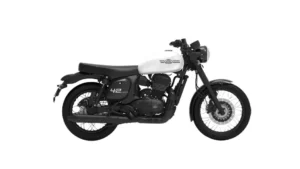
Detailed Overview The Jawa 42 has always been one of those bikes that immediately catches your attention, not because it shouts for it, but because it blends a classic silhouette with a cleaner, more modern execution. What lies beneath that timeless shape is a 294.7 cc single-cylinder, liquid-cooled engine that feels calmer and more refined than what its retro looks suggest. On the road, this engine produces power in a gentle, progressive manner, offering a shade over 27 horses and nearly 27 Nm of torque. Numbers aside, the way it behaves is what matters. It has enough poke to glide through daily traffic without effort and enough mid-range strength to let you make relaxed overtakes on open stretches. Liquid cooling helps the engine stay composed even in slow-moving traffic, which is something riders in Indian cities instinctively appreciate after a few weeks of ownership. Pairing this motor with a 6-speed gearbox adds to the usability. The lower gears keep the bike agile in congested areas, while the higher gears let the engine settle into a smooth rhythm once you get past city limits. It doesn’t buzz excessively at cruising speeds, which means longer rides feel easier on the hands and the head. You don’t really need to work the gearbox too hard; the bike has that effortless vibe where it moves without demanding constant attention. The chassis plays an equally important role in shaping the character of the Jawa 42. Built around a double-cradle frame, the motorcycle feels planted and meaningful, especially on predictable tarmac. The telescopic front forks and twin rear shock absorbers are tuned more toward comfort than aggression. On broken city roads, they absorb most imperfections without sending harshness to the rider. When the road smoothens out, the bike feels composed and reassuring, never twitchy or nervous. The rear shocks come with preload adjustment, which helps you tweak the stiffness based on your weight or whether you’re carrying a pillion. With a wheelbase that sits in a comfortable middle ground and a seat height that most riders can manage without a second thought, the 42 feels friendly the moment you swing a leg over it. The weight, hovering around the 180-kilo mark, is noticeable when you first lift it off the stand, but once the wheels start rolling, it becomes surprisingly easy to guide through tight city gaps. At slow speeds, it doesn’t feel top-heavy or intimidating, making it a bike that even new riders can ease into confidently. Braking performance further boosts that confidence. Disc brakes at both ends, supported by ABS, ensure the bike maintains composure even during harder braking scenarios. Whether you’re slowing down suddenly for an unexpected pothole or coming down from a quick highway burst, the bite feels progressive and predictable. The road grip from the tyres complements the braking setup, giving the rider a reassuring sense of control in both dry and wet conditions. The 13-litre fuel tank offers a practical range for mixed usage. In real riding, the bike tends to return mileage figures that make sense for a 300 cc machine—good enough for daily routes and long enough to avoid unnecessary halts during weekend rides. The riding position supports this versatility. The handlebar sits at a comfortable reach, the footpegs aren’t placed too far back or forward, and the seat shape suits both short commutes and longer journeys. Modern touches such as the digital or semi-digital instrument cluster add convenience without taking away from the classic charm. The display keeps essential information easy to absorb while riding, and the switches and controls feel straightforward and durable. The alloy wheels, apart from enhancing the bike’s stance, also bring the practicality of tubeless tyres, which every rider appreciates the moment a puncture threatens to ruin the day. What ties everything together is the way the Jawa 42 feels when you ride it. It’s not a machine built to chase top speeds or sharp cornering records. Instead, it’s designed to make everyday riding enjoyable. It’s smooth where it needs to be, steady when the road gets unpredictable, and stylish enough to turn heads without trying too hard. For someone who wants a motorcycle that merges classic aesthetics with modern engineering, and who values comfort and composure over outright aggression, the Jawa 42 fits naturally into that sweet spot. It becomes a companion more than a tool—a bike you look forward to riding every single day. From the moment you swing a leg over the S1 Pro Gen 3 you get a sense this isn’t a run-of-the-mill scooter swinging between trolley pace and occasional bursts — it’s built to deliver a confident, electric-age ride that can really stretch its legs when called upon. The mid-mounted IPM (Permanent Magnet) electric motor — in its standard trim rated at about 11 kW peak, and in top trim even hitting around 13 kW — moves the wheel with a sense of urgency that’s rare for a scooter. That translates into fast, sharp launches in city traffic — you’ll feel the torque and instant throttle response as you weave through intersections or overtake sluggish vehicles. In many everyday situations, the scooter surges ahead like a light, nimble ride rather than a heavy two-wheeler dragging its feet. Because the motor is electric and doesn’t rely on shifting gears or revving up, you get that power instantly — no clutch slip, no gear hunt. That means in traffic lights, tight city lanes, or slip-streams behind slow vehicles, the S1 Pro Gen 3 doesn’t hesitate; it just moves. For riders who commute daily in Indian city (or semi-urban) traffic, that immediacy becomes liberating rather than intimidating. Battery and range are where the S1 Pro Gen 3 tries to shine beyond city-only expectations. Depending on the variant you choose, you get battery packs sized around 4 kWh in the “standard Pro” trim, or higher capacity in top-end trims. That gives a certified range (on paper) that’s substantial — enough to cover multiple days of commuting, errands, or even a longer ride without stressing about charging. For someone who rides moderately — avoids aggressive throttle, uses city-postal-style short bursts, and takes advantage of regen braking — this scooter realistically becomes a “charge once, forget for days” kind of ride. On a full battery, you don’t have to hunt for a charger every evening if you’ve done light to moderate daily runs. Charging is also fairly manageable: you can plug it at home via a standard charger, and overnight charging works well for most users. That blending of decent range + manageable charging means the scooter doesn’t demand a “perfect” infrastructure to be useful. For many urban and semi-urban owners, this will feel like they finally got an EV they can live with daily — without constant anxiety about charging points or battery drain. But power and range alone don’t make a good ride if the chassis and handling don’t follow through — and the S1 Pro Gen 3 makes a thoughtful attempt there. The frame is a blend of tubular plus sheet-metal construction, chosen to balance rigidity and lightness. Suspension setup — with a telescopic front fork and a monoshock rear — gives the kind of stability that keeps things composed on smooth roads, and surprises you with confidence on moderate irregularities. It steers well, rides with composure through corners or U-turns, and doesn’t feel ponderous even when you’re navigating narrow or crowded lanes. For city riders especially, that nimbleness matters a lot: it means you don’t treat every pothole or traffic jam as a chore — the scooter simply flows through. Stopping power and control follow the performance: disc brakes at both ends ensure that whether you’re nipping between cars or riding somewhere faster, the response is strong and predictable. There’s also an electronic braking system (brake-by-wire with dual-channel safety logic) and regenerative braking to feed energy back into the system — those features do more than just improve safety: they add to the feeling of control, especially when traffic is unpredictable or you’re riding fast and want to scrub speed without abrupt jolts. One of the more practical touches for real-life use is the storage under the seat — the kind you need for day-to-day commuting or errands. It’s roomy enough for everyday items: helmet, small groceries, backpack or shopping bags — something many commuters wish their scooters had from day one. That means you don’t always have to carry a backpack to work or run errands; the scooter becomes a small-haul companion, not just a ride. Equally important: S1 Pro Gen 3 dresses up its practicality with modern electronics. A big digital touchscreen dash, ride-mode selection (from efficient Eco/Normal to more eager Sport/Hyper), and an intuitive, responsive throttle/regen + braking system make it feel contemporary — not clumsy or dated like some older scooters. For someone used to feature-rich phones or gadgets, the smoothness, responsiveness and user-friendly electronics help the scooter feel like a proper “smart vehicle,” rather than a basic mode of transport. Now, riding any electric scooter daily also involves trade-offs — and S1 Pro Gen 3 is no exception. Its suspension setup, while stable and civil on regular roads, can feel firm when the road turns rough — pot-holed rural lanes or badly maintained roads tend to transmit more shock than a softer commuter-scooter would. So if your daily terrain often involves rough patch-work of roads, you’ll notice that the ride leans toward a “sporty-firm” feel rather than cushy comfort. Also, if you habitually ride hard — frequent quick starts, constant high-speed bursts, use of top ride modes — the real-world range will drop noticeably. That means the promise of long rides per charge exists, but it depends heavily on how you ride. Heavy throttle, frequent rides on rough terrain, or pillion + load will shrink that window. For someone without stable access to charging (home or office), occasional long trips could demand careful planning. Lastly, while the scooter is light and nimble, carrying capacity is still limited — if you often ferry larger shopping loads or need to carry more than everyday items, the under-seat storage helps but won’t turn this into a cargo ride. And because it’s optimized for comfort + performance over long-haul touring, long highway rides, rough rural patches or constant heavy usage might still make you wish for a heavier, sturdier motorcycle or a cargo-oriented ride. In everyday life — commuting to work, weaving through city traffic, running errands, riding to college or market, maybe occasional weekend trips — the S1 Pro Gen 3 offers a refined, capable experience. It gives brisk performance when needed, handles with composure, charges without fuss, and mixes modern convenience with sensible practicality. For someone who values ease, modern EV-style riding, and doesn’t want to compromise much on performance or convenience — it’s hard to find another scooter in this price-performance bracket that strikes such a balanced chord.
Expert Review MotoAutiv Team MotoAutiv Team
FAQ (Manual Override) Q1. Is the Jawa 42 good for daily commuting? Yes, the Jawa 42 works very well as a daily ride. Its engine is smooth in the low and mid-range, the riding posture is comfortable, and the bike feels easy to handle in traffic once it’s moving. The 6-speed gearbox also helps during mixed city and highway use. Q2. What is the real-world mileage of the Jawa 42? In normal riding conditions, most owners get somewhere around 30–35 km/l. Mileage can vary based on traffic, riding style, and how often you ride in lower gears. Q3. Can the Jawa 42 handle long highway rides? Absolutely. The bike maintains a relaxed rhythm at cruising speeds, and the liquid-cooled engine stays stable on longer stretches. The seat and riding triangle are designed to reduce fatigue, making weekend trips and short tours comfortable. Q4. Is the engine reliable for long-term use? The 294.7 cc, liquid-cooled, DOHC engine is built to be durable and refined. With regular maintenance and quality engine oil, the bike holds up well over the years and remains smooth even with daily use. Q5. How is the suspension comfort on bad roads? The suspension tuning leans toward comfort. The front forks and adjustable rear shocks absorb bumps reasonably well, making the bike suitable for broken city roads and uneven surfaces. Q6. Does the Jawa 42 vibrate at high speeds? The bike handles vibrations better than many retro-styled motorcycles. Mild buzz may appear at very high speeds, but cruising at moderate highway speeds remains smooth and manageable. Q7. Is the seat height suitable for shorter riders? Yes, the seat height is around 788 mm, which most riders can comfortably manage. Even shorter riders usually find it easy to place their feet on the ground. Q8. How are the brakes on the Jawa 42? With disc brakes at both ends and ABS, braking performance is confident and predictable. It offers good stopping power and remains stable even during sudden braking. Q9. Is the Jawa 42 heavy to manage? The weight feels slightly noticeable when pushing it while parked, but once moving, the bike becomes easy to maneuver. Its balance and geometry help it feel lighter than it actually is. Q10. What is the service cost like? Service costs are generally moderate for a 300 cc bike. Routine maintenance, oil changes, and consumables stay within a reasonable range, though prices can vary slightly between dealerships. Q11. Is the Jawa 42 suitable for beginners? Yes, it can be a good choice for new riders. The power delivery is smooth, the handling is friendly, and it doesn’t intimidate you with sudden acceleration. It’s a comfortable, approachable motorcycle for learning and improving skills. Q12. Does the Jawa 42 have tubeless tyres? Yes, the alloy wheel variants come with tubeless tyres, which is a major advantage for daily riders as they make puncture handling much easier. Q13. What is the fuel tank capacity? The bike carries a 13.2-litre tank, giving a comfortable riding range for both city commutes and weekend rides. Q14. What makes the Jawa 42 different from other retro bikes? It stands out for blending classic looks with a smoother, more modern engine feel. The liquid-cooled DOHC engine, 6-speed gearbox, and better high-speed refinement give it a more contemporary riding character while still keeping the vintage charm. Q: What is the real-world range of the Ola S1 Pro Gen 3? A: In everyday riding, you can expect around 120–150 km depending on speed, mode, and traffic. With careful riding, it can go higher. Q: How long does it take to charge the battery fully? A: Using a home charger, it generally takes around 6–7 hours for a full charge from low battery. Q: What is the top speed of the S1 Pro Gen 3? A: The scooter can reach a top speed of about 120 km/h in its highest performance mode. Q: Does it support fast charging? A: Yes, Ola Hypercharger stations can add meaningful range quickly, though speed depends on availability and battery percentage. Q: What motor does the S1 Pro Gen 3 use? A: It uses a mid-mounted permanent magnet motor with peak output around 11–13 kW depending on variant. Q: What riding modes are available on the scooter? A: The scooter offers multiple modes such as Eco, Normal, Sport, and Hyper to balance performance and efficiency. Q: Is the scooter suitable for long daily commutes? A: Yes, its strong range, fast acceleration, and comfortable ergonomics make it reliable for long commutes. Q: How is the suspension quality? A: It is stable and sporty, though slightly firm on very rough roads. Q: Does it have storage space? A: Yes, it offers spacious under-seat storage that fits essentials like a helmet, backpack, or groceries. Q: Can it carry a pillion comfortably? A: The seat is long and supportive enough for comfortable pillion riding. Q: Is the S1 Pro Gen 3 good for hilly areas? A: Yes, the powerful motor handles inclines well, though range may drop due to extra load. Q: What safety features does it have? A: It comes with front and rear disc brakes, electronic braking, regenerative braking, and multiple sensors for stability and control. Q: Does it support OTA updates? A: Yes, the scooter’s software can be updated over the air, adding new features and improvements. Q: Is the touchscreen reliable? A: The large digital display responds smoothly and remains visible in bright daylight. Q: What is the warranty on the battery? A: Typically around 8 years or a fixed kilometer limit, depending on Ola’s policy at purchase.
Fuel System Electronic Fuel Injection Electric
Price Variants | 159000 Pro | 124999 Pro + | 154999
Pros The 294.7 cc liquid-cooled, DOHC engine delivers smooth, usable power. It’s strong enough for city traffic and highway cruising without being overly aggressive — ideal for a daily ride or a relaxed weekend cruise. The 6-speed gearbox is a big plus: it helps keep the engine relaxed at higher speeds and offers flexibility for tight city riding, which makes the bike versatile whether you’re commuting or touring. Suspension and chassis setup balance comfort and stability nicely. The telescopic front forks and adjustable twin rear shocks soak up urban bumps and rough roads reasonably well, yet the bike remains composed on smoother roads. Handling and ergonomics suit a wide range of riders. Seat height and geometry keep the bike manageable in traffic or tight spots; once moving, the weight feels stable but not cumbersome. Disc brakes (front and rear) with ABS give reliable stopping power and good braking confidence — good for unpredictable traffic or sudden stops. The 13-litre fuel tank and respectable real-world mileage make it practical for daily use without frequent fuel stops. Blend of retro styling and modern engineering: it gives the classic-bike look and relaxed feel but with contemporary performance, maintenance comfort, and features like alloy wheels and tubeless tyres. Comfortable riding posture makes it suitable for both short commutes and longer rides; it's not tiring or too aggressive, which broadens the use-case beyond just city or weekend use. Strong, responsive acceleration — the instant torque and high-power electric motor make starts, overtakes and city traffic much easier and more confidence-inspiring. Good top-end speed and range (on a full battery) — it’s not just a short-hop scooter; you can cover daily commutes or longer rides without constant range anxiety if you moderate throttle and riding style. Flexible ride modes — Eco through Sport/Hyper give you control: you can save energy on regular commuting or unlock performance when needed. Modern features and convenience — digital instrument cluster, ride-modes, braking + regen systems, and under-seat storage add practicality and a “smart-vehicle” feel. Ease of ownership & maintenance simplicity — fewer moving parts compared with a petrol scooter/ bike, smoother rides without clutch/gears, and low day-to-day upkeep for city use.
Transmission 6-Speed Automatic

Stay connected with 🚗 Motoautiv.com ⚡

Leave your email 📧 below and Click subscribe Now 🔔✨