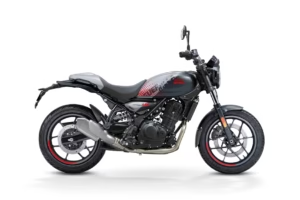
Quick Analysis
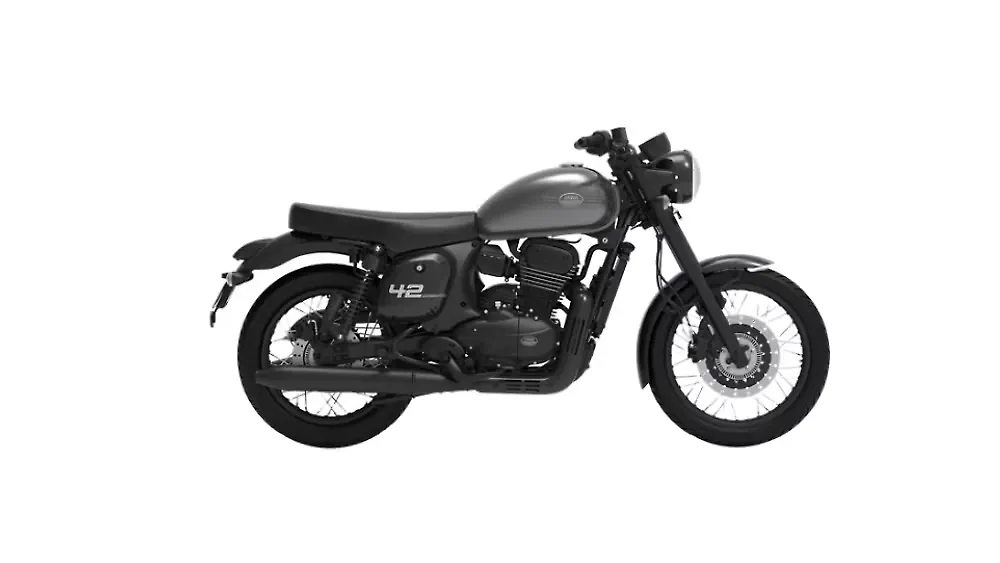
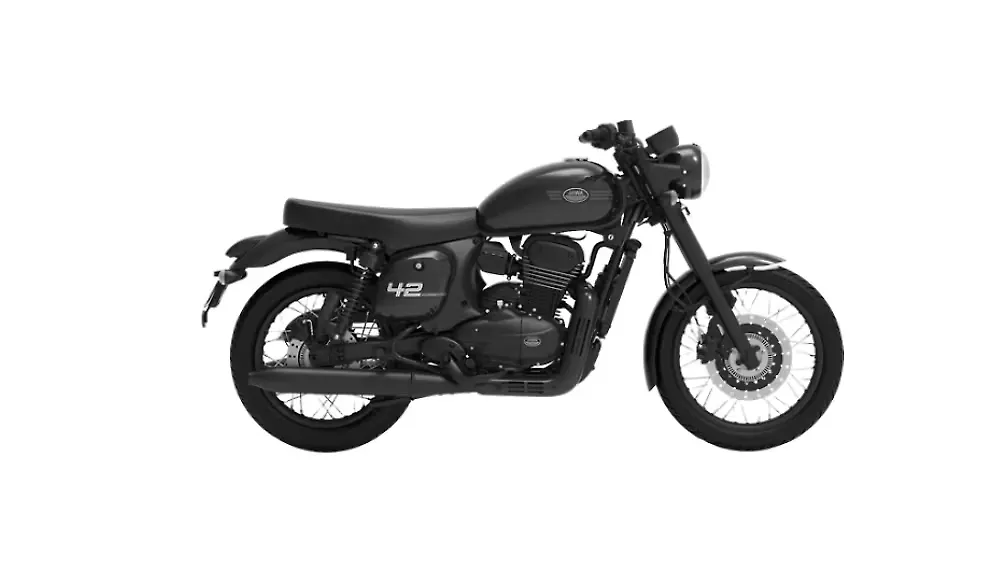
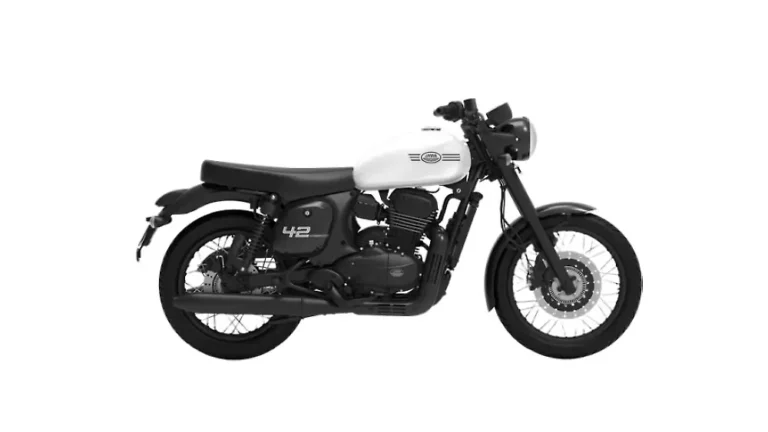
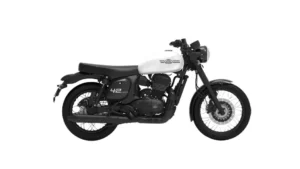
JAWA 42
12.5 pts
Unweighted: 14 advantages
EnginePerformanceDimensionsBrakesTyresOther
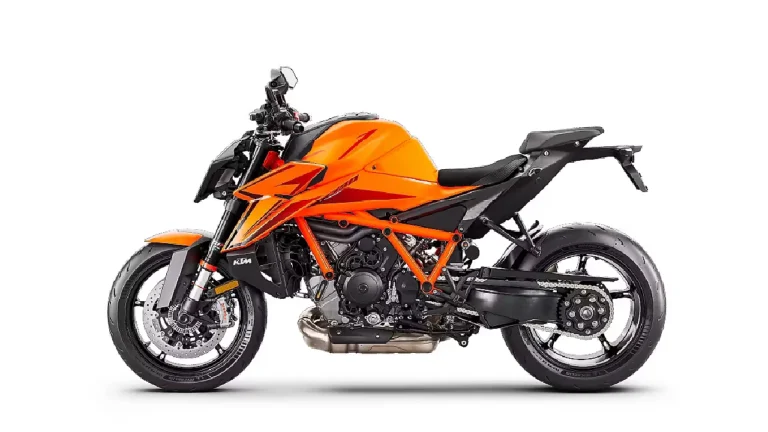
KTM 1390 SUPER DUKE R
26.5 pts
Unweighted: 16 advantages
EnginePerformanceDimensionsBrakesTyresOther
| Specification | ||
|---|---|---|
Engine Specifications |
||
| Cooling System | — | Liquid Cooled |
| Displacement | 294.7 cc | 1350 cc |
| Engine Type | — | 2 cylinder, 4 stroke, V 75° (EURO 5+) |
| Power | 27.3 PS | 140 kW (190 hp) @ 10,000 rpm |
| Torque | 26.8 Nm | 145 Nm @ 8,000 rpm |
Performance & Efficiency |
||
| Fuel Tank Capacity | 13.2 L | approx. 17.5 litres/3 I reserve |
| Mileage | 32 kmpl | 16.9 kmpl |
Dimensions & Weight |
||
| Kerb Weight | 184 kg | approx. 200.5 kg |
| Seat Height | 788 mm | 834 mm |
Brakes & Suspension |
||
| ABS | Dual Channel ABS | Bosch 9.3 MP (incl. cornering-ABS and Supermoto ABS) |
| Front Brake | Disc Front 280 mm, Caliper - Front 2 Piston | 2 x Brembo Stylema Monobloc four piston, radially mounted caliper, brake disc Ø 320 mm |
| Front Suspension | Telescopic Forks, Ø 35 mm | WP APEX-linkage shock |
| Rear Brake | Disc Front 240 mm, Caliper - Rear 1Piston | Brembo two piston, fixed caliper, brake disc Ø 240 mm |
| Rear Suspension | Twin Shock Absorber, Gas Filled with Adjustable Preload | Compression (high and low speed), rebound, hydraulic preload |
Tyres & Wheels |
||
| Front Tyre | Alloy wheel - 90/90-18, 51P | Michelin Power GP, 120/70 ZR 17, 200/55 ZR 17 |
| Rear Tyre | Alloy Wheel - 120/80-17, 61P | Michelin Power GP, 120/70 ZR 17, 200/55 ZR 17 |
| Tyre Type | Tubeless | Cast aluminium wheels 3.50 x 17"; 6.00 x 17" |
| Wheel Type | Alloy | Cast aluminium wheels 3.50 x 17"; 6.00 x 17" |
Other Specifications |
||
| Battery | MF Battery | 12V 11.2 Ah |
| Bike Image 1 | https://motoautiv.com/wp-content/uploads/2025/11/42voyagerred.webp | — |
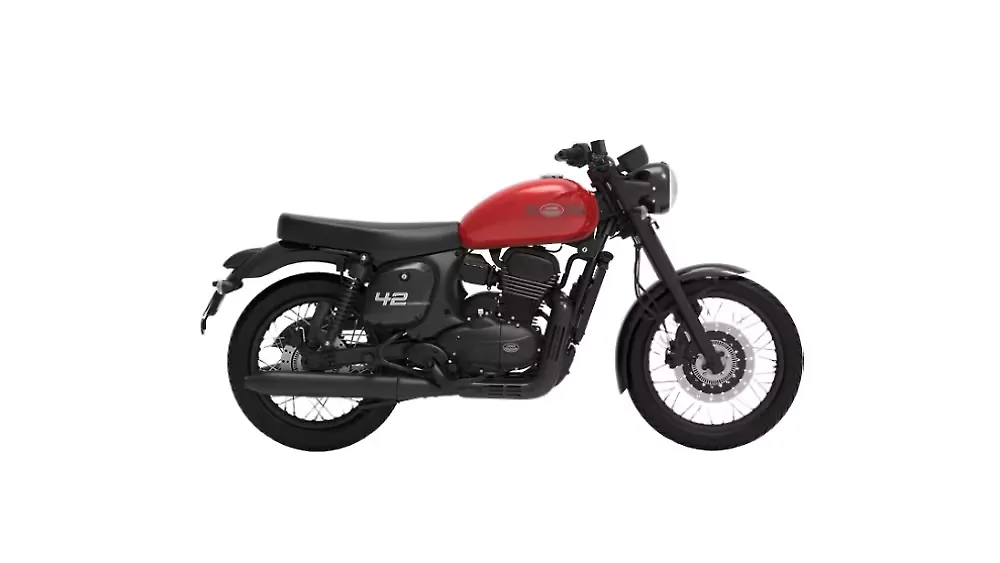
| Bike Image 10 | https://motoautiv.com/wp-content/uploads/2025/11/42cosmicrockdt.webp | — |
| Bike Image 2 | https://motoautiv.com/wp-content/uploads/2025/11/42asteroidgrey.webp | — |
| Bike Image 3 | https://motoautiv.com/wp-content/uploads/2025/11/42odysseyblack.webp | — |
| Bike Image 4 | https://motoautiv.com/wp-content/uploads/2025/11/42nebulablue.webp | — |
| Bike Image 5 | https://motoautiv.com/wp-content/uploads/2025/11/42celestialcoppermatte.webp | — |
| Bike Image 6 | https://motoautiv.com/wp-content/uploads/2025/11/42allstarblackmatte.webp | — |
| Bike Image 7 | https://motoautiv.com/wp-content/uploads/2025/11/42celestialcoppermattedt.webp | — |
| Bike Image 8 | https://motoautiv.com/wp-content/uploads/2025/11/42starshipbluedt.webp | — |
| Bike Image 9 | https://motoautiv.com/wp-content/uploads/2025/11/42infinityblackmattedt.webp | — |
| Color Options | Vega White Voyager Red Asteroid Grey Odyssey Black Nebula Blue Celestial Copper Matte Orion Red Matte Sirius White Matte All Star Black Matte Cosmic Rock Dual Tone Celestial Copper Matte Dual Tone Starship Blue Dual Tone Infinity Black Matte Dual Tone | Orange |
| Cons | It’s not a performance-focused bike: top-end acceleration and high-speed punch are modest compared to sportier or more powerful motorcycles. If you crave quick bursts or aggressive overtakes, the 42 might feel a bit reserved. At around 180+ kg kerb-weight, it’s not the lightest — manoeuvring at very low speeds or parking sometimes feels a bit heavyish for inexperienced riders. While suspension is comfortable and balanced, it doesn’t offer sporty handling or sharp cornering agility. On twisty roads or aggressive riding, the bike doesn’t inspire a sport-bike vibe. For fully-loaded touring (pillions, luggage, rough terrain), the comfort and power are only average: it’s more of a commuter-plus or mild-tourer than a long-distance tourer. Because it aims for balance, it doesn’t shine in any single category. It may leave riders who want either pure vintage simplicity or modern performance wanting more. Tubeless/Alloy wheel + disc-brake setup is good, but tyre size and ground clearance (typical of this class) might limit comfort on severely broken or off-road conditions. Maintenance and running costs, while reasonable for a 300 cc class bike, will still be higher than basic commuter bikes — fuel, maintenance, and insurance will be more than a small-capacity commuter. | High Running & Maintenance Cost: Premium components (tires, brakes, consumables) and insurance can be expensive, as noted in reviews. Prone to Rear Tyre Wear: In aggressive use (especially on a track or spirited riding), the rear Michelin Power GP rubber may wear out quickly. Windblast & Comfort: As a naked “beast,” it offers limited wind protection, which can make highway riding tiring or uncomfortable. High Seat Height: The seat height (834 mm) may not be ideal for shorter riders. Electronics / Reliability Quirks: Some users have reported occasional electronic gremlins, sensor issues, or clutch drag. Expensive Purchase Price: Given the power and components, it comes with a high price tag compared to some rivals. |
| Detailed Overview | The Jawa 42 has always been one of those bikes that immediately catches your attention, not because it shouts for it, but because it blends a classic silhouette with a cleaner, more modern execution. What lies beneath that timeless shape is a 294.7 cc single-cylinder, liquid-cooled engine that feels calmer and more refined than what its retro looks suggest. On the road, this engine produces power in a gentle, progressive manner, offering a shade over 27 horses and nearly 27 Nm of torque. Numbers aside, the way it behaves is what matters. It has enough poke to glide through daily traffic without effort and enough mid-range strength to let you make relaxed overtakes on open stretches. Liquid cooling helps the engine stay composed even in slow-moving traffic, which is something riders in Indian cities instinctively appreciate after a few weeks of ownership. Pairing this motor with a 6-speed gearbox adds to the usability. The lower gears keep the bike agile in congested areas, while the higher gears let the engine settle into a smooth rhythm once you get past city limits. It doesn’t buzz excessively at cruising speeds, which means longer rides feel easier on the hands and the head. You don’t really need to work the gearbox too hard; the bike has that effortless vibe where it moves without demanding constant attention. The chassis plays an equally important role in shaping the character of the Jawa 42. Built around a double-cradle frame, the motorcycle feels planted and meaningful, especially on predictable tarmac. The telescopic front forks and twin rear shock absorbers are tuned more toward comfort than aggression. On broken city roads, they absorb most imperfections without sending harshness to the rider. When the road smoothens out, the bike feels composed and reassuring, never twitchy or nervous. The rear shocks come with preload adjustment, which helps you tweak the stiffness based on your weight or whether you’re carrying a pillion. With a wheelbase that sits in a comfortable middle ground and a seat height that most riders can manage without a second thought, the 42 feels friendly the moment you swing a leg over it. The weight, hovering around the 180-kilo mark, is noticeable when you first lift it off the stand, but once the wheels start rolling, it becomes surprisingly easy to guide through tight city gaps. At slow speeds, it doesn’t feel top-heavy or intimidating, making it a bike that even new riders can ease into confidently. Braking performance further boosts that confidence. Disc brakes at both ends, supported by ABS, ensure the bike maintains composure even during harder braking scenarios. Whether you’re slowing down suddenly for an unexpected pothole or coming down from a quick highway burst, the bite feels progressive and predictable. The road grip from the tyres complements the braking setup, giving the rider a reassuring sense of control in both dry and wet conditions. The 13-litre fuel tank offers a practical range for mixed usage. In real riding, the bike tends to return mileage figures that make sense for a 300 cc machine—good enough for daily routes and long enough to avoid unnecessary halts during weekend rides. The riding position supports this versatility. The handlebar sits at a comfortable reach, the footpegs aren’t placed too far back or forward, and the seat shape suits both short commutes and longer journeys. Modern touches such as the digital or semi-digital instrument cluster add convenience without taking away from the classic charm. The display keeps essential information easy to absorb while riding, and the switches and controls feel straightforward and durable. The alloy wheels, apart from enhancing the bike’s stance, also bring the practicality of tubeless tyres, which every rider appreciates the moment a puncture threatens to ruin the day. What ties everything together is the way the Jawa 42 feels when you ride it. It’s not a machine built to chase top speeds or sharp cornering records. Instead, it’s designed to make everyday riding enjoyable. It’s smooth where it needs to be, steady when the road gets unpredictable, and stylish enough to turn heads without trying too hard. For someone who wants a motorcycle that merges classic aesthetics with modern engineering, and who values comfort and composure over outright aggression, the Jawa 42 fits naturally into that sweet spot. It becomes a companion more than a tool—a bike you look forward to riding every single day. | The KTM 1390 Super Duke R is the ultimate expression of KTM’s “Beast” philosophy — a high-performance naked streetfighter that pairs brutal V-twin power with razor-sharp handling and modern electronics. At its core is a 1,350 cc LC8 V-twin engine that churns out around **190 PS (approximately 188–190 bhp)** at 10,000 rpm and **145 Nm of torque** at 8,000 rpm, giving it an immense punch and a visceral, muscular character. The engine also makes use of a cam-shift (variable valve timing) system that enhances its performance spread, delivering strong torque low down and explosive power at high revs. Built on a chromium-molybdenum steel trellis frame, the 1390 Super Duke R is not only powerful but also impressively agile for its size. KTM pairs the frame with high-quality WP APEX suspension — a 48 mm USD front fork and a linkage monoshock at the back — to strike a balance between compliant ride quality and sporty precision. ([KTM][1]) Cornering ABS by Bosch, traction control (MTC), a slipper clutch, and a five-mode ride-mode system (Street, Sport, Rain, Track, Performance) give the rider confidence to explore the bike’s full potential. Braking is handled by forceful Brembo Stylema calipers (320 mm twin discs at the front, 240 mm at the rear), ensuring the Super Duke R can back up its power with excellent stopping authority. Visually, the Super Duke R is bold, aggressive, and unmistakable. The angular bodywork, sharp LED headlight with characteristic DRLs, new tank shrouds, and subtle winglets give it a predatory look that lives up to its nickname. The trellis frame is painted in KTM’s signature orange, providing both structural strength and stylistic flair, while the narrow tail section completes the streetfighter stance. Technology is a major strength. Its 5-inch TFT display is loaded with KTMConnect for smartphone pairing, and in Track mode it shows telemetry data such as lean angle, lap times, and G-forces. ([Bajaj Auto][3]) The electronics suite also includes wheelie control, launch control, anti-slide, and a quickshifter for seamless clutchless upshifts and downshifts, adding to the bike’s performance-focused edge. KTM even brings a “Demo Mode” for a limited period — allowing riders to try out all electronic aids in the first 1,500 km before choosing what to permanently enable. In terms of practicality, the Super Duke R is surprisingly usable on the street. Its seat height of **834 mm** and a kerb weight of about **200.5 kg** make it relatively manageable compared to more extreme superbikes. The fuel tank is 17.5 litres, offering a decent range for a performance beast. Despite its aggressive nature, it can be tuned via its various ride modes for more relaxed everyday use — though wind protection is limited due to its naked-bike design, and long highway stints may feel less comfortable than on touring bikes. In the Indian market, KTM prices the 1390 Super Duke R at ₹ 22.96 lakh (ex-showroom), positioning it as a flagship naked bike with no shortage of performance or tech. However, its premium components and high-performance nature come at a cost: maintenance, tyres (Michelin Power GP), and high-spec brakes are all expensive, and potential buyers should be prepared for that. Overall, the KTM 1390 Super Duke R is not for the faint of heart — it’s a powerful, aggressive, and technically sophisticated machine built for riders who demand extreme performance, advanced electronics, and a visceral riding experience. For enthusiasts looking for a street-focused beast that delivers both in city traffic and on twisty roads, it stands out as one of the most capable and exhilarating naked bikes on the market today. |
| Expert Review | MotoAutiv Team | MotoAutiv Team |
| FAQ (Manual Override) | Q1. Is the Jawa 42 good for daily commuting? Yes, the Jawa 42 works very well as a daily ride. Its engine is smooth in the low and mid-range, the riding posture is comfortable, and the bike feels easy to handle in traffic once it’s moving. The 6-speed gearbox also helps during mixed city and highway use. Q2. What is the real-world mileage of the Jawa 42? In normal riding conditions, most owners get somewhere around 30–35 km/l. Mileage can vary based on traffic, riding style, and how often you ride in lower gears. Q3. Can the Jawa 42 handle long highway rides? Absolutely. The bike maintains a relaxed rhythm at cruising speeds, and the liquid-cooled engine stays stable on longer stretches. The seat and riding triangle are designed to reduce fatigue, making weekend trips and short tours comfortable. Q4. Is the engine reliable for long-term use? The 294.7 cc, liquid-cooled, DOHC engine is built to be durable and refined. With regular maintenance and quality engine oil, the bike holds up well over the years and remains smooth even with daily use. Q5. How is the suspension comfort on bad roads? The suspension tuning leans toward comfort. The front forks and adjustable rear shocks absorb bumps reasonably well, making the bike suitable for broken city roads and uneven surfaces. Q6. Does the Jawa 42 vibrate at high speeds? The bike handles vibrations better than many retro-styled motorcycles. Mild buzz may appear at very high speeds, but cruising at moderate highway speeds remains smooth and manageable. Q7. Is the seat height suitable for shorter riders? Yes, the seat height is around 788 mm, which most riders can comfortably manage. Even shorter riders usually find it easy to place their feet on the ground. Q8. How are the brakes on the Jawa 42? With disc brakes at both ends and ABS, braking performance is confident and predictable. It offers good stopping power and remains stable even during sudden braking. Q9. Is the Jawa 42 heavy to manage? The weight feels slightly noticeable when pushing it while parked, but once moving, the bike becomes easy to maneuver. Its balance and geometry help it feel lighter than it actually is. Q10. What is the service cost like? Service costs are generally moderate for a 300 cc bike. Routine maintenance, oil changes, and consumables stay within a reasonable range, though prices can vary slightly between dealerships. Q11. Is the Jawa 42 suitable for beginners? Yes, it can be a good choice for new riders. The power delivery is smooth, the handling is friendly, and it doesn’t intimidate you with sudden acceleration. It’s a comfortable, approachable motorcycle for learning and improving skills. Q12. Does the Jawa 42 have tubeless tyres? Yes, the alloy wheel variants come with tubeless tyres, which is a major advantage for daily riders as they make puncture handling much easier. Q13. What is the fuel tank capacity? The bike carries a 13.2-litre tank, giving a comfortable riding range for both city commutes and weekend rides. Q14. What makes the Jawa 42 different from other retro bikes? It stands out for blending classic looks with a smoother, more modern engine feel. The liquid-cooled DOHC engine, 6-speed gearbox, and better high-speed refinement give it a more contemporary riding character while still keeping the vintage charm. | Q: What engine powers the KTM 1390 Super Duke R? A: It is powered by a 1,350 cc liquid-cooled V-twin (LC8) engine. Q: What is its power and torque output? A: The engine produces 190 PS (140 kW) at 10,000 rpm and 145 Nm of torque at 8,000 rpm. Q: What is the seat height and weight of the 1390 Super Duke R? A: The seat height is 834 mm, and the dry (or “without fuel”) weight is around 200.5 kg per KTM specifications. Q: What is the fuel tank capacity? A: The fuel tank can hold 17.5 litres. Q: What type of brakes and suspension does it use? A: It features twin 320 mm Brembo Stylema calipers at the front, a 240 mm Brembo disc at the rear, 48 mm WP APEX USD fork up front, and a WP APEX linkage monoshock at the rear. Q: What rider aids and electronics are included on this bike? A: The 1390 Super Duke R comes with lean-angle (cornering) ABS, cornering traction control (KTM calls it MTC), wheelie control, launch control, a bi-directional quickshifter, cruise control, and a 5-inch TFT display with Bluetooth (KTM Connect). Q: What riding modes are available? A: It offers 5 riding modes: Street, Sport, Rain, Track, and Performance (depending on the market version). Q: What is the ex-showroom price of the KTM 1390 Super Duke R in India? A: The Super Duke R is priced at ₹ 22.96 lakh (ex-showroom) in India. Q: What is the service interval for this model? A: According to KTM’s 1390 spec sheet, it has a long service interval—up to 15,000 km (depending on region/market). |
| Fuel System | Electronic Fuel Injection | Keihin EFI (Throttle body 60mm) |
| Price Variants | | 159000 | Standard | 2295800 |
| Pros | The 294.7 cc liquid-cooled, DOHC engine delivers smooth, usable power. It’s strong enough for city traffic and highway cruising without being overly aggressive — ideal for a daily ride or a relaxed weekend cruise. The 6-speed gearbox is a big plus: it helps keep the engine relaxed at higher speeds and offers flexibility for tight city riding, which makes the bike versatile whether you’re commuting or touring. Suspension and chassis setup balance comfort and stability nicely. The telescopic front forks and adjustable twin rear shocks soak up urban bumps and rough roads reasonably well, yet the bike remains composed on smoother roads. Handling and ergonomics suit a wide range of riders. Seat height and geometry keep the bike manageable in traffic or tight spots; once moving, the weight feels stable but not cumbersome. Disc brakes (front and rear) with ABS give reliable stopping power and good braking confidence — good for unpredictable traffic or sudden stops. The 13-litre fuel tank and respectable real-world mileage make it practical for daily use without frequent fuel stops. Blend of retro styling and modern engineering: it gives the classic-bike look and relaxed feel but with contemporary performance, maintenance comfort, and features like alloy wheels and tubeless tyres. Comfortable riding posture makes it suitable for both short commutes and longer rides; it's not tiring or too aggressive, which broadens the use-case beyond just city or weekend use. | Massive Power & Torque: The 1,350cc LC-8 V-twin makes 190 PS (or ≈ 187 bhp) and 145 Nm of torque, delivering brutal acceleration and a very exciting powerband. Advanced Engine Technology: Uses variable valve timing (cam-shift) for a wider spread of performance, making the engine more flexible and usable across RPMs. Premium Brakes & Suspension: Equipped with Brembo Stylema calipers and high-quality WP Apex suspension, which gives excellent braking feel and handling. Modern Electronics Suite: Cornering ABS, cornering traction control (MTC), wheelie control, launch control, ride modes, quickshifter, and a 5-inch TFT display with Bluetooth make it very civilized for the performance it offers. Refined Ride for Its Power: Despite its raw power, reviewers note that the new 1390 feels easier to ride than earlier versions, thanks to improved ergonomics, electronics, and ride-height control. Long Service Interval: According to the spec sheet, the service interval is up to 15,000 km, which is very good for a high-performance bike. |
| Starter | — | Electric |
| Transmission | 6-Speed | 6 gears |