Quick Analysis
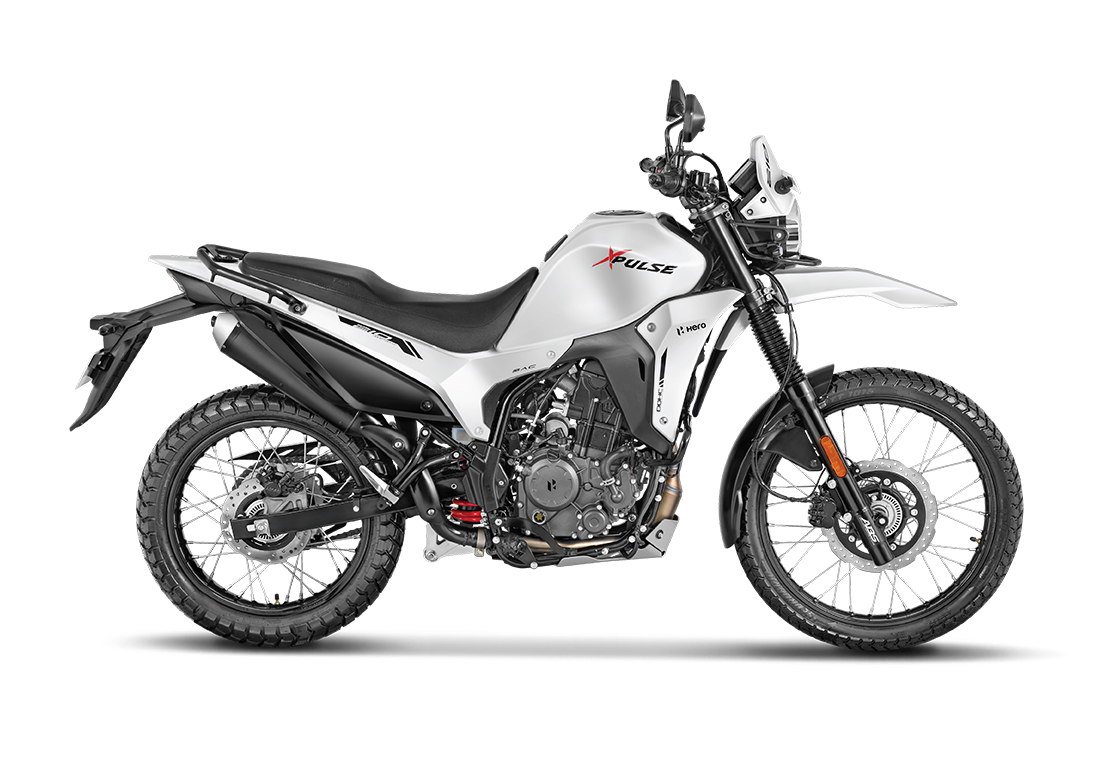
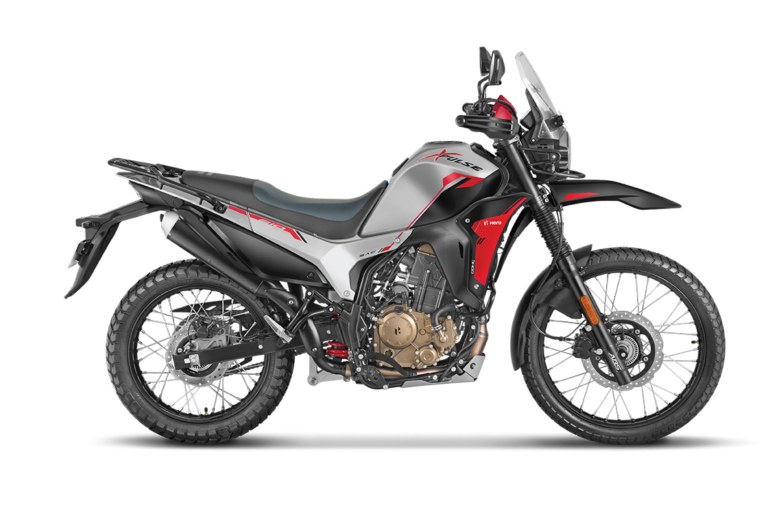
Hero XPULSE 210
15.5 pts
Unweighted: 8 advantages
EnginePerformanceDimensionsBrakesTyresFeaturesOther
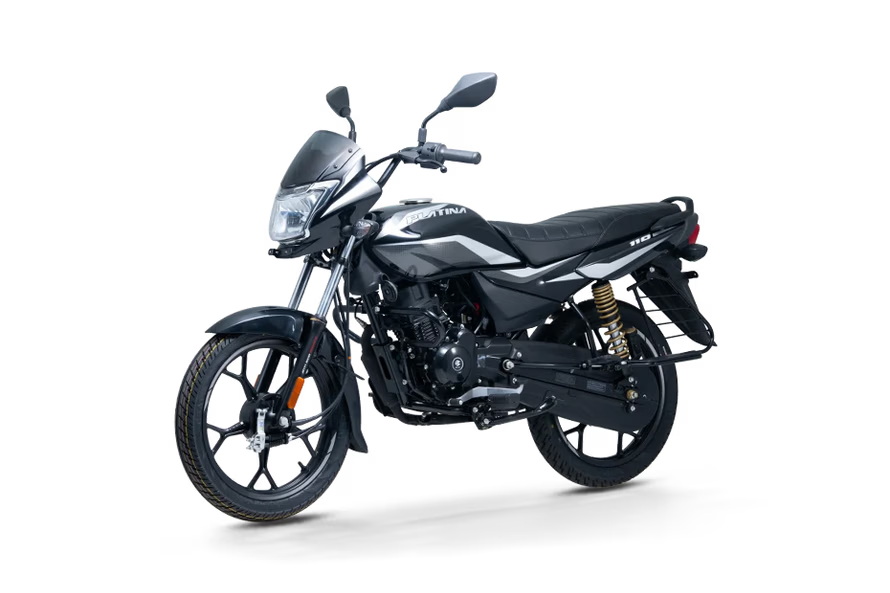
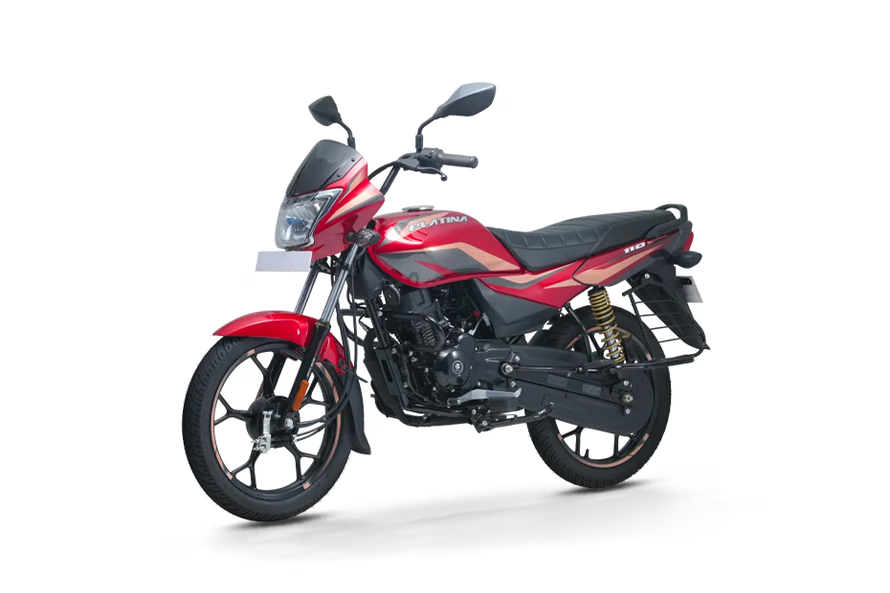
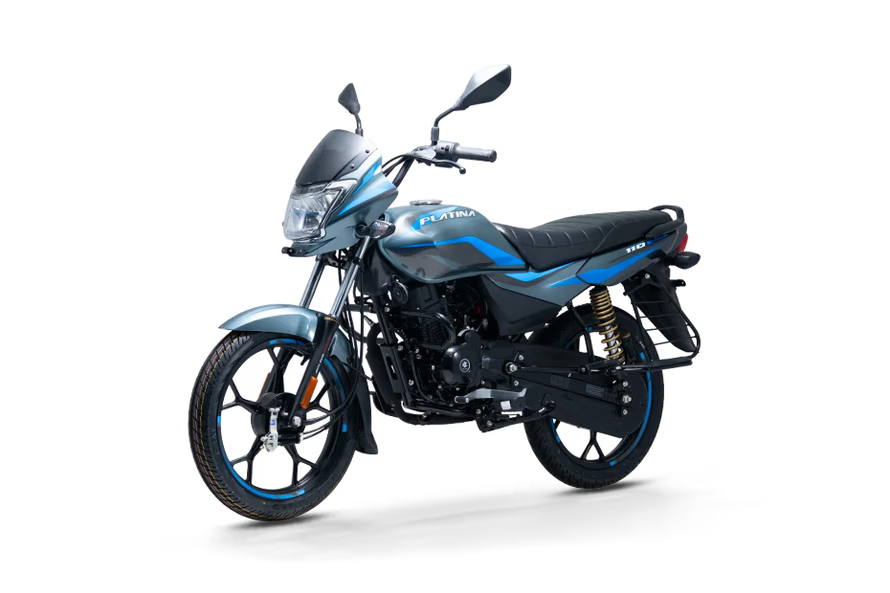
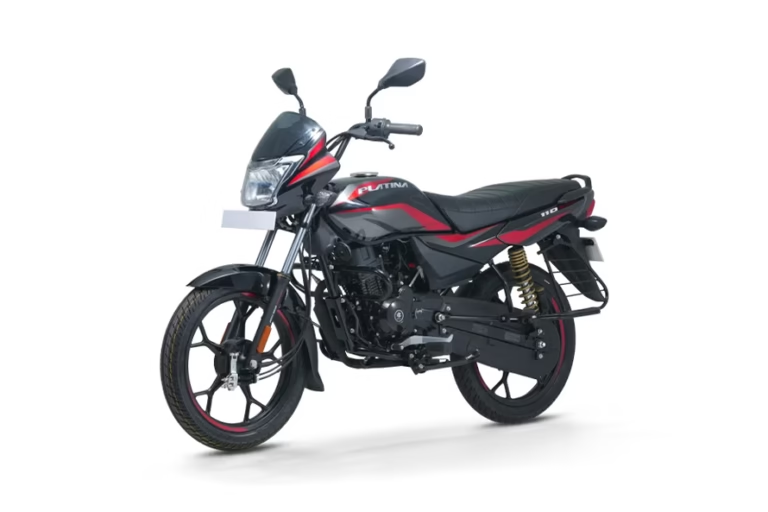
Bajaj Platina 110
18.5 pts
Unweighted: 16 advantages
EnginePerformanceDimensionsBrakesTyresFeaturesOther
| Specification | ||
|---|---|---|
Engine Specifications |
||
| Cooling System | Liquid Cooled | Air-cooled |
| Displacement | 210 cc | 115.06 cc |
| Engine Type | 4 Stroke 4 Valve Single Cylinder Liquid Cooled DOHC | 4‑Stroke, Single Cylinder, DTS‑i |
| Power | 24.6 PS @9250rpm | 6.99 KW (9.5 PS) @ 7500 rpm |
| Torque | 20.7 Nm @ 7250 rpm | 9.9 Nm @ 5500 rpm |
Performance & Efficiency |
||
| Fuel Tank Capacity | 13 litres | 11 L |
| Mileage | 40 Kmpl | 70 Kmpl |
Dimensions & Weight |
||
| Kerb Weight | 168 | 122 |
| Seat Height | 830 | 807 |
Brakes & Suspension |
||
| ABS | Single / Dual Channel ABS | — |
| Front Brake | Petal Disc 276 mm | 130 mm Drum |
| Front Suspension | Telescopic Front Forks Dia 41mm with anti friction bush | Hydraulic Telescopic, 135 mm travel |
| Rear Brake | Petal Disc 220 mm | 110 mm Drum (with CBS) |
| Rear Suspension | Rectangular swingarm with 10 steps adjustable gas charged mono-shock | SOS with nitrox canister Rear wheel stroke of 110 mm |
Tyres & Wheels |
||
| Front Tyre | 90/90 - 21 | 80/100–17 Tubeless |
| Rear Tyre | 120/80 - 18 | 80/100–17 Tubeless |
| Tyre Type | Tubed | Tubeless |
| Wheel Type | Spoke | Alloy |
Features & Technology |
||
| Headlight | LED | 12 V, 35/35 W HS1 with DRL |
Other Specifications |
||
| Battery | 12V - 6Ah | 12 V, 3 Ah VRLA |
| Bike Image 1 | https://motoautiv.com/wp-content/uploads/2025/05/Azure-Blue.png | https://motoautiv.com/wp-content/uploads/2025/07/BW-110.avif |
| Bike Image 2 | https://motoautiv.com/wp-content/uploads/2025/05/White.png | https://motoautiv.com/wp-content/uploads/2025/07/Red-110.avif |
| Bike Image 3 | — | https://motoautiv.com/wp-content/uploads/2025/07/Blue-110.avif |
| Bike Image 4 | — | https://motoautiv.com/wp-content/uploads/2025/07/Yellow-110.avif |
| Cluster | Digital Instrument Cluster | Analogue |
| Color Options | Azure Blue | #1F4E8C Alpine Silver | #6F7378 Glacier White | #F5F7F7 | Blue | #2456A6 Red | #A00000 Black and White | #111111, #F2F2EE Black and Red | #111111, #A00000 Yellow | #D4A017 |
| Cons | Wind Protection Is Limited: Despite its adventure-bike styling, the windscreen offers only moderate protection at higher highway speeds. Seat Height May Be Challenging: Shorter riders may find the tall seat height intimidating, especially in stop-and-go traffic. Engine Refinement at Higher RPMs: Some riders notice vibrations becoming more apparent when the engine is pushed harder for extended periods. Not Focused on Sporty Handling: The long-travel suspension and off-road setup prioritize versatility over sharp cornering performance on tarmac. Pillion Comfort Could Be Better: While suitable for daily use, the rear seat may feel narrow during longer journeys. Fuel Tank Capacity Is Average: Riders planning extended touring routes may find themselves stopping more frequently compared to some larger adventure motorcycles. | The motorcycle is tuned mainly for comfort and mileage, so acceleration and highway performance feel limited compared to more powerful commuter bikes. The soft suspension setup improves comfort but can feel slightly bouncy and less stable at higher speeds. The current model no longer offers ABS, which reduces its braking advantage compared to the older Platina 110 ABS variant. Design and styling remain very commuter-focused and simple, which may not appeal to younger buyers looking for a more modern appearance. Features are basic compared to newer commuter motorcycles that now offer digital displays and connected technology. Drum brakes at both ends feel adequate for city use but less confidence-inspiring during aggressive braking situations. Build quality and fit-and-finish in certain plastic panels and switchgear could feel more premium. Long highway rides can feel tiring because the motorcycle is mainly designed around urban commuting and fuel-efficient travel rather than touring performance. |
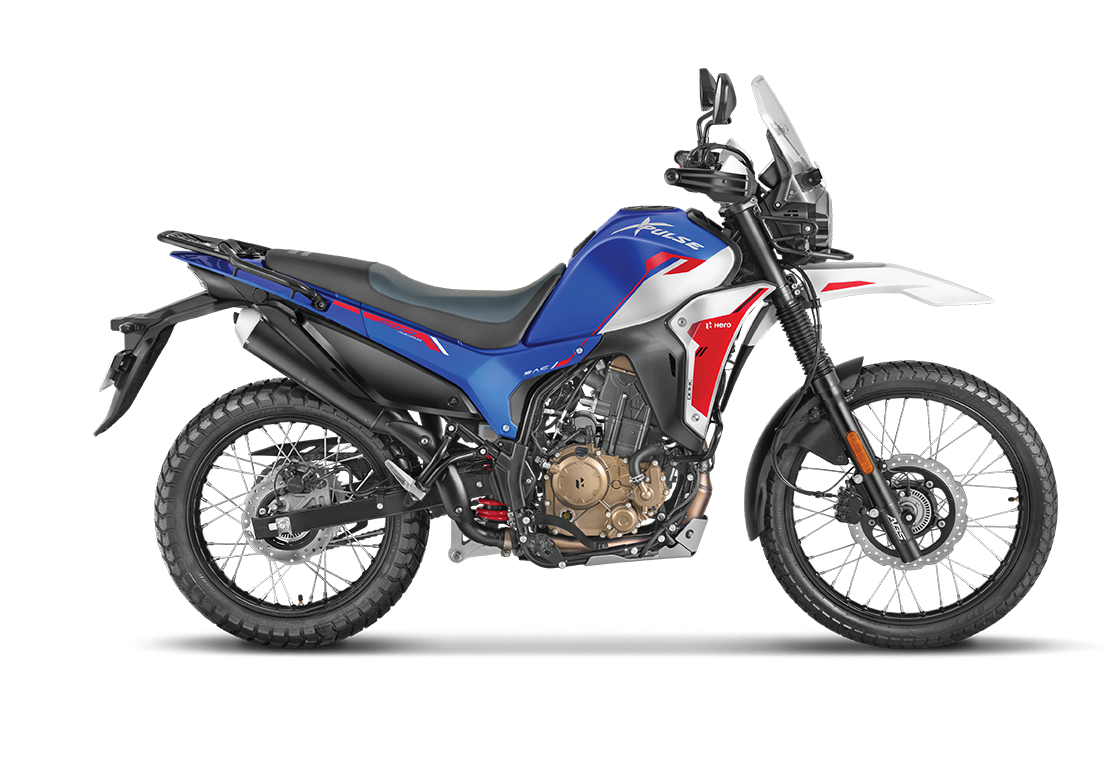
| Detailed Overview | The Hero XPulse 210 is designed for riders who often find themselves dealing with a mix of road conditions rather than sticking to perfectly paved highways. Whether it’s pothole-ridden city streets, broken rural roads, gravel tracks, or occasional off-road trails, the motorcycle has been built with the idea of handling all of them without requiring major compromises. While it continues the adventure-focused philosophy of the XPulse family, the move to a new 210cc platform brings noticeable changes in performance, technology, and overall capability. One of the biggest updates is the new 210cc liquid-cooled single-cylinder engine. Producing around 24.6 PS and 20.7 Nm, it offers a stronger and more relaxed riding experience than its predecessor, especially when speeds start to rise. In city traffic, the engine feels flexible enough to move along without constant gear changes, while on highways the six-speed gearbox allows it to cruise more comfortably. The liquid-cooling system also helps maintain consistent performance during long rides and in slow-moving traffic where air-cooled engines can often feel more strained. The motorcycle’s adventure-bike credentials remain a central part of its identity. A 21-inch front wheel, long-travel suspension, and around 220 mm of ground clearance allow the XPulse 210 to tackle rough terrain that would make many road-biased motorcycles uncomfortable. Deep potholes, rocky paths, loose gravel, and uneven surfaces are all areas where the bike’s suspension setup comes into its own. Rather than transmitting every bump directly to the rider, the suspension is designed to absorb impacts and maintain control across changing terrain. The riding position reflects the motorcycle’s intended purpose. The wide handlebar provides plenty of leverage when maneuvering through traffic or standing on the footpegs during off-road riding. The seat is relatively spacious, and the upright posture reduces strain on the wrists and shoulders during longer journeys. With a seat height of around 830 mm, taller riders are likely to feel comfortable, while shorter riders may need some time to get accustomed to it. Technology has also taken a step forward. The XPulse 210 features a TFT instrument display that provides access to navigation functions, smartphone connectivity, ride information, and other vehicle data. Full LED lighting improves visibility and gives the motorcycle a more modern appearance. Multiple ABS modes allow riders to adjust braking intervention depending on whether they are riding on tarmac or venturing onto loose surfaces. The fuel tank holds approximately 13 litres, which, combined with the motorcycle’s fuel efficiency, provides a useful range for touring and adventure riding. Despite its adventure-focused design, the XPulse 210 remains relatively light for the category, helping riders manage the bike more easily during low-speed riding, off-road situations, and everyday commuting. Visually, the motorcycle retains the rugged look that XPulse models are known for. The tall stance, raised front mudguard, windscreen, knuckle guards, and rally-inspired bodywork give it a purpose-built appearance. Unlike many adventure motorcycles that are primarily designed for touring, the XPulse 210 continues to emphasize versatility and the ability to explore beyond paved roads. The Hero XPulse 210 combines a liquid-cooled engine, long-travel suspension, adventure-oriented chassis, modern electronics, and practical ergonomics into a motorcycle intended for riders who regularly encounter different types of terrain. Its design and specifications reflect the needs of those who want a machine capable of handling daily commutes during the week and exploring less-traveled roads when the opportunity arises. | The Bajaj Platina 110 is designed for riders who prioritize comfort, fuel efficiency, and ease of daily commuting over sporty performance or aggressive styling. In the commuter motorcycle segment, many bikes focus mainly on mileage figures, but the Platina 110 tries to add a more comfortable riding experience along with low running costs. Its overall character feels calm and practical, making it suitable for office travel, regular city riding, and long daily commutes where comfort becomes more important than speed. The motorcycle uses a 115.45cc single-cylinder, air-cooled engine paired with a 5-speed gearbox. The engine tuning is focused on smooth and predictable power delivery rather than quick acceleration. At lower speeds, the motorcycle feels relaxed and easy to manage, especially in traffic conditions where constant gear changes and throttle inputs are common. Compared to smaller 100cc commuter motorcycles, the Platina 110 offers slightly better pulling power, which helps during overtakes and while riding with a pillion passenger. The addition of the 5-speed gearbox also helps the motorcycle maintain smoother engine behavior at moderate highway speeds. Fuel efficiency remains one of the strongest highlights of the Platina 110. In real-world riding conditions, the motorcycle generally delivers around 60–70 km/l depending on traffic, riding style, and maintenance. Combined with its 11-litre fuel tank, this gives the bike a long riding range before refueling becomes necessary, which is particularly useful for riders covering large distances daily. The main focus of the Platina 110 is ride comfort. Bajaj’s Comfortec technology is designed around improving suspension response and seating comfort for Indian road conditions. The motorcycle uses telescopic front forks and Nitrox rear suspension, both tuned softly to absorb potholes, broken roads, and speed breakers more comfortably than many motorcycles in this category. The suspension setup allows the bike to glide over rough surfaces without transferring too much harshness to the rider. The long and wide seat further improves comfort for both rider and pillion during extended commutes. Its riding posture also contributes to the relaxed character of the motorcycle. The upright handlebar position, neutral footpeg placement, and lightweight chassis help reduce fatigue during long hours of city riding. The motorcycle weighs around 122 kg, which makes it manageable in traffic and easy to handle at lower speeds. Because of its predictable throttle response and light steering feel, the Platina 110 is also approachable for beginner riders. The design remains simple and commuter-focused. Instead of sharp bodywork or sporty styling elements, the motorcycle uses practical body panels, basic graphics, and a conventional commuter-bike appearance. Alloy wheels and tubeless tyres improve convenience during punctures and regular maintenance. Braking duties are handled by drum brakes at both ends supported by Combined Braking System (CBS), which helps improve braking balance during sudden stops. Feature-wise, the motorcycle keeps things straightforward. The instrument cluster remains simple and easy to read, while electric start functionality improves convenience during daily use. Unlike more premium commuter motorcycles, the Platina 110 avoids complex electronic features and focuses more on low maintenance and reliability. The overall riding experience feels soft, stable, and commuter-oriented. The motorcycle is not designed for aggressive riding or high-speed touring, but it performs its intended role effectively by offering a comfortable suspension setup, strong fuel efficiency, and easy everyday usability. Overall, the Bajaj Platina 110 combines comfort-focused suspension tuning, fuel-efficient engine performance, practical ergonomics, and low running costs into a commuter motorcycle developed mainly for relaxed and economical daily transportation. |
| Expert Review | The Hero XPulse 210 builds on the formula that made the XPulse series popular, but the larger 210cc liquid-cooled engine gives it a broader range of abilities. The additional power is immediately noticeable on highways, where the motorcycle feels more comfortable maintaining cruising speeds and handling overtakes, while still remaining easy to ride in city traffic. Its long-travel suspension, 21-inch front wheel, and generous ground clearance continue to be key parts of the package, allowing it to deal with broken roads, gravel tracks, and uneven surfaces with confidence. The upright riding position, wide handlebar, and spacious seat make it suitable for spending extended hours on the road, while features such as a TFT display, Bluetooth connectivity, navigation support, and riding modes add modern functionality. Rather than feeling like a motorcycle designed purely for off-road adventures or highway touring, the XPulse 210 comes across as a machine intended to handle a wide variety of riding conditions, from daily commuting to weekend exploration, with its engine, chassis, and equipment working together to support that versatility., 4.6, MotoAutiv Team | The Bajaj Platina 110 is built with a very clear focus on comfort-oriented commuting, and that character becomes noticeable almost immediately while riding through rough city roads or daily traffic. The suspension setup is tuned softly, allowing the motorcycle to absorb potholes and uneven surfaces more comfortably than many basic commuter bikes in this segment. Its 115cc engine feels smooth and relaxed during regular riding, offering enough performance for everyday commuting and occasional highway stretches without losing the fuel-efficient nature expected from the Platina lineup. The upright ergonomics, lightweight chassis, and wide seat further improve day-to-day usability, especially for riders covering long distances regularly. At the same time, the motorcycle remains firmly commuter-focused, which means sporty handling, quick acceleration, and premium features are not its main priorities. The removal of the older ABS variant also means the current model feels more basic in terms of braking hardware. Overall, the Platina 110 focuses on delivering a calm, comfortable, and economical riding experience centered mainly around practical everyday transportation., 4.3, MotoAutiv Team |
| FAQ (Manual Override) | Q: What is the engine capacity of the Hero XPulse 210? A: The Hero XPulse 210 is powered by a 210cc single-cylinder, liquid-cooled engine that produces approximately 24.6 PS of power and 20.7 Nm of torque. Q: What is the real-world mileage of the Hero XPulse 210? A: Most riders can expect a real-world fuel efficiency of around 35-42 km/l, depending on riding conditions, terrain, and riding style. Q: What is the top speed of the Hero XPulse 210? A: The Hero XPulse 210 can achieve a top speed of approximately 130 km/h under suitable conditions. Q: Is the Hero XPulse 210 suitable for off-road riding? A: Yes, the Hero XPulse 210 is designed with off-road capability in mind and features long-travel suspension, high ground clearance, spoke wheels, and a 21-inch front wheel. Q: What is the ground clearance of the Hero XPulse 210? A: The Hero XPulse 210 offers approximately 220 mm of ground clearance, helping it tackle rough terrain and obstacles. Q: Does the Hero XPulse 210 have riding modes? A: Yes, the Hero XPulse 210 comes with multiple ABS modes, including settings designed for off-road riding. Q: What is the fuel tank capacity of the Hero XPulse 210? A: The Hero XPulse 210 is equipped with a 13-litre fuel tank. Q: Does the Hero XPulse 210 have Bluetooth connectivity? A: Yes, the motorcycle features Bluetooth connectivity with turn-by-turn navigation, call alerts, and smartphone integration. Q: What is the seat height of the Hero XPulse 210? A: The Hero XPulse 210 has a seat height of approximately 830 mm, which may feel tall for some riders. Q: Is the Hero XPulse 210 suitable for touring? A: Yes, the combination of an upright riding position, comfortable ergonomics, long-travel suspension, and a six-speed gearbox makes the Hero XPulse 210 suitable for touring. Q: What is the kerb weight of the Hero XPulse 210? A: The Hero XPulse 210 has a kerb weight of approximately 168 kg, making it relatively light for an adventure motorcycle. Q: What are the major differences between the Hero XPulse 210 and XPulse 200 4V? A: The Hero XPulse 210 offers a larger liquid-cooled engine, more power, a six-speed gearbox, updated electronics, improved highway performance, and a redesigned chassis compared to the Hero XPulse 200 4V. Q: Can the Hero XPulse 210 be used as a daily commuter? A: Yes, despite its adventure-bike design, the Hero XPulse 210 remains practical for daily commuting thanks to its manageable weight, upright ergonomics, and flexible engine characteristics. | Q: What engine does the Bajaj Platina 110 use? A: The motorcycle uses a 115.45cc single-cylinder, air-cooled engine. Q: What mileage does the Bajaj Platina 110 give? A: Real-world mileage generally stays around 60–70 km/l depending on riding conditions and maintenance. Q: What is the top speed of the Bajaj Platina 110? A: The motorcycle has an approximate top speed of around 90 km/h. Q: Does the Bajaj Platina 110 have ABS? A: No, the currently sold Platina 110 in India does not offer ABS. The older ABS variant has been discontinued. Q: What braking system does the Platina 110 use? A: The motorcycle uses drum brakes at both ends along with CBS (Combined Braking System). Q: What suspension setup does the Platina 110 use? A: The motorcycle uses telescopic front forks and Nitrox rear suspension. Q: What is Comfortec technology in the Platina 110? A: Comfortec refers to Bajaj’s comfort-focused suspension and seat setup designed to improve ride quality on rough roads. Q: What is the fuel tank capacity of the Bajaj Platina 110? A: The motorcycle comes with an 11-litre fuel tank. Q: What is the kerb weight of the Bajaj Platina 110? A: The bike weighs approximately 122 kg. Q: Does the Platina 110 use tubeless tyres? A: Yes, the motorcycle comes with tubeless tyres. Q: Is the Bajaj Platina 110 suitable for long rides? A: It can handle moderate highway rides comfortably, though it is mainly designed for city commuting and fuel-efficient travel. Q: Does the Bajaj Platina 110 have electric start? A: Yes, the motorcycle comes with electric start functionality. Q: Is the Bajaj Platina 110 beginner-friendly? A: Yes, the lightweight handling, smooth engine behavior, and comfortable ergonomics make it suitable for beginner riders and daily commuters. |
| Fuel System | Fuel Injection | Fuel Injection |
| Price Variants | Base | 166745 Top | 175963 | NXT | 72847 Drum | 72847 |
| Pros | More Powerful Engine: The new 210cc liquid-cooled engine offers noticeably stronger performance than the older XPulse 200, especially during highway riding and overtaking. Built for Bad Roads: With its long-travel suspension, high ground clearance, and 21-inch front wheel, the XPulse 210 feels comfortable on broken roads, gravel, and rough terrain. Comfortable Riding Position: The upright handlebar, spacious seat, and relaxed ergonomics make the motorcycle suitable for long hours in the saddle. Improved Highway Capability: The additional power and sixth gear allow the bike to cruise at highway speeds more comfortably than its predecessor. Lightweight Adventure Motorcycle: Compared to many adventure bikes, the XPulse 210 remains relatively light and easy to handle, both on and off the road. Feature-Rich Package: Features such as a TFT display, Bluetooth connectivity, navigation support, riding modes, and full LED lighting add modern functionality. Good Suspension Travel: The suspension setup is designed to absorb rough surfaces effectively, helping the bike maintain composure on uneven terrain. Accessible for New Adventure Riders: The manageable weight and predictable handling characteristics make it approachable for riders entering the adventure touring segment. | Ride comfort remains the strongest part of the motorcycle. The soft suspension setup absorbs potholes and rough roads very well, which makes daily commuting less tiring, especially on broken city roads. The 115cc engine feels smoother and slightly more responsive than smaller 100cc commuter motorcycles, giving the bike better usability during overtakes and mild highway riding. Fuel efficiency is still one of the major highlights. Real-world mileage generally stays around 60–70 km/l depending on riding conditions and maintenance habits. The upright riding posture, wide seat, and lightweight chassis make the motorcycle easy to handle in traffic and comfortable for long daily commutes. Combined Braking System (CBS) improves braking balance during regular city riding and emergency stops compared to basic non-linked braking setups. Maintenance costs remain affordable, and spare parts are widely available across India, helping reduce long-term ownership expenses. Electric start and tubeless tyres improve practicality for everyday usage. The motorcycle feels beginner-friendly because of its predictable throttle response and easy low-speed handling. |
| Starter | Self Start | Electric & Kick |
| Transmission | 6 Speed | 4-speed (all-down shift) |