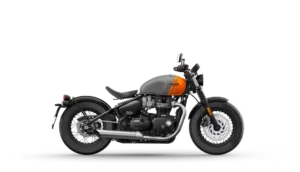
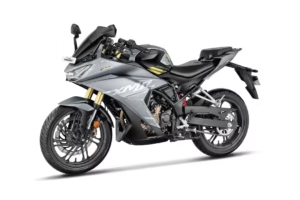
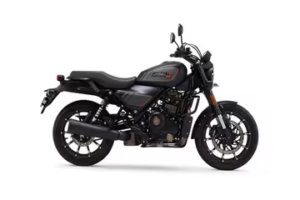
VS

Quick Analysis

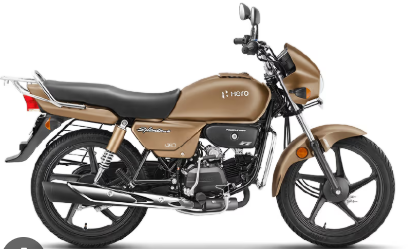
Hero Super Splendor

14.5 pts
Unweighted: 7 advantages
EnginePerformanceDimensionsBrakesTyresFeaturesOther

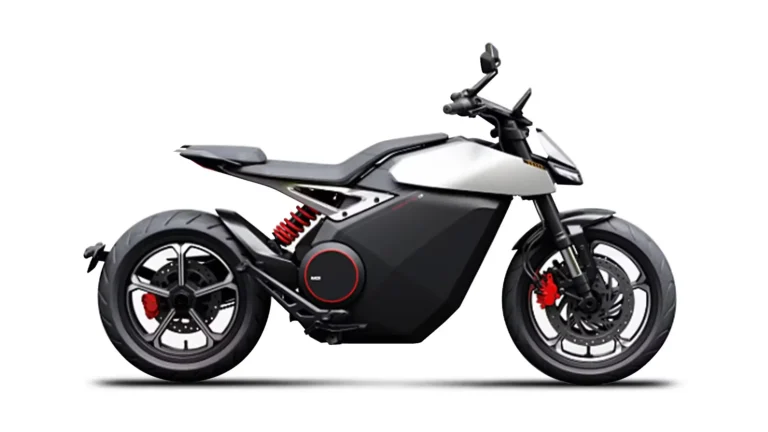
OLA ROADSTER PRO

10.5 pts
Unweighted: 13 advantages
EnginePerformanceDimensionsBrakesTyresFeaturesOther
Specification
Hero Super Splendor
Hero Super Splendor
Hero
₹81,030
OLA ROADSTER PRO
OLA ROADSTER PRO
Ola

Engine Specifications

Cooling System Air Cooled Liquid-cooled motor
Displacement 124.7 cc
Engine Type Air Cooled, 4-stroke Electric motor
Power 10.7 BHP @ 7500 rpm 52 kW
Torque 10.6 Nm @ 6000 rpm 105 Nm

Performance & Efficiency

Fuel Tank Capacity 10 Litres

Dimensions & Weight

Kerb Weight 122 Kg
Seat Height Std 798 mm

Brakes & Suspension

Abs No ABS Dual-channel ABS
Front Brake Disc - Dia 240 mm / Drum - Dia 130 mm Double disc
Front Suspension Dia.30 Telescopic USD
Rear Brake Drum 130 mm Disc
Rear Suspension 5-step Adjustable Hydraulic Shock Absorbers Monoshock absorber

Tyres & Wheels

Front Tyre 80/100-18 120/70 ZR17
Rear Tyre 100/80-18 180/55 ZR17
Tyre Type Tubeless Tubeless
Wheel Type Alloy Alloy

Features & Technology

Headlight Halogen Bulb LED projector

Other Specifications

Battery MF 12V , 4Ah (ETZ 5) 8 kWh (lower variant) or 16 kWh (top variant)
Bike Cons Text Real-world range may vary: High speeds, heavy traffic, and frequent hard acceleration can reduce range noticeably compared to claims. Charging time is longer than refuelling: Even with good range, charging still takes time, which can be inconvenient for spontaneous long trips. Heavier than petrol bikes: The large battery increases weight, making the bike feel bulkier during tight manoeuvres or parking. Charging infrastructure limitations: If you don’t have home charging, or if public chargers are sparse in your area, usage can become restrictive. High upfront price: The initial cost is significantly more than mainstream petrol motorcycles, and may not suit budget-focused buyers. Electric feel may not appeal to some riders: Absence of sound, gears, and engine character may feel less engaging for petrol-bike enthusiasts. Long-term battery concerns: Battery degradation over years, replacement cost, and service availability remain important unknowns for many EV buyers.
Bike Pros Text Instant acceleration: The electric motor delivers strong, immediate torque, making the bike extremely quick off the line and effortless to ride in traffic. High top-speed capability: The performance of the stronger battery variant allows highway speeds with ease. Excellent claimed range: The larger battery variant offers enough range for multiple days of commuting without daily charging. Low running and maintenance costs: No petrol, no engine oil, no clutch, fewer moving parts — long-term upkeep stays simple. Smooth and stable ride: USD front forks and a rear monoshock give a confident, planted feel on both smooth highways and rough city roads. Strong braking package: Dual disc brakes with dual-channel ABS offer very controlled and predictable stopping power. Modern features: Large TFT touchscreen, ride modes, connectivity, TPMS, traction aids, and app functions add a premium, futuristic experience. Silent and vibration-free: No engine noise or vibration makes city riding very pleasant and fatigue-free.
Cluster Semi-Digital Instrument Cluster 10-inch TFT touchscreen
Color Options Pro
Expert Review MotoAutiv Team
Faq Manual Q: What is the top speed of the Ola Roadster Pro? A: The top speed is around 194 km/h (for the 16 kWh variant). Q: What is the range of the Ola Roadster Pro? A: The 16 kWh variant delivers up to around 579 km per charge (IDC). Q: What is the acceleration of the Roadster Pro? A: It can accelerate from 0–40 km/h in about 1.2 seconds (16 kWh variant). Q: What is the power output of the Ola Roadster Pro? A: The peak power is around 52 kW. Q: What is the torque of the Ola Roadster Pro? A: It produces about 105 Nm of torque instantly. Q: What type of battery does the Roadster Pro use? A: It uses an IP-rated lithium-ion battery pack (8 kWh or 16 kWh options). Q: Does the Roadster Pro have ABS? A: Yes, it comes with dual-channel ABS. Q: What kind of brakes does the bike have? A: It gets disc brakes at both front and rear. Q: What suspension setup does the Roadster Pro use? A: It uses USD (upside-down) forks at the front and a rear monoshock. Q: What features does the instrument cluster offer? A: It has a 10-inch TFT touchscreen with ride modes, navigation, TPMS, and connectivity features. Q: Do I need to shift gears on the Roadster Pro? A: No, it has an automatic transmission since it’s an electric motorcycle. Q: What is the charging method? A: It charges through a standard home charger; fast charging availability depends on Ola’s network. Q: What is the weight of the Ola Roadster Pro? A: Kerb weight differs by variant but is on the heavier side due to the large battery pack. Q: What colours are available for the Roadster Pro? A: Currently it comes in a single colour theme with a dark body and orange accents. Q: Is it suitable for long-distance rides? A: Yes, especially the 16 kWh variant, though charging availability should be considered for highway travel.
Overview Manual Riding the Roadster Pro feels like stepping into a different era of motorcycling — one where silence meets sudden thrust and tech merges with raw, electric-driven energy. Under its sleek body sits not a traditional petrol engine, but a liquid-cooled, frame-mounted electric motor that delivers a peak output of 52 kW and a healthy 105 Nm of torque. That translates into an immediate twist of the throttle and a punch of power that launches you effortlessly — the 16 kWh variant claims a 0–40 km/h sprint in just 1.2 seconds. On city roads this means sharp overtakes, quick starts at traffic lights, and a lively, agile ride through traffic. Once you’re rolling, the bike doesn’t feel like an electric compromise — it feels like a proper performance machine. The top-end 16 kWh version is rated for up to 194 km/h, which is more than enough for highway stretches or spirited rides outside the city. For those who prefer a lighter, possibly more affordable option, there’s also an 8 kWh battery configuration that offers a decent lower-performance balance (though the 16 kWh is the flagship setup). Range worries — a big concern with EVs — get a strong answer here. On a full charge, the 16 kWh version is claimed to deliver up to 579 km (under IDC certification). Even the 8 kWh version promises a respectable 316 km per charge. That kind of range, in practical terms, could cover several days of commuting or even a mix of city + occasional long rides before needing to plug in. You don’t need a clutch or manual gears — the transmission is automatic, and starting is as simple as a push-button click. Because there’s no fuel tank or conventional engine, many of the traditional hassles go away: no oil changes, no engine tuning, no fuel stops. Instead, you charge — overnight at home or whenever power is available — and ride. What about comfort and control? Roadster Pro does well here too. Up front it sports USD (upside-down) forks, and at the rear a monoshock setup. That combination gives a balanced ride: stable and planted at speed, yet forgiving enough for potholes, uneven surfaces, and the patchwork roads you often encounter. Alloy wheels fitted with tubeless tyres contribute to better handling and easy maintenance. Braking and safety aren’t Afterthoughts. The bike brings disc brakes on both ends and a dual-channel ABS system — giving you dependable stopping power even when speed or traffic demands quick reactions. For many riders, especially in busy urban settings or mixed-terrain commutes, that dual-disc + ABS combo brings peace of mind. Ride quality and features push the feel into the “modern motorcycle” zone. A 10-inch TFT touchscreen (with touch response) serves as the instrument cluster. Through it, you get ride-modes (Hyper, Sport, Normal, Eco), connectivity features, and what Ola calls “smart” tech — traction control, tyre-pressure monitoring, digital key / app connectivity, possibly ride-assist features. For a daily rider, those things make commuting easier, rides safer, and the ownership experience more premium. Because it runs on a 16 kWh (or 8 kWh) lithium-ion battery pack, there’s no “fuel tank capacity” in the traditional sense. That also means no fuel system to worry about — no petrol, no carburetor or fuel injection, just clean, quiet electric drive. Water and dust protection are taken care of with a decent IP-rating (for the battery/motor area), adding a layer of comfort especially on rough or wet Indian roads. On the ownership side, this means fewer mechanical parts, simpler maintenance, and a fundamentally quieter and cleaner ride. For people commuting daily, cruising in traffic, or doing moderate-distance rides, Roadster Pro can offer a terrific balance of performance and convenience. But it’s not all ideal. Because charging still takes time, and because range — though impressive on paper — depends heavily on how you ride (speed, stop-start, load, terrain), you need to be mindful. Long highway runs at high speed or frequent short rides under stop-go traffic will eat battery faster. Also, while the tech and features are premium, real-world handling of charging infrastructure, long-term battery health, and actual range will matter more in everyday use than headline numbers. In practical use, the Roadster Pro offers what a modern, high-performance, electric-motorcycle should: raw acceleration, high top speed, long range (on battery), a comfortable and stable ride setup, strong brakes and safety, minimal maintenance demands, and a tech-laden, future-friendly user experience. If you ride regularly, like a mix of city and highway, and have access to charging, it can be a real alternative to a conventional petrol bike — with quieter rides, fewer hassles, and electric torque on tap.
Price Variants Text 8 kWh | 199999 16 kWh | 249999
Starter Self (with i3s) & Kick
Transmission Automatic