Quick Analysis
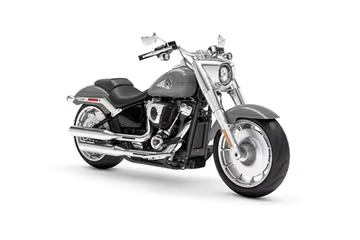
Harley Davidson Fat Boy
11.5 pts
Unweighted: 10 advantages
EnginePerformanceDimensionsBrakesTyresFeaturesOther
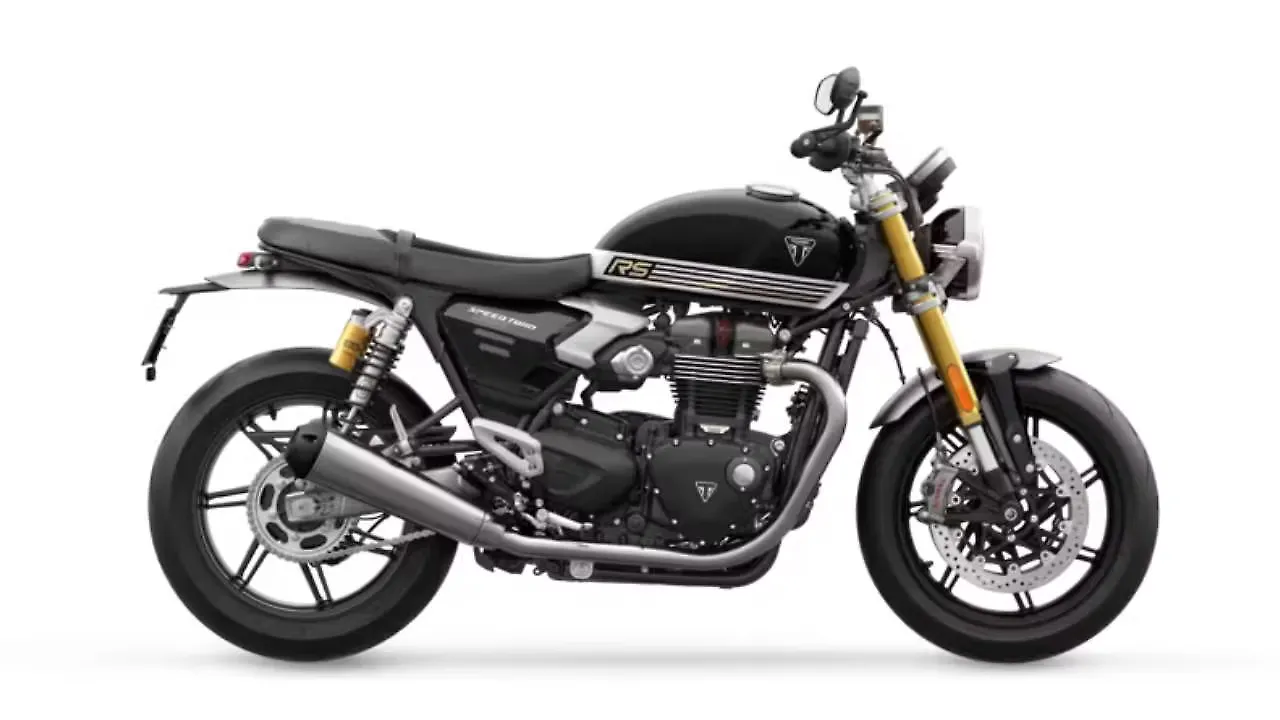
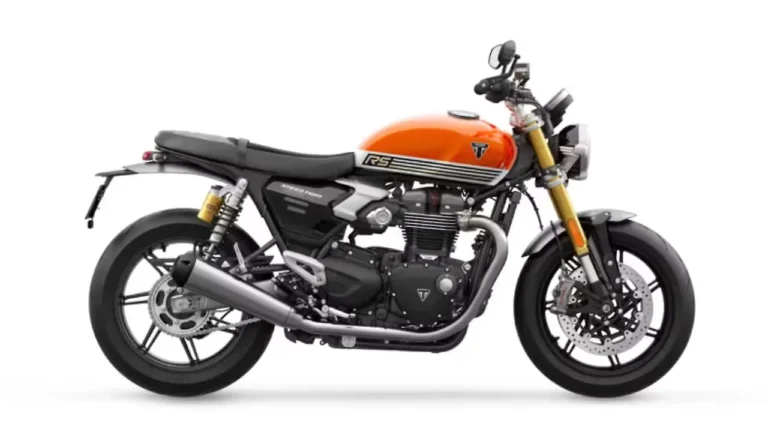
TRIUMPH SPEED TWIN 1200 RS
22.5 pts
Unweighted: 12 advantages
EnginePerformanceDimensionsBrakesTyresFeaturesOther
| Specification | ||
|---|---|---|
Engine Specifications |
||
| Cooling System | Air-cooled | Liquid-cooled parallel twin |
| Displacement | 1,923 cc | 1200 cc |
| Engine Type | Milwaukee-Eight™ 117 Custom | 8 valve, SOHC, 2700 firing order |
| Power | 103 HP / 77 kW @ 5020 rpm | 105 PS / 103.5 bhp (77.2 kW) @ 7,750 rpm |
| Torque | 168 Nm @ 3000 rpm | 112 Nm @ 4,250 rpm |
Performance & Efficiency |
||
| Fuel Tank Capacity | 18.9 litres | 14.5 L |
| Mileage | 18.18 Kmpl | 19.60 Kmpl |
Dimensions & Weight |
||
| Kerb Weight | 315 | 216 |
| Seat Height | 675 | 810 |
Brakes & Suspension |
||
| ABS | Dual-channel ABS | Dual Channel ABS |
| Front Brake | Disc | Twin Ø 320mm floating discs, Brembo Stylema M4.30 radial calipers, OCABS |
| Front Suspension | Dual-bending valve 49 mm telescopic with aluminum fork triple clamps, dual rate spring | Ø 43mm USD Marzocchi forks, 120mm travel |
| Rear Brake | Disc | Single Ø 220mm disc, Nissin 2-piston floating caliper, OCABS |
| Rear Suspension | Hidden, free piston, coil-over monoshock; 43mm stroke, hydraulic preload adjustment | Twin Öhlins RSUs with external reservoirs, adjustable for pre-load, compression and rebound damping. 123 mm wheel travel |
Tyres & Wheels |
||
| Front Tyre | 160/60 R18 | 120/70 R17 |
| Rear Tyre | 240/40 R18 | 160/60 R17 |
| Tyre Type | Tubeless | Tubeless |
| Wheel Type | Cast aluminum (Lakester) | Aluminium Alloy |
Features & Technology |
||
| Headlight | LED | DRLs LED |
Other Specifications |
||
| Bike Image 1 | https://motoautiv.com/wp-content/uploads/2025/06/Blue.avif | — |
| Bike Image 2 | https://motoautiv.com/wp-content/uploads/2025/06/Grey.avif | https://motoautiv.com/wp-content/uploads/2025/11/speedtwin1200sapphireblack.webp |
| Bike Image 3 | https://motoautiv.com/wp-content/uploads/2025/06/Whiskey-fire.avif | — |
| Cluster | Analog with LCD | — |
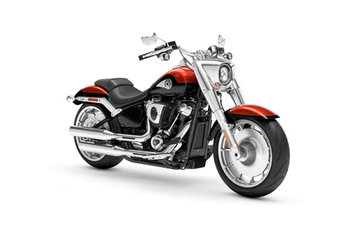
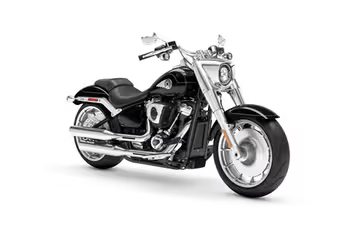
| Color Options | Billiard Gray | #6B7074 Vivid Black | #0F0F10 Blue Burst | #1E4D8C Whiskey Fire / Vivid Black | #7A2D1B, #0F0F10 | Sapphire Black Baja Orange and Sapphire Black |
| Cons | The Weight Is Impossible to Ignore – Parking, reversing, or making tight U-turns requires more effort than on most motorcycles. The bike feels considerably lighter once moving, but the weight is always present at low speeds. Not a Motorcycle That Enjoys Tight Corners – The Fat Boy is happiest on flowing roads. When the road becomes tight and twisty, its size and geometry become more noticeable. Wind Hits You Directly at Highway Speeds – Without a fairing or windscreen, long highway rides can become tiring because the rider takes the full force of the wind. Can Feel Warm in Traffic – Sitting in slow-moving traffic on a hot day makes the large V-twin's heat more noticeable around the legs. Passenger Comfort Is Average – The stock setup feels more focused on the rider. For frequent two-up riding, many owners look at accessory seats and backrests. Not Built Around Practicality – There is no meaningful storage space, and carrying luggage usually requires additional accessories. Running Costs Are Higher Than Average – Tyres, servicing, insurance, and genuine accessories can all add up compared to smaller motorcycles. Requires Some Experience to Get the Best Out of It – The combination of weight, engine size, and physical dimensions can feel intimidating for riders who are new to large-capacity cruisers. Floorboards Touch Down Earlier Than You Might Expect – Riders who push harder through corners will eventually find the limits of the cruiser-style setup. | Price premium & diminishing returns for everyday use: Reviewers note that while the RS gets the “best bits”, you pay significantly more and might not utilise all of them unless you ride aggressively. Some ergonomics & weight issues: At over 200 kg and with a sportier riding position (for the RS), it may feel less comfortable in heavy traffic or for shorter riders. Also the seat could become firm on long rides. Feature trade-offs & tyre choices: Some reviews mention that the sport tyres and certain component choices (for the RS) might not suit everyday urban or wet weather riding perfectly. Service/maintenance cost & availability: As a premium bike with high-spec parts and brand positioning, ownership costs (parts, servicing) and dealer network may be less favourable compared to mass market bikes. (General observation from premium-bike feedback) |
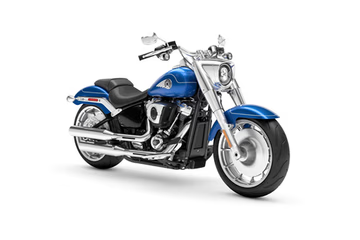
| Detailed Overview | Even among Harley-Davidson’s own motorcycles, the Fat Boy has always been difficult to mistake for anything else. The solid-disc Lakester wheels, broad fuel tank, chunky tyres, and low stance give it a silhouette that looks substantial from every angle. While many cruisers rely on chrome and visual complexity to create an impression, the Fat Boy’s design is built around simple, oversized elements that have remained part of its identity for decades. The motorcycle is based on Harley-Davidson’s Softail platform, which uses a hidden rear suspension arrangement beneath the seat area. From the side, the frame still resembles the rigid hardtail cruisers that inspired it, but underneath there is a modern monoshock setup responsible for absorbing road imperfections. The front suspension uses telescopic forks designed to support the motorcycle’s considerable weight while maintaining stability over varying road surfaces. A 1,923cc Milwaukee-Eight 117 V-twin engine sits prominently in the center of the motorcycle. Rather than encouraging riders to explore the upper reaches of the rev range, the engine develops much of its performance lower down, which influences how the Fat Boy behaves in everyday riding. The motorcycle can accelerate with relatively little throttle input, and the six-speed gearbox allows the engine to remain relaxed during highway travel. The large displacement and V-twin configuration are also major contributors to the motorcycle’s mechanical character and riding feel. Dimensionally, the Fat Boy is a substantial machine. Wide tyres at both ends, a long wheelbase, and a low seat height all contribute to its proportions. The low seating position places the rider close to the ground, while forward-mounted foot controls create the stretched riding posture commonly associated with large American cruisers. Combined with the wide handlebar, the rider’s position is very different from what would be experienced on a roadster or sport motorcycle. The Lakester wheels remain one of the defining visual features of the Fat Boy. Unlike conventional alloy wheels, their solid-disc-inspired design creates a unique appearance that has become closely associated with the model over the years. Alongside the broad tyres and muscular bodywork, these wheels play a significant role in shaping the motorcycle’s overall identity. Technology is present, although it is integrated more discreetly than on Harley-Davidson’s touring motorcycles. Modern versions include selectable riding modes, traction control, and ABS, with certain markets also receiving cornering-sensitive rider-assistance systems. Instead of a large touchscreen display, the Fat Boy uses a compact instrument setup focused primarily on essential riding information. An 18.9-litre fuel tank sits above the engine and forms one of the largest visual elements of the motorcycle. Lighting throughout the motorcycle uses LED technology, while the overall design remains intentionally uncluttered. There are few body panels, minimal visual distractions, and a clear emphasis on exposing the mechanical components that define the motorcycle. The Fat Boy’s specifications reveal a motorcycle shaped around traditional cruiser principles: a large-capacity V-twin engine, long-wheelbase chassis, low seating position, and substantial physical presence. Although modern electronics and engineering have been incorporated over time, the underlying layout remains closely tied to the formula that has defined the model for decades. | The Triumph Speed Twin 1200 RS is a modern-retro motorcycle that combines classic design with a strong focus on performance and high-quality components. It is powered by a 1200cc parallel-twin engine that produces around 103.5 bhp and 112 Nm of torque, which means it delivers strong pulling power from low speeds and continues to feel responsive through the mid-range. The engine uses fuel injection and an electronic throttle, paired with a 6-speed gearbox and a slip-and-assist clutch, making gear shifts smoother and more controlled. The bike is built on a tubular steel frame with an aluminium swingarm, which helps maintain a balance between strength and handling. It comes with 17-inch alloy wheels at both ends and is fitted with performance-oriented tyres that provide good grip on the road. The suspension setup is one of its key highlights, featuring fully adjustable upside-down front forks from Marzocchi and twin Öhlins rear shock absorbers. This allows the rider to adjust the suspension based on riding style or road conditions, which is useful for both regular riding and more spirited use. Braking is handled by high-spec components, including dual front disc brakes with Brembo Stylema calipers and a rear disc brake with ABS. This setup is designed to offer strong and controlled stopping power. The bike also includes modern electronics such as riding modes (Road, Rain, and Sport), traction control, cornering ABS, and a quickshifter, which allows clutchless gear shifts for smoother acceleration and deceleration. In terms of dimensions, the seat height is around 810 mm, making it accessible for many riders, while the fuel tank capacity of about 14.5 litres supports both city rides and longer journeys. The wet weight is approximately 216 kg, which gives it a planted feel on the road but can make it feel heavier at low speeds. The riding posture is slightly forward-leaning compared to traditional retro bikes, with lower handlebars and rear-set footpegs, which adds to its sporty character. The overall design keeps a classic look with elements like a sculpted fuel tank, twin exhausts, and minimal bodywork, while also integrating modern touches such as LED lighting and a TFT-integrated display. The combination of traditional styling and modern hardware defines its overall character, making it a bike that blends old-school appearance with current technology and performance-focused components. |
| Expert Review | The Fat Boy has always been a motorcycle that prioritizes presence as much as performance. Even by cruiser standards, it feels substantial, whether you're looking at it parked or riding it down the road. The Milwaukee-Eight 117 engine suits the character of the bike perfectly, producing the kind of effortless torque that allows you to ride without constantly thinking about gear selection or engine speed. What stands out most is how planted the motorcycle feels once it's moving. The wide tyres, long wheelbase, and considerable weight create a sense of stability that encourages a relaxed riding style rather than an aggressive one. At the same time, those same traits mean the Fat Boy asks for a bit more effort in slow-speed situations and doesn't feel particularly eager when the road becomes tight and technical. The riding experience is less about chasing performance figures and more about the way the motorcycle delivers its power, carries its weight, and settles into a steady rhythm on open roads. Modern electronics have improved safety and usability, but they remain secondary to the traditional cruiser character that continues to define the Fat Boy., 4.4, MotoAutiv Team | The Triumph Speed Twin 1200 RS is a modern-retro roadster that combines classic styling with a more performance-focused setup. It is powered by a 1200cc parallel-twin engine that delivers strong and smooth power, especially in the low and mid-range, making it feel responsive without being difficult to control. The bike features upgraded components like fully adjustable suspension and high-spec brakes, which improve stability and give it a sharper feel while cornering or riding at higher speeds. The riding posture is slightly more aggressive than typical retro bikes, with a forward-leaning stance that adds to its sporty character but may feel less relaxed in slow traffic. Handling is precise and confidence-inspiring, though the firmer suspension can make rough roads feel more noticeable. The build quality and finish are in line with its premium positioning, with attention to detail in both design and materials. It also includes modern electronics like riding modes, traction control, and cornering ABS, adding to overall control. In everyday use, the weight and firmer setup can make it feel less comfortable in city conditions, but on open roads, it offers a more engaging and controlled riding experience., 4.0, MotoAutiv Team |
| FAQ (Manual Override) | Q: What type of motorcycle is the Harley-Davidson Fat Boy? A: The Fat Boy is classified as a heavyweight cruiser motorcycle, designed around relaxed riding ergonomics, a large V-twin engine, and long-distance road comfort. Q: Which engine powers the Fat Boy? A: The latest model uses the Milwaukee-Eight 117 V-twin engine paired with a 6-speed gearbox. Q: Is the Fat Boy suitable for long-distance rides? A: Yes. The relaxed ergonomics and torque-rich engine make it capable of covering long distances, although many owners add touring accessories for greater comfort. Q: What is the seat height of the Fat Boy? A: The seat height is approximately 675 mm, making it accessible to a wide range of riders. Q: Does the Fat Boy have cruise control? A: Availability depends on market and model year. Some versions include cruise control, while others may offer it as an accessory. Q: What is the fuel tank capacity of the Fat Boy? A: The motorcycle is equipped with an 18.9-litre fuel tank. Q: Does the Fat Boy have riding modes? A: Yes. Modern versions include selectable riding modes and electronic rider-assistance systems. Q: Is the Fat Boy comfortable for a passenger? A: Occasional two-up riding is possible, but the stock setup is more rider-focused than dedicated touring motorcycles. Q: How is the Fat Boy different from the Breakout? A: The Fat Boy focuses on a broad, muscular cruiser character with solid-disc wheels, while the Breakout adopts a stretched custom-cruiser design with a much wider rear tyre. Q: Does the Fat Boy have traction control and ABS? A: Yes. Modern versions include ABS, traction control, and other rider-assistance technologies. Q: What is the kerb weight of the Harley-Davidson Fat Boy? A: The motorcycle weighs approximately 315 kg in running condition, depending on market specification. Q: Is the Fat Boy beginner-friendly? A: The low seat height helps with accessibility, but the weight, engine size, and overall dimensions make it better suited to riders with some experience. Q: Does the Fat Boy support smartphone connectivity? A: The Fat Boy uses a relatively simple instrumentation setup compared to Harley's touring models, so smartphone integration is limited. Q: What body type does the Fat Boy belong to? A: It is categorized as a cruiser motorcycle, specifically a heavyweight cruiser designed around comfort, torque delivery, and road presence. | Q: What is the fuel tank capacity and claimed mileage? A: The tank capacity is 14.5 litres. Real-world mileage figures cited are around ~16 km/l depending on riding style. Q: What is the engine capacity of the Triumph Speed Twin 1200 RS? A: The Triumph Speed Twin 1200 RS comes with a 1200cc, liquid-cooled, parallel-twin engine. Q: How much power does the Triumph Speed Twin 1200 RS produce? A: The Triumph Speed Twin 1200 RS produces around 103.5 bhp and 112 Nm of torque, with strong performance in the low and mid-range. Q: Is the Triumph Speed Twin 1200 RS suitable for daily commuting? A: The Triumph Speed Twin 1200 RS can be used for city riding, but its weight, heat, and slightly aggressive ergonomics make it less comfortable in heavy traffic compared to smaller bikes. Q: What makes the Triumph Speed Twin 1200 RS different from the standard Speed Twin 1200? A: The Triumph Speed Twin 1200 RS gets upgraded components like fully adjustable Öhlins rear suspension, Marzocchi front forks, Brembo brakes, and a more aggressive riding position. Q: Does the Triumph Speed Twin 1200 RS have riding modes and electronics? A: Yes, the Triumph Speed Twin 1200 RS comes with multiple riding modes, traction control, cornering ABS, and electronic throttle control. Q: What is the weight of the Triumph Speed Twin 1200 RS? A: The Triumph Speed Twin 1200 RS has a wet weight of around 216 kg (476 lbs). Q: Is the Triumph Speed Twin 1200 RS beginner-friendly? A: The Triumph Speed Twin 1200 RS is not ideal for beginners due to its high power output and performance-focused setup. Q: What type of riding is the Triumph Speed Twin 1200 RS best suited for? A: The Triumph Speed Twin 1200 RS is best suited for spirited road riding and highway use rather than slow city commuting. Q: Does the Triumph Speed Twin 1200 RS have a quickshifter? A: Yes, the Triumph Speed Twin 1200 RS comes with an up-and-down quickshifter as standard. Q: What is the fuel tank capacity of the Triumph Speed Twin 1200 RS? A: The Triumph Speed Twin 1200 RS has a fuel tank capacity of around 14.5 litres. |
| Fuel System | Fuel Injection | Fuel Injection |
| Price Variants | STD | 2803000 | Standard | 1383800 RS | 1677600 MY24 | 1109000 |
| Pros | Instantly Recognizable Design – Few motorcycles are as easy to identify from a distance as the Fat Boy. The solid-disc wheels, wide stance, and muscular proportions give it a presence that stands out even among other cruisers. Torque-Rich Engine Character – The Milwaukee-Eight 117 doesn't need to be revved hard to make progress. A small twist of the throttle is usually enough to get the bike moving with very little effort. Relaxed Riding Position – The low seat, wide handlebar, and stretched-out foot controls create a laid-back riding posture that suits cruising and long hours in the saddle. Feels Stable on Open Roads – Once the bike is moving, its weight starts working in its favour. It feels planted at highway speeds and doesn't get unsettled easily. High-Quality Finish – From the paintwork to the chrome detailing and metal components, the overall fit and finish reflects the premium nature of the motorcycle. Low Seat Height Helps at Stops – Despite being a large motorcycle, the low seat makes it easier for many riders to place both feet firmly on the ground. Modern Electronics Without Changing the Character – Features such as ABS, traction control, and riding modes work in the background without taking away from the traditional cruiser feel. Comfortable Engine for Cruising – The engine settles into a relaxed rhythm at highway speeds and rarely feels stressed during normal riding. | Premium components & sharp handling: The RS gets high-end kit such as adjustable suspension and Brembo front calipers, which reviewers say significantly improve the bike’s composure and road manners. Strong engine character: The 1200cc twin delivers a good mix of usable mid-range torque and fun revs, making the bike enjoyable in a variety of riding situations. Neo-classic styling with premium finish: Many reviewers comment on the quality of materials, aesthetic detail and the overall “looks” factor of the RS variant. Versatile usability: Despite its premium nature, the bike is described as one you could ride daily, not just on weekends, the ergonomics and build allow for commuting and spirited rides alike. |
| Starter | Electric | Self Start |
| Transmission | 6-speed manual | 6-speed |