Quick Analysis
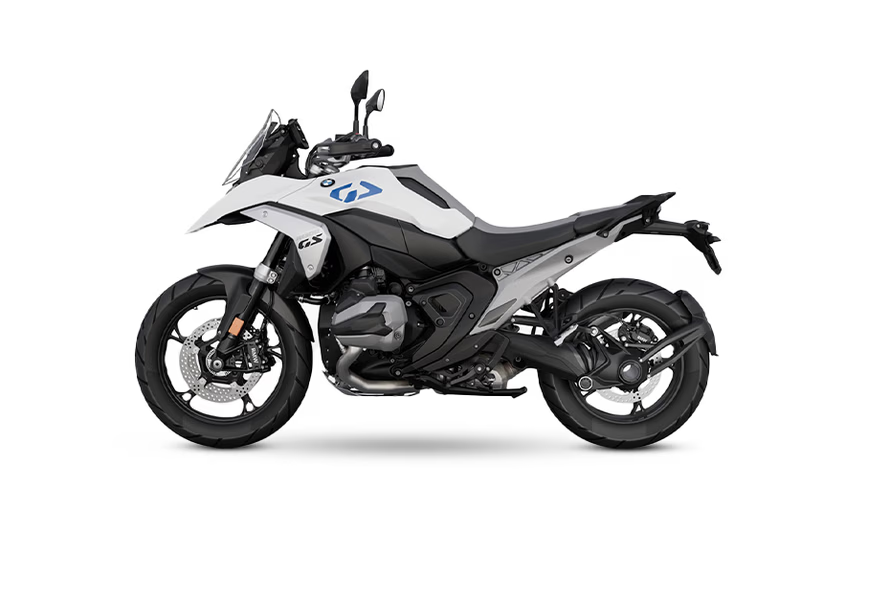
BMW R 1300 GS
19.5 pts
Unweighted: 15 advantages
EnginePerformanceDimensionsBrakesTyresFeaturesOther
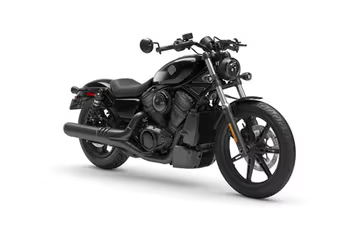
Nightster Special
8.5 pts
Unweighted: 6 advantages
EnginePerformanceDimensionsBrakesTyresFeaturesOther
| Specification | ||
|---|---|---|
Engine Specifications |
||
| Cooling System | Air and liquid-cooled | Liquid‑cooled |
| Displacement | 1,300 cc | 975 cc |
| Engine Type | Two-cylinder, four-stroke boxer engine | Revolution Max 975T V‑twin (DOHC, VVT) |
| Power | 145.48 bhp @ 7750 rpm | 89 HP (66 kW) @ 7,500 rpm |
| Torque | 149 Nm @ 6500 rpm | 95 Nm @ 5,750 RPM |
Performance & Efficiency |
||
| Fuel Tank Capacity | 19 L | 11.7 L |
| Mileage | 20.83 kmpl | 18.18 Kmpl |
Dimensions & Weight |
||
| Kerb Weight | 237 | 225 |
| Seat Height | 850 | 715 |
Brakes & Suspension |
||
| ABS | Dual Channel ABS | Dual‑channel ABS |
| Front Brake | Twin disc brake, semi-floating brake discs, diameter 310 mm, 4-piston radial brake caliper | Disc |
| Front Suspension | Central Shock Absorber | 41mm SHOWA® Dual Bending Valve conventional forks. Aluminum fork triple clamps. |
| Rear Brake | Single disc brake, diameter 285 mm, 2-piston floating caliper | Disc |
| Rear Suspension | Single-sided Swingarm | Rear suspension is dual outboard, direct-acting (no linkage) emulsion technology shock absorbers with coil springs and a threaded collar for pre-load adjustment. |
Tyres & Wheels |
||
| Front Tyre | 120/70 - R19 | 100/90‑19 |
| Rear Tyre | 170/60 - R17 | 150/80‑16 |
| Tyre Type | Tubeless | Tubeless |
| Wheel Type | Alloy | Aluminum cast, satin black |
Features & Technology |
||
| Headlight | LED | LED |
Other Specifications |
||
| Battery | 12 V / 10 Ah | — |
| Bike Image 1 | https://motoautiv.com/wp-content/uploads/2026/03/Aurelius-Green.avif | https://motoautiv.com/wp-content/uploads/2025/06/Gray-1.avif |
| Bike Image 2 | https://motoautiv.com/wp-content/uploads/2026/03/Triple-black.avif | https://motoautiv.com/wp-content/uploads/2025/06/snake-venom-1.avif |
| Bike Image 3 | https://motoautiv.com/wp-content/uploads/2026/03/GS-Trophy.avif | https://motoautiv.com/wp-content/uploads/2025/06/whiskey-fire-3.avif |
| Cluster | Digital | Digital TFT (102 mm) |
| Color Options | Light white | #F5F5F5 Black Storm Metallic | #1B1B1B Racing Blue Metallic | #15327E Aurelius Green Metallic | #3A4B3B,#D4AF37 | Whiskey Fire | #A64B22 Vivid Black | #0F0F10 Billiard Gray | #6B7074 Snake Venom | #4F5A3D |
| Cons | Significantly expensive compared to many adventure bike alternatives • Heavy motorcycle, especially for slow-speed manoeuvring and off-road beginners • Optional accessories and packages increase cost quickly • The boxer engine’s width can feel bulky in narrow traffic • Heat is noticeable in Indian summers at crawling speeds • Pillion seat comfort is good but not exceptional without optional top-box/backrest • Maintenance and parts costs are on the premium side | Fuel Capacity Is Modest for the Segment – The 11.7-litre fuel tank is smaller than what many riders expect from a motorcycle intended for highway use, which can limit range between fuel stops. Suspension Can Feel Firm on Broken Roads – Sharp bumps and poorly surfaced roads are transmitted more directly to the rider than on motorcycles with longer-travel suspension. Limited Wind Protection – The motorcycle is sold without a windscreen or fairing, leaving the rider exposed to airflow at sustained highway speeds. Passenger Accommodation Is Secondary – The compact rear seat and overall layout prioritize the rider more than two-up comfort. Engine Heat Becomes Noticeable in Congested Traffic – The liquid-cooled V-twin manages temperature effectively, but heat can still be felt around the rider during prolonged stop-and-go conditions. Storage Options Are Minimal – There are no integrated luggage solutions, and touring capability often requires aftermarket accessories. Traditional Harley Riders May Find It Unfamiliar – The engine character, chassis layout, and overall riding experience differ substantially from Harley-Davidson's classic air-cooled cruiser models. Weight Is Still Higher Than Many Middleweight Roadsters – Although lighter than most Harleys, it remains heavier than several similarly powered naked motorcycles and roadsters. |
| Detailed Overview | The BMW R 1300 GS is built around a new 1,300cc two-cylinder boxer engine, which is the most powerful of its kind from the brand to date. It produces approximately 145 hp at 7,750 rpm and 149 Nm of torque at 6,500 rpm. A major change in this generation is the placement of the gearbox underneath the engine, a design choice that makes the entire powertrain more compact and helps centralize the bike’s weight. In terms of physical build, the motorcycle uses a two-part frame consisting of a main steel shell and a bolted rear subframe. It features a unique suspension system: the EVO-Telelever at the front and EVO-Paralever at the rear, which together provide a travel of 190 mm and 200 mm, respectively. The standard bike has a kerb weight of 237 kg (fully fueled) and a fuel tank capacity of 19 litres, while the more rugged GS Adventure variant increases this capacity to 30 litres and weighs 269 kg. For everyday usability, the seat height is set at 850 mm on the standard model, though an optional Adaptive Vehicle Height Control system can automatically lower the bike to 820 mm when coming to a stop. Braking is handled by twin 310 mm discs at the front with four-piston radial calipers and a single 285 mm disc at the rear, all governed by a lean-angle sensitive ABS system. The cockpit is centered around a 6.5-inch (or optional 10.25-inch) full-color TFT display that includes Bluetooth connectivity for navigation and media. It comes with four standard riding modes, Eco, Rain, Road, and Enduro, which adjust the throttle response and traction control. Other standard electrical features include a full LED matrix headlight, heated grips, keyless ride, and a smartphone charging compartment with a USB socket. | The Nightster Special is based on the same platform as the standard Nightster, but it adds a number of technology and convenience features that change the motorcycle’s overall specification without altering its core mechanical layout. Within Harley-Davidson’s lineup, it occupies a position that is noticeably different from the company’s traditional cruisers. While the styling retains familiar Harley-Davidson cues such as a low stance, exposed V-twin engine, and compact bodywork, the engineering underneath follows a more contemporary approach. Power comes from the Revolution Max 975T, a 975cc liquid-cooled V-twin engine that serves as a structural component of the motorcycle. Rather than sitting inside a conventional frame, the engine itself forms part of the chassis, with separate frame sections attached directly to it. This design reduces the amount of frame material required and contributes to the motorcycle’s overall rigidity. The engine is paired with a six-speed gearbox and electronic throttle control, allowing rider-assistance systems and ride modes to interact with the powertrain. Unlike Harley-Davidson’s traditional air-cooled V-twins, the Revolution Max engine operates across a wider rev range and uses liquid cooling to manage temperatures. Fuel injection and electronic engine management systems continuously monitor operating conditions, while selectable ride modes adjust throttle response and electronic intervention levels. The engine’s design reflects Harley-Davidson’s broader shift toward modern performance-oriented powertrains. One of the motorcycle’s less obvious design features is its fuel storage arrangement. What appears to be a conventional fuel tank is actually an airbox cover. The fuel itself is stored beneath the seat, helping centralize mass and lower the centre of gravity. The fuel capacity is 11.7 litres, which contributes to the Nightster Special’s compact dimensions and narrow profile. The chassis uses conventional telescopic front forks and twin rear shock absorbers. This setup differs from Harley-Davidson’s Softail models, which conceal the rear suspension beneath the motorcycle. Suspension components are configured to support everyday road use while maintaining the motorcycle’s compact proportions. The wheelbase and overall dimensions are considerably smaller than those of Harley-Davidson’s larger cruiser and touring models, making the Nightster Special one of the more manageable motorcycles in the brand’s range. Braking is handled by a single front disc brake and a rear disc brake, supported by a range of electronic rider-assistance systems. These include ABS, traction control, drag-torque slip control, and cornering-enhanced safety functions. The systems use onboard sensors to monitor motorcycle behaviour and adjust intervention levels when required. The riding position combines elements from both cruisers and standard motorcycles. Mid-mounted foot controls place the rider’s feet beneath the body rather than far forward, while the handlebar position encourages a relatively upright posture. The seat height of approximately 705 mm keeps the rider close to the ground, contributing to accessibility and confidence during low-speed manoeuvres. The most noticeable distinction between the Nightster and Nightster Special is the technology package. A 4-inch TFT display replaces the simpler instrumentation found on the standard model and acts as the centre of the motorcycle’s connectivity features. Through this display, riders can access navigation functions, smartphone connectivity, vehicle information, and ride-mode settings. Cruise control is also included as standard equipment on the Special variant. Taken together, the Nightster Special combines a liquid-cooled Revolution Max engine, compact chassis architecture, modern electronic rider aids, and connected technology features within a motorcycle that remains visually linked to Harley-Davidson’s cruiser heritage. Its specifications reflect a platform developed around contemporary engineering solutions while retaining a design language that remains recognisably Harley-Davidson. |
| Expert Review | The BMW R 1300 GS is a massive leap forward for Indian riders who found the previous 1250 model a bit too bulky for our frantic traffic. By shedding significant weight and adopting a more compact frame, it feels much more manageable when you're filtering through city chaos or tackling narrow mountain hairpins. The new engine delivers smooth, predictable power that doesn't feel overwhelming, which is a huge plus on our unpredictable road surfaces. However, the bike’s sophisticated electronics and radar systems might feel like overkill for someone sticking to well-known routes, and the premium price tag remains a high barrier. While the cooling system has improved, the large boxer engine still radiates a fair amount of heat that becomes very noticeable during long waits at Indian traffic signals. It’s a highly capable machine that balances high-tech features with better agility, though it requires a serious financial commitment and an appetite for its unique, modern styling., 4.3, MotoAutiv Team | The Nightster Special is an interesting motorcycle because it sits between categories rather than fitting neatly into one. Its proportions and low seat height suggest a cruiser, but the riding experience is influenced just as much by the Revolution Max 975T engine and modern chassis as by traditional Harley-Davidson design cues. The engine is central to the motorcycle's character. It revs more freely than Harley-Davidson's older air-cooled V-twins and encourages riders to use a broader portion of the rev range. Around town, the compact dimensions make the motorcycle feel easier to manage than most of Harley-Davidson's larger models, while the upright riding position and mid-mounted controls create ergonomics that are closer to a standard motorcycle than a conventional cruiser. The Special variant adds a TFT display, connectivity features, cruise control, and a more comprehensive electronics package, but these additions do not fundamentally alter the motorcycle's nature. On longer rides, the absence of wind protection and the relatively small fuel tank become more noticeable, while rough road surfaces can highlight the firm suspension setup. Overall, the Nightster Special feels less like a scaled-down version of Harley-Davidson's traditional cruisers and more like a modern middleweight motorcycle that happens to wear Harley-Davidson styling and branding., 4.3, MotoAutiv Team |
| FAQ (Manual Override) | Q: What is the engine capacity of the BMW R 1300 GS? A: The engine capacity is 1,300 cc, featuring a twin-cylinder boxer layout with BMW’s ShiftCam technology. Q: What are the standard riding modes on the BMW R 1300 GS? A: It comes with modes such as Road, Rain, Eco and Enduro. Q: Does the R 1300 GS come with advanced electronics? A: Yes, it includes features like ABS Pro, traction control, dynamic cruise control with brake function, and optional radar-based systems. Q: Is the BMW R 1300 GS seat height manageable for shorter Indian riders? A: Yes, significantly more so than the older models. While the standard BMW R 1300 GS seat height is 850 mm, the new Adaptive Vehicle Height Control system automatically lowers the bike to 820 mm as you slow down or stop. If you opt for the "Low Comfort Seat," it can drop as far as 800 mm, making it much easier to plant your feet firmly at traffic signals or on uneven Indian roads. Q: What is the real-world fuel range of the BMW R 1300 GS on Indian highways? A: The BMW R 1300 GS fuel tank capacity is 19 litres, which is slightly smaller than some long-distance tourers. In Indian conditions, you can expect a real-world range of approximately 320–350 km on a full tank, depending on your riding mode. Q: Is the BMW R 1300 GS maintenance expensive in India? A: Owning a premium machine like the BMW R 1300 GS does come with high-tier maintenance costs. A standard annual service at an authorized BMW Motorrad India workshop typically ranges between ₹18,000 to ₹25,000, covering oil changes and basic checks. | Q: What engine powers the Nightster Special? A: It uses Harley-Davidson's 975cc Revolution Max 975T liquid-cooled V-twin engine paired with a 6-speed gearbox. Q: How is the Nightster Special different from the standard Nightster? A: The Special adds a 4-inch TFT display, smartphone connectivity, navigation functions, cruise control, additional ride modes, and a more comprehensive electronics package. Q: Is the Nightster Special liquid-cooled? A: Yes. Unlike Harley-Davidson's traditional air-cooled cruisers, it uses a liquid-cooled V-twin engine. Q: Does the Nightster Special have cruise control? A: Yes. Cruise control is standard equipment on the Special variant. Q: Does it have ride modes? A: Yes. Riders can select from multiple ride modes, including Road, Rain, Sport, and Custom settings. Q: What is the fuel tank capacity? A: The Nightster Special carries 11.7 litres of fuel. Q: What is the seat height? A: The seat height is approximately 705 mm, making it one of the more accessible motorcycles in Harley-Davidson's lineup. Q: Does the Nightster Special support smartphone connectivity? A: Yes. The TFT display supports Bluetooth connectivity, navigation-related functions, and mobile device integration. Q: Does it have traction control and cornering ABS? A: Yes. The motorcycle includes traction control, ABS, drag-torque slip control, and cornering-enhanced rider-assistance systems. Q: What is the kerb weight? A: The Nightster Special weighs approximately 225 kg in running condition. Q: Is it comfortable for long-distance touring? A: It can handle highway travel, but the compact fuel tank, lack of wind protection, and limited luggage options mean it is not designed as a dedicated touring motorcycle. Q: Is the Nightster Special beginner-friendly? A: The low seat height and manageable dimensions help accessibility, but the performance and weight make it better suited to riders with some experience. Q: How is it different from the Sportster S? A: The Nightster Special uses the smaller 975T engine and adopts a more balanced approach, while the Sportster S focuses more heavily on performance and uses the larger 1250T powertrain. |
| Fuel System | Electronic fuel injection | Fuel Injection |
| Price Variants | Triple Black | 2200000 Trophy | 2225000 Option 719 Tramuntana | 2425000 | | 1538000 |
| Pros | • Strong and refined 1,300cc boxer engine with excellent low-end and mid-range torque • Noticeably lighter and more agile than the previous R1250GS • Improved dynamic handling thanks to new chassis and updated suspension • Very comfortable riding position suitable for long-distance touring • Advanced electronics including traction control, ABS Pro, radar-based aids (optional), and multiple ride modes • High-quality build and premium materials throughout • Great wind protection and ergonomic improvements for rider comfort • Versatile performance — equally confident on highways, off-road trails, and city traffic • New design is more compact, modern, and sharper • Multiple style variants (Triple Black, Trophy, Option 719) giving different personalities and equipment | The Revolution Max 975T Engine – Unlike Harley-Davidson's traditional air-cooled V-twins, the liquid-cooled 975cc engine is designed to operate across a wider rev range. It responds quickly to throttle inputs and feels comfortable in both city traffic and open-road riding. Compact Dimensions by Harley-Davidson Standards – The Nightster Special is noticeably smaller and lighter than the company's cruiser and touring models, making it easier to manoeuvre in everyday situations. Low Seat Height Creates an Accessible Riding Position – Despite its modern chassis and engine, the motorcycle retains a low seat height that helps riders feel connected to the motorcycle at stops and low speeds. Modern Electronics Package – Ride modes, traction control, cornering-enhanced ABS, drag-torque slip control, cruise control, and rider-assistance systems are integrated into the platform. TFT Display Adds Connectivity Features – The Nightster Special receives a colour TFT instrument screen with smartphone connectivity, navigation support, and expanded vehicle information. Neutral Riding Ergonomics – Mid-mounted foot controls and a relatively upright handlebar position create a riding posture that differs from traditional forward-control cruisers. More Agile Than Most Harley-Davidson Cruisers – The combination of its weight, wheelbase, and chassis design allows the motorcycle to change direction more readily than larger Harley-Davidson models. Minimalist Design Approach – Exposed mechanical components, compact bodywork, and a short rear section give the motorcycle a clean and uncluttered appearance. |
| Starter | Electric | Electric |
| Transmission | 6 Speed Manual | 6‑speed manual |