Quick Analysis
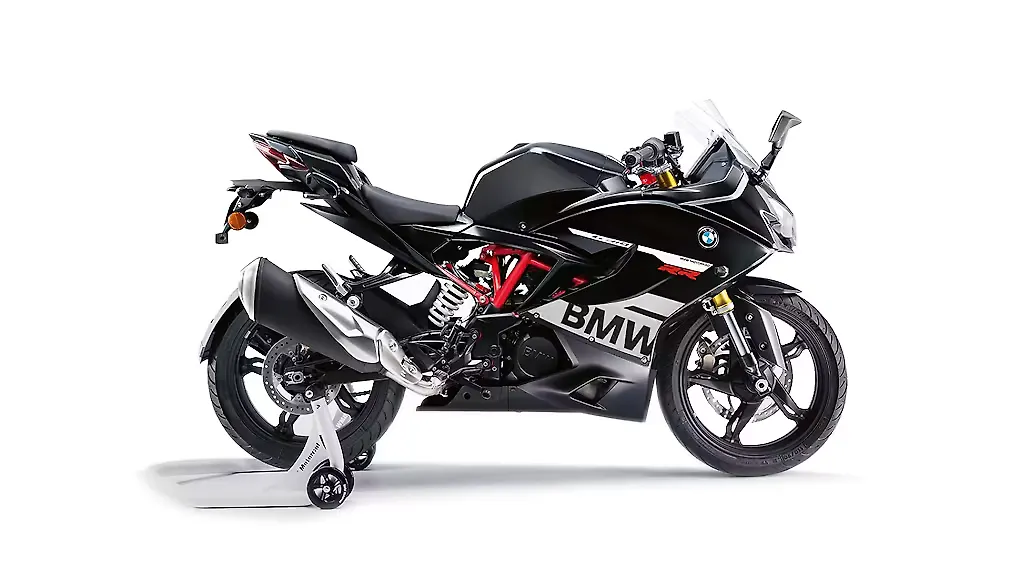
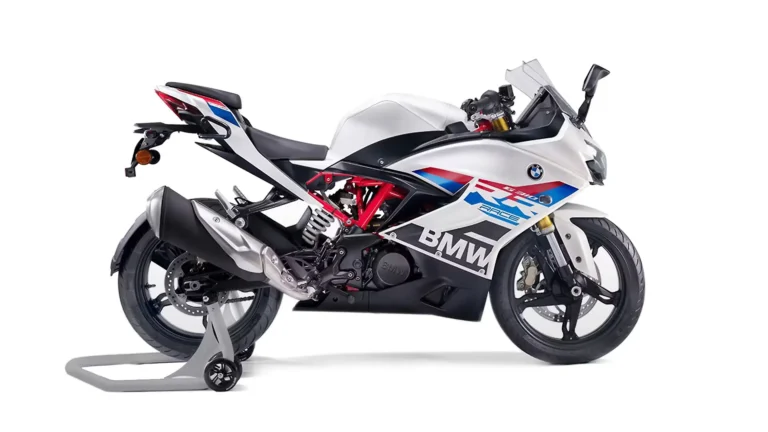
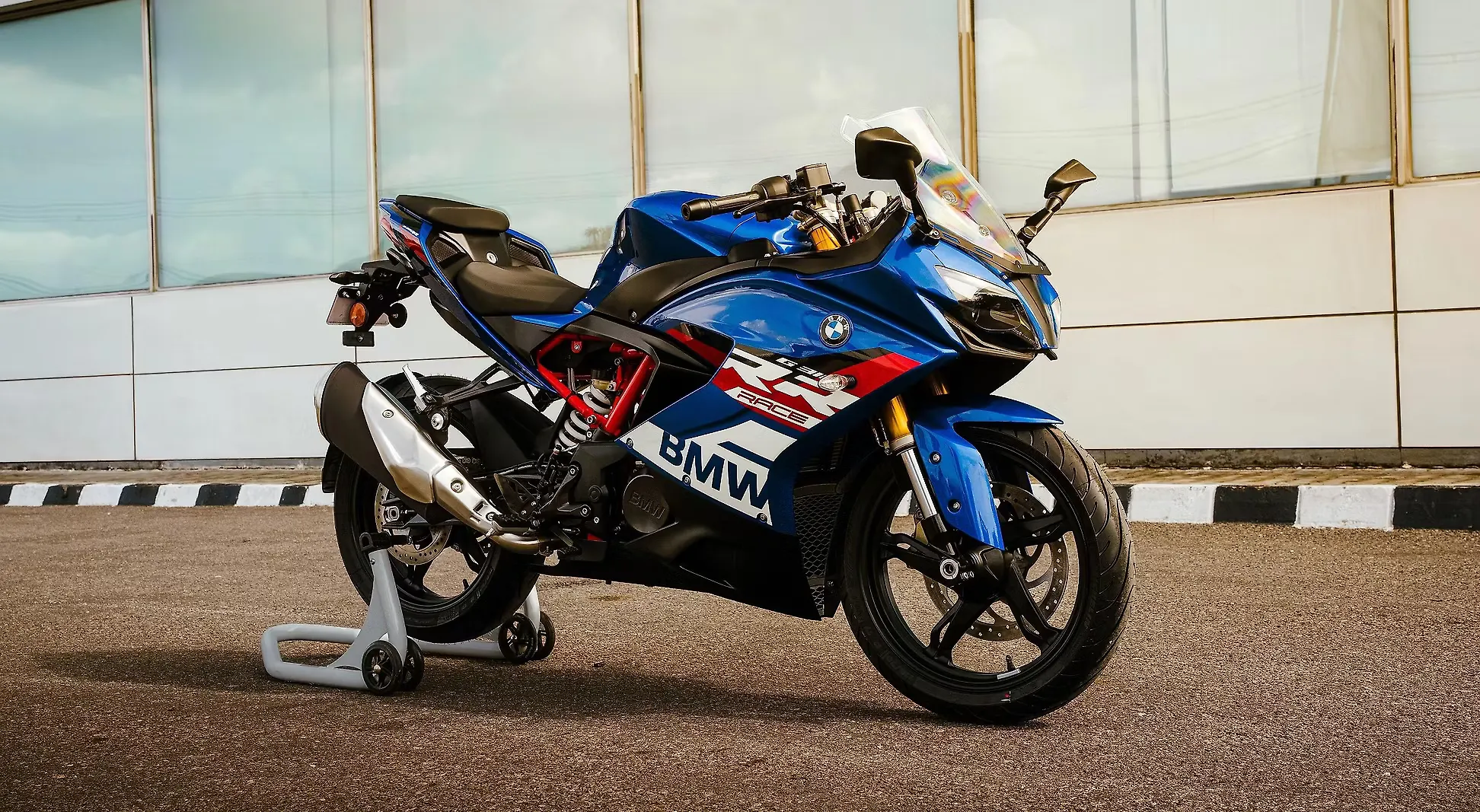
BMW G 310 RR
8.0 pts
Unweighted: 6 advantages
EnginePerformanceDimensionsBrakesTyresFeaturesOther
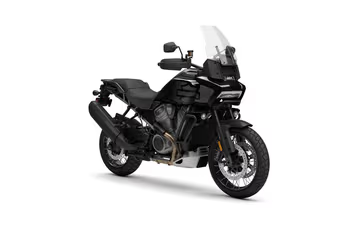
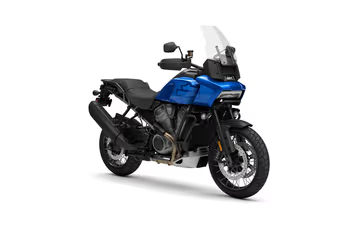
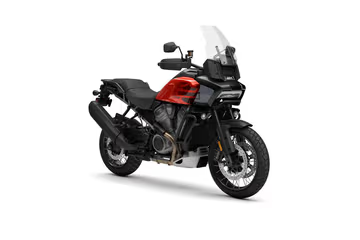
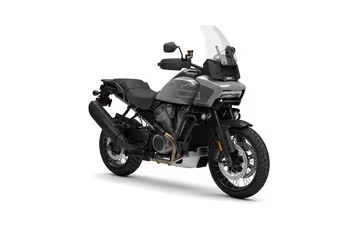
Pan America 1250 Special
23.5 pts
Unweighted: 16 advantages
EnginePerformanceDimensionsBrakesTyresFeaturesOther
| Specification | ||
|---|---|---|
Engine Specifications |
||
| Cooling System | liquid cooling | Liquid-cooled |
| Displacement | 312.12 cc | 1,252 cc |
| Engine Type | single‑cylinder, four‑stroke engine with four valves | Revolution Max 1250 V‑twin (DOHC, VVT) |
| Power | 34 PS at 9,700 rpm | 150 HP (112 kW) @ 8,750 rpm |
| Torque | 27.3 Nm at 7,700 rpm | 125 Nm @ 6,750 rpm |
Performance & Efficiency |
||
| Fuel Tank Capacity | 11 L | 21.2 L |
| Mileage | 30 kmpl | 18.33 Kmpl |
Dimensions & Weight |
||
| Kerb Weight | 174 | 258 in running order |
| Seat Height | 811 | 850 mm / 875 |
Brakes & Suspension |
||
| ABS | Dual Channel ABS | Cornering ABS, dual-channel |
| Front Brake | Disc 300 mm Caliper - Front 4 Piston | 320 mm Disc (dual rotor) |
| Front Suspension | Upside down fork, Ø 41 mm | 47mm inverted fork with electronically adjustable semi-active damping control. Aluminum fork triple clamps |
| Rear Brake | Disc 240 mm Caliper - Rear 1 Piston | 280 mm Disc |
| Rear Suspension | Cast aluminium dual swing arm, central spring strut | Linkage-mounted monoshock with automatic electronic preload control and semi-active compression & rebound damping |
Tyres & Wheels |
||
| Front Tyre | 110/70 - R17 | 120/70 R19 Michelin Scorcher “Adventure” radial |
| Rear Tyre | 150/60 - R17 | 170/60 R17 Michelin Scorcher “Adventure” radial |
| Tyre Type | Tubeless | Radial, tubeless |
| Wheel Type | Alloy | Cast Aluminum |
Features & Technology |
||
| Headlight | LED | LED |
Other Specifications |
||
| Battery | 12 V / 8 Ah | — |
| Bike Image 1 | https://motoautiv.com/wp-content/uploads/2025/12/g310rrracingbluemetallic.webp | https://motoautiv.com/wp-content/uploads/2025/06/Black-5.avif |
| Bike Image 2 | https://motoautiv.com/wp-content/uploads/2025/12/g310rrcosmicblack2.webp | https://motoautiv.com/wp-content/uploads/2025/06/Blue-burst-1.avif |
| Bike Image 3 | — | https://motoautiv.com/wp-content/uploads/2025/06/Whiskey-Fire-4.avif |
| Cluster | Digital 5 inch TFT | 6.8″ full‑color TFT touchscreen |
| Color Options | Racing Blue Metallic | #0057A3 Cosmic Black 2 | #0B0B0C White with M Sport graphics | #F5F5F5 Polar White | #FFFFFF Cosmic Black | #000000 | Blue Burst | #1F4FA3 Billiard Gray | #6B7074 Vivid Black | #0F0F10 Whiskey Fire / Raven Metallic | #A64B22, #2A2A2D |
| Cons | Fuel tank is only 11 litres, limiting range on longer rides. Seat height may feel slightly tall for shorter riders due to riding posture Single-cylinder engine can produce noticeable vibrations at higher speeds. Relatively premium price compared to entry-level sport bikes in India. Lacks advanced electronics like traction control or quick shifter that competitors may offer. | Physical Size Can Be Intimidating – Even with Adaptive Ride Height, the Pan America remains a large adventure motorcycle that requires confidence when manoeuvring at low speeds. Weight Becomes Noticeable Off-Road – On challenging terrain, the motorcycle's mass is difficult to ignore, particularly when compared with lighter dual-sport machines. Engine Heat Can Be Felt During Slow Riding – The high-performance V-twin generates noticeable heat in traffic and during low-speed technical riding. The TFT System Has a Learning Curve – The extensive electronics package offers many adjustment options, but new owners may need time to become familiar with the menus and settings. Premium Purchase and Ownership Costs – The motorcycle competes in the premium adventure-touring segment, where purchase prices, accessories, servicing, and insurance costs are typically high. Wide Bodywork Can Feel Bulky in Urban Traffic – The fairing, handlebars, and overall dimensions are optimized for touring rather than filtering through tight spaces. Off-Road Capability Depends Heavily on Rider Skill – Although the motorcycle is capable of leaving paved roads, managing a large adventure bike on difficult terrain requires experience. |
| Detailed Overview | The BMW G 310 RR is based on a 312 cc, single-cylinder, liquid-cooled, four-stroke DOHC engine producing approximately 34 PS of power and 27.3 Nm of torque. The engine is paired with a 6-speed manual gearbox featuring an assist and slipper clutch, with power transmitted via a chain drive. Fuel delivery is managed through electronic fuel injection, and the engine is tuned to operate across a range of riding conditions typically encountered in Indian environments. The motorcycle is equipped with four riding modes, Track, Sport, Urban, and Rain which alter throttle response and power delivery characteristics. These modes allow the rider to adapt the engine output based on road surface conditions and usage scenarios. The gearbox is designed to provide consistent shifts across different speeds, while the slipper clutch assists in maintaining stability during aggressive downshifting. The chassis is supported by a 41 mm upside-down telescopic front fork and a rear monoshock mounted on a cast aluminium dual swingarm, with preload adjustability at the rear. This suspension setup is configured to manage a combination of urban road irregularities and highway riding conditions. The motorcycle has a kerb weight of approximately 174 kg, contributing to its handling characteristics in both low-speed and higher-speed scenarios. Braking duties are handled by a 300 mm front disc with a four-piston caliper and a 240 mm rear disc, supported by dual-channel ABS. The braking system is designed to provide controlled deceleration across varying road conditions. The motorcycle is fitted with 110/70 R17 front and 150/60 R17 rear tubeless radial tyres mounted on alloy wheels. In terms of dimensions, the BMW G 310 RR has a seat height of 811 mm and a fuel tank capacity of 11 litres. The overall design includes a fully faired body structure, influencing both aerodynamics and rider positioning. The riding posture is moderately forward-leaning, with handlebar and footpeg placement aligned with its sport-oriented configuration. Electrical components include a full LED lighting system and a fully digital instrument cluster displaying speed, gear position, fuel level, and trip-related information. The motorcycle is powered by a maintenance-free battery and uses an electric start system for ignition. | The Pan America 1250 Special represents one of the most significant departures Harley-Davidson has made from its traditional product formula. For decades, the company’s identity was closely linked to cruisers and touring motorcycles powered by large air-cooled V-twin engines. The Pan America was developed for an entirely different category: the adventure-touring segment. As a result, its design, engineering, and intended use differ substantially from most motorcycles that carry the Harley-Davidson badge. At the heart of the motorcycle is the Revolution Max 1250 engine, a 1,252cc liquid-cooled V-twin that serves as a structural component of the chassis. Rather than sitting inside a conventional frame, the engine acts as a stressed member, with the front, middle, and rear chassis sections attached directly to it. This construction method helps reduce weight while contributing to chassis rigidity. The engine itself is designed around a broader operating range than Harley-Davidson’s traditional V-twins, producing power across a wide span of engine speeds. A six-speed gearbox transfers power to the rear wheel, while electronic throttle control allows the motorcycle’s various rider-assistance systems to interact with the powertrain. The chassis is built around the requirements of adventure touring, which means it must function across a variety of road conditions. Long-travel suspension provides greater wheel movement than would typically be found on a road-focused motorcycle, helping the machine cope with uneven surfaces and off-pavement terrain. The Special variant is equipped with electronically controlled semi-active suspension that continuously adjusts damping characteristics based on riding conditions and rider inputs. Depending on specification, the motorcycle may also be fitted with Adaptive Ride Height, a system that lowers the suspension when the motorcycle comes to a stop and returns it to normal height once underway. Wheel sizes follow established adventure-bike practice, with a 19-inch front wheel and a 17-inch rear wheel. The motorcycle uses tubeless tyres, which simplify puncture repairs compared with tube-type setups. Ground clearance, suspension travel, and riding position are all designed with mixed-surface riding in mind, allowing the motorcycle to operate on highways, rough roads, gravel tracks, and other unpaved surfaces. The riding position reflects the motorcycle’s touring and adventure focus. A wide handlebar provides leverage and control, while the upright seating posture allows the rider to remain comfortable over extended distances. The seat height is adjustable, and the relationship between the handlebar, seat, and footpegs is intended to accommodate both seated and standing riding positions. This becomes particularly relevant when riding away from paved roads, where riders often stand on the footpegs for greater control. Technology plays a significant role in the Pan America 1250 Special. A colour TFT display serves as the central interface for vehicle information, navigation, smartphone connectivity, and ride settings. Multiple riding modes allow the motorcycle’s behaviour to be adjusted for different environments, while electronic rider aids include cornering-enhanced ABS, traction control, wheel-lift mitigation, drag-torque slip control, hill-hold control, and engine braking management. These systems rely on sensors and onboard electronics to monitor the motorcycle’s behaviour and adjust intervention levels as conditions change. The motorcycle carries a 21.2-litre fuel tank, reflecting its long-distance touring role. Luggage systems, crash protection accessories, and other adventure-touring equipment can be added to expand carrying capacity and functionality. Combined with the large-capacity engine, long-travel suspension, electronic rider aids, and upright ergonomics, the Pan America 1250 Special is configured around the demands of extended travel across a variety of road surfaces rather than a single riding environment. |
| Expert Review | The BMW G 310 RR is positioned as an entry-level fully faired sport motorcycle built around a 312 cc single-cylinder platform, tuned to deliver a balance between everyday usability and sport-oriented performance. In Indian riding conditions, the engine offers adequate performance for city and highway use, though vibrations become more noticeable at higher speeds. The chassis and suspension setup provide stable handling with a focus on predictable dynamics rather than aggressive track-oriented sharpness. Its electronics package, including multiple riding modes, adds adaptability across varying road and weather conditions, which is relatively uncommon in this segment. However, factors such as limited fuel tank capacity, absence of certain advanced rider aids, and pricing relative to similarly positioned motorcycles influence its positioning within the market., 4.0, MotoAutiv Team | The Pan America 1250 Special stands apart from most Harley-Davidson motorcycles because it was developed for a category that has traditionally been dominated by European and Japanese manufacturers. The Revolution Max 1250 engine is central to that effort. It delivers performance in a manner that feels more typical of modern adventure motorcycles than of Harley-Davidson's cruiser lineup, with a broad operating range and a willingness to rev that would be unfamiliar to riders coming from the company's air-cooled V-twins. The chassis, suspension, and electronics package follow the same philosophy. Features such as semi-active suspension, multiple ride modes, cornering-sensitive rider aids, and Adaptive Ride Height place the motorcycle firmly within the expectations of the premium adventure-touring segment. On paved roads, the combination of an upright riding position, long-travel suspension, and stable chassis allows the motorcycle to cover large distances comfortably. Away from smooth asphalt, the suspension travel and riding modes provide the flexibility expected from an adventure platform, although the motorcycle's size and weight remain important factors in more demanding terrain. The Pan America does not feel like a cruiser adapted for adventure use; it feels like a motorcycle engineered specifically for the adventure-touring category, with Harley-Davidson's influence appearing more in the design language and engine architecture than in the riding experience itself., 4.6, MotoAutiv Team |
| FAQ (Manual Override) | Q: What type of engine does the BMW G 310 RR use? A: The BMW G 310 RR is powered by a 312 cc, single-cylinder, liquid-cooled, four-stroke DOHC engine with four valves. Q: How much power does the BMW G 310 RR produce? A: The BMW G 310 RR produces 34 PS of maximum power at higher RPMs, which allows it to maintain consistent performance across a range of riding conditions, including urban traffic and open roads. Q: How much power does the BMW G 310 RR produce? A: The BMW G 310 RR produces 34 PS of maximum power at higher RPMs, which allows it to maintain consistent performance across a range of riding conditions, including urban traffic and open roads. Q: What type of lighting setup does the BMW G 310 RR have? A: The BMW G 310 RR features a full LED lighting system, including the headlight, tail light, and turn indicators, contributing to visibility and consistent illumination. Q: What type of starter system is available in the BMW G 310 RR? A: The BMW G 310 RR is equipped with an electric starter system, ensuring convenient and reliable ignition. | Q: Which engine powers the Pan America 1250 Special? A: It uses Harley-Davidson's 1,252cc Revolution Max liquid-cooled V-twin engine paired with a 6-speed gearbox. Q: Is the Pan America Harley-Davidson's first adventure motorcycle? A: Yes. The Pan America marked Harley-Davidson's entry into the adventure-touring segment. Q: What is the power output of the Pan America 1250 Special? A: The engine produces approximately 150 hp and 128 Nm of torque. Q: What is Adaptive Ride Height (ARH)? A: Adaptive Ride Height is an electronically controlled suspension feature that automatically lowers the motorcycle when coming to a stop and raises it again once moving. Q: Is Adaptive Ride Height standard? A: No. It is offered as an optional feature in many markets, though availability can vary by region and model year. Q: What is the fuel tank capacity? A: The Pan America 1250 Special has a 21.2-litre fuel tank. Q: Does it have tubeless tyres? A: Yes. The motorcycle uses tubeless tyres, making puncture repairs easier during long-distance travel. Q: What wheel sizes does it use? A: The motorcycle uses a 19-inch front wheel and a 17-inch rear wheel. Q: Does the Pan America have cruise control? A: Yes. Electronic cruise control is standard on the Special variant. Q: Does it have riding modes? A: Yes. Multiple ride modes are available, including Road, Sport, Rain, Off-Road, Off-Road Plus, and customizable modes. Q: Does it have cornering ABS and traction control? A: Yes. The motorcycle includes cornering-enhanced ABS, traction control, wheel-lift mitigation, drag-torque slip control, and other rider-assistance systems. Q: Does the Pan America have electronic suspension? A: Yes. The Special variant comes equipped with semi-active suspension, which continuously adjusts damping based on riding conditions. Q: What is the seat height? A: Depending on suspension settings and seat position, the seat height ranges from approximately 850 mm to 875 mm. Models equipped with Adaptive Ride Height can effectively feel lower when stationary. Q: What is the kerb weight? A: The Pan America 1250 Special weighs approximately 258 kg in running condition. Q: Is the Pan America suitable for off-road riding? A: Yes. It is designed to handle gravel roads, dirt tracks, and light-to-moderate off-road terrain, although its size and weight remain important considerations. Q: Does it support smartphone connectivity? A: Yes. The TFT display supports Bluetooth connectivity, navigation functions, call management, and media controls through Harley-Davidson's connected features. Q: Does it come with luggage? A: No. Panniers and top boxes are generally offered as accessories rather than standard equipment. Q: Is the Pan America comfortable for two-up touring? A: Yes. The seat size, suspension travel, passenger accommodations, and touring ergonomics allow it to be used for long-distance riding with a passenger. Q: How is the Pan America different from the BMW R 1300 GS? A: Both are premium adventure tourers, but the Pan America uses a liquid-cooled V-twin engine and offers Adaptive Ride Height, while the BMW uses a boxer-twin engine and follows a different chassis philosophy. |
| Fuel System | electronic fuel injection | Fuel Injection |
| Price Variants | STD | 285000 | Disc Brakes, Alloy Wheels Limited Edition | 299000 | Disc Brakes, Alloy Wheels | | 2716000 |
| Pros | Sporty fully-faired design with aggressive aesthetics suitable for enthusiasts. Balanced performance suitable for city and highway use Four riding modes (Track, Sport, Urban, Rain) allow you to adapt the bike to different road conditions. Dual-channel ABS with adequate braking performance Relatively manageable weight with nimble handling characteristics Moderately sporty ergonomics with a relatively upright stance LED lighting and fully digital instrument cluster enhance visibility and usability. | The Revolution Max 1250 Engine Shapes the Entire Experience – The liquid-cooled V-twin delivers power very differently from Harley-Davidson's traditional engines. It revs freely, produces strong performance across a broad range of engine speeds, and feels equally comfortable on highways and mountain roads. Adaptive Ride Height Is a Unique Feature – Depending on specification, the suspension can automatically lower the motorcycle when coming to a stop and raise it again while moving. This addresses one of the common challenges associated with large adventure motorcycles. Capable on a Wide Variety of Roads – The chassis, suspension travel, and wheel setup allow the motorcycle to operate across highways, rough roads, gravel tracks, and unpaved routes without requiring significant compromises. Comprehensive Electronics Package – Ride modes, cornering ABS, traction control, wheel-lift control, engine braking management, hill-hold control, and semi-active suspension are integrated into the platform. Long-Distance Comfort Is a Major Consideration – The upright riding position, wide handlebar, windscreen, and spacious ergonomics are designed around spending extended periods in the saddle. Strong Highway Stability – At cruising speeds, the motorcycle feels planted and composed, particularly when carrying luggage or a passenger. Large TFT Display and Connectivity Features – Navigation, smartphone integration, ride settings, and vehicle information are accessed through a modern touchscreen interface. Adventure-Touring Practicality – The motorcycle supports luggage systems, touring accessories, and a variety of configurations suited to long-distance travel. |
| Starter | Electric | Electric |
| Transmission | 6‑speed manual | 6‑speed manual |