Quick Analysis
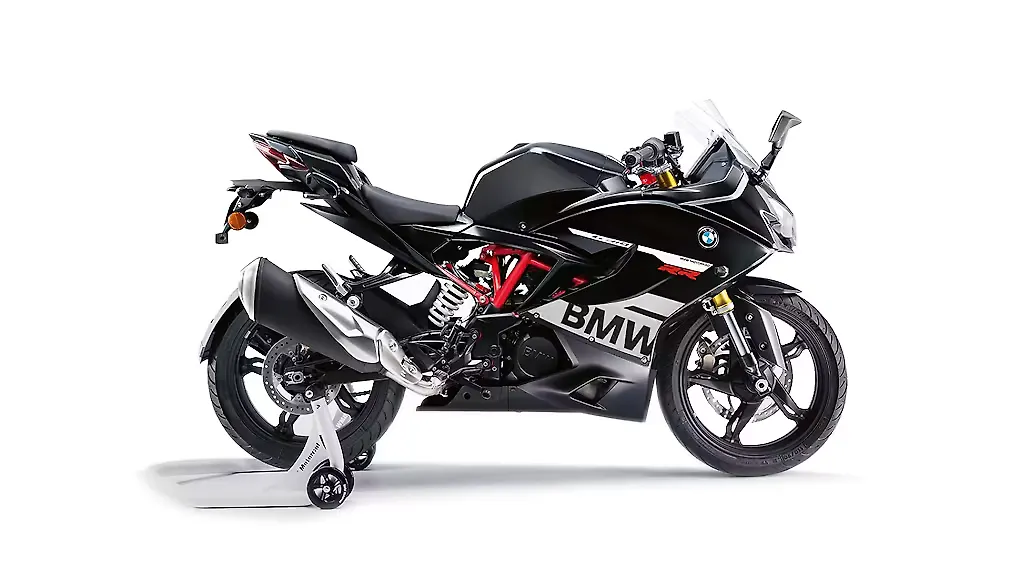
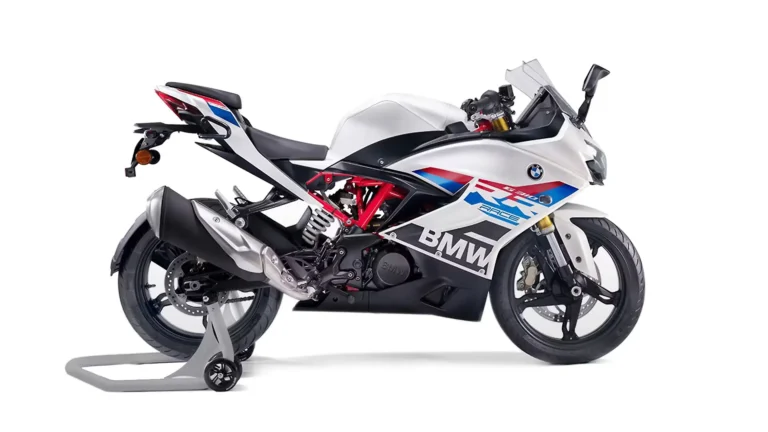
BMW G 310 RR
11.5 pts
Unweighted: 8 advantages
EnginePerformanceDimensionsBrakesTyresFeaturesOther
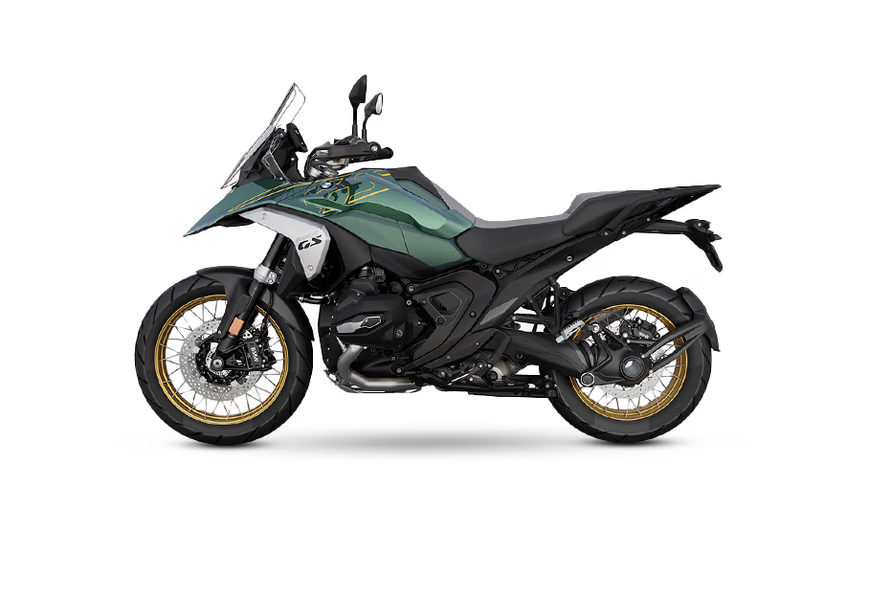
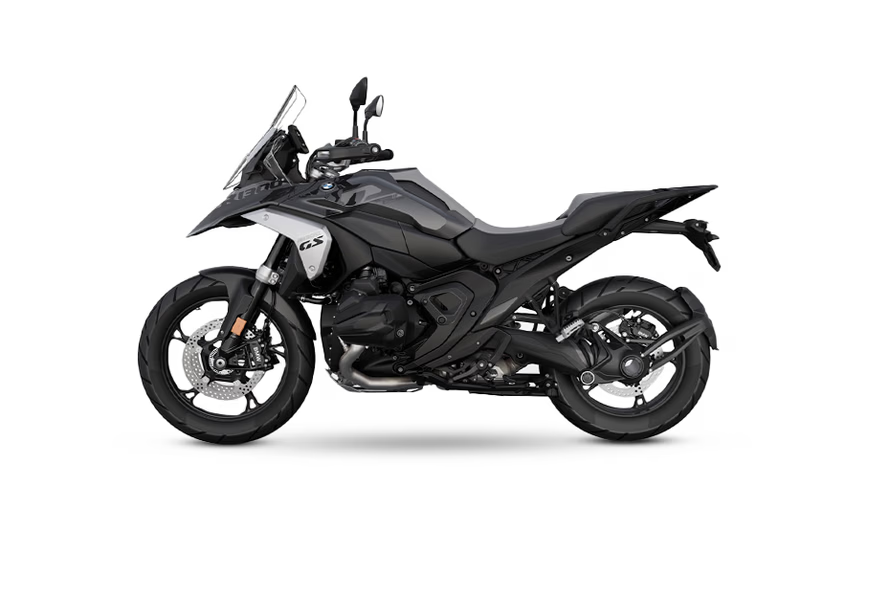
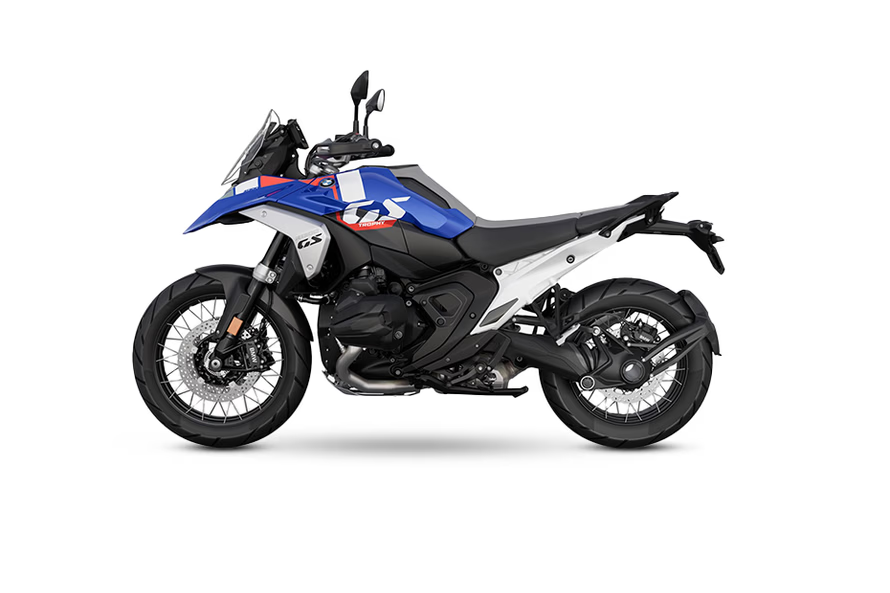
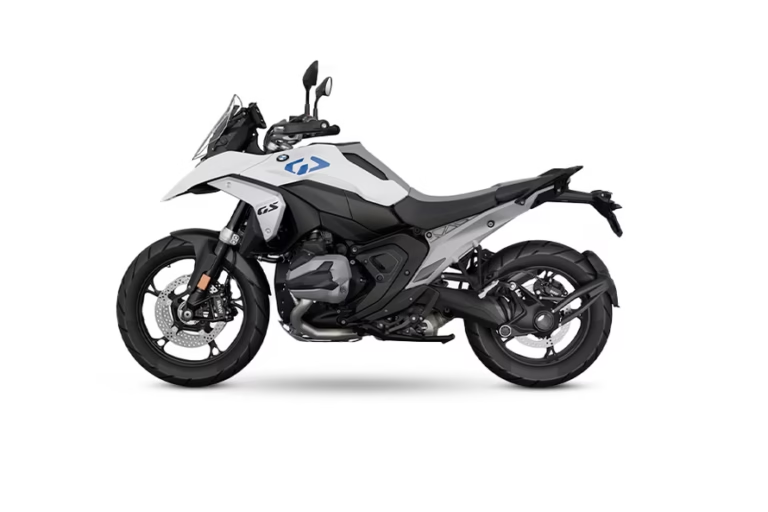
BMW R 1300 GS
18.0 pts
Unweighted: 13 advantages
EnginePerformanceDimensionsBrakesTyresFeaturesOther
| Specification | ||
|---|---|---|
Engine Specifications |
||
| Cooling System | liquid cooling | Air and liquid-cooled |
| Displacement | 312.12 cc | 1,300 cc |
| Engine Type | single‑cylinder, four‑stroke engine with four valves | Two-cylinder, four-stroke boxer engine |
| Power | 34 PS at 9,700 rpm | 145.48 bhp @ 7750 rpm |
| Torque | 27.3 Nm at 7,700 rpm | 149 Nm @ 6500 rpm |
Performance & Efficiency |
||
| Fuel Tank Capacity | 11 L | 19 L |
| Mileage | 30 kmpl | 20.83 kmpl |
Dimensions & Weight |
||
| Kerb Weight | 174 | 237 |
| Seat Height | 811 | 850 |
Brakes & Suspension |
||
| ABS | Dual Channel ABS | Dual Channel ABS |
| Front Brake | Disc 300 mm Caliper - Front 4 Piston | Twin disc brake, semi-floating brake discs, diameter 310 mm, 4-piston radial brake caliper |
| Front Suspension | Upside down fork, Ø 41 mm | Central Shock Absorber |
| Rear Brake | Disc 240 mm Caliper - Rear 1 Piston | Single disc brake, diameter 285 mm, 2-piston floating caliper |
| Rear Suspension | Cast aluminium dual swing arm, central spring strut | Single-sided Swingarm |
Tyres & Wheels |
||
| Front Tyre | 110/70 - R17 | 120/70 - R19 |
| Rear Tyre | 150/60 - R17 | 170/60 - R17 |
| Tyre Type | Tubeless | Tubeless |
| Wheel Type | Alloy | Alloy |
Features & Technology |
||
| Headlight | LED | LED |
Other Specifications |
||
| Battery | 12 V / 8 Ah | 12 V / 10 Ah |
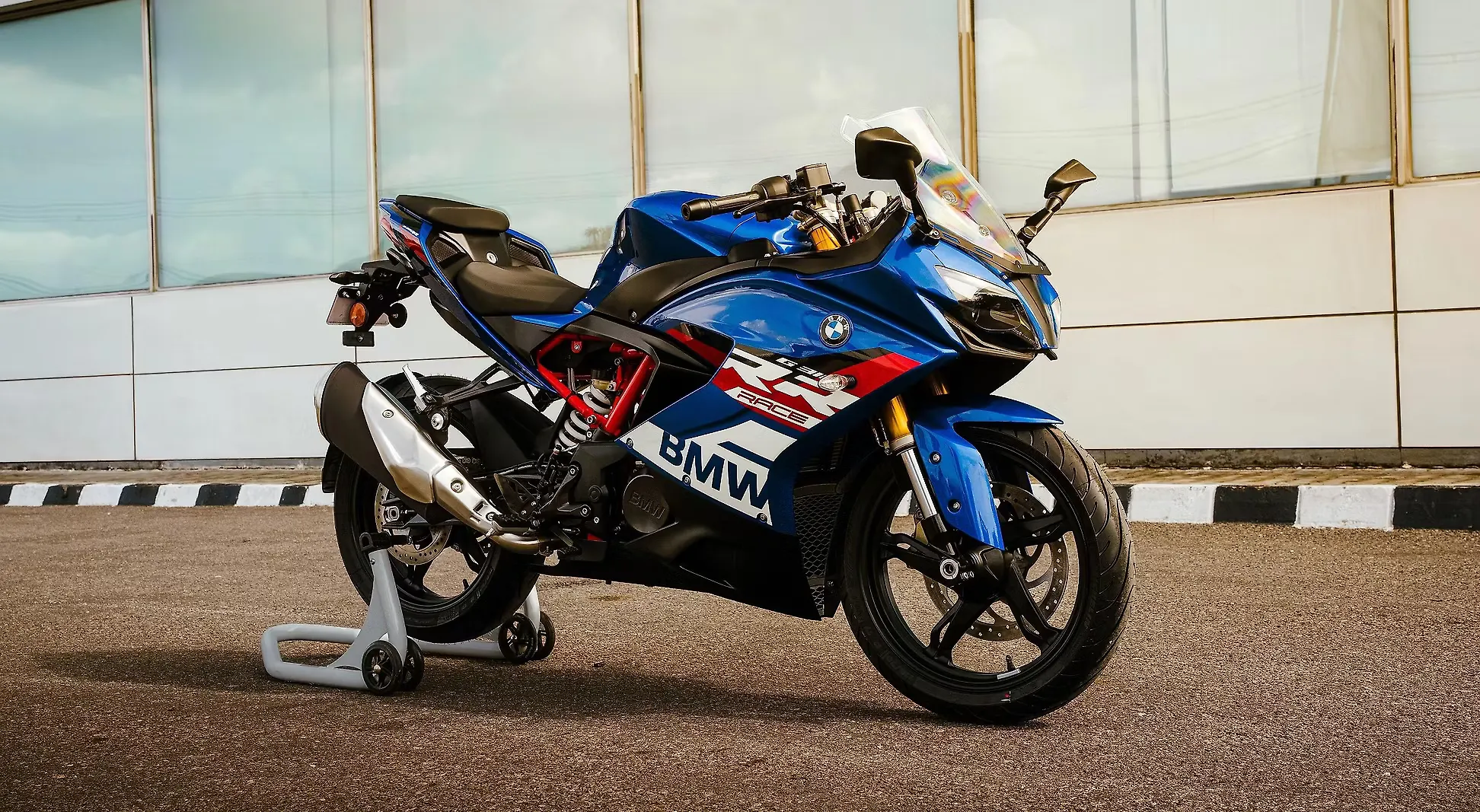
| Bike Image 1 | https://motoautiv.com/wp-content/uploads/2025/12/g310rrracingbluemetallic.webp | https://motoautiv.com/wp-content/uploads/2026/03/Aurelius-Green.avif |
| Bike Image 2 | https://motoautiv.com/wp-content/uploads/2025/12/g310rrcosmicblack2.webp | https://motoautiv.com/wp-content/uploads/2026/03/Triple-black.avif |
| Bike Image 3 | — | https://motoautiv.com/wp-content/uploads/2026/03/GS-Trophy.avif |
| Cluster | Digital 5 inch TFT | Digital |
| Color Options | Racing Blue Metallic | #0057A3 Cosmic Black 2 | #0B0B0C White with M Sport graphics | #F5F5F5 Polar White | #FFFFFF Cosmic Black | #000000 | Light white | #F5F5F5 Black Storm Metallic | #1B1B1B Racing Blue Metallic | #15327E Aurelius Green Metallic | #3A4B3B,#D4AF37 |
| Cons | Fuel tank is only 11 litres, limiting range on longer rides. Seat height may feel slightly tall for shorter riders due to riding posture Single-cylinder engine can produce noticeable vibrations at higher speeds. Relatively premium price compared to entry-level sport bikes in India. Lacks advanced electronics like traction control or quick shifter that competitors may offer. | Significantly expensive compared to many adventure bike alternatives • Heavy motorcycle, especially for slow-speed manoeuvring and off-road beginners • Optional accessories and packages increase cost quickly • The boxer engine’s width can feel bulky in narrow traffic • Heat is noticeable in Indian summers at crawling speeds • Pillion seat comfort is good but not exceptional without optional top-box/backrest • Maintenance and parts costs are on the premium side |
| Detailed Overview | The BMW G 310 RR is based on a 312 cc, single-cylinder, liquid-cooled, four-stroke DOHC engine producing approximately 34 PS of power and 27.3 Nm of torque. The engine is paired with a 6-speed manual gearbox featuring an assist and slipper clutch, with power transmitted via a chain drive. Fuel delivery is managed through electronic fuel injection, and the engine is tuned to operate across a range of riding conditions typically encountered in Indian environments. The motorcycle is equipped with four riding modes, Track, Sport, Urban, and Rain which alter throttle response and power delivery characteristics. These modes allow the rider to adapt the engine output based on road surface conditions and usage scenarios. The gearbox is designed to provide consistent shifts across different speeds, while the slipper clutch assists in maintaining stability during aggressive downshifting. The chassis is supported by a 41 mm upside-down telescopic front fork and a rear monoshock mounted on a cast aluminium dual swingarm, with preload adjustability at the rear. This suspension setup is configured to manage a combination of urban road irregularities and highway riding conditions. The motorcycle has a kerb weight of approximately 174 kg, contributing to its handling characteristics in both low-speed and higher-speed scenarios. Braking duties are handled by a 300 mm front disc with a four-piston caliper and a 240 mm rear disc, supported by dual-channel ABS. The braking system is designed to provide controlled deceleration across varying road conditions. The motorcycle is fitted with 110/70 R17 front and 150/60 R17 rear tubeless radial tyres mounted on alloy wheels. In terms of dimensions, the BMW G 310 RR has a seat height of 811 mm and a fuel tank capacity of 11 litres. The overall design includes a fully faired body structure, influencing both aerodynamics and rider positioning. The riding posture is moderately forward-leaning, with handlebar and footpeg placement aligned with its sport-oriented configuration. Electrical components include a full LED lighting system and a fully digital instrument cluster displaying speed, gear position, fuel level, and trip-related information. The motorcycle is powered by a maintenance-free battery and uses an electric start system for ignition. | The BMW R 1300 GS is built around a new 1,300cc two-cylinder boxer engine, which is the most powerful of its kind from the brand to date. It produces approximately 145 hp at 7,750 rpm and 149 Nm of torque at 6,500 rpm. A major change in this generation is the placement of the gearbox underneath the engine, a design choice that makes the entire powertrain more compact and helps centralize the bike’s weight. In terms of physical build, the motorcycle uses a two-part frame consisting of a main steel shell and a bolted rear subframe. It features a unique suspension system: the EVO-Telelever at the front and EVO-Paralever at the rear, which together provide a travel of 190 mm and 200 mm, respectively. The standard bike has a kerb weight of 237 kg (fully fueled) and a fuel tank capacity of 19 litres, while the more rugged GS Adventure variant increases this capacity to 30 litres and weighs 269 kg. For everyday usability, the seat height is set at 850 mm on the standard model, though an optional Adaptive Vehicle Height Control system can automatically lower the bike to 820 mm when coming to a stop. Braking is handled by twin 310 mm discs at the front with four-piston radial calipers and a single 285 mm disc at the rear, all governed by a lean-angle sensitive ABS system. The cockpit is centered around a 6.5-inch (or optional 10.25-inch) full-color TFT display that includes Bluetooth connectivity for navigation and media. It comes with four standard riding modes, Eco, Rain, Road, and Enduro, which adjust the throttle response and traction control. Other standard electrical features include a full LED matrix headlight, heated grips, keyless ride, and a smartphone charging compartment with a USB socket. |
| Expert Review | The BMW G 310 RR is positioned as an entry-level fully faired sport motorcycle built around a 312 cc single-cylinder platform, tuned to deliver a balance between everyday usability and sport-oriented performance. In Indian riding conditions, the engine offers adequate performance for city and highway use, though vibrations become more noticeable at higher speeds. The chassis and suspension setup provide stable handling with a focus on predictable dynamics rather than aggressive track-oriented sharpness. Its electronics package, including multiple riding modes, adds adaptability across varying road and weather conditions, which is relatively uncommon in this segment. However, factors such as limited fuel tank capacity, absence of certain advanced rider aids, and pricing relative to similarly positioned motorcycles influence its positioning within the market., 4.0, MotoAutiv Team | The BMW R 1300 GS is a massive leap forward for Indian riders who found the previous 1250 model a bit too bulky for our frantic traffic. By shedding significant weight and adopting a more compact frame, it feels much more manageable when you're filtering through city chaos or tackling narrow mountain hairpins. The new engine delivers smooth, predictable power that doesn't feel overwhelming, which is a huge plus on our unpredictable road surfaces. However, the bike’s sophisticated electronics and radar systems might feel like overkill for someone sticking to well-known routes, and the premium price tag remains a high barrier. While the cooling system has improved, the large boxer engine still radiates a fair amount of heat that becomes very noticeable during long waits at Indian traffic signals. It’s a highly capable machine that balances high-tech features with better agility, though it requires a serious financial commitment and an appetite for its unique, modern styling., 4.3, MotoAutiv Team |
| FAQ (Manual Override) | Q: What type of engine does the BMW G 310 RR use? A: The BMW G 310 RR is powered by a 312 cc, single-cylinder, liquid-cooled, four-stroke DOHC engine with four valves. Q: How much power does the BMW G 310 RR produce? A: The BMW G 310 RR produces 34 PS of maximum power at higher RPMs, which allows it to maintain consistent performance across a range of riding conditions, including urban traffic and open roads. Q: How much power does the BMW G 310 RR produce? A: The BMW G 310 RR produces 34 PS of maximum power at higher RPMs, which allows it to maintain consistent performance across a range of riding conditions, including urban traffic and open roads. Q: What type of lighting setup does the BMW G 310 RR have? A: The BMW G 310 RR features a full LED lighting system, including the headlight, tail light, and turn indicators, contributing to visibility and consistent illumination. Q: What type of starter system is available in the BMW G 310 RR? A: The BMW G 310 RR is equipped with an electric starter system, ensuring convenient and reliable ignition. | Q: What is the engine capacity of the BMW R 1300 GS? A: The engine capacity is 1,300 cc, featuring a twin-cylinder boxer layout with BMW’s ShiftCam technology. Q: What are the standard riding modes on the BMW R 1300 GS? A: It comes with modes such as Road, Rain, Eco and Enduro. Q: Does the R 1300 GS come with advanced electronics? A: Yes, it includes features like ABS Pro, traction control, dynamic cruise control with brake function, and optional radar-based systems. Q: Is the BMW R 1300 GS seat height manageable for shorter Indian riders? A: Yes, significantly more so than the older models. While the standard BMW R 1300 GS seat height is 850 mm, the new Adaptive Vehicle Height Control system automatically lowers the bike to 820 mm as you slow down or stop. If you opt for the "Low Comfort Seat," it can drop as far as 800 mm, making it much easier to plant your feet firmly at traffic signals or on uneven Indian roads. Q: What is the real-world fuel range of the BMW R 1300 GS on Indian highways? A: The BMW R 1300 GS fuel tank capacity is 19 litres, which is slightly smaller than some long-distance tourers. In Indian conditions, you can expect a real-world range of approximately 320–350 km on a full tank, depending on your riding mode. Q: Is the BMW R 1300 GS maintenance expensive in India? A: Owning a premium machine like the BMW R 1300 GS does come with high-tier maintenance costs. A standard annual service at an authorized BMW Motorrad India workshop typically ranges between ₹18,000 to ₹25,000, covering oil changes and basic checks. |
| Fuel System | electronic fuel injection | Electronic fuel injection |
| Price Variants | STD | 285000 | Disc Brakes, Alloy Wheels Limited Edition | 299000 | Disc Brakes, Alloy Wheels | Triple Black | 2200000 Trophy | 2225000 Option 719 Tramuntana | 2425000 |
| Pros | Sporty fully-faired design with aggressive aesthetics suitable for enthusiasts. Balanced performance suitable for city and highway use Four riding modes (Track, Sport, Urban, Rain) allow you to adapt the bike to different road conditions. Dual-channel ABS with adequate braking performance Relatively manageable weight with nimble handling characteristics Moderately sporty ergonomics with a relatively upright stance LED lighting and fully digital instrument cluster enhance visibility and usability. | • Strong and refined 1,300cc boxer engine with excellent low-end and mid-range torque • Noticeably lighter and more agile than the previous R1250GS • Improved dynamic handling thanks to new chassis and updated suspension • Very comfortable riding position suitable for long-distance touring • Advanced electronics including traction control, ABS Pro, radar-based aids (optional), and multiple ride modes • High-quality build and premium materials throughout • Great wind protection and ergonomic improvements for rider comfort • Versatile performance — equally confident on highways, off-road trails, and city traffic • New design is more compact, modern, and sharper • Multiple style variants (Triple Black, Trophy, Option 719) giving different personalities and equipment |
| Starter | Electric | Electric |
| Transmission | 6‑speed manual | 6 Speed Manual |