Quick Analysis
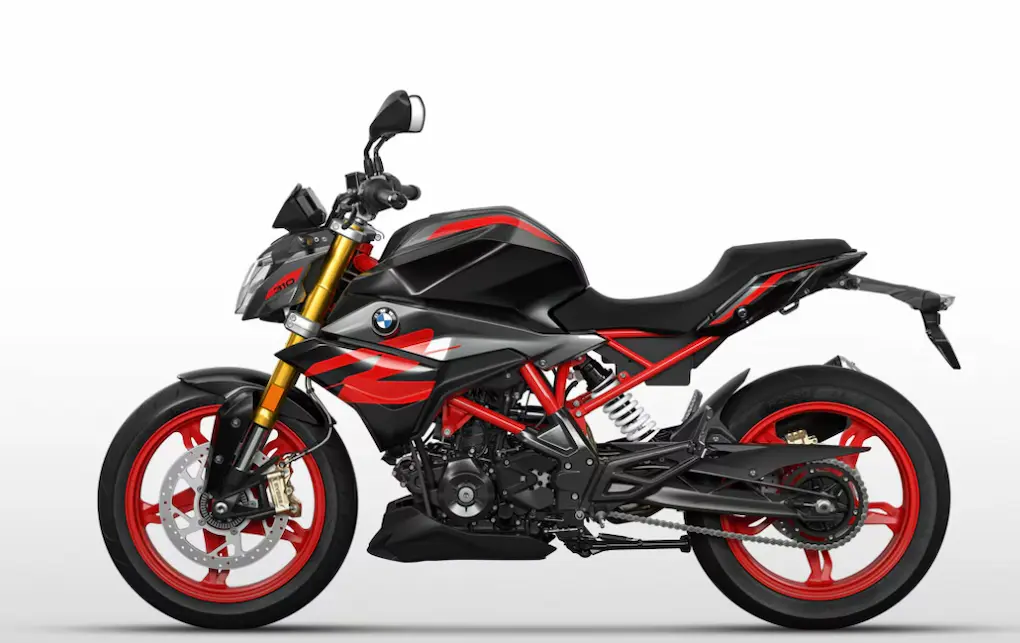
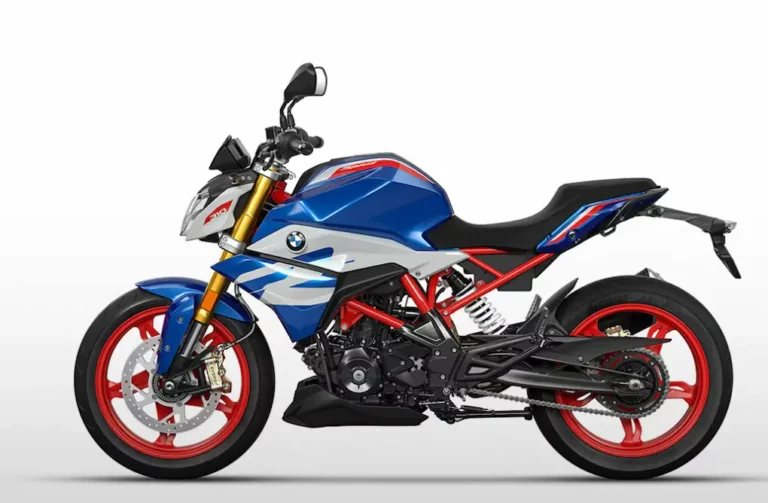
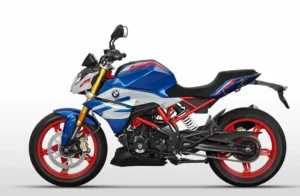
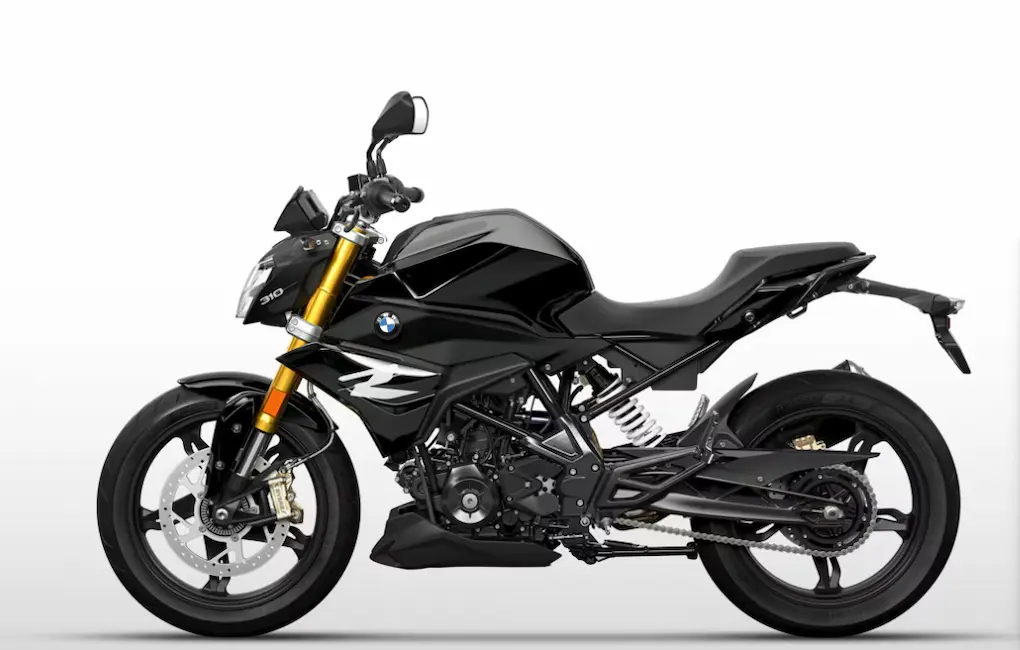
BMW G 310 R
12.5 pts
Unweighted: 11 advantages
EnginePerformanceDimensionsBrakesTyresFeaturesOther
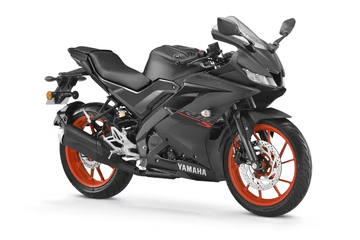
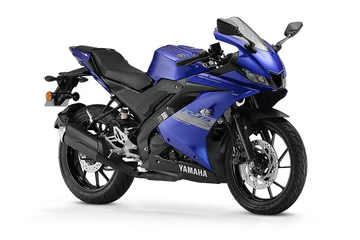
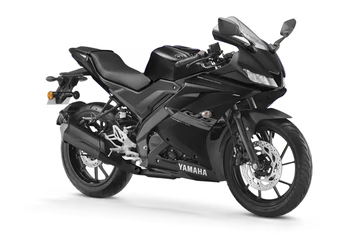
YAMAHA R15 S
8.0 pts
Unweighted: 5 advantages
EnginePerformanceDimensionsBrakesTyresFeaturesOther
| Specification | ||
|---|---|---|
Engine Specifications |
||
| Cooling System | Liquid / water-cooled | Liquid-Cooled |
| Displacement | 313cc | 155 CC |
| Engine Type | Water-cooled, single-cylinder, 4-stroke, DOHC, 4-valve | Liquid-cooled, 4-stroke, SOHC, 4-valve |
| Power | 34 hp at 9,250 rpm | 13.5kW(18.4PS)/10000 RPM |
| Torque | 28 Nm @ ~7,500 rpm | 14.2 Nm (1.4 kgfm) @7,500 RPM |
Performance & Efficiency |
||
| Fuel Tank Capacity | 11 L | 11 L |
| Mileage | 30 kmpl | 40 Kmpl |
Dimensions & Weight |
||
| Kerb Weight | 164 | 142 |
| Seat Height | 785 | 815 |
Brakes & Suspension |
||
| ABS | Dual Channel | Dual channel ABS |
| Front Brake | Disc 300 mm Caliper - 4 Piston | Disc brake (282 mm) |
| Front Suspension | Upside down fork , Ø 41 mm | Telescopic Fork |
| Rear Brake | Disc 240 mm Caliper - 1 Piston | Disc brake (220 mm) |
| Rear Suspension | Cast aluminium dual swing arm | Monocross (link suspension) |
Tyres & Wheels |
||
| Front Tyre | 110/70 - R17 | 100/80-17M/C 52P |
| Rear Tyre | 150/60 - R17 | 140/70R17M/C 66H |
| Tyre Type | Tubeless | Tubeless |
| Wheel Type | Alloy | Alloy |
Features & Technology |
||
| Headlight | LED | LED |
Other Specifications |
||
| Battery | 12 V / 8 Ah, | 12 V, 4.0 Ah |
| Bike Image 1 | https://motoautiv.com/wp-content/uploads/2025/12/image-8.webp | https://motoautiv.com/wp-content/uploads/2025/05/new-matte-black.avif |
| Bike Image 2 | https://motoautiv.com/wp-content/uploads/2025/12/image-10.webp | https://motoautiv.com/wp-content/uploads/2025/05/racing-blue-1.avif |
| Cluster | Digital console | Digital |
| Color Options | Triple Black | #1B1B1B Polar White Racing Blue Metallic | #FFFFFF, #16588E Granite Gray Metallic | #1B1B1B, #4D4D4D | Racing Blue | #1B4FAF Matte Black | #1A1A1C Matte Black (New) | #1A1A1C, #C62828 |
| Cons | Relatively small fuel tank at 11 liters, limiting long-distance touring range. Single-cylinder vibrations can be felt at higher RPMs, especially during prolonged highway riding. Limited top-end performance compared to some rivals in the segment that focus more on outright speed. Maintenance and service costs are slightly higher than typical 300 cc class bikes. No advanced electronics or ride modes, which some riders might expect at this price point. | Aggressive Riding Position for Daily Commuting – Although more comfortable than the R15 V4 due to its single-piece seat, the clip-on handlebars and sporty ergonomics can still become tiring in heavy traffic and during longer city rides. Misses Out on USD Front Forks – The R15S uses conventional telescopic front forks, whereas the R15 V4 and R15M come equipped with upside-down forks that offer a more premium feel and appearance. No Traction Control System – Unlike the higher-spec R15 V4 and R15M variants, the R15S does not offer traction control. No Quickshifter – Riders do not get the clutchless upshift functionality available on the R15M and selected R15 V4 variants. Basic Instrument Cluster Compared to Newer Rivals – The display provides essential information but lacks the advanced connectivity and modern interface offered by some competitors. Performance Requires Higher RPMs – The VVA engine performs best when revved, meaning riders often need to shift gears frequently to access its strongest performance. |
| Detailed Overview | The BMW G 310 R is one of those motorcycles that reminds you how much joy a well-engineered lightweight machine can bring, even before you start chasing big numbers. Its 313 cc single-cylinder engine may sound modest on paper, but once it fires up, you feel a lively and eager character that’s been tuned carefully for both city life and spirited weekend rides. The liquid-cooled, four-valve motor revs cleanly, pulling with smooth determination through the mid-range before stretching confidently toward its peak output of around 34 horsepower. Real-world torque comes alive right where riders spend most of their time — around the 5,000 to 7,000 rpm zone — making quick overtakes and tight gaps in traffic feel effortless rather than stressful. Riding it in the city reveals how much its weight and design work in your favor. At roughly 158 kilos ready to ride, the G 310 R feels light on its feet, and that pays off the moment you weave through traffic or flick it into a narrow gap between cars. The six-speed gearbox clicks through gears neatly, helped by a slipper clutch that makes downshifts smooth when you’re scrubbing off speed or diving into a corner. BMW’s fuel-injection system keeps throttle response crisp, which makes the bike feel more polished than many in its class. Comfort and stability are handled by a suspension setup that balances firmness and compliance unusually well. Up front sits a chunky 41 mm upside-down fork that keeps the bike planted when you brake hard or lean in with enthusiasm. At the rear, a preload-adjustable monoshock helps tailor the feel whether you’re riding solo, carrying a backpack, or taking on a weekend highway stretch. Even on patchy roads, the suspension manages to absorb imperfections without ever feeling soggy or disconnected. Braking confidence is one of the G 310 R’s strongest traits. The front 300 mm disc with its four-piston caliper gives the kind of initial bite and progressive feel that encourages you to ride with assurance. The rear 240 mm disc complements it nicely, especially in tighter city situations where small corrections matter. Dual-channel ABS works quietly in the background, stepping in only when needed but never feeling intrusive, which is exactly how riders prefer it. The dimensions of the bike play a huge role in how friendly it feels. With a seat height of about 785 mm, it’s accessible to a wide range of riders while still giving a commanding riding position. The wheelbase sits right in the sweet spot for agility, making quick transitions feel intuitive rather than forced. Because of its narrow tank and compact chassis, newer riders find it unintimidating, while more experienced riders appreciate how effortlessly it leans and responds. Fuel efficiency hovers in the 30–35 km/l range in mixed conditions, and with an 11-liter fuel tank, it delivers enough riding range for daily commute duties or casual weekend runs without constant fuel stops. The digital instrument cluster is straightforward and easy to read, giving you all essential information without clutter. LED lighting across the bike not only modernizes its appearance but also improves night-time visibility significantly. The electric starter fires the engine to life instantly, and the maintenance-free battery adds to the overall ease of ownership. On the move, the G 310 R manages to feel both manageable and genuinely enjoyable. In the city, it darts through gaps with precision. On the highway, it settles comfortably around typical cruising speeds, feeling stable and composed. On twisty roads, its lightness becomes its biggest asset, offering a playful and confidence-inspiring ride that encourages you to explore more lean angle than you expected from a bike in this category. What truly defines the G 310 R is how all these specifications come together to create an experience that feels refined, balanced, and mature. The engine never feels stressed, the suspension never feels confused, and the braking hardware never makes you second-guess your decisions. It’s practical enough for everyday life, exciting enough for weekend escapes, and polished enough to feel like a genuine BMW — just in a compact and accessible form. For many riders, that combination is exactly what makes the G 310 R such a compelling motorcycle to live with. | The Yamaha R15S is aimed at riders who like the sharp styling and sporty character of the R15 range but want something a little more practical for everyday use. While it shares most of its mechanical components with the R15 V4, the biggest difference is the single-piece seat, which offers more room for both the rider and pillion. As a result, the R15S sits in an interesting space where it carries the DNA of a small supersport motorcycle while remaining usable for daily commuting. Power comes from Yamaha’s familiar 155cc liquid-cooled engine, which has been a key part of the R15 lineup for several years. The motor uses Variable Valve Actuation (VVA), a technology designed to maintain performance across different engine speeds. In normal city riding, the motorcycle feels smooth and manageable, but as the revs climb, the engine develops a more energetic character. The six-speed gearbox works alongside an assist and slipper clutch, which keeps clutch effort light in traffic and helps make downshifts feel smoother when riding enthusiastically. One of the strongest aspects of the R15S is its chassis. The motorcycle is built around Yamaha’s Deltabox frame, a setup that has long been associated with the company’s performance-oriented motorcycles. On the road, this translates into a motorcycle that feels stable when cornering and predictable when changing direction. Whether navigating through city traffic or riding on a winding road, the bike responds accurately to rider inputs without feeling nervous or heavy. The suspension setup consists of telescopic front forks and a rear monoshock. Unlike the R15 V4, the R15S does not use upside-down forks, but the overall setup is tuned to provide a balance between everyday usability and sporty handling. The ride quality tends to feel firm rather than plush, which suits the motorcycle’s sporty nature but also means rough roads can be felt more clearly through the seat and handlebars. Braking duties are handled by disc brakes at both ends, supported by dual-channel ABS. This allows both wheels to benefit from anti-lock braking intervention during sudden braking situations. The braking performance matches the motorcycle’s overall character, offering a controlled and confidence-inspiring feel without requiring excessive effort from the rider. Visually, the R15S continues to look every bit like a member of Yamaha’s R-series family. The full fairing, sharp bodywork, sculpted fuel tank, and aggressive front-end design give it the appearance of a larger supersport motorcycle. LED lighting at both ends further adds to the modern look, while the fully digital instrument console provides information such as speed, fuel level, gear position, and trip details in a clean layout. With a kerb weight of around 142 kg and a seat height of 815 mm, the R15S remains approachable for a wide range of riders. The 11-litre fuel tank offers a useful balance between range and overall weight, making the motorcycle suitable for both daily travel and occasional weekend rides. Rather than being defined by outright performance numbers, the Yamaha R15S is a motorcycle whose character comes from its combination of a high-revving engine, precise handling, sporty ergonomics, and a more accommodating seat layout. It takes the core ingredients of the R15 platform and presents them in a package that feels slightly more practical without moving away from its sportbike roots. |
| Expert Review | The BMW G 310 R serves as an entry-level roadster that focuses on urban agility and brand accessibility within the Indian market. Its 313cc single-cylinder engine is tuned for a strong mid-range, making it effective for navigating city traffic and occasional highway stretches. While the 785 mm seat height and 164 kg kerb weight make it easy for most riders to handle, the 11-litre fuel tank limits its range for long-distance touring. Premium components like the 41 mm upside-down forks and gold-anodized calipers contribute to a high-quality feel, though the LCD console is now considered dated by segment standards. Maintenance and spare part costs remain significantly higher than domestic rivals, which is a key consideration for long-term ownership. Overall, it remains a refined option for those prioritizing a compact footprint and the prestige of the BMW badge over outright power., 4.4, MotoAutiv Team | The Yamaha R15S occupies an interesting position within Yamaha's sportbike lineup because it combines the mechanical foundation of the R15 family with a slightly more practical approach to everyday riding. The 155cc VVA engine remains the centerpiece of the experience, delivering its performance in a manner that encourages riders to explore the upper reaches of the rev range while still offering enough flexibility for routine commuting. The motorcycle feels composed when leaned into corners, and the Deltabox frame continues to provide the sense of precision that has long been associated with the R15 platform. Compared with the R15 V4 and R15M, the single-piece seat improves day-to-day usability and pillion accommodation, though the riding posture still reflects the motorcycle's supersport origins. On uneven roads, the suspension setup prioritizes stability and control over outright softness, which means sharper bumps can be felt through the chassis. The overall package focuses more on rider engagement, chassis balance, and sport-oriented dynamics than on advanced electronics or touring comfort, resulting in a riding experience that remains closely aligned with the R-series identity., 4.4, MotoAutiv Team |
| FAQ (Manual Override) | Q: What is the mileage? A: The mileage is around 30–35 kmpl. Q: How much does the annual maintenance of a BMW G 310 R cost in India? A: While the initial price is competitive, the BMW G 310 R service cost is higher than domestic rivals. A standard annual service typically ranges between ₹6,000 and ₹9,000. Q: Does the BMW G 310 R engine vibrate at high speeds on the highway? A: Since the BMW G 310 R uses a single-cylinder engine, some "buzz" is natural at higher revs. You’ll mostly feel these vibrations through the footpegs and handlebars once you cross 100 kmph. Q: How does the BMW G 310 R handle heating in bumper-to-bumper traffic? A: The BMW G 310 R features a unique "reverse-inclined" engine design that helps with heat dissipation. While you will feel some warm air on your legs when the radiator fan kicks in during a hot Indian summer, it rarely gets "engine-stalling" hot. Q: Is the BMW G 310 R seat height comfortable for shorter riders in India? A: One of the biggest advantages of the BMW G 310 R is its very accessible 785 mm seat height. Because the bike is quite slim, it allows riders around 5'3" to 5'5" to plant both feet firmly on the ground, which is a huge confidence booster in heavy Indian traffic. | Q: Is the Yamaha R15S good for daily use? A: Yes, the R15S is often chosen by riders who want a sportbike for everyday commuting. The single-piece seat makes it more practical than the R15 V4, although the riding position is still sport-oriented. Q: What is the real mileage of the Yamaha R15S? A: Most owners report mileage figures between 40 km/l and 50 km/l, depending on traffic conditions, riding style, and maintenance. Q: What is the top speed of the Yamaha R15S? A: Under suitable conditions, the Yamaha R15S can reach around 135–140 km/h. Q: Does the Yamaha R15S have dual-channel ABS? A: Yes, the Yamaha R15S comes equipped with dual-channel ABS as standard. Q: Does the Yamaha R15S have traction control? A: No, traction control is not available on the R15S. Q: Does the Yamaha R15S get a quickshifter? A: No, the R15S does not come with a quickshifter. This feature is available on the R15M and selected R15 V4 variants. Q: What is the seat height of the Yamaha R15S? A: The seat height is approximately 815 mm, which is the same as the R15 V4. Q: Is the Yamaha R15S comfortable for long rides? A: It is more comfortable than the R15 V4 because of its single-piece seat, but the sporty riding posture can still become tiring during very long journeys. Q: What is the fuel tank capacity of the Yamaha R15S? A: The motorcycle comes with an 11-litre fuel tank. Q: What is the kerb weight of the Yamaha R15S? A: The Yamaha R15S has a kerb weight of approximately 142 kg. Q: What is the difference between Yamaha R15S and Yamaha R15 V4? A: The R15S uses a single-piece seat and conventional telescopic forks, while the R15 V4 gets split seats, USD front forks, traction control, Bluetooth connectivity, and additional premium features depending on the variant. Q: Which is better for daily use, Yamaha R15S or Yamaha R15 V4? A: Riders who prioritize comfort often prefer the R15S because of its single-piece seat, while the R15 V4 offers more features and a sportier overall package. Q: Is the Yamaha R15S suitable for beginners? A: Yes, many new riders start with the R15S because the engine is manageable, the bike is lightweight, and the handling is predictable. Q: Does the Yamaha R15S have VVA technology? A: Yes, the R15S uses Yamaha's Variable Valve Actuation (VVA) system, which helps maintain performance across different engine speeds. Q: Is the Yamaha R15S good for highway riding? A: The motorcycle is capable of highway cruising, and the fairing provides useful wind protection. However, the committed riding position may not suit every rider on very long trips. Q: Does the Yamaha R15S have an assist and slipper clutch? A: Yes, the Yamaha R15S comes equipped with an assist and slipper clutch as standard. |
| Fuel System | Electronic Fuel Injection | Fuel Injection |
| Price Variants | Standard | 290000 | | 155600 |
| Pros | Refined and lively engine that offers smooth acceleration and a strong mid-range, making city riding and short highway runs enjoyable. Lightweight and agile, which makes it incredibly easy to maneuver in traffic and fun to flick through corners. High-quality suspension setup, especially the USD forks, giving the bike a stable and planted feel even at higher speeds. Strong braking performance with a confident front brake and dual-channel ABS for added safety. Premium build quality, from paint finish to component feel, giving it a true BMW character. Comfortable seat height that works well for most riders and encourages confidence. LED lighting and digital cluster provide modern functionality and improved visibility. Slipper clutch makes downshifts smoother and enhances overall ride refinement. | Refined 155cc VVA Engine – The liquid-cooled engine with Variable Valve Actuation delivers smooth performance across a wide rev range and remains one of the most technologically advanced engines in the segment. Sportbike-Inspired Handling – The Deltabox frame provides excellent chassis balance and precise handling, especially while cornering and changing direction. More Comfortable Than the R15 V4 – Unlike the split-seat setup on the R15 V4, the R15S uses a single-piece seat that offers improved comfort for both rider and pillion. Strong Highway Stability – The aerodynamic fairing and well-sorted chassis help the motorcycle remain composed at higher speeds. Good Fuel Efficiency – Despite its sporty nature, the engine is capable of delivering fuel economy figures that remain competitive in the 150cc category. Aggressive R-Series Styling – The design closely resembles Yamaha's larger supersport motorcycles, giving the bike a premium sportbike appearance. Assist and Slipper Clutch – This reduces clutch effort and helps improve stability during downshifts. Lightweight and Manageable – The motorcycle remains easy to handle in urban traffic while still offering a sporty riding feel. LED Headlamp and Tail Lamp – The LED lighting setup contributes to visibility and modern styling. |
| Starter | Electric | Electric starter |
| Transmission | 6-speed constant mesh, manual | Constant mesh, 6-speed |