Quick Analysis
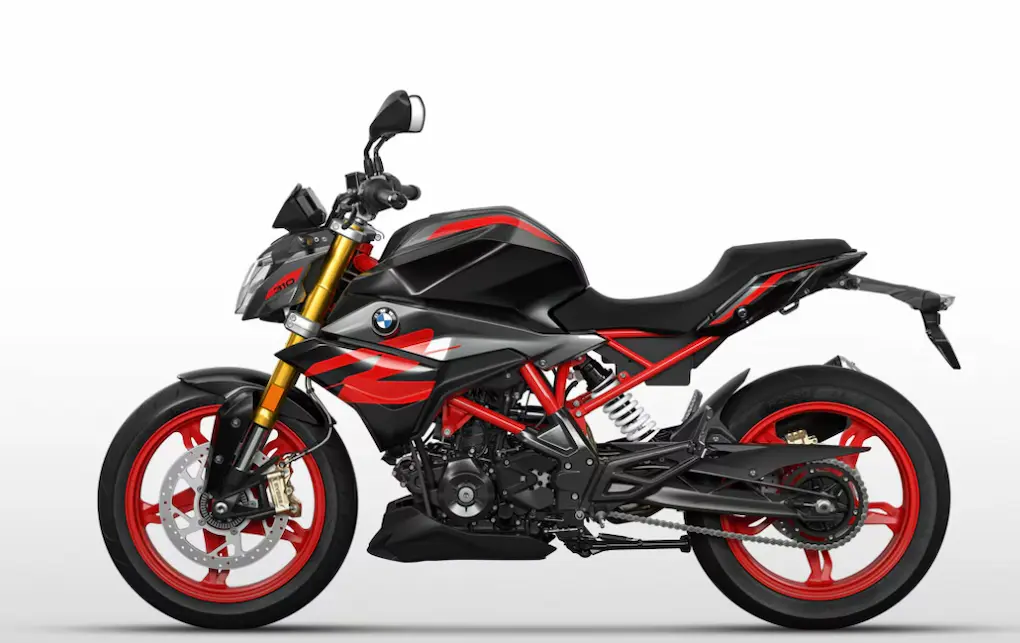
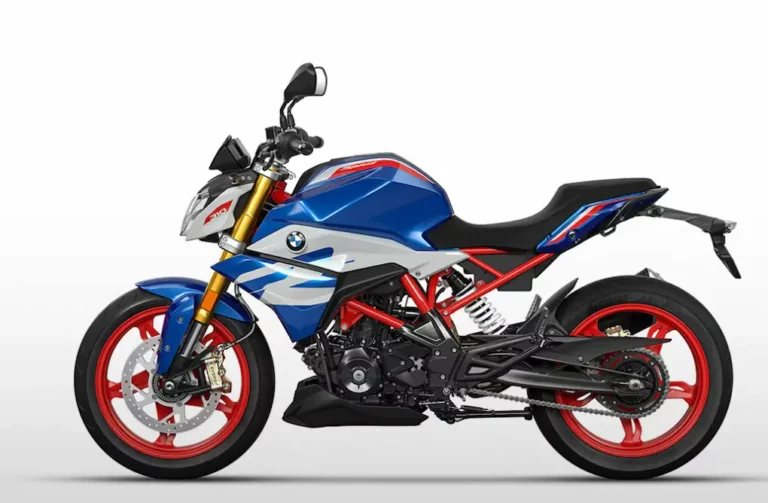
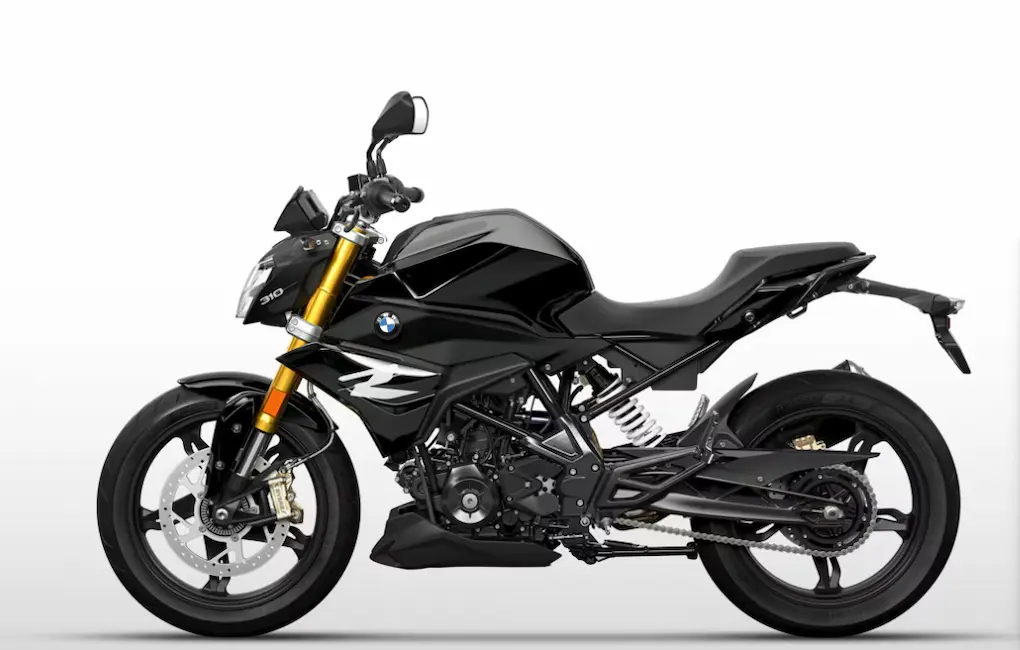
BMW G 310 R
22.0 pts
Unweighted: 13 advantages
EnginePerformanceDimensionsBrakesTyresFeaturesOther
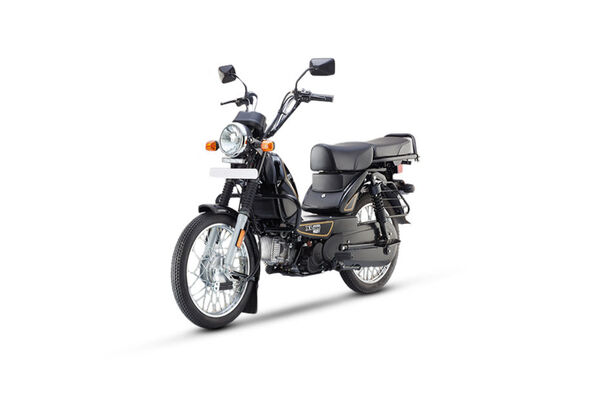
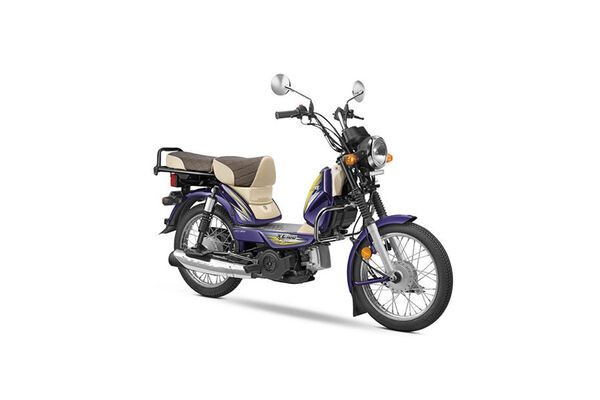
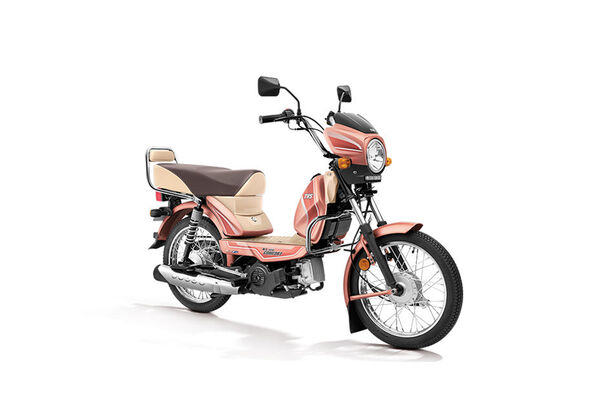
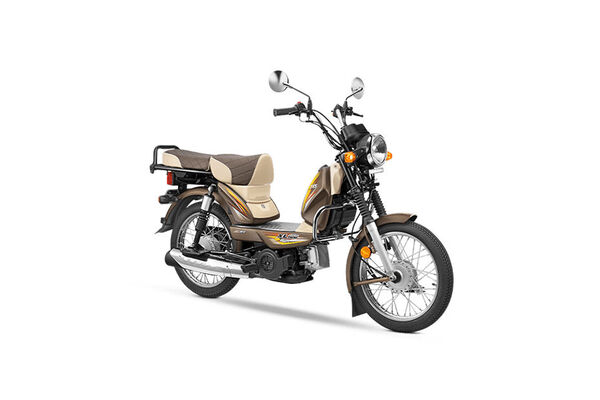
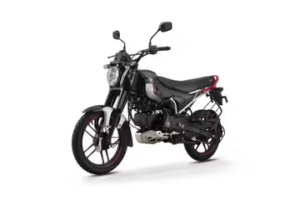
TVS XL100
10.0 pts
Unweighted: 13 advantages
EnginePerformanceDimensionsBrakesTyresFeaturesOther
| Specification | ||
|---|---|---|
Engine Specifications |
||
| Cooling System | Liquid / water-cooled | Air-cooled |
| Displacement | 313cc | 99.7 cc |
| Engine Type | Water-cooled, single-cylinder, 4-stroke, DOHC, 4-valve | 4-stroke, single-cylinder, SI |
| Power | 34 hp at 9,250 rpm | 3.20 kW (4.35 PS) @ 6000 rpm |
| Torque | 28 Nm @ ~7,500 rpm | 6.5 Nm @ 3,500 rpm |
Performance & Efficiency |
||
| Fuel Tank Capacity | 11 L | 4 L |
| Mileage | 30 kmpl | 65 Kmpl |
Dimensions & Weight |
||
| Kerb Weight | 164 | 80–89 (variant-dependent) |
| Seat Height | 785 | 787 |
Brakes & Suspension |
||
| ABS | Dual Channel | No |
| Front Brake | Disc 300 mm Caliper - 4 Piston | Drum (110 mm) |
| Front Suspension | Upside down fork , Ø 41 mm | Telescopic hydraulic spring-type |
| Rear Brake | Disc 240 mm Caliper - 1 Piston | Drum (110 mm), Synchronized Braking Tech |
| Rear Suspension | Cast aluminium dual swing arm | Swing-arm with hydraulic shock absorbers |
Tyres & Wheels |
||
| Front Tyre | 110/70 - R17 | 2.50 × 16 |
| Rear Tyre | 150/60 - R17 | 2.50 × 16 |
| Tyre Type | Tubeless | Tube less |
| Wheel Type | Alloy | Spoke wheels |
Features & Technology |
||
| Headlight | LED | 12V, LED / AHO |
Other Specifications |
||
| Battery | 12 V / 8 Ah, | 12V, 3Ah MF battery |
| Bike Image 1 | https://motoautiv.com/wp-content/uploads/2025/12/image-8.webp | https://motoautiv.com/wp-content/uploads/2025/07/Black.jpeg |
| Bike Image 10 | — | https://motoautiv.com/wp-content/uploads/2025/07/Sparkling-silver.jpeg |
| Bike Image 2 | https://motoautiv.com/wp-content/uploads/2025/12/image-10.webp | https://motoautiv.com/wp-content/uploads/2025/07/Blue.jpeg |
| Bike Image 3 | — | https://motoautiv.com/wp-content/uploads/2025/07/Coral-silk.jpeg |
| Bike Image 4 | — | https://motoautiv.com/wp-content/uploads/2025/07/Green.jpeg |
| Bike Image 5 | — | https://motoautiv.com/wp-content/uploads/2025/07/Grey-Black.jpeg |
| Bike Image 6 | — | https://motoautiv.com/wp-content/uploads/2025/07/Luster-gold.jpeg |
| Bike Image 7 | — | https://motoautiv.com/wp-content/uploads/2025/07/Mineral-purple.jpeg |
| Bike Image 8 | — | https://motoautiv.com/wp-content/uploads/2025/07/Mint-blue-1.jpeg |
| Bike Image 9 | — | https://motoautiv.com/wp-content/uploads/2025/07/Red-black.jpeg |
| Cluster | Digital console | Analog speedometer with odometer & fuel gauge |
| Color Options | Triple Black | #1B1B1B Polar White Racing Blue Metallic | #FFFFFF, #16588E Granite Gray Metallic | #1B1B1B, #4D4D4D | Beaver Brown | #6B4A3A Mineral Purple | #6C4A7D Luster Gold | #B08D57 Green | #3F5F45 Mint Blue | #6FA7B3 Coral Silk | #C97B63 Blue | #2456A6 Red | #A50000 Grey Black | #6D6D6D, #111111 Red Black | #A00000, #111111 Sparkling Silver | #BFC3C7 Black | #111111 |
| Cons | Relatively small fuel tank at 11 liters, limiting long-distance touring range. Single-cylinder vibrations can be felt at higher RPMs, especially during prolonged highway riding. Limited top-end performance compared to some rivals in the segment that focus more on outright speed. Maintenance and service costs are slightly higher than typical 300 cc class bikes. No advanced electronics or ride modes, which some riders might expect at this price point. | Performance is basic, and the engine feels underpowered at higher speeds or while riding on highways. The overall design and feature list feel very utilitarian, with minimal modern equipment or styling elements. Braking performance is average, especially when carrying heavier loads. Ride comfort is acceptable for short commutes and work use, but longer rides can feel tiring due to the simple seat and basic ergonomics. Some owners have reported inconsistent service experience and occasional reliability issues related to tyres, clutch parts, or switches. The small fuel tank limits long-distance riding range compared to regular motorcycles. |
| Detailed Overview | The BMW G 310 R is one of those motorcycles that reminds you how much joy a well-engineered lightweight machine can bring, even before you start chasing big numbers. Its 313 cc single-cylinder engine may sound modest on paper, but once it fires up, you feel a lively and eager character that’s been tuned carefully for both city life and spirited weekend rides. The liquid-cooled, four-valve motor revs cleanly, pulling with smooth determination through the mid-range before stretching confidently toward its peak output of around 34 horsepower. Real-world torque comes alive right where riders spend most of their time — around the 5,000 to 7,000 rpm zone — making quick overtakes and tight gaps in traffic feel effortless rather than stressful. Riding it in the city reveals how much its weight and design work in your favor. At roughly 158 kilos ready to ride, the G 310 R feels light on its feet, and that pays off the moment you weave through traffic or flick it into a narrow gap between cars. The six-speed gearbox clicks through gears neatly, helped by a slipper clutch that makes downshifts smooth when you’re scrubbing off speed or diving into a corner. BMW’s fuel-injection system keeps throttle response crisp, which makes the bike feel more polished than many in its class. Comfort and stability are handled by a suspension setup that balances firmness and compliance unusually well. Up front sits a chunky 41 mm upside-down fork that keeps the bike planted when you brake hard or lean in with enthusiasm. At the rear, a preload-adjustable monoshock helps tailor the feel whether you’re riding solo, carrying a backpack, or taking on a weekend highway stretch. Even on patchy roads, the suspension manages to absorb imperfections without ever feeling soggy or disconnected. Braking confidence is one of the G 310 R’s strongest traits. The front 300 mm disc with its four-piston caliper gives the kind of initial bite and progressive feel that encourages you to ride with assurance. The rear 240 mm disc complements it nicely, especially in tighter city situations where small corrections matter. Dual-channel ABS works quietly in the background, stepping in only when needed but never feeling intrusive, which is exactly how riders prefer it. The dimensions of the bike play a huge role in how friendly it feels. With a seat height of about 785 mm, it’s accessible to a wide range of riders while still giving a commanding riding position. The wheelbase sits right in the sweet spot for agility, making quick transitions feel intuitive rather than forced. Because of its narrow tank and compact chassis, newer riders find it unintimidating, while more experienced riders appreciate how effortlessly it leans and responds. Fuel efficiency hovers in the 30–35 km/l range in mixed conditions, and with an 11-liter fuel tank, it delivers enough riding range for daily commute duties or casual weekend runs without constant fuel stops. The digital instrument cluster is straightforward and easy to read, giving you all essential information without clutter. LED lighting across the bike not only modernizes its appearance but also improves night-time visibility significantly. The electric starter fires the engine to life instantly, and the maintenance-free battery adds to the overall ease of ownership. On the move, the G 310 R manages to feel both manageable and genuinely enjoyable. In the city, it darts through gaps with precision. On the highway, it settles comfortably around typical cruising speeds, feeling stable and composed. On twisty roads, its lightness becomes its biggest asset, offering a playful and confidence-inspiring ride that encourages you to explore more lean angle than you expected from a bike in this category. What truly defines the G 310 R is how all these specifications come together to create an experience that feels refined, balanced, and mature. The engine never feels stressed, the suspension never feels confused, and the braking hardware never makes you second-guess your decisions. It’s practical enough for everyday life, exciting enough for weekend escapes, and polished enough to feel like a genuine BMW — just in a compact and accessible form. For many riders, that combination is exactly what makes the G 310 R such a compelling motorcycle to live with. | Utility-focused two-wheelers usually follow a very simple formula, and the TVS XL100 is one of the clearest examples of that approach. Rather than trying to behave like a motorcycle or a modern scooter, the XL100 is designed mainly for everyday work, low-cost commuting, and carrying loads across city streets, village roads, and market areas. Its lightweight construction, automatic transmission, and simple mechanical setup make it practical for riders who prioritize ease of use and reliability over performance or styling. The moped is powered by a 99.7cc single-cylinder, air-cooled engine that produces around 4.3 bhp of power and 6.5 Nm of torque. The engine is paired with a single-speed automatic transmission, which removes the need for clutch operation or manual gear changes. This setup helps make riding easier in stop-and-go traffic and during heavy-duty work usage. The engine tuning focuses more on low-speed pulling power and fuel efficiency than speed, allowing the XL100 to carry loads comfortably at regular commuting speeds. Acceleration remains calm and predictable, which suits its utility-oriented nature. Fuel efficiency is one of the strongest aspects of the XL100. Real-world mileage figures generally stay around 55–65 km/l depending on riding conditions, load, and maintenance. The fuel tank capacity is approximately 4 litres, helping keep running costs low for riders who use the vehicle daily for work or transport purposes. Newer variants also use EcoThrust Fuel Injection (ETFi) technology, which improves throttle response and overall fuel management while helping the engine run more smoothly. The overall chassis setup is developed mainly for durability and practicality. The suspension system includes telescopic front forks and dual rear shock absorbers designed to manage rough roads, potholes, and uneven village terrain. The suspension tuning feels soft enough for everyday use while also supporting heavier loads reasonably well. Since the XL100 remains lightweight at around 88–89 kg kerb weight, handling stays manageable even in narrow streets or crowded market areas. One of the most important features of the XL100 is its utility-focused design. The long flat seat, sturdy rear carrier, and open frame structure make it suitable for carrying goods, groceries, agricultural items, and small business supplies. This practical layout is one of the reasons why the vehicle is commonly seen in both rural and commercial environments. Higher variants such as the Heavy Duty Alloy version now also include alloy wheels with tubeless tyres, improving puncture resistance and reducing maintenance compared to older tube-type setups. Braking duties are handled by drum brakes at both ends. The braking performance is tuned mainly for regular commuting and utility riding rather than aggressive stopping power. The wheel setup uses 16-inch wheels that help maintain stability over broken roads and rough surfaces. The upright handlebar and low seat height also contribute to a comfortable and easy riding posture suitable for riders of different age groups. Feature-wise, the XL100 keeps things simple. Depending on the variant, it may include features such as electric start, USB charging, and basic analogue instrumentation. However, the overall design avoids unnecessary complexity and remains focused on durability and straightforward operation. Overall, the TVS XL100 combines low running costs, simple mechanics, lightweight usability, and load-carrying practicality into a utility-focused two-wheeler developed mainly for everyday work and affordable transportation. |
| Expert Review | The BMW G 310 R serves as an entry-level roadster that focuses on urban agility and brand accessibility within the Indian market. Its 313cc single-cylinder engine is tuned for a strong mid-range, making it effective for navigating city traffic and occasional highway stretches. While the 785 mm seat height and 164 kg kerb weight make it easy for most riders to handle, the 11-litre fuel tank limits its range for long-distance touring. Premium components like the 41 mm upside-down forks and gold-anodized calipers contribute to a high-quality feel, though the LCD console is now considered dated by segment standards. Maintenance and spare part costs remain significantly higher than domestic rivals, which is a key consideration for long-term ownership. Overall, it remains a refined option for those prioritizing a compact footprint and the prestige of the BMW badge over outright power., 4.4, MotoAutiv Team | The TVS XL100 is built around practicality more than anything else, and that purpose becomes obvious in the way it rides and functions. Its lightweight body, automatic transmission, and simple controls make it extremely easy to use in daily work conditions, especially for riders carrying goods or travelling through crowded and uneven roads. The 99.7cc engine focuses more on low-speed pulling power and fuel efficiency than outright performance, which suits its utility-oriented nature. The suspension setup and durable frame also help it handle rough roads better than many regular scooters. At the same time, the XL100 keeps things extremely basic, with limited features, modest braking performance, and very simple styling. Highway riding and high-speed performance are not its strengths, but within city, rural, and work-oriented environments, the moped delivers a practical and straightforward riding experience focused mainly on utility and ease of ownership., 4.2, MotoAutiv Team |
| FAQ (Manual Override) | Q: What is the mileage? A: The mileage is around 30–35 kmpl. Q: How much does the annual maintenance of a BMW G 310 R cost in India? A: While the initial price is competitive, the BMW G 310 R service cost is higher than domestic rivals. A standard annual service typically ranges between ₹6,000 and ₹9,000. Q: Does the BMW G 310 R engine vibrate at high speeds on the highway? A: Since the BMW G 310 R uses a single-cylinder engine, some "buzz" is natural at higher revs. You’ll mostly feel these vibrations through the footpegs and handlebars once you cross 100 kmph. Q: How does the BMW G 310 R handle heating in bumper-to-bumper traffic? A: The BMW G 310 R features a unique "reverse-inclined" engine design that helps with heat dissipation. While you will feel some warm air on your legs when the radiator fan kicks in during a hot Indian summer, it rarely gets "engine-stalling" hot. Q: Is the BMW G 310 R seat height comfortable for shorter riders in India? A: One of the biggest advantages of the BMW G 310 R is its very accessible 785 mm seat height. Because the bike is quite slim, it allows riders around 5'3" to 5'5" to plant both feet firmly on the ground, which is a huge confidence booster in heavy Indian traffic. | Q: What is the engine capacity of the TVS XL100? A: The TVS XL100 comes with a 99.7cc single-cylinder, air-cooled engine. Q: Does the TVS XL100 have gears? A: No, the XL100 uses an automatic CVT-style transmission and does not require manual gear shifting. Q: What mileage does the TVS XL100 give? A: The moped generally delivers around 55–65 km/l depending on load, riding conditions, and maintenance. Q: What is the top speed of the TVS XL100? A: The top speed of the TVS XL100 is approximately 60 km/h. Q: Is the TVS XL100 suitable for carrying loads? A: Yes, the XL100 is widely used for load carrying, small business transport, and utility purposes because of its strong rear carrier and sturdy frame. Q: What is the fuel tank capacity of the TVS XL100? A: The TVS XL100 comes with a fuel tank capacity of around 4 litres. Q: Does the TVS XL100 have electric start? A: Yes, selected variants like the i-Touch Start come with electric start functionality. Q: What type of brakes are used in the TVS XL100? A: The XL100 uses drum brakes at both the front and rear. Q: What is the kerb weight of the TVS XL100? A: The kerb weight of the moped is approximately 88–90 kg depending on the variant. Q: Is the TVS XL100 good for rural roads? A: Yes, its lightweight design, suspension setup, and utility-focused construction make it suitable for rough and rural roads. Q: Does the TVS XL100 have alloy wheels? A: Yes, some variants such as the HD Alloy come with alloy wheels. Q: What type of tyres does the TVS XL100 use? A: The XL100 uses tubeless tyres, while certain higher variants may offer tubeless setups. Q: Is the TVS XL100 suitable for beginners? A: Yes, the lightweight body, automatic transmission, and simple controls make it easy for beginners to ride. Q: What suspension setup does the TVS XL100 use? A: It gets telescopic front suspension and dual rear shock absorbers. Q: What is the main purpose of the TVS XL100? A: The XL100 is mainly designed for utility-focused commuting, load carrying, and low-cost everyday transportation. |
| Fuel System | Electronic Fuel Injection | Fuel Injection |
| Price Variants | Standard | 290000 | Heavy Duty | 45150 Heavy Duty i Touch Start | 57160 Comfort i-Touch Start | 60080 Heavy Duty i Touch Start Win Edition | 60280 Heavy Duty Alloy | 62560 |
| Pros | Refined and lively engine that offers smooth acceleration and a strong mid-range, making city riding and short highway runs enjoyable. Lightweight and agile, which makes it incredibly easy to maneuver in traffic and fun to flick through corners. High-quality suspension setup, especially the USD forks, giving the bike a stable and planted feel even at higher speeds. Strong braking performance with a confident front brake and dual-channel ABS for added safety. Premium build quality, from paint finish to component feel, giving it a true BMW character. Comfortable seat height that works well for most riders and encourages confidence. LED lighting and digital cluster provide modern functionality and improved visibility. Slipper clutch makes downshifts smoother and enhances overall ride refinement. | The biggest strength of the XL100 is its simplicity. The automatic no-gear setup makes it extremely easy to ride, especially for older riders, delivery work, rural usage, and daily utility purposes. It is lightweight and highly practical for carrying loads, groceries, agricultural items, or small business goods. Many owners use it as a work vehicle because of its utility-focused design and loading capability. Fuel efficiency remains one of its strongest points, with real-world mileage often staying around 55–65 km/l depending on riding conditions. The suspension setup is tuned more for rough roads and heavy-duty usage, which helps the XL100 handle village roads, muddy surfaces, and uneven terrain reasonably well. Maintenance costs are generally low, spare parts are widely available in most regions, and the mechanical setup remains simple to repair. Its compact size and lightweight body make it very manageable in traffic, narrow roads, and parking areas. |
| Starter | Electric | Kick, plus i-Touch self-start (in select variants) |
| Transmission | 6-speed constant mesh, manual | Automatic, single-speed gearbox |