Quick Analysis
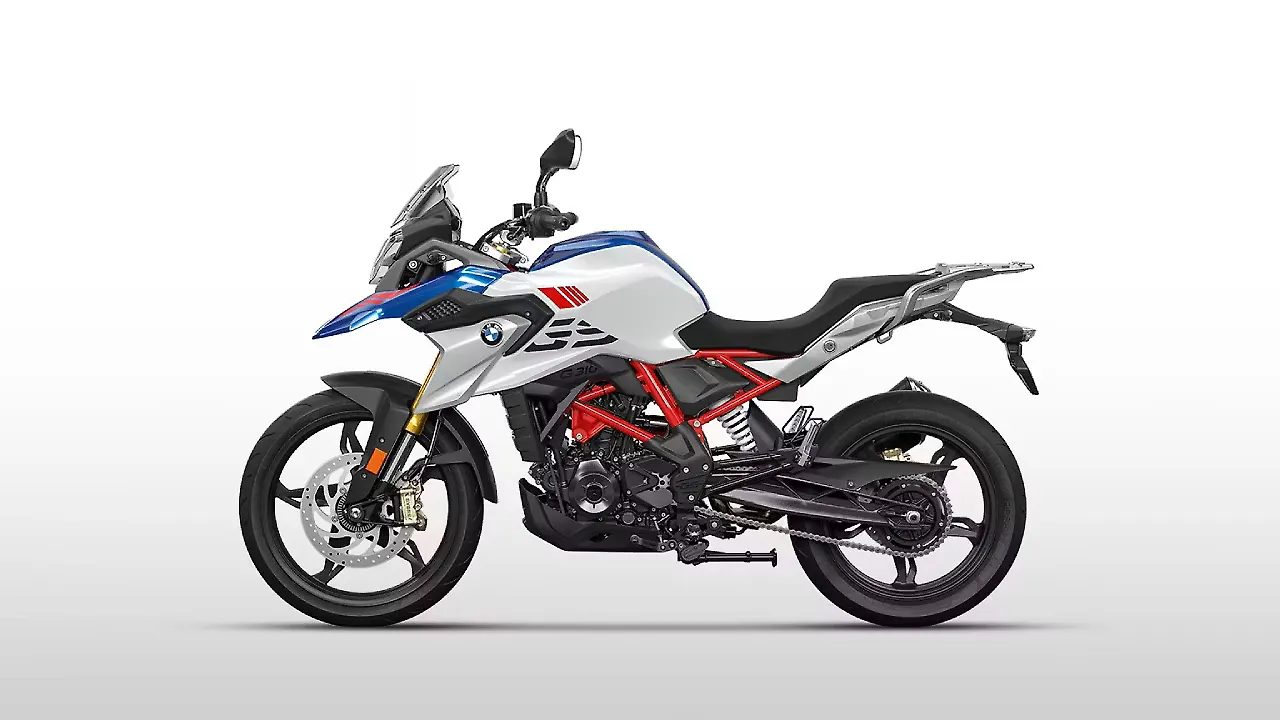
BMW G 310 GS
15.5 pts
Unweighted: 12 advantages
EnginePerformanceDimensionsBrakesTyresFeaturesOther
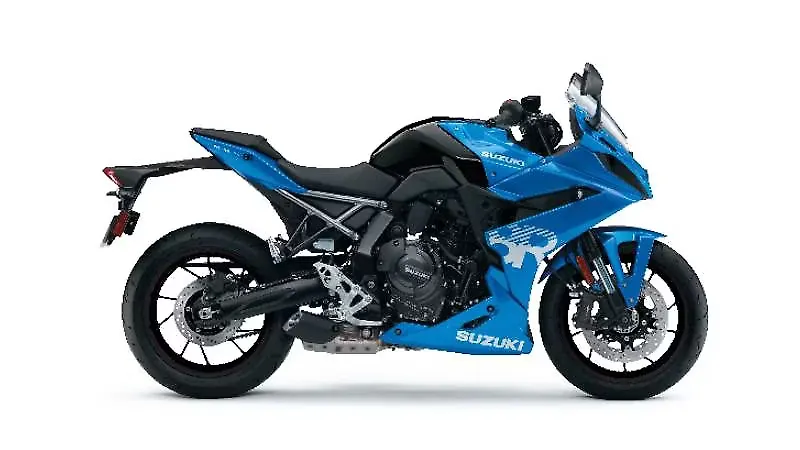
SUZUKI GSX-8R
12.0 pts
Unweighted: 8 advantages
EnginePerformanceDimensionsBrakesTyresFeaturesOther
| Specification | ||
|---|---|---|
Engine Specifications |
||
| Cooling System | Liquid cooled system | Liquid Cooling |
| Displacement | 313 cc | 776 cc |
| Engine Type | Water-cooled, single-cylinder 4-stroke engine, four valves, two overhead camshafts and finger followers, wet sump lubrication | 4-stroke, 2-cylinder, liquid-cooled, DOHC |
| Power | 34 PS (25 kW) at 9,500 rpm | 81.8 bhp @ 8500 rpm |
| Torque | 28 Nm at 7,500 rpm | 78 Nm @ 6800 rpm |
Performance & Efficiency |
||
| Fuel Tank Capacity | 11 L | 14 L |
| Mileage | 30 | 23.8 kmpl |
Dimensions & Weight |
||
| Kerb Weight | 169.5 | 205 |
| Seat Height | 835 | 810 |
Brakes & Suspension |
||
| ABS | Dual Channel ABS | Dual Channel |
| Front Brake | Single disc 300 mm with a 4-piston radial caliper | Disc 310 mm Caliper - Front 4 Piston |
| Front Suspension | Upside down fork , Ø 41 mm | Inverted telescopic, coil spring, oil damped |
| Rear Brake | Single disc 240 mm with a floating caliper | Disc Caliper - Rear 1 Piston |
| Rear Suspension | Cast aluminium dual swing arm | Link type, coil spring, oil damped |
Tyres & Wheels |
||
| Front Tyre | 110/80 R19 | 120/70ZR17M/C |
| Rear Tyre | 150/70 R17 | 180/55ZR17M/C |
| Tyre Type | Tubelesss | Tubeless |
| Wheel Type | Alloy | Alloy |
Features & Technology |
||
| Headlight | LED | LED |
Other Specifications |
||
| Battery | 12 V / 8 Ah | — |
| Bike Image 1 | https://motoautiv.com/wp-content/uploads/2025/12/g310gsracingred.webp | https://motoautiv.com/wp-content/uploads/2025/11/gsx8rmetallicmattblack.webp |
| Bike Image 2 | https://motoautiv.com/wp-content/uploads/2025/12/g310gscosmicblack3.webp | https://motoautiv.com/wp-content/uploads/2025/11/gsx8rmetallicmattswordsilver.webp |
| Cluster | Digital | — |
| Color Options | Racing Red | #C40000 Cosmic Black 3 | #1A1A1A Polar White with Racing Blue Metallic | #F5F5F5,#003399 | Metallic Matt Black | #0D0D0D Metallic Matt Sword Silver | #9AA0A6, #5F646A Metallic Triton Blue | #004EA8 |
| Cons | Seat height of 835 mm may be challenging for shorter riders. Fuel tank is only 11 litres, limiting long-distance touring range. Relatively expensive compared to entry-level adventure bikes in India. Single-cylinder engine vibrations can be felt at higher speeds on long rides. No advanced electronics or ride modes, which some competitors offer at this price point. | Doesn’t deliver the high-revving top-end excitement of inline-4 supersport motorcycles. Wind protection at very high speeds is modest and can feel tiring on long highway rides. Suspension tuning leans slightly firm, which can feel bumpy on rough roads. Weight is on the heavier side, noticeable at low speeds or during tight maneuvers. Not designed for hardcore track riders seeking extreme performance or razor-sharp handling. Fuel economy drops significantly when ridden aggressively. |
| Detailed Overview | The BMW G 310 GS serves as a lightweight entry into the adventure-touring segment, specifically engineered to balance urban agility with light trail capability. At its core is a 313cc, single-cylinder engine featuring a unique “reverse-inclined” layout, which positions the intake at the front and exhaust at the rear to lower the bike’s center of gravity. This liquid-cooled, DOHC unit produces 34 PS of power and 28 Nm of torque, managed through a 6-speed gearbox equipped with an anti-hopping slipper clutch and ride-by-wire throttle for smoother transitions. The chassis is built around a tubular space frame supported by a suspension system designed for high comfort levels on uneven surfaces. It features 41mm upside-down front forks and a rear monoshock, both providing 180mm of travel to effectively absorb road irregularities. The bike rolls on a 19-inch front and 17-inch rear cast aluminum wheel setup, fitted with tubeless radial tyres. Braking is handled by a large 300mm front disc and a 240mm rear disc, both integrated with a dual-channel ABS system for consistent stopping power. Ergonomically, the motorcycle provides an upright, neutral seating position with a standard seat height of 835mm, making it a stable platform for both commuting and touring. With a kerb weight of 175 kg and an 11.5-liter fuel tank, it remains manageable for a variety of riders. The interface includes a full LED lighting package and a functional LCD digital instrument cluster that provides essential ride data at a glance. | The Suzuki GSX-8R is built around a 776cc, parallel-twin, liquid-cooled engine, and that configuration shapes most of its character. Instead of chasing very high revs, the engine focuses more on accessible performance, with a noticeable pull in the mid-range. This becomes relevant in real riding conditions, where smooth acceleration matters more than outright top-end speed. The motor is paired with a 6-speed gearbox, and it also gets a bi-directional quickshifter, which allows clutchless upshifts and downshifts. This setup changes how the bike feels in traffic as well as on open roads, making gear changes more seamless. The chassis is based on a steel frame, which keeps the structure straightforward while maintaining stability. Suspension duties are handled by upside-down front forks and a rear monoshock, both tuned to deal with a mix of riding scenarios. On uneven roads, the suspension absorbs most irregularities without feeling overly stiff, while at higher speeds it maintains a planted feel. The riding posture sits somewhere between aggressive and upright, with clip-on handlebars that are not too low, allowing a slightly leaned-forward stance without putting too much pressure on the wrists. Braking is managed by dual disc brakes at the front and a single disc at the rear, supported by dual-channel ABS. The setup is designed to offer controlled stopping power, especially considering the bike’s performance level. The GSX-8R also comes with electronic aids such as traction control and selectable riding modes, which adjust how the throttle responds. These features don’t change the core nature of the bike but add a layer of adaptability depending on riding conditions. In terms of design, the GSX-8R follows a fully faired layout, with sharp body panels and a compact tail section. The LED lighting setup, including the headlamp and indicators, keeps the design in line with modern expectations. The instrument cluster is a full-colour TFT display, showing information like speed, gear position, riding mode, and other basic data in a clean layout that is easy to read while riding. The bike uses 17-inch alloy wheels at both ends, paired with road-focused tyres. Fuel tank capacity is around 14 litres, which aligns with its intended use for both short rides and longer stretches. Weight distribution and overall kerb weight play a role in how manageable the bike feels, especially for riders moving up from smaller motorcycles. |
| Expert Review | The BMW G 310 GS is a purposefully engineered adventure tourer that prioritizes mechanical refinement and rider ergonomics over aggressive off-road performance. Its standout feature is a plush, long-travel suspension system that effectively isolates the rider from the harsh irregularities typical of Indian road infrastructure. Complemented by an upright, commanding seating position, the motorcycle offers superior long-distance comfort and high visibility for urban navigation. The 313cc liquid-cooled engine is characterized by a linear power delivery of 34 PS, providing a predictable and manageable experience for intermediate riders. While it maintains highway speeds with ease, high-frequency vibrations at the upper end of the rev range remain a known trait of its single-cylinder configuration. Ultimately, the G 310 GS represents a premium ownership proposition, where the initial build quality and brand prestige are balanced against higher-than-average maintenance costs and a relatively concentrated service network., 4.4, MotoAutiv Team | The Suzuki GSX-8R enters a space in the Indian market that is still quite limited, where middleweight faired motorcycles are more aspirational than practical for most riders. Its parallel-twin engine and overall setup place it above the usual entry-level segments, which means it caters to a smaller group of buyers who are looking beyond daily commuting needs. In real-world usage, factors like traffic conditions, road quality, and cost of ownership naturally shape how often a bike like this can be fully used. At the same time, there is a growing interest in bigger motorcycles, especially among riders upgrading from 150–300cc bikes. The GSX-8R fits into this shift, offering a format that sits between everyday usability and weekend riding intent. Its relevance, therefore, is less about volume and more about how it aligns with this gradually expanding premium segment in India., 4.2, MotoAutiv Team |
| FAQ (Manual Override) | Q: What is the mileage of BMW G 310 GS? A: The mileage is approximately 28–30 kmpl. Q: Does BMW G 310 GS have ABS? A: Yes, it comes with dual-channel ABS. Q: Is the BMW G 310 GS suitable for short riders? A: The standard BMW G 310 GS seat height is 835mm, which can be challenging for anyone under 5'7". However, BMW offers a low seat option (820mm), and the bike's narrow profile and light 170kg kerb weight make the BMW G 310 GS easier to balance with one foot down. Q: How much is the annual maintenance cost for a BMW G 310 GS in India? A: Expect to pay between ₹6,000 and ₹10,000 for a standard annual service of the BMW G 310 GS. Major services (every 20,000 km) for the BMW G 310 GS can cost significantly more, sometimes exceeding ₹20,000 if parts like the chain-sprocket or brake pads need replacement. Q: Is the BMW G 310 GS engine reliable for long-distance touring? A: The BMW G 310 GS uses a proven 313cc reverse-inclined engine that manages heat very well. | Q: What is the mileage? A: The mileage is about 23.8 km/l under mixed riding conditions. Q: Is the Suzuki GSX-8R suitable for daily use in India? A: The Suzuki GSX-8R is often asked about for daily use because of its size. In real conditions, its smooth power delivery and relatively relaxed riding posture make it manageable in city traffic, though heat and width can still be noticeable in heavy congestion. Q: Is the Suzuki GSX-8R comfortable for long rides or touring? A: Many buyers ask this before upgrading. The GSX-8R is designed more like a sport-tourer, so the seating position is not too aggressive, and it can handle longer rides better than typical supersport bikes. Q: How powerful is the Suzuki GSX-8R engine? A: This comes up frequently, especially for first-time big bike buyers. The GSX-8R uses a 776cc parallel-twin engine with strong mid-range torque, which makes it feel usable rather than overwhelming in normal riding. Q: Is the Suzuki GSX-8R a good first big bike? A: A lot of riders upgrading from 200–400cc bikes ask this. The GSX-8R is generally considered approachable because of its linear power delivery and predictable nature, which helps riders transition into higher displacement bikes more easily. Q: What is the maintenance cost of the Suzuki GSX-8R in India? A: Cost of ownership is a common concern. Since it is a middleweight imported bike, service and parts are typically more expensive than smaller bikes, and availability can vary depending on location. Q: Does the Suzuki GSX-8R heat up in traffic? A: This is something many Indian riders specifically ask. Like most big-capacity bikes, engine heat can be noticeable in slow-moving traffic, especially in hot weather conditions. Q: How does the Suzuki GSX-8R compare to Ninja 650 or CBR650R? A: Comparison questions are very common. Buyers usually compare it with bikes like Ninja 650 or CBR650R based on price, performance, and usability rather than just specs. Q: Is the Suzuki GSX-8R good for beginners? A: This overlaps with the “first big bike” question. It is not a beginner bike in the strict sense, but many riders consider it after gaining some experience due to its manageable power delivery. Q: What is the seat height and is the Suzuki GSX-8R comfortable for shorter riders? A: Fit and ergonomics are commonly asked. The seat height is on the higher side, so shorter riders usually check this before buying or plan a test ride to understand reach and comfort. |
| Fuel System | Electronic fuel injection | Fuel injection |
| Price Variants | Standard | 324973 | STD | 988551 |
| Pros | Compact and lightweight adventure bike, making it very manageable in city traffic and narrow streets. Refined engine that delivers smooth power and strong mid-range torque, perfect for both urban commuting and occasional highway runs. Comfortable long-travel suspension that absorbs potholes and rough Indian roads effectively. Strong and predictable braking with dual-channel ABS for enhanced safety. High-quality build and premium feel typical of BMW motorcycles. Good ergonomics and upright seating that reduce fatigue during longer rides. LED headlight and digital instrument cluster improve visibility and usability. Tubeless radial tyres provide better grip and easier maintenance. | Strong and usable mid-range torque that makes the bike easy to ride in the city and lively on open roads. Smooth engine character thanks to the 270° crank, giving a refined feel even at higher speeds. Comfortable yet sporty riding posture that works for daily use as well as weekend rides. Agile handling with good stability, making it confidence-inspiring for both new and experienced riders. Modern electronics like riding modes, traction control, ride-by-wire, and quick-shifter add convenience and safety. High-quality build and attractive, modern styling with a sharp fairing and sleek proportions. Versatile enough for commuting, spirited cornering, and even moderate touring. |
| Starter | Electric | Self Start |
| Transmission | 6-speed manual | 6 Speed Manual |