Quick Analysis
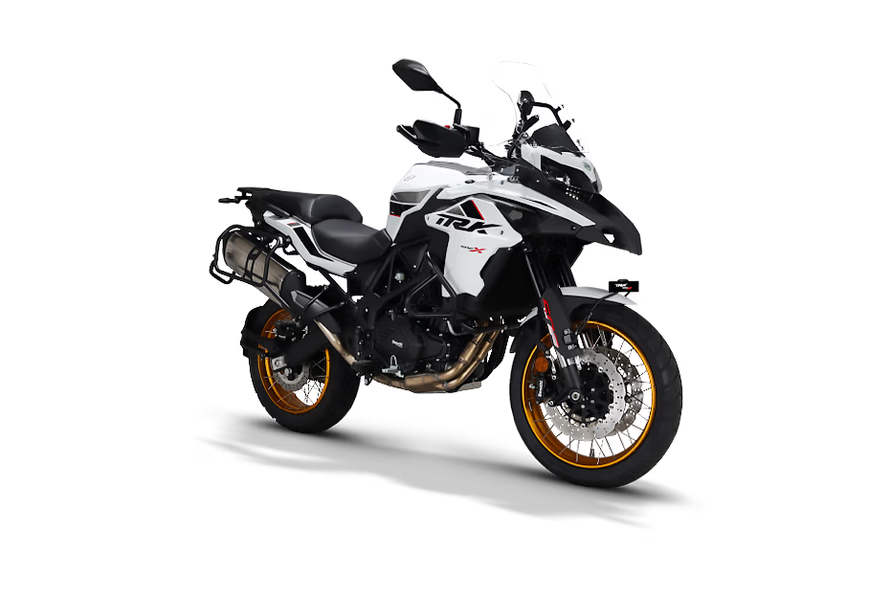
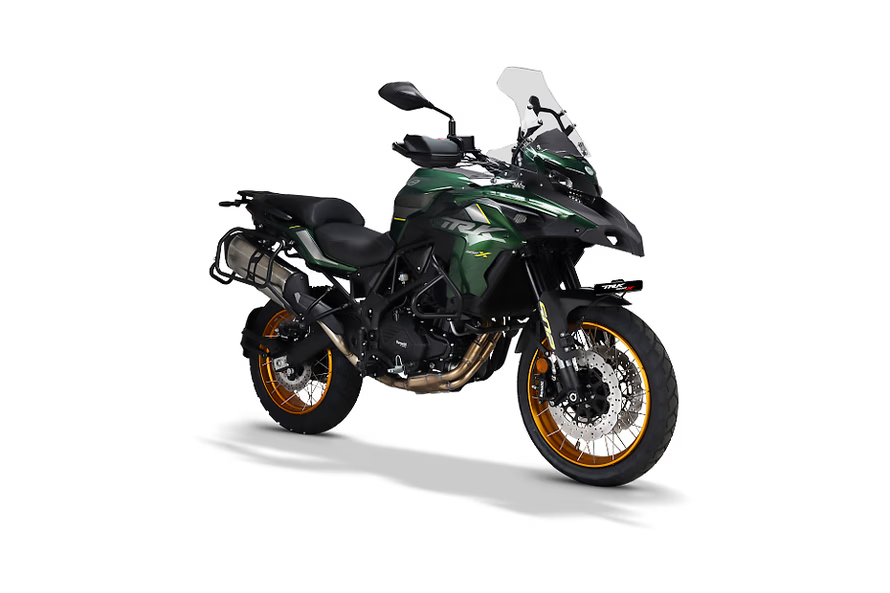
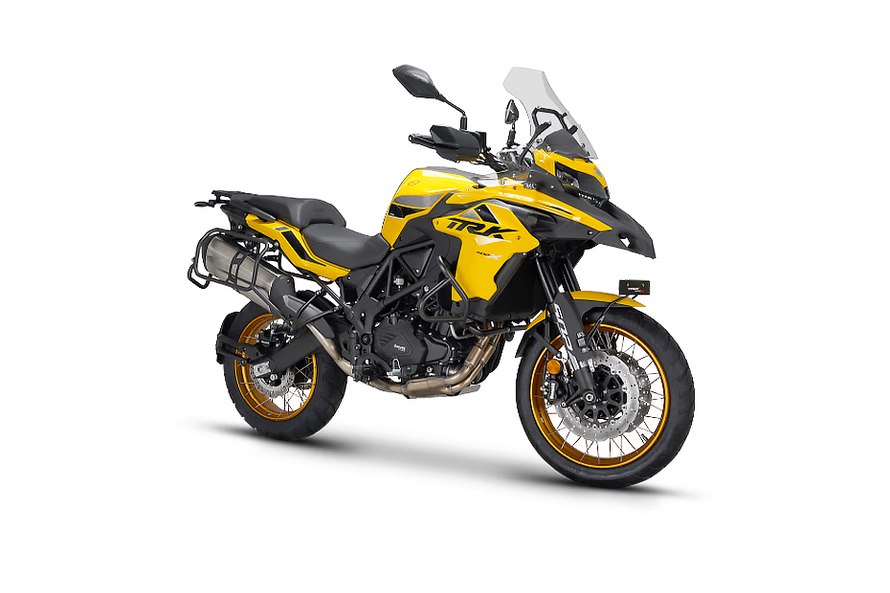
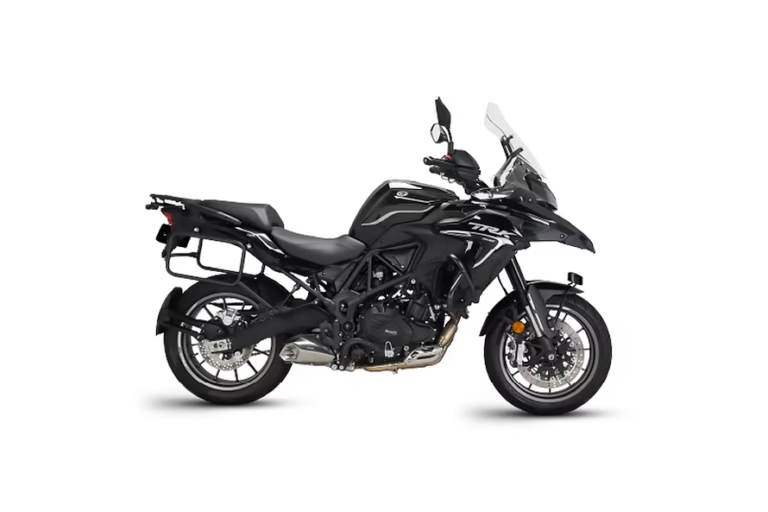
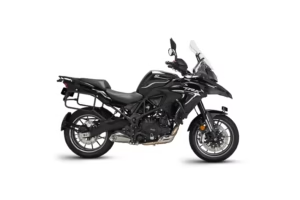
Benelli TRK 502
27.5 pts
Unweighted: 15 advantages
EnginePerformanceDimensionsBrakesTyresOther
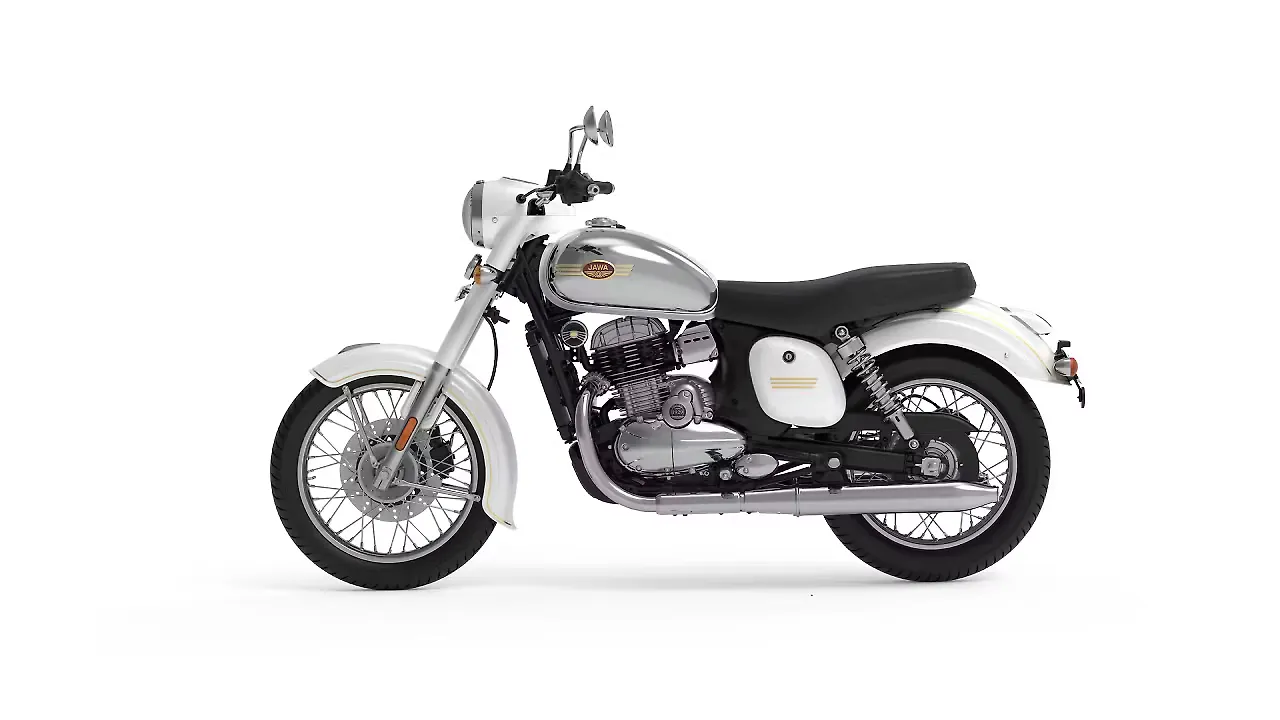
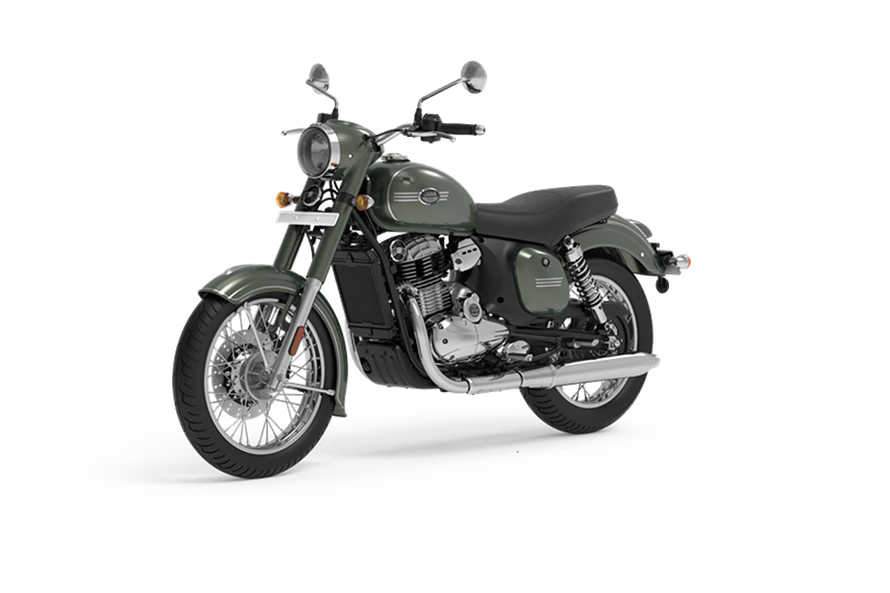
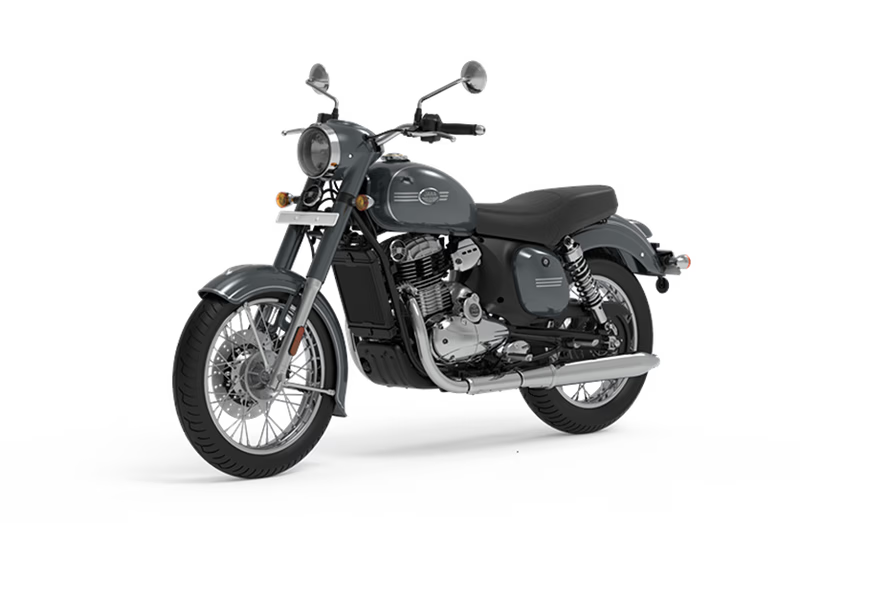
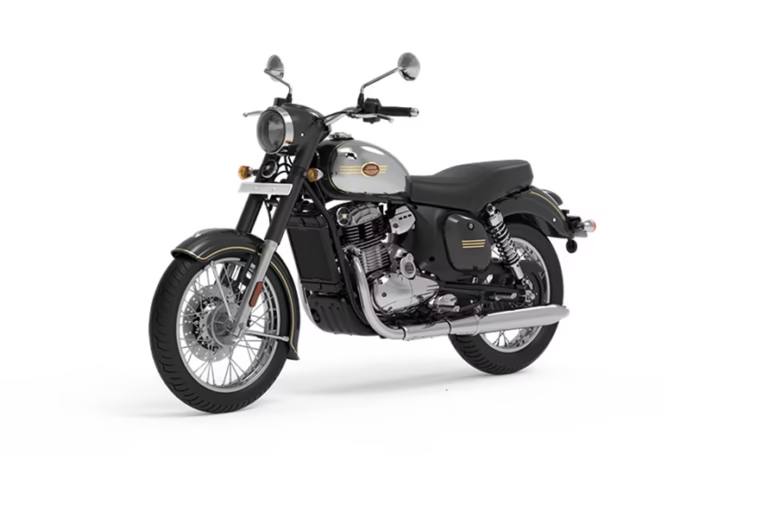
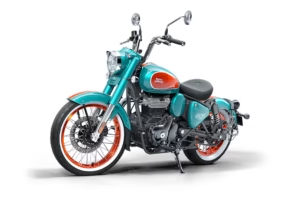
JAWA 350
9.0 pts
Unweighted: 10 advantages
EnginePerformanceDimensionsBrakesTyresOther
| Specification | ||
|---|---|---|
Engine Specifications |
||
| Cooling System | Liquid-cooled | — |
| Displacement | 500 | 334 cc |
| Engine Type | 2-cylinder/4-stroke/8-valve | Single cylinder, 4 stroke, liquid cooled, DOHC |
| Power | 35kW at 8500 r/min | 22.57 PS |
| Torque | 46N·m/6000 r/min | 28.1 Nm |
Performance & Efficiency |
||
| Fuel Tank Capacity | 20 l | 13.2 l |
| Mileage | 25 kmpl | 28.5 kmpl |
Dimensions & Weight |
||
| Kerb Weight | 210 kg | 184 kg |
| Seat Height | 835mm | 790 mm |
Brakes & Suspension |
||
| ABS | Dual Channel | Dual Channel |
| Front Brake | Disc Front 320 mm Caliper - Front 4 Piston | Disc with floating caliper 280 mm 2 piston |
| Front Suspension | USD Telescopic Forks | Telescopic Forks, Ø 35 mm |
| Rear Brake | Disc Rear 260 mm Caliper - Rear 1 Piston | Disc with floating caliper 240 mm 1 piston |
| Rear Suspension | Hydraulic Monoshock (Rebound & Preload adjustable) | Twin shock absorber, gas filled emulsion with 5-step adjustable pre-load |
Tyres & Wheels |
||
| Front Tyre | 120/70 ZR17 | Spoke Wheel – 100/90-18, 56S |
| Rear Tyre | 160/60 ZR17 | Spoke Wheel – 130/80-17, 65S |
| Tyre Type | Tubeless | Tube |
| Wheel Type | Alloy | Spoke |
Other Specifications |
||
| Bike Image 1 | https://motoautiv.com/wp-content/uploads/2025/11/trk502white.webp | https://motoautiv.com/wp-content/uploads/2025/11/350white.webp |
| Bike Image 2 | — | https://motoautiv.com/wp-content/uploads/2025/11/350black.webp |
| Bike Image 3 | — | https://motoautiv.com/wp-content/uploads/2025/11/350deepforest.webp |
| Bike Image 4 | — | https://motoautiv.com/wp-content/uploads/2025/11/350grey.webp |
| Bike Image 5 | — | https://motoautiv.com/wp-content/uploads/2025/11/350obsidianblack.webp |
| Bike Image 6 | — | https://motoautiv.com/wp-content/uploads/2025/11/350orange.webp |
| Color Options | — | White, Black Orange Maroon Deep Forest Grey Obsidian Black Chrome Maroon |
| Cons | Its heavy weight becomes noticeable in traffic, tight turns, and situations where quick direction changes are needed. While the suspension works well for moderate rough roads, very broken terrain can feel harsh or less controlled compared to more off-road-focused bikes. Maintenance and spare parts may cost more than typical mid-segment bikes, making long-term ownership slightly expensive. The power-to-weight ratio isn’t the strongest, so riders expecting a very punchy performance may find it a bit slow when accelerating hard. It lacks some modern electronic features that newer competitors now offer, which may disappoint riders looking for advanced tech and connectivity. | Mileage is average for a 350cc bike (28–32 kmpl) • On the heavier side at around 184 kg • Top speed is modest compared to some competitors • Limited storage options without accessories • Rear suspension can feel stiff on bad roads • Pricing may feel slightly premium due to the special-edition package |
| Detailed Overview | You swing a leg over the TRK 502 and you’re immediately aware that this is meant to be more than a city commuter; there’s a sense of presence, of readiness for longer roads. Under the tank sits a 500 cc, liquid-cooled, parallel-twin engine, running a DOHC layout with 8 valves. The bore and stroke (69 × 66.8 mm) and a compression ratio of 11.5:1 tell you that this engine is tuned for a healthy balance — it’s neither peaky and fragile, nor a torquey grinder. What you get instead is a smooth, flexible powerplant that builds revs steadily, giving enough grunt without being nervous or rough. At its peak, it delivers about 46.8-47.5 horsepower at 8,500 rpm and 46 Newton-metres of torque at around 6,000 rpm. That output, in plain riding, doesn’t mean blazing superbike sprints. It means confidence: enough urge to overtake on the highway, enough midrange torque for loaded touring or two-up rides, and smooth throttle response for city or mixed-road use. The 6-speed gearbox with chain final drive feels just right — shifts are predictable and the clutch (wet multi-plate / slipper clutch depending on region) handles starts and slow manoeuvres without fuss. Because this is meant for touring and everyday versatility, the chassis and suspension are built accordingly. A steel trellis frame acts as the backbone — sturdy enough to keep the bike stable at speed, yet with a bit of compliance to soak up normal road irregularities. Up front, there’s an upside-down telescopic fork (about 50 mm) with around 140 mm travel; at the rear a preload- and rebound-adjustable mono-shock with around 45 mm travel. What that gives on road is a setup that doesn’t punish you over bad surfaces but remains planted: potholes, imperfect tarmac or rough stretches are dealt with gracefully, while the bike stays composed even when you ask for speed or load it up with luggage and pillion. Physically the TRK 502 is substantial — long and purposeful. Its overall length is about 2200–2220 mm, width around 915 mm, and height roughly 1450 mm (slightly more depending on variant). The wheelbase of 1505 mm gives it stable tracking on highways and at speed, but that length and mass mean low-speed manoeuvres require some care — U-turns, tight corners, or dense traffic will need respect and a bit of strength. The seat height — roughly 800-835 mm depending on model/market — places you in a commanding riding posture: good for visibility and control, but may feel tall for shorter riders. Ground clearance around 190 mm means you’re also not too worried about speed-bumps or rough rural surfaces. When it comes to stopping and safety, TRK 502 doesn’t leave much to complaint. Twin 320 mm discs up front (with 4-piston calipers) and a 260 mm disc at the rear — both with dual-channel ABS — give you solid braking power and modulation. In everyday traffic or loaded touring, you get confident, progressive braking rather than abrupt grabs or fade, which is exactly what you want when you’re carrying luggage or a pillion. Fuel-wise, the 20-litre tank (with a bit of reserve) gives a decent riding range. Fill up and you can reasonably expect to tackle long rides or highway runs without constant fuel stops — an important detail if you plan to use this bike for touring or inter-city travel. Combined with the engine’s fuel injection and tuning, the balance between performance and range is well-struck. On the feature front, the TRK 502 comes decently equipped for its class. The instrument console mixes analogue and digital readouts (tachometer + digital speedo/fuel/odometer/trip) — enough to give you all the essential info clearly without overcomplicating the dashboard. Lighting, electrics and ergonomics are oriented toward usability: the riding position is upright, comfortable for long hours; footpegs and rider triangle are such that you don’t feel cramped even after a few hours of cruise. For everyday commuting, that means less fatigue; for touring, it means more hours in the saddle without strain. When you take it out on the open road — open highway, winding roads, rolling hills — the TRK 502 reveals what it is built for: stability, comfort, and controlled performance. It doesn’t feel underpowered even when carrying luggage or with a pillion; the twin’s smooth torque curve helps you manage traffic or overtakes with ease. On rough or uneven roads, the suspension soaks up the imperfections, and the frame feels secure. The overall setup makes it a comfortable, confident companion for trips that are more than just short city commutes. But there are trade-offs. Because the bike is fairly heavy and long, jockeying through tight city traffic or congested lanes means you’ll notice the bulk — quick zigzags or tight U-turns are not the bike’s forte. Seat height and weight can be challenging for shorter riders or those new to big bikes. The power-to-weight ratio is modest, so while it’s confident for touring or leisure riding, it doesn’t give the “sportbike thrill.” If you push it hard — say, frequent hard acceleration with two-up + luggage — you may find that intense use exposes the limits of a 500 cc twin configured for balance, not brute power. Overall, the TRK 502 feels like what you’d expect from a middleweight touring-oriented motorcycle — not a race-bred machine, not a lightweight commuter, but a capable all-rounder that lets you ride relaxed yet with enough substance. It’s ideal for those who want a single bike to handle everything: daily commuting when needed, weekend adventures, city-to-city travel, even occasional touring with a pillion and luggage, all without demanding sport bike instinct or compromising comfort. | Riding the Jawa 350 Legacy Edition feels like stepping into a time-travel machine — vintage soul on the outside, but with a modern heart beating underneath. At its core sits a 334 cc, single-cylinder, liquid-cooled, 4-stroke DOHC engine that delivers roughly 22.5 PS of power and 28.1 Nm of torque. That might not sound like a rocket, but in real life it means this bike isn’t about explosive bursts — it’s about composed, usable performance. In city traffic or on suburban roads, the engine pulls smoothly from low revs, making for easy starts and relaxed rides. On longer runs, the liquid cooling helps keep temperature under control, so even when the needle climbs, the engine stays calm and efficient rather than getting hot and grumbly. The 6-speed gearbox feels just right: low gears give good control and confidence in slow or jammed-up traffic, while higher gears let the engine breathe on open roads, keeping vibration and noise in check. The slip-and-assist clutch adds to the sense of ease — gear shifts stay smooth even when you’re downshifting in a hurry, which is useful in real-life riding situations when you need a quick kick of torque. The chassis beneath feels solid and familiar, built around a double-cradle frame that gives the bike a stable backbone. The front uses 35 mm telescopic forks, and at the rear you get twin shock absorbers with preload adjustment. This setup strikes a balance: it isn’t harsh, but it’s not floaty either. On potholed city roads or irregular rural tracks, the suspension soaks up bumps reasonably well — you don’t feel every minor jolt, and the bike stays composed rather than bouncing around. On smoother roads, it gives the ride a planted, confident feel, which helps when you cruise at higher speeds or carry a pillion. The geometry and ergonomics suit a wide range of riders. The seat height sits around 790 mm, while the bike weighs in the ballpark of 184 kg — manageable for those who often deal with heavy traffic or need to maneuver through tight parking spots. Once you’re riding, the weight works in favor of stability rather than burdening you; the bike feels grounded, not twitchy. For riders who aren’t very tall or are switching from smaller bikes, this balance of seat height and weight makes the 350 feel accessible without compromising on road presence. Braking brings good peace of mind: 280 mm disc up front and 240 mm at the rear, both with dual-channel ABS, ensure that whether you’re slowing down for a speed breaker or coming down from a long ride, the bike handles deceleration with composure and control. The disc brakes deliver strong, predictable bite rather than sudden jolts — ideal when traffic is dense or the road surface is sketchy. Practicality hasn’t been ignored either. The 13.2-litre fuel tank gives a decent range, and typical riding economy from this class of bike makes it workable for daily commutes, weekend rides, or occasional longer trips. The ground clearance of 178 mm provides enough leeway to glide over speed breakers and rough patches without worrying too much about scraping. What gives the Legacy Edition its name — and makes it stand out beyond specs — are the thoughtful touches aimed at enhancing comfort, convenience, and style. It comes with a touring visor to lessen wind blast on open roads, a pillion backrest to make riding with a passenger more relaxed, and a crash guard that adds a layer of protection against falls or bumps. For a limited-edition model, buyers also get small trinkets like a leather keychain and a miniature collectible of the bike — small gestures, but they add to the sense of owning something special. In real-world usage, this combo — a smooth and stable motor, balanced chassis, practical ergonomics, and useful extras — means the Jawa 350 Legacy Edition is more than just a stylish retro-bike; it’s a daily-ride-ready machine that’s as viable for city commutes as it is for Sunday cruises. The ride quality leans toward comfort and composure, rather than sporty sharpness, making it a relaxed companion rather than a performance tool. If you appreciate a bike that looks timeless yet behaves modern, gives predictable and manageable performance, and wraps it all in a package that’s comfortable and usable — the Legacy Edition does a fine job. It’s not about bragging-rights top-speed or aggressive acceleration; it’s about a grounded, dependable, and enjoyable ride — something many riders value more than raw numbers. |
| Expert Review | MotoAutiv Team | MotoAutiv Team |
| FAQ (Manual Override) | Q: What engine does the TRK 502 use? A: It uses a 500 cc, liquid-cooled, parallel-twin DOHC engine with 8 valves. Q: What is the power and torque output? A: The engine puts out about 47.5 PS at 8,500 rpm and delivers around 46 Nm of torque at 6,000 rpm. Q: What kind of transmission does it have? A: It comes with a 6-speed manual gearbox and a chain final drive. Q: What is the fuel tank capacity? A: The fuel tank capacity is 20 litres. Q: What is the seat height and ground clearance? A: The seat height is roughly 800–835 mm (depending on variant/market), and ground clearance is about 190 mm. Q: What is the kerb (or wet) weight of the bike? A: The bike weighs around 228–235 kg (depending on specification and additional gear/load). Q: What are the brakes and wheels/tyres setup? A: Up front there are twin 320 mm disc brakes with 4-piston calipers; at the rear a 260 mm disc. Both front and rear tyres sit on 17-inch alloy wheels, with tubeless tyres. Dual-channel ABS comes standard. Q: What is the claimed mileage / fuel efficiency? A: Mileage typically ranges around 30–34 km per litre (city and highway use). Q: What kind of suspension does it have? A: It uses a 50 mm upside-down (USD) telescopic front fork (about 140 mm travel) and a rear mono-shock with preload adjustability and around 45 mm rear suspension travel. Q: What kind of instrumentation and features does it offer? A: The instrument console combines analogue (tachometer) and digital displays (speedometer, fuel gauge, trip meter, etc.). It includes electric start, digital fuel gauge, trip meter, passenger footrests, and typical adventure-tourer ergonomics. Q: What is its top speed / performance potential? A: The top speed is around 160–165 km/h, and it can do 0–100 km/h in approximately 7.5–8 seconds depending on load and conditions. | Q: What is the Jawa 350 Legacy Edition? A: It is a special-themed variant of the Jawa 350 with retro styling, chrome elements, and added touring accessories. Q: What is the engine capacity of the Jawa 350 Legacy Edition? A: It has a 334cc single-cylinder, liquid-cooled engine. Q: What is the power and torque output? A: The bike produces around 22.5 PS of power and 28.1 Nm of torque. Q: What is the mileage? A: The mileage is around 28–32 kmpl in real-world riding. Q: What is the fuel tank capacity? A: The fuel tank capacity is 13.2 litres. Q: What is the seat height? A: The seat height is approximately 790 mm. Q: Does it have ABS? A: Yes, it comes with dual-channel ABS. Q: What type of suspension does it use? A: It has 35mm telescopic forks at the front and twin shock absorbers with 5-step preload adjustment at the rear. Q: What is the top speed? A: The top speed is around 120–125 km/h. Q: Is the Jawa 350 Legacy Edition good for daily commuting? A: Yes, its smooth engine and comfortable ergonomics make it suitable for daily use. Q: Is it good for long rides? A: Yes, the touring visor, comfortable seat, and relaxed riding posture make it ideal for touring. Q: What is the kerb weight of the bike? A: The kerb weight is around 184 kg. Q: What are the special features of the Legacy Edition? A: It includes a touring visor, pillion backrest, crash guard, chrome finish, and special edition collectibles. Q: Does it have any performance changes compared to the standard Jawa 350? A: No, performance is similar; the Legacy Edition mainly gets cosmetic and touring upgrades. Q: Is the Jawa 350 Legacy Edition worth buying? A: Yes, it is a great choice if you want a retro-styled motorcycle with added touring comfort and exclusivity. |
| Price Variants | | 662000 | |183000 |
| Pros | The TRK 502 is built for long rides, offering a relaxed riding position and a comfortable seat that help you stay fresh even after hours on the highway. Its suspension and chassis balance make it stable on rough patches, allowing it to handle mixed road conditions without feeling nervous. For its price, the bike comes loaded with practical touring features like hand guards, a large windscreen, good ergonomics, and a solid, confidence-inspiring build. The bike feels substantial on the road — its size and weight give it a strong presence, making it feel like a true adventure-tourer. The engine is smooth and predictable, making it friendly for newer riders while still offering enough power for everyday commuting and long-distance travel. | Classic retro styling with premium chrome finish • Smooth and refined 334cc liquid-cooled engine • Good torque for city and highway rides • Comfortable riding posture suitable for long journeys • Touring extras like visor, backrest, and crash guard included • Dual-channel ABS for safer braking • Low seat height makes it accessible for most riders • Strong road presence and limited-edition appeal |
| Starter | Electric | — |
| Transmission | 6-speed | 6–Speed – Gearbox |