Quick Analysis
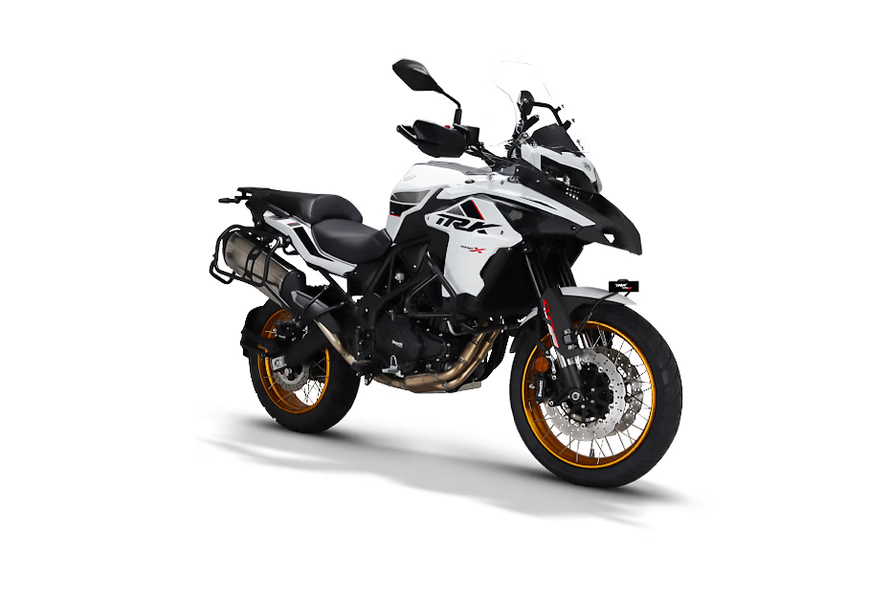
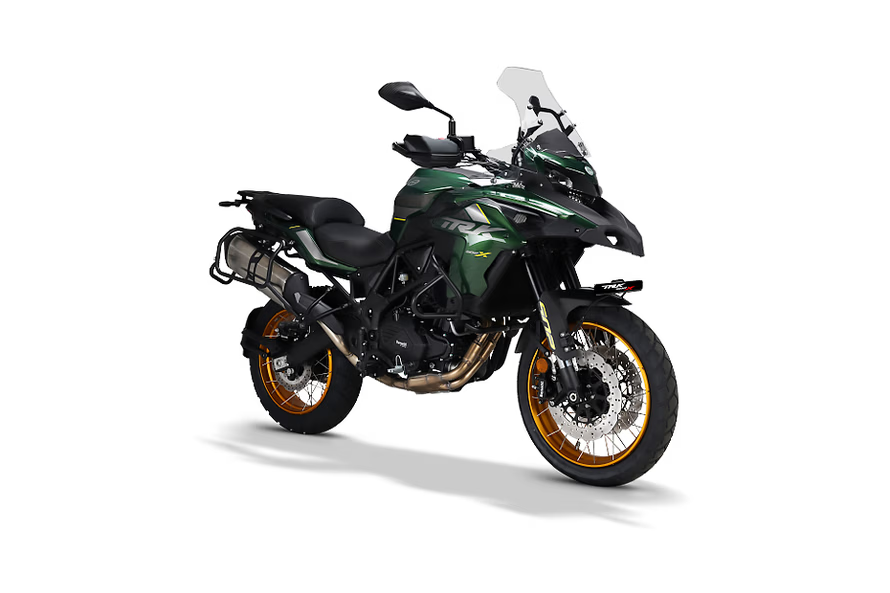
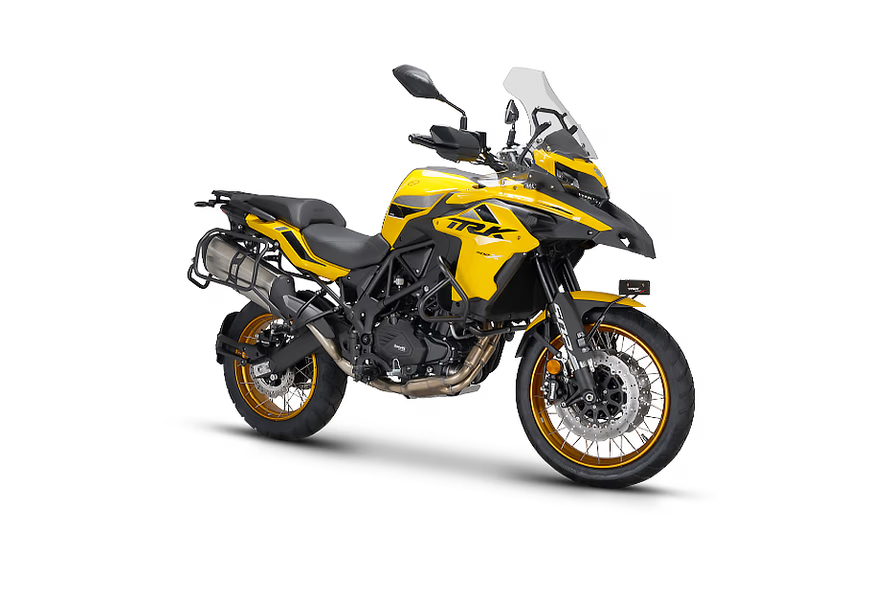
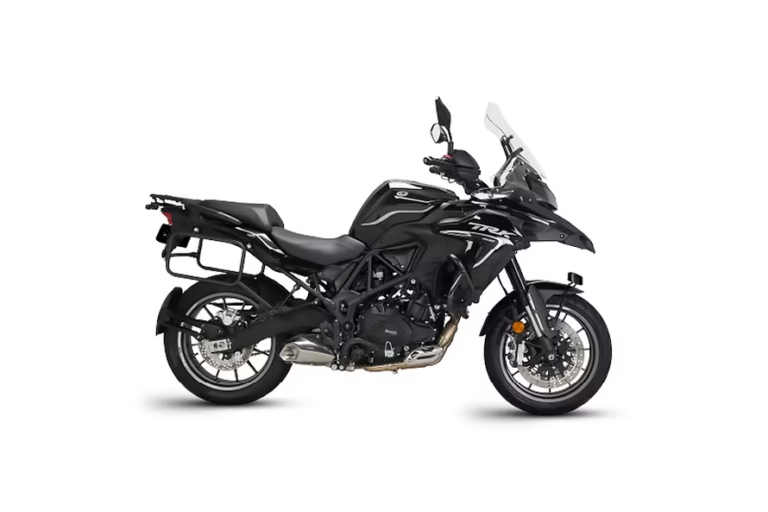
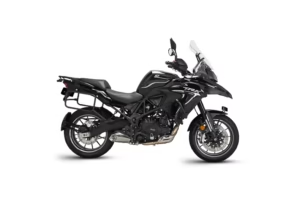
Benelli TRK 502
33.5 pts
Unweighted: 19 advantages
EnginePerformanceDimensionsBrakesTyresOther
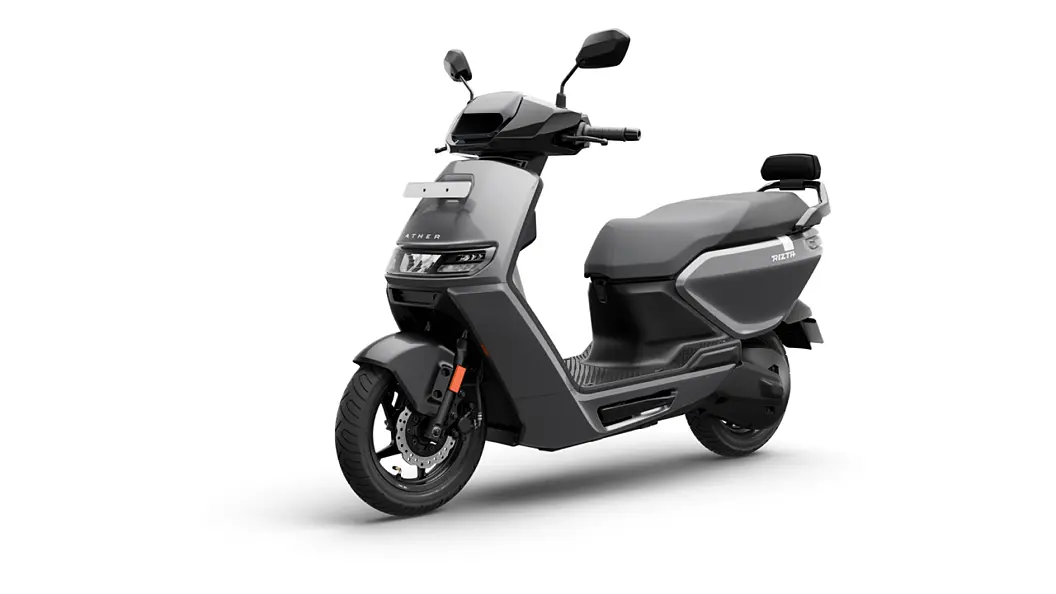
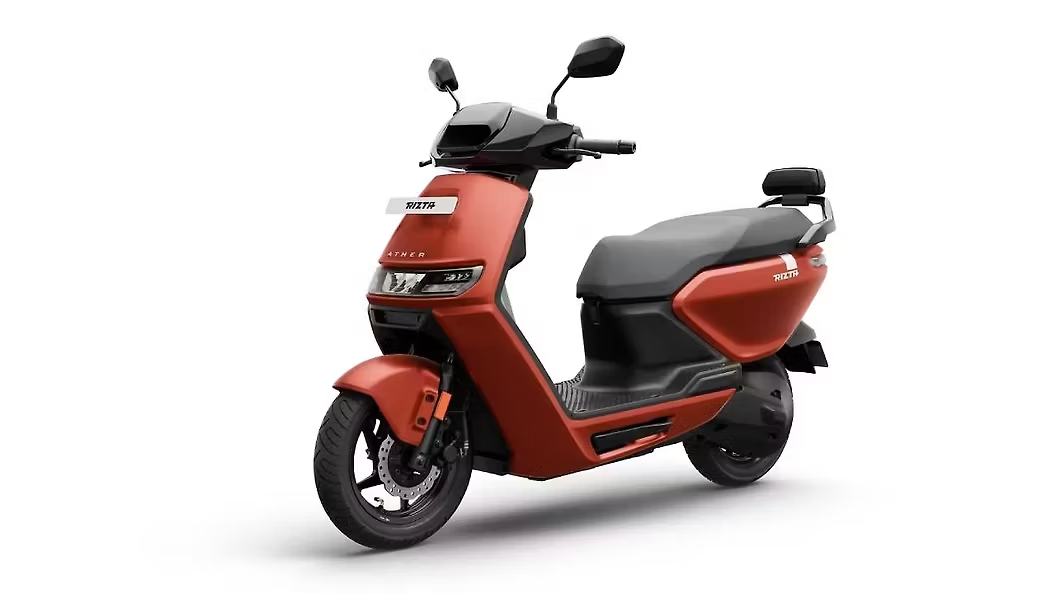
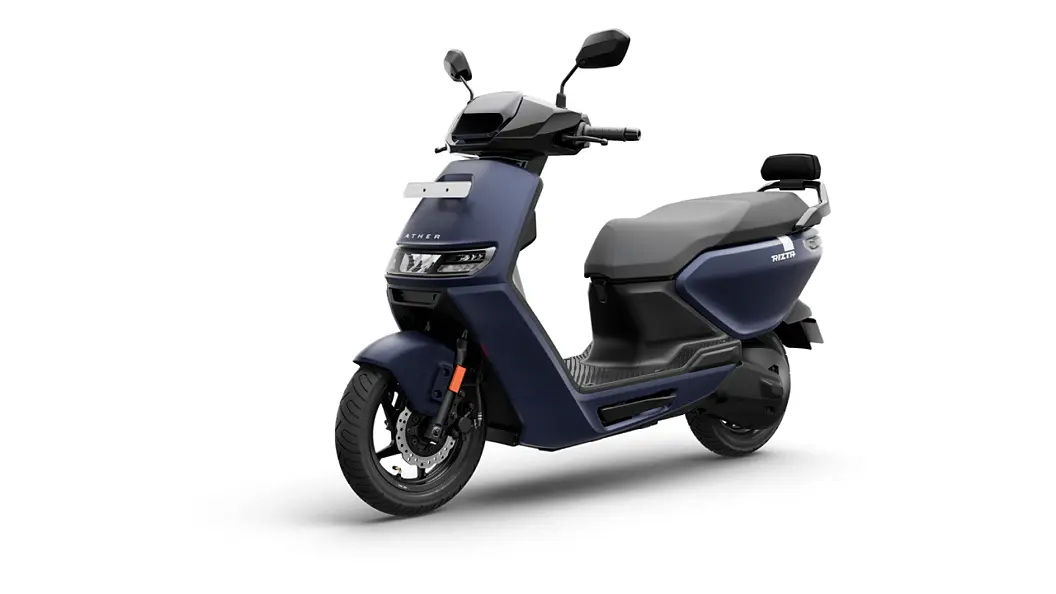
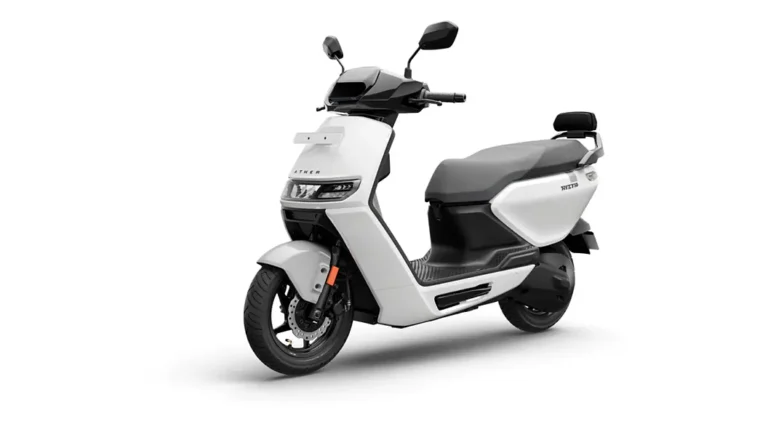
ATHER RIZTA
5.0 pts
Unweighted: 7 advantages
EnginePerformanceDimensionsBrakesTyresOther
| Specification | ||
|---|---|---|
Engine Specifications |
||
| Cooling System | Liquid-cooled | — |
| Displacement | 500 | — |
| Engine Type | 2-cylinder/4-stroke/8-valve | — |
| Power | 35kW at 8500 r/min | 4.3 kW |
| Torque | 46N·m/6000 r/min | 22 Nm |
Performance & Efficiency |
||
| Fuel Tank Capacity | 20 l | — |
| Mileage | 25 kmpl | — |
Dimensions & Weight |
||
| Kerb Weight | 210 kg | 125 kg |
| Seat Height | 835mm | 780 mm |
Brakes & Suspension |
||
| ABS | Dual Channel | — |
| Front Brake | Disc Front 320 mm Caliper - Front 4 Piston | Disc 200 mm |
| Front Suspension | USD Telescopic Forks | Telescopic Forks |
| Rear Brake | Disc Rear 260 mm Caliper - Rear 1 Piston | Drum 130 mm |
| Rear Suspension | Hydraulic Monoshock (Rebound & Preload adjustable) | Monoshock Absorbers |
Tyres & Wheels |
||
| Front Tyre | 120/70 ZR17 | 90/90 - 12 |
| Rear Tyre | 160/60 ZR17 | 100/80 - 12 |
| Tyre Type | Tubeless | Tubeless |
| Wheel Type | Alloy | Alloy |
Other Specifications |
||
| Bike Image 1 | https://motoautiv.com/wp-content/uploads/2025/11/trk502white.webp | https://motoautiv.com/wp-content/uploads/2025/12/Rizta-Pangong-Blue-mono-on-road-price-scaled.webp |
| Bike Image 2 | — | https://motoautiv.com/wp-content/uploads/2025/12/riztadeccangrey.webp |
| Bike Image 3 | — | https://motoautiv.com/wp-content/uploads/2025/12/Rizta-Siachen-White-mono-on-road-price-scaled.webp |
| Color Options | — | Deccan Grey - Mono Siachen White - Mono Pangong Blue - Super Matte Terracotta Red - Super Matte |
| Cons | Its heavy weight becomes noticeable in traffic, tight turns, and situations where quick direction changes are needed. While the suspension works well for moderate rough roads, very broken terrain can feel harsh or less controlled compared to more off-road-focused bikes. Maintenance and spare parts may cost more than typical mid-segment bikes, making long-term ownership slightly expensive. The power-to-weight ratio isn’t the strongest, so riders expecting a very punchy performance may find it a bit slow when accelerating hard. It lacks some modern electronic features that newer competitors now offer, which may disappoint riders looking for advanced tech and connectivity. | Rear drum brake feels basic compared to full disc setups. Ride can feel firm on rough or broken roads. Top speed is limited for highway or long-distance usage. Higher initial price than many petrol scooters. Charging time requires planning if you ride frequently. Some premium features may require optional add-on packs. |
| Detailed Overview | You swing a leg over the TRK 502 and you’re immediately aware that this is meant to be more than a city commuter; there’s a sense of presence, of readiness for longer roads. Under the tank sits a 500 cc, liquid-cooled, parallel-twin engine, running a DOHC layout with 8 valves. The bore and stroke (69 × 66.8 mm) and a compression ratio of 11.5:1 tell you that this engine is tuned for a healthy balance — it’s neither peaky and fragile, nor a torquey grinder. What you get instead is a smooth, flexible powerplant that builds revs steadily, giving enough grunt without being nervous or rough. At its peak, it delivers about 46.8-47.5 horsepower at 8,500 rpm and 46 Newton-metres of torque at around 6,000 rpm. That output, in plain riding, doesn’t mean blazing superbike sprints. It means confidence: enough urge to overtake on the highway, enough midrange torque for loaded touring or two-up rides, and smooth throttle response for city or mixed-road use. The 6-speed gearbox with chain final drive feels just right — shifts are predictable and the clutch (wet multi-plate / slipper clutch depending on region) handles starts and slow manoeuvres without fuss. Because this is meant for touring and everyday versatility, the chassis and suspension are built accordingly. A steel trellis frame acts as the backbone — sturdy enough to keep the bike stable at speed, yet with a bit of compliance to soak up normal road irregularities. Up front, there’s an upside-down telescopic fork (about 50 mm) with around 140 mm travel; at the rear a preload- and rebound-adjustable mono-shock with around 45 mm travel. What that gives on road is a setup that doesn’t punish you over bad surfaces but remains planted: potholes, imperfect tarmac or rough stretches are dealt with gracefully, while the bike stays composed even when you ask for speed or load it up with luggage and pillion. Physically the TRK 502 is substantial — long and purposeful. Its overall length is about 2200–2220 mm, width around 915 mm, and height roughly 1450 mm (slightly more depending on variant). The wheelbase of 1505 mm gives it stable tracking on highways and at speed, but that length and mass mean low-speed manoeuvres require some care — U-turns, tight corners, or dense traffic will need respect and a bit of strength. The seat height — roughly 800-835 mm depending on model/market — places you in a commanding riding posture: good for visibility and control, but may feel tall for shorter riders. Ground clearance around 190 mm means you’re also not too worried about speed-bumps or rough rural surfaces. When it comes to stopping and safety, TRK 502 doesn’t leave much to complaint. Twin 320 mm discs up front (with 4-piston calipers) and a 260 mm disc at the rear — both with dual-channel ABS — give you solid braking power and modulation. In everyday traffic or loaded touring, you get confident, progressive braking rather than abrupt grabs or fade, which is exactly what you want when you’re carrying luggage or a pillion. Fuel-wise, the 20-litre tank (with a bit of reserve) gives a decent riding range. Fill up and you can reasonably expect to tackle long rides or highway runs without constant fuel stops — an important detail if you plan to use this bike for touring or inter-city travel. Combined with the engine’s fuel injection and tuning, the balance between performance and range is well-struck. On the feature front, the TRK 502 comes decently equipped for its class. The instrument console mixes analogue and digital readouts (tachometer + digital speedo/fuel/odometer/trip) — enough to give you all the essential info clearly without overcomplicating the dashboard. Lighting, electrics and ergonomics are oriented toward usability: the riding position is upright, comfortable for long hours; footpegs and rider triangle are such that you don’t feel cramped even after a few hours of cruise. For everyday commuting, that means less fatigue; for touring, it means more hours in the saddle without strain. When you take it out on the open road — open highway, winding roads, rolling hills — the TRK 502 reveals what it is built for: stability, comfort, and controlled performance. It doesn’t feel underpowered even when carrying luggage or with a pillion; the twin’s smooth torque curve helps you manage traffic or overtakes with ease. On rough or uneven roads, the suspension soaks up the imperfections, and the frame feels secure. The overall setup makes it a comfortable, confident companion for trips that are more than just short city commutes. But there are trade-offs. Because the bike is fairly heavy and long, jockeying through tight city traffic or congested lanes means you’ll notice the bulk — quick zigzags or tight U-turns are not the bike’s forte. Seat height and weight can be challenging for shorter riders or those new to big bikes. The power-to-weight ratio is modest, so while it’s confident for touring or leisure riding, it doesn’t give the “sportbike thrill.” If you push it hard — say, frequent hard acceleration with two-up + luggage — you may find that intense use exposes the limits of a 500 cc twin configured for balance, not brute power. Overall, the TRK 502 feels like what you’d expect from a middleweight touring-oriented motorcycle — not a race-bred machine, not a lightweight commuter, but a capable all-rounder that lets you ride relaxed yet with enough substance. It’s ideal for those who want a single bike to handle everything: daily commuting when needed, weekend adventures, city-to-city travel, even occasional touring with a pillion and luggage, all without demanding sport bike instinct or compromising comfort. | When you swing your leg over the Rizta, you instantly sense that this is not about performance show-offs but about everyday comfort and sensible practicality. Its 4.3 kW permanent-magnet electric motor quietly hums into life, ready to push you smoothly through city lanes. With 22 Nm of torque on tap, the scooter has enough grunt to handle regular urban traffic — merging, overtaking and climbing gentle slopes without drama. Its top speed of about 80 km/h is more than adequate for everyday city commutes or suburban trips, ensuring you’re not painfully slow relative to other traffic. What matters for many riders is battery and range, and Rizta offers flexibility there. Depending on the variant you pick, you get either a 2.9 kWh battery pack or a larger 3.7 kWh pack. On a full charge, the claimed range is 123 km for the smaller pack and up to 159 km for the bigger one — generous for a scooter, especially if your daily run is modest. In practical terms, this means you could probably go a week or more between charges if you’re only doing commutes, errands and short rides. The battery pack is sealed in a waterproof and dust-resistant casing, which should give some peace of mind in monsoon or dusty road conditions. Charging the scooter is fairly convenient too. With the standard charger at home, you can get a full charge typically in a few hours. If you have access to a fast-charging point (for example through a public network that supports the scooter), topping up for a short ride becomes easy — good for city dwellers who prefer flexibility. Space and comfort are clearly a priority for the Rizta. The seat is long and spacious, making rides comfortable for rider and pillion — a real advantage when you’re carrying family or frequently have a passenger. Under-seat storage is generous, and you also get the option of an additional front trunk (frunk), which together give about 56 litres of carrying capacity. That kind of storage can swallow helmets, bags, groceries or small shopping hauls — a big plus if you use the scooter for errands, family rides or regular shopping. The floorboard is roomy too, so even taller riders won’t feel cramped. On the ride quality front, the front uses telescopic forks while the rear runs a monoshock suspension. This setup aims to deliver a comfortable ride over typical city roads and mild road roughness. For everyday traffic — potholes, speed breakers, uneven surfaces — it hits a balance: softer than sporty bikes, but not so soft that you lose ride stability. For many users that makes it a pleasant daily commuter. Braking is handled via a front disc brake and a rear drum brake. For the speeds and use-cases this scooter is designed for — city traffic, suburban rides, moderate speeds — this arrangement is adequate. The disc brake up front gives reliable stopping power, while the drum at the back keeps things simple and cost-effective. It won’t give you sport-bike level bite, but for a family-oriented urban scooter, it is sensible and functional. Beyond the mechanicals, Rizta trades on convenience and thoughtful touches. The digital console — a clean, modern display — keeps all vital information at a glance. It offers ride-mode selection, battery and range readouts, and other indicators that help you stay informed. Features such as automatic hold on slopes (so you don’t roll back when stopped on an incline), a reverse mode to help with tight parking spots, and a comfortable pillion backrest add up to make daily riding easier and more stress-free. Safety and smart-features are also part of the package. There’s a traction control like system (often referred to as “SkidControl”) that helps manage torque delivery in slippery or low-grip conditions — a thoughtful addition for rainy or sandy roads. Add in theft/tow alerts, emergency-stop signalling (tail-light flashing under sudden braking), and connected-scooter features (like navigation and mobile integration), and the Rizta feels designed for a modern urban rider’s needs. What this all means when you actually ride it: The Rizta comes across as a dependable, practical scooter for daily life. It won’t thrill those who crave sporty acceleration or high-speed cornering, but it doesn’t pretend to. Instead, it quietly delivers what many Indian riders need: comfortable commuting, easy handling in traffic, ample storage, decent range and minimal hassle. For a city commuter, a student, a small family or anyone who wants a low-maintenance electric ride for regular day-to-day use — it’s a well-rounded, sensible choice. In the mix of rising electric scooters, Rizta doesn’t scream “look at me,” but it delivers solidly where it counts: convenience, usability and reliability. If you’re not chasing performance but want an electric scooter that fits into real life — errands, rides to work or college, city errands, occasional family rides, and straightforward maintenance — the Rizta can offer that balance almost exactly right. |
| Expert Review | MotoAutiv Team | MotoAutiv Team |
| FAQ (Manual Override) | Q: What engine does the TRK 502 use? A: It uses a 500 cc, liquid-cooled, parallel-twin DOHC engine with 8 valves. Q: What is the power and torque output? A: The engine puts out about 47.5 PS at 8,500 rpm and delivers around 46 Nm of torque at 6,000 rpm. Q: What kind of transmission does it have? A: It comes with a 6-speed manual gearbox and a chain final drive. Q: What is the fuel tank capacity? A: The fuel tank capacity is 20 litres. Q: What is the seat height and ground clearance? A: The seat height is roughly 800–835 mm (depending on variant/market), and ground clearance is about 190 mm. Q: What is the kerb (or wet) weight of the bike? A: The bike weighs around 228–235 kg (depending on specification and additional gear/load). Q: What are the brakes and wheels/tyres setup? A: Up front there are twin 320 mm disc brakes with 4-piston calipers; at the rear a 260 mm disc. Both front and rear tyres sit on 17-inch alloy wheels, with tubeless tyres. Dual-channel ABS comes standard. Q: What is the claimed mileage / fuel efficiency? A: Mileage typically ranges around 30–34 km per litre (city and highway use). Q: What kind of suspension does it have? A: It uses a 50 mm upside-down (USD) telescopic front fork (about 140 mm travel) and a rear mono-shock with preload adjustability and around 45 mm rear suspension travel. Q: What kind of instrumentation and features does it offer? A: The instrument console combines analogue (tachometer) and digital displays (speedometer, fuel gauge, trip meter, etc.). It includes electric start, digital fuel gauge, trip meter, passenger footrests, and typical adventure-tourer ergonomics. Q: What is its top speed / performance potential? A: The top speed is around 160–165 km/h, and it can do 0–100 km/h in approximately 7.5–8 seconds depending on load and conditions. | Q: What is the range of the Ather Rizta? A: The claimed range (IDC) is 123 km with the 2.9 kWh battery and 159 km with the 3.7 kWh battery. Q: What is the top speed of the Ather Rizta? A: The top speed is about 80 km/h. Q: What is the motor specification of the Ather Rizta? A: It uses a PMSM (permanent magnet synchronous motor) with peak power of 4.3 kW and peak torque of 22 Nm. Q: How long does it take to charge the Ather Rizta? A: For 2.9 kWh variants, 0–80% takes about 5 hr 45 min (or 6 hr 30 min with some chargers); 0–100% around 8–8.5 hours. For 3.7 kWh variant, 0–80% takes about 4 hr 30 min and full charge around 5–6 hours. Q: Does the Ather Rizta support fast charging or quick top-up? A: Yes — it supports quick recharges: you can get around 15 km of range with a short 10-minute top-up on a compatible charger. Q: What are the braking and wheel/tyre specs on the Ather Rizta? A: The front uses a disc brake (200 mm), the rear a drum brake (130 mm), and it runs on 12-inch alloy wheels with tubeless tyres (front 90/90-12, rear 100/80-12). Q: What kind of suspension does the Ather Rizta have? A: It has telescopic forks in front and a monoshock at the rear. Q: What is the storage capacity or boot space on the Ather Rizta? A: It offers about 56 litres total storage: 34 L under-seat and an optional 22 L front “frunk.” Q: What safety / convenience / smart features does the Ather Rizta offer? A: It includes features such as traction-control-like SkidControl™, emergency-stop signal, tow & theft alerts, “Find My Scooter” function, turn-by-turn navigation (on Z variants), a digital/TFT instrument cluster and a variety of connected-scooter/phone-integration features. Q: How many variants does Ather Rizta come in and what are the battery options? A: There are two primary trims — Rizta S and Rizta Z. Both trims are offered with a 2.9 kWh battery, and the Z trim also gets a 3.7 kWh battery option |
| Fuel System | — | Electric |
| Price Variants | | 662000 | S | 114546 Z | 134047 |
| Pros | The TRK 502 is built for long rides, offering a relaxed riding position and a comfortable seat that help you stay fresh even after hours on the highway. Its suspension and chassis balance make it stable on rough patches, allowing it to handle mixed road conditions without feeling nervous. For its price, the bike comes loaded with practical touring features like hand guards, a large windscreen, good ergonomics, and a solid, confidence-inspiring build. The bike feels substantial on the road — its size and weight give it a strong presence, making it feel like a true adventure-tourer. The engine is smooth and predictable, making it friendly for newer riders while still offering enough power for everyday commuting and long-distance travel. | Smooth and silent electric motor makes city riding stress-free. Strong low-end torque helps with quick getaways and overtakes in traffic. Practical real-world range suitable for everyday commutes. Spacious seat and excellent storage capacity, making it very family-friendly. Telescopic front suspension and monoshock rear offer stable, predictable ride quality. Front disc brake provides good stopping power for urban speeds. Smart features like reverse mode, hill-hold, navigation and connectivity enhance daily usability. Skid-control style traction assistance improves confidence on slippery surfaces. Affordable running costs thanks to low maintenance and no fuel expenses. Quiet, vibration-free performance adds to comfort on longer commutes. |
| Starter | Electric | — |
| Transmission | 6-speed | — |