Quick Analysis
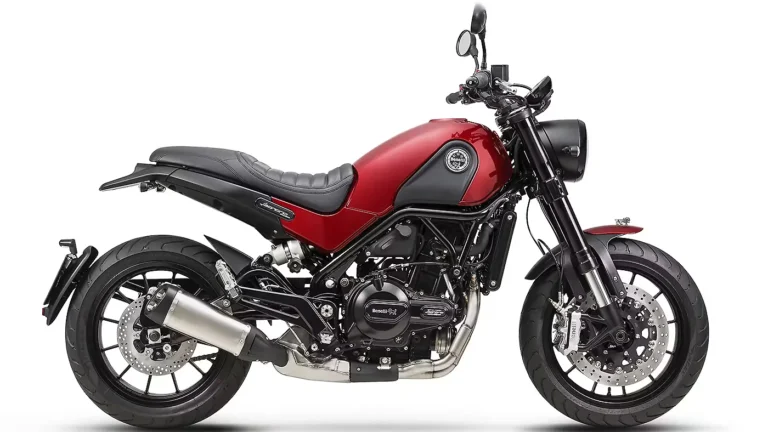
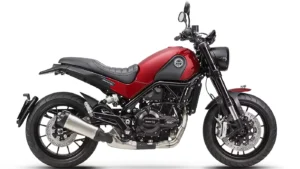
Benelli Leoncino 500
16.0 pts
Unweighted: 12 advantages
EnginePerformanceDimensionsBrakesTyresFeaturesOther
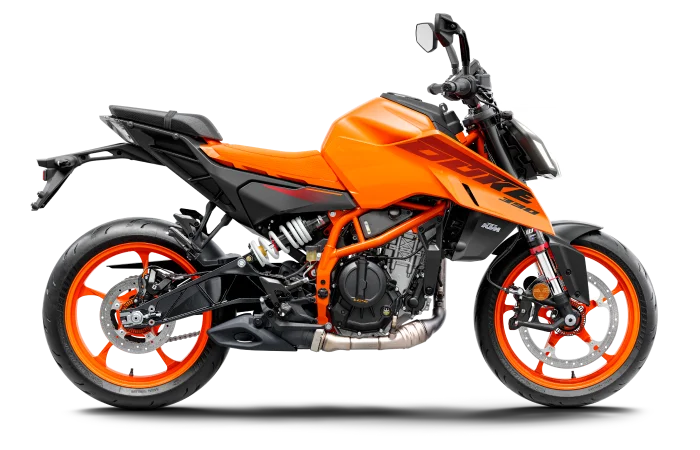
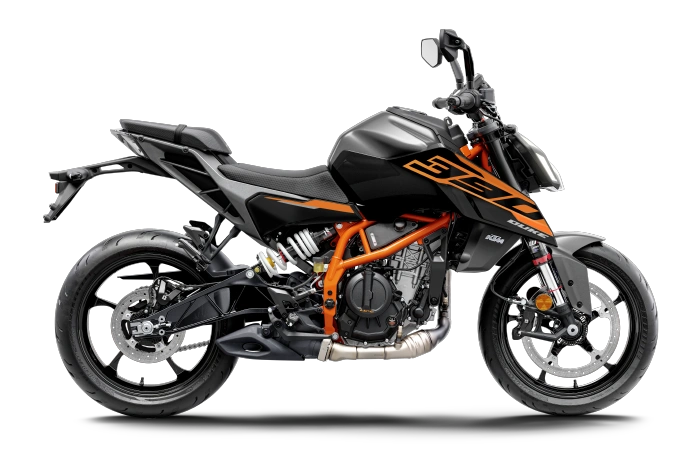
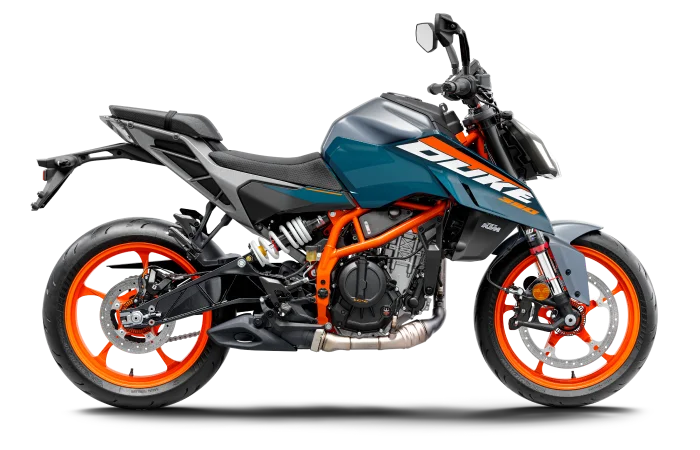
KTM 390 DUKE
12.5 pts
Unweighted: 9 advantages
EnginePerformanceDimensionsBrakesTyresFeaturesOther
| Specification | ||
|---|---|---|
Engine Specifications |
||
| Cooling System | Liquid-cooled | Liquid cooling with radiator |
| Displacement | 500cc | 398.63 cc |
| Engine Type | 2-cylinder/4-stroke/8-valve | Single Cylinder, Liquid Cooled, DOHC, FI Engine |
| Power | 35kW at 8500 r/min | 46 PS @ 8500 rpm |
| Torque | 46N·m/6000 r/min | 39 Nm @ 6500 rpm |
Performance & Efficiency |
||
| Fuel Tank Capacity | 12.7 l | 15 L |
| Mileage | — | 30 kmpl |
Dimensions & Weight |
||
| Kerb Weight | 207 | 168.3 kg |
| Seat Height | 810 | 800 mm |
Brakes & Suspension |
||
| ABS | Dual Channel ABS | Dual-channel ABS with SUPERMOTO mode |
| Front Brake | Disc 320 mm Caliper - Front 4 Piston | 320 mm Disc with Radially mounted calliper |
| Front Suspension | 50mm inverted forks | 5-click Compression & Rebound adjustable, Open Cartridge, WP APEX USD forks, 43mm diameter |
| Rear Brake | Disc 260 mm Caliper - Rear 1 Piston | 240 mm Disc with Floating calliper |
| Rear Suspension | Hydraulic Monoshock (Rebound & Preload adjustable) | Adjustable WP APEX Monoshock, 5-step Rebound damping, 10-step preload adjustable |
Tyres & Wheels |
||
| Front Tyre | Pirelli 120/70 ZR17 M/C | 110/70 - ZR17 |
| Rear Tyre | Pirelli 160/60 ZR17 M/C | 150/60 - ZR17 |
| Tyre Type | Tubeless | Tubeless |
| Wheel Type | Alloy | Alloy |
Features & Technology |
||
| Headlight | — | Full Split LED Headlamp |
Other Specifications |
||
| Battery | — | 12 V, 8 AH MF battery |
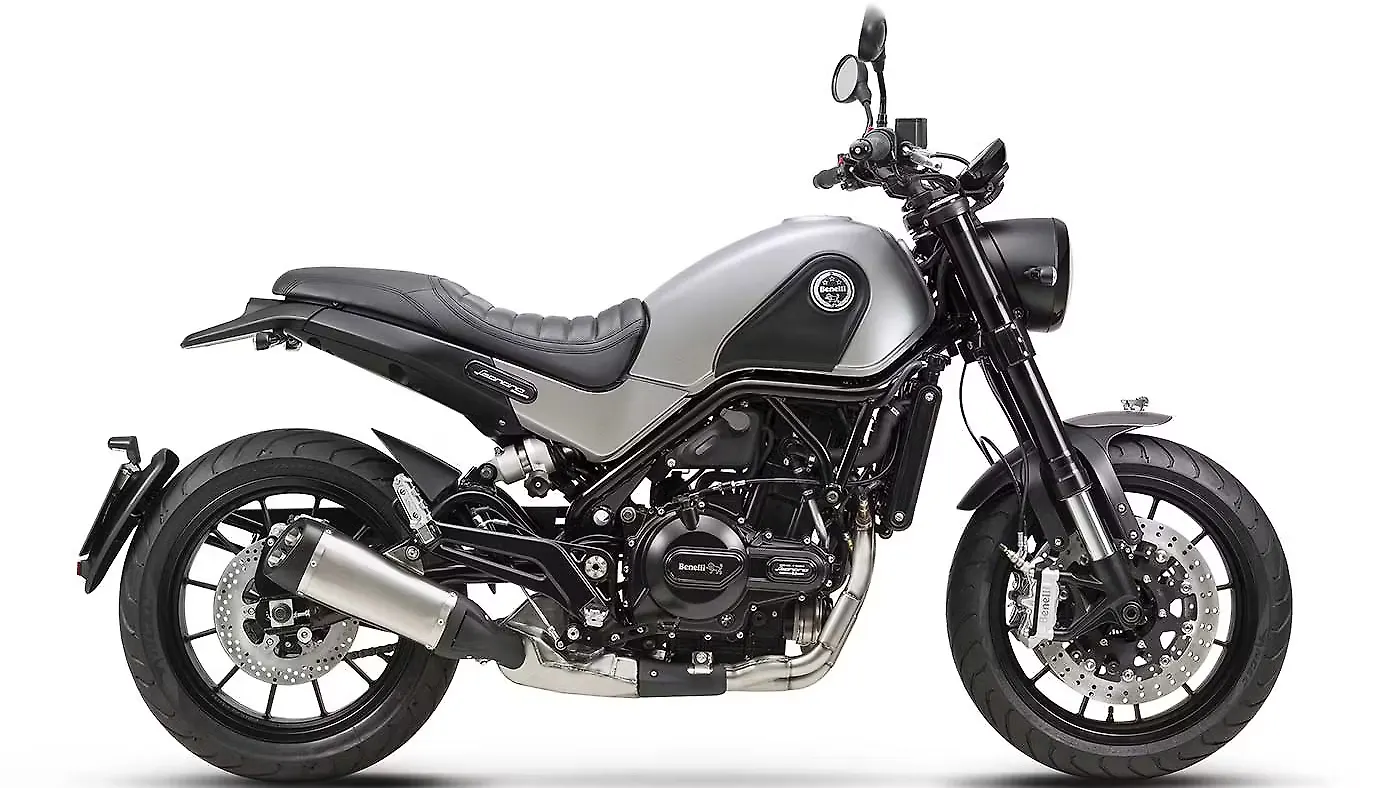
| Bike Image 1 | https://motoautiv.com/wp-content/uploads/2025/11/leoncino500silver.webp | https://motoautiv.com/wp-content/uploads/2025/11/KTM-390-Duke-Electric-orange.webp |
| Bike Image 2 | — | https://motoautiv.com/wp-content/uploads/2025/11/KTM390DukeBlack_Booking.webp |
| Cluster | — | 5" TFT dash display |
| Color Options | RED GREY | GUN METAL GREY ELECTRONIC ORANGE ATLANTIC BLUE |
| Cons | The bike is on the heavier side, and this weight becomes noticeable during low-speed maneuvers, U-turns, or parking in tight city spaces. Fuel tank capacity is relatively small for a 500cc motorcycle, meaning touring riders may need more frequent fuel stops. The suspension can feel firm over broken roads, and sharp bumps may not be absorbed as smoothly as expected. The engine, while smooth, is not aggressively powerful — riders seeking quick acceleration or sportbike-like performance may find it a bit gentle. Some components and fit-and-finish details do not feel as premium as other bikes in the same price bracket. Limited dealership and service network in certain regions may affect ease of ownership. | Firm (harsh) ride: The suspension can feel stiff over potholes or uneven surfaces, which may be tiring for long rides. Limited wind protection: Being a naked bike, you feel a lot of wind at highway speeds, making long-distance touring less comfortable. Engine heat: In slow or stop-go traffic, the radiator fan can dump hot air toward the rider’s legs, which many find uncomfortable. Seat comfort: The stock seat can feel firm and less comfortable for long rides; also, pillion comfort is limited. Vibration: Some riders report noticeable vibrations in certain RPM ranges, especially between ~4,500–6,000 rpm. Reliability concerns: There are occasional reports of reliability issues or quality control, especially in older models. |
| Detailed Overview | When you swing your leg over the Leoncino 500, the first thing you notice is that it doesn’t feel like a heavy, intimidating “big bike.” Its 500 cc, liquid-cooled, parallel-twin engine—built with a DOHC, 8-valve layout and a bore/stroke of 69 × 66.8 mm—offers a nice balance: enough punch to make each twist of the wrist satisfying, without being overly fierce or jerky. With around 35 kW (≈ 47.5 PS) at 8,500 rpm and 46 Nm torque at 6,000 rpm, the power delivery doesn’t spike — it builds progressively. In practical riding, that translates to a throttle that’s forgiving in traffic, yet confident when you want to overtake or cruise smoothly on open roads. It won’t throw you back in the seat, but it will carry you along with reassuring steadiness. Mated to a six-speed gearbox and a conventional chain final drive, the riding experience feels grounded. The wet multi-plate clutch gives clean, predictable engagement — useful when pulling away at traffic lights or crawling in city bustle. Because the engine isn’t hyper-aggressive, clutch work stays manageable; the Leoncino remains friendly even for someone transitioning into a middle-weight bike. The chassis and underpinnings do more than just hold things together — they shape the ride’s character. A steel trellis frame gives the Leoncino a firm backbone that also offers a touch of flexibility to soak up minor road flaws. Up front, a 50 mm inverted fork works together with a preload-adjustable rear mono-shock to deliver suspension behaviour that’s more composed than harsh — meaning city potholes, speed-breakers, or imperfect tarmac aren’t punished on your spine. The 17-inch alloy wheels shod in reasonably sporty tyres (120/70-R17 front, 160/60-R17 rear) enhance stability and responsiveness when carving corners or cutting through slow-moving traffic. The geometry and ergonomics strike a clever balance: at roughly 2160 mm long, 875 mm wide and 1160 mm tall, with a wheelbase around 1460–1490 mm, the Leoncino has enough presence to feel stable — not twitchy or nervous. A seat height of ~790–815 mm keeps reach manageable for many riders, striking a middle ground: upright enough for comfort on longer rides, yet low enough for confidence at stops. What this means on Indian roads is that the Leoncino can be surprisingly practical for both city and occasional weekend highway duty — though its 207 kg curb weight does remind you to be smooth in heavy traffic or U-turns. When it’s time to slow down or stop, the Leoncino doesn’t let you down. Dual 320 mm discs up front, paired with a 260 mm disc at the rear — all with dual-channel ABS — give braking that’s confident and progressive, not grabby. Whether you’re carrying a pillion, riding solo, or braking hard in a sudden traffic stop, the setup inspires control. Fuel-wise, its 12.7-litre tank might not scream “long-distance tourer,” but combined with the relatively efficient 500 cc twin, it makes the Leoncino handy for daily commuting and short-to-medium rides. For a rider commuting in mixed city-highway conditions, occasional fuel-ups aren’t a chore. And because the bike isn’t tuned for maximum range, the ride still feels alive — engaging for morning traffic and evening returns alike. In terms of attitude and feel, the Leoncino 500 defines a sweet middle ground. It doesn’t pretend to be a stripped-down commuter, but nor does it put on airs as a heavy cruiser. Its modest displacement, manageable weight, and composed suspension make it friendly enough for newer middle-weight riders, yet its engine character, chassis solidity, and braking setup give it enough credibility for seasoned riders seeking a reliable everyday or weekend bike. Yet no machine is perfect, and Leoncino 500 comes with trade-offs—ones you’d want to understand before committing. The modest fuel tank means long rides will require more stops than larger adventure or tourer bikes. The 207 kg weight, while manageable, can feel substantial when manoeuvring in tight traffic or parking in cramped city lanes. If you’re expecting aggressive acceleration or a sportbike-like rush, the Leoncino will seem restrained — it’s tuned for balance and usability, not adrenaline-fueled bursts. For long highway runs or two-up touring, the comfort is decent but not plush — it’s not designed as a luxury tourer. In essence, the Leoncino 500 feels like an honest, grounded middle-weight — one that doesn’t oversell itself. It aims to be versatile: a companion for daily commutes, a weekend ride when you want to stretch your legs, and a reliable machine for short trips and errands. It isn’t flashy in performance terms, but in everyday ownership it delivers a satisfying mixture of practicality, character, and rideability. If you’re the kind of rider who values balance over extremes, who wants a bike that handles city chaos yet isn’t out of place on a highway — the Leoncino 500 is likely to make a lot of sense. | The **KTM 390 Duke** has long been celebrated as a high-performance yet lightweight streetfighter, offering a compelling mix of power, agility, and modern technology that makes it a favorite for both urban commuting and spirited weekend rides. The latest (Gen-3) 390 Duke takes this formula further, built on a newly designed trellis frame with a die-cast aluminium sub-frame that improves rigidity and handling. Under the hood, the 2024 model is powered by a liquid-cooled, single-cylinder “LC4c” engine now displacing **399 cc**, which bumps up the performance to roughly **46 PS of power and 39 Nm of torque** in the Indian spec. One of the most striking traits of the 390 Duke is its lightness: the new model continues to boast sporty handling thanks to its steel trellis frame and a compact, aggressive footprint. The WP APEX 43 mm upside-down front fork and a preload-adjustable WP APEX mono-shock at the rear provide a finely tuned suspension setup that balances comfort on city roads with precision in the corners. Braking is handled by a 320 mm front disc with a radial calliper and a 230 mm rear disc, supported by Bosch cornering ABS, giving reliable and controllable stopping performance. On the feature front, the 2024 Duke 390 is truly packed. It includes ride modes (Street, Rain, Track), launch control, SuperMoto ABS, a quickshifter+, and a slipper clutch. The ride-by-wire throttle ensures smooth power delivery and precise control, especially when transitioning between modes. Its 5-inch TFT display supports smartphone connectivity (via Bluetooth) for turn-by-turn navigation, calls, and media, making it a very usable bike for daily commuting. Ergonomically, the 390 Duke offers a sporty but accessible riding position. The seat height is around **800 mm** in the Indian variant, with an optional 820 mm seat available, making it relatively manageable for a variety of rider heights. The fuel tank is reasonably sized (KTM lists about 13.4 litres), which balances enough capacity for daily use without compromising on agility. In terms of usability, the 390 Duke shines in city traffic thanks to its light weight, responsive throttle, and nimble chassis. At the same time, its torque and power allow for satisfying highway stretches and sporty ride-outs. However, as some users note, the high-revving single cylinder can vibrate noticeably at lower RPMs, and the engine tends to heat up in slow, stop-go traffic — a common character point for small high-performance singles. On long highway rides, wind protection is minimal due to the naked nature, and though the electronics are rich, some may feel the bike’s seat and fuel range are not optimized for extended touring. Reliability-wise, many long-term owners report good durability when properly maintained. One rider, after 29,000 km, said he never faced major breakdowns and appreciated the bike’s consistent performance. That said, some others have expressed concern about vibration and the need for regular maintenance given the sporty nature of the engine. Overall, the **KTM 390 Duke** is a brilliant all-rounder in the 300–400 cc naked category. It offers serious performance, modern electronics, and a lightweight chassis, but it doesn’t compromise on practicality. For someone looking for a fun, aggressive bike that can do daily duties and weekend thrills, the 390 Duke remains one of the most compelling choices in its class. |
| Expert Review | MotoAutiv Team | MotoAutiv Team |
| FAQ (Manual Override) | Q: What is the engine configuration of the Leoncino 500? A: It comes with a 500cc, liquid-cooled, parallel-twin DOHC engine with 8 valves. Q: How much power and torque does it produce? A: The bike makes around 47–48 PS of power at 8,500 rpm and about 46 Nm of torque at 6,000 rpm. Q: What type of gearbox does the Leoncino 500 have? A: It uses a 6-speed manual transmission paired with a wet multi-plate clutch. Q: What is the fuel tank capacity and expected mileage? A: The fuel tank capacity is 12.7 litres, and you can expect real-world mileage of roughly 20–25 kmpl depending on riding conditions. Q: What is the seat height and kerb weight? A: The seat height is approximately 790–815 mm, and the kerb weight is around 207 kg. Q: What suspension setup does the bike use? A: It gets a 50 mm upside-down front fork and a rear mono-shock with preload and rebound adjustability. Q: What wheels and tyres come with the Leoncino 500? A: It rides on 17-inch alloy wheels with tubeless tyres sized 120/70-R17 at the front and 160/60-R17 at the rear. Q: What braking system is offered? A: The bike features dual 320 mm front discs with 4-piston calipers and a 260 mm rear disc, supported by dual-channel ABS. Q: What are the key dimensions of the motorcycle? A: It measures about 2160 mm in length, 875 mm in width, with a wheelbase of around 1460 mm and ground clearance close to 160 mm. Q: Is the Leoncino 500 suitable for long rides? A: Yes, the smooth twin-cylinder engine makes highway riding comfortable, though the small fuel tank means slightly more frequent fuel stops. Q: Who is this bike best suited for? A: It’s ideal for city riders, beginners stepping into the 500cc segment, and weekend tourers who want a stylish, easy-to-ride motorcycle. | Q: What engine does the KTM 390 Duke have? A: It uses a single-cylinder, liquid-cooled, DOHC engine. Q: What is the displacement, power & torque of the 390 Duke? A: The displacement is about 398.6 cc. In the newer versions, it produces around 46 PS at 8,500 rpm and 39 Nm of torque at 6,500 rpm. Q: What is the seat height and weight of the 390 Duke? A: The seat height is 800 mm (or optionally 820 mm) depending on the version. The kerb weight is about 168.3 kg per KTM’s specification. Q: What is the fuel tank capacity and what is the mileage like? A: The fuel tank capacity is 15 litres in many versions. According to some sources, real-world fuel efficiency is around 25–30 km/l, depending on riding style. Q: What brakes and suspension does it use? A: It comes with WP APEX 43 mm upside-down front forks and a WP APEX monoshock at the rear. For brakes, there is a 320 mm front disc and a 240 mm rear disc, with a radially mounted caliper up front. Q: What is the ground clearance of the 390 Duke? A: The ground clearance is around 183 mm according to KTM India specifications. Q: What is the seat configuration and ergonomics like? A: It has a two-part seat design, with a slightly aggressive but comfortable rider position thanks to its upright handlebars. There’s also a “Supermoto mode” which lets you limit ABS intervention to the front brake — great for sliding control. Q: Does the 390 Duke come with smartphone connectivity? A: Yes — some variants support KTM MY RIDE via the 5-inch TFT dash, allowing for calls, music, and navigation integration. |
| Price Variants | | 560000 | Standard | 297443 |
| Pros | The Leoncino 500 has a very distinctive neo-retro design that instantly stands out, giving it a stylish presence that many riders appreciate. Its 500cc parallel-twin engine is smooth, predictable, and friendly, making it easy to manage in city traffic while still delivering enough power for enjoyable highway cruising. The low seat height and upright ergonomics make the bike accessible and comfortable for a wide range of riders, especially those who want a relaxed riding posture. Handling feels confidence-inspiring thanks to wide handlebars, good weight distribution, and a planted feel through corners. Braking performance is strong due to the dual front discs and ABS, offering stability and reassurance even during sudden stops. Build quality feels solid and the bike gives a “big-bike” road presence, which appeals to riders upgrading from smaller displacement motorcycles. The exhaust note has a pleasing, refined twin-cylinder character that many owners enjoy. | Excellent performance for its class: The 390 Duke’s single-cylinder engine delivers punchy acceleration and strong mid-range performance. Lightweight & nimble: With a relatively low kerb/wet weight, its chassis is very agile, making it easy to flick through corners and manoeuvre in traffic. Advanced electronics suite: Comes equipped with ride modes, traction control (MTC), cornering ABS, supermoto ABS, quickshifter, and a modern TFT display. Adjustable suspension: The front and rear suspension are adjustable (WP APEX), allowing riders to tune the setup depending on road conditions or riding style. Sharp styling & design: Features such as an exposed steel trellis frame, LED headlight, and aggressive design make it visually striking. Good build quality: Reviews note improved fit and finish on newer models, giving a premium feel. Decent fuel efficiency: Compared to its performance, it offers reasonable fuel efficiency for sporty riding. |
| Starter | Electric | — |
| Transmission | 6- Speed | 6 Speed Manual |