Quick Analysis
BENELLI 502C
16.5 pts
Unweighted: 9 advantages
EnginePerformanceDimensionsBrakesTyresFeaturesOther
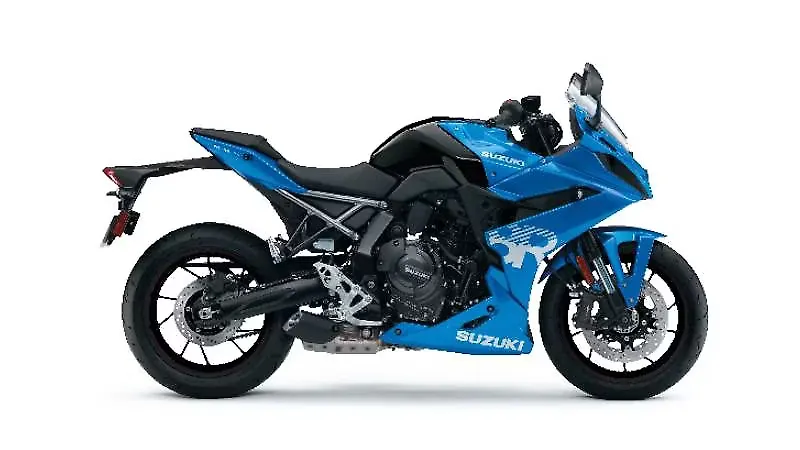
SUZUKI GSX-8R
12.5 pts
Unweighted: 10 advantages
EnginePerformanceDimensionsBrakesTyresFeaturesOther
| Specification | ||
|---|---|---|
Engine Specifications |
||
| Cooling System | Liquid-cooled | Liquid Cooling |
| Displacement | 500cc | 776 cc |
| Engine Type | 2-cylinder, 4-stroke, 8-valve | 4-stroke, 2-cylinder, liquid-cooled, DOHC |
| Power | 35kW @ 8500 r/min | 81.8 bhp @ 8500 rpm |
| Torque | 46N·m @ 6000 r/min | 78 Nm @ 6800 rpm |
Performance & Efficiency |
||
| Fuel Tank Capacity | 21.5L | 14 L |
| Mileage | 26.5 Kmpl | 23.8 kmpl |
Dimensions & Weight |
||
| Kerb Weight | 216 | 205 |
| Seat Height | 760 | 810 |
Brakes & Suspension |
||
| ABS | Dual Channel | Dual Channel |
| Front Brake | Disc Front Brake 280 mm Caliper - 4 Piston | Disc 310 mm Caliper - Front 4 Piston |
| Front Suspension | Upside down telescopic fork – 135mm | Inverted telescopic, coil spring, oil damped |
| Rear Brake | Disc Front Brake 240 mm Caliper - 1 Piston | Disc Caliper - Rear 1 Piston |
| Rear Suspension | Telescopic coil spring oil damped – 50mm | Link type, coil spring, oil damped |
Tyres & Wheels |
||
| Front Tyre | 120/70 ZR17 | 120/70ZR17M/C |
| Rear Tyre | 160/60 ZR17 | 180/55ZR17M/C |
| Tyre Type | Tube | Tubeless |
| Wheel Type | Alloy | Alloy |
Features & Technology |
||
| Headlight | LED | LED |
Other Specifications |
||
| Battery | 12V / 8AH | — |
| Bike Image 1 | https://motoautiv.com/wp-content/uploads/2025/11/502cmatteblack.webp | https://motoautiv.com/wp-content/uploads/2025/11/gsx8rmetallicmattblack.webp |
| Bike Image 2 | — | https://motoautiv.com/wp-content/uploads/2025/11/gsx8rmetallicmattswordsilver.webp |
| Color Options | Matte Black | #1C1C1C | Metallic Matt Black | #0D0D0D Metallic Matt Sword Silver | #9AA0A6, #5F646A Metallic Triton Blue | #004EA8 |
| Cons | Bulk and weight can make city riding or tight manoeuvres tricky: For its size and weight, it’s not easy to handle, U-turns, narrow lanes or heavy traffic require care and effort. Pillion comfort and practicality issues: The rear seat and pillion comfort setup don’t match the front’s promise very well; for two-up rides or long tours with a passenger, it might feel compromised. Ride can be a bit firm: Suspension may feel stiff on certain rough patches or very uneven roads — not the plushest cruiser ride in all conditions. Fuel efficiency and running cost may not be ideal: Given the displacement and weight, fuel consumption and maintenance may turn out costlier than lighter/smaller bikes — something to weigh if you ride daily. Feature-set and usability tradeoffs: While it offers the basics, it misses some modern amenities (e.g. advanced electronics or luggage accessories) that some rivals may provide — limiting its appeal for tourers or riders wanting more convenience. | Doesn’t deliver the high-revving top-end excitement of inline-4 supersport motorcycles. Wind protection at very high speeds is modest and can feel tiring on long highway rides. Suspension tuning leans slightly firm, which can feel bumpy on rough roads. Weight is on the heavier side, noticeable at low speeds or during tight maneuvers. Not designed for hardcore track riders seeking extreme performance or razor-sharp handling. Fuel economy drops significantly when ridden aggressively. |
| Detailed Overview | The Benelli 502C is a middleweight motorcycle designed in a cruiser style, but it uses a twin-cylinder engine more commonly seen in roadster or touring bikes. It is powered by a 500 cc, liquid-cooled, parallel-twin engine that produces around 47.5 PS (35 kw) of power and 46 Nm of torque, paired with a 6-speed gearbox. The engine feels smooth and works well at steady speeds, making it suitable for relaxed riding. It can reach a top speed of around 160 km/h, although in normal conditions it is mostly used at lower cruising speeds. The bike is built on a steel trellis frame and comes with upside-down front forks and a rear monoshock suspension. This setup helps with stability, but the suspension is on the firmer side, so uneven roads and bumps are clearly felt. Braking is handled by dual disc brakes at the front and a single disc at the rear, along with dual-channel ABS. The bike runs on 17-inch alloy wheels with wide tyres, which add to its grip and road presence. In terms of size, the Benelli 502C has a kerb weight of around 216–220 kg, which makes it one of the heavier bikes in this segment. The seat height is around 750 mm, which is relatively low and helps riders place their feet on the ground easily. It also gets a large fuel tank of about 21 litres, which supports longer rides without frequent refuelling. Ground clearance is adequate for city and highway use, but care is needed on bigger speed breakers. The bike comes with a fully digital instrument cluster that shows basic information like speed, fuel level, gear position, and trip details. It also gets full LED lighting, but does not offer advanced features like Bluetooth connectivity. In real-world conditions, mileage usually falls between 22 to 25 km/l depending on riding style and traffic. Overall, the 502C focuses on a mix of cruiser design and twin-cylinder performance, while keeping the feature list simple and more focused on essential riding needs. | The Suzuki GSX-8R is built around a 776cc, parallel-twin, liquid-cooled engine, and that configuration shapes most of its character. Instead of chasing very high revs, the engine focuses more on accessible performance, with a noticeable pull in the mid-range. This becomes relevant in real riding conditions, where smooth acceleration matters more than outright top-end speed. The motor is paired with a 6-speed gearbox, and it also gets a bi-directional quickshifter, which allows clutchless upshifts and downshifts. This setup changes how the bike feels in traffic as well as on open roads, making gear changes more seamless. The chassis is based on a steel frame, which keeps the structure straightforward while maintaining stability. Suspension duties are handled by upside-down front forks and a rear monoshock, both tuned to deal with a mix of riding scenarios. On uneven roads, the suspension absorbs most irregularities without feeling overly stiff, while at higher speeds it maintains a planted feel. The riding posture sits somewhere between aggressive and upright, with clip-on handlebars that are not too low, allowing a slightly leaned-forward stance without putting too much pressure on the wrists. Braking is managed by dual disc brakes at the front and a single disc at the rear, supported by dual-channel ABS. The setup is designed to offer controlled stopping power, especially considering the bike’s performance level. The GSX-8R also comes with electronic aids such as traction control and selectable riding modes, which adjust how the throttle responds. These features don’t change the core nature of the bike but add a layer of adaptability depending on riding conditions. In terms of design, the GSX-8R follows a fully faired layout, with sharp body panels and a compact tail section. The LED lighting setup, including the headlamp and indicators, keeps the design in line with modern expectations. The instrument cluster is a full-colour TFT display, showing information like speed, gear position, riding mode, and other basic data in a clean layout that is easy to read while riding. The bike uses 17-inch alloy wheels at both ends, paired with road-focused tyres. Fuel tank capacity is around 14 litres, which aligns with its intended use for both short rides and longer stretches. Weight distribution and overall kerb weight play a role in how manageable the bike feels, especially for riders moving up from smaller motorcycles. |
| Expert Review | The Benelli 502C is a mid-capacity cruiser-style bike that focuses more on relaxed riding and road presence in the Indian market. It uses a 500 cc twin-cylinder engine that feels smooth and easy to manage, especially at steady speeds, but the overall weight of the bike makes it feel heavy in city traffic. In slow-moving conditions, handling and quick turns can take some effort, while on highways it feels more stable and comfortable. The riding posture is laid-back with wide handlebars and forward-set footpegs, which suits longer rides, but the suspension is on the stiffer side, so bad roads are clearly felt. The bike comes with basic features like a digital display and LED lighting, without advanced connectivity options. In India, its relevance depends on factors like service availability, maintenance cost, and how comfortable a rider is with its size and weight in daily use., 3.9, MotoAutiv Team | The Suzuki GSX-8R enters a space in the Indian market that is still quite limited, where middleweight faired motorcycles are more aspirational than practical for most riders. Its parallel-twin engine and overall setup place it above the usual entry-level segments, which means it caters to a smaller group of buyers who are looking beyond daily commuting needs. In real-world usage, factors like traffic conditions, road quality, and cost of ownership naturally shape how often a bike like this can be fully used. At the same time, there is a growing interest in bigger motorcycles, especially among riders upgrading from 150–300cc bikes. The GSX-8R fits into this shift, offering a format that sits between everyday usability and weekend riding intent. Its relevance, therefore, is less about volume and more about how it aligns with this gradually expanding premium segment in India., 4.2, MotoAutiv Team |
| FAQ (Manual Override) | Q: Is the Benelli 502C good for daily use in India? A: The Benelli 502C can be used daily, but its heavy weight and wide size can make it difficult in heavy traffic and tight city roads. Q: How is the Benelli 502C for long rides? A: The Benelli 502C is more comfortable on highways, where the relaxed riding position and stable feel make long rides easier. Q: What mileage does the Benelli 502C give in real-world riding? A: The Benelli 502C usually gives around 22–25 km/l depending on riding style and traffic conditions. Q: Is the Benelli 502C easy to handle for beginners? A: The Benelli 502C may not be ideal for beginners because of its weight and size, especially at low speeds. Q: How is the service and maintenance of the Benelli 502C in India? A: The Benelli 502C can have higher maintenance costs, and service availability may be limited in smaller cities. Q: Does the Benelli 502C heat up in traffic? A: The Benelli 502C can feel warm in slow-moving traffic, which is common for larger engines in Indian conditions. Q: Is the Benelli 502C comfortable for a pillion? A: The Benelli 502C has a small rear seat, so pillion comfort is not the strongest point, especially on longer rides. Q: How does the Benelli 502C perform on bad roads? A: The Benelli 502C has a slightly stiff suspension, so bumps and rough roads are felt more clearly. Q: What makes the Benelli 502C different from other bikes in this segment? A: The Benelli 502C stands out mainly for its cruiser styling combined with a twin-cylinder engine, which is not very common in this price range. | Q: What is the mileage? A: The mileage is about 23.8 km/l under mixed riding conditions. Q: Is the Suzuki GSX-8R suitable for daily use in India? A: The Suzuki GSX-8R is often asked about for daily use because of its size. In real conditions, its smooth power delivery and relatively relaxed riding posture make it manageable in city traffic, though heat and width can still be noticeable in heavy congestion. Q: Is the Suzuki GSX-8R comfortable for long rides or touring? A: Many buyers ask this before upgrading. The GSX-8R is designed more like a sport-tourer, so the seating position is not too aggressive, and it can handle longer rides better than typical supersport bikes. Q: How powerful is the Suzuki GSX-8R engine? A: This comes up frequently, especially for first-time big bike buyers. The GSX-8R uses a 776cc parallel-twin engine with strong mid-range torque, which makes it feel usable rather than overwhelming in normal riding. Q: Is the Suzuki GSX-8R a good first big bike? A: A lot of riders upgrading from 200–400cc bikes ask this. The GSX-8R is generally considered approachable because of its linear power delivery and predictable nature, which helps riders transition into higher displacement bikes more easily. Q: What is the maintenance cost of the Suzuki GSX-8R in India? A: Cost of ownership is a common concern. Since it is a middleweight imported bike, service and parts are typically more expensive than smaller bikes, and availability can vary depending on location. Q: Does the Suzuki GSX-8R heat up in traffic? A: This is something many Indian riders specifically ask. Like most big-capacity bikes, engine heat can be noticeable in slow-moving traffic, especially in hot weather conditions. Q: How does the Suzuki GSX-8R compare to Ninja 650 or CBR650R? A: Comparison questions are very common. Buyers usually compare it with bikes like Ninja 650 or CBR650R based on price, performance, and usability rather than just specs. Q: Is the Suzuki GSX-8R good for beginners? A: This overlaps with the “first big bike” question. It is not a beginner bike in the strict sense, but many riders consider it after gaining some experience due to its manageable power delivery. Q: What is the seat height and is the Suzuki GSX-8R comfortable for shorter riders? A: Fit and ergonomics are commonly asked. The seat height is on the higher side, so shorter riders usually check this before buying or plan a test ride to understand reach and comfort. |
| Fuel System | Fuel Injection | Fuel injection |
| Price Variants | STD | 580000 | STD | 988551 |
| Pros | Looks and road presence: The 502C has a bold, muscular cruiser-style appearance. Its design draws attention, giving you strong presence on the road. Balanced engine and rideability: The 500 cc twin offers smooth, linear power delivery that’s easy to manage in city traffic but still capable on highways enough punch for overtakes or cruising without being overly aggressive. Comfortable ergonomics for many riders: With a low seat height and relaxed riding posture, it’s reasonably comfortable for day-to-day rides or weekend trips. Good for highway and long rides: Large fuel tank and stable chassis make it well-suited for longer rides due to less frequent refuelling and a planted feel at cruising speeds. Decent performance + braking hardware: The bike’s brakes (disc + ABS) and suspension are competent for its segment, offering reasonably confident stopping power and decent ride quality over typical road surfaces. | Strong and usable mid-range torque that makes the bike easy to ride in the city and lively on open roads. Smooth engine character thanks to the 270° crank, giving a refined feel even at higher speeds. Comfortable yet sporty riding posture that works for daily use as well as weekend rides. Agile handling with good stability, making it confidence-inspiring for both new and experienced riders. Modern electronics like riding modes, traction control, ride-by-wire, and quick-shifter add convenience and safety. High-quality build and attractive, modern styling with a sharp fairing and sleek proportions. Versatile enough for commuting, spirited cornering, and even moderate touring. |
| Starter | Electric | Self Start |
| Transmission | 6-speed | 6 Speed Manual |