VS

Quick Analysis

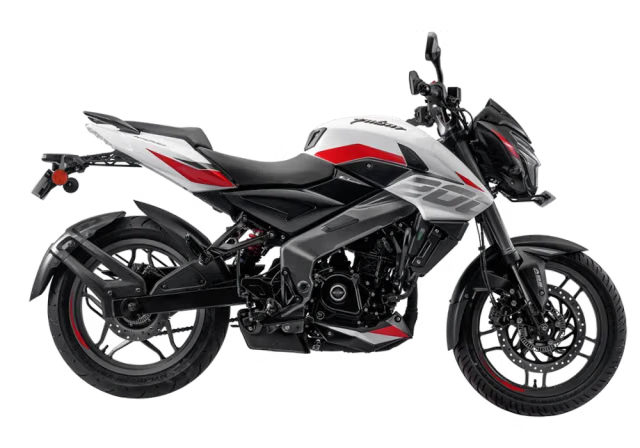
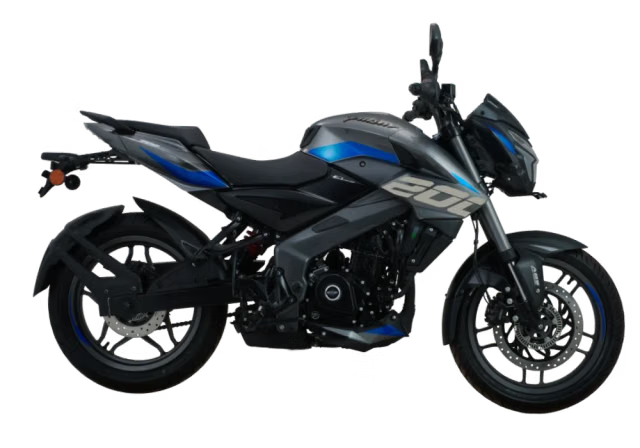
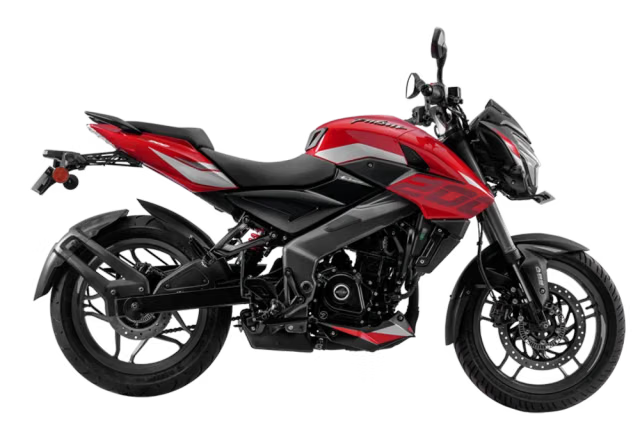
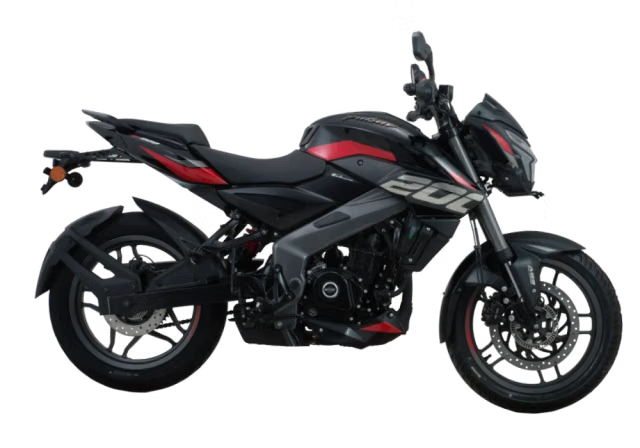
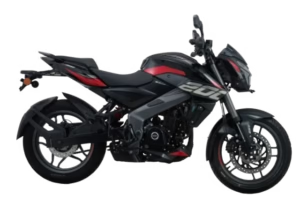
Bajaj Pulsar NS200

14.0 pts
Unweighted: 5 advantages
EnginePerformanceDimensionsBrakesTyresFeaturesOther

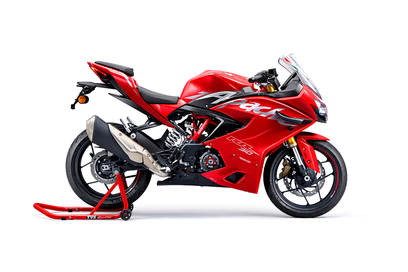
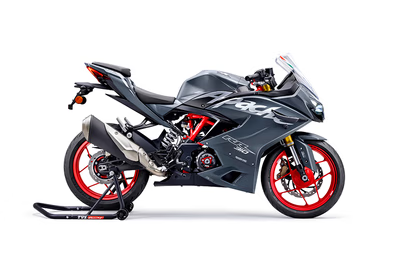
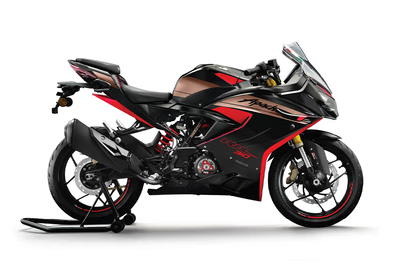
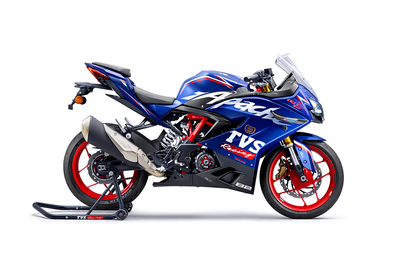
TVS Apache RR 310

14.5 pts
Unweighted: 12 advantages
EnginePerformanceDimensionsBrakesTyresFeaturesOther
Specification
Bajaj Pulsar NS200
Bajaj Pulsar NS200
Bajaj
₹151,725
TVS Apache RR 310
TVS Apache RR 310
TVS
₹277,999

Engine Specifications

Cooling System Liquid-cooled Liquid‑cooled Oil‑Coolant Technology
Displacement 199.5 cc 312.2 cc
Engine Type Single Cylinder, 4-Valve, DTS-i FI 6 Speed SI, 4‑stroke, 4‑valve, single‑cylinder, DOHC, reverse‑inclined
Power 18 kW (24.5 PS) @ 9,750 rpm Sport 28 kW @ 9800 RPM ; Urban 22 kW @7600 RPM
Torque 18.74 Nm @ 8,000 rpm Sport: 27.3 Nm @ 7900 RPM ; Urban: 25 Nm @ 6700 RPM

Performance & Efficiency

Fuel Tank Capacity 12 L 11 L
Mileage 40.36 Kmpl 34 Kmpl

Dimensions & Weight

Kerb Weight 158  174 
Seat Height 805 810

Brakes & Suspension

ABS Dual-channel ABS Dual‑channel ABS
Front Brake Dual Channel ABS, 300 mm Disc Disc 300mm Petal type with ABS
Front Suspension 37 mm USD Telescopic Fork KYB inverted cartridge telescopic fork
Rear Brake 230 mm Disc (ABS) Disc 240mm Petal type with ABS
Rear Suspension Nitrox Mono-shock Two‑arm aluminium die‑cast swingarm with monotube floating‑piston gas shock

Tyres & Wheels

Front Tyre 100/80-17 Tubeless 110/70‑ZR17 M/C 54W tubeless – Michelin Road 5
Rear Tyre 130/70-17 Tubeless 150/60‑ZR17 M/C 66W tubeless – Michelin Road 5
Tyre Type Tubeless Tubeless
Wheel Type Alloy Alloy

Features & Technology

Headlight LED DRLs, LED HeadLamps Bi‑LED projector

Other Specifications

Battery 12 V, 8 Ah VRLA 12 V, 8 Ah
Bike Image 1 https://motoautiv.com/wp-content/uploads/2025/07/pearl-white-2.avif https://motoautiv.com/wp-content/uploads/2025/07/Red-1.avif
Bike Image 2 https://motoautiv.com/wp-content/uploads/2025/07/pewer-grey.avif https://motoautiv.com/wp-content/uploads/2025/07/Bomber-Grey.avif
Bike Image 3 https://motoautiv.com/wp-content/uploads/2025/07/wine-red-2.avif https://motoautiv.com/wp-content/uploads/2025/07/Anniversary-Edition-1.avif
Cluster Fully digital LCD 5″ TFT (SmartXonnect connected)
Color Options Cocktail Wine Red – White | #7A0019, #F2F2EE Glossy Ebony Black | #111111 Metallic Pearl White | #F5F5F2 Pewter Grey – Blue | #6E7378, #2456A6 Sepang Blue Race Replica | #1D5AAE, #D6D6D6 Racing Red | #B00000 Bomber Grey | #5F6368 Black Champagne Gold Livery | #111111, #B08D57
Cons Engine refinement is not class-leading, and vibrations become noticeable at higher RPMs compared to some rivals. The gearbox can occasionally feel less slick than newer competitors, particularly during aggressive shifts. The seat cushioning is adequate for daily use but may feel firm during longer touring sessions. Low-speed ride quality can feel slightly stiff on badly broken roads because of the sporty suspension setup. Fuel efficiency is lower than commuter-oriented motorcycles, especially when the engine is ridden enthusiastically. The motorcycle's sporty nature means it is less relaxed in heavy stop-and-go traffic compared to smaller commuter bikes. Pillion comfort is acceptable for short rides but not among the strongest in the segment for extended journeys. Engine vibrations are still noticeable at certain RPM ranges, especially near highway cruising speeds. The committed riding posture can feel tiring during long city traffic rides or extended touring sessions. Heat management around the engine area can become noticeable in slow-moving traffic conditions. The gearbox and quickshifter setup, while feature-rich, may not feel as smooth as some higher-priced international sport bikes. Pillion comfort is limited because of the sporty rear seat design and aggressive ergonomics. The motorcycle sits in a pricing zone where buyers also start considering larger-capacity motorcycles and twin-cylinder alternatives. Service quality and ownership experience can vary depending on dealership location and technician expertise. Low-speed maneuvering feels slightly heavier compared to lightweight naked motorcycles because of the full-faired setup and riding posture.
Detailed Overview The Bajaj Pulsar NS200 was introduced as a motorcycle that focused more on performance-oriented riding than the traditional commuter-focused approach seen in many motorcycles at the time. Even today, the NS200 continues to carry that same identity. Its design, engine characteristics, chassis setup, and riding dynamics are all aimed at creating a more engaging riding experience rather than simply prioritizing fuel efficiency or comfort alone. The motorcycle sits in the streetfighter category and combines aggressive styling with a mechanical setup developed around sporty road riding. At the centre of the motorcycle is a 199.5cc single-cylinder, liquid-cooled engine with fuel injection and Bajaj’s triple-spark technology. The engine produces around 24.5 PS of power and 18.74 Nm of torque, figures that place it among the more performance-focused motorcycles in its segment. Unlike engines tuned mainly for low-speed commuting, the NS200’s motor feels more energetic as the revs climb. The acceleration becomes stronger in the mid and upper rev range, which gives the motorcycle a lively character during highway riding and spirited acceleration. A 6-speed gearbox handles transmission duties and helps the motorcycle maintain smoother engine performance at higher speeds. The chassis plays a major role in defining the NS200’s riding feel. The motorcycle uses a perimeter frame that contributes to its stability and cornering confidence. Combined with the relatively aggressive steering geometry, the bike feels responsive during direction changes and maintains a planted feel while leaning into corners. This setup gives the motorcycle a more connected feel compared to softer commuter-oriented motorcycles. The riding posture also supports this character. The handlebar position is upright enough for daily use but still sporty enough to provide a sense of control during faster riding. Recent updates to the motorcycle have modernized its hardware and features. The latest NS200 uses upside-down front forks, which improve front-end feel and add to the motorcycle’s aggressive visual design. At the rear, the bike continues to use a Nitrox monoshock suspension setup. Together, the suspension components are tuned to provide a balance between stability and ride comfort. On smoother roads and highways, the motorcycle feels composed and controlled, while rougher city roads reveal a slightly firmer suspension character. Braking performance comes from disc brakes at both ends supported by dual-channel ABS. The braking setup is designed to provide stable stopping performance during both city riding and higher-speed use. The motorcycle rides on alloy wheels fitted with tubeless tyres, contributing to handling stability and convenience during puncture situations. Visually, the NS200 follows a sharp and muscular streetfighter design language. The exposed frame sections, aggressive tank shrouds, split-style seat design, and sharp body panels create a more mechanical and sporty appearance compared to conventional commuter motorcycles. The motorcycle’s styling has remained recognizable over the years, even though it has received periodic cosmetic and feature updates. Technology has also become a more important part of the package in newer versions. The motorcycle now includes a digital instrument console with Bluetooth connectivity support, allowing features such as call alerts, message notifications, and turn-by-turn navigation. LED lighting elements further modernize the motorcycle without changing its core identity. The NS200 carries a 12-litre fuel tank and generally delivers real-world mileage figures between 30 and 40 km/l depending on riding conditions and throttle usage. Its overall character remains centered around sporty riding dynamics, strong mid-range performance, stable handling, and streetfighter styling rather than pure commuter-focused efficiency or relaxed touring comfort. The TVS Apache RR 310 is built around the idea of offering a fully-faired sport motorcycle that can handle both everyday road riding and higher-speed performance riding without becoming too extreme for regular use. While the motorcycle clearly carries supersport-inspired styling and aerodynamics, its overall setup feels more balanced than a pure track-focused machine. The riding experience combines strong highway stability, modern electronics, and sporty handling with enough practicality to make the bike usable beyond weekend rides. Power comes from a 312.2cc single-cylinder, liquid-cooled engine that uses a reverse-inclined layout. This engine design helps centralize mass and improve handling characteristics while also contributing to better weight distribution. The motor produces around 38 PS and 29 Nm of torque in Track and Sport modes, giving the RR 310 strong acceleration through the mid and upper rev range. The engine feels smooth during regular riding but becomes more energetic once pushed harder, especially during highway overtakes and fast corner exits. A 6-speed gearbox handles transmission duties, and newer variants also receive a bi-directional quickshifter that allows clutchless upshifts and downshifts during spirited riding. The motorcycle includes four riding modes — Track, Sport, Urban, and Rain. These modes change throttle response, ABS behavior, power delivery, and traction control intervention depending on riding conditions. Track and Sport modes unlock the motorcycle’s full performance potential, while Urban and Rain modes soften throttle response and add more electronic intervention for smoother control on wet roads or city traffic. This system gives the RR 310 a more adaptable personality compared to many conventional sport motorcycles. Aerodynamics play a major role in the bike’s design. The fully-faired bodywork, sharp front profile, and windscreen are developed to improve airflow and stability at higher speeds. The motorcycle feels planted while cruising on highways, and the fairing helps reduce wind blast during long rides. At the same time, the aggressive styling with LED lighting, sculpted tank sections, split seats, and race-inspired graphics gives the RR 310 a strong visual presence on the road. The chassis setup focuses heavily on stability and handling precision. The bike uses a trellis frame combined with upside-down front forks and a rear monoshock suspension. The suspension setup keeps the motorcycle composed during fast cornering while still absorbing regular road imperfections reasonably well. The RR 310 feels stable during high-speed riding and maintains confidence during quick direction changes, though the sporty riding posture places more weight on the wrists compared to upright street motorcycles. Braking duties are handled by disc brakes at both ends along with dual-channel ABS. Higher variants also receive cornering ABS and traction control, which improve stability during aggressive braking and leaned-over cornering situations. Michelin Road 5 tyres further improve grip and road feedback, especially during fast highway riding and wet conditions. Technology is one of the most feature-rich aspects of the RR 310. The TFT instrument display supports TVS SmartXonnect connectivity with navigation assist, call alerts, ride telemetry, voice assistance, and riding statistics. Features like cruise control, cornering traction control, wheelie control, and adjustable suspension on selected variants give the motorcycle a premium feel usually associated with larger sport bikes. The bike carries an 11-litre fuel tank and weighs around 174 kg. Fuel efficiency generally stays around 30–35 km/l depending on riding conditions and throttle usage. Overall, the TVS Apache RR 310 combines aerodynamic sportbike styling, modern rider electronics, stable chassis dynamics, and strong highway performance into a motorcycle developed for riders who want a sporty but road-usable fully-faired machine.
Expert Review The Bajaj Pulsar NS200 has always been known more for its riding experience than its specification sheet, and that character remains intact. The motorcycle feels eager the moment the throttle is opened, with the liquid-cooled 199.5cc engine delivering a strong surge of power as revs climb. What makes the NS200 stand out is not just acceleration but the way the chassis responds to rider inputs. The perimeter frame and well-balanced geometry give the bike an agile, planted feel whether it is filtering through traffic or leaning into corners on an open road. Recent updates such as USD forks, Bluetooth connectivity, a digital display, and dual-channel ABS have modernized the package without changing its core personality. The motorcycle still feels like a streetfighter designed around performance and rider involvement rather than comfort-focused commuting. While vibrations, a firm ride at low speeds, and average pillion comfort remain part of the experience, the NS200 continues to offer a combination of engine performance, handling confidence, and sporty character that defines its place in the segment., 4.5, MotoAutiv Team The TVS Apache RR 310 feels like a motorcycle developed with serious attention toward riding dynamics rather than just outright specifications. Once the bike starts moving, the chassis immediately stands out because of how stable and planted it feels through corners and at highway speeds. The 312.2cc reverse-inclined engine delivers strong acceleration and a smooth flow of power through the mid and top-end range, while the aerodynamic fairing helps the motorcycle remain composed during fast riding. TVS has also packed the RR 310 with a large number of electronic features including ride modes, cornering ABS, traction control, cruise control, and a bi-directional quickshifter, giving the motorcycle a much more premium feel than many bikes in this category. At the same time, the RR 310 does not try to behave like an extreme supersport machine all the time. The suspension setup and riding ergonomics still allow it to function as an everyday motorcycle, although engine heat, committed ergonomics, and vibrations at certain RPMs become noticeable during longer rides or city traffic. Overall, the RR 310 combines sporty handling, high-speed stability, modern electronics, and practical road usability into a fully-faired motorcycle designed mainly for riders who enjoy performance-oriented road riding., 4.6, MotoAutiv Team
FAQ (Manual Override) Q: What engine does the Bajaj Pulsar NS200 use? A: The NS200 is powered by a 199.5cc single-cylinder, liquid-cooled, fuel-injected engine with a triple-spark setup. Q: How much power does the Pulsar NS200 produce? A: The engine produces approximately 24.5 PS of power and 18.74 Nm of torque. Q: What mileage does the Pulsar NS200 deliver in real-world conditions? A: Most riders report fuel efficiency between 30–40 km/l, depending on traffic, riding style, and road conditions. Q: What is the top speed of the Bajaj Pulsar NS200? A: The motorcycle can achieve an approximate top speed of 125–135 km/h under suitable conditions. Q: Does the Pulsar NS200 have dual-channel ABS? A: Yes. The current NS200 comes equipped with dual-channel ABS as standard. Q: What is the difference between the Pulsar NS200 and Pulsar N250? A: The NS200 is tuned with a stronger top-end character, liquid cooling, and a perimeter frame aimed at sporty riding. The N250 focuses more on everyday torque delivery, comfort, and relaxed road manners. Q: Does the NS200 have Bluetooth connectivity? A: Yes. The latest model includes Bluetooth connectivity with call alerts, message notifications, and turn-by-turn navigation support. Q: Does the Pulsar NS200 get USD forks? A: Yes. Recent versions of the NS200 feature upside-down (USD) front forks for improved front-end feel and stability. Q: Is the Pulsar NS200 suitable for touring? A: The motorcycle can handle touring duties thanks to its stable chassis, strong engine performance, and comfortable riding triangle, although the seat may feel firm during very long rides. Q: How is the NS200 different from the KTM 200 Duke? A: Both motorcycles offer similar engine capacities, but the KTM 200 Duke focuses more on premium components and aggressive performance, while the NS200 emphasizes a balance of performance, practicality, and value. Q: What is the fuel tank capacity of the Pulsar NS200? A: The motorcycle comes with a 12-litre fuel tank. Q: What type of frame does the NS200 use? A: It uses a perimeter frame, which contributes to its handling stability and cornering characteristics. Q: Does the Pulsar NS200 have traction control or riding modes? A: No. The NS200 does not currently offer traction control or selectable riding modes. Q: Is the Bajaj Pulsar NS200 good for daily commuting? A: Yes. Although it has a sporty character, the upright ergonomics and manageable dimensions make it practical for everyday city use as well. Q: What engine does the TVS Apache RR 310 use? A: The motorcycle uses a 312.2cc single-cylinder, liquid-cooled, reverse-inclined engine. Q: What is the power output of the Apache RR 310? A: The bike produces around 38 PS and 29 Nm in Track and Sport modes. Q: What is the top speed of the Apache RR 310? A: The motorcycle has an approximate top speed of around 160 km/h. Q: Does the Apache RR 310 have riding modes? A: Yes, the motorcycle offers Track, Sport, Urban, and Rain riding modes. Q: Does the RR 310 have a quickshifter? A: Yes, newer variants get a bi-directional quickshifter. Q: What type of brakes does the Apache RR 310 use? A: The motorcycle uses disc brakes at both ends along with dual-channel ABS. Q: Does the Apache RR 310 get traction control? A: Yes, higher variants include traction control and cornering traction control features. Q: What suspension setup does the Apache RR 310 use? A: The bike gets USD front forks and a rear monoshock suspension setup. Q: What is the fuel tank capacity of the RR 310? A: The motorcycle comes with an 11-litre fuel tank. Q: Does the Apache RR 310 support Bluetooth connectivity? A: Yes, the motorcycle supports TVS SmartXonnect connectivity with navigation and ride analytics. Q: Is the Apache RR 310 suitable for touring? A: Yes, the bike is capable of highway touring because of its stable chassis, aerodynamic fairing, and strong cruising performance. Q: What tyres are used on the Apache RR 310? A: The motorcycle uses Michelin Road 5 tubeless tyres on newer variants. Q: Does the Apache RR 310 have cruise control? A: Yes, selected variants offer cruise control functionality. Q: What is the kerb weight of the Apache RR 310? A: The motorcycle weighs around 174 kg.
Fuel System Fuel Injection Fuel Injection
Price Variants Single Channel | 134266 Dual Channel USD | 144485 Red Without Quickshifter | 261240 Red With Quickshifter | 277190 Bomber Grey | 281790 Limited Edition | 314390
Pros The 199.5cc liquid-cooled engine delivers strong performance across the rev range, with particularly energetic acceleration in the mid and top end. It feels noticeably more powerful than most commuter-based motorcycles in the segment. Handling remains one of the strongest aspects of the NS200. The perimeter frame, balanced chassis, and responsive steering allow the motorcycle to feel confident through corners and quick direction changes. The motorcycle now comes with modern features such as USD front forks, a fully digital instrument cluster, Bluetooth connectivity, turn-by-turn navigation, and dual-channel ABS. High-speed stability is impressive. The bike feels planted on highways and maintains composure even during fast cruising and overtaking situations. The riding position strikes a balance between sporty control and everyday comfort, making the motorcycle usable for both city riding and longer journeys. The liquid-cooled engine manages heat effectively during spirited riding and highway use. Braking performance is strong, with disc brakes at both ends supported by dual-channel ABS. The aggressive streetfighter styling, muscular fuel tank, and exposed mechanical components give the motorcycle a distinctive road presence. The motorcycle feels very stable at higher speeds, especially on highways. The aerodynamic fairing, riding posture, and chassis setup help the bike maintain confidence during fast cruising and cornering. The 312.2cc reverse-inclined engine delivers strong acceleration and a noticeable top-end pull, making the RR 310 feel more performance-oriented than most smaller sport motorcycles. Ride modes such as Track, Sport, Urban, and Rain mode allow the motorcycle to adapt its throttle response and ABS behavior depending on riding conditions. The bike balances sporty handling with everyday usability better than many aggressive supersport motorcycles. It can still be used for regular commuting without feeling excessively uncomfortable. Features like cornering ABS, traction control, cruise control, bi-directional quickshifter, TFT display, and Bluetooth connectivity make the motorcycle feel technologically advanced within the segment. The fully-faired design gives the RR 310 strong road presence, and the race-inspired styling remains one of the most distinctive parts of the motorcycle. Suspension and braking performance feel premium, especially on variants equipped with adjustable suspension setups and Michelin tyres. High-speed stability and chassis feedback are among the strongest areas of the motorcycle, particularly during cornering and highway riding.
Starter Electric Self Start Only
Transmission 6-speed manual 6‑speed with bi‑directional quick‑shifter

If you like what we do, Stay connected with 🚗 Motoautiv.com ⚡

Leave your email 📧 below and Click subscribe Now 🔔✨