Quick Analysis
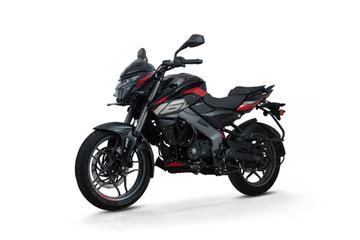
Bajaj Pulsar NS160
29.5 pts
Unweighted: 19 advantages
EnginePerformanceDimensionsBrakesTyresFeaturesOther
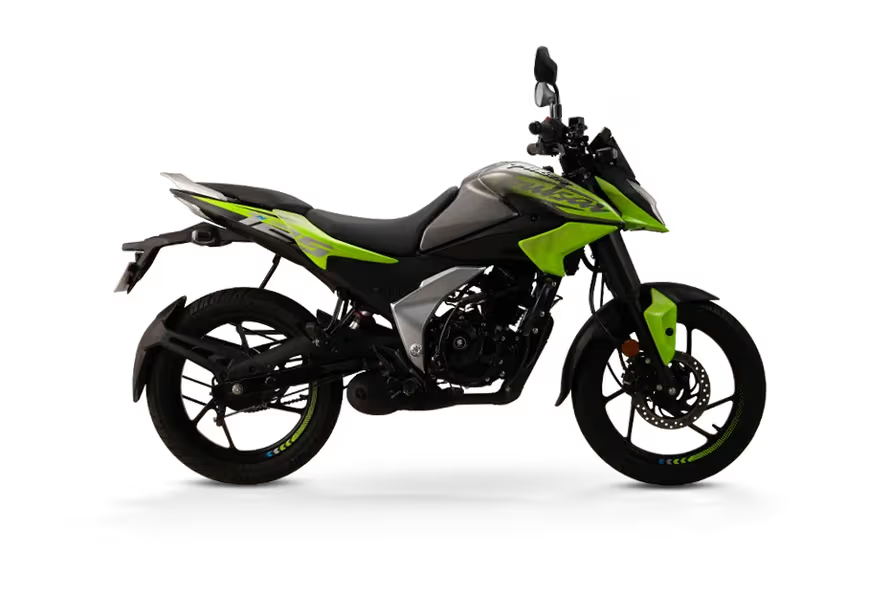
Bajaj Pulsar N125 (new)
4.0 pts
Unweighted: 3 advantages
EnginePerformanceDimensionsBrakesTyresFeaturesOther
| Specification | ||
|---|---|---|
Engine Specifications |
||
| Cooling System | Oil-cooled | Air‑cooled |
| Displacement | 160.3 cc | 124.58 cc |
| Engine Type | Single Cylinder, 4-Valve, Twin Spark, DTS-i FI | Single Spark, 2‑Valve |
| Power | 12.5 kW (17 PS) @ 9000 rpm | 12 PS @ 8,500 rpm |
| Torque | 14.6 Nm @ 7,250 rpm | 11 Nm @ 6,000 rpm |
Performance & Efficiency |
||
| Fuel Tank Capacity | 12 L | 9.5 L |
| Mileage | 40.36 Kmpl | 58 Kmpl |
Dimensions & Weight |
||
| Kerb Weight | 152 | 125 |
| Seat Height | 804 | 795 |
Brakes & Suspension |
||
| ABS | Dual-channel ABS | — |
| Front Brake | Dual Channel ABS, 300 mm Disc | 240 mm Disc |
| Front Suspension | 37 mm Upside Down (USD) Fork (130 mm travel) | Telescopic, 125 mm stroke |
| Rear Brake | 230 mm Disc(ABS) | 130 mm Drum |
| Rear Suspension | Nitrox Mono-shock | Monoshock, 125 mm stroke |
Tyres & Wheels |
||
| Front Tyre | 100/80-17 Tubeless | 80/100‑17 Tubeless |
| Rear Tyre | 130/70-17 Tubeless | 110/80‑17 Tubeless |
| Tyre Type | Tubeless | Tubeless |
| Wheel Type | Alloy | Alloy |
Features & Technology |
||
| Headlight | H4 Blue Tinge (12V 55/60W), With AHO (Auto Headlamps On) | LED with AHO |
Other Specifications |
||
| Battery | DC, 12V, 4 Ah VRLA | — |
| Bike Image 1 | https://motoautiv.com/wp-content/uploads/2025/07/Pearl-White-3.avif | https://motoautiv.com/wp-content/uploads/2025/07/wine-red-1.avif |
| Bike Image 2 | https://motoautiv.com/wp-content/uploads/2025/07/Pewter-grey.avif | https://motoautiv.com/wp-content/uploads/2025/07/purple-fury.avif |
| Bike Image 3 | https://motoautiv.com/wp-content/uploads/2025/07/Wine-Red-3.avif | — |
| Cluster | Semi-digital LCD | Fully digital LCD |
| Color Options | Ebony Black | #1B1B1B Pearl Metallic White | #F1F1ED Cocktail Wine Red | #7A1023 Pewter Grey | #6A6D70 | Ebony Black Cocktail Wine Red | #111111, #7A0019 Ebony Black Purple Fury | #111111, #5A2D82 Pewter Grey Citrus Rush | #6E7378, #C7D300 |
| Cons | Limited Top-End Performance – While strong in the mid-range, the motorcycle is not as exciting at higher RPMs as some performance-focused rivals. Engine Vibrations at Higher Speeds – Mild vibrations can become noticeable through the handlebar and footpegs during prolonged high-speed riding. Seat Comfort Could Be Better for Touring – The seat works well for commuting, but longer highway rides may feel tiring for some riders. Feature List Not Segment-Leading – Certain competitors offer Bluetooth connectivity, riding modes, TFT displays, or traction control systems. Pillion Comfort Is Average – The rear seat is usable for daily travel but may not feel ideal for extended two-up journeys. Wind Blast at Highway Speeds – As a naked street motorcycle, riders experience noticeable wind pressure at higher speeds. Gearbox Feel Could Be Smoother – Some riders report that gear shifts do not feel as refined as certain competitors in the segment. Headlamp Performance Could Be Better – While modern-looking, some users feel the headlamp throw could improve for highway night riding. | Highway performance is naturally limited by the 125cc engine capacity, especially during high-speed overtakes or when carrying a pillion rider. The motorcycle does not offer the extensive feature list found on some premium rivals that include advanced connectivity options and larger displays. Rear seat comfort is adequate for short and medium journeys but may feel less spacious during longer rides. Engine refinement is generally good for daily use, but vibrations can become noticeable near the upper end of the rev range. Wind protection is minimal because of the naked streetfighter design, making sustained highway speeds less comfortable. Some riders may find the sporty styling more appealing than the actual performance delivered by the 125cc engine. The compact dimensions that help in city traffic can make the motorcycle feel slightly small for taller riders. |
| Detailed Overview | The Pulsar NS160 has always felt slightly different from the average 160cc motorcycle, mainly because it borrows a lot from bigger street bikes instead of following the usual commuter-bike formula. Even today, the exposed perimeter frame, sharp tank shrouds, and underbelly exhaust give it a more mechanical and purposeful look than most motorcycles in its category. It does not look minimal or commuter-focused, and that visual character plays a big role in how the bike is perceived on the road. The motorcycle uses a 160.3cc single-cylinder engine with fuel injection and oil cooling. On paper, the numbers are fairly competitive for the segment, but the way the engine delivers power is more important than outright figures. Most of the usable performance sits in the mid-range, so the bike feels responsive in regular riding conditions like overtaking traffic, accelerating out of corners, or riding through open city roads. It does not chase extremely high top-end performance, but the engine feels energetic enough to keep the motorcycle engaging without becoming difficult to manage in daily use. A large part of the NS160’s identity comes from its chassis. Bajaj uses a perimeter frame instead of the simpler setups seen on many commuter motorcycles, and that changes the way the bike behaves while riding. The front end feels more planted while cornering, and the motorcycle remains fairly stable even when pushed harder than a typical city commuter usually would be. This is one of the reasons many riders still consider the NS160 one of the more enjoyable bikes in the segment from a handling perspective. The suspension setup consists of telescopic forks at the front and a monoshock at the rear. The tuning is not especially soft, so the bike tends to feel firmer over rough roads and sharp potholes. On smoother roads, though, that same firmness helps the motorcycle feel controlled and stable. The wider tyres also contribute to that sense of grip and confidence, particularly while leaning into turns or riding at higher speeds. Braking duties are handled by disc brakes at both ends, and newer versions include dual-channel ABS. The braking feel is predictable during regular riding, and the addition of dual-channel ABS helps the motorcycle feel more secure during sudden braking situations, especially on wet or uneven surfaces. Despite the aggressive styling, the riding posture is not overly committed. The handlebar is positioned high enough to avoid putting excessive pressure on the wrists, and the seat height remains manageable for most riders. That balance makes the NS160 usable for everyday commuting while still retaining the slightly sporty feel the design suggests. The split-seat layout and compact tail section add to the visual appeal, although pillion comfort is average rather than especially spacious. The instrument console includes a digital display with information such as speed, fuel level, trip readings, and gear position indication. Recent updates have also added LED lighting and Bluetooth-based navigation support on certain variants, although the feature list remains less extensive than some newer competitors that focus heavily on connected technology. Overall, the NS160 feels more like a street motorcycle adapted for daily use than a commuter bike trying to look sporty. Its strongest points continue to be the chassis behaviour, mid-range performance, and the overall riding feel rather than outright specifications alone. | At first look, the Bajaj Pulsar N125 doesn’t immediately feel like a typical 125cc commuter. Its sharp tank extensions, compact tail section and aggressive headlamp design borrow heavily from the larger Pulsar N-series motorcycles, giving it a sportier appearance than many motorcycles in this category. Despite the muscular styling, the bike remains compact and lightweight, which becomes noticeable while moving through traffic or squeezing into tight parking spaces. The motorcycle is powered by a 124.58cc single-cylinder engine that produces around 12 PS of power and 11 Nm of torque. The engine is paired with a 5-speed gearbox and is tuned to deliver usable performance in everyday riding conditions. In city traffic, acceleration feels responsive enough for quick overtakes and gap-finding, while the extra gear helps the engine stay relatively relaxed when cruising at higher speeds. Rather than chasing outright performance figures, the setup focuses on maintaining a balance between efficiency and everyday usability. One of the characteristics that shapes the riding experience is the motorcycle’s low kerb weight of around 125 kg. The light chassis helps the bike change direction easily and makes low-speed handling feel less demanding, especially in crowded urban environments. Riders who spend most of their time navigating traffic signals, market roads and daily office routes are likely to notice this trait more than the power figures themselves. The suspension setup consists of telescopic front forks and a rear monoshock. Instead of feeling overly soft or excessively firm, the setup is intended to cope with a mix of city roads, speed breakers and uneven patches commonly encountered during daily commuting. The monoshock arrangement also contributes to the motorcycle’s cleaner side profile while helping maintain stability during regular riding conditions. The braking system combines a front disc brake with a rear drum brake and is supported by CBS (Combined Braking System). Alloy wheels and tubeless tyres come as standard equipment, reducing the inconvenience associated with punctures and routine maintenance. These components are chosen more for practicality than performance-focused riding. The digital instrument console adds a modern touch to the motorcycle. Depending on the variant, riders can access information such as speed, fuel level, trip details and smartphone notification functions through Bluetooth connectivity. This allows the motorcycle to offer some connected features without moving into the premium segment. A 9.5-litre fuel tank works alongside the fuel-efficient engine to provide a useful riding range for daily commuting. Actual fuel economy depends on traffic conditions, rider inputs and maintenance, but the motorcycle is designed to keep running costs manageable while retaining the sporty styling associated with the Pulsar brand. Overall, the Pulsar N125 combines a lightweight chassis, a 124.58cc engine, monoshock suspension, digital instrumentation and contemporary streetfighter-inspired styling into a motorcycle intended primarily for everyday urban transportation and regular commuting duties. |
| Expert Review | The Pulsar NS160 still feels like one of the more engaging motorcycles in the 160cc segment, mainly because of the way its chassis behaves. The perimeter frame gives the bike a planted feel through corners, and the steering remains predictable even when ridden aggressively in traffic or on twisty roads. Its 160cc oil-cooled engine performs best in the mid-range, where throttle response feels lively enough for quick overtakes and daily commuting, although the top-end performance is less exciting than some rivals. The riding position strikes a reasonable compromise between sporty and comfortable, so the motorcycle does not become tiring in regular use. Ride quality is slightly on the firmer side, especially over sharp bumps, but the suspension setup helps the bike feel stable at higher speeds. The NS160 also benefits from mature styling that still looks purposeful without appearing overly aggressive. At the same time, the feature list now feels simpler compared to newer competitors offering connectivity features and more advanced electronics., 4.3, MotoAutiv Team | The Bajaj Pulsar N125 is built around the idea of bringing the styling and feel of a modern streetfighter motorcycle into the 125cc segment. Its compact dimensions and lightweight chassis make it particularly easy to handle in city traffic, while the engine delivers enough performance for everyday commuting without becoming demanding to ride. The motorcycle feels agile during direction changes, and the riding position strikes a balance between comfort and a slightly sporty character. Design plays a significant role in its identity, with sharp bodywork, bold graphics, and styling cues borrowed from larger Pulsar N-series models. The suspension setup is tuned for daily road conditions and handles common urban imperfections without feeling overly stiff. While the motorcycle remains focused on practical transportation, its visual design and riding dynamics give it a character that differs from more conventional commuter motorcycles., 4.4, MotoAutiv Team |
| FAQ (Manual Override) | Q: What is the engine capacity of the Bajaj Pulsar NS160? A: The motorcycle is powered by a 160.3cc single-cylinder, fuel-injected, oil-cooled engine. Q: Is the Pulsar NS160 suitable for daily commuting? A: Yes. Its upright riding posture, manageable dimensions, and responsive mid-range performance make it practical for city riding. Q: What mileage does the Pulsar NS160 deliver? A: Most riders report real-world fuel efficiency between 40–50 kmpl, depending on riding style, traffic, and maintenance. Q: Does the Pulsar NS160 have dual-channel ABS? A: Yes. Recent versions come equipped with dual-channel ABS. Q: Is the Pulsar NS160 beginner-friendly? A: Yes. The motorcycle's predictable handling and manageable power delivery make it approachable for riders upgrading from commuter motorcycles. Q: What is the top speed of the Pulsar NS160? A: Under suitable conditions, the motorcycle can reach approximately 115–120 km/h. Q: What is the fuel tank capacity of the NS160? A: The motorcycle comes with a 12-litre fuel tank. Q: Does the Pulsar NS160 have Bluetooth connectivity? A: Selected newer variants offer Bluetooth connectivity and turn-by-turn navigation support. Q: How comfortable is the NS160 for long rides? A: The motorcycle can handle occasional highway rides comfortably, although the firmer suspension and compact seat may feel tiring over very long distances. Q: What type of motorcycle is the Pulsar NS160? A: It is classified as a streetfighter-style street motorcycle with sporty handling and commuter-friendly ergonomics. Q: How is the NS160 different from the Pulsar N160? A: The NS160 feels sportier and sharper in handling due to its perimeter frame and riding dynamics, while the N160 focuses more on refinement and everyday comfort. Q: Does the Pulsar NS160 vibrate at high speeds? A: Mild vibrations can be felt at higher RPMs and sustained highway speeds, particularly through the handlebars and footpegs. Q: Is the NS160 good for college students and young riders? A: Many riders prefer it for its sporty styling, manageable performance, and relatively affordable running costs. Q: Does the Pulsar NS160 have LED lighting? A: Recent versions include LED lighting elements, though equipment may vary depending on the variant and model year. Q: Are spare parts and servicing easily available? A: Yes. Bajaj has a widespread dealership and service network across India, making maintenance and spare parts access relatively convenient. | Q: What engine does the Bajaj Pulsar N125 use? A: The motorcycle is powered by a 124.58cc single-cylinder, air-cooled engine. Q: How much power does the Pulsar N125 produce? A: The engine produces approximately 12 PS of power and 11 Nm of torque. Q: What mileage does the Bajaj Pulsar N125 deliver? A: Real-world mileage generally ranges between 50–60 km/l depending on riding style, traffic conditions, and maintenance. Q: What is the top speed of the Pulsar N125? A: The motorcycle has an approximate top speed of around 100–105 km/h. Q: Is the Pulsar N125 suitable for highway riding? A: Yes, it can handle occasional highway trips comfortably, though it is primarily designed for city commuting and daily transportation. Q: What type of brakes does the Pulsar N125 use? A: The motorcycle comes with a front disc brake and rear drum brake setup along with CBS (Combined Braking System). Q: Does the Bajaj Pulsar N125 have ABS? A: No, the Pulsar N125 does not offer ABS. It uses CBS for braking assistance. Q: What suspension setup does the Pulsar N125 use? A: It uses telescopic front forks and a rear monoshock suspension. Q: What is the fuel tank capacity of the Pulsar N125? A: The motorcycle comes with a fuel tank capacity of approximately 9.5 litres. Q: What is the kerb weight of the Pulsar N125? A: The bike weighs around 125 kg, making it one of the lighter motorcycles in its segment. Q: Does the Pulsar N125 use tubeless tyres? A: Yes, the motorcycle comes with tubeless tyres fitted on alloy wheels. Q: Does the Pulsar N125 have a digital instrument cluster? A: Yes, it features a digital instrument console that displays ride-related information clearly. Q: Does the Pulsar N125 support Bluetooth connectivity? A: Selected variants offer Bluetooth connectivity with call and notification alerts. Q: Is the Bajaj Pulsar N125 beginner-friendly? A: Yes, its lightweight handling, predictable power delivery, and manageable dimensions make it suitable for new riders. Q: Is the Pulsar N125 a commuter motorcycle or a streetfighter? A: It is generally classified as a sporty commuter/streetfighter-style motorcycle, combining commuter practicality with design elements inspired by larger naked street motorcycles. |
| Fuel System | Fuel Injection | Fuel Injection |
| Price Variants | Single Channel | 122897 Dual Channel USD | 131305 | LED Disc BT | 92270 |
| Pros | Strong Mid-Range Performance – The 160cc oil-cooled engine delivers responsive acceleration in the mid-range, making overtakes and urban riding feel effortless. Sharp Streetfighter Styling – Inspired by the larger NS-series motorcycles, the aggressive tank extensions, exposed perimeter frame, and muscular stance give the NS160 a sporty road presence. Good Handling Balance – The perimeter frame and suspension setup help the motorcycle feel stable while cornering and manageable in city traffic. Comfortable Riding Position – Despite its sporty appearance, the upright ergonomics and wide handlebar make it suitable for daily commuting and occasional longer rides. Refined Engine Character – The engine remains smooth through most of the rev range and provides predictable throttle response for everyday riding conditions. Dual-Channel ABS Availability – Recent versions include dual-channel ABS, improving braking confidence and safety during sudden stops. Good Ride Quality – The suspension setup absorbs most road imperfections effectively without making the motorcycle feel overly soft. Value-Oriented Feature Package – LED lighting, digital instrumentation, and sporty hardware help the NS160 offer a modern specification list within the segment. | The motorcycle feels light and easy to maneuver, which makes it convenient for city traffic, tight turns, and everyday commuting. The 124.58cc engine offers a good balance of performance and fuel efficiency. Acceleration feels quick enough for urban riding and regular overtakes. The sporty streetfighter-inspired design gives the bike a more modern and aggressive appearance than many traditional commuter motorcycles in the 125cc segment. The riding posture remains comfortable for daily use, with an upright handlebar position and a natural seating arrangement. Fuel efficiency is practical for everyday commuting, with real-world mileage generally ranging between 50–60 km/l depending on riding conditions. The digital instrument cluster and modern styling elements help the motorcycle feel more contemporary than several conventional commuter alternatives. Suspension tuning balances comfort and handling reasonably well, allowing the bike to remain comfortable on uneven roads while retaining stability around corners. The lightweight chassis contributes to confident low-speed handling and easier parking or maneuvering in crowded areas. |
| Starter | Electric | ISG + Kick |
| Transmission | 6-speed manual | 5‑speed |