Quick Analysis
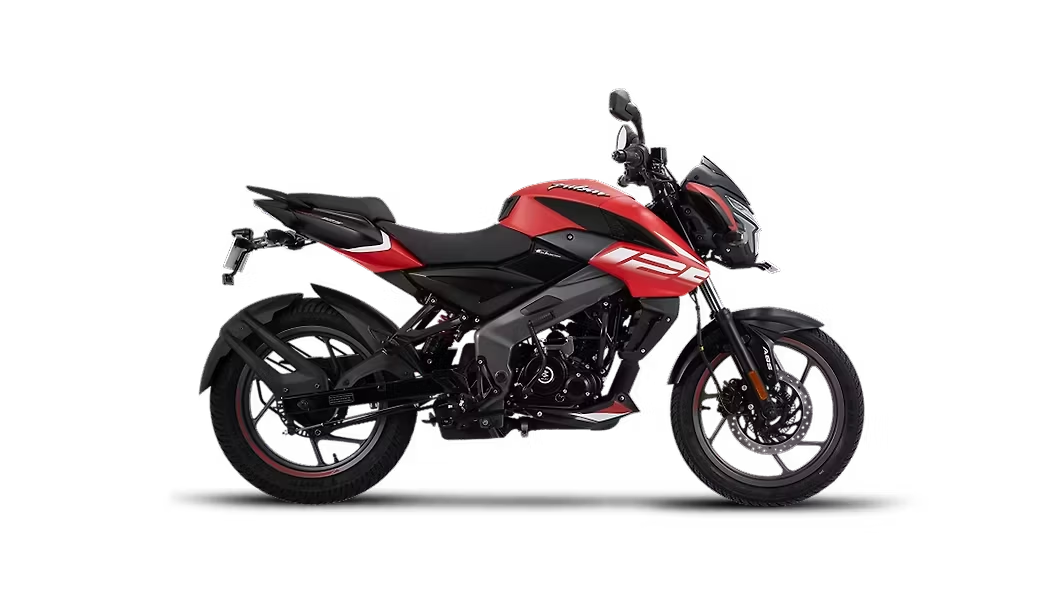
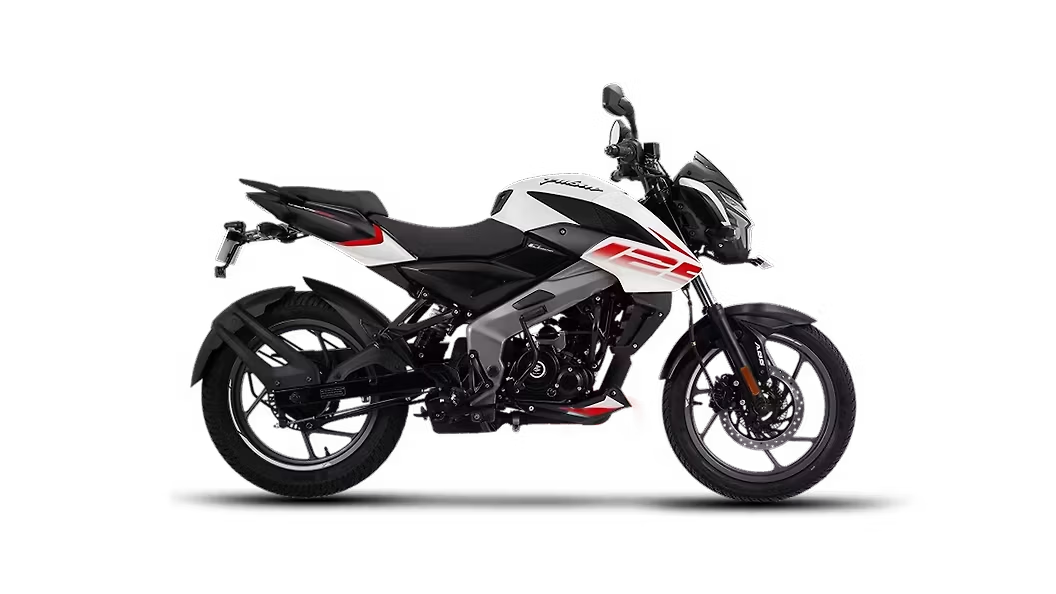
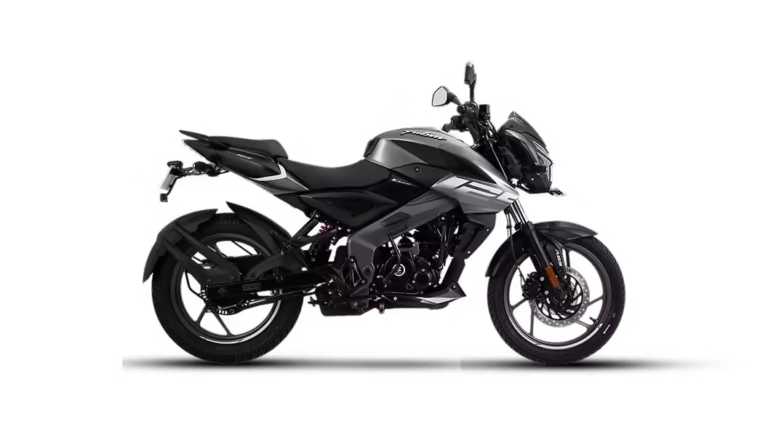
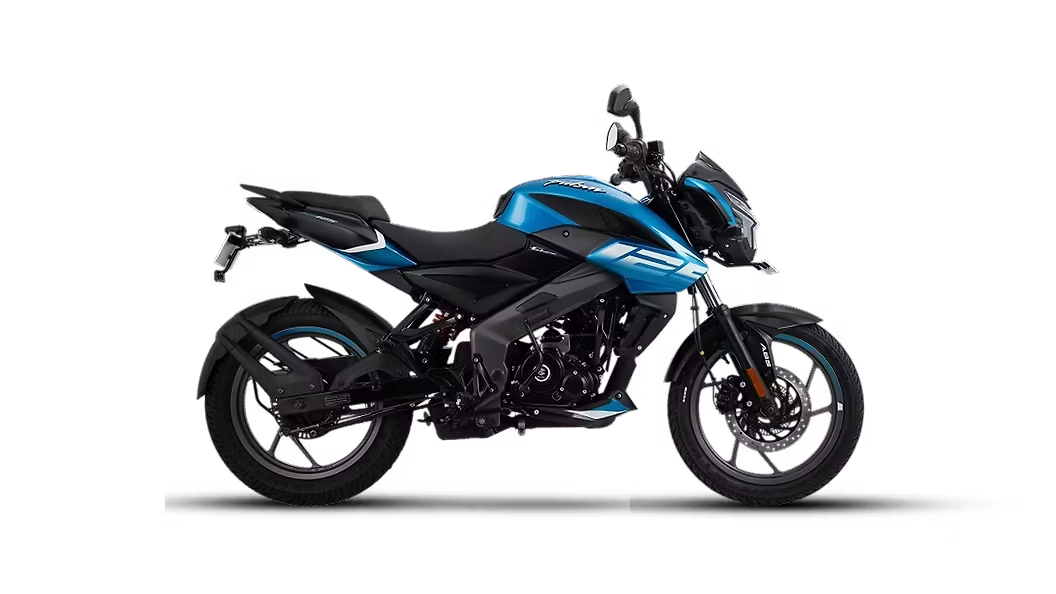
Bajaj Pulsar NS125
13.0 pts
Unweighted: 13 advantages
EnginePerformanceDimensionsBrakesTyresFeaturesOther
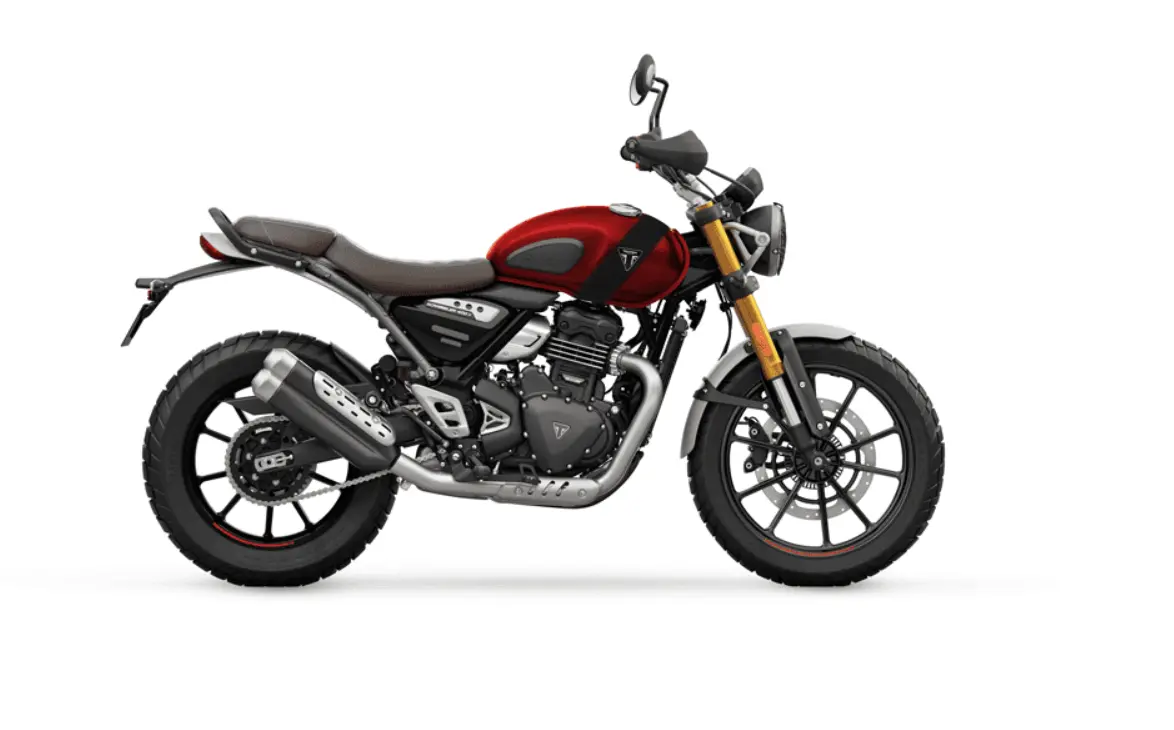
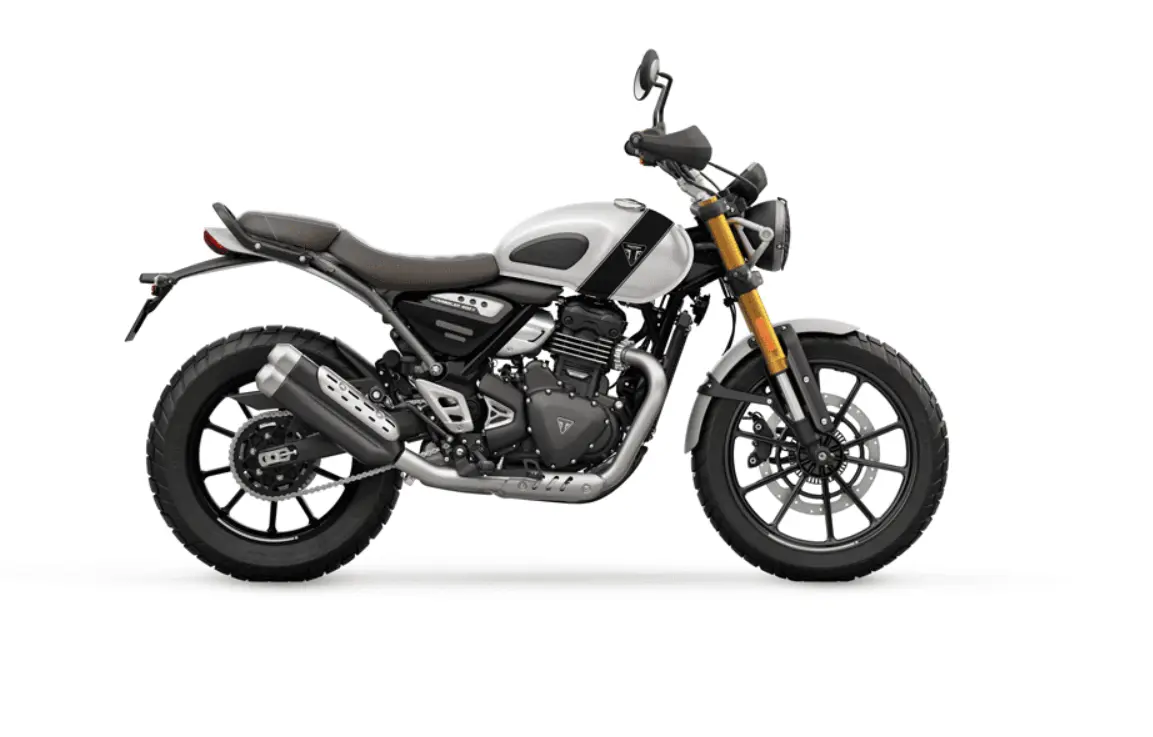
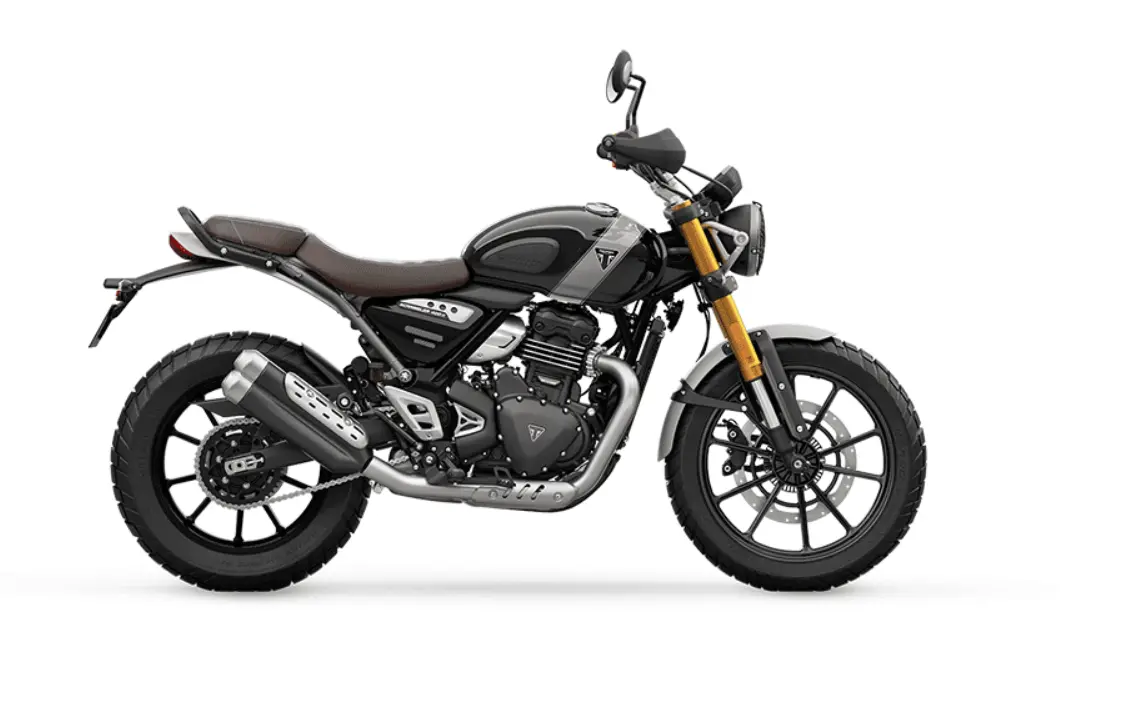
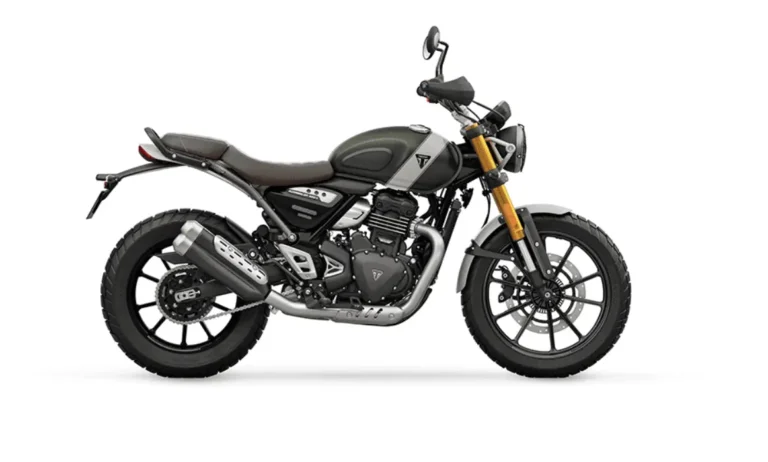
TRIUMPH SCRAMBLER 400 X
19.0 pts
Unweighted: 13 advantages
EnginePerformanceDimensionsBrakesTyresFeaturesOther
| Specification | ||
|---|---|---|
Engine Specifications |
||
| Cooling System | Air cooled | Liquid-cooled |
| Displacement | 124.45 cc | 398.15 cc |
| Engine Type | 4-Stroke, SOHC 4-Valve, Air Cooled, BSVI Compliant DTS-i Ei Engine | 4 valve, DOHC, single-cylinder |
| Power | 11.8 bhp @ 8500 rpm | 40 PS / 39.5 bhp (29.4 kW) @ 8,000 rpm |
| Torque | 11 Nm @ 7000 rpm | 37.5 Nm @ 6,500 rpm |
Performance & Efficiency |
||
| Fuel Tank Capacity | 12 L | 13 l |
| Mileage | 50 kmpl | 27 kmpl |
Dimensions & Weight |
||
| Kerb Weight | 145 | 185 kg |
| Seat Height | 805 | 835 mm |
Brakes & Suspension |
||
| ABS | Single channel ABS with 3 ABS ride modes | Switchable ABS |
| Front Brake | 240 mm (CBS/CBS premium) and 260 mm (ABS) front disc | 320mm fixed disc, four-piston radial caliper, ABS |
| Front Suspension | Telescopic | 43mm upside down Big Piston forks. 150mm wheel travel |
| Rear Brake | 130 mm Drum CBS | 230mm fixed disc, ByBreTM single piston floating caliper, ABS |
| Rear Suspension | Monoshock | Gas monoshock RSU with external reservoir and pre-load adjustment. 150mm wheel travel |
Tyres & Wheels |
||
| Front Tyre | 90/90 - 17 | 100/90-19 |
| Rear Tyre | 120/80 - 17 | 140/80-17 |
| Tyre Type | Tubeless | Tubeless |
| Wheel Type | Alloy | Alloy |
Features & Technology |
||
| Headlight | Halogen Headlamp | DRLs LED |
Other Specifications |
||
| Battery | 12V, 4Ah | — |
| Bike Image 1 | https://motoautiv.com/wp-content/uploads/2026/03/blue-1.avif | https://motoautiv.com/wp-content/uploads/2025/10/Screenshot-2025-10-27-115646.webp |
| Bike Image 2 | https://motoautiv.com/wp-content/uploads/2026/03/red-1.avif | https://motoautiv.com/wp-content/uploads/2025/10/Screenshot-2025-10-27-115631.webp |
| Bike Image 3 | https://motoautiv.com/wp-content/uploads/2026/03/peal-mettalic-white-1.avif | https://motoautiv.com/wp-content/uploads/2025/10/Screenshot-2025-10-27-115616.webp |
| Bike Image 4 | https://motoautiv.com/wp-content/uploads/2026/03/pewter-grey-3.avif | — |
| Bike Image 5 | https://motoautiv.com/wp-content/uploads/2026/03/orange-1.avif | — |
| Color Options | Burnt Black | #1C1C1C Beach Blue | #4A7FA0 Burnt Red | #8B1A1A Pearl Mettalic white | #E8E8E6 Pewter Grey | #6E6E6E Fiery Orange | #F05A28 | Matt Khaki Green / Fusion White Carnival Red/ Phantom Black Phantom Black/ Silver Ice Pearl Metallic White / Phantom Black |
| Cons | Not as refined as competitors Air-cooled engine limitation Stiff braking | Tall seat & heavier stance: Seat height is about 835 mm and kerb weight around ~185 kg, which may be challenging for shorter riders or in tight urban traffic. Feature omissions & cost premium: Some expected features missing (e.g., connected tech, riding modes, adjustable levers) and the price/service costs are higher than many in the 400cc class. Vibrations and urban compromise: Some users report noticeable vibration at higher RPMs, and in heavy traffic the tall stance may be less comfortable. Practical limitations: The split rear seat is compact; tyres/brakes designed for dual-terrain but may trade off slightly on pure street use; service network/maintenance costs may be higher for premium brand. |
| Detailed Overview | The Bajaj Pulsar NS125 is built as a smaller-capacity motorcycle within the NS (Naked Sport) lineup, combining a compact engine with a perimeter frame and design elements inspired by larger Pulsar models. At its core, the motorcycle is powered by a 124.45 cc single-cylinder, air-cooled engine that uses a 4-valve SOHC configuration and fuel injection to manage combustion. This engine produces around 12 PS of power at 8500 rpm and 11 Nm of torque at 7000 rpm, figures that are broadly in line with other motorcycles in the 125cc segment. The engine is paired with a 5-speed manual gearbox, which allows the rider to shift through gears depending on speed and riding conditions. Power is delivered to the rear wheel via a chain drive system, a common setup in motorcycles of this category. The overall powertrain is designed to provide a mix of usable power and efficiency for everyday riding scenarios. The NS125 is built on a perimeter frame, a structure that surrounds the engine and distributes loads around it during cornering and regular riding. This type of frame is derived from larger NS models. Suspension duties are handled by telescopic front forks and a rear monoshock suspension, which work together to absorb road irregularities such as bumps and uneven surfaces. For braking, the motorcycle features a front disc brake and a rear drum brake, supported by a combined braking system (CBS). In some variants, a single-channel ABS setup is also available, depending on the configuration. The braking system is designed to distribute stopping force between the wheels to maintain balance during deceleration. The bike rides on 17-inch alloy wheels fitted with tubeless tyres, which are commonly used for road grip and ease of maintenance. This wheel setup contributes to maneuverability and stability in both city traffic and open roads. In terms of dimensions, the Pulsar NS125 has a fuel tank capacity of 12 litres, providing a riding range between refueling stops that depends on fuel consumption and riding conditions. The motorcycle has a kerb weight of around 145 kg and a seat height of approximately 805 mm. Ground clearance is around 178 mm, intended to provide clearance over uneven road surfaces and speed breakers. The instrument cluster on the NS125 is typically a semi-digital console, combining an analog tachometer with a digital display for speed, fuel level, and trip information. Some variants also include Bluetooth connectivity features, offering additional ride data and navigation-related functions through a connected device. Lighting components include a halogen or LED headlamp setup depending on variant, and an LED tail lamp, along with design elements such as the wolf-eyed headlamp styling and split grab rails. | The Triumph Scrambler 400 X represents a bold entry in the mid-size adventure-scrambler segment, combining British craftsmanship with rugged, go-anywhere capability. Built under the Triumph-Bajaj partnership, the Scrambler 400 X is designed to bring Triumph’s legendary scrambler DNA to a wider audience — offering classic styling, off-road practicality, and refined performance in a lightweight, accessible package. At first glance, the Scrambler 400 X captures attention with its authentic scrambler design — high-mounted exhaust finishers, wire-spoke wheels, a muscular fuel tank, sump guard, hand guards, and long-travel suspension. It carries a sense of adventure and heritage that closely resembles its larger siblings, the Scrambler 900 and 1200. The bike’s upright stance, high ground clearance, and purposeful proportions instantly set it apart from roadsters and commuters in its class. Powering the Scrambler 400 X is a 398 cc, liquid-cooled, single-cylinder engine from Triumph’s new TR-series platform. This engine produces 39.5 bhp at 8,000 rpm and 37.5 Nm of torque at 6,500 rpm, paired with a 6-speed gearbox and slip-and-assist clutch. The performance is refined, tractable, and full of character — making it ideal for both city rides and adventurous weekend escapes. The power delivery is smooth and linear, and the engine’s mid-range torque ensures effortless overtakes, even on steep terrain or highways. In terms of riding dynamics, the Scrambler 400 X truly shines. It features longer suspension travel (150 mm at both ends), 19-inch front and 17-inch rear wire-spoke wheels, and dual-purpose tyres for better control on rough terrain. The seat height of 835 mm gives riders a commanding view of the road, while the wide handlebar and neutral ergonomics make it comfortable for long rides. Though slightly tall and heavier at around 185 kg, the weight distribution is balanced, making it stable both on-road and off-road. The bike’s ride quality is among the best in its class. The suspension soaks up bumps and potholes effectively, providing confidence over broken Indian roads. Braking performance is handled by disc brakes at both ends with dual-channel ABS, which can be switched off for the rear wheel during off-road use. The ride-by-wire throttle, switchable traction control, and off-road ABS mode make the Scrambler 400 X a technologically advanced machine without overwhelming new riders. Feature-wise, Triumph offers a premium package: LED headlight, tail-light and indicators, a semi-digital instrument cluster with gear position indicator, USB-C charging port, and high-quality switchgear. Every component feels well-built, reflecting Triumph’s attention to detail and quality. In terms of performance, the Scrambler 400 X delivers real-world mileage of 27 km/l, a top speed of around 150 km/h, and strong mid-range performance for highway cruising. While the tall seat height and kerb weight might be challenging for shorter riders, taller riders will find it perfectly balanced for both urban commuting and trail riding. Priced at around ₹2.84–2.94 lakh (ex-showroom), the Triumph Scrambler 400 X may not be the most affordable option in its class, but it offers unmatched premium feel, solid build quality, and versatility. It’s ideal for riders seeking a stylish motorcycle that can handle daily rides, weekend tours, and light off-road adventures with ease. In summary, the Triumph Scrambler 400 X is a near-perfect blend of heritage design, refined performance, and practical versatility — a motorcycle that not only looks timeless but also performs with modern precision. |
| Expert Review | The Bajaj Pulsar NS125 occupies an interesting position in the 125cc segment - it borrows the perimeter frame, monoshock rear suspension, and streetfighter styling from its larger NS siblings, which gives it a hardware advantage that most competitors at this price point simply cannot match on paper. In real-world city riding, the 124.45cc air-cooled engine delivers adequate performance for stop-and-go traffic and college commutes, though it begins to show its limitations above 80 km/h where vibrations become noticeable through the handlebar and footpegs. The claimed ARAI efficiency of 56+ km/l is optimistic, most owners report figures closer to 34–45 km/l under mixed riding conditions, which is decent but not exceptional for a 125cc motorcycle. The addition of single-channel ABS on the top variant is a genuinely meaningful safety feature for the segment, though the base and mid variants still make do with CBS, and the rear drum brake across all variants feels like a cost compromise that affects overall braking confidence. Build quality and finish are adequate for the price but fall short of what the sporty design aesthetic suggests, plastics feel thin in places and panel gaps are inconsistent on some units. At roughly ₹93,000–₹1,02,000 ex-showroom, the NS125 is reasonably positioned, but buyers willing to stretch their budget slightly will find the NS160 a considerably more complete motorcycle in terms of performance and refinement., 3.2, MotoAutiv Team | MotoAutiv Team |
| FAQ (Manual Override) | Q: What mileage can I expect from the NS125? A: The bike is reported to deliver around 45–55 km/l, depending on riding conditions, maintenance, and usage. Q: Is the NS125 good for daily commuting? A: Yes, it is generally considered suitable for daily commuting, due to its manageable power, relatively lightweight feel, and fuel efficiency. Q: Is the NS125 comfortable for long rides? A: It can handle short to medium rides comfortably, but for longer highway rides, higher-capacity motorcycles may offer more relaxed cruising ability. Q: What type of engine does the NS125 use? A: The NS125 uses a single-cylinder, air-cooled, fuel-injected engine, which is a straightforward setup compared to liquid-cooled engines found in higher-capacity NS models. | Q: What is the engine capacity of the Triumph Scrambler 400 X? A: The Scrambler 400 X is powered by a 398 cc, liquid-cooled, single-cylinder engine. Q: How much power does the Scrambler 400 X produce? A: It delivers 39.5 bhp at 8,000 rpm and 37.5 Nm of torque at 6,500 rpm. Q: What is the mileage of the Triumph Scrambler 400 X? A: The Scrambler 400 X offers a real-world mileage of around 27 km/l. Q: Is the Scrambler 400 X suitable for off-road riding? A: Yes, it’s designed for light off-road use with long-travel suspension, dual-purpose tyres, and switchable ABS. Q: What is the seat height of the Scrambler 400 X? A: The seat height is 835 mm, offering a tall and commanding riding position. Q: Does the Triumph Scrambler 400 X have traction control? A: Yes, it comes with switchable traction control and ride-by-wire technology for enhanced safety and control. Q: What is the top speed of the Triumph Scrambler 400 X? A: The Scrambler 400 X can reach a top speed of approximately 150 km/h. Q: What is the price of the Triumph Scrambler 400 X in India? A: The ex-showroom price ranges between ₹2,67,731, depending on the city and variant. |
| Fuel System | Electronic Fuel injection | — |
| Price Variants | Standard | 92760 | Disc Brakes, Alloy Wheels, CBS, Halogen headlamp LED Bluetooth | 97409 | Disc Brakes, Alloy Wheels, CBS, LED headlamp LED Bluetooth - ABS | 102111 | Disc Brakes, Alloy Wheels, Single channel ABS, LED headlamp | SCRAMBLER 400 X | 267731 |
| Pros | Sporty NS design and road presence Good performance for daily use Fuel-efficient engine Comfortable and easy to handle Value-for-money positioning | Strong off-road-ready hardware: It has a 19″ front / 17″ rear wheel setup, long suspension travel (~150 mm front & rear) and gets features like knuckle guards, headlight grille, sump guard — true to its scrambler DNA. Refined, torque-rich engine: The 398 cc single-cylinder engine delivers around 39.5 bhp / 37.5 Nm, with good low-end pull and smooth delivery for both city and trail use. Premium build & features: High quality finish, ride-by-wire throttle, switchable traction control, dual-channel (switchable) ABS, split seat and modern instrumentation. Versatility: Works well as a street bike with scrambler/dual-terrain capabilities thanks to the chassis/suspension set-up. Reviewers say it “still a hoot to ride despite taller stance”. |
| Starter | Kick and Self Start | — |
| Transmission | 5 speed manual | 6 Speed Manual |