VS

Quick Analysis

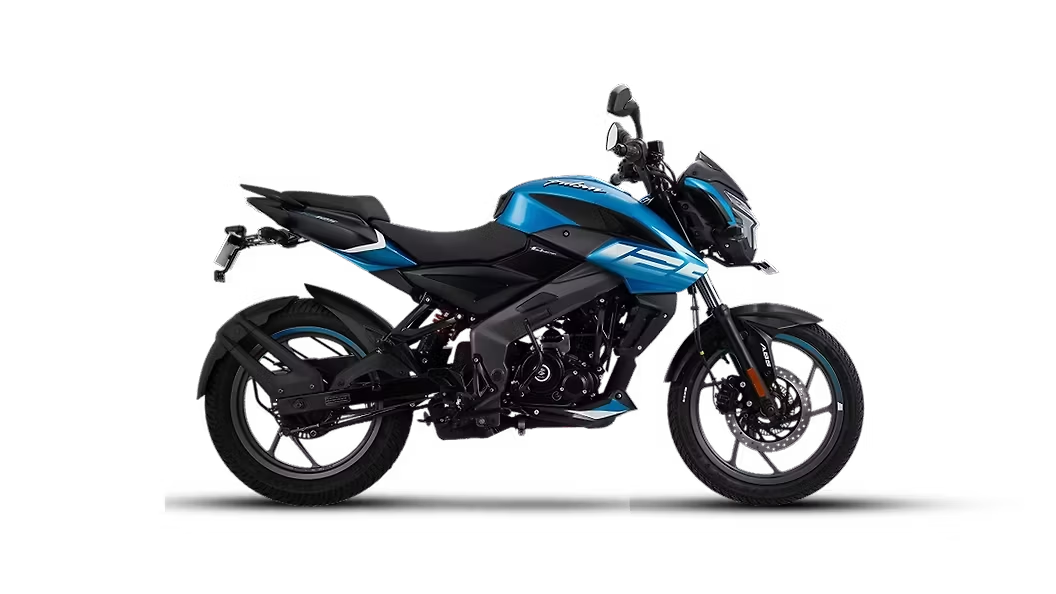
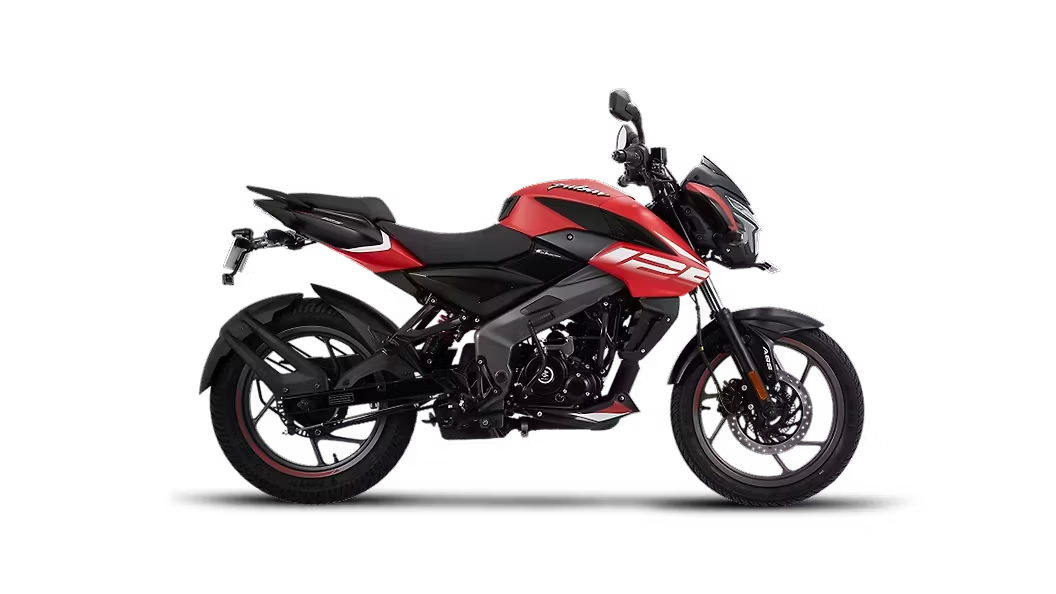
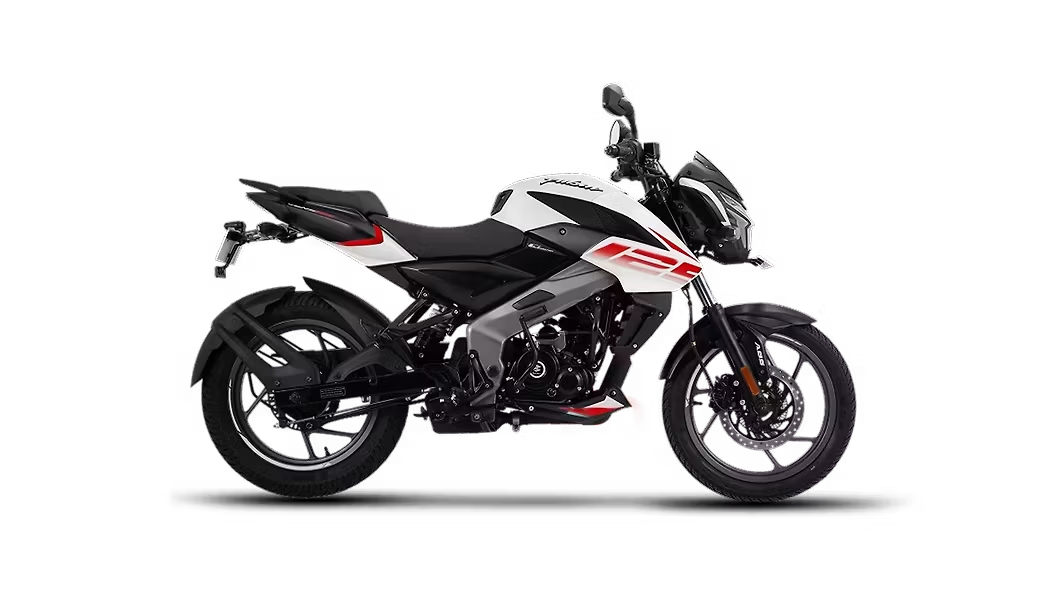
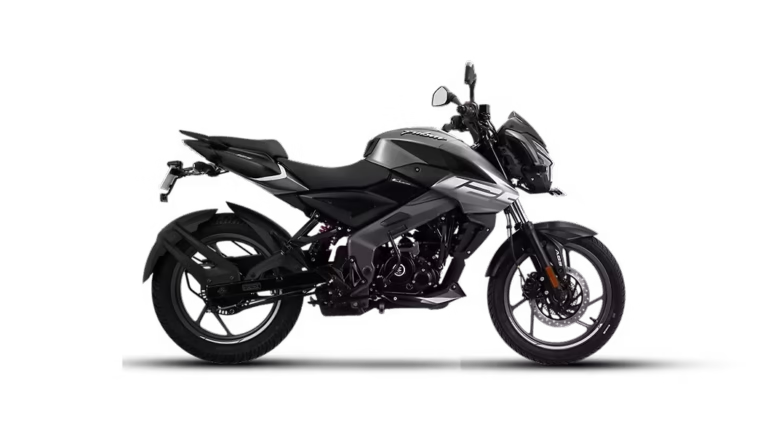
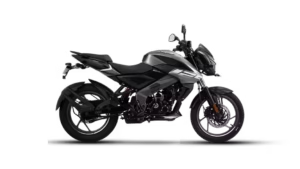
Bajaj Pulsar NS125

14.5 pts
Unweighted: 13 advantages
EnginePerformanceDimensionsBrakesTyresFeaturesOther

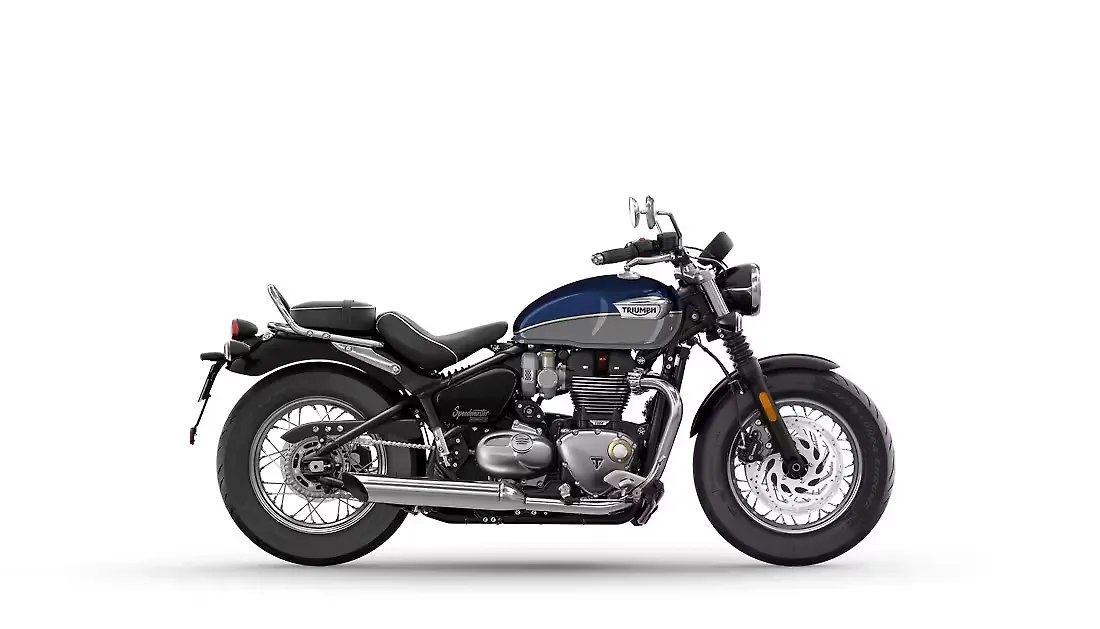
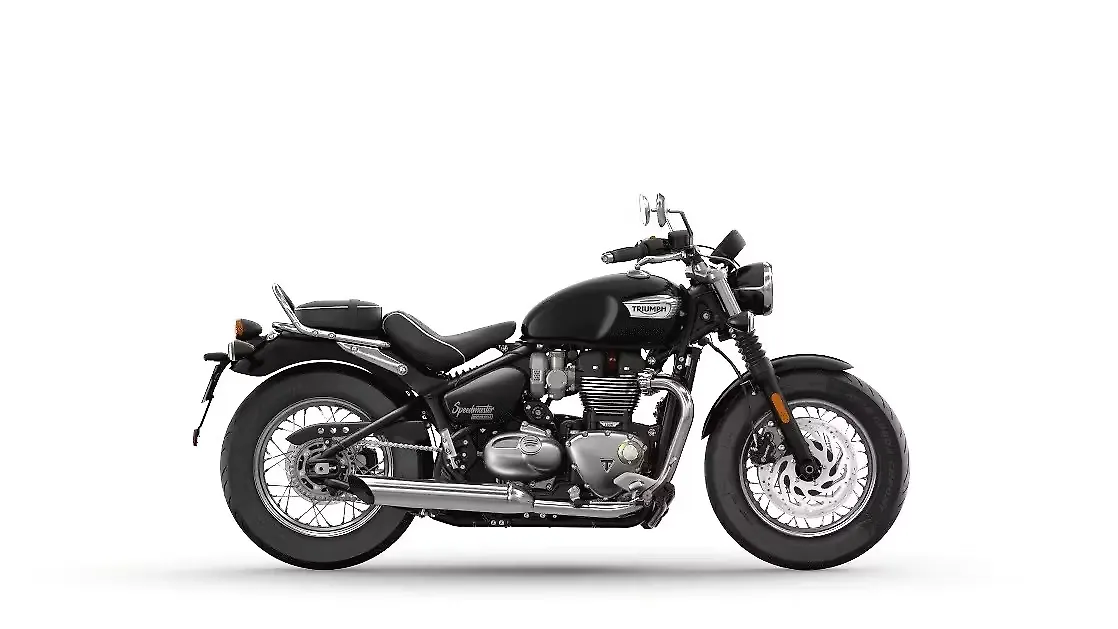
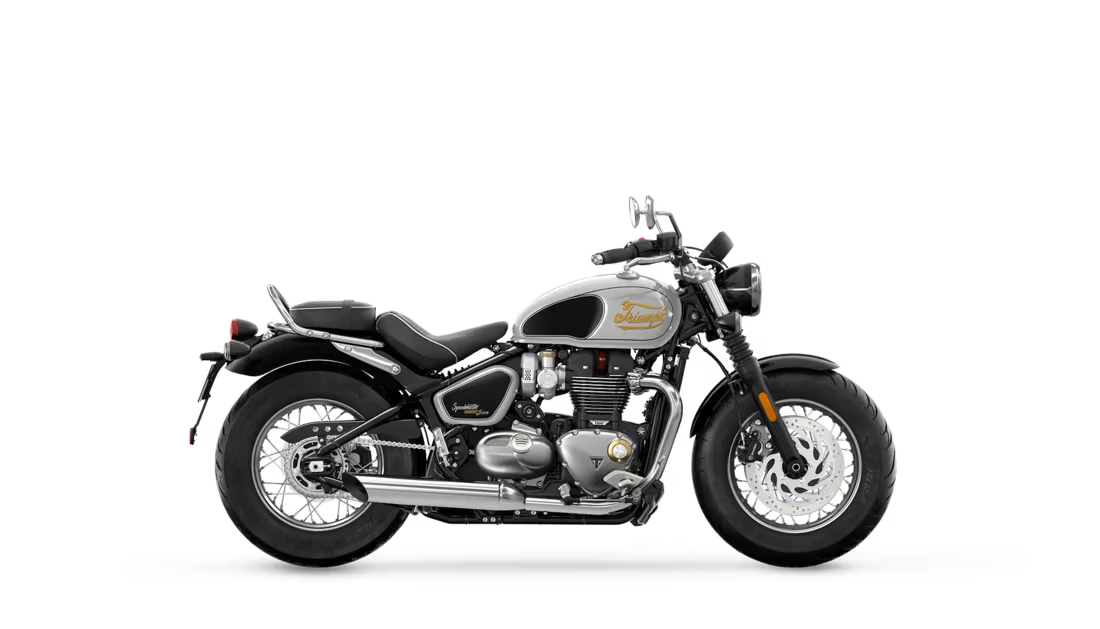
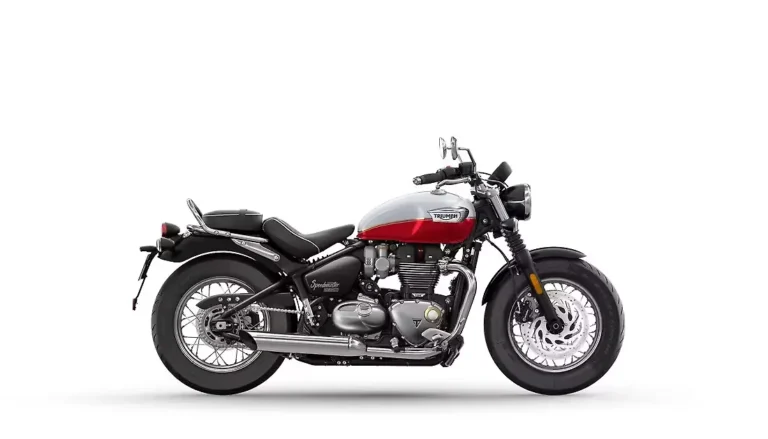
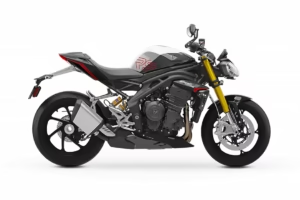
TRIUMPH BONNEVILLE SPEEDMASTER

16.0 pts
Unweighted: 11 advantages
EnginePerformanceDimensionsBrakesTyresFeaturesOther
Specification
Bajaj Pulsar NS125
Bajaj Pulsar NS125
Bajaj
TRIUMPH BONNEVILLE SPEEDMASTER
Triumph

Engine Specifications

Cooling System Air cooled Liquid cooled
Displacement 124.45 cc 1200 cc
Engine Type 4-Stroke, SOHC 4-Valve, Air Cooled, BSVI Compliant DTS-i Ei Engine 8 valve, SOHC, 270° crank angle parallel twin
Power 11.8 bhp @ 8500 rpm 78 PS / 76.9 bhp (57.5 kW) @ 6100 rpm
Torque 11 Nm @ 7000 rpm 106 Nm @ 4000 rpm

Performance & Efficiency

Fuel Tank Capacity 12 L 12 L
Mileage 50 kmpl 22 kmpl

Dimensions & Weight

Kerb Weight 145 263
Seat Height 805 705

Brakes & Suspension

ABS Single channel ABS with 3 ABS ride modes Dual Channel ABS
Front Brake 240 mm (CBS/CBS premium) and 260 mm (ABS) front disc Twin Ø310mm disc, Brembo 2-piston sliding axial calipers, ABS
Front Suspension Telescopic Ø 47 mm Showa cartridge forks
Rear Brake 130 mm Drum CBS Single Ø255mm disc, Nissin single piston sliding axial caliper, ABS
Rear Suspension Monoshock Mono-shock RSU with linkage and preload adjustment

Tyres & Wheels

Front Tyre 90/90 - 17 MT 90 B16
Rear Tyre 120/80 - 17 150/80 R16
Tyre Type Tubeless Tubeless
Wheel Type Alloy Spoke

Features & Technology

Headlight Halogen Headlamp DRLs LED

Other Specifications

Battery 12V, 4Ah
Bike Image 1 https://motoautiv.com/wp-content/uploads/2026/03/blue-1.avif https://motoautiv.com/wp-content/uploads/2025/11/bonnevillespeedmasterpacificbluesilverice.webp
Bike Image 2 https://motoautiv.com/wp-content/uploads/2026/03/red-1.avif https://motoautiv.com/wp-content/uploads/2025/11/bonnevillespeedmasterjetblack.webp
Bike Image 3 https://motoautiv.com/wp-content/uploads/2026/03/peal-mettalic-white-1.avif https://motoautiv.com/wp-content/uploads/2025/11/bonneville-speedmaster_my25_icon-edition_rhs_629px.webp
Bike Image 4 https://motoautiv.com/wp-content/uploads/2026/03/pewter-grey-3.avif
Bike Image 5 https://motoautiv.com/wp-content/uploads/2026/03/orange-1.avif
Color Options Burnt Black | #1C1C1C Beach Blue | #4A7FA0 Burnt Red | #8B1A1A Pearl Mettalic white | #E8E8E6 Pewter Grey | #6E6E6E Fiery Orange | #F05A28 Snowdonia / Cranberry Red | #F4F4F4, #8B1E2D Aluminium Silver Sapphire Black | #C0C0C0, #0F1A2B Jet Black | #0A0A0A Pacific Blue / Silver Ice | #1F3A5F, #D9D9D9
Cons Not as refined as competitors Air-cooled engine limitation Stiff braking Low ground clearance & limited suspension travel: On bad or uneven surfaces, its cruiser geometry and low clearance can be a drawback, especially in markets with rough roads. Heavy weight / less agility in tight scenarios: While stable at speed, the mass and cruiser chassis make it less nimble than lighter motorcycles, especially in traffic or tighter corners. Suspension setup may feel firm/stiff: Some reviewers mention that the suspension, tuned for style and load, can feel a bit firm or less compliant than ideal for rough surfaces. Premium cost and ownership aspects: As a premium bike in its class, purchase price, maintenance and parts/spares may cost more than simpler alternatives.
Detailed Overview   The Bajaj Pulsar NS125 is built as a smaller-capacity motorcycle within the NS (Naked Sport) lineup, combining a compact engine with a perimeter frame and design elements inspired by larger Pulsar models. At its core, the motorcycle is powered by a 124.45 cc single-cylinder, air-cooled engine that uses a 4-valve SOHC configuration and fuel injection to manage combustion. This engine produces around 12 PS of power at 8500 rpm and 11 Nm of torque at 7000 rpm, figures that are broadly in line with other motorcycles in the 125cc segment. The engine is paired with a 5-speed manual gearbox, which allows the rider to shift through gears depending on speed and riding conditions. Power is delivered to the rear wheel via a chain drive system, a common setup in motorcycles of this category. The overall powertrain is designed to provide a mix of usable power and efficiency for everyday riding scenarios. The NS125 is built on a perimeter frame, a structure that surrounds the engine and distributes loads around it during cornering and regular riding. This type of frame is derived from larger NS models. Suspension duties are handled by telescopic front forks and a rear monoshock suspension, which work together to absorb road irregularities such as bumps and uneven surfaces. For braking, the motorcycle features a front disc brake and a rear drum brake, supported by a combined braking system (CBS). In some variants, a single-channel ABS setup is also available, depending on the configuration. The braking system is designed to distribute stopping force between the wheels to maintain balance during deceleration. The bike rides on 17-inch alloy wheels fitted with tubeless tyres, which are commonly used for road grip and ease of maintenance. This wheel setup contributes to maneuverability and stability in both city traffic and open roads. In terms of dimensions, the Pulsar NS125 has a fuel tank capacity of 12 litres, providing a riding range between refueling stops that depends on fuel consumption and riding conditions. The motorcycle has a kerb weight of around 145 kg and a seat height of approximately 805 mm. Ground clearance is around 178 mm, intended to provide clearance over uneven road surfaces and speed breakers. The instrument cluster on the NS125 is typically a semi-digital console, combining an analog tachometer with a digital display for speed, fuel level, and trip information. Some variants also include Bluetooth connectivity features, offering additional ride data and navigation-related functions through a connected device. Lighting components include a halogen or LED headlamp setup depending on variant, and an LED tail lamp, along with design elements such as the wolf-eyed headlamp styling and split grab rails. The Triumph Bonneville Speedmaster is the kind of motorcycle that looks like it belongs to an older era, but once you start looking at the specs, you realise it’s built with modern parts underneath. It runs on a 1200 cc parallel-twin engine that makes around 78 PS and 106 Nm. What this means in real life is that the bike feels strong at low speeds. You don’t have to keep changing gears again and again in traffic, and even on highways it moves in a smooth and relaxed way rather than feeling aggressive. The riding position is very different from regular bikes. You sit low, with your legs stretched forward, and your hands on wide handlebars. It feels comfortable when the road is open, but in city traffic it can take some time to get used to, especially when you have to stop and start often. The seat height is quite low, around 705 mm, so most riders can easily place their feet on the ground, which helps when handling such a heavy bike. Talking about the hardware, the Speedmaster uses a steel frame with front telescopic forks and a rear monoshock that is hidden to keep that classic look. The suspension is tuned more for comfort, so it works fine on normal roads, but sharp bumps and bad patches are still clearly felt. The bike rides on a 16-inch front and rear wheel setup, which adds to its low and stretched design. Braking is handled by a disc at the front and rear, along with dual-channel ABS, so braking feels controlled and predictable in normal riding conditions. This is not a light bike by any means. It weighs around 263 kg, so you will notice the weight when moving it around or riding at low speeds. Once the bike is moving, it feels more stable and planted. The fuel tank is about 12 litres, which means you may need to plan fuel stops on longer rides. In real-world conditions, mileage usually stays around 18 to 22 km/l, depending on how you ride. On the feature side, the Speedmaster keeps things simple but modern enough. It gets a semi-digital instrument cluster with an analogue speedometer and a small digital screen for details like gear position, fuel level, and trip info. It also comes with riding modes, traction control, and cruise control, which can be useful on highways. There is no focus on flashy tech or connectivity, and the bike sticks to a straightforward setup.
Expert Review The Bajaj Pulsar NS125 occupies an interesting position in the 125cc segment - it borrows the perimeter frame, monoshock rear suspension, and streetfighter styling from its larger NS siblings, which gives it a hardware advantage that most competitors at this price point simply cannot match on paper. In real-world city riding, the 124.45cc air-cooled engine delivers adequate performance for stop-and-go traffic and college commutes, though it begins to show its limitations above 80 km/h where vibrations become noticeable through the handlebar and footpegs. The claimed ARAI efficiency of 56+ km/l is optimistic, most owners report figures closer to 34–45 km/l under mixed riding conditions, which is decent but not exceptional for a 125cc motorcycle. The addition of single-channel ABS on the top variant is a genuinely meaningful safety feature for the segment, though the base and mid variants still make do with CBS, and the rear drum brake across all variants feels like a cost compromise that affects overall braking confidence. Build quality and finish are adequate for the price but fall short of what the sporty design aesthetic suggests, plastics feel thin in places and panel gaps are inconsistent on some units. At roughly ₹93,000–₹1,02,000 ex-showroom, the NS125 is reasonably positioned, but buyers willing to stretch their budget slightly will find the NS160 a considerably more complete motorcycle in terms of performance and refinement., 3.2, MotoAutiv Team With the Bonneville Speedmaster, the focus is clearly on a calm and steady riding experience rather than speed. The 1200 cc engine feels strong at low speeds, so riding in traffic doesn’t require constant gear changes, and on highways it stays smooth at a relaxed pace. The riding position is stretched out with forward footpegs, which feels natural on open roads but less convenient in crowded areas. Because of its weight, slow-speed handling needs some effort, especially in tight turns or parking. The suspension is set for comfort, but bad roads and sharp bumps are still felt. It gets basic modern features like ride modes and traction control, without too much focus on advanced electronics. In everyday conditions, it feels more suited to easy rides than regular heavy usage., 4.3, MotoAutiv Team
FAQ (Manual Override) Q: What mileage can I expect from the NS125? A: The bike is reported to deliver around 45–55 km/l, depending on riding conditions, maintenance, and usage. Q: Is the NS125 good for daily commuting? A: Yes, it is generally considered suitable for daily commuting, due to its manageable power, relatively lightweight feel, and fuel efficiency. Q: Is the NS125 comfortable for long rides? A: It can handle short to medium rides comfortably, but for longer highway rides, higher-capacity motorcycles may offer more relaxed cruising ability. Q: What type of engine does the NS125 use? A: The NS125 uses a single-cylinder, air-cooled, fuel-injected engine, which is a straightforward setup compared to liquid-cooled engines found in higher-capacity NS models. Q: What engine does the Bonneville Speedmaster have? A: It uses a 1,200 cc liquid-cooled, 8-valve, parallel-twin engine with a 270° crank, producing around 78 PS at 6,100 rpm and 106 Nm of torque at 4,000 rpm. Q: What is the seat height and wet weight for the Speedmaster in India? A: The seat height is approximately 705 mm and the wet weight is listed at about 263 kg (according to specification data) for the model in India. Q: What is the fuel tank capacity and what mileage can one expect? A: The fuel tank capacity is 12 litres. Real-world mileage is around ~18-20 km/l on mixed use in Indian conditions as per reviews. Q: What features and rider aids come with the Speedmaster? A: The Speedmaster comes with dual riding modes (Rain & Road), ABS, switchable traction control, cruise control, LED lighting, ride-by-wire throttle and torque-assist clutch. Q: What is the price of the Speedmaster in India? A: The ex-showroom price starts from around ₹ 13,37,500 for the latest variant in India. Q: What kind of chassis and wheels does the Speedmaster use? A: It uses a tubular steel cradle frame, 16″ wire-spoked wheels (16×2.5″ front and 16×3.5″ rear) with 47 mm Showa front forks and mono-shock at the rear, twin 310 mm front discs and single 255 mm rear disc with ABS. Q: Is the Speedmaster suitable for two-up riding and touring? A: Yes, its comfortable riding position with forward foot-pegs, low seat height and cruiser-style ergonomics make it well-suited for relaxed rides. However, its 12-litre tank and cruiser setup mean it's more for relaxed touring rather than ultra-long highway blasts. Q: What is the service interval for the Speedmaster? A: The service interval is about 16,000 km (10,000 miles) or 12 months, whichever comes first.
Fuel System Electronic Fuel injection Fuel Injection
Price Variants Standard | 92760 | Disc Brakes, Alloy Wheels, CBS, Halogen headlamp LED Bluetooth | 97409 | Disc Brakes, Alloy Wheels, CBS, LED headlamp LED Bluetooth - ABS | 102111 | Disc Brakes, Alloy Wheels, Single channel ABS, LED headlamp Standard | 1287500 Icon Edition | 1367500
Pros Sporty NS design and road presence Good performance for daily use Fuel-efficient engine Comfortable and easy to handle Value-for-money positioning Excellent low-end torque and ride feel: The 1200 cc twin delivers a rich, satisfying pull from low rpm, giving the Speedmaster good real-world usability. Iconic styling & credible build: It carries classic cruiser/modern-classic looks with swept-back bars, forward foot-controls and premium finishes, which many riders find appealing. Comfortable ergonomics (for many): With its low seat height (~705 mm in some markets) and cruiser-style riding position, it’s relatively accessible and suitable for relaxed rides. Modern features included: Despite its retro styling, it integrates modern tech, ride-by-wire throttle, two riding modes, ABS, traction control, cruise control and full LED lighting.
Starter Kick and Self Start Self start
Transmission 5 speed manual 6-speed

Stay connected with 🚗 Motoautiv.com ⚡

To get exiting stories, news and automotive content Leave your email 📧 below and Click subscribe Now 🔔✨