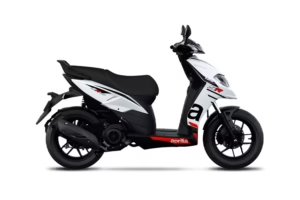
VS

Quick Analysis

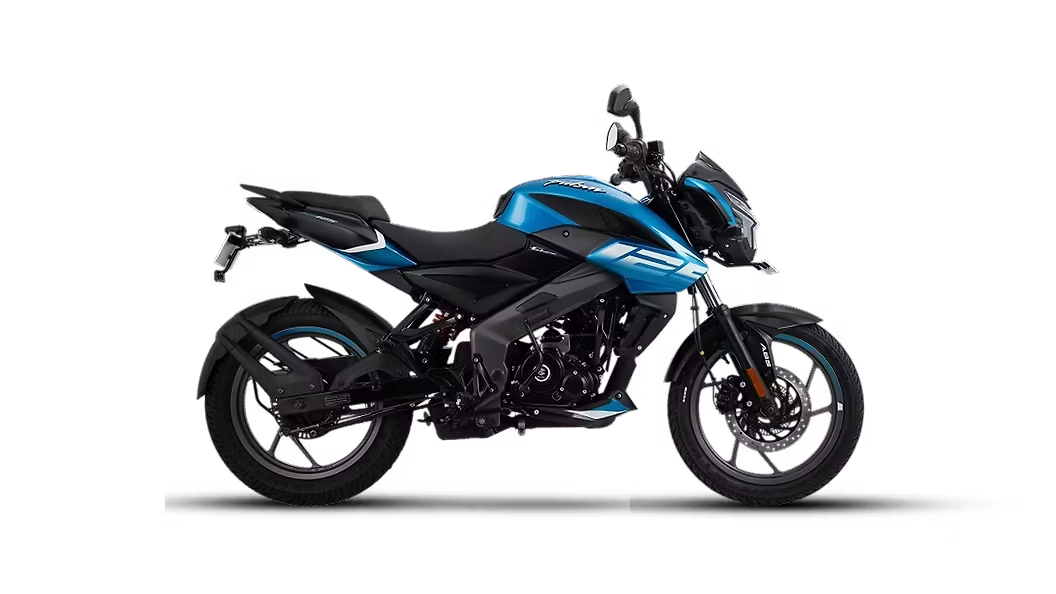
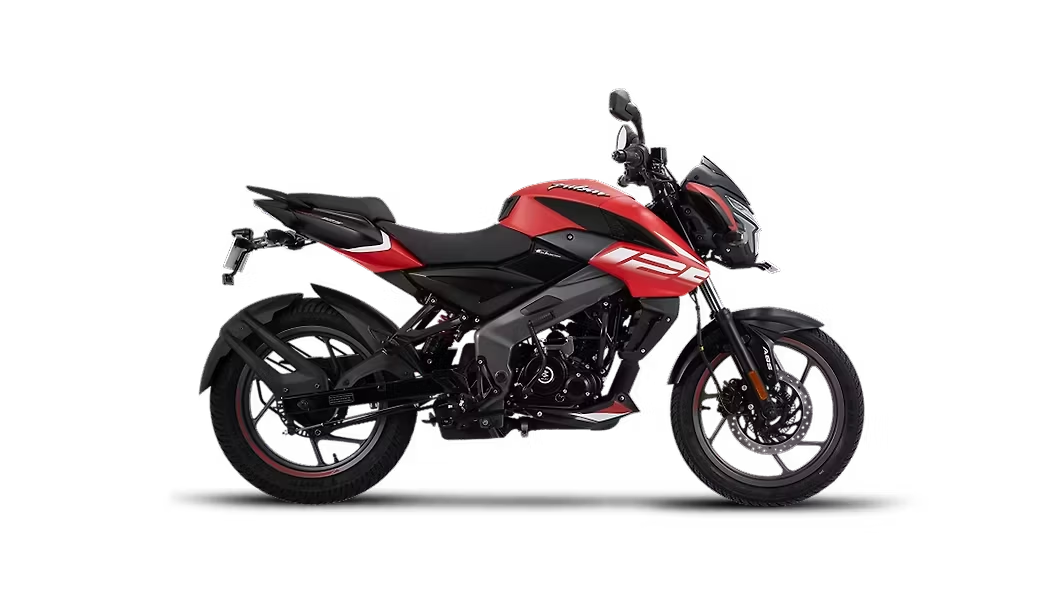
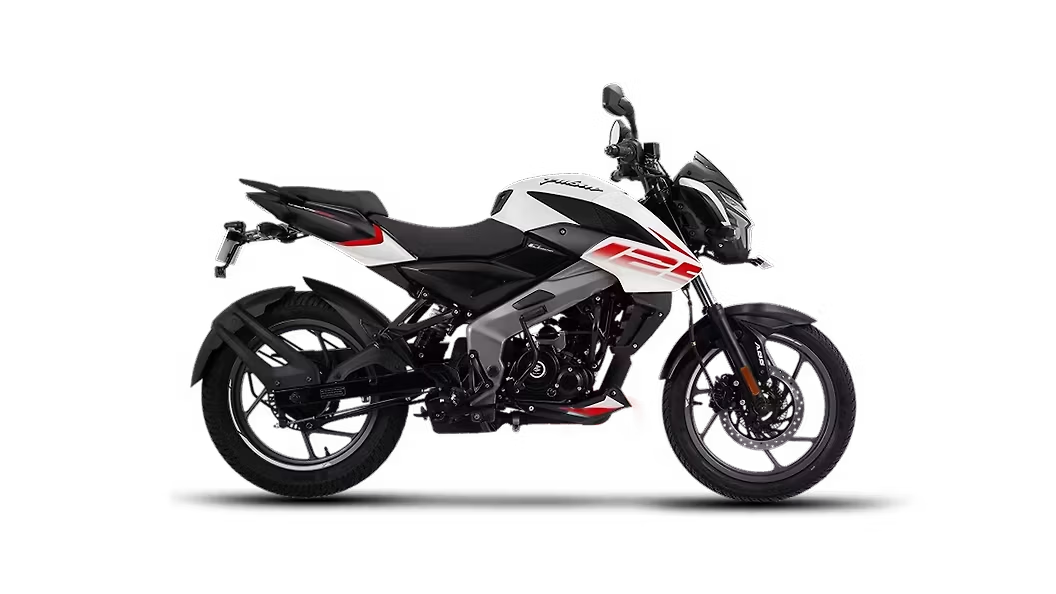
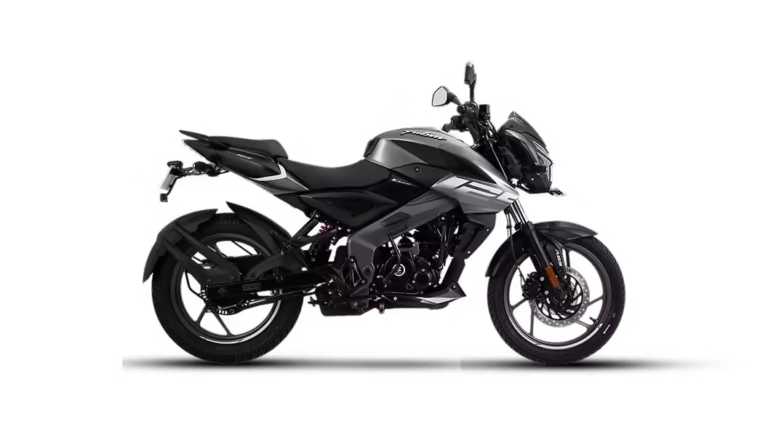
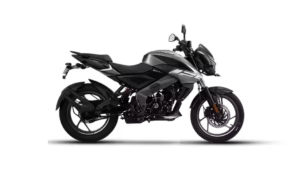
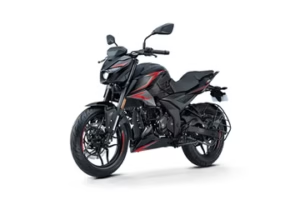
Bajaj Pulsar NS125

22.0 pts
Unweighted: 16 advantages
EnginePerformanceDimensionsBrakesTyresFeaturesOther

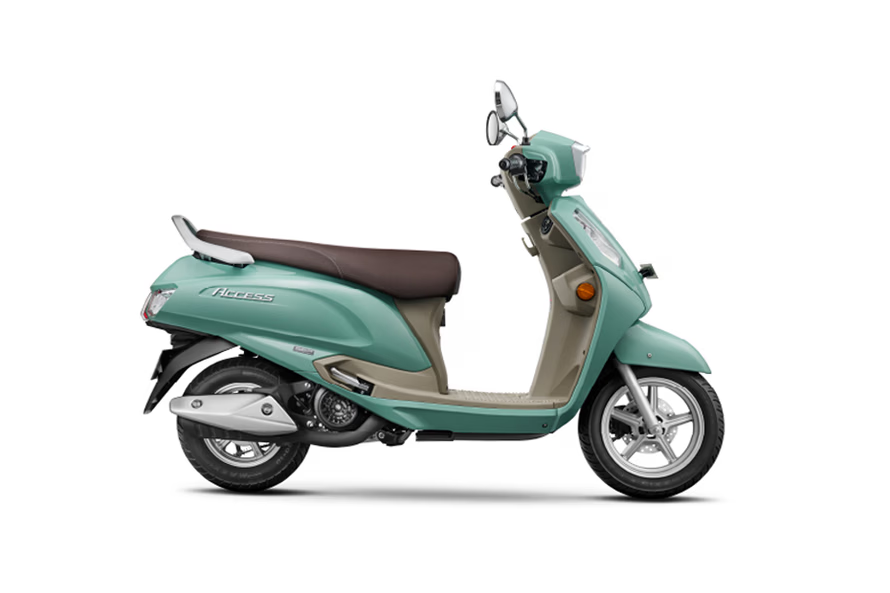
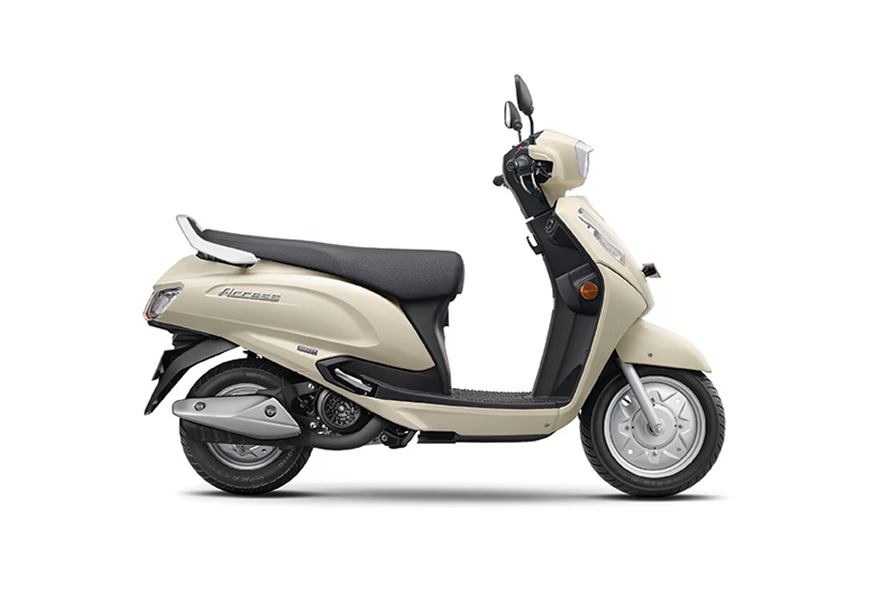
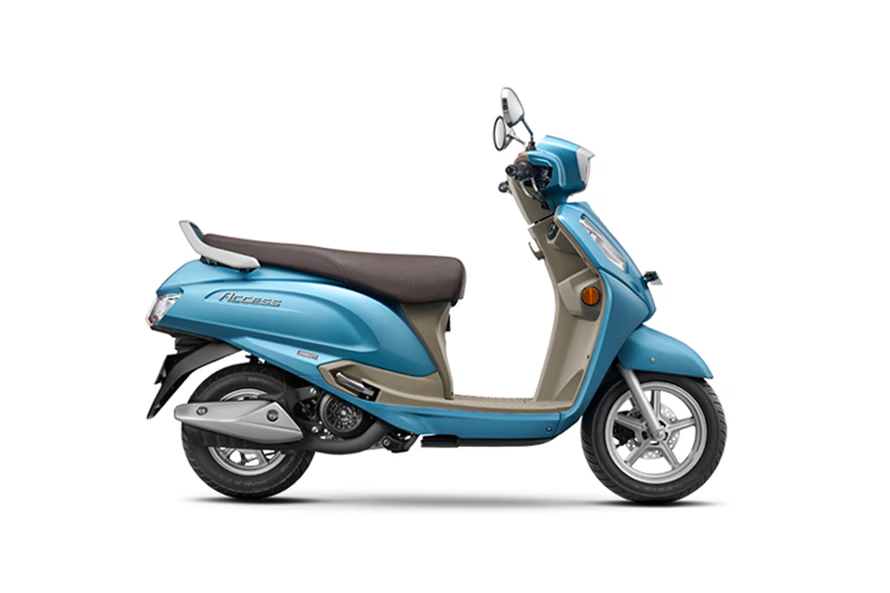
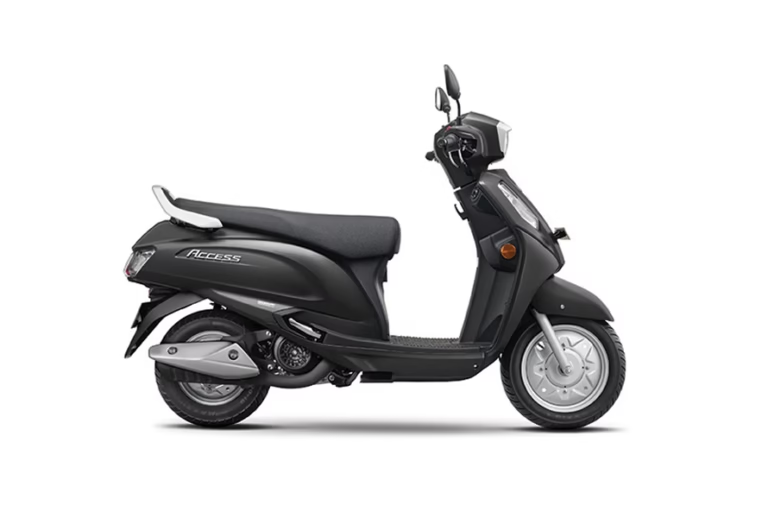
SUZUKI ACCESS

5.0 pts
Unweighted: 4 advantages
EnginePerformanceDimensionsBrakesTyresFeaturesOther
Specification
Bajaj Pulsar NS125
Bajaj Pulsar NS125
Bajaj
SUZUKI ACCESS
SUZUKI ACCESS
Suzuki

Engine Specifications

Cooling System Air cooled Air Cooled
Displacement 124.45 cc 124 cc
Engine Type 4-Stroke, SOHC 4-Valve, Air Cooled, BSVI Compliant DTS-i Ei Engine 4- Stroke, 1-Cylinder, Air Cooled
Power 11.8 bhp @ 8500 rpm 6.2 kW @ 6500 rpm
Torque 11 Nm @ 7000 rpm 10.2 Nm @ 5000 rpm

Performance & Efficiency

Fuel Tank Capacity 12 L 5.3 L
Mileage 50 kmpl 45 kmpl

Dimensions & Weight

Kerb Weight 145 106 kg (Std) | 105 (SE/RC)
Seat Height 805 856

Brakes & Suspension

ABS Single channel ABS with 3 ABS ride modes Single Channel (Variant Dependent)
Front Brake 240 mm (CBS/CBS premium) and 260 mm (ABS) front disc Drum/Disc
Front Suspension Telescopic Telescopic
Rear Brake 130 mm Drum CBS Drum
Rear Suspension Monoshock Swing Arm

Tyres & Wheels

Front Tyre 90/90 - 17 90/90 - 12 54J
Rear Tyre 120/80 - 17 90/100 – 10 53J
Tyre Type Tubeless Tubeless
Wheel Type Alloy Alloy

Features & Technology

Headlight Halogen Headlamp LED

Other Specifications

Battery 12V, 4Ah Maintenance Free 12V, 4Ah
Bike Image 1 https://motoautiv.com/wp-content/uploads/2026/03/blue-1.avif https://motoautiv.com/wp-content/uploads/2025/12/Ice-Green-1.avif
Bike Image 2 https://motoautiv.com/wp-content/uploads/2026/03/red-1.avif https://motoautiv.com/wp-content/uploads/2025/12/Grace-White.avif
Bike Image 3 https://motoautiv.com/wp-content/uploads/2026/03/peal-mettalic-white-1.avif https://motoautiv.com/wp-content/uploads/2025/12/Aqua-silver.avif
Bike Image 4 https://motoautiv.com/wp-content/uploads/2026/03/pewter-grey-3.avif https://motoautiv.com/wp-content/uploads/2025/12/Stellar-blue-1.avif
Bike Image 5 https://motoautiv.com/wp-content/uploads/2026/03/orange-1.avif https://motoautiv.com/wp-content/uploads/2025/12/Shiny-Beige.avif
Color Options Burnt Black | #1C1C1C Beach Blue | #4A7FA0 Burnt Red | #8B1A1A Pearl Mettalic white | #E8E8E6 Pewter Grey | #6E6E6E Fiery Orange | #F05A28 Metallic Mat Black | #0A0A0A Pearl Grace White | #E6EBF0 Solid Ice Green | #AFC8A2 Pearl Mat Aqua Silver | #BFC7CE Metallic Mat Stellar Blue | #2F4F7F Pearl Shiny Beige | #D8C3A5
Cons Not as refined as competitors Air-cooled engine limitation Stiff braking Not designed for high-speed riding or long highway use Ride can feel slightly firm over rough or uneven roads Braking setup is simple and focused on everyday riding Design is simple and may feel conservative compared to sporty alternatives Feature list is not as extensive as some newer scooters in the segment
Detailed Overview   The Bajaj Pulsar NS125 is built as a smaller-capacity motorcycle within the NS (Naked Sport) lineup, combining a compact engine with a perimeter frame and design elements inspired by larger Pulsar models. At its core, the motorcycle is powered by a 124.45 cc single-cylinder, air-cooled engine that uses a 4-valve SOHC configuration and fuel injection to manage combustion. This engine produces around 12 PS of power at 8500 rpm and 11 Nm of torque at 7000 rpm, figures that are broadly in line with other motorcycles in the 125cc segment. The engine is paired with a 5-speed manual gearbox, which allows the rider to shift through gears depending on speed and riding conditions. Power is delivered to the rear wheel via a chain drive system, a common setup in motorcycles of this category. The overall powertrain is designed to provide a mix of usable power and efficiency for everyday riding scenarios. The NS125 is built on a perimeter frame, a structure that surrounds the engine and distributes loads around it during cornering and regular riding. This type of frame is derived from larger NS models. Suspension duties are handled by telescopic front forks and a rear monoshock suspension, which work together to absorb road irregularities such as bumps and uneven surfaces. For braking, the motorcycle features a front disc brake and a rear drum brake, supported by a combined braking system (CBS). In some variants, a single-channel ABS setup is also available, depending on the configuration. The braking system is designed to distribute stopping force between the wheels to maintain balance during deceleration. The bike rides on 17-inch alloy wheels fitted with tubeless tyres, which are commonly used for road grip and ease of maintenance. This wheel setup contributes to maneuverability and stability in both city traffic and open roads. In terms of dimensions, the Pulsar NS125 has a fuel tank capacity of 12 litres, providing a riding range between refueling stops that depends on fuel consumption and riding conditions. The motorcycle has a kerb weight of around 145 kg and a seat height of approximately 805 mm. Ground clearance is around 178 mm, intended to provide clearance over uneven road surfaces and speed breakers. The instrument cluster on the NS125 is typically a semi-digital console, combining an analog tachometer with a digital display for speed, fuel level, and trip information. Some variants also include Bluetooth connectivity features, offering additional ride data and navigation-related functions through a connected device. Lighting components include a halogen or LED headlamp setup depending on variant, and an LED tail lamp, along with design elements such as the wolf-eyed headlamp styling and split grab rails. Starting a typical day with a scooter like the Suzuki Access 125 usually highlights how much emphasis is placed on ease of use and everyday practicality rather than standout numbers. At its core, it runs on a 124cc, single-cylinder, air-cooled engine that produces around 6.2 Kw of power and 10.2 Nm of torque, paired with a CVT automatic gearbox. The power delivery is tuned to feel smooth and predictable, which becomes noticeable in stop-and-go traffic where sudden acceleration is less important than consistency. The overall structure is built on a steel frame, keeping things simple and familiar. With a kerb weight of around 105–106 kg, the scooter feels manageable in tight city spaces and while parking. Suspension duties are handled by telescopic front forks and a rear monoshock, a setup designed to deal with everyday road conditions like speed breakers and mild uneven surfaces without requiring much effort from the rider. The riding posture is upright, and the seat height is around 773 mm, making it accessible for a wide range of riders. Braking is handled by a front disc (in higher variants) and a rear drum, supported by a combined braking system, with newer variants also offering single-channel ABS. This setup is tuned for controlled and predictable stopping in city conditions rather than aggressive riding. The scooter rides on alloy wheels with tubeless tyres, contributing to stable and low-maintenance usage. In terms of features, the Access 125 keeps a balance between basic and modern elements. It comes with a digital or semi-digital instrument cluster, and in higher variants, a TFT display with smartphone connectivity is available. Practical additions like external fuel filling, USB charging, and multiple storage compartments make a noticeable difference in day-to-day use. The under-seat storage has been expanded to around 24.4 litres, which can accommodate a helmet and other small items. The fuel tank capacity stands at around 5.3 litres, and with a claimed mileage of roughly 45 km/l, it is set up for regular city commutes without frequent refuelling. Overall, the specifications of the Suzuki Access 125 reflect a scooter that is built around simplicity, smooth performance, and practical usability, aligning with how scooters are typically used in everyday Indian conditions.
Expert Review The Bajaj Pulsar NS125 occupies an interesting position in the 125cc segment - it borrows the perimeter frame, monoshock rear suspension, and streetfighter styling from its larger NS siblings, which gives it a hardware advantage that most competitors at this price point simply cannot match on paper. In real-world city riding, the 124.45cc air-cooled engine delivers adequate performance for stop-and-go traffic and college commutes, though it begins to show its limitations above 80 km/h where vibrations become noticeable through the handlebar and footpegs. The claimed ARAI efficiency of 56+ km/l is optimistic, most owners report figures closer to 34–45 km/l under mixed riding conditions, which is decent but not exceptional for a 125cc motorcycle. The addition of single-channel ABS on the top variant is a genuinely meaningful safety feature for the segment, though the base and mid variants still make do with CBS, and the rear drum brake across all variants feels like a cost compromise that affects overall braking confidence. Build quality and finish are adequate for the price but fall short of what the sporty design aesthetic suggests, plastics feel thin in places and panel gaps are inconsistent on some units. At roughly ₹93,000–₹1,02,000 ex-showroom, the NS125 is reasonably positioned, but buyers willing to stretch their budget slightly will find the NS160 a considerably more complete motorcycle in terms of performance and refinement., 3.2, MotoAutiv Team The Suzuki Access 125 continues to hold a steady place in the Indian market, mainly because it aligns closely with how scooters are actually used on a daily basis. Its simple design, smooth engine, and easy riding nature make it suitable for regular commuting, where comfort and reliability matter more than performance. In crowded city conditions, its light feel and predictable behaviour help reduce effort during short trips and frequent stops. At the same time, many buyers in this segment look for practicality, and features like storage and fuel efficiency play a bigger role than styling or advanced tech. However, with newer scooters offering more features and sharper designs, buyer expectations are gradually shifting. The Access 125 remains relevant in this space by sticking to a familiar formula that focuses on everyday usability rather than trying to change its character., 4.2, MotoAutiv Team
FAQ (Manual Override) Q: What mileage can I expect from the NS125? A: The bike is reported to deliver around 45–55 km/l, depending on riding conditions, maintenance, and usage. Q: Is the NS125 good for daily commuting? A: Yes, it is generally considered suitable for daily commuting, due to its manageable power, relatively lightweight feel, and fuel efficiency. Q: Is the NS125 comfortable for long rides? A: It can handle short to medium rides comfortably, but for longer highway rides, higher-capacity motorcycles may offer more relaxed cruising ability. Q: What type of engine does the NS125 use? A: The NS125 uses a single-cylinder, air-cooled, fuel-injected engine, which is a straightforward setup compared to liquid-cooled engines found in higher-capacity NS models. Q: What is the real-world mileage of the Suzuki Access 125 in India? A: The Suzuki Access 125 typically gives around 45–50 km/l in daily use, with many owners reporting close to 47 km/l under normal riding conditions. Q: Is the Suzuki Access 125 good for daily commuting? A: Yes, the Suzuki Access 125 is mainly designed for city use. Its light weight (around 105–106 kg) and smooth engine make it easy to handle in traffic and short daily rides. Q: What is the top speed of the Suzuki Access 125? A: The Suzuki Access 125 has a top speed of around 90 km/h, which is enough for city riding and occasional short highway use. Q: How much storage space does the Suzuki Access 125 offer? A: The Suzuki Access 125 comes with around 24.4 litres of under-seat storage, which is enough to fit a helmet and daily items comfortably. Q: What engine does the Suzuki Access 125 use? A: The Suzuki Access 125 uses a 124cc air-cooled, single-cylinder engine producing around 8.4 PS and 10.2 Nm torque, tuned for smooth and consistent performance. Q: Does the Suzuki Access 125 have ABS? A: Yes, higher variants of the Suzuki Access 125 come with single-channel ABS, while lower variants use CBS (combined braking system). Q: Is the Suzuki Access 125 comfortable for long rides? A: The Suzuki Access 125 is comfortable for city and moderate-distance rides due to its wide seat and upright posture, but for long highway rides, comfort can feel average compared to larger scooters. Q: What is the fuel tank capacity of the Suzuki Access 125? A: The Suzuki Access 125 has a 5.3-litre fuel tank, which is typical for scooters in this segment. Q: Is the Suzuki Access 125 easy for beginners to ride? A: Yes, the Suzuki Access 125 is considered beginner-friendly because of its automatic transmission, predictable power delivery, and manageable weight. Q: Does the Suzuki Access 125 have Bluetooth connectivity? A: Yes, the Suzuki Access 125 offers Bluetooth connectivity and a TFT display in higher variants, but this feature is not available in all versions
Fuel System Electronic Fuel injection Fuel Injection
Price Variants Standard | 92760 | Disc Brakes, Alloy Wheels, CBS, Halogen headlamp LED Bluetooth | 97409 | Disc Brakes, Alloy Wheels, CBS, LED headlamp LED Bluetooth - ABS | 102111 | Disc Brakes, Alloy Wheels, Single channel ABS, LED headlamp Standard | 78984 Special Edition | 85426 Ride Connect Edition | 89227 Ride Connect ABS Edition | 93228 Ride Connect TFT Edition | 93877 Ride Connect TFT ABS Edition | 99278
Pros Sporty NS design and road presence Good performance for daily use Fuel-efficient engine Comfortable and easy to handle Value-for-money positioning Smooth and refined engine that feels effortless in daily city riding Light and easy to handle, making it convenient in traffic Good fuel efficiency with consistent real-world mileage Comfortable seat and relaxed riding posture for everyday use Suspension handles normal roads well, though it can feel slightly firm on rough patches Practical features like external fuel filler, storage, and USB charging improve daily usability Bluetooth features are available in higher variants but not a major highlight Reliable engine with generally manageable maintenance costs
Starter Kick and Self Start Kick and Electric
Transmission 5 speed manual CVT

Stay connected with 🚗 Motoautiv.com ⚡

To get exiting stories, news and automotive content Leave your email 📧 below and Click subscribe Now 🔔✨