VS

Quick Analysis

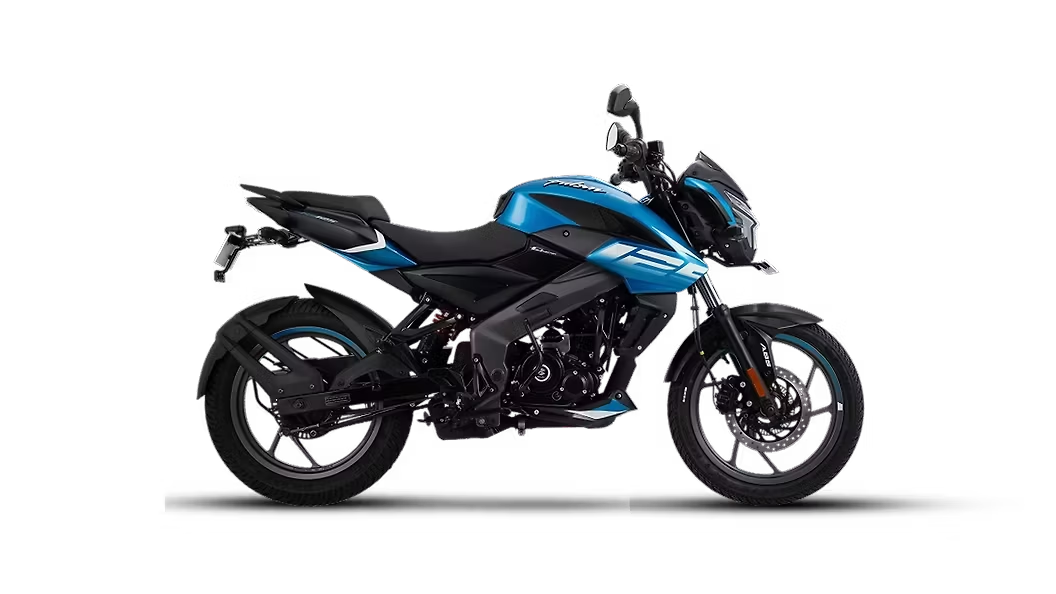
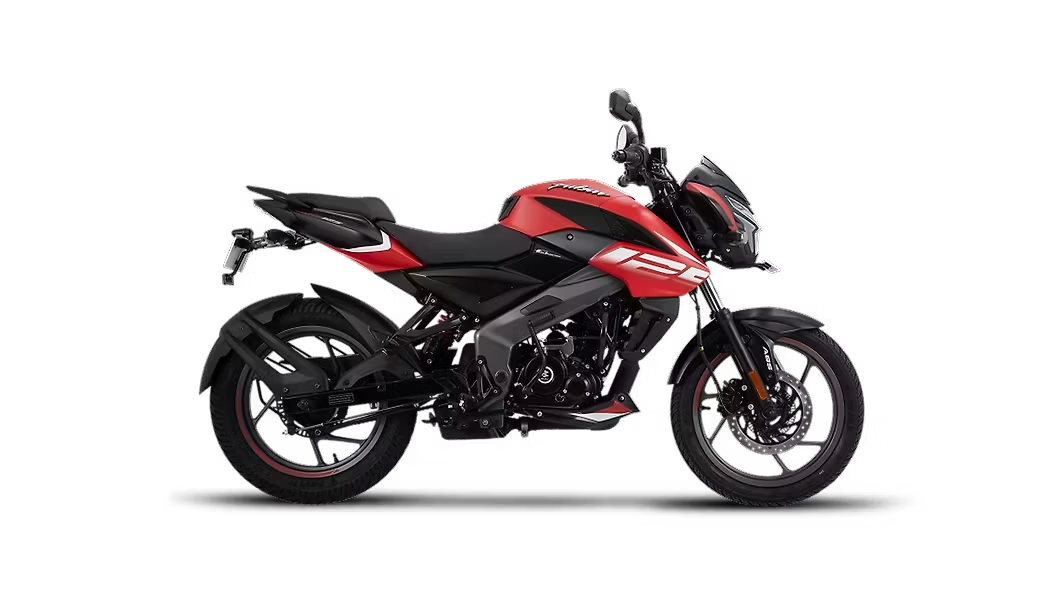
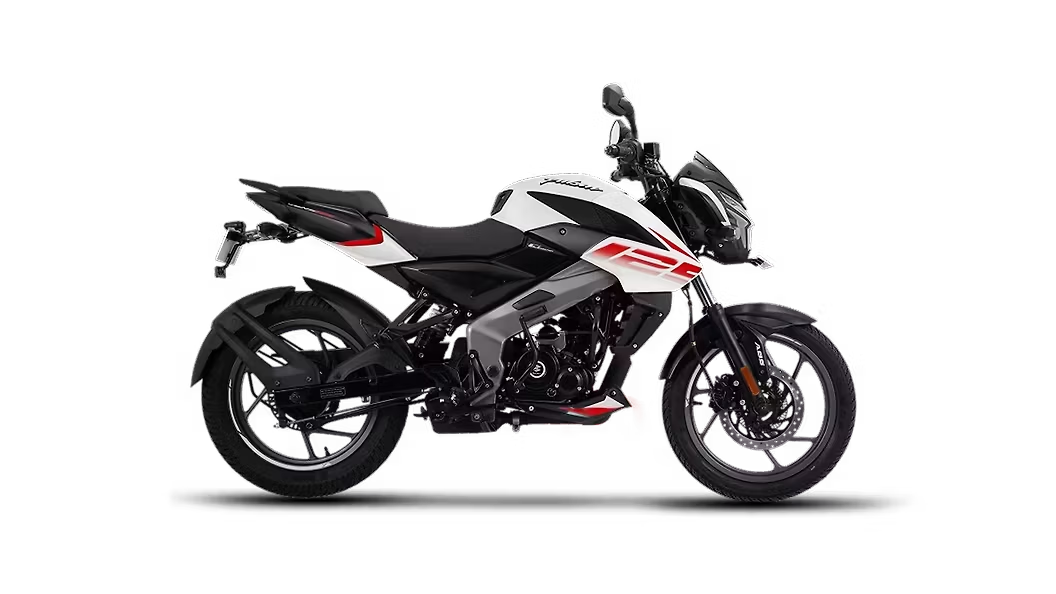
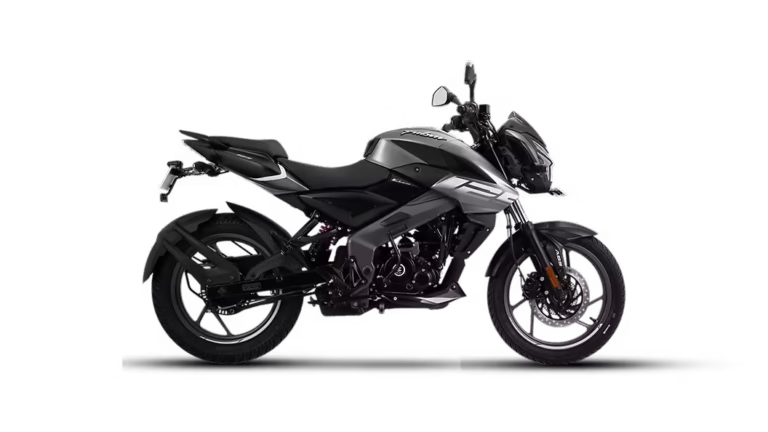
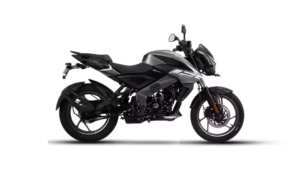
Bajaj Pulsar NS125

18.0 pts
Unweighted: 14 advantages
EnginePerformanceDimensionsBrakesTyresFeaturesOther

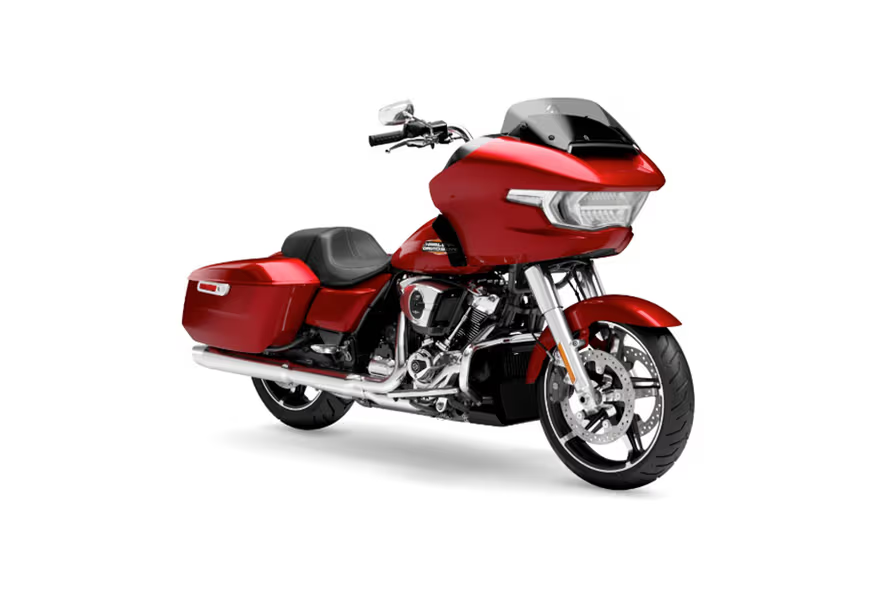
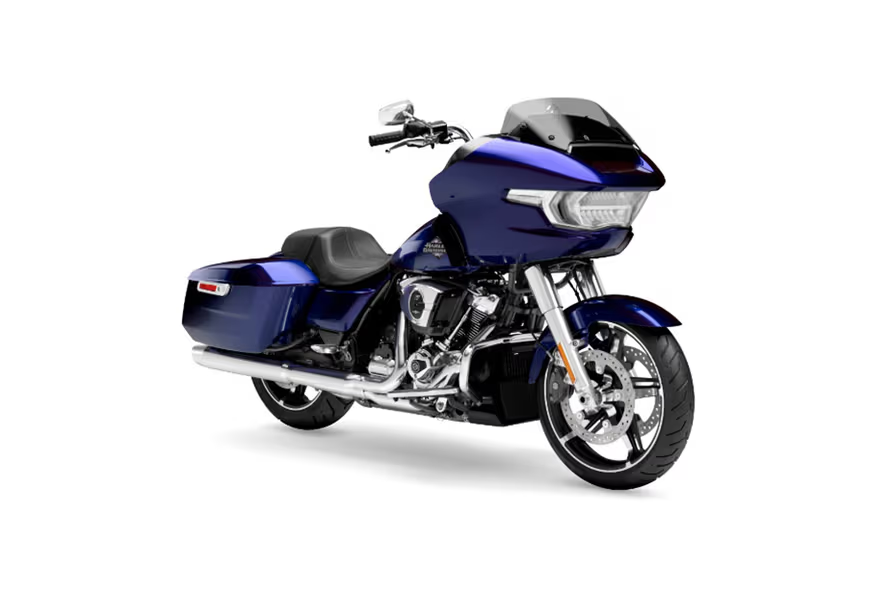
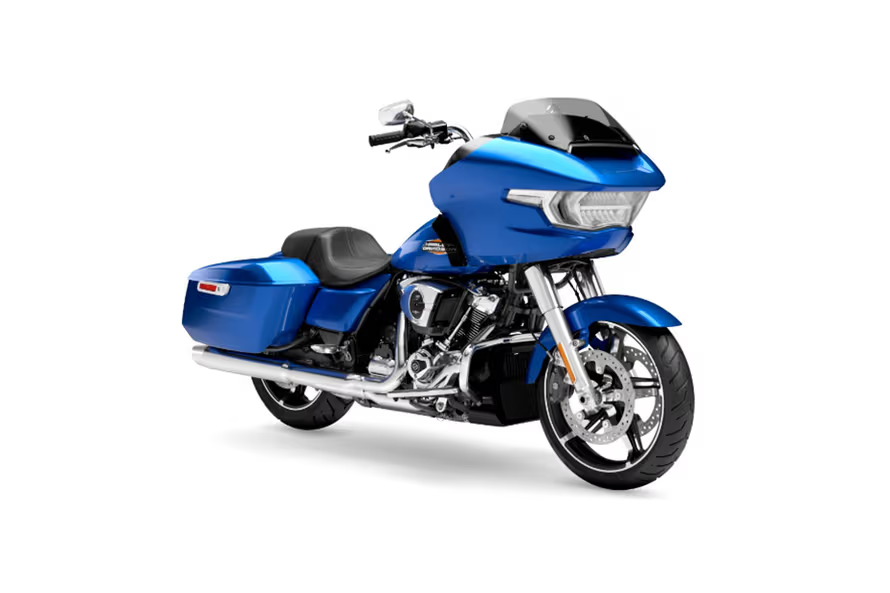
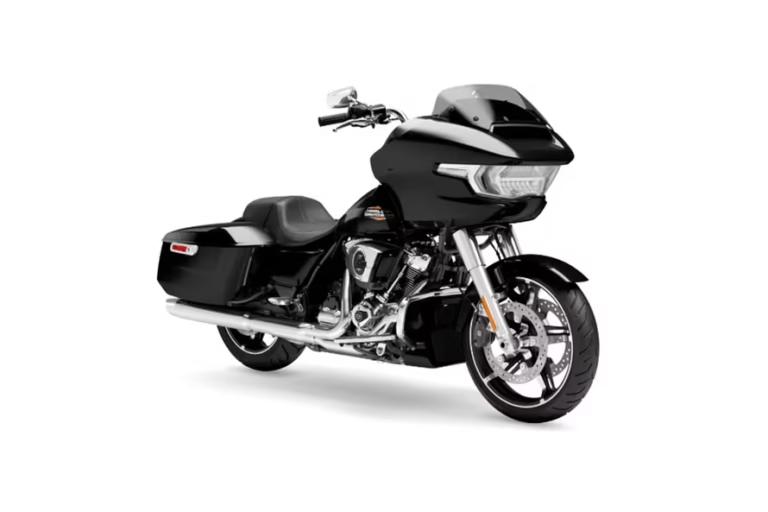
Road Glide

17.0 pts
Unweighted: 13 advantages
EnginePerformanceDimensionsBrakesTyresFeaturesOther
Specification
Bajaj Pulsar NS125
Bajaj Pulsar NS125
Bajaj
Road Glide
Road Glide
Harley Davidson
₹4,230,000

Engine Specifications

Cooling System Air cooled Air-cooled
Displacement 124.45 cc 1,923 cc
Engine Type 4-Stroke, SOHC 4-Valve, Air Cooled, BSVI Compliant DTS-i Ei Engine Milwaukee-Eight® 117 V-Twin
Power 11.8 bhp @ 8500 rpm 107 hp @ 5,020 rpm
Torque 11 Nm @ 7000 rpm 175 Nm @ 3,500 rpm

Performance & Efficiency

Fuel Tank Capacity 12 L 22.7 litres
Mileage 50 kmpl 16.66 Kmpl

Dimensions & Weight

Kerb Weight 145 387
Seat Height 805 720

Brakes & Suspension

ABS Single channel ABS with 3 ABS ride modes Dual-channel ABS
Front Brake 240 mm (CBS/CBS premium) and 260 mm (ABS) front disc Disc
Front Suspension Telescopic 49 mm dual-bending valve fork
Rear Brake 130 mm Drum CBS Disc
Rear Suspension Monoshock 3 in. (76.2 mm) Dual Outboard Emulsion with Preload Adjustability

Tyres & Wheels

Front Tyre 90/90 - 17 130/60 B19
Rear Tyre 120/80 - 17 180/55 B18
Tyre Type Tubeless Tubeless
Wheel Type Alloy Cast aluminum

Features & Technology

Headlight Halogen Headlamp LED (frame-mounted fairing)

Other Specifications

Battery 12V, 4Ah
Bike Image 1 https://motoautiv.com/wp-content/uploads/2026/03/blue-1.avif https://motoautiv.com/wp-content/uploads/2025/06/Brilliant-Red.avif
Bike Image 2 https://motoautiv.com/wp-content/uploads/2026/03/red-1.avif https://motoautiv.com/wp-content/uploads/2025/06/Mystic-Shift.avif
Bike Image 3 https://motoautiv.com/wp-content/uploads/2026/03/peal-mettalic-white-1.avif https://motoautiv.com/wp-content/uploads/2025/06/Blue-Burst.avif
Bike Image 4 https://motoautiv.com/wp-content/uploads/2026/03/pewter-grey-3.avif https://motoautiv.com/wp-content/uploads/2025/06/Billiard-Gray.avif
Bike Image 5 https://motoautiv.com/wp-content/uploads/2026/03/orange-1.avif https://motoautiv.com/wp-content/uploads/2025/06/Atlas-Silver-Metallic.avif
Bike Image 6 https://motoautiv.com/wp-content/uploads/2025/06/Iron-horse.avif
Cluster 4-inch TFT touchscreen
Color Options Burnt Black | #1C1C1C Beach Blue | #4A7FA0 Burnt Red | #8B1A1A Pearl Mettalic white | #E8E8E6 Pewter Grey | #6E6E6E Fiery Orange | #F05A28 Vivid Black | #0F0F10 Billiard Gray | #6B7074 Blue Burst | #1E4D8C Brilliant Red | #A01824 Iron Horse Metallic | #5A5A58 Mystic Shift | #4B4F59 Atlas Silver Metallic | #B6B8BA
Cons Not as refined as competitors Air-cooled engine limitation Stiff braking Very Heavy Motorcycle – The weight is noticeable during parking, low-speed manoeuvres, U-turns, and urban riding conditions. Expensive Ownership Experience – Purchase price, insurance, servicing, accessories, and replacement parts can be significantly higher than most motorcycles. Not Ideal for Congested City Traffic – Its dimensions and weight make navigating dense traffic more demanding than on smaller motorcycles. Heat Can Be Noticeable in Slow Riding – The large V-twin engine can generate considerable heat during prolonged stop-and-go traffic. Requires Rider Familiarity – New riders may find the size, weight, and overall presence intimidating initially. Fuel Efficiency Is Secondary to Touring Ability – Running costs are higher than those of middleweight touring motorcycles and adventure bikes. Limited Off-Road Capability – The Road Glide is designed almost entirely around paved-road touring and highway use. Premium Features Come at a Cost – Many factory accessories, customization options, and upgrades can add substantially to the ownership cost.
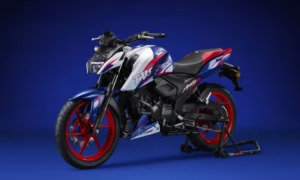
Detailed Overview   The Bajaj Pulsar NS125 is built as a smaller-capacity motorcycle within the NS (Naked Sport) lineup, combining a compact engine with a perimeter frame and design elements inspired by larger Pulsar models. At its core, the motorcycle is powered by a 124.45 cc single-cylinder, air-cooled engine that uses a 4-valve SOHC configuration and fuel injection to manage combustion. This engine produces around 12 PS of power at 8500 rpm and 11 Nm of torque at 7000 rpm, figures that are broadly in line with other motorcycles in the 125cc segment. The engine is paired with a 5-speed manual gearbox, which allows the rider to shift through gears depending on speed and riding conditions. Power is delivered to the rear wheel via a chain drive system, a common setup in motorcycles of this category. The overall powertrain is designed to provide a mix of usable power and efficiency for everyday riding scenarios. The NS125 is built on a perimeter frame, a structure that surrounds the engine and distributes loads around it during cornering and regular riding. This type of frame is derived from larger NS models. Suspension duties are handled by telescopic front forks and a rear monoshock suspension, which work together to absorb road irregularities such as bumps and uneven surfaces. For braking, the motorcycle features a front disc brake and a rear drum brake, supported by a combined braking system (CBS). In some variants, a single-channel ABS setup is also available, depending on the configuration. The braking system is designed to distribute stopping force between the wheels to maintain balance during deceleration. The bike rides on 17-inch alloy wheels fitted with tubeless tyres, which are commonly used for road grip and ease of maintenance. This wheel setup contributes to maneuverability and stability in both city traffic and open roads. In terms of dimensions, the Pulsar NS125 has a fuel tank capacity of 12 litres, providing a riding range between refueling stops that depends on fuel consumption and riding conditions. The motorcycle has a kerb weight of around 145 kg and a seat height of approximately 805 mm. Ground clearance is around 178 mm, intended to provide clearance over uneven road surfaces and speed breakers. The instrument cluster on the NS125 is typically a semi-digital console, combining an analog tachometer with a digital display for speed, fuel level, and trip information. Some variants also include Bluetooth connectivity features, offering additional ride data and navigation-related functions through a connected device. Lighting components include a halogen or LED headlamp setup depending on variant, and an LED tail lamp, along with design elements such as the wolf-eyed headlamp styling and split grab rails. Few motorcycles are as instantly recognizable on the highway as the Harley-Davidson Road Glide. Its signature Sharknose fairing, stretched touring profile, and large V-twin engine have made it one of the defining models in Harley-Davidson’s touring lineup for decades. Unlike motorcycles that try to balance multiple roles, the Road Glide is built primarily around long-distance road travel, carrying its rider, passenger, and luggage across large distances while maintaining comfort and stability. At the centre of the motorcycle is Harley-Davidson’s Milwaukee-Eight 117 engine, a large-capacity V-twin designed to produce strong torque throughout the rev range. Rather than encouraging high-rev riding, the engine delivers most of its performance lower down, allowing the motorcycle to accelerate with minimal effort and maintain highway speeds without feeling strained. The powertrain is paired with a six-speed transmission, helping keep engine speeds relaxed during long-distance cruising. This approach reflects the motorcycle’s touring-focused character, where smooth power delivery and effortless overtaking are often more important than outright acceleration figures. One of the Road Glide’s most distinctive features is its frame-mounted Sharknose fairing. Unlike a fork-mounted fairing that turns with the handlebars, this setup remains attached to the frame. The design helps reduce steering effort while providing substantial wind protection at higher speeds. Long hours on the highway can expose riders to constant wind pressure, and the fairing is intended to reduce that fatigue by directing airflow around the rider rather than directly at them. Combined with the large windscreen, it contributes significantly to the motorcycle’s long-distance touring capability. The chassis is built to support the demands of a fully loaded touring motorcycle. Suspension duties are handled by front forks and rear suspension components designed to cope with the weight of luggage, passengers, and extended travel. While the Road Glide is a large motorcycle, its suspension setup focuses on maintaining stability and comfort over long stretches of road. The wheelbase, overall dimensions, and weight distribution are all aimed at providing confidence during highway riding rather than quick changes of direction. Braking performance is managed through dual front disc brakes and a rear disc brake, supported by modern rider-assistance systems. Recent generations have introduced a more advanced electronics package that includes cornering-enhanced safety systems, traction control, selectable riding modes, and electronically managed rider aids. These technologies operate in the background and are intended to assist the rider across varying road and weather conditions. Technology has become a much larger part of the Road Glide experience than in previous generations. A large TFT touchscreen serves as the motorcycle’s primary information and entertainment hub. Through this display, riders can access navigation, smartphone connectivity, audio controls, ride information, and vehicle settings. The system is designed to remain usable while touring and reduces the need for additional navigation or communication devices. Storage and passenger accommodation are also central to the motorcycle’s design. Hard saddlebags come fitted as standard and provide secure luggage space for longer journeys. The seating arrangement offers ample room for both rider and passenger, with ergonomics that prioritize comfort over aggressive riding posture. Wide handlebars, floorboards, and a relaxed seating position further reinforce the touring-oriented layout. With its Milwaukee-Eight 117 engine, frame-mounted Sharknose fairing, integrated luggage, advanced electronics, and long-distance-focused ergonomics, the Harley-Davidson Road Glide remains a motorcycle developed around the specific demands of highway touring. Its design, engineering, and equipment are all centered on covering distance comfortably while carrying the features and storage capacity expected from a modern grand touring motorcycle.
Expert Review The Bajaj Pulsar NS125 occupies an interesting position in the 125cc segment - it borrows the perimeter frame, monoshock rear suspension, and streetfighter styling from its larger NS siblings, which gives it a hardware advantage that most competitors at this price point simply cannot match on paper. In real-world city riding, the 124.45cc air-cooled engine delivers adequate performance for stop-and-go traffic and college commutes, though it begins to show its limitations above 80 km/h where vibrations become noticeable through the handlebar and footpegs. The claimed ARAI efficiency of 56+ km/l is optimistic, most owners report figures closer to 34–45 km/l under mixed riding conditions, which is decent but not exceptional for a 125cc motorcycle. The addition of single-channel ABS on the top variant is a genuinely meaningful safety feature for the segment, though the base and mid variants still make do with CBS, and the rear drum brake across all variants feels like a cost compromise that affects overall braking confidence. Build quality and finish are adequate for the price but fall short of what the sporty design aesthetic suggests, plastics feel thin in places and panel gaps are inconsistent on some units. At roughly ₹93,000–₹1,02,000 ex-showroom, the NS125 is reasonably positioned, but buyers willing to stretch their budget slightly will find the NS160 a considerably more complete motorcycle in terms of performance and refinement., 3.2, MotoAutiv Team The Road Glide is one of those motorcycles whose strengths become clearer the farther you ride it. Around a parking lot, the weight is impossible to ignore, and in city traffic it constantly reminds you that it is a full-size American touring motorcycle. Once the road opens up, however, the bike starts making a lot more sense. The frame-mounted fairing keeps wind pressure away from the rider without making the steering feel heavy, and the Milwaukee-Eight 117 engine settles into a relaxed rhythm that suits highway travel remarkably well. The Road Glide isn't a motorcycle that encourages aggressive riding or constant direction changes; instead, it feels most natural covering hundreds of kilometres at a steady pace while carrying luggage and a passenger. Recent updates have also brought a more modern electronics package, helping the bike feel less old-school than previous generations. Its appeal comes less from outright performance figures and more from the effortless way it handles long-distance touring, which remains the core purpose of the motorcycle., 4.6, MotoAutiv Team
FAQ (Manual Override) Q: What mileage can I expect from the NS125? A: The bike is reported to deliver around 45–55 km/l, depending on riding conditions, maintenance, and usage. Q: Is the NS125 good for daily commuting? A: Yes, it is generally considered suitable for daily commuting, due to its manageable power, relatively lightweight feel, and fuel efficiency. Q: Is the NS125 comfortable for long rides? A: It can handle short to medium rides comfortably, but for longer highway rides, higher-capacity motorcycles may offer more relaxed cruising ability. Q: What type of engine does the NS125 use? A: The NS125 uses a single-cylinder, air-cooled, fuel-injected engine, which is a straightforward setup compared to liquid-cooled engines found in higher-capacity NS models. Q: What engine powers the Harley-Davidson Road Glide? A: The latest Road Glide is powered by the Milwaukee-Eight 117 V-twin engine, producing strong low-end and mid-range torque suited to touring. Q: What type of motorcycle is the Road Glide? A: It is classified as a grand touring motorcycle, designed primarily for long-distance highway travel and touring. Q: What is the difference between the Road Glide and Street Glide? A: The biggest difference is the fairing design. The Road Glide uses a frame-mounted Sharknose fairing, while the Street Glide uses a fork-mounted Batwing fairing, resulting in a different riding feel and wind management. Q: Is the Road Glide suitable for long-distance touring? A: Yes. Long-distance comfort is one of the motorcycle's primary purposes, supported by its seating position, luggage capacity, wind protection, and touring features. Q: Does the Road Glide have cruise control? A: Yes. Cruise control is standard and is designed to reduce rider fatigue during extended highway rides. Q: Does the Road Glide come with navigation? A: Yes. The motorcycle features a large TFT display with integrated navigation and smartphone connectivity functions. Q: What is the fuel tank capacity of the Road Glide? A: The motorcycle is equipped with a fuel tank of approximately 22.7 litres. Q: Are hard saddlebags included as standard? A: Yes. Lockable hard saddlebags are fitted as standard equipment and provide substantial luggage capacity for touring. Q: Is the Road Glide comfortable for a passenger? A: Yes. The motorcycle is designed for two-up touring and offers a spacious pillion seat, passenger footrests, and supportive seating arrangements. Q: Does the Road Glide have riding modes? A: Yes. Recent models include selectable riding modes that alter throttle response and electronic intervention settings. Q: Is the Road Glide suitable for beginners? A: Due to its size, weight, and power output, it is generally considered more suitable for experienced riders. Q: What is the kerb weight of the Harley-Davidson Road Glide? A: Depending on the specification and model year, the motorcycle weighs approximately 380–390 kg in running condition. Q: Can the Road Glide be used for city commuting? A: It can be ridden in urban environments, but its dimensions and weight make it more comfortable on open roads and highways than in dense city traffic. Q: Does the Road Glide support smartphone connectivity? A: Yes. Bluetooth-based smartphone integration is available through the infotainment system.
Fuel System Electronic Fuel injection Fuel Injection
Price Variants Standard | 92760 | Disc Brakes, Alloy Wheels, CBS, Halogen headlamp LED Bluetooth | 97409 | Disc Brakes, Alloy Wheels, CBS, LED headlamp LED Bluetooth - ABS | 102111 | Disc Brakes, Alloy Wheels, Single channel ABS, LED headlamp STD | 4575000
Pros Sporty NS design and road presence Good performance for daily use Fuel-efficient engine Comfortable and easy to handle Value-for-money positioning Outstanding Long-Distance Comfort – The large fairing, spacious seating, relaxed ergonomics, and highway-focused design make the Road Glide well suited for covering long distances. Milwaukee-Eight 117 Engine Performance – The V-twin engine produces strong low-end and mid-range torque, allowing effortless highway cruising and overtaking. Excellent Wind Protection – The frame-mounted Sharknose fairing directs airflow effectively, reducing rider fatigue during extended highway journeys. High-Speed Stability – Despite its size, the Road Glide feels remarkably stable at touring speeds and remains composed during long interstate rides. Premium Touring Equipment – Features such as the large TFT display, navigation, Bluetooth connectivity, cruise control, and integrated saddlebags enhance touring practicality. Strong Luggage Capacity – The hard saddlebags provide useful storage for multi-day trips without requiring additional luggage solutions. Improved Technology Package – Recent generations include modern infotainment, rider-assistance systems, ride modes, and advanced electronics. Distinctive Road Presence – The Sharknose fairing and large touring proportions make the Road Glide one of the most recognizable motorcycles in Harley-Davidson's lineup.
Starter Kick and Self Start Electric
Transmission 5 speed manual 6-speed manual

If you like what we do, Stay connected with 🚗 Motoautiv.com ⚡

Leave your email 📧 below and Click subscribe Now 🔔✨