Quick Analysis
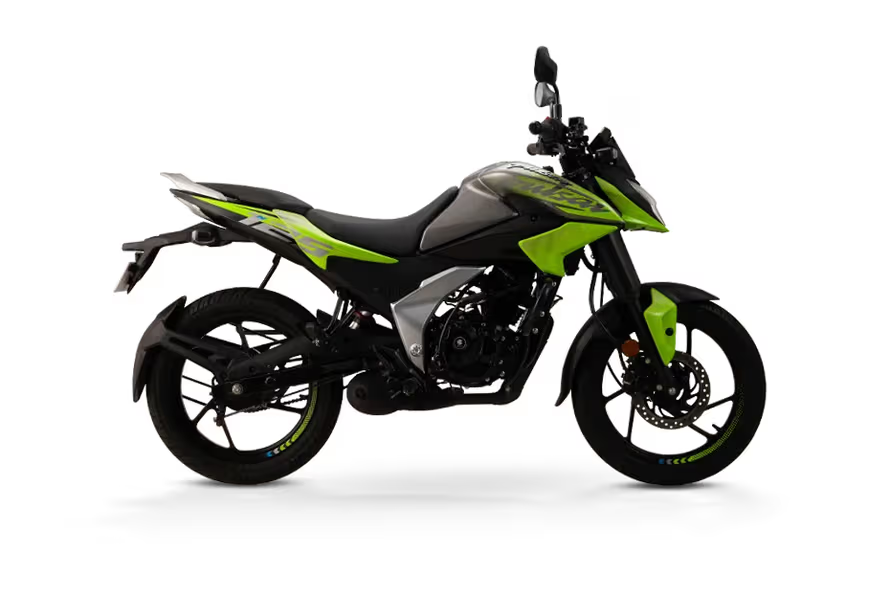
Bajaj Pulsar N125 (new)
7.5 pts
Unweighted: 6 advantages
EnginePerformanceDimensionsBrakesTyresFeaturesOther
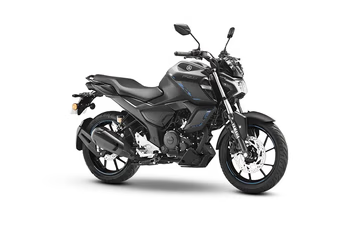
YAMAHA FZS-Fi Hybrid
24.5 pts
Unweighted: 13 advantages
EnginePerformanceDimensionsBrakesTyresFeaturesOther
| Specification | ||
|---|---|---|
Engine Specifications |
||
| Cooling System | Air‑cooled | Air-cooled |
| Displacement | 124.58 cc | 149 cc |
| Engine Type | Single Spark, 2‑Valve | Air cooled, 4-stroke, SOHC, 2-valve |
| Power | 12 PS @ 8,500 rpm | 9.1 kW (12.4PS) / 7,250 r/min |
| Torque | 11 Nm @ 6,000 rpm | 13.3 N.m (1.4 kg f.m) / 5,500 r/min |
Performance & Efficiency |
||
| Fuel Tank Capacity | 9.5 L | 13 L |
| Mileage | 58 Kmpl | 60 Kmpl |
Dimensions & Weight |
||
| Kerb Weight | 125 | 138 |
| Seat Height | 795 | 780 |
Brakes & Suspension |
||
| ABS | — | Single Channel ABS |
| Front Brake | 240 mm Disc | Disc Brake 282mm with ABS |
| Front Suspension | Telescopic, 125 mm stroke | Telescopic fork |
| Rear Brake | 130 mm Drum | Disc Brake 220mm |
| Rear Suspension | Monoshock, 125 mm stroke | 7-Step Adjustable Monocross Suspension |
Tyres & Wheels |
||
| Front Tyre | 80/100‑17 Tubeless | 100/80-17M/C 52P |
| Rear Tyre | 110/80‑17 Tubeless | 140/60R17M/C 63P |
| Tyre Type | Tubeless | Tubeless |
| Wheel Type | Alloy | Alloy |
Features & Technology |
||
| Headlight | LED with AHO | LED |
Other Specifications |
||
| Bike Image 1 | https://motoautiv.com/wp-content/uploads/2025/07/wine-red-1.avif | https://motoautiv.com/wp-content/uploads/2025/05/Cyan-1.avif |
| Bike Image 2 | https://motoautiv.com/wp-content/uploads/2025/07/purple-fury.avif | https://motoautiv.com/wp-content/uploads/2025/05/Blue.avif |
| Cluster | Fully digital LCD | Digital |
| Color Options | Ebony Black Cocktail Wine Red | #111111, #7A0019 Ebony Black Purple Fury | #111111, #5A2D82 Pewter Grey Citrus Rush | #6E7378, #C7D300 | Cyan Metallic Grey | #00A8C8, #6F7378 Racing Blue | #0047AB Matte Black | #232323 |
| Cons | Highway performance is naturally limited by the 125cc engine capacity, especially during high-speed overtakes or when carrying a pillion rider. The motorcycle does not offer the extensive feature list found on some premium rivals that include advanced connectivity options and larger displays. Rear seat comfort is adequate for short and medium journeys but may feel less spacious during longer rides. Engine refinement is generally good for daily use, but vibrations can become noticeable near the upper end of the rev range. Wind protection is minimal because of the naked streetfighter design, making sustained highway speeds less comfortable. Some riders may find the sporty styling more appealing than the actual performance delivered by the 125cc engine. The compact dimensions that help in city traffic can make the motorcycle feel slightly small for taller riders. | Performance Remains Commuter-Focused: Despite the Hybrid assist, the motorcycle is tuned primarily for efficiency and refinement rather than strong acceleration or sporty performance. Highway Overtakes Require Planning: Riders frequently mention that overtaking at higher speeds requires more throttle input compared to more powerful 160cc rivals. Hybrid Assist Is Subtle: The Hybrid system improves initial acceleration, but some owners feel the assistance is not dramatic enough to significantly change the riding experience. Single-Channel ABS Only: While ABS is present, some competitors in similar price ranges offer dual-channel ABS. Suspension Can Feel Firm on Rough Roads: Broken roads and potholes can occasionally be felt through the suspension setup, especially at lower speeds. Premium Pricing: Some buyers feel the Yamaha FZ-S Fi Hybrid is priced higher than certain competitors that offer more performance. |
| Detailed Overview | At first look, the Bajaj Pulsar N125 doesn’t immediately feel like a typical 125cc commuter. Its sharp tank extensions, compact tail section and aggressive headlamp design borrow heavily from the larger Pulsar N-series motorcycles, giving it a sportier appearance than many motorcycles in this category. Despite the muscular styling, the bike remains compact and lightweight, which becomes noticeable while moving through traffic or squeezing into tight parking spaces. The motorcycle is powered by a 124.58cc single-cylinder engine that produces around 12 PS of power and 11 Nm of torque. The engine is paired with a 5-speed gearbox and is tuned to deliver usable performance in everyday riding conditions. In city traffic, acceleration feels responsive enough for quick overtakes and gap-finding, while the extra gear helps the engine stay relatively relaxed when cruising at higher speeds. Rather than chasing outright performance figures, the setup focuses on maintaining a balance between efficiency and everyday usability. One of the characteristics that shapes the riding experience is the motorcycle’s low kerb weight of around 125 kg. The light chassis helps the bike change direction easily and makes low-speed handling feel less demanding, especially in crowded urban environments. Riders who spend most of their time navigating traffic signals, market roads and daily office routes are likely to notice this trait more than the power figures themselves. The suspension setup consists of telescopic front forks and a rear monoshock. Instead of feeling overly soft or excessively firm, the setup is intended to cope with a mix of city roads, speed breakers and uneven patches commonly encountered during daily commuting. The monoshock arrangement also contributes to the motorcycle’s cleaner side profile while helping maintain stability during regular riding conditions. The braking system combines a front disc brake with a rear drum brake and is supported by CBS (Combined Braking System). Alloy wheels and tubeless tyres come as standard equipment, reducing the inconvenience associated with punctures and routine maintenance. These components are chosen more for practicality than performance-focused riding. The digital instrument console adds a modern touch to the motorcycle. Depending on the variant, riders can access information such as speed, fuel level, trip details and smartphone notification functions through Bluetooth connectivity. This allows the motorcycle to offer some connected features without moving into the premium segment. A 9.5-litre fuel tank works alongside the fuel-efficient engine to provide a useful riding range for daily commuting. Actual fuel economy depends on traffic conditions, rider inputs and maintenance, but the motorcycle is designed to keep running costs manageable while retaining the sporty styling associated with the Pulsar brand. Overall, the Pulsar N125 combines a lightweight chassis, a 124.58cc engine, monoshock suspension, digital instrumentation and contemporary streetfighter-inspired styling into a motorcycle intended primarily for everyday urban transportation and regular commuting duties. | The Yamaha FZ-S Fi Hybrid is a premium commuter motorcycle that combines Yamaha’s established FZ platform with mild-hybrid technology, modern connectivity features, and updated rider-assistance systems. Designed primarily for urban commuting and everyday transportation, the motorcycle focuses on efficiency, refinement, comfort, and technology integration while retaining the muscular streetfighter-inspired styling that has long defined the FZ series. The Hybrid variant represents a technological advancement within Yamaha’s 150cc lineup, incorporating features aimed at enhancing fuel economy and convenience without significantly altering the motorcycle’s core riding characteristics. Powering the Yamaha FZ-S Fi Hybrid is a 149cc, single-cylinder, air-cooled, fuel-injected engine that produces approximately 12.4 PS of power and 13.3 Nm of torque. The engine is paired with a five-speed gearbox and is tuned to deliver smooth and predictable performance across a wide range of riding conditions. Fuel injection technology continuously monitors engine requirements and adjusts fuel delivery to maintain efficient combustion and consistent throttle response. The engine’s focus remains on refinement and low- to mid-range usability, making it particularly suitable for city traffic and daily commuting scenarios. A key distinguishing feature of the Yamaha FZ-S Fi Hybrid is its Smart Motor Generator (SMG) system, which forms the foundation of the motorcycle’s mild-hybrid technology. The SMG provides a small amount of electric assistance during acceleration, helping reduce engine load and improving responsiveness during initial take-offs. This system also works in conjunction with Yamaha’s Stop & Start System (SSS), which automatically shuts off the engine when the motorcycle remains stationary for a period of time and restarts it when the clutch is engaged. Together, these technologies are designed to improve fuel efficiency and reduce unnecessary fuel consumption in stop-and-go traffic conditions. The motorcycle is built around a diamond-type frame that contributes to balanced handling and stability. Suspension duties are handled by telescopic front forks and a rear monoshock setup. This combination is designed to provide a comfortable riding experience while maintaining predictable handling characteristics across different road surfaces. The motorcycle rides on 17-inch alloy wheels fitted with tubeless tyres, contributing to grip, stability, and convenience during everyday use. Braking performance is managed by disc brakes at both ends. The Yamaha FZ-S Fi Hybrid is equipped with a single-channel Anti-lock Braking System (ABS) operating on the front wheel. ABS helps reduce the likelihood of wheel lock-up during sudden braking situations and contributes to improved rider confidence. In addition, the motorcycle features a Traction Control System (TCS), which monitors wheel slip and adjusts engine output when necessary to help maintain traction. The inclusion of traction control remains a notable feature within the 150cc segment. Technology plays a significant role in the Yamaha FZ-S Fi Hybrid package. The motorcycle features a color TFT instrument cluster that displays speed, fuel level, gear position, trip information, and various vehicle-related indicators. Bluetooth connectivity through Yamaha’s Y-Connect application enables smartphone integration, allowing riders to access call alerts, message notifications, maintenance reminders, fuel consumption data, and navigation-related information. These connectivity functions add convenience for riders who regularly use smartphones during their daily routines. The Yamaha FZ-S Fi Hybrid has a fuel tank capacity of 13 litres and a kerb weight of approximately 138 kg. The seat height of 790 mm makes the motorcycle accessible to a broad range of riders. Its upright ergonomics, wide handlebar, and well-padded seat create a relaxed riding posture designed to reduce fatigue during daily commuting and occasional longer rides. The motorcycle also features full LED lighting, including the headlamp and tail lamp, contributing to both visibility and modern styling. Additional convenience features include a side-stand engine cut-off function, hazard lights, engine kill switch, and premium styling details that distinguish the Hybrid model from earlier versions of the FZ-S. Overall, the Yamaha FZ-S Fi Hybrid combines a fuel-injected 149cc engine, mild-hybrid assistance technology, traction control, TFT instrumentation, Bluetooth connectivity, and comfortable ergonomics into a commuter-focused motorcycle package. Its specifications emphasize efficiency, refinement, technology, and rider convenience while maintaining the practical and user-friendly nature that has characterized the FZ series for many years. |
| Expert Review | The Bajaj Pulsar N125 is built around the idea of bringing the styling and feel of a modern streetfighter motorcycle into the 125cc segment. Its compact dimensions and lightweight chassis make it particularly easy to handle in city traffic, while the engine delivers enough performance for everyday commuting without becoming demanding to ride. The motorcycle feels agile during direction changes, and the riding position strikes a balance between comfort and a slightly sporty character. Design plays a significant role in its identity, with sharp bodywork, bold graphics, and styling cues borrowed from larger Pulsar N-series models. The suspension setup is tuned for daily road conditions and handles common urban imperfections without feeling overly stiff. While the motorcycle remains focused on practical transportation, its visual design and riding dynamics give it a character that differs from more conventional commuter motorcycles., 4.4, MotoAutiv Team | The Yamaha FZ-S Fi Hybrid represents an evolution of the FZ platform by integrating mild-hybrid technology into a motorcycle that has traditionally been known for refinement and everyday usability. The 149cc fuel-injected engine continues to prioritize smoothness, predictable power delivery, and fuel efficiency, while the Smart Motor Generator provides subtle assistance during initial acceleration and works in conjunction with the automatic Start & Stop System. The result is a riding experience that feels polished and well-suited to urban environments where frequent stops and starts are common. The motorcycle retains the comfortable ergonomics that have long been associated with the FZ series, featuring an upright riding posture, wide handlebar, and well-cushioned seat. Technology is a key highlight, with features such as traction control, smartphone connectivity, turn-by-turn navigation support, and a TFT instrument cluster adding functionality that is uncommon in this segment. The chassis remains light and easy to manage, contributing to confidence in city traffic and routine commuting. Rather than focusing on outright performance gains, the FZ-S Fi Hybrid emphasizes efficiency, rider convenience, and modern technology integration while maintaining the familiar refinement and practicality of the FZ lineup., 4.5, MotoAutiv Team |
| FAQ (Manual Override) | Q: What engine does the Bajaj Pulsar N125 use? A: The motorcycle is powered by a 124.58cc single-cylinder, air-cooled engine. Q: How much power does the Pulsar N125 produce? A: The engine produces approximately 12 PS of power and 11 Nm of torque. Q: What mileage does the Bajaj Pulsar N125 deliver? A: Real-world mileage generally ranges between 50–60 km/l depending on riding style, traffic conditions, and maintenance. Q: What is the top speed of the Pulsar N125? A: The motorcycle has an approximate top speed of around 100–105 km/h. Q: Is the Pulsar N125 suitable for highway riding? A: Yes, it can handle occasional highway trips comfortably, though it is primarily designed for city commuting and daily transportation. Q: What type of brakes does the Pulsar N125 use? A: The motorcycle comes with a front disc brake and rear drum brake setup along with CBS (Combined Braking System). Q: Does the Bajaj Pulsar N125 have ABS? A: No, the Pulsar N125 does not offer ABS. It uses CBS for braking assistance. Q: What suspension setup does the Pulsar N125 use? A: It uses telescopic front forks and a rear monoshock suspension. Q: What is the fuel tank capacity of the Pulsar N125? A: The motorcycle comes with a fuel tank capacity of approximately 9.5 litres. Q: What is the kerb weight of the Pulsar N125? A: The bike weighs around 125 kg, making it one of the lighter motorcycles in its segment. Q: Does the Pulsar N125 use tubeless tyres? A: Yes, the motorcycle comes with tubeless tyres fitted on alloy wheels. Q: Does the Pulsar N125 have a digital instrument cluster? A: Yes, it features a digital instrument console that displays ride-related information clearly. Q: Does the Pulsar N125 support Bluetooth connectivity? A: Selected variants offer Bluetooth connectivity with call and notification alerts. Q: Is the Bajaj Pulsar N125 beginner-friendly? A: Yes, its lightweight handling, predictable power delivery, and manageable dimensions make it suitable for new riders. Q: Is the Pulsar N125 a commuter motorcycle or a streetfighter? A: It is generally classified as a sporty commuter/streetfighter-style motorcycle, combining commuter practicality with design elements inspired by larger naked street motorcycles. | — |
| Fuel System | Fuel Injection | Fuel Injection |
| Price Variants | LED Disc BT | 92270 | | 137200 |
| Pros | The motorcycle feels light and easy to maneuver, which makes it convenient for city traffic, tight turns, and everyday commuting. The 124.58cc engine offers a good balance of performance and fuel efficiency. Acceleration feels quick enough for urban riding and regular overtakes. The sporty streetfighter-inspired design gives the bike a more modern and aggressive appearance than many traditional commuter motorcycles in the 125cc segment. The riding posture remains comfortable for daily use, with an upright handlebar position and a natural seating arrangement. Fuel efficiency is practical for everyday commuting, with real-world mileage generally ranging between 50–60 km/l depending on riding conditions. The digital instrument cluster and modern styling elements help the motorcycle feel more contemporary than several conventional commuter alternatives. Suspension tuning balances comfort and handling reasonably well, allowing the bike to remain comfortable on uneven roads while retaining stability around corners. The lightweight chassis contributes to confident low-speed handling and easier parking or maneuvering in crowded areas. | Refined Hybrid-Assisted Engine: The 149cc fuel-injected engine combined with Yamaha's Smart Motor Generator (SMG) delivers smooth acceleration and improved responsiveness during initial take-offs. Excellent Fuel Efficiency: Owners commonly report real-world mileage figures between 50 and 60 km/l, making the Yamaha FZ-S Fi Hybrid one of the more fuel-efficient motorcycles in its segment. Comfortable Riding Ergonomics: The upright seating posture, wide handlebar, and spacious seat provide a relaxed riding experience for both daily commuting and longer rides. Hybrid Technology Benefits: The mild-hybrid system assists the engine during acceleration and works alongside the Start & Stop System to improve efficiency in city traffic. Premium Build Quality: Yamaha's fit-and-finish, paint quality, switchgear feel, and overall refinement are frequently praised by owners. Traction Control System: The inclusion of traction control remains a rare feature in the 150cc segment and adds an extra layer of rider assistance. Bluetooth Connectivity and TFT Display: The modern instrument cluster supports smartphone connectivity, navigation functions, call alerts, and vehicle information through Yamaha Y-Connect. Lightweight and Easy Handling: The motorcycle remains easy to maneuver in traffic and feels approachable for both new and experienced riders. |
| Starter | ISG + Kick | Electric starter |
| Transmission | 5‑speed | Constant mesh, 5-speed |