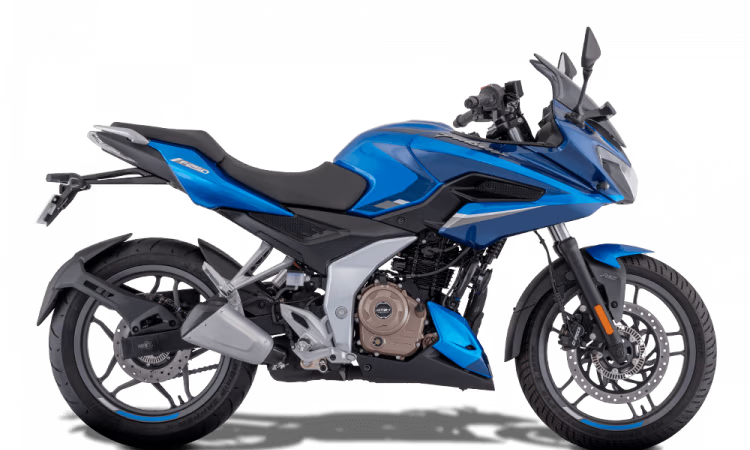
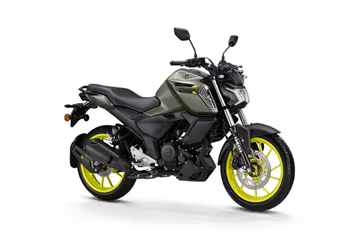
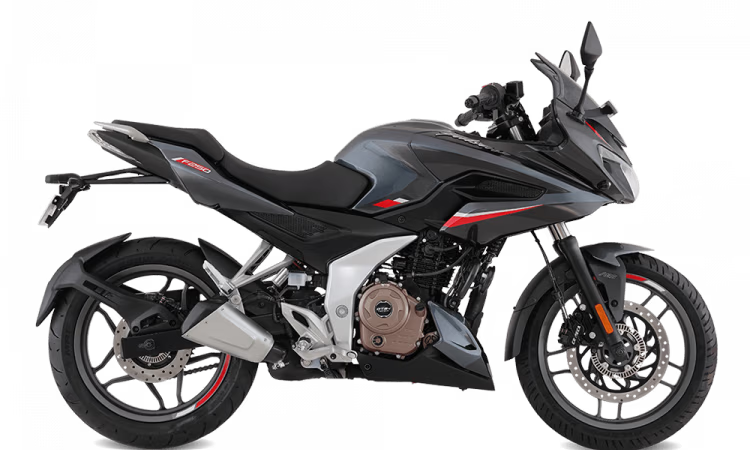
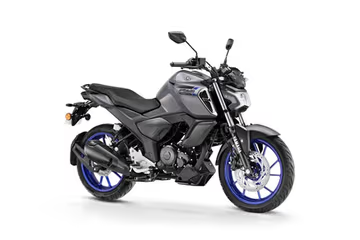
VS

Quick Analysis

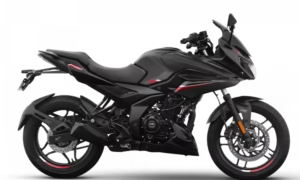
Bajaj Pulsar F250

22.5 pts
Unweighted: 15 advantages
EnginePerformanceDimensionsBrakesTyresFeaturesOther

YAMAHA FZ-S Fi Ver 4.0

6.5 pts
Unweighted: 5 advantages
EnginePerformanceDimensionsBrakesTyresFeaturesOther
Specification
Bajaj Pulsar F250
Bajaj Pulsar F250
Bajaj
₹144,324
YAMAHA FZ-S Fi Ver 4.0
Yamaha
₹130,702

Engine Specifications

Cooling System Oil‑cooled Air-cooled
Displacement 249.07 cc 149 cc
Engine Type Single cylinder, 4 stroke, SOHC, 2 Valve, Oil cooled, FI Air cooled, 4-stroke, SOHC, 2-valve
Power 18 kW (24.5 PS) @ 8,750 rpm 9.1 kW (12.4PS) / 7,250 r/min
Torque 21.5 Nm @ 6,500 rpm 13.3 N.m (1.4 kg f.m) / 5,500 r/min

Performance & Efficiency

Fuel Tank Capacity 14 L 13 L
Mileage 35 Kmpl 46 Kmpl

Dimensions & Weight

Kerb Weight 162  136
Seat Height 795 780

Brakes & Suspension

ABS Dual-channel ABS Single Channel ABS
Front Brake 300 mm Disc Disc Brake 282mm with ABS
Front Suspension USD telescopic fork (37 mm) Telescopic fork
Rear Brake 230 mm Disc Disc Brake 220mm
Rear Suspension Nitrox mono‑shock 7-Step Adjustable Monocross Suspension

Tyres & Wheels

Front Tyre 100/80–17 Tubeless 100/80-17M/C 52P
Rear Tyre 130/70–17 Tubeless 140/60R17M/C 63P
Tyre Type Tubeless Tubeless
Wheel Type Alloy Alloy

Features & Technology

Headlight LED projector + DRLs LED

Other Specifications

Battery 12 V, 8 Ah VRLA 12V
Bike Image 1 https://motoautiv.com/wp-content/uploads/2025/07/Blue-4.avif https://motoautiv.com/wp-content/uploads/2025/05/Cyber-Green-1.avif
Bike Image 2 https://motoautiv.com/wp-content/uploads/2025/07/Techno-grey.avif https://motoautiv.com/wp-content/uploads/2025/05/Grey.avif
Bike Image 3 https://motoautiv.com/wp-content/uploads/2025/07/Racing-red-2.avif https://motoautiv.com/wp-content/uploads/2025/05/Ice-Fluo-vermillion-1.avif
Bike Image 4 https://motoautiv.com/wp-content/uploads/2025/05/Racing-Blue-5.avif
Bike Image 5 https://motoautiv.com/wp-content/uploads/2025/05/Red.avif
Cluster Fully digital LCD w/ Bluetooth & navigation Digital
Color Options Caribbean Blue | #0066B3 Racing Red | #C1121F Techno Grey | #6A6D70 Brooklyn Black | #1B1B1B Matte Black | #232323 Majesty Red | #A32025 Metallic Grey | #7A7D80 Racing Blue | #0047AB Ice Fluo Vermillion | #F5F5F5, #FF5A36 Cyber Green | #7FFF00, #232323
Cons Limited Top-End Performance – While the engine performs strongly in the mid-range, some riders may find the top-end performance less exciting compared to more performance-focused rivals. Five-Speed Gearbox Only – Several competitors in the segment offer a six-speed gearbox, which some riders prefer for relaxed highway cruising. Feature List Depends on Variant – Certain connectivity and convenience features are available only on selected versions of the motorcycle. Front Design Divides Opinion – The semi-faired styling and projector headlamp design receive mixed reactions, with styling preferences varying among buyers. Suspension Can Feel Firm on Sharp Bumps – Although comfortable overall, sharp potholes and broken roads can occasionally transmit noticeable feedback to the rider. Weight Noticeable at Low Speeds – The motorcycle remains manageable while moving, but some riders may notice its weight during parking manoeuvres and slow-speed handling. Competition Offers More Premium Hardware – Some rivals provide upside-down forks, liquid-cooled engines, quickshifters, or more advanced electronics at similar price points. Aftermarket Touring Accessories Are Less Common – Compared with some established touring motorcycles, dedicated aftermarket accessories and touring-specific modifications are relatively limited. Performance Feels Conservative: The engine is tuned more for refinement and efficiency than outright performance, which may disappoint riders seeking stronger acceleration. Highway Overtakes Need Planning: While capable of highway cruising, quick overtakes at higher speeds often require downshifts and more rider input. Five-Speed Gearbox Only: Some riders feel the motorcycle would benefit from a sixth gear for more relaxed highway cruising. Suspension Can Feel Firm: On rough roads and potholes, the suspension setup may transmit sharper impacts than some competitors. Instrument Cluster Feels Dated: Although Bluetooth-equipped, the LCD display lacks the visual appeal and functionality of modern TFT screens. Limited Feature Upgrades Over Earlier Models: Some owners feel the updates over previous FZ-S versions are evolutionary rather than substantial.
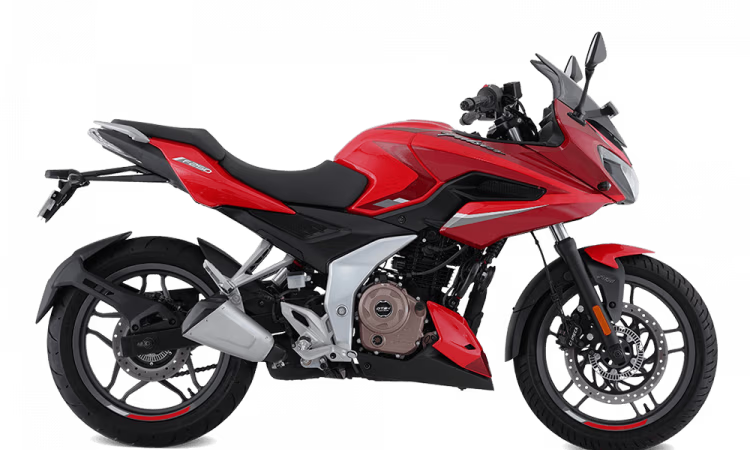
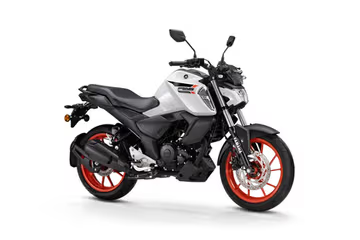
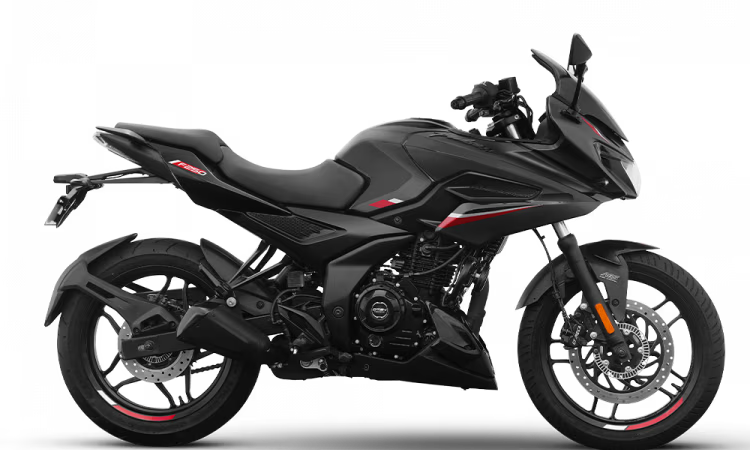
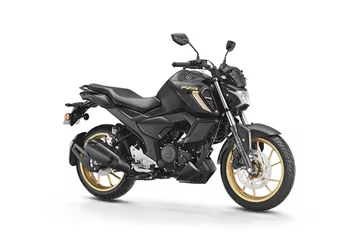
Detailed Overview Among motorcycles designed to balance daily commuting with highway touring, the Bajaj Pulsar F250 occupies a distinctive position in the 250cc segment. Unlike conventional naked street bikes, the F250 adopts a semi-faired design that introduces additional wind protection while retaining the practicality and accessibility expected from a sports commuter motorcycle. It is positioned as one of the larger-capacity offerings in the Pulsar lineup and combines modern styling, contemporary features, and a performance-oriented engine package aimed at a wide range of riding conditions. The motorcycle features a sharp front fairing integrated with a projector LED headlamp and LED daytime running lights. This semi-faired bodywork not only contributes to the motorcycle’s visual identity but also helps channel airflow around the rider during highway travel. A sculpted fuel tank, split-seat configuration, and compact rear section further complement its sporty appearance. Unlike fully-faired sports motorcycles that prioritize aggressive riding positions, the F250 maintains ergonomics intended to support both comfort and control during everyday use. Power comes from a 249.07cc single-cylinder, fuel-injected, oil-cooled engine that produces approximately 24.5 PS of power and 21.5 Nm of torque. The engine is paired with a five-speed gearbox and is designed to deliver a broad spread of usable performance across varying riding situations. Strong low- and mid-range torque characteristics allow the motorcycle to respond effectively during city commuting, overtaking manoeuvres, and highway cruising. Fuel injection technology helps provide precise throttle response and efficient fuel delivery, while the oil-cooling system assists in maintaining stable operating temperatures during prolonged rides. The Pulsar F250 is built around a tubular frame chassis that serves as the foundation for its handling characteristics. Suspension duties are managed by telescopic front forks and a rear monoshock suspension setup. This combination is designed to absorb road imperfections while maintaining stability and rider confidence across different road surfaces. The chassis geometry and wheelbase contribute to predictable handling, whether navigating urban traffic, cornering on winding roads, or travelling at highway speeds. Braking performance is handled by disc brakes at both ends, supported by dual-channel ABS as standard equipment. The anti-lock braking system helps reduce wheel lock-up during hard braking and assists riders in maintaining control under challenging conditions. The motorcycle also incorporates an assist and slipper clutch, which reduces clutch lever effort and helps improve stability during rapid downshifts. Modern features form an important part of the overall package. The motorcycle includes a digital instrument console that displays speed, fuel level, gear position, trip information, distance-to-empty readings, and other ride-related data. Bluetooth connectivity is available on selected variants, enabling smartphone-based functions such as call alerts, message notifications, and turn-by-turn navigation. LED lighting throughout the motorcycle contributes to visibility while maintaining a contemporary appearance. Comfort-oriented ergonomics distinguish the F250 from many sport-focused alternatives. The upright riding posture, wide handlebar, and spacious seating arrangement are designed to reduce rider fatigue during longer journeys. A seat height of approximately 795 mm makes the motorcycle accessible to a broad range of riders, while the split-seat design accommodates both rider and passenger. The 14-litre fuel tank further supports long-distance travel by reducing the frequency of refuelling stops. With its 249cc oil-cooled engine, semi-faired design, modern technology, dual-channel ABS, and touring-friendly ergonomics, the Bajaj Pulsar F250 combines the characteristics of a sports commuter motorcycle with features intended to enhance comfort and usability across a variety of riding environments. The Yamaha FZ-S Fi Version 4.0 is a premium commuter motorcycle that builds upon the long-established FZ platform with updated styling, enhanced technology, and modern rider-assistance features. Designed primarily for urban commuting and everyday riding, the motorcycle combines Yamaha’s focus on refinement and fuel efficiency with a muscular streetfighter-inspired appearance. The design features a sculpted fuel tank, sharp tank shrouds, LED lighting, compact body panels, and a sporty stance that gives the motorcycle a distinctive road presence while maintaining practicality for daily use. Powering the Yamaha FZ-S Fi Version 4.0 is a 149cc, single-cylinder, air-cooled, fuel-injected engine that produces approximately 12.4 PS of power and 13.3 Nm of torque. The engine is paired with a five-speed gearbox and is tuned to deliver smooth and predictable performance across a wide range of riding conditions. Fuel injection technology continuously monitors engine requirements and optimizes fuel delivery, contributing to efficient combustion, consistent throttle response, and improved fuel economy. The engine’s emphasis is placed on refinement and usability rather than outright performance, making it particularly suitable for city traffic and routine commuting duties. The motorcycle is built around a diamond-type frame that contributes to its balanced handling characteristics. Suspension duties are handled by telescopic front forks and a rear monoshock setup. This combination is designed to provide a blend of comfort and stability while maintaining predictable handling on various road surfaces. The FZ-S Fi V4 rides on 17-inch alloy wheels fitted with tubeless tyres, which contribute to grip, stability, and convenience during everyday riding. Braking performance is managed through disc brakes at both the front and rear. The motorcycle is equipped with a single-channel Anti-lock Braking System (ABS), which operates on the front wheel and helps reduce the likelihood of wheel lock-up during sudden braking situations. One of the key additions to the Version 4.0 model is the inclusion of a Traction Control System (TCS). This electronic rider aid monitors wheel slip and adjusts engine output when necessary to help maintain traction, a feature that remains relatively uncommon in the 150cc motorcycle segment. The Yamaha FZ-S Fi Version 4.0 has a fuel tank capacity of 13 litres and a kerb weight of approximately 136 kg. The seat height of 790 mm makes the motorcycle accessible to a broad range of riders, while the upright ergonomics contribute to overall riding comfort. The wide handlebar, relaxed footpeg positioning, and well-padded seat create a natural riding posture that reduces fatigue during daily commuting and occasional longer journeys. Technology plays a more significant role in the FZ-S Fi Version 4.0 compared to previous generations. The motorcycle features a fully digital LCD instrument cluster with Bluetooth connectivity through Yamaha’s Y-Connect application. This system allows riders to access smartphone-related functions such as call alerts, message notifications, maintenance reminders, fuel consumption data, and parking location tracking. The integration of smartphone connectivity adds an additional layer of convenience for riders who regularly use mobile devices during their daily routines. The lighting system is fully LED-based, including the headlamp and tail lamp, contributing to both visibility and modern styling. Additional convenience features include a side-stand engine cut-off function, engine kill switch, and hazard light functionality. The overall equipment package reflects Yamaha’s effort to incorporate contemporary technology while maintaining the motorcycle’s commuter-focused character. Overall, the Yamaha FZ-S Fi Version 4.0 combines a fuel-injected 149cc engine, traction control, Bluetooth connectivity, LED lighting, comfortable ergonomics, and modern styling into a motorcycle designed for everyday transportation. Its specifications emphasize refinement, efficiency, rider comfort, and ease of ownership while continuing the established identity of the FZ series within the Indian motorcycle market.
Expert Review Designed around a semi-faired sports commuter concept, the Bajaj Pulsar F250 combines a 249.07cc single-cylinder, fuel-injected, oil-cooled engine with ergonomics that prioritize everyday comfort and highway usability. The engine delivers its strongest performance in the low and mid-range, allowing the motorcycle to handle city traffic and overtaking manoeuvres with minimal effort. The front fairing and windscreen provide a degree of wind protection that is not available on most naked motorcycles, making longer highway journeys more comfortable. Suspension duties are handled by telescopic front forks and a rear monoshock, while disc brakes with dual-channel ABS contribute to predictable braking performance. Features such as LED lighting, a digital instrument cluster, Bluetooth connectivity, and navigation support on selected variants add modern functionality. The motorcycle focuses on smooth power delivery and practical riding characteristics rather than aggressive high-rev performance, positioning it as a versatile option for riders who split their time between daily commuting and occasional touring., 4.3, MotoAutiv Team The Yamaha FZ-S Fi Version 4.0 continues to follow the formula that has defined the FZ series for years—prioritizing refinement, comfort, and everyday usability over outright performance. Its 149cc fuel-injected engine delivers smooth and linear power, making the motorcycle particularly well-suited to urban commuting and daily transportation. The engine remains one of the most refined units in its class, with controlled vibration levels and predictable throttle response. The upright ergonomics, wide handlebar, and comfortable seat contribute to a relaxed riding experience, while the lightweight chassis makes maneuvering through traffic straightforward. Yamaha has enhanced the package with features such as traction control, Bluetooth connectivity via Y-Connect, LED lighting, and a modernized instrument cluster, bringing additional technology to the segment. The motorcycle's handling remains stable and confidence-inspiring, though the suspension setup is tuned more towards everyday comfort than sporty riding. While competitors offer greater power and performance, the FZ-S Fi V4 focuses on delivering a polished, efficient, and easy-to-live-with riding experience that aligns closely with the needs of daily commuters., 4.4, MotoAutiv Team
FAQ (Manual Override) Q: What is the engine capacity of the Bajaj Pulsar F250? A: The motorcycle is powered by a 249.07cc single-cylinder, fuel-injected, oil-cooled engine paired with a 5-speed gearbox. Q: Is the Bajaj Pulsar F250 suitable for daily commuting? A: Yes. Its upright riding position, smooth power delivery, and manageable dimensions make it comfortable for everyday city use. Q: What mileage does the Pulsar F250 deliver? A: Most owners report a real-world fuel efficiency of around 32–40 kmpl, depending on riding style, traffic conditions, and maintenance. Q: Is the Pulsar F250 good for highway touring? A: Yes. The semi-fairing, windscreen, comfortable ergonomics, and relaxed engine character make it well-suited for long-distance highway rides. Q: Does the Pulsar F250 have dual-channel ABS? A: Yes. Dual-channel ABS comes as standard and helps improve braking control during emergency stops. Q: What is the top speed of the Bajaj Pulsar F250? A: Under suitable conditions, the motorcycle can reach approximately 130–140 km/h, depending on rider weight, road conditions, and weather. Q: Does the Pulsar F250 have Bluetooth connectivity? A: Selected variants feature Bluetooth connectivity with functions such as call alerts, message notifications, and turn-by-turn navigation. Q: What is the fuel tank capacity of the Pulsar F250? A: The motorcycle comes with a 14-litre fuel tank, suitable for longer rides between fuel stops. Q: What is the seat height of the Bajaj Pulsar F250? A: The seat height is approximately 795 mm, making it accessible to riders of varying heights. Q: Is the Pulsar F250 comfortable for a pillion rider? A: The split-seat setup offers adequate space and cushioning for a passenger, making it suitable for daily commuting and occasional touring. Q: Does the Pulsar F250 have a slipper clutch? A: Yes. The motorcycle is equipped with an assist and slipper clutch, which helps reduce rear-wheel hop during aggressive downshifts and provides a lighter clutch feel. Q: How does the Pulsar F250 differ from the Pulsar N250? A: Both motorcycles share the same engine and core platform, but the F250 features a semi-faired design with a windscreen for better wind protection, while the N250 follows a naked street-bike layout. Q: Is the Pulsar F250 beginner-friendly? A: Riders with basic riding experience can adapt to the motorcycle comfortably thanks to its predictable power delivery, comfortable ergonomics, and manageable handling. Q: Does the Pulsar F250 vibrate at high speeds? A: The engine is generally considered refined, although mild vibrations may be noticeable at higher RPMs and sustained highway speeds. Q: What type of motorcycle is the Bajaj Pulsar F250? A: It is classified as a sports commuter motorcycle with a semi-faired design, combining everyday practicality with enhanced highway comfort. Q: Are spare parts and service support easily available? A: Yes. Bajaj has a widespread dealership and service network across India, making routine maintenance and spare parts procurement relatively convenient. Q: What is the real-world mileage of the Yamaha FZ-S Fi Version 4.0? A: Most Yamaha FZ-S Fi Version 4.0 owners report real-world mileage between 45 and 55 km/l, depending on riding conditions, maintenance, and riding style. Q: What is the top speed of the Yamaha FZ-S Fi Version 4.0? A: The Yamaha FZ-S Fi Version 4.0 can reach a top speed of approximately 115 km/h under favorable conditions. Q: Does the Yamaha FZ-S Fi Version 4.0 have traction control? A: Yes, the Yamaha FZ-S Fi Version 4.0 comes equipped with a Traction Control System (TCS), making it one of the few motorcycles in its segment to offer this feature. Q: Does the Yamaha FZ-S Fi Version 4.0 support Bluetooth connectivity? A: Yes, the Yamaha FZ-S Fi Version 4.0 supports Bluetooth connectivity through Yamaha's Y-Connect application, enabling call alerts, message notifications, maintenance reminders, and riding statistics. Q: Is the Yamaha FZ-S Fi Version 4.0 suitable for beginners? A: Yes, the Yamaha FZ-S Fi Version 4.0 is considered beginner-friendly due to its predictable power delivery, comfortable ergonomics, manageable weight, and smooth engine characteristics. Q: What is the fuel tank capacity of the Yamaha FZ-S Fi Version 4.0? A: The Yamaha FZ-S Fi Version 4.0 comes with a 13-litre fuel tank. Q: What is the seat height of the Yamaha FZ-S Fi Version 4.0? A: The Yamaha FZ-S Fi Version 4.0 has a seat height of 790 mm, making it accessible to a wide variety of riders. Q: Is the Yamaha FZ-S Fi Version 4.0 good for long rides? A: The Yamaha FZ-S Fi Version 4.0 offers a comfortable riding posture and refined engine, making it suitable for weekend rides and moderate-distance touring. Q: Does the Yamaha FZ-S Fi Version 4.0 have dual-channel ABS? A: No, the Yamaha FZ-S Fi Version 4.0 is equipped with single-channel ABS that operates on the front wheel. Q: What is the kerb weight of the Yamaha FZ-S Fi Version 4.0? A: The Yamaha FZ-S Fi Version 4.0 has a kerb weight of approximately 136 kg. Q: What is the difference between the Yamaha FZ-S Fi Version 4.0 and Yamaha FZ-S Fi Version 3.0? A: The Yamaha FZ-S Fi Version 4.0 adds features such as traction control, Bluetooth connectivity, updated instrumentation, revised styling details, and compliance with newer emission norms compared to the earlier Yamaha FZ-S Fi Version 3.0. Q: Why is the Yamaha FZ-S Fi Version 4.0 popular among commuters? A: The Yamaha FZ-S Fi Version 4.0 is popular because it combines fuel efficiency, comfort, refined performance, modern technology, and low ownership costs in a practical everyday motorcycle package.
Fuel System Fuel Injection Fuel injection
Price Variants STD | 144267 Dual Channel ABS | 151037 STD | 119846 V4 Delux | 120304
Pros Strong Mid-Range Performance – The 249.07cc engine delivers ample torque in the low and mid rev range, making city riding, overtaking, and highway cruising feel effortless. Comfortable Touring Ergonomics – The semi-faired design, upright riding position, and well-cushioned seat help reduce fatigue during long-distance rides. Effective Wind Protection – Unlike naked street bikes, the front fairing and windscreen provide noticeable protection from wind blast at highway speeds. Refined Engine Character – Riders generally appreciate the smooth power delivery and predictable throttle response, especially during daily commuting and touring. Stable Highway Behaviour – The motorcycle remains composed at cruising speeds, offering a planted feel on open roads and long stretches of highway. Good Ride Quality – The suspension setup absorbs most road imperfections effectively, helping maintain comfort on uneven surfaces and rough patches. Practical for Everyday Use – Despite its 250cc engine, the F250 remains manageable in urban traffic and does not feel intimidating for regular commuting. Modern Features – Depending on the variant, features such as LED lighting, Bluetooth connectivity, turn-by-turn navigation, and a digital instrument console add convenience to everyday riding. Large Fuel Tank for Longer Journeys – The fuel tank capacity supports extended rides by reducing the need for frequent fuel stops. Refined and Smooth Engine: The 149cc fuel-injected engine delivers power in a smooth and predictable manner, making the motorcycle easy to ride in daily traffic conditions. Comfortable Riding Position: The upright ergonomics, wide handlebar, and relaxed seating posture make the Yamaha FZ-S Fi V4 comfortable for commuting and occasional long rides. Excellent Fuel Efficiency: Owners commonly report real-world mileage figures between 45 and 55 km/l, helping keep running costs low. Premium Build Quality: The paint finish, switchgear quality, panel fitment, and overall attention to detail are frequently praised by owners. Traction Control System: The inclusion of traction control is a rare feature in the 150cc segment and adds an extra layer of electronic assistance. Bluetooth Connectivity: Yamaha's Y-Connect system allows riders to access call alerts, message notifications, maintenance updates, and fuel consumption data through a smartphone. Lightweight and Easy Handling: The motorcycle feels agile in city traffic and remains easy to maneuver in tight urban environments. Muscular Streetfighter Styling: The sharp tank extensions, LED lighting, and aggressive bodywork contribute to a strong road presence.
Starter Electric Electric starter
Transmission 5‑speed manual Constant mesh, 5-speed

If you like what we do, Stay connected with 🚗 Motoautiv.com ⚡

Leave your email 📧 below and Click subscribe Now 🔔✨