VS

Quick Analysis

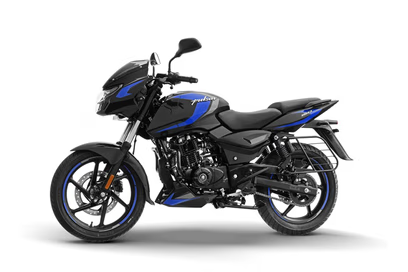
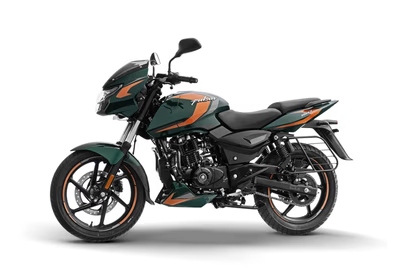
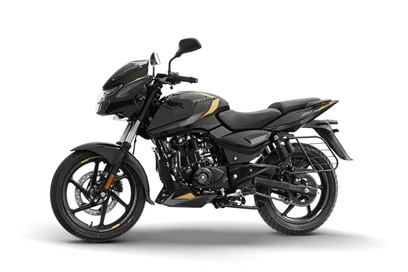
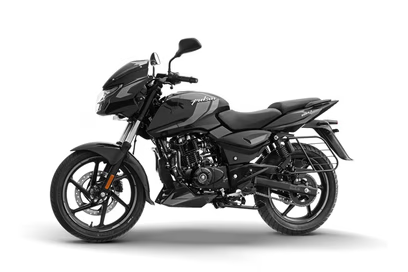
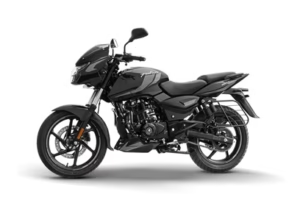
Bajaj Pulsar 150

17.0 pts
Unweighted: 10 advantages
EnginePerformanceDimensionsBrakesTyresFeaturesOther

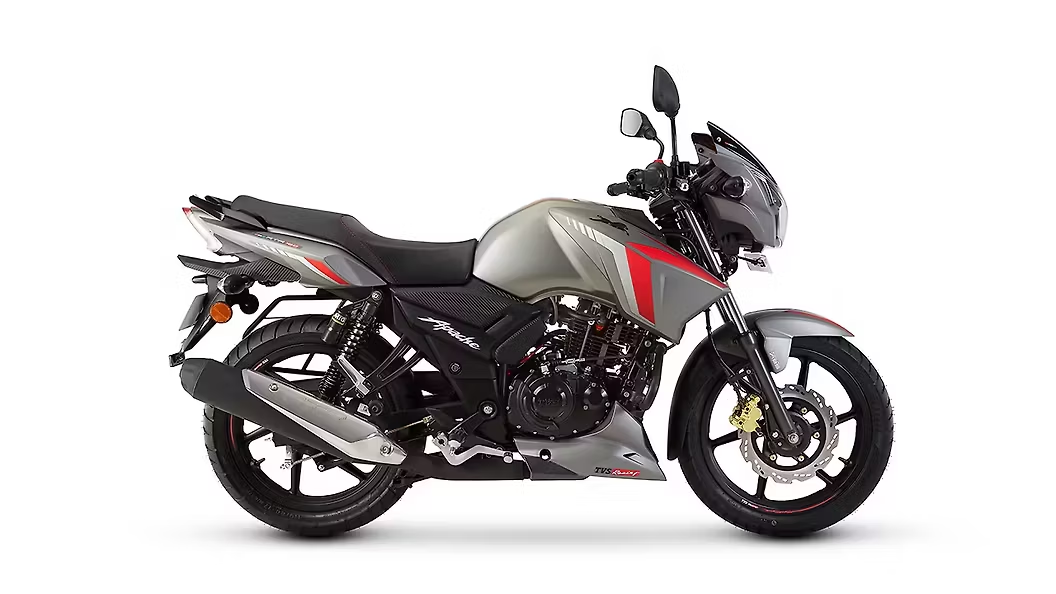
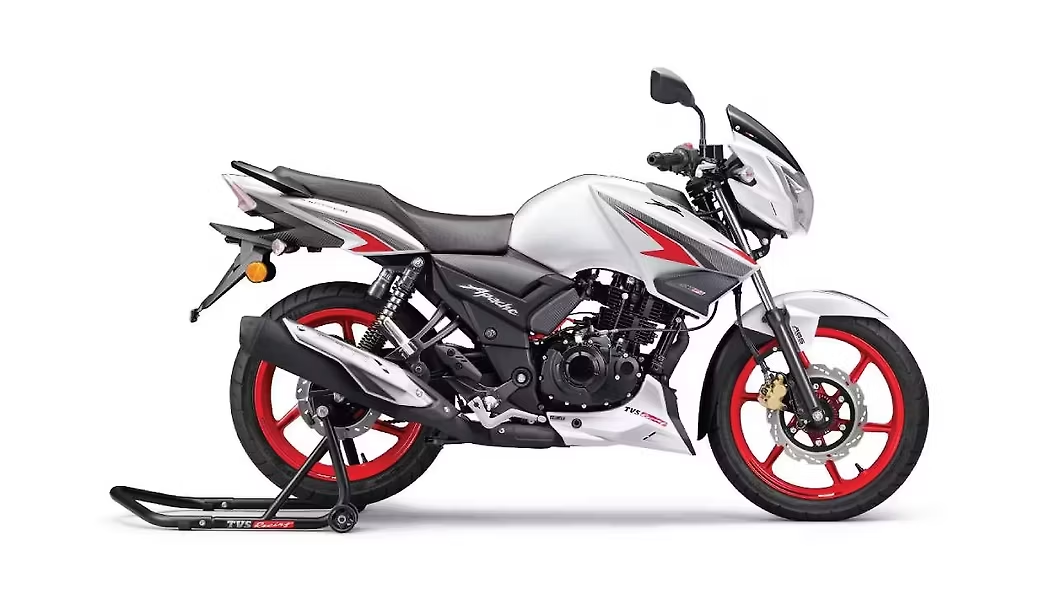
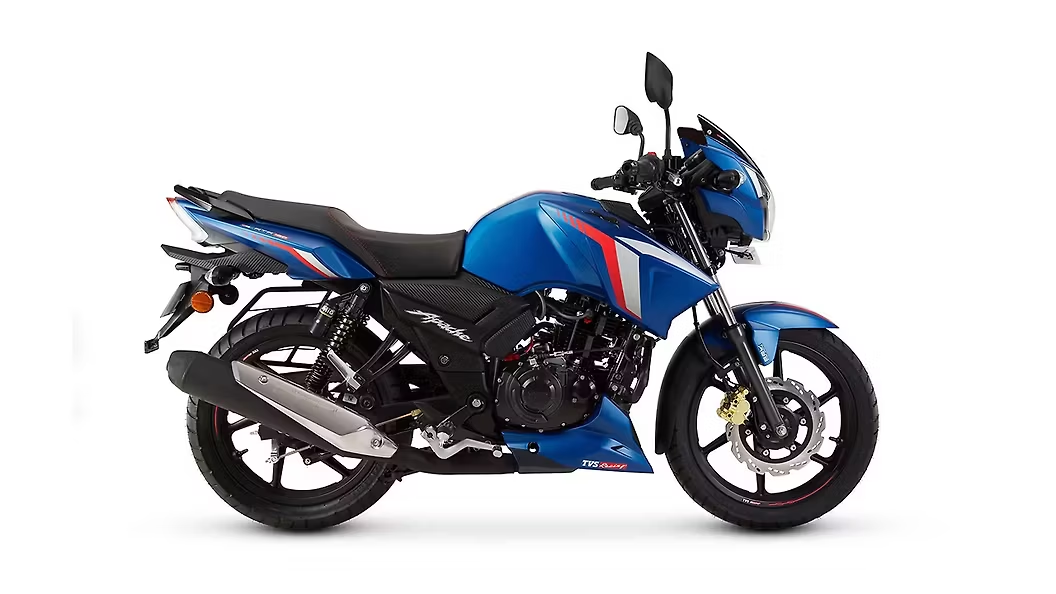
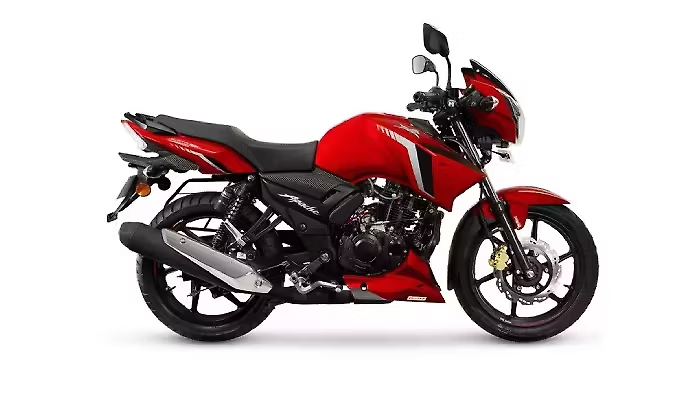
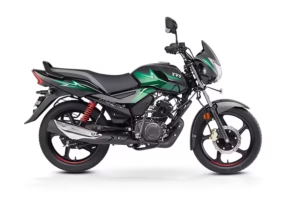
TVS Apache RTR 160

12.0 pts
Unweighted: 10 advantages
EnginePerformanceDimensionsBrakesTyresFeaturesOther
Specification
Bajaj Pulsar 150
Bajaj Pulsar 150
Bajaj
₹110,419
TVS Apache RTR 160
TVS Apache RTR 160
TVS
₹121,003

Engine Specifications

Cooling System Air-cooled Air-cooled (2V)
Displacement 149.50 cc 159.7 cc
Engine Type 4‑Stroke, 2‑Valve, Twin Spark DTS-i FI SI, 4 Stroke, Air Cooled, SOHC, Fuel Injection
Power 10.3 kW (14 PS) @ 8,500 rpm 16.04 PS @ 8750 rpm
Torque 13.25 Nm @ 6,500 rpm 13.85 Nm @ 7000 rpm

Performance & Efficiency

Fuel Tank Capacity 15 L (including 3.2 L reserve) 12 litres
Mileage 47.5 Kmpl 47

Dimensions & Weight

Kerb Weight 148 (SD) / 150 (TD) 137
Seat Height 785 790

Brakes & Suspension

ABS Single-channel ABS Single/Dual-channel ABS
Front Brake 280 mm Disc / 260 mm Disc 270 mm Disc
Front Suspension 37 mm Telescopic fork / 31 mm Telescopic fork Upside Down Forks with 37mm dia
Rear Brake 230 mm Disc / 130 mm Drum 130 mm Disc / Drum
Rear Suspension Twin gas-filled shocks with canister Monotube Inverted Gas Filled Shox (MIG) With Spring Aid

Tyres & Wheels

Front Tyre 80/100-17 (SD) / 90/90-17 (TD), Tubeless 90/90 – 17 (Tubeless)
Rear Tyre 100/90-17 (SD) / 120/80-17 (TD), Tubeless 110/80 – 17 (Tubeless)
Tyre Type Tubeless Tubeless
Wheel Type Alloy Alloy wheels

Features & Technology

Headlight 35/35 W with 2 pilot lamps, With AHO Halogen HS1 35/35W with LED DRL

Other Specifications

Battery DC, 12V, 4Ah VRLA 12V, 6Ah MF
Bike Image 1 https://motoautiv.com/wp-content/uploads/2025/07/BLue-3.avif https://motoautiv.com/wp-content/uploads/2025/07/T-Grey.avif
Bike Image 2 https://motoautiv.com/wp-content/uploads/2025/07/Green.avif https://motoautiv.com/wp-content/uploads/2025/07/Pearl-White-1.avif
Bike Image 3 https://motoautiv.com/wp-content/uploads/2025/07/Gold-1.avif https://motoautiv.com/wp-content/uploads/2025/07/Matte-Blue-1.avif
Bike Image 4 https://motoautiv.com/wp-content/uploads/2025/07/Red-5.avif https://motoautiv.com/wp-content/uploads/2025/07/Matte-Black-2.avif
Bike Image 5 https://motoautiv.com/wp-content/uploads/2025/07/Glossy-Black.avif
Bike Image 6 https://motoautiv.com/wp-content/uploads/2025/07/Anniversary.avif
Cluster Analog-digital (rev counter + LCD display) Digital
Color Options Black Gold | #111111, #B08D57 Ebony Black Cherry Red | #111111, #9B111E Ebony Black Ink Blue | #111111, #2456A6 Ebony Black Dark Grey | #111111, #5C6166 Bottle Green with Copper Beige | #355E3B, #B87333 Matte Black | #1A1A1A Matte Blue | #315C9B Pearl White | #F2F2EE Glossy Black | #111111 T Grey | #6B6F76 Racing Red | #A50000 Anniversary Edition | #2E2E2E, #C89B3C
Cons The overall design, while still recognizable, does not feel as modern as some newer motorcycles in the 150cc category. The feature list is relatively basic compared to rivals that offer full digital displays, Bluetooth connectivity, navigation support, and riding modes. Engine vibrations become noticeable at higher RPMs and sustained highway speeds. The motorcycle is heavier than some of its competitors, which can make low-speed maneuvering feel slightly less effortless. The rear suspension can feel firm on badly broken roads, especially when riding solo. Fuel efficiency is respectable but not class-leading compared to newer commuter-focused alternatives. The instrument cluster design feels dated alongside newer fully digital setups available in the market. Some riders still notice vibrations at higher RPMs and highway speeds, especially during longer rides. The riding posture and seat setup can feel slightly tiring on long-distance touring compared to more relaxed commuter motorcycles. Fit-and-finish quality in certain plastic panels and components could feel better when compared to some rivals in the segment. Some owners have reported inconsistent service experiences depending on dealership location. The braking setup on older or lower variants has received mixed feedback from some riders, although newer versions now offer improved ABS equipment. Taller riders may find the riding ergonomics slightly compact during extended rides.
Detailed Overview Few motorcycles in India have remained in production for as long as the Bajaj Pulsar 150. Over the years, the motorcycle has gone through multiple updates, but its basic formula has largely stayed the same. It sits in the space between a traditional commuter bike and a fully performance-oriented motorcycle, offering enough power for daily riding while maintaining the practicality expected from an everyday machine. Even today, many riders encounter the Pulsar 150 as a daily commuter, a college motorcycle, a highway companion, or simply a long-term ownership choice that continues to serve routine transportation needs. At the heart of the motorcycle is a 149.5cc single-cylinder, air-cooled engine equipped with fuel injection. The engine produces around 14 PS of power and 13.25 Nm of torque, figures that place it comfortably within the 150cc category. In everyday riding conditions, the power delivery feels linear and predictable. The motorcycle does not demand constant gear changes in traffic and has enough low-end and mid-range performance to handle urban commuting without feeling strained. A 5-speed gearbox manages power delivery, helping the engine remain reasonably relaxed during city rides as well as moderate highway cruising. One reason the Pulsar 150 has remained popular for so long is its riding position. Instead of adopting an aggressively sporty stance, the motorcycle uses a layout that feels comfortable for extended periods on the road. The handlebar position allows riders to sit naturally, while the footpeg placement creates a balance between comfort and control. This setup works equally well for daily office commutes, weekend rides, and occasional longer journeys. The seat provides adequate space for both rider and pillion, and the overall ergonomics are designed around regular use rather than extreme riding conditions. The motorcycle rides on a suspension setup consisting of telescopic front forks and twin gas-charged rear shock absorbers. The tuning focuses on managing typical Indian road conditions such as potholes, expansion joints, and speed breakers. While the suspension is not designed for aggressive cornering, it contributes to a stable and predictable riding experience during everyday use. The chassis itself has always been one of the defining characteristics of the Pulsar series, offering a planted feel at normal cruising speeds and confidence during lane changes or sweeping bends. Braking performance varies depending on the variant. Buyers can find versions equipped with a front disc brake and rear drum brake, while some variants feature disc brakes at both ends. Single-channel ABS is provided to improve braking stability during sudden stops. Alloy wheels and tubeless tyres are part of the package, adding convenience and reducing the inconvenience associated with punctures. Visually, the Pulsar 150 retains many design elements that have become familiar over the years. The muscular fuel tank, wolf-eyed headlamp styling, sporty graphics, and compact tail section continue to shape its appearance. While newer motorcycles may feature more aggressive styling themes, the Pulsar 150 maintains a design language that is immediately recognizable on Indian roads. The instrument console follows a semi-digital layout, combining an analogue tachometer with a digital display that shows information such as speed, fuel level, odometer readings, and trip details. The feature list remains relatively straightforward, focusing on essential riding information rather than advanced connectivity functions. With a 15-litre fuel tank, fuel-injected engine, comfortable ergonomics, and a well-established mechanical setup, the Bajaj Pulsar 150 continues to occupy a position that blends commuter practicality with the characteristics of a traditional sport commuter motorcycle. The TVS Apache RTR 160 is designed as a sporty commuter motorcycle that tries to combine everyday practicality with a more engaging riding experience. Unlike regular commuter bikes that focus mainly on fuel efficiency and comfort, the Apache RTR 160 adds sharper performance and aggressive styling into the package while still remaining usable for daily riding. Its overall design follows the streetfighter approach, with muscular tank extensions, sharp body panels, LED lighting elements, and a sporty riding stance that gives the motorcycle a more performance-oriented appearance. At the centre of the bike is a 159.7cc single-cylinder, air-cooled engine that produces close to 16 bhp of power and around 13.8 Nm of torque. The engine is paired with a 5-speed gearbox, and the tuning focuses heavily on strong mid-range performance. This becomes noticeable during overtakes and quick acceleration in city traffic, where the motorcycle feels more responsive than many basic commuter bikes. Power delivery remains smooth at lower speeds, but the engine also feels eager when pushed harder through the mid and upper RPM range. The exhaust note further adds to the sporty feel without becoming excessively loud. The Apache RTR 160 also offers riding modes in newer variants, including Sport, Urban, and Rain mode. These modes adjust throttle response and ABS intervention depending on riding conditions. Sport mode delivers sharper acceleration, while Urban and Rain modes soften throttle response slightly to improve control on slippery roads or during regular commuting. This feature is not commonly seen in many motorcycles within this segment and adds a more modern feel to the riding experience. The chassis and suspension setup play a major role in the motorcycle’s sporty character. The bike uses telescopic front forks along with twin rear shock absorbers that are tuned to balance comfort and handling. The suspension setup handles potholes and uneven roads reasonably well, but it also keeps the motorcycle stable during cornering and quick direction changes. The overall handling feels agile and confidence-inspiring, especially in city traffic where the lightweight chassis and responsive steering help the bike feel easy to maneuver. Braking duties are managed by disc brakes, with newer variants receiving single-channel ABS for added safety during sudden braking. The braking setup provides predictable stopping power for everyday riding as well as more spirited usage. The motorcycle rides on alloy wheels fitted with tubeless tyres that offer decent grip and stability on regular road surfaces. In terms of dimensions, the Apache RTR 160 remains compact enough for urban riding while still offering a slightly sporty riding posture. The seat height is manageable for most riders, and the split-style seat setup adds to the motorcycle’s aggressive appearance. The fuel tank capacity is around 12 litres, which works well with the bike’s fuel efficiency figures that usually stay between 40–50 km/l depending on riding conditions and throttle usage. Feature-wise, the motorcycle includes a fully digital instrument cluster with SmartXonnect connectivity in higher variants. Riders get access to Bluetooth connectivity, turn-by-turn navigation, call alerts, gear position indicator, lap timer, and riding analytics. LED DRLs and modern graphics also help the bike feel updated compared to more traditional commuter motorcycles.
Expert Review The Bajaj Pulsar 150 has built its reputation around offering a mix of practicality and performance without leaning too heavily toward either side. Even today, the motorcycle feels like it was designed to handle multiple roles rather than specialize in one. In city traffic, the engine responds smoothly and has enough low-end torque to make daily commuting straightforward. Once on open roads, the extra displacement and stable chassis help it maintain highway speeds more comfortably than smaller commuter motorcycles. The riding position strikes a middle ground between sporty and relaxed, which explains why many riders use it for everything from office commutes to weekend rides. While the motorcycle does not feature the latest electronics or the most modern instrument console in the segment, its mechanical package remains familiar and uncomplicated. The combination of a 149.5cc engine, comfortable ergonomics, stable handling characteristics, and practical dimensions gives the motorcycle a riding character that has remained largely consistent throughout its lifespan., 4.3, MotoAutiv Team The TVS Apache RTR 160 has always been known for bringing a sporty feel into the commuter motorcycle segment, and that character is still very noticeable in the way it rides. The engine feels energetic in city traffic, especially in the mid-range, where quick acceleration and overtakes happen without much effort. What makes the bike stand out more is its handling, the chassis feels light and responsive while cornering, and the overall balance gives the rider confidence even at higher speeds. At the same time, the suspension setup manages to keep the ride reasonably comfortable on uneven roads, so the bike does not feel overly stiff during daily commuting. Features like the digital console, Bluetooth connectivity, and riding modes on higher variants help it feel more modern compared to many traditional commuters. However, the sporty tuning also means some vibrations can still be noticed at higher RPMs, and the riding posture may feel slightly tiring on long highway rides. Overall, the Apache RTR 160 balances commuter practicality with sporty performance in a way that makes it feel more engaging than a typical everyday motorcycle., 4.4, MotoAutiv Team
FAQ (Manual Override) Q: What engine does the Bajaj Pulsar 150 use? A: The motorcycle is powered by a 149.5cc single-cylinder, air-cooled, fuel-injected engine. Q: How much power does the Pulsar 150 produce? A: The engine produces approximately 14 PS of power and 13.25 Nm of torque. Q: What is the top speed of the Pulsar 150? A: The motorcycle can reach an approximate top speed of 110–115 km/h. Q: Does the Bajaj Pulsar 150 have ABS? A: Yes, the current Pulsar 150 comes with single-channel ABS as standard. Q: What mileage does the Bajaj Pulsar 150 give in real-world conditions? A: Most owners report around 45–55 km/l, depending on traffic, riding style, and maintenance. Q: Is the Bajaj Pulsar 150 suitable for highway riding? A: Yes. The 149.5cc engine, comfortable riding posture, and stable chassis make it suitable for daily highway commuting and occasional long-distance rides. Q: What is the top speed of the Bajaj Pulsar 150? A: The motorcycle can reach an approximate top speed of 110–115 km/h under suitable conditions. Q: Does the Bajaj Pulsar 150 still use a carburettor? A: No. The current model uses a fuel-injection system that complies with BS6 emission norms. Q: Is the Bajaj Pulsar 150 available in single-seat and split-seat versions? A: Yes. Depending on the variant and market availability, buyers can choose between single-seat and split-seat configurations. Q: What is the fuel tank capacity of the Pulsar 150? A: The motorcycle has a 15-litre fuel tank, which helps reduce fuel stops during long commutes. Q: How is the Pulsar 150 different from the Pulsar N150? A: The Pulsar 150 follows the traditional Pulsar design with twin rear shock absorbers and a more familiar riding feel, while the N150 uses the newer N-series platform with updated styling, chassis design, and a rear monoshock suspension. Q: Does the Bajaj Pulsar 150 get Bluetooth connectivity? A: No. Unlike some newer rivals and N-series Pulsars, the standard Pulsar 150 does not offer Bluetooth connectivity. Q: Is the Pulsar 150 good for daily commuting? A: The motorcycle is commonly used for daily commuting because of its balanced engine performance, comfortable ergonomics, and relatively low maintenance requirements. Q: What are the main rivals of the Bajaj Pulsar 150? A: Its key competitors include the TVS Apache RTR 160 4V, Hero Xtreme 160R 4V, Honda SP160, Honda Unicorn, and Yamaha FZ-S Fi. Q: Is the Bajaj Pulsar 150 still worth considering despite being an older model? A: The Pulsar 150 remains in production and continues to receive updates such as fuel injection and ABS, although it retains much of the design and mechanical layout that has defined the model for years. Q: What is the engine capacity of the TVS Apache RTR 160? A: The bike comes with a 159.7cc single-cylinder, air-cooled engine. Q: What mileage does the TVS Apache RTR 160 give? A: Real-world mileage generally stays around 40–50 km/l depending on riding style and traffic conditions. Q: What is the top speed of the TVS Apache RTR 160? A: The motorcycle has an approximate top speed of around 110–115 km/h. Q: Does the TVS Apache RTR 160 have riding modes? A: Yes, newer variants offer multiple ride modes including Urban, Rain, and Sport. Q: Does the TVS Apache RTR 160 get Bluetooth connectivity? A: Yes, higher variants support Bluetooth connectivity with navigation and call alerts through TVS SmartXonnect. Q: What type of brakes does the Apache RTR 160 use? A: It comes with disc brake options along with single/Dual channel ABS. Q: Is the TVS Apache RTR 160 suitable for daily commuting? A: Yes, the bike balances sporty performance with everyday practicality for regular commuting. Q: What suspension setup does the TVS Apache RTR 160 use? A: The bike uses telescopic front forks and dual rear shock absorbers. Q: What is the fuel tank capacity of the TVS Apache RTR 160? A: The motorcycle comes with a fuel tank capacity of around 12 litres. Q: Is the TVS Apache RTR 160 good for highway riding? A: It can handle highway rides comfortably, though some vibrations become noticeable at higher speeds.
Fuel System Fuel Injection Fuel Injection
Price Variants Single Disc | 110896 Single Disc UG | 113793 Twin Disc UG | 117605 RM Drum Black Edition | 112190 RM Drum | 113340 RM Disc | 116540 RM Disc BT | 119640 Racing Edition | 120940 Dual Channel ABS | 123990 Limited Edition | 126650
Pros The 149.5cc engine offers a good balance between everyday usability and performance. It feels comfortable in city traffic while still having enough power for highway cruising and overtaking. The riding posture is one of the strongest aspects of the motorcycle. It manages to feel sporty without becoming uncomfortable, making it suitable for both daily commuting and longer rides. High-speed stability remains impressive for the segment. The motorcycle feels planted on highways and predictable while changing lanes or riding through sweeping corners. The Pulsar's muscular fuel tank, wolf-eyed headlamp design, and sporty bodywork continue to give it a strong road presence despite being in the market for many years. Maintenance costs are generally affordable, and spare parts are easily available across most parts of India. The twin-disc variant offers confident braking performance, especially during everyday riding and highway use. The seat provides adequate space for both rider and pillion, making the motorcycle practical for regular two-up riding. The engine is known for its durability when serviced regularly, which contributes to its long-standing popularity in the segment. The engine feels lively and responsive in city riding conditions, especially in the mid-range where quick overtakes and acceleration feel effortless. The throttle response adds a sporty character without making the bike difficult to manage. Handling is one of the strongest areas of the bike. The chassis feels agile in corners, and the motorcycle remains stable while changing directions or filtering through traffic. Ride quality is balanced well for Indian roads. The suspension handles potholes and uneven surfaces reasonably comfortably while still maintaining sporty feedback. The bike manages to combine decent mileage with performance. Many owners report real-world efficiency figures around 40–50 km/l depending on riding style. Features like Bluetooth connectivity, navigation support, riding modes (on higher variants), and a fully digital instrument cluster help the bike feel modern within the segment. The aggressive styling, sporty exhaust note, and road presence continue to attract riders looking for a performance-oriented commuter motorcycle. Maintenance costs and spare part availability are generally considered manageable for long-term ownership
Starter Kick and Electric Electric
Transmission 5-speed manual 5-speed manual

If you like what we do, Stay connected with 🚗 Motoautiv.com ⚡

Leave your email 📧 below and Click subscribe Now 🔔✨