VS

Quick Analysis

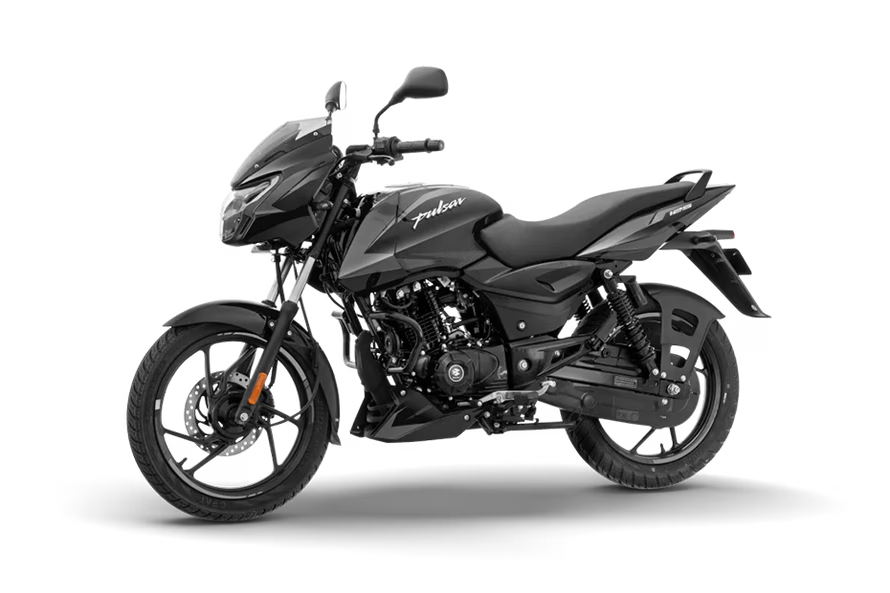
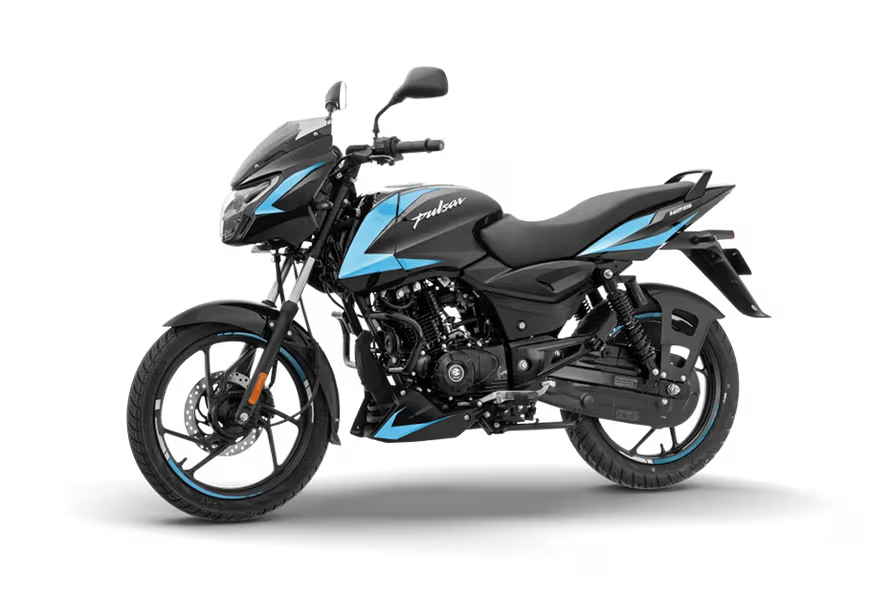
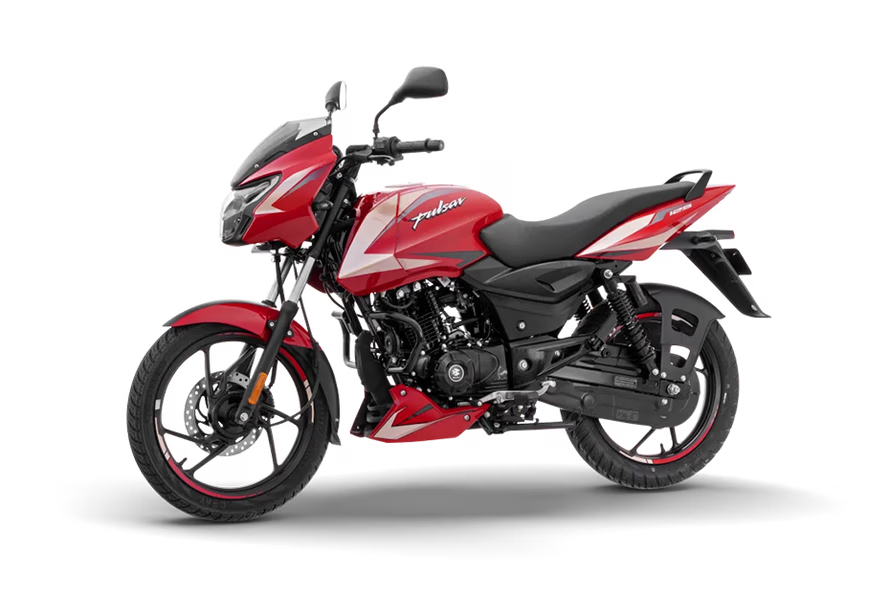
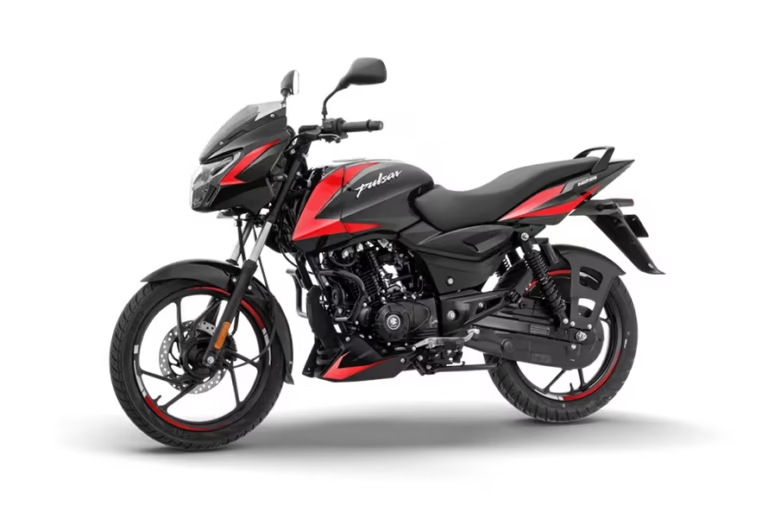
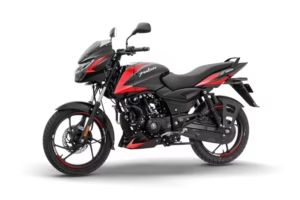
Bajaj Pulsar 125

12.5 pts
Unweighted: 9 advantages
EnginePerformanceDimensionsBrakesTyresFeaturesOther

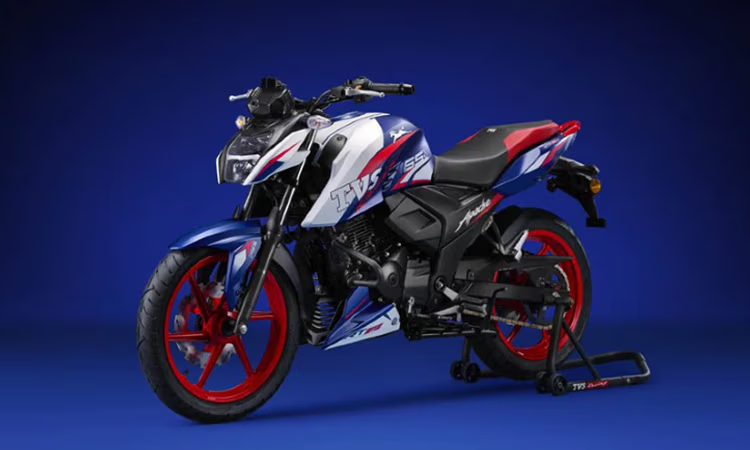
TVS Apache RTR 165 RP

18.0 pts
Unweighted: 14 advantages
EnginePerformanceDimensionsBrakesTyresFeaturesOther
Specification
Bajaj Pulsar 125
Bajaj Pulsar 125
Bajaj
₹91,610
TVS Apache RTR 165 RP
TVS
₹145,000

Engine Specifications

Cooling System Air‑cooled Oil-cooled
Displacement 124.4 cc 164.9 cc
Engine Type 4-Stroke, 2-Valve, Twin Spark BSVI Compliant Engine Single-cylinder, 4-stroke, 4-valve, SOHC
Power 8.68 kW (11.8 PS) @ 8500 rpm 19.2 PS @ 10,000 rpm
Torque 10.8 Nm @ 6,500 rpm 14.2 Nm @ 8,750 rpm

Performance & Efficiency

Fuel Tank Capacity 15 L 12 litres
Mileage 51.46 Kmpl 45 Kmpl

Dimensions & Weight

Kerb Weight Split: 144 / Single: 146 148
Seat Height 795 800

Brakes & Suspension

ABS Single-channel ABS
Front Brake 240 mm Disc 270 mm Disc
Front Suspension 30mm Telescopic forks Showa Race-Tuned Telescopic Fork
Rear Brake 130 mm Drum 240 mm Disc
Rear Suspension Twin Hydraulic Suspension Showa Race-Tuned Monoshock

Tyres & Wheels

Front Tyre 80/100 × 17 Tubeless 90/90 – 17 (Tubeless)
Rear Tyre 100/90 × 17 Tubeless 130/70 – 17 (Tubeless, Radial)
Tyre Type Tubeless Tubeless
Wheel Type Alloy Alloy

Features & Technology

Headlight 12 V HS1 35/35 W LED with DRL

Other Specifications

Battery DC, 12V, 4Ah VRLA 12V, 8Ah MF
Bike Image 1 https://motoautiv.com/wp-content/uploads/2025/07/black-2.avif
Bike Image 2 https://motoautiv.com/wp-content/uploads/2025/07/cyan.avif
Bike Image 3 https://motoautiv.com/wp-content/uploads/2025/07/red-3.avif
Bike Image 4 https://motoautiv.com/wp-content/uploads/2025/07/gold.avif
Cluster Fully Digital LCD Fully digital
Color Options Racing Red Tan Beige | #A50000, #C7A27C Black Race Red | #111111, #B00000 Black Cyan Blue | #111111, #00A3C7 Black Dark Grey | #111111, #5C6166 Black Gold | #111111, #B08D57 Racing White | #F2F2EE, #C40000
Cons The feature list feels basic compared to some newer 125cc motorcycles that offer fully digital displays, Bluetooth connectivity, and additional rider information. Engine vibrations become noticeable at higher RPMs and prolonged highway speeds. The motorcycle carries more weight than several competitors in the segment, which can make low-speed maneuvering feel slightly heavier. Rear suspension comfort can feel firm on badly broken roads, especially when riding solo. The design has evolved gradually over the years, so some buyers may find it less modern than newer rivals. Highway performance remains limited by the engine capacity, particularly when riding with a pillion or luggage at higher speeds. Lighting and instrumentation remain relatively simple on lower variants. The aggressive tuning also means vibrations become more noticeable at higher RPMs and highway cruising speeds. The suspension setup is firmer than regular commuter motorcycles, so rough roads and potholes can feel harsher during everyday riding. Long-distance comfort is not one of the strongest areas because the riding posture and sporty seat setup can feel tiring after extended hours. Since it was launched as a limited-production model, availability of specific body parts and graphics may be more difficult compared to standard Apache variants. Fuel efficiency is lower than the regular RTR 160 because of the performance-oriented tuning and shorter gearing. The motorcycle focuses more on sporty riding than relaxed commuting, so riders looking mainly for comfort and refinement may find it slightly too aggressive for daily use. Some riders expected even more power considering the “Race Performance” branding, especially when compared to larger 200cc motorcycles.
Detailed Overview The Bajaj Pulsar 125 is a motorcycle that combines the practicality of a commuter bike with styling elements that are usually associated with larger motorcycles. It is designed for riders who want a motorcycle for daily transportation but also prefer a sportier appearance and a slightly more engaging riding experience than a traditional commuter model. The bike carries the familiar Pulsar design language, including a muscular fuel tank, sporty graphics, split grab rails on selected variants, and body panels that give it a larger road presence than many motorcycles in the 125cc category. Power comes from a 124.4cc single-cylinder, air-cooled DTS-i engine paired with a 5-speed gearbox. The engine produces around 11.8 PS of power and 10.8 Nm of torque. The tuning focuses on providing a balance between fuel efficiency and usable performance. In city traffic, the motorcycle feels responsive enough for daily commuting, while the engine also has sufficient power for occasional highway rides. The 5-speed transmission helps maintain smoother engine operation at moderate cruising speeds and allows the rider to make better use of the available power across different road conditions. Fuel efficiency is one of the important aspects of the Pulsar 125. Under normal riding conditions, real-world mileage generally ranges between 50 and 60 km/l, depending on traffic, riding style, road conditions, and maintenance. The motorcycle is equipped with an 11.5-litre fuel tank, which provides a useful riding range and reduces the need for frequent fuel stops during daily commuting. The riding position is designed to balance comfort and control. The handlebar is positioned in a way that allows a slightly sporty feel without putting excessive pressure on the rider’s wrists. The footpegs and seat placement create a natural riding posture that works well for city riding as well as longer daily commutes. The seat is wide enough for both rider and pillion, and the overall ergonomics are intended to support regular use in different riding environments. Suspension duties are handled by telescopic front forks and twin rear shock absorbers. The setup is tuned to absorb common road imperfections such as potholes, speed breakers, and uneven surfaces. This allows the motorcycle to remain comfortable during everyday riding while also maintaining stability on smoother roads. The chassis provides predictable handling characteristics, making the bike easy to maneuver in traffic and around corners at normal riding speeds. Braking performance depends on the variant selected. Higher variants are equipped with a front disc brake, while other versions use drum brakes. All variants use Combined Braking System (CBS), which helps distribute braking force between the front and rear wheels during braking. The motorcycle rides on alloy wheels fitted with tubeless tyres, which add convenience during punctures and routine maintenance. The instrument cluster combines analogue and digital elements. Riders can view information such as speed, fuel level, odometer readings, and other basic ride-related data. The layout remains straightforward and easy to read. Unlike some newer motorcycles in the segment, the Pulsar 125 does not focus heavily on connected technology or smartphone integration. The overall character of the motorcycle is shaped by its combination of commuter-friendly mechanics, sporty styling, practical ergonomics, and everyday usability. Its engine, suspension, braking system, and riding position are designed to handle regular commuting requirements while maintaining the visual identity associated with the Pulsar series. Some motorcycles are designed mainly for broad mass-market appeal, while others are built to showcase what a platform can do when performance becomes the priority. The TVS Apache RTR 165 RP belongs to the second category. Developed under the company’s “Race Performance” program, the motorcycle takes the familiar Apache RTR formula and pushes it toward a more aggressive and track-inspired direction. Although it shares its foundation with the RTR 160 4V, several mechanical and cosmetic changes give the 165 RP a noticeably sharper personality on the road. The motorcycle is powered by a 164.9cc single-cylinder, oil-cooled engine paired with a 5-speed gearbox. TVS revised the engine tuning to increase output to around 19.2 bhp, which made it one of the most powerful motorcycles in its segment during its launch period. The engine feels noticeably more responsive than the standard RTR 160 4V, especially in the mid and top-end range where acceleration becomes quicker and more energetic. Throttle response feels immediate, and the shorter gearing further adds to the bike’s aggressive nature during city riding and overtakes. The oil-cooling system helps maintain performance consistency during longer rides and high-RPM usage. The RTR 165 RP also includes three riding modes — Sport, Urban, and Rain. These modes change throttle sensitivity and ABS calibration depending on riding conditions. Sport mode allows the motorcycle to deliver its sharpest response and full performance output, while Urban and Rain modes make acceleration smoother for everyday traffic or slippery roads. This feature gives the bike more adaptability while still maintaining its performance-focused identity. One of the biggest differences between the 165 RP and regular Apache models lies in the chassis setup. The motorcycle feels more focused and sharper while cornering, partly because of the revised suspension tuning. The front uses telescopic forks, while the rear receives a preload-adjustable monoshock setup tuned for more aggressive riding. The suspension feels firmer than standard commuter motorcycles, helping the bike remain stable during quick direction changes and fast cornering. However, rough roads and potholes are felt more clearly because comfort is not the primary focus of the setup. Braking hardware includes petal disc brakes at both ends supported by dual-channel ABS. The braking feel remains progressive and confidence-inspiring, especially during spirited riding. The motorcycle rides on alloy wheels fitted with tubeless tyres, while red wheel accents and race-inspired graphics add to its distinctive appearance. TVS also added several visual upgrades including sporty decals, contrasting body graphics, and golden fork detailing that separate the bike from the standard Apache lineup. Technology and features are another important part of the package. The fully digital instrument console supports TVS SmartXonnect connectivity with Bluetooth pairing, navigation assist, call alerts, ride analytics, and race-oriented information. Adjustable clutch and brake levers, a slipper clutch, and LED lighting further add to the premium and performance-focused nature of the motorcycle. The riding posture remains sporty but manageable enough for regular road use. The split-seat layout, rear-set footpegs, and slightly forward-leaning ergonomics help the bike feel more engaging without becoming too extreme for daily riding. Fuel efficiency usually stays around 35–45 km/l depending on riding style and traffic conditions. Unlike regular Apache models, the RTR 165 RP was launched as a limited-production motorcycle in India and was never intended to become a permanent mass-market offering. Overall, the motorcycle combines sharper engine tuning, race-inspired upgrades, sporty handling, and modern electronic features into a street bike designed primarily around rider engagement and performance-oriented road riding.
Expert Review he Bajaj Pulsar 125 takes the familiar Pulsar formula and adapts it for riders looking for everyday practicality with a slightly sportier feel than a conventional commuter bike. The 124.4cc engine delivers smooth low and mid-range performance, which suits city traffic and routine commuting, while still providing enough response for occasional highway use. What stands out most is how the motorcycle carries the visual proportions and road presence of a larger bike despite belonging to the 125cc category. The riding posture feels natural for daily use, and the suspension setup is tuned to balance comfort and stability across different road conditions. The motorcycle does not focus heavily on modern electronics or premium features, instead relying on straightforward mechanical simplicity and familiar riding characteristics. Engine refinement remains acceptable for regular use, though vibrations become more noticeable as speeds increase. The overall package is centered around everyday usability, balanced performance, and the established character associated with the Pulsar name., 4.3, MotoAutiv Team The TVS Apache RTR 165 RP feels more like a factory-tuned special edition than just a slightly upgraded Apache. The engine responds sharply, the gearing feels shorter and more aggressive, and the motorcycle reacts quickly to throttle inputs in a way that immediately feels sportier than the standard RTR 160 4V. What stands out most is how light and eager the bike feels while cornering — the chassis remains agile, and the suspension setup gives the motorcycle a much more focused riding character. TVS also added several race-inspired touches like adjustable suspension, slipper clutch, riding modes, and cosmetic upgrades that make the motorcycle feel closer to a track-oriented street bike rather than a regular commuter. At the same time, the firmer setup and aggressive tuning also mean vibrations and ride stiffness are more noticeable during longer rides or rough roads. The RTR 165 RP mainly appeals to riders who enjoy sharp handling and a more energetic riding feel rather than relaxed commuting comfort., 4.6, MotoAutiv Team
FAQ (Manual Override) Q: What engine does the Bajaj Pulsar 125 use? A: It is powered by a 124.4cc single-cylinder, air-cooled, DTS-i engine. Q: How much power does the Pulsar 125 produce? A: The engine produces approximately 11.8 PS of power and 10.8 Nm of torque. Q: What mileage does the Bajaj Pulsar 125 deliver? A: Real-world fuel efficiency generally ranges between 50–60 km/l depending on riding conditions and maintenance. Q: What is the top speed of the Pulsar 125? A: The motorcycle can reach an approximate top speed of around 100–105 km/h. Q: Is the Bajaj Pulsar 125 suitable for highway riding? A: Yes, it can handle occasional highway rides comfortably, although it is primarily designed for city commuting and everyday transportation. Q: Does the Pulsar 125 have a front disc brake? A: Yes, higher variants are equipped with a front disc brake, while some variants are available with drum brakes. Q: Does the Bajaj Pulsar 125 have ABS? A: No, the Pulsar 125 does not offer ABS. It uses CBS (Combined Braking System). Q: What suspension setup does the Pulsar 125 use? A: The motorcycle uses telescopic front forks and twin rear shock absorbers. Q: What is the fuel tank capacity of the Pulsar 125? A: The motorcycle comes with a 11.5-litre fuel tank. Q: What is the kerb weight of the Bajaj Pulsar 125? A: Depending on the variant, kerb weight is approximately 140–142 kg. Q: Does the Pulsar 125 use tubeless tyres? A: Yes, all variants come equipped with tubeless tyres. Q: Is the Bajaj Pulsar 125 beginner-friendly? A: Yes, the motorcycle offers predictable power delivery, comfortable ergonomics, and manageable performance, making it suitable for new riders. Q: Does the Pulsar 125 have Bluetooth connectivity? A: No, the standard Pulsar 125 does not offer Bluetooth connectivity or smartphone integration. Q: What type of instrument cluster does the Pulsar 125 get? A: The motorcycle uses a semi-digital instrument cluster with an analogue tachometer and digital information display. Q: Is the Bajaj Pulsar 125 a commuter motorcycle or a sports bike? A: The Pulsar 125 is generally classified as a sporty commuter motorcycle. It combines commuter-bike practicality with styling and riding characteristics inspired by larger Pulsar models. Q: Is the TVS Apache RTR 165 RP discontinued in India? A: Yes, the TVS Apache RTR 165 RP was launched as a limited-production “Race Performance” model and is no longer part of the regular TVS lineup in India. TVS produced the motorcycle in limited numbers, which is why it was available only for a short period. Q: Can the TVS Apache RTR 165 RP still be purchased in India? A: New units are generally unavailable through official dealerships now, but used models may still be found in the pre-owned motorcycle market. Q: What is the engine capacity of the TVS Apache RTR 165 RP? A: The motorcycle is powered by a 164.9cc single-cylinder, oil-cooled engine. Q: What is the power output of the RTR 165 RP? A: The bike produces around 19.2 bhp and approximately 14.2 Nm of torque. Q: What makes the RTR 165 RP different from the RTR 160 4V? A: The RTR 165 RP gets a more powerful engine tune, slipper clutch, adjustable suspension, red alloy wheels, race-inspired styling, and performance-focused upgrades. Q: What mileage does the TVS Apache RTR 165 RP give? A: Real-world mileage generally stays around 35–45 km/l depending on riding style and traffic conditions. Q: What is the top speed of the RTR 165 RP? A: The motorcycle has an approximate top speed of around 125 km/h. Q: Does the Apache RTR 165 RP have riding modes? A: Yes, the bike offers Sport, Urban, and Rain riding modes. Q: Does the RTR 165 RP get Bluetooth connectivity? A: Yes, it supports TVS SmartXonnect with navigation, call alerts, and ride analytics. Q: What type of brakes does the RTR 165 RP use? A: The motorcycle uses petal disc brakes at both ends along with dual-channel ABS. Q: What suspension setup does the RTR 165 RP use? A: It gets telescopic front forks and preload-adjustable rear monoshock suspension. Q: Does the RTR 165 RP have a slipper clutch? A: Yes, the motorcycle comes with a slipper clutch for smoother downshifts during aggressive riding. Q: What is the fuel tank capacity of the RTR 165 RP? A: The motorcycle comes with a fuel tank capacity of around 12 litres. Q: What is the kerb weight of the RTR 165 RP? A: The kerb weight of the bike is approximately 145 kg. Q: Was the RTR 165 RP a limited edition motorcycle? A: Yes, TVS launched the RTR 165 RP as a limited-production Race Performance model. Q: Is the RTR 165 RP suitable for highway riding? A: Yes, the strong acceleration and sporty chassis make it suitable for highway use and spirited riding. Q: What type of tyres does the RTR 165 RP use? A: The motorcycle uses tubeless tyres mounted on alloy wheels.
Fuel System Fuel Injection Fuel Injection
Price Variants Single Seat | 92170 Split Seat | 94229 Neon Single Seat | 107675 STD | 145000
Pros The 124.4cc engine offers stronger performance than most basic commuter motorcycles, making overtakes and daily city riding feel easier without significantly affecting fuel efficiency. The motorcycle retains the familiar Pulsar design language, giving it a larger and more muscular appearance than many other bikes in the 125cc segment. Ride quality is well balanced for everyday use. The suspension setup handles potholes, speed breakers, and uneven roads reasonably well while maintaining stability at regular commuting speeds. The riding position strikes a good balance between comfort and sportiness. The handlebar and footpeg placement allow comfortable daily commuting without feeling overly upright or aggressive. Fuel efficiency remains practical for daily use, with real-world mileage generally ranging between 50–60 km/l depending on riding conditions. The front disc brake variant provides better stopping confidence than many entry-level commuter motorcycles that rely entirely on drum brakes. Spare parts availability, service network reach, and maintenance costs are generally manageable due to the widespread presence of the Pulsar lineup across India. The motorcycle feels stable at moderate highway speeds compared to many lightweight commuter-focused alternatives. The biggest highlight of the RTR 165 RP is its engine tuning. The motorcycle feels noticeably more aggressive and quicker than the standard RTR 160 4V, especially in the mid and top-end range where acceleration feels sharp and immediate. The bike feels very light and responsive while cornering. Direction changes happen quickly, and the chassis gives the rider a confident and sporty feel during fast riding. TVS added several race-inspired upgrades like adjustable suspension, red alloy wheels, racing graphics, and a slipper clutch, which make the motorcycle feel more performance-focused than a regular commuter bike. The exhaust note sounds deeper and sportier compared to the standard Apache models, adding more character to the riding experience. Ride modes, Bluetooth connectivity, adjustable levers, and the fully digital display give the bike a feature-rich setup for its segment. The shorter gearing and aggressive throttle response make the motorcycle especially enjoyable in city riding and quick overtakes. Braking performance feels strong and predictable, with dual-channel ABS improving confidence during hard braking situations.
Starter Electric & Kick Electric
Transmission 5‑speed 5-speed manual

If you like what we do, Stay connected with 🚗 Motoautiv.com ⚡

Leave your email 📧 below and Click subscribe Now 🔔✨