Quick Analysis
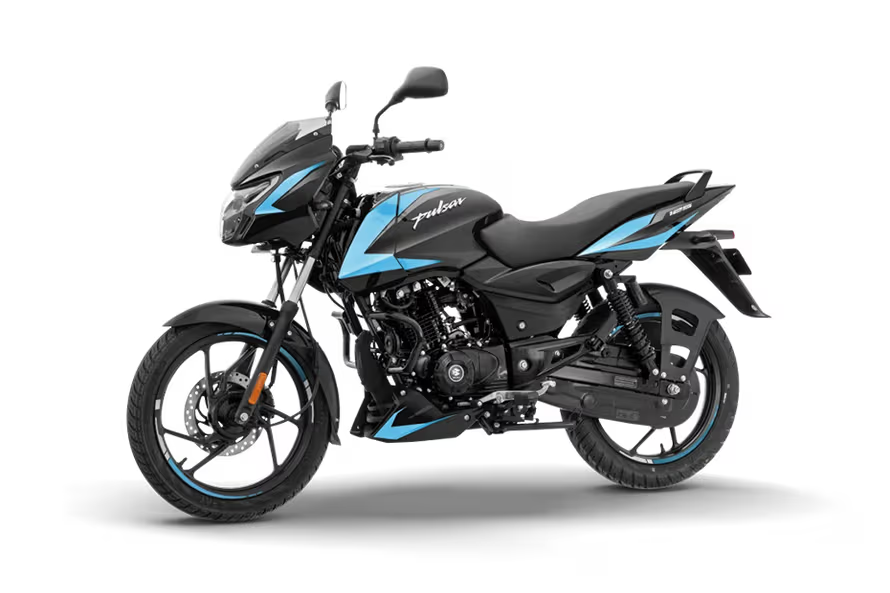
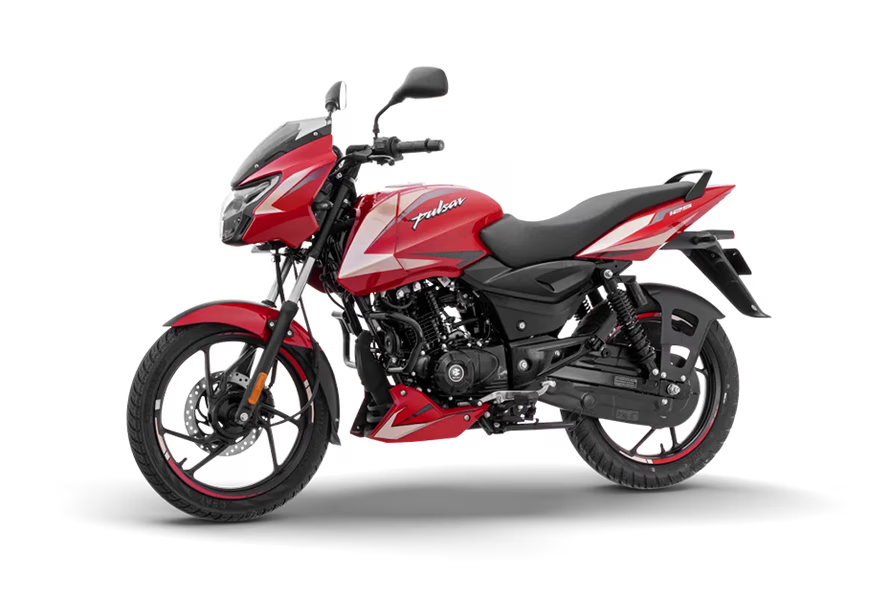
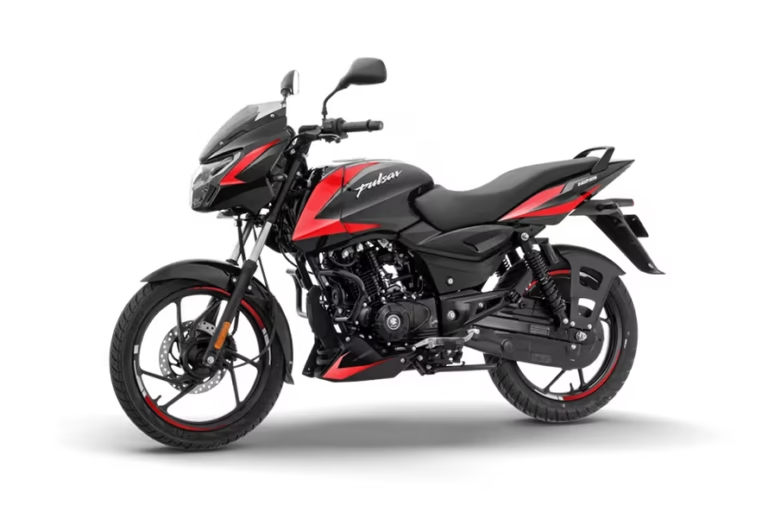
Bajaj Pulsar 125
14.0 pts
Unweighted: 9 advantages
EnginePerformanceDimensionsBrakesTyresFeaturesOther
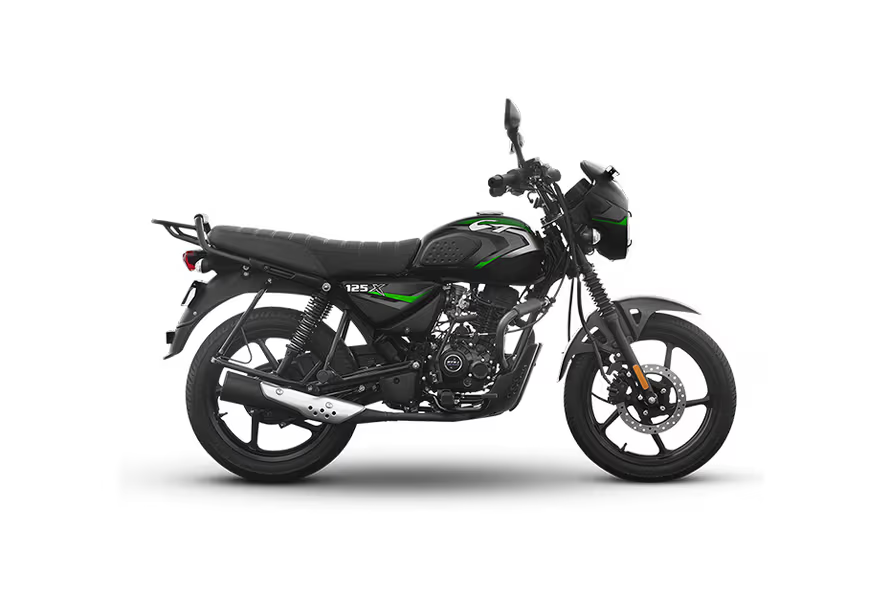
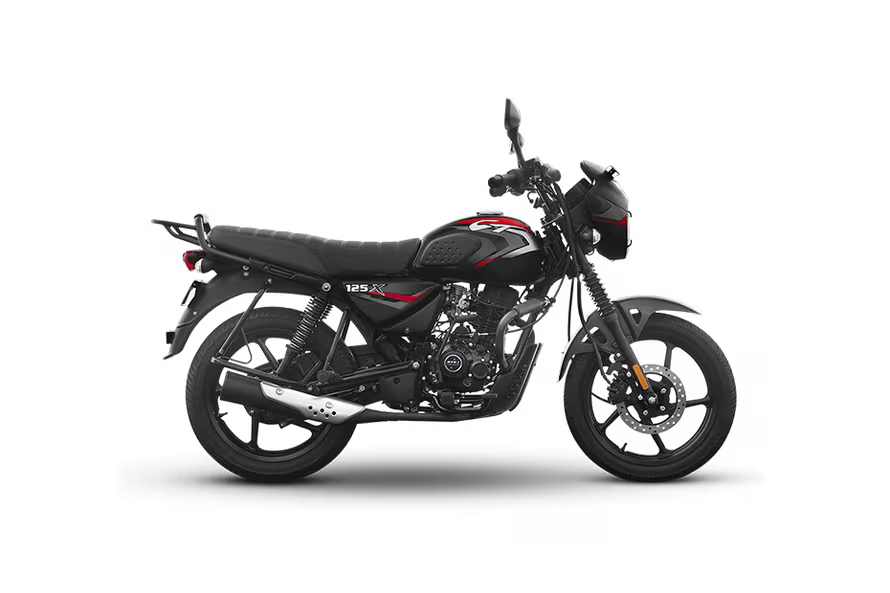
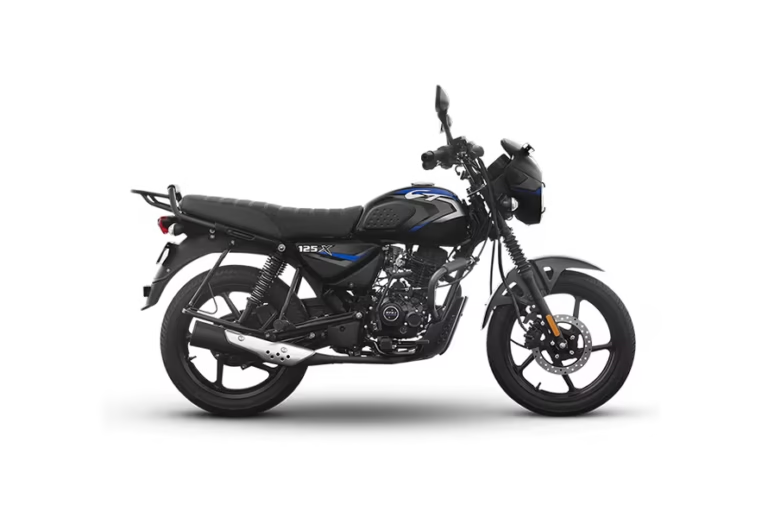
Bajaj CT125x
13.5 pts
Unweighted: 11 advantages
EnginePerformanceDimensionsBrakesTyresFeaturesOther
| Specification | ||
|---|---|---|
Engine Specifications |
||
| Cooling System | Air‑cooled | Air‑cooled |
| Displacement | 124.4 cc | 124.45 cc |
| Engine Type | 4-Stroke, 2-Valve, Twin Spark BSVI Compliant Engine | 4 stroke, Air cooled Single cylinder, SOHC, DTSi |
| Power | 8.68 kW (11.8 PS) @ 8500 rpm | 10.9 PS @ 8000 rpm |
| Torque | 10.8 Nm @ 6,500 rpm | 11 Nm @ 5500 rpm |
Performance & Efficiency |
||
| Fuel Tank Capacity | 15 L | 11 L |
| Mileage | 51.46 Kmpl | 59.6 Kmpl |
Dimensions & Weight |
||
| Kerb Weight | Split: 144 / Single: 146 | 130 |
| Seat Height | 795 | 810 |
Brakes & Suspension |
||
| Front Brake | 240 mm Disc | 130 mm Disc/Drum |
| Front Suspension | 30mm Telescopic forks | Telescopic (125 mm travel) |
| Rear Brake | 130 mm Drum | 130 mm Drum |
| Rear Suspension | Twin Hydraulic Suspension | SNS with Nitrox (100 mm travel) |
Tyres & Wheels |
||
| Front Tyre | 80/100 × 17 Tubeless | 80/100–17 Tubeless |
| Rear Tyre | 100/90 × 17 Tubeless | 100/90–17 Tubeless |
| Tyre Type | Tubeless | Tubeless |
| Wheel Type | Alloy | Alloy |
Features & Technology |
||
| Headlight | 12 V HS1 35/35 W | Halogen |
Other Specifications |
||
| Battery | DC, 12V, 4Ah VRLA | — |
| Bike Image 1 | https://motoautiv.com/wp-content/uploads/2025/07/black-2.avif | https://motoautiv.com/wp-content/uploads/2025/07/Ebony-green.avif |
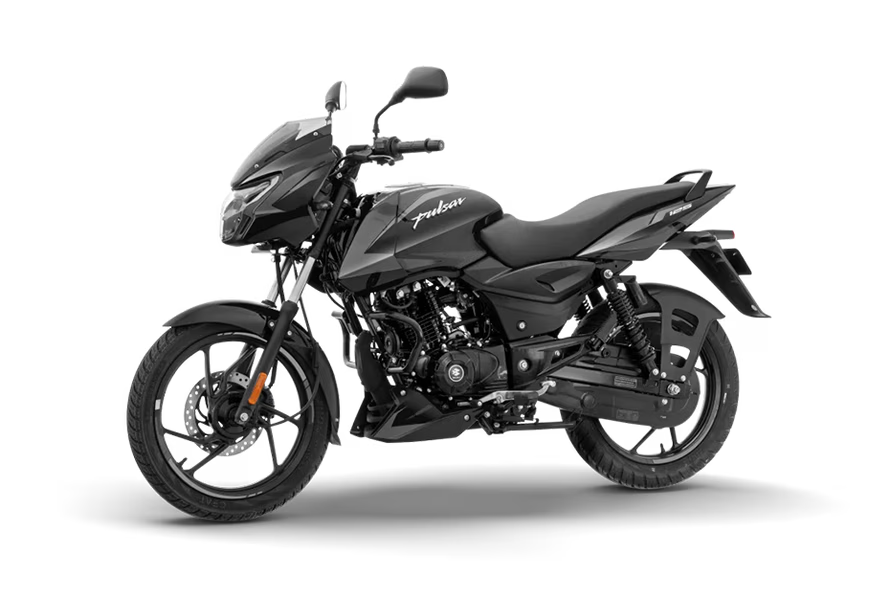
| Bike Image 2 | https://motoautiv.com/wp-content/uploads/2025/07/cyan.avif | https://motoautiv.com/wp-content/uploads/2025/07/Ebony-red-1.avif |
| Bike Image 3 | https://motoautiv.com/wp-content/uploads/2025/07/red-3.avif | — |
| Bike Image 4 | https://motoautiv.com/wp-content/uploads/2025/07/gold.avif | — |
| Cluster | Fully Digital LCD | — |
| Color Options | Racing Red Tan Beige | #A50000, #C7A27C Black Race Red | #111111, #B00000 Black Cyan Blue | #111111, #00A3C7 Black Dark Grey | #111111, #5C6166 Black Gold | #111111, #B08D57 | Ebony Black with Red Decals | #111111, #A00000 Ebony Black with Blue Decals | #111111, #2456A6 Ebony Black with Green Decals | #111111, #2F6B3D |
| Cons | The feature list feels basic compared to some newer 125cc motorcycles that offer fully digital displays, Bluetooth connectivity, and additional rider information. Engine vibrations become noticeable at higher RPMs and prolonged highway speeds. The motorcycle carries more weight than several competitors in the segment, which can make low-speed maneuvering feel slightly heavier. Rear suspension comfort can feel firm on badly broken roads, especially when riding solo. The design has evolved gradually over the years, so some buyers may find it less modern than newer rivals. Highway performance remains limited by the engine capacity, particularly when riding with a pillion or luggage at higher speeds. Lighting and instrumentation remain relatively simple on lower variants. | Despite the larger engine, performance remains commuter-oriented and does not feel particularly exciting at higher speeds. The motorcycle uses a front disc and rear drum brake setup, but braking performance is still tuned more for regular commuting than aggressive riding. The design is functional rather than premium, and some buyers may find the styling too utilitarian compared to modern 125cc commuters. The instrument cluster is basic and lacks features such as Bluetooth connectivity, navigation, or advanced digital displays. Engine vibrations can become noticeable when the motorcycle is ridden near its top speed for extended periods. The suspension is comfort-focused, which means handling feels stable but not especially sharp during fast cornering. Highway cruising ability is better than smaller commuter bikes, but the motorcycle is still primarily designed for daily transportation rather than long-distance touring. Since the model has been discontinued in India, availability of certain body panels, graphics, or model-specific cosmetic parts may become more limited over time compared to current-production motorcycles. |
| Detailed Overview | The Bajaj Pulsar 125 is a motorcycle that combines the practicality of a commuter bike with styling elements that are usually associated with larger motorcycles. It is designed for riders who want a motorcycle for daily transportation but also prefer a sportier appearance and a slightly more engaging riding experience than a traditional commuter model. The bike carries the familiar Pulsar design language, including a muscular fuel tank, sporty graphics, split grab rails on selected variants, and body panels that give it a larger road presence than many motorcycles in the 125cc category. Power comes from a 124.4cc single-cylinder, air-cooled DTS-i engine paired with a 5-speed gearbox. The engine produces around 11.8 PS of power and 10.8 Nm of torque. The tuning focuses on providing a balance between fuel efficiency and usable performance. In city traffic, the motorcycle feels responsive enough for daily commuting, while the engine also has sufficient power for occasional highway rides. The 5-speed transmission helps maintain smoother engine operation at moderate cruising speeds and allows the rider to make better use of the available power across different road conditions. Fuel efficiency is one of the important aspects of the Pulsar 125. Under normal riding conditions, real-world mileage generally ranges between 50 and 60 km/l, depending on traffic, riding style, road conditions, and maintenance. The motorcycle is equipped with an 11.5-litre fuel tank, which provides a useful riding range and reduces the need for frequent fuel stops during daily commuting. The riding position is designed to balance comfort and control. The handlebar is positioned in a way that allows a slightly sporty feel without putting excessive pressure on the rider’s wrists. The footpegs and seat placement create a natural riding posture that works well for city riding as well as longer daily commutes. The seat is wide enough for both rider and pillion, and the overall ergonomics are intended to support regular use in different riding environments. Suspension duties are handled by telescopic front forks and twin rear shock absorbers. The setup is tuned to absorb common road imperfections such as potholes, speed breakers, and uneven surfaces. This allows the motorcycle to remain comfortable during everyday riding while also maintaining stability on smoother roads. The chassis provides predictable handling characteristics, making the bike easy to maneuver in traffic and around corners at normal riding speeds. Braking performance depends on the variant selected. Higher variants are equipped with a front disc brake, while other versions use drum brakes. All variants use Combined Braking System (CBS), which helps distribute braking force between the front and rear wheels during braking. The motorcycle rides on alloy wheels fitted with tubeless tyres, which add convenience during punctures and routine maintenance. The instrument cluster combines analogue and digital elements. Riders can view information such as speed, fuel level, odometer readings, and other basic ride-related data. The layout remains straightforward and easy to read. Unlike some newer motorcycles in the segment, the Pulsar 125 does not focus heavily on connected technology or smartphone integration. The overall character of the motorcycle is shaped by its combination of commuter-friendly mechanics, sporty styling, practical ergonomics, and everyday usability. Its engine, suspension, braking system, and riding position are designed to handle regular commuting requirements while maintaining the visual identity associated with the Pulsar series. | The Bajaj CT 125X is a commuter motorcycle that has been developed with an emphasis on practicality, durability, and everyday usability. While it shares the basic purpose of most commuter bikes, providing economical transportation, it introduces several design elements that make it stand apart from conventional city-focused commuters. Features such as a metal bash plate, fork gaiters, crash guards, and semi-knobby tyres give the motorcycle a more rugged appearance and highlight its focus on handling rough road conditions alongside regular urban commuting. Powering the motorcycle is a 124.4cc single-cylinder, air-cooled engine paired with a 5-speed gearbox. The engine is tuned to deliver usable low and mid-range performance rather than aggressive acceleration. This tuning allows the motorcycle to respond smoothly in city traffic and makes it easier to ride at everyday speeds. Compared to smaller 100cc commuter motorcycles, the additional engine capacity provides improved pulling power, which can be useful when carrying a pillion rider, transporting luggage, or riding on inclines. The 5-speed transmission also helps maintain a more relaxed engine speed during longer rides and moderate highway usage. Fuel efficiency remains an important part of the motorcycle’s overall character. Real-world mileage generally falls in the range of approximately 55–65 km/l depending on riding habits, traffic conditions, and maintenance. Combined with its 11-litre fuel tank, the motorcycle offers a riding range that suits riders who cover substantial distances as part of their daily routine. The riding posture is designed around comfort and control. A wide handlebar, upright seating position, and neutral footpeg placement create a natural riding triangle that does not place excessive strain on the rider. The seat is long and reasonably spacious, allowing both rider and pillion to sit comfortably during daily commutes. These ergonomics make the motorcycle suitable for prolonged periods of use in urban environments and on mixed road surfaces. Suspension duties are handled by telescopic front forks and dual rear shock absorbers. The setup is tuned primarily to absorb uneven surfaces and reduce the impact of potholes, speed breakers, and damaged roads. This suspension configuration works together with the motorcycle’s relatively high ground clearance, allowing it to travel over rough patches without frequent contact between the underside of the bike and the road surface. The semi-knobby tyre pattern further contributes to the motorcycle’s ability to maintain grip on mixed terrain, including gravel roads and less-developed routes. Visually, the CT 125X follows a straightforward and functional design philosophy. The bodywork remains simple, but the addition of protective elements and contrasting graphics creates a tougher appearance than a typical commuter motorcycle. Alloy wheels, tank pads, and practical utility-focused components contribute to the overall design theme without significantly increasing complexity. Braking performance varies depending on the variant, with front disc and drum brake options offered during its production run. The motorcycle uses Combined Braking System (CBS), which distributes braking force between the wheels to improve stability during braking. Tubeless tyres add another practical element by reducing inconvenience in the event of minor punctures. The feature list remains focused on essential functionality. The instrument cluster provides basic riding information in a simple and easy-to-read format, while electric start functionality improves convenience during daily use. Unlike premium motorcycles, the CT 125X does not rely heavily on advanced electronics or connected technologies, instead maintaining a straightforward mechanical setup aimed at routine transportation and ease of ownership. |
| Expert Review | he Bajaj Pulsar 125 takes the familiar Pulsar formula and adapts it for riders looking for everyday practicality with a slightly sportier feel than a conventional commuter bike. The 124.4cc engine delivers smooth low and mid-range performance, which suits city traffic and routine commuting, while still providing enough response for occasional highway use. What stands out most is how the motorcycle carries the visual proportions and road presence of a larger bike despite belonging to the 125cc category. The riding posture feels natural for daily use, and the suspension setup is tuned to balance comfort and stability across different road conditions. The motorcycle does not focus heavily on modern electronics or premium features, instead relying on straightforward mechanical simplicity and familiar riding characteristics. Engine refinement remains acceptable for regular use, though vibrations become more noticeable as speeds increase. The overall package is centered around everyday usability, balanced performance, and the established character associated with the Pulsar name., 4.3, MotoAutiv Team | The Bajaj CT 125X feels like a motorcycle developed for riders who need something tougher than a typical city commuter without moving into a larger or more expensive segment. Its 124.4cc engine provides a noticeable improvement in pulling power over most 100cc commuters, making daily riding with a pillion or luggage feel less demanding. The suspension setup is tuned for comfort, and the higher ground clearance, bash plate, fork gaiters, and semi-knobby tyres give the bike a practical advantage on broken roads and rural routes. The riding posture remains upright and relaxed, which helps during long hours of commuting. Rather than focusing on modern technology or sporty performance, the CT 125X prioritizes durability, simplicity, and ease of ownership. Features remain basic and highway performance is limited by commuter-bike standards, but the motorcycle is clearly aimed at riders who value robustness and everyday usability above everything else., 4.3, MotoAutiv Team |
| FAQ (Manual Override) | Q: What engine does the Bajaj Pulsar 125 use? A: It is powered by a 124.4cc single-cylinder, air-cooled, DTS-i engine. Q: How much power does the Pulsar 125 produce? A: The engine produces approximately 11.8 PS of power and 10.8 Nm of torque. Q: What mileage does the Bajaj Pulsar 125 deliver? A: Real-world fuel efficiency generally ranges between 50–60 km/l depending on riding conditions and maintenance. Q: What is the top speed of the Pulsar 125? A: The motorcycle can reach an approximate top speed of around 100–105 km/h. Q: Is the Bajaj Pulsar 125 suitable for highway riding? A: Yes, it can handle occasional highway rides comfortably, although it is primarily designed for city commuting and everyday transportation. Q: Does the Pulsar 125 have a front disc brake? A: Yes, higher variants are equipped with a front disc brake, while some variants are available with drum brakes. Q: Does the Bajaj Pulsar 125 have ABS? A: No, the Pulsar 125 does not offer ABS. It uses CBS (Combined Braking System). Q: What suspension setup does the Pulsar 125 use? A: The motorcycle uses telescopic front forks and twin rear shock absorbers. Q: What is the fuel tank capacity of the Pulsar 125? A: The motorcycle comes with a 11.5-litre fuel tank. Q: What is the kerb weight of the Bajaj Pulsar 125? A: Depending on the variant, kerb weight is approximately 140–142 kg. Q: Does the Pulsar 125 use tubeless tyres? A: Yes, all variants come equipped with tubeless tyres. Q: Is the Bajaj Pulsar 125 beginner-friendly? A: Yes, the motorcycle offers predictable power delivery, comfortable ergonomics, and manageable performance, making it suitable for new riders. Q: Does the Pulsar 125 have Bluetooth connectivity? A: No, the standard Pulsar 125 does not offer Bluetooth connectivity or smartphone integration. Q: What type of instrument cluster does the Pulsar 125 get? A: The motorcycle uses a semi-digital instrument cluster with an analogue tachometer and digital information display. Q: Is the Bajaj Pulsar 125 a commuter motorcycle or a sports bike? A: The Pulsar 125 is generally classified as a sporty commuter motorcycle. It combines commuter-bike practicality with styling and riding characteristics inspired by larger Pulsar models. | Q: Is the Bajaj CT 125X discontinued in India? A: Yes. Bajaj has discontinued the CT 125X from its current India lineup, although used models are still available in the pre-owned market. Q: What engine does the Bajaj CT 125X use? A: It is powered by a 124.4cc single-cylinder, air-cooled engine paired with a 5-speed gearbox. Q: What mileage does the Bajaj CT 125X deliver? A: Real-world mileage generally ranges between 55–65 km/l depending on riding conditions and maintenance. Q: What is the top speed of the CT 125X? A: The motorcycle can reach an approximate top speed of around 95–100 km/h. Q: What makes the CT 125X different from the CT 110X? A: The CT 125X gets a larger 124.4cc engine, a 5-speed gearbox, and stronger performance while retaining the rugged commuter design. Q: Does the Bajaj CT 125X have a front disc brake? A: Yes. Higher variants were offered with a front disc brake, while some versions used a drum brake setup. Q: Does the CT 125X have ABS? A: No. The motorcycle does not offer ABS and instead uses CBS (Combined Braking System). Q: What suspension setup does the CT 125X use? A: It uses telescopic front forks and dual rear shock absorbers. Q: What is the fuel tank capacity of the CT 125X? A: The motorcycle comes with an 11-litre fuel tank. Q: What is the kerb weight of the CT 125X? A: Depending on the variant, kerb weight is approximately 130 kg. Q: Does the CT 125X use tubeless tyres? A: Yes, it comes equipped with tubeless tyres mounted on alloy wheels. Q: Is the CT 125X suitable for rough roads? A: Yes. The higher ground clearance, semi-knobby tyres, bash plate, and comfort-oriented suspension help it handle rough surfaces more effectively than many standard commuters. Q: Does the CT 125X have electric start? A: Yes, electric start was available on the motorcycle. Q: Is the Bajaj CT 125X beginner-friendly? A: Yes. The upright ergonomics, predictable power delivery, and manageable weight make it easy for new riders to handle. |
| Fuel System | Fuel Injection | Carburetor |
| Price Variants | Single Seat | 92170 Split Seat | 94229 Neon Single Seat | 107675 | Drum | 73702 Disc | 76902 |
| Pros | The 124.4cc engine offers stronger performance than most basic commuter motorcycles, making overtakes and daily city riding feel easier without significantly affecting fuel efficiency. The motorcycle retains the familiar Pulsar design language, giving it a larger and more muscular appearance than many other bikes in the 125cc segment. Ride quality is well balanced for everyday use. The suspension setup handles potholes, speed breakers, and uneven roads reasonably well while maintaining stability at regular commuting speeds. The riding position strikes a good balance between comfort and sportiness. The handlebar and footpeg placement allow comfortable daily commuting without feeling overly upright or aggressive. Fuel efficiency remains practical for daily use, with real-world mileage generally ranging between 50–60 km/l depending on riding conditions. The front disc brake variant provides better stopping confidence than many entry-level commuter motorcycles that rely entirely on drum brakes. Spare parts availability, service network reach, and maintenance costs are generally manageable due to the widespread presence of the Pulsar lineup across India. The motorcycle feels stable at moderate highway speeds compared to many lightweight commuter-focused alternatives. | The 124.4cc engine offers noticeably stronger pulling power than typical 100–110cc commuter motorcycles, making overtakes, pillion riding, and carrying luggage easier in everyday use. The motorcycle is built with rough-road practicality in mind. Features such as the metal bash plate, fork gaiters, crash guards, and higher ground clearance help it cope better with broken roads and rural routes. Ride comfort is a strong point. The suspension setup absorbs potholes, speed breakers, and uneven surfaces reasonably well, making long daily commutes less tiring. Fuel efficiency remains impressive for a 125cc motorcycle, with real-world mileage often ranging between 55–65 km/l depending on riding conditions. The upright riding posture, wide handlebar, and spacious seat create a comfortable riding position for both city commuting and longer daily journeys. The motorcycle feels mechanically simple, which helps keep maintenance costs affordable and servicing straightforward even in smaller towns. The rugged design gives it a tougher visual identity than most conventional commuter motorcycles in the segment. Tubeless tyres and electric start improve convenience for everyday ownership. |
| Starter | Electric & Kick | Kick and Self Start |
| Transmission | 5‑speed | 5‑speed |