Quick Analysis
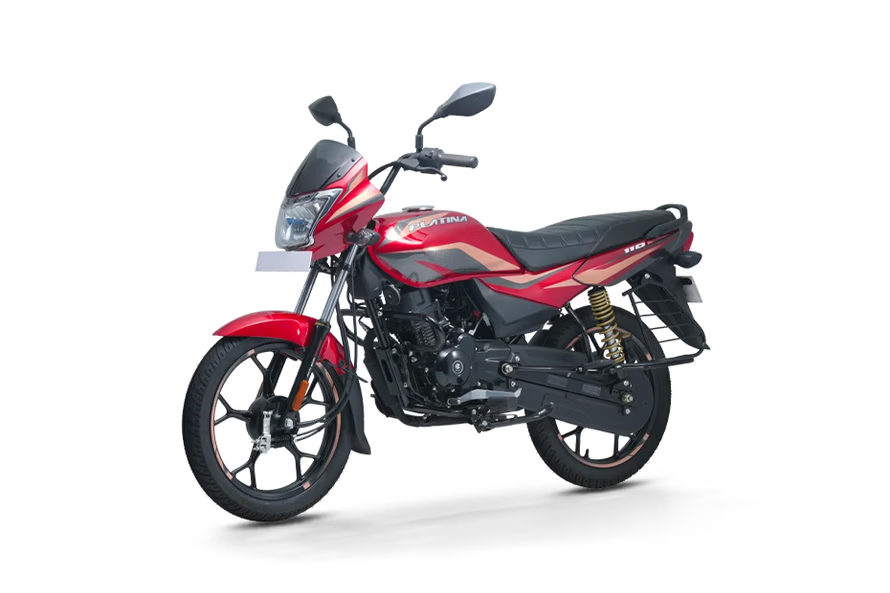
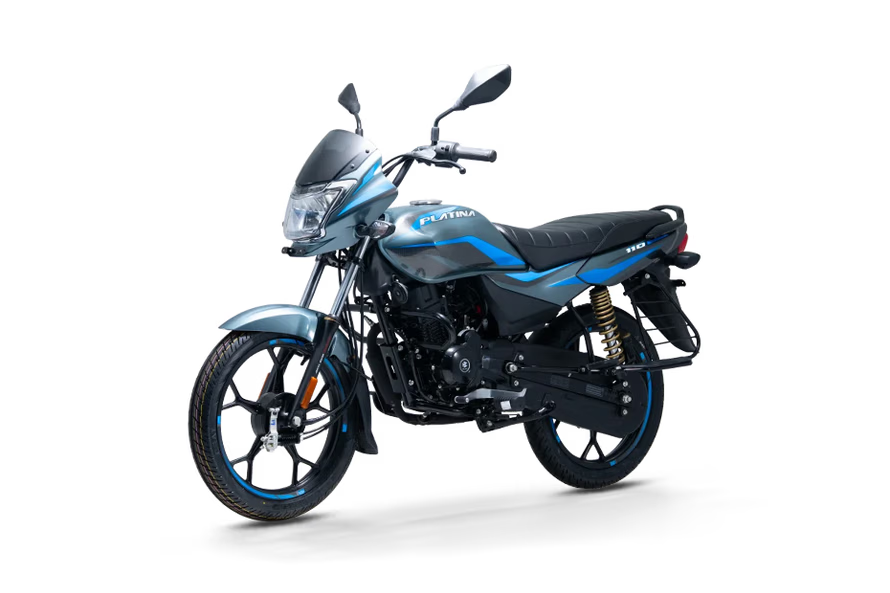
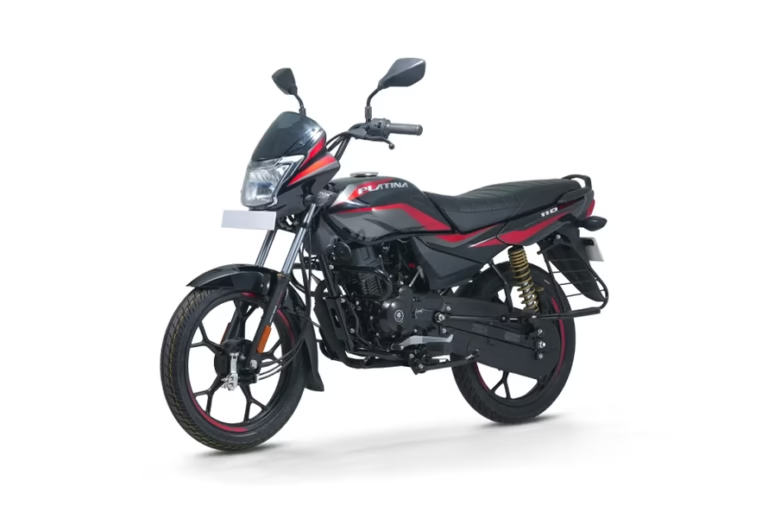
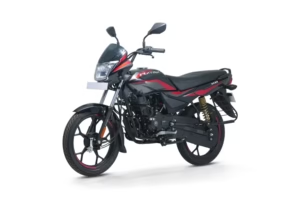
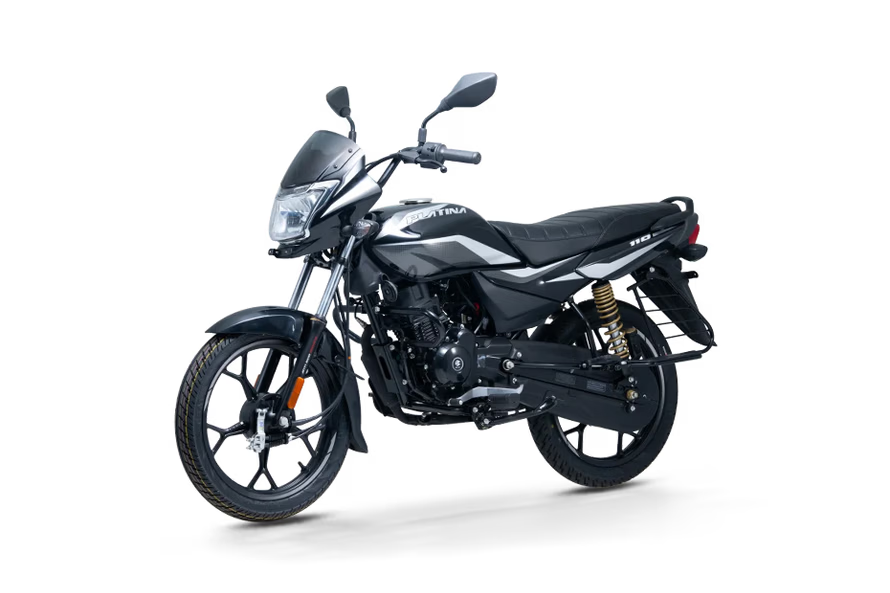
Bajaj Platina 110
15.5 pts
Unweighted: 15 advantages
EnginePerformanceDimensionsBrakesTyresFeaturesOther
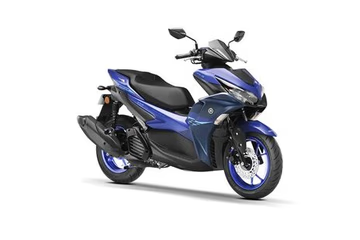
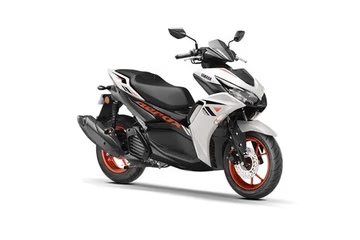
YAMAHA Aerox 155 Version S
14.5 pts
Unweighted: 7 advantages
EnginePerformanceDimensionsBrakesTyresFeaturesOther
| Specification | ||
|---|---|---|
Engine Specifications |
||
| Cooling System | Air-cooled | Liquid-cooled |
| Displacement | 115.06 cc | 155 CC |
| Engine Type | 4‑Stroke, Single Cylinder, DTS‑i | Liquid cooled, 4-stroke, SOHC, 4-valve |
| Power | 6.99 KW (9.5 PS) @ 7500 rpm | 11.0kW(15.0PS)/8000r/min |
| Torque | 9.9 Nm @ 5500 rpm | 13.9N.m(1.4kgf.m)/6500r/min |
Performance & Efficiency |
||
| Fuel Tank Capacity | 11 L | 5.5 L |
| Mileage | 70 Kmpl | 45 Kmpl |
Dimensions & Weight |
||
| Kerb Weight | 122 | 126 |
| Seat Height | 807 | 790 |
Brakes & Suspension |
||
| ABS | — | Single Channel ABS |
| Front Brake | 130 mm Drum | Disc Brake(230mm) with ABS |
| Front Suspension | Hydraulic Telescopic, 135 mm travel | Telescopic fork |
| Rear Brake | 110 mm Drum (with CBS) | Drum(130mm) |
| Rear Suspension | SOS with nitrox canister Rear wheel stroke of 110 mm | Unit swing |
Tyres & Wheels |
||
| Front Tyre | 80/100–17 Tubeless | 110/80-14M/C 53P |
| Rear Tyre | 80/100–17 Tubeless | 140/70-14M/C 62P |
| Tyre Type | Tubeless | Tubeless |
| Wheel Type | Alloy | Alloy |
Features & Technology |
||
| Headlight | 12 V, 35/35 W HS1 with DRL | LED (Class D) |
Other Specifications |
||
| Battery | 12 V, 3 Ah VRLA | 12 V, 6.0 Ah |
| Bike Image 1 | https://motoautiv.com/wp-content/uploads/2025/07/BW-110.avif | https://motoautiv.com/wp-content/uploads/2025/05/Racing-Blue-2.avif |
| Bike Image 2 | https://motoautiv.com/wp-content/uploads/2025/07/Red-110.avif | — |
| Bike Image 3 | https://motoautiv.com/wp-content/uploads/2025/07/Blue-110.avif | — |
| Bike Image 4 | https://motoautiv.com/wp-content/uploads/2025/07/Yellow-110.avif | — |
| Cluster | Analogue | Digital |
| Color Options | Blue | #2456A6 Red | #A00000 Black and White | #111111, #F2F2EE Black and Red | #111111, #A00000 Yellow | #D4A017 | Racing Blue | #0047AB Ice Fluo Vermillion | #F5F5F5, #FF5A36 |
| Cons | The motorcycle is tuned mainly for comfort and mileage, so acceleration and highway performance feel limited compared to more powerful commuter bikes. The soft suspension setup improves comfort but can feel slightly bouncy and less stable at higher speeds. The current model no longer offers ABS, which reduces its braking advantage compared to the older Platina 110 ABS variant. Design and styling remain very commuter-focused and simple, which may not appeal to younger buyers looking for a more modern appearance. Features are basic compared to newer commuter motorcycles that now offer digital displays and connected technology. Drum brakes at both ends feel adequate for city use but less confidence-inspiring during aggressive braking situations. Build quality and fit-and-finish in certain plastic panels and switchgear could feel more premium. Long highway rides can feel tiring because the motorcycle is mainly designed around urban commuting and fuel-efficient travel rather than touring performance. | Stiff suspension - This is probably the most common complaint. Riders often mention that potholes and broken roads are felt more sharply compared to scooters like the Activa or Jupiter. Large turning radius - Because of its sporty geometry and longer wheelbase, maneuvering in tight spaces and U-turns can require extra effort. Limited footboard practicality - Unlike conventional scooters, the Aerox has a central tunnel. Owners who regularly carry grocery bags or larger items on the floorboard find this inconvenient. Rear seat comfort - While the rider seat is generally comfortable, some pillion riders complain that the rear seat is a bit high and firm for long journeys. Higher maintenance costs - Compared to a typical 110cc or 125cc scooter, service costs and spare parts can be slightly more expensive due to the liquid-cooled engine and premium components. |
| Detailed Overview | The Bajaj Platina 110 is designed for riders who prioritize comfort, fuel efficiency, and ease of daily commuting over sporty performance or aggressive styling. In the commuter motorcycle segment, many bikes focus mainly on mileage figures, but the Platina 110 tries to add a more comfortable riding experience along with low running costs. Its overall character feels calm and practical, making it suitable for office travel, regular city riding, and long daily commutes where comfort becomes more important than speed. The motorcycle uses a 115.45cc single-cylinder, air-cooled engine paired with a 5-speed gearbox. The engine tuning is focused on smooth and predictable power delivery rather than quick acceleration. At lower speeds, the motorcycle feels relaxed and easy to manage, especially in traffic conditions where constant gear changes and throttle inputs are common. Compared to smaller 100cc commuter motorcycles, the Platina 110 offers slightly better pulling power, which helps during overtakes and while riding with a pillion passenger. The addition of the 5-speed gearbox also helps the motorcycle maintain smoother engine behavior at moderate highway speeds. Fuel efficiency remains one of the strongest highlights of the Platina 110. In real-world riding conditions, the motorcycle generally delivers around 60–70 km/l depending on traffic, riding style, and maintenance. Combined with its 11-litre fuel tank, this gives the bike a long riding range before refueling becomes necessary, which is particularly useful for riders covering large distances daily. The main focus of the Platina 110 is ride comfort. Bajaj’s Comfortec technology is designed around improving suspension response and seating comfort for Indian road conditions. The motorcycle uses telescopic front forks and Nitrox rear suspension, both tuned softly to absorb potholes, broken roads, and speed breakers more comfortably than many motorcycles in this category. The suspension setup allows the bike to glide over rough surfaces without transferring too much harshness to the rider. The long and wide seat further improves comfort for both rider and pillion during extended commutes. Its riding posture also contributes to the relaxed character of the motorcycle. The upright handlebar position, neutral footpeg placement, and lightweight chassis help reduce fatigue during long hours of city riding. The motorcycle weighs around 122 kg, which makes it manageable in traffic and easy to handle at lower speeds. Because of its predictable throttle response and light steering feel, the Platina 110 is also approachable for beginner riders. The design remains simple and commuter-focused. Instead of sharp bodywork or sporty styling elements, the motorcycle uses practical body panels, basic graphics, and a conventional commuter-bike appearance. Alloy wheels and tubeless tyres improve convenience during punctures and regular maintenance. Braking duties are handled by drum brakes at both ends supported by Combined Braking System (CBS), which helps improve braking balance during sudden stops. Feature-wise, the motorcycle keeps things straightforward. The instrument cluster remains simple and easy to read, while electric start functionality improves convenience during daily use. Unlike more premium commuter motorcycles, the Platina 110 avoids complex electronic features and focuses more on low maintenance and reliability. The overall riding experience feels soft, stable, and commuter-oriented. The motorcycle is not designed for aggressive riding or high-speed touring, but it performs its intended role effectively by offering a comfortable suspension setup, strong fuel efficiency, and easy everyday usability. Overall, the Bajaj Platina 110 combines comfort-focused suspension tuning, fuel-efficient engine performance, practical ergonomics, and low running costs into a commuter motorcycle developed mainly for relaxed and economical daily transportation. | The Yamaha Aerox 155 Version S is a maxi-scooter that combines the convenience of an automatic scooter with engineering elements typically found in Yamaha’s performance-oriented motorcycles. Its design follows a sporty and aerodynamic approach, featuring a sharp front apron, centrally mounted LED headlamp, muscular body panels, and a stepped seat layout. The overall proportions are noticeably larger than those of conventional scooters, giving it a distinctive road presence while also accommodating a sizeable under-seat storage compartment. Powering the Aerox 155 Version S is a 155cc, single-cylinder, liquid-cooled, fuel-injected engine that produces approximately 15 PS of power and 13.9 Nm of torque. The engine incorporates Yamaha’s Variable Valve Actuation (VVA) technology, which adjusts valve timing to help maintain performance across different engine speeds. Unlike smaller commuter scooters that prioritize low-speed operation, the Aerox’s engine is designed to deliver a broader powerband, allowing it to handle city riding as well as sustained highway speeds. Power is transmitted through a CVT automatic gearbox, eliminating the need for manual gear changes and making operation straightforward in varying traffic conditions. The scooter is built around an underbone frame that contributes to structural rigidity and handling stability. Suspension duties are managed by telescopic front forks and twin shock absorbers at the rear. This setup is intended to balance everyday usability with responsive handling characteristics. The Aerox rides on 14-inch alloy wheels at both ends, which are larger than those found on many scooters in the segment. The larger wheel size can influence stability and road feedback, particularly at higher speeds. Braking performance is handled by a front disc brake and a rear drum brake. The scooter is equipped with a single-channel Anti-lock Braking System (ABS) for the front wheel, helping reduce the likelihood of wheel lock-up during sudden braking situations. The Version S variant also features Traction Control System (TCS), a technology that monitors wheel slip and adjusts power delivery when necessary to maintain traction on low-grip surfaces. In terms of features, the Aerox 155 Version S includes a fully digital LCD instrument console that displays information such as speed, fuel level, trip data, and other riding information. Bluetooth connectivity through Yamaha’s Y-Connect application enables smartphone integration, allowing riders to access call alerts, message notifications, maintenance reminders, and fuel consumption data. The Smart Key system offered on the Version S variant introduces keyless operation, enabling ignition control and scooter access without physically inserting a key. The fuel tank capacity stands at 5.5 litres, while the kerb weight is approximately 126 kg. The seat height of 790 mm and wheelbase of 1,350 mm contribute to the scooter’s riding ergonomics and stability. Storage practicality is supported by a large under-seat compartment that can accommodate daily essentials and certain helmet types depending on their size and shape. Additional equipment includes LED lighting throughout, an automatic start-stop system designed to reduce fuel consumption during idle periods, and a side-stand engine cut-off feature. Together, these specifications position the Yamaha Aerox 155 Version S as a feature-rich scooter that blends modern technology, performance-focused engineering, and everyday commuting functionality within a single package. |
| Expert Review | The Bajaj Platina 110 is built with a very clear focus on comfort-oriented commuting, and that character becomes noticeable almost immediately while riding through rough city roads or daily traffic. The suspension setup is tuned softly, allowing the motorcycle to absorb potholes and uneven surfaces more comfortably than many basic commuter bikes in this segment. Its 115cc engine feels smooth and relaxed during regular riding, offering enough performance for everyday commuting and occasional highway stretches without losing the fuel-efficient nature expected from the Platina lineup. The upright ergonomics, lightweight chassis, and wide seat further improve day-to-day usability, especially for riders covering long distances regularly. At the same time, the motorcycle remains firmly commuter-focused, which means sporty handling, quick acceleration, and premium features are not its main priorities. The removal of the older ABS variant also means the current model feels more basic in terms of braking hardware. Overall, the Platina 110 focuses on delivering a calm, comfortable, and economical riding experience centered mainly around practical everyday transportation., 4.3, MotoAutiv Team | The Yamaha Aerox 155 Version S occupies a unique space in the Indian scooter market by combining the practicality of a scooter with performance characteristics that are more commonly associated with entry-level motorcycles. Its 155cc liquid-cooled engine delivers strong acceleration throughout the rev range, while the rigid chassis and larger wheels contribute to confident handling at both city and highway speeds. The riding position feels sporty yet relaxed enough for daily commuting, though the firm suspension setup tends to transmit road imperfections more noticeably on rough surfaces. Features such as traction control, Smart Key technology, and Bluetooth connectivity add to the modern appeal, while the maxi-scooter design provides a distinct road presence. However, the focus on performance and styling does bring certain compromises in everyday practicality, particularly when compared to conventional family-oriented scooters. The Aerox ultimately presents a different approach to scooter design, emphasizing riding dynamics and high-speed composure alongside everyday usability., 4.4, MotoAutiv Team |
| FAQ (Manual Override) | Q: What engine does the Bajaj Platina 110 use? A: The motorcycle uses a 115.45cc single-cylinder, air-cooled engine. Q: What mileage does the Bajaj Platina 110 give? A: Real-world mileage generally stays around 60–70 km/l depending on riding conditions and maintenance. Q: What is the top speed of the Bajaj Platina 110? A: The motorcycle has an approximate top speed of around 90 km/h. Q: Does the Bajaj Platina 110 have ABS? A: No, the currently sold Platina 110 in India does not offer ABS. The older ABS variant has been discontinued. Q: What braking system does the Platina 110 use? A: The motorcycle uses drum brakes at both ends along with CBS (Combined Braking System). Q: What suspension setup does the Platina 110 use? A: The motorcycle uses telescopic front forks and Nitrox rear suspension. Q: What is Comfortec technology in the Platina 110? A: Comfortec refers to Bajaj’s comfort-focused suspension and seat setup designed to improve ride quality on rough roads. Q: What is the fuel tank capacity of the Bajaj Platina 110? A: The motorcycle comes with an 11-litre fuel tank. Q: What is the kerb weight of the Bajaj Platina 110? A: The bike weighs approximately 122 kg. Q: Does the Platina 110 use tubeless tyres? A: Yes, the motorcycle comes with tubeless tyres. Q: Is the Bajaj Platina 110 suitable for long rides? A: It can handle moderate highway rides comfortably, though it is mainly designed for city commuting and fuel-efficient travel. Q: Does the Bajaj Platina 110 have electric start? A: Yes, the motorcycle comes with electric start functionality. Q: Is the Bajaj Platina 110 beginner-friendly? A: Yes, the lightweight handling, smooth engine behavior, and comfortable ergonomics make it suitable for beginner riders and daily commuters. | Q: What is the real-world mileage of the Yamaha Aerox 155 Version S? A: Most Yamaha Aerox 155 Version S owners report a real-world fuel efficiency of around 38-45 km/l, depending on riding style, traffic conditions, and maintenance. Q: Is the Yamaha Aerox 155 Version S suitable for long rides? A: Yes, the Yamaha Aerox 155 Version S is considered one of the better scooters for highway touring due to its powerful engine, stable chassis, and comfortable cruising ability. Q: What is the top speed of the Yamaha Aerox 155 Version S? A: The Yamaha Aerox 155 Version S can achieve a top speed of approximately 115-120 km/h under favorable riding conditions. Q: Does the Yamaha Aerox 155 Version S have traction control? A: Yes, the Yamaha Aerox 155 Version S comes equipped with Traction Control System (TCS), which helps improve grip during acceleration on slippery surfaces. Q: Can a full-face helmet fit inside the Yamaha Aerox 155 Version S under-seat storage? A: The Yamaha Aerox 155 Version S offers a large under-seat storage compartment, but whether a full-face helmet fits depends on the helmet's size and shell design. Q: Is the Yamaha Aerox 155 Version S comfortable for a pillion rider? A: The Yamaha Aerox 155 Version S provides adequate pillion space, though some users feel the elevated rear seat and firm suspension can affect comfort on longer journeys. Q: Does the Yamaha Aerox 155 Version S have keyless ignition? A: Yes, the Version S variant of the Yamaha Aerox 155 comes with a Smart Key system that enables keyless ignition and additional convenience features. Q: What are the service costs of the Yamaha Aerox 155 Version S? A: Yamaha Aerox 155 Version S service costs are generally higher than those of typical 125cc scooters because of its liquid-cooled engine and premium components. Q: Is the Yamaha Aerox 155 Version S good for daily commuting? A: Yes, the Yamaha Aerox 155 Version S can be used for daily commuting, although its sporty setup and central tunnel make it slightly less practical than traditional family scooters. |
| Fuel System | Fuel Injection | Fuel Injection |
| Price Variants | NXT | 72847 Drum | 72847 | | 146120 |
| Pros | Ride comfort remains the strongest part of the motorcycle. The soft suspension setup absorbs potholes and rough roads very well, which makes daily commuting less tiring, especially on broken city roads. The 115cc engine feels smoother and slightly more responsive than smaller 100cc commuter motorcycles, giving the bike better usability during overtakes and mild highway riding. Fuel efficiency is still one of the major highlights. Real-world mileage generally stays around 60–70 km/l depending on riding conditions and maintenance habits. The upright riding posture, wide seat, and lightweight chassis make the motorcycle easy to handle in traffic and comfortable for long daily commutes. Combined Braking System (CBS) improves braking balance during regular city riding and emergency stops compared to basic non-linked braking setups. Maintenance costs remain affordable, and spare parts are widely available across India, helping reduce long-term ownership expenses. Electric start and tubeless tyres improve practicality for everyday usage. The motorcycle feels beginner-friendly because of its predictable throttle response and easy low-speed handling. | Powerful and exciting performance - The 155cc liquid-cooled engine borrowed from the Yamaha R15 is the biggest highlight. Owners frequently mention that the Aerox feels significantly quicker than traditional scooters, especially during overtakes and highway riding. Excellent highway capability - Unlike most scooters that feel stressed at higher speeds, the Aerox can comfortably cruise at 80–100 km/h. Many users appreciate its stability on long rides. Sporty handling - The motorcycle-like frame and larger wheels give the scooter a planted feel around corners. Riders often say it feels more like a lightweight bike than a conventional scooter. Good fuel efficiency for the performance - Most owners report real-world mileage between 38–45 km/l depending on riding style, which is considered respectable for a 155cc performance scooter. Premium styling - The aggressive maxi-scooter design attracts a lot of attention. Many buyers choose the Aerox simply because it looks different from every other scooter on the road. Feature-rich Version S - The Smart Key system, answer-back function, automatic start-stop system, Bluetooth connectivity, and traction control add a premium touch that owners appreciate. |
| Starter | Electric & Kick | Electric starter |
| Transmission | 4-speed (all-down shift) | Automatic |