Quick Analysis
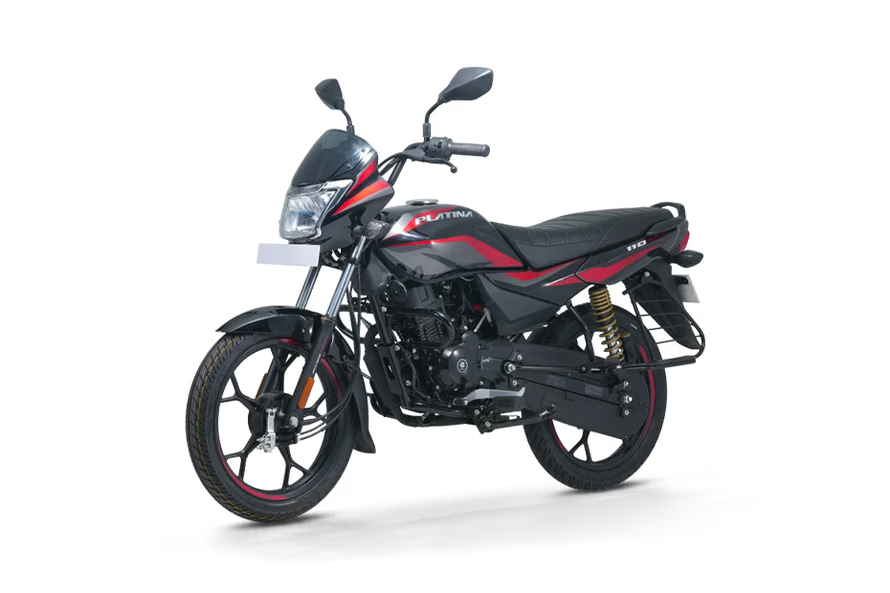
Bajaj Platina 110
22.5 pts
Unweighted: 14 advantages
EnginePerformanceDimensionsBrakesTyresFeaturesOther
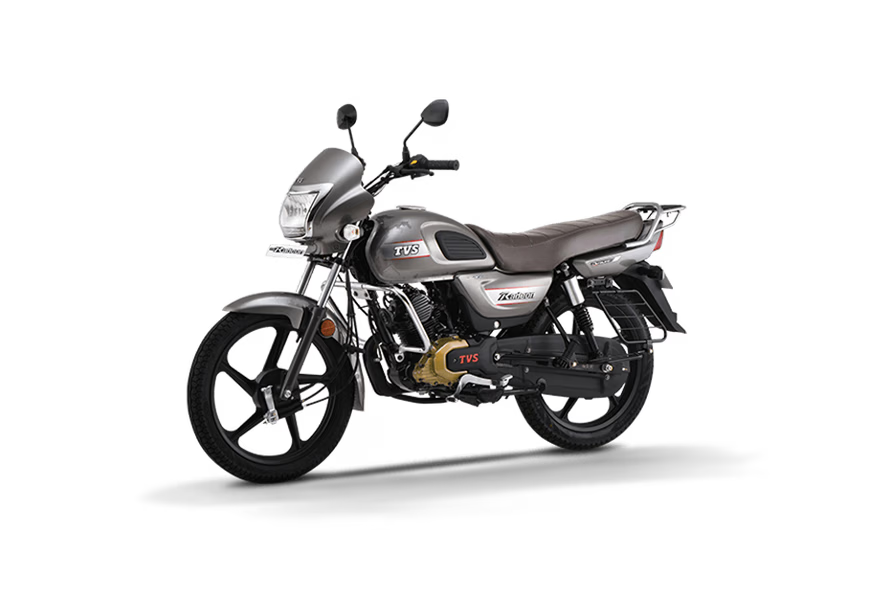
TVS Radeon
10.0 pts
Unweighted: 10 advantages
EnginePerformanceDimensionsBrakesTyresFeaturesOther
| Specification | ||
|---|---|---|
Engine Specifications |
||
| Cooling System | Air-cooled | Air‑cooled |
| Displacement | 115.06 cc | 109.7 cc |
| Engine Type | 4‑Stroke, Single Cylinder, DTS‑i | 4‑Stroke, single‑cylinder, DuraLife engine |
| Power | 6.99 KW (9.5 PS) @ 7500 rpm | 6.03 kW @ 7,350 rpm |
| Torque | 9.9 Nm @ 5500 rpm | 8.7 Nm @ 4,500 rpm |
Performance & Efficiency |
||
| Fuel Tank Capacity | 11 L | 10 litres |
| Mileage | 70 Kmpl | — |
Dimensions & Weight |
||
| Kerb Weight | 122 | 113 kg (drum) / 115 kg (disc) |
| Seat Height | 807 | 780 |
Brakes & Suspension |
||
| Front Brake | 130 mm Drum | Drum (130 mm) / Disc (240mm) |
| Front Suspension | Hydraulic Telescopic, 135 mm travel | Telescopic oil damped shock absorber |
| Rear Brake | 110 mm Drum (with CBS) | Drum (110mm) |
| Rear Suspension | SOS with nitrox canister Rear wheel stroke of 110 mm | 5 step adjustable hydraulic shock absorber |
Tyres & Wheels |
||
| Front Tyre | 80/100–17 Tubeless | 2.75 x 18 tubeless |
| Rear Tyre | 80/100–17 Tubeless | 3.00 x 18 tubeless |
| Tyre Type | Tubeless | Tubeless |
| Wheel Type | Alloy | 5‑spoke alloy |
Features & Technology |
||
| Headlight | 12 V, 35/35 W HS1 with DRL | 12 V 35/35 W multi‑reflector + LED DRL (5 W) |
Other Specifications |
||
| Battery | 12 V, 3 Ah VRLA | 12 V, 4 Ah MF |
| Bike Image 1 | https://motoautiv.com/wp-content/uploads/2025/07/BW-110.avif | https://motoautiv.com/wp-content/uploads/2025/07/Starlight-blue.avif |
| Bike Image 2 | https://motoautiv.com/wp-content/uploads/2025/07/Red-110.avif | https://motoautiv.com/wp-content/uploads/2025/07/Royal-Purple.avif |
| Bike Image 3 | https://motoautiv.com/wp-content/uploads/2025/07/Blue-110.avif | https://motoautiv.com/wp-content/uploads/2025/07/Red-Black.avif |
| Bike Image 4 | https://motoautiv.com/wp-content/uploads/2025/07/Yellow-110.avif | https://motoautiv.com/wp-content/uploads/2025/07/Metal-Black.avif |
| Bike Image 5 | — | https://motoautiv.com/wp-content/uploads/2025/07/Blue-Black.avif |
| Bike Image 6 | — | https://motoautiv.com/wp-content/uploads/2025/07/Black.avif |
| Bike Image 7 | — | https://motoautiv.com/wp-content/uploads/2025/07/All-Black.avif |
| Cluster | Analogue | — |
| Color Options | Blue | #2456A6 Red | #A00000 Black and White | #111111, #F2F2EE Black and Red | #111111, #A00000 Yellow | #D4A017 | Metal Black | #222222 All Black | #000000 Titanium Grey | #555555 Royal Purple | #4B0082 Starlight Blue | #1E3A5F Black (Base) | #1A1A1A Blue Black DT (Dual Tone) | #001F3F Red Black DT (Dual Tone) | #8B0000 |
| Cons | The motorcycle is tuned mainly for comfort and mileage, so acceleration and highway performance feel limited compared to more powerful commuter bikes. The soft suspension setup improves comfort but can feel slightly bouncy and less stable at higher speeds. The current model no longer offers ABS, which reduces its braking advantage compared to the older Platina 110 ABS variant. Design and styling remain very commuter-focused and simple, which may not appeal to younger buyers looking for a more modern appearance. Features are basic compared to newer commuter motorcycles that now offer digital displays and connected technology. Drum brakes at both ends feel adequate for city use but less confidence-inspiring during aggressive braking situations. Build quality and fit-and-finish in certain plastic panels and switchgear could feel more premium. Long highway rides can feel tiring because the motorcycle is mainly designed around urban commuting and fuel-efficient travel rather than touring performance. | Braking Performance: Many users feel the drum brakes lack "bite" and can feel spongy. The Synchronized Braking Technology (SBT) helps, but owners often recommend opting for the Disc Brake variant for better safety. Engine Vibrations: While the engine is refined at city speeds (40–60 kmph), users notice buzzing vibrations at the footpegs and handlebars once you cross 75–80 kmph. Cold Start Issues: Some owners have reported difficulty starting the bike in the morning, often requiring the manual choke or multiple attempts with the self-starter. Basic Feature Set: Compared to newer 110cc-125cc competitors, the console (especially on lower trims) feels dated, lacking a digital clock or gear position indicator on all models. Service & Parts: A few users have highlighted that specific spare parts can sometimes be hard to find at local shops, requiring a visit to an authorized TVS dealer. |
| Detailed Overview | The Bajaj Platina 110 is designed for riders who prioritize comfort, fuel efficiency, and ease of daily commuting over sporty performance or aggressive styling. In the commuter motorcycle segment, many bikes focus mainly on mileage figures, but the Platina 110 tries to add a more comfortable riding experience along with low running costs. Its overall character feels calm and practical, making it suitable for office travel, regular city riding, and long daily commutes where comfort becomes more important than speed. The motorcycle uses a 115.45cc single-cylinder, air-cooled engine paired with a 5-speed gearbox. The engine tuning is focused on smooth and predictable power delivery rather than quick acceleration. At lower speeds, the motorcycle feels relaxed and easy to manage, especially in traffic conditions where constant gear changes and throttle inputs are common. Compared to smaller 100cc commuter motorcycles, the Platina 110 offers slightly better pulling power, which helps during overtakes and while riding with a pillion passenger. The addition of the 5-speed gearbox also helps the motorcycle maintain smoother engine behavior at moderate highway speeds. Fuel efficiency remains one of the strongest highlights of the Platina 110. In real-world riding conditions, the motorcycle generally delivers around 60–70 km/l depending on traffic, riding style, and maintenance. Combined with its 11-litre fuel tank, this gives the bike a long riding range before refueling becomes necessary, which is particularly useful for riders covering large distances daily. The main focus of the Platina 110 is ride comfort. Bajaj’s Comfortec technology is designed around improving suspension response and seating comfort for Indian road conditions. The motorcycle uses telescopic front forks and Nitrox rear suspension, both tuned softly to absorb potholes, broken roads, and speed breakers more comfortably than many motorcycles in this category. The suspension setup allows the bike to glide over rough surfaces without transferring too much harshness to the rider. The long and wide seat further improves comfort for both rider and pillion during extended commutes. Its riding posture also contributes to the relaxed character of the motorcycle. The upright handlebar position, neutral footpeg placement, and lightweight chassis help reduce fatigue during long hours of city riding. The motorcycle weighs around 122 kg, which makes it manageable in traffic and easy to handle at lower speeds. Because of its predictable throttle response and light steering feel, the Platina 110 is also approachable for beginner riders. The design remains simple and commuter-focused. Instead of sharp bodywork or sporty styling elements, the motorcycle uses practical body panels, basic graphics, and a conventional commuter-bike appearance. Alloy wheels and tubeless tyres improve convenience during punctures and regular maintenance. Braking duties are handled by drum brakes at both ends supported by Combined Braking System (CBS), which helps improve braking balance during sudden stops. Feature-wise, the motorcycle keeps things straightforward. The instrument cluster remains simple and easy to read, while electric start functionality improves convenience during daily use. Unlike more premium commuter motorcycles, the Platina 110 avoids complex electronic features and focuses more on low maintenance and reliability. The overall riding experience feels soft, stable, and commuter-oriented. The motorcycle is not designed for aggressive riding or high-speed touring, but it performs its intended role effectively by offering a comfortable suspension setup, strong fuel efficiency, and easy everyday usability. Overall, the Bajaj Platina 110 combines comfort-focused suspension tuning, fuel-efficient engine performance, practical ergonomics, and low running costs into a commuter motorcycle developed mainly for relaxed and economical daily transportation. | The TVS Radeon is designed as a simple, everyday commuter motorcycle, and its specifications reflect a focus on practicality and ease of use. It comes equipped with a 109.7cc single-cylinder, air-cooled engine. This motor is tuned to deliver a balance between usable power and fuel efficiency rather than outright performance. It produces around 8 horsepower and 8.7 Nm of torque, which is sufficient for city riding, short highway stretches, and daily errands. The engine is paired with a 4-speed gearbox that offers smooth and predictable shifts, making it suitable for riders who prefer a straightforward riding experience. One of the key aspects of the Radeon is its fuel efficiency-oriented setup. The engine incorporates TVS’s EcoThrust fuel injection technology, which helps in maintaining consistent performance while optimizing fuel consumption. This makes it suitable for riders who prioritize running costs and longer intervals between fuel stops. The fuel tank capacity is around 10 litres, which complements its efficiency-focused nature and supports longer rides without frequent refueling. In terms of hardware, the bike uses a tubular double cradle frame, which provides a stable base for everyday riding. The suspension setup includes telescopic front forks and 5-step adjustable hydraulic shock absorbers at the rear. This combination is designed to handle uneven roads and speed breakers commonly found in urban and semi-urban environments. The suspension tuning leans towards comfort, helping absorb bumps and maintain ride stability. For braking, the Radeon is offered with drum brakes on both ends, with the option of a front disc brake in some variants. It is also equipped with a synchronized braking system (SBS), which distributes braking force between the front and rear wheels when the rear brake is applied. This setup enhances control during sudden braking situations, especially for newer riders. The bike rides on 18-inch wheels, which are slightly larger than what is seen on some competitors in the same segment. These larger wheels, combined with relatively wide tyres, contribute to better road grip and stability. The ground clearance is around 180 mm, allowing the motorcycle to handle rough patches and uneven surfaces without much difficulty. Ergonomically, the Radeon is built with a comfortable riding posture in mind. It features a long, well-padded seat designed to accommodate both rider and pillion. The handlebar is positioned for an upright stance, reducing strain on the back and shoulders during longer rides. The kerb weight is around 113 kg, making it light enough for easy maneuverability in traffic and during parking. The bike also includes a mix of basic and functional features. Depending on the variant, it may come with an analogue or semi-digital instrument cluster that displays essential information such as speed, fuel level, and odometer readings. Additional touches like a USB charging port, side-stand indicator, and LED DRLs add to its everyday usability. Overall, the TVS Radeon’s specifications are centered around reliability, simplicity, and comfort, making it aligned with the needs of daily commuting and routine usage. |
| Expert Review | The Bajaj Platina 110 is built with a very clear focus on comfort-oriented commuting, and that character becomes noticeable almost immediately while riding through rough city roads or daily traffic. The suspension setup is tuned softly, allowing the motorcycle to absorb potholes and uneven surfaces more comfortably than many basic commuter bikes in this segment. Its 115cc engine feels smooth and relaxed during regular riding, offering enough performance for everyday commuting and occasional highway stretches without losing the fuel-efficient nature expected from the Platina lineup. The upright ergonomics, lightweight chassis, and wide seat further improve day-to-day usability, especially for riders covering long distances regularly. At the same time, the motorcycle remains firmly commuter-focused, which means sporty handling, quick acceleration, and premium features are not its main priorities. The removal of the older ABS variant also means the current model feels more basic in terms of braking hardware. Overall, the Platina 110 focuses on delivering a calm, comfortable, and economical riding experience centered mainly around practical everyday transportation., 4.3, MotoAutiv Team | The TVS Radeon positions itself as a pragmatic choice for those who prioritize functional longevity over flashy tech. Its 109.7cc engine isn't built for high-speed thrills, but it delivers a steady, low-end torque that makes navigating congested city traffic feel effortless. What truly sets it apart in the commuter segment is the focus on ergonomics; the exceptionally wide, well-padded seat and the upright riding posture are clearly designed for riders who spend several hours a day in the saddle. While the inclusion of a synchronized braking system and a sturdy metal build adds a sense of durability, the experience is strictly utilitarian. At higher speeds, the mechanical limitations of a small-capacity engine become apparent through noticeable vibrations, and the basic analog interface serves as a reminder that this bike is a tool for efficiency rather than a lifestyle statement., 4.3, MotoAutiv Team |
| FAQ (Manual Override) | Q: What engine does the Bajaj Platina 110 use? A: The motorcycle uses a 115.45cc single-cylinder, air-cooled engine. Q: What mileage does the Bajaj Platina 110 give? A: Real-world mileage generally stays around 60–70 km/l depending on riding conditions and maintenance. Q: What is the top speed of the Bajaj Platina 110? A: The motorcycle has an approximate top speed of around 90 km/h. Q: Does the Bajaj Platina 110 have ABS? A: No, the currently sold Platina 110 in India does not offer ABS. The older ABS variant has been discontinued. Q: What braking system does the Platina 110 use? A: The motorcycle uses drum brakes at both ends along with CBS (Combined Braking System). Q: What suspension setup does the Platina 110 use? A: The motorcycle uses telescopic front forks and Nitrox rear suspension. Q: What is Comfortec technology in the Platina 110? A: Comfortec refers to Bajaj’s comfort-focused suspension and seat setup designed to improve ride quality on rough roads. Q: What is the fuel tank capacity of the Bajaj Platina 110? A: The motorcycle comes with an 11-litre fuel tank. Q: What is the kerb weight of the Bajaj Platina 110? A: The bike weighs approximately 122 kg. Q: Does the Platina 110 use tubeless tyres? A: Yes, the motorcycle comes with tubeless tyres. Q: Is the Bajaj Platina 110 suitable for long rides? A: It can handle moderate highway rides comfortably, though it is mainly designed for city commuting and fuel-efficient travel. Q: Does the Bajaj Platina 110 have electric start? A: Yes, the motorcycle comes with electric start functionality. Q: Is the Bajaj Platina 110 beginner-friendly? A: Yes, the lightweight handling, smooth engine behavior, and comfortable ergonomics make it suitable for beginner riders and daily commuters. | Q: What is the actual real-world mileage of the TVS Radeon? A: While the official ARAI figure is around 73.68 kmpl, most owners report a real-world mileage of 62 to 68 kmpl in mixed city traffic. If you ride primarily on open roads at steady speeds of 40-50 kmph, you can push it closer to 70 kmpl. Q: Is the TVS Radeon comfortable for long daily commutes? A: Yes, comfort is actually the Radeon's strongest selling point. It features what many consider the largest and most cushioned seat in the 110cc segment. Combined with its upright riding posture and well-tuned suspension, it handles 40–50 km daily commutes with much less fatigue than its competitors. Q: Does the bike vibrate at high speeds? A: The engine is very refined and "silent" up to 60–65 kmph. However, once you cross 75 kmph, you will start feeling noticeable vibrations through the footpegs and handlebars. It is a city commuter at heart, so it's happiest when kept under 70 kmph. Q: How effective are the drum brakes compared to the disc variant? A: The base drum variant comes with Synchronized Braking Technology (SBT), which applies the front brake automatically when you hit the rear pedal. While it's safe for steady city riding, it lacks the sharp "bite" of a disc. If your daily route involves heavy traffic or higher speeds, the Disc variant is highly recommended for better stopping power. Q: Are there any common issues or "niggles" reported by owners? A: Some users have reported cold-start issues in the morning, where the bike may require a few extra attempts to idle smoothly. Others have noted that the "Digi-cluster" on newer variants can occasionally be hard to read under direct, harsh sunlight. Q: Can the TVS Radeon carry heavy loads or a heavy pillion? A: Absolutely. The bike is built with a sturdy metal body and a heavy-duty "box iron" chassis. It also features a functional luggage rack and a 5-step adjustable rear shock absorber, making it one of the better choices in the 110cc category for carrying a pillion or extra weight. Q: How much does the regular service of a TVS Radeon cost? A: The Radeon is quite pocket-friendly to maintain. A standard periodic service typically costs between ₹600 to ₹1,000 (excluding major part replacements), depending on the engine oil used and local labor charges. |
| Fuel System | Fuel Injection | Eco-Thrust Fuel Injection |
| Price Variants | NXT | 72847 Drum | 72847 | All Black Edition | 56850 Base Edition | 63350 Digi Drum | 75950 Digi Disc | 78200 |
| Pros | Ride comfort remains the strongest part of the motorcycle. The soft suspension setup absorbs potholes and rough roads very well, which makes daily commuting less tiring, especially on broken city roads. The 115cc engine feels smoother and slightly more responsive than smaller 100cc commuter motorcycles, giving the bike better usability during overtakes and mild highway riding. Fuel efficiency is still one of the major highlights. Real-world mileage generally stays around 60–70 km/l depending on riding conditions and maintenance habits. The upright riding posture, wide seat, and lightweight chassis make the motorcycle easy to handle in traffic and comfortable for long daily commutes. Combined Braking System (CBS) improves braking balance during regular city riding and emergency stops compared to basic non-linked braking setups. Maintenance costs remain affordable, and spare parts are widely available across India, helping reduce long-term ownership expenses. Electric start and tubeless tyres improve practicality for everyday usage. The motorcycle feels beginner-friendly because of its predictable throttle response and easy low-speed handling. | Superior Comfort: Frequently cited as having the "largest and most cushioned seat" in its segment. Users report low fatigue even on commutes exceeding 30–50 km. Excellent Fuel Efficiency: Real-world mileage is consistently reported between 62–72 kmpl, making it highly economical for daily use. Rugged Build Quality: Unlike many plastic-heavy commuters, the Radeon features a strong metal body and a "box iron" chassis, giving it a solid, rattle-free feel on rough roads. Practical Features: Highlights include a USB charging port, a functional luggage carrier with a pillion grab rail, and a side-stand beeper for safety. Retro Appeal: Its "car-like" speedometer and chrome accents give it a unique aesthetic that stands out from the standard "uncle bike" look of rivals like the Splendor. |
| Starter | Electric & Kick | Electric & Kick |
| Transmission | 4-speed (all-down shift) | 4‑speed constant mesh |