Quick Analysis
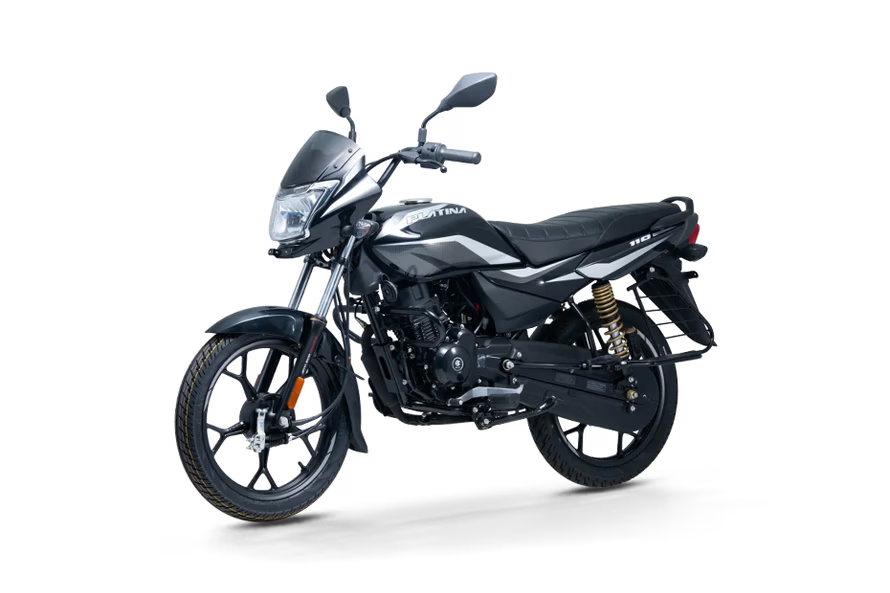
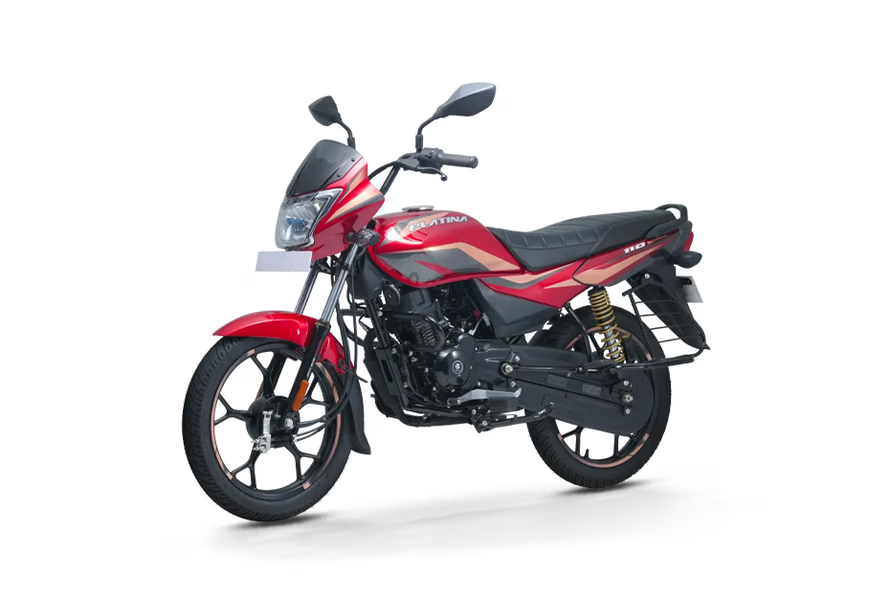
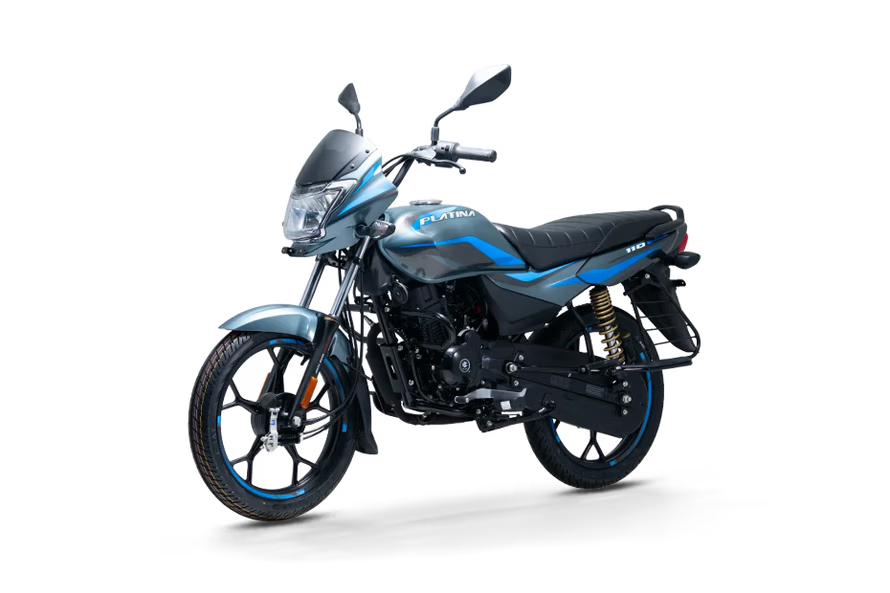
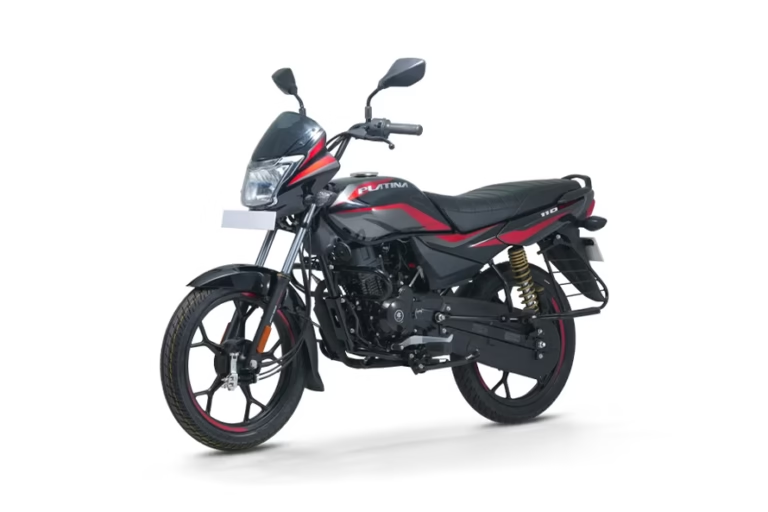
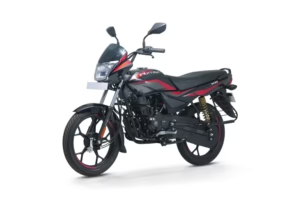
Bajaj Platina 110
6.0 pts
Unweighted: 6 advantages
EnginePerformanceDimensionsBrakesTyresFeaturesOther
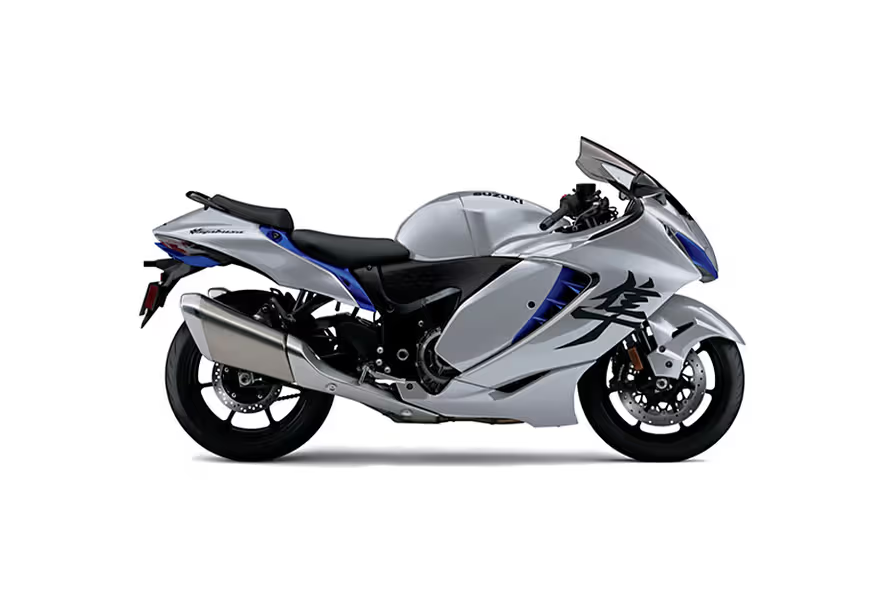
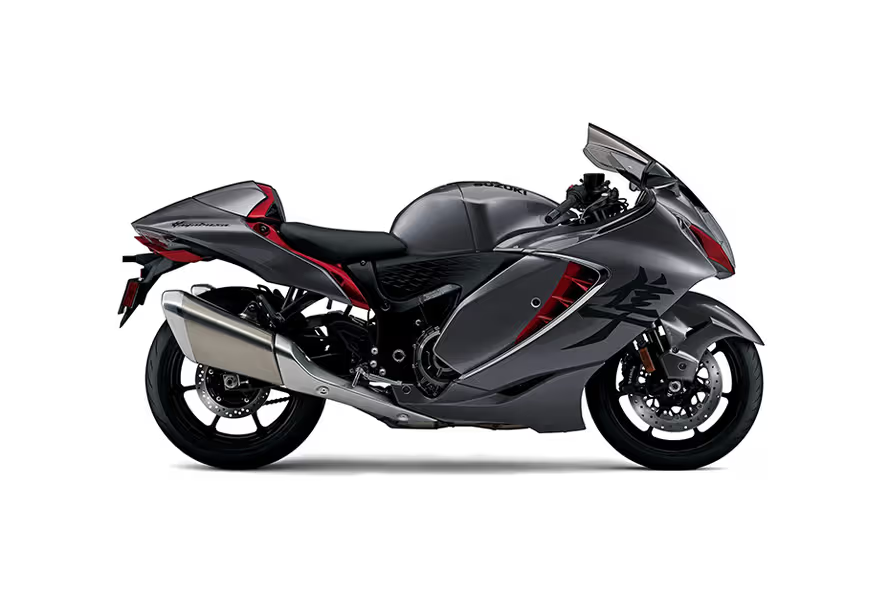
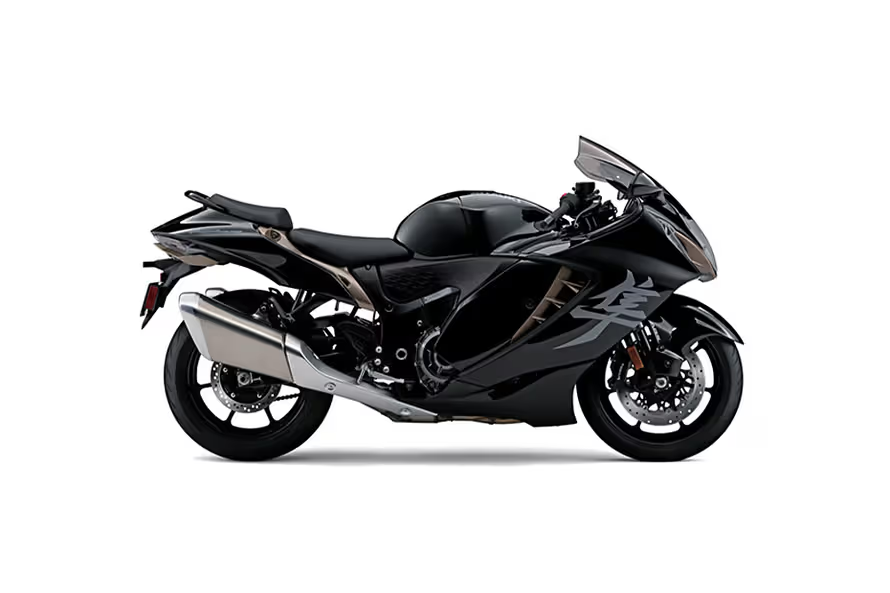
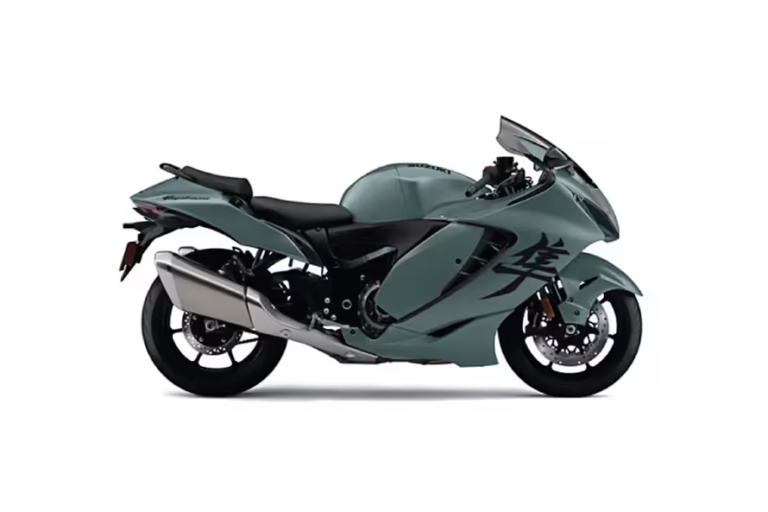
SUZUKI HAYABUSA
26.0 pts
Unweighted: 20 advantages
EnginePerformanceDimensionsBrakesTyresFeaturesOther
| Specification | ||
|---|---|---|
Engine Specifications |
||
| Cooling System | Air-cooled | Liquid Cooled |
| Displacement | 115.45 cc | 1,340 cc |
| Engine Type | 4‑Stroke, Single Cylinder, DTS‑i | 4-Stroke, Liquid-cooled, DOHC,in-line four |
| Power | 6.33 kW (8.6 PS) @ 7,000 rpm | 190 ps @ 9700 rpm |
| Torque | 9.81 Nm @ 5,000 rpm | 150 Nm @ 7000 rpm |
Performance & Efficiency |
||
| Fuel Tank Capacity | 11 L | 20 L |
| Mileage | — | 17 kmpl |
Dimensions & Weight |
||
| Kerb Weight | 119 kg | 266 |
| Seat Height Std | 807 mm | 800 |
Brakes & Suspension |
||
| Abs | — | Switchable ABS |
| Front Brake | Drum | Disc 320 mm Caliper - Front 4 Piston |
| Front Suspension | Hydraulic Telescopic, 135 mm travel | Inverted Telescopic, Coil Spring, Oil Damped |
| Rear Brake | Drum (with CBS) | Disc 260 mm Caliper - Rear 1 Piston |
| Rear Suspension | Spring-on-Spring (SOS), 110 mm travel | Link Type, Coil Spring, Oil Damped |
Tyres & Wheels |
||
| Front Tyre | 80/100–17 Tubeless | 120/70ZR17M/C |
| Rear Tyre | 80/100–17 Tubeless | 190/50ZR17M/C |
| Tyre Type | Tubeless | Tubeless |
| Wheel Type | Alloy | Alloy |
Features & Technology |
||
| Headlight | 12 V, 35/35 W HS1 with DRL | LED |
Other Specifications |
||
| Battery | 12 V, 3 Ah VRLA | — |
| Bike Cons Text | — | Heavy and bulky - Its mass and size make it less agile for slow-speed manoeuvres, tight city traffic, or U-turns; handling can feel unwieldy compared to smaller bikes. Not ideal for daily commuting - In urban traffic, congestion, or frequent stop-and-go situations, its power and size become impractical; it isn’t a city-friendly ride. Economy and upkeep aren’t modest - Fuel consumption, tyre wear, servicing, and maintenance costs tend to be higher than regular commuter bikes. Can be intimidating for newer riders - The bike demands respect: its power delivery, weight and overall presence might overwhelm someone without adequate riding experience. Limited practicality - Storage space, comfort for pillion riding, and ease of everyday use are compromised compared to more utilitarian bikes; it’s more about thrill than convenience. |
| Bike Pros Text | — | Incredible acceleration and performance - The Hayabusa gives a powerful burst of speed and a strong sense of thrust when you twist the throttle, which makes highway rides and open-road runs exhilarating. Stability and composure at high speeds - Its weight, long wheelbase, and well-tuned chassis help the bike feel planted and confident even when cruising fast or cornering hard. Balanced enough for long rides - Despite being a superbike, it doesn’t feel like a torture rack: the seating and suspension offer decent comfort for touring or long-distance travel. Strong braking & road-holding confidence - Braking performance and tyre/grip setup give a reassuring sense of control, even when slowing down from high speeds. Prestige, style and presence - Owning/riding a Hayabusa carries a certain status and charm; it draws attention and delivers that “superbike feel” many riders seek. |
| Cluster | Analogue | — |
| Color Options | — | Metallic Mat Steel Green And Glass Sparkle Black | #5F6F5A, #737F6B Glass Sparkle Black And Metallic Mat Titanium Sliver | #0A0A0A, #8A8F95 Metallic Mystic Sliver And Pearl Vigor Blue | #1F3F8F, #A6ADB4 Metallic Thuder Grey And Candy Daring Red | #A1121B, #5F646A |
| Expert Review | — | The Suzuki Hayabusa usually sits comfortably in the mid-to-high 4 range when you look at both expert and owner feedback. A large part of that comes from how refined and effortless the engine feels, along with the stability it offers at higher speeds and its ability to cover long distances without feeling strained. At the same time, its size and weight do reflect in everyday situations, especially in city traffic where it can feel demanding to manage. Practical aspects like heat, handling, and running costs also play a role in how it is rated in Indian conditions. So while the core experience pushes the rating up, these real-world factors keep it from going all the way to the top end., 4.5, MotoAutiv Team |
| Faq Manual | — | Q: What is the real-world mileage of the Suzuki Hayabusa in India? A: The Suzuki Hayabusa usually delivers around 15–17 km/l in mixed riding conditions. In heavy traffic or aggressive riding, this number can drop further because of the large engine size. Q: What is the top speed of the Suzuki Hayabusa, and can it be used in India? A: The Suzuki Hayabusa is electronically limited to 299 km/h, but in India, such speeds are not practical due to traffic, road conditions, and legal limits. Q: Is the Suzuki Hayabusa comfortable for long-distance touring? A: Yes, the Suzuki Hayabusa is often used for touring because of its relatively relaxed riding posture, stable nature, and large seat, which help during long highway rides. Q: What is the maintenance cost of the Suzuki Hayabusa in India? A: Maintenance is higher compared to smaller bikes. Regular servicing is manageable, but costs increase with tyres, parts, and long-term ownership. Q: Is the Suzuki Hayabusa too heavy for city riding? A: The Suzuki Hayabusa weighs around 266 kg, which can feel heavy in slow traffic or tight spaces. Once the bike is moving, it becomes easier to handle. Q: Is the Suzuki Hayabusa a good first big bike? A: The Suzuki Hayabusa has a very powerful engine, so it is generally better suited for riders who already have experience with mid-capacity motorcycles. Q: What engine does the Suzuki Hayabusa use? A: The Suzuki Hayabusa is powered by a 1340cc inline-four, liquid-cooled engine, known for strong and smooth performance. Q: Does the Suzuki Hayabusa have modern electronics and safety features? A: Yes, the Suzuki Hayabusa includes traction control, riding modes, launch control, cruise control, and ABS, which help manage its performance. Q: Is the Suzuki Hayabusa practical for daily use in India? A: Daily use is possible, but factors like heat, fuel consumption, and size can make it less convenient in regular city traffic. Q: What is the fuel tank capacity of the Suzuki Hayabusa? A: The Suzuki Hayabusa comes with a 20-litre fuel tank, which supports longer rides without frequent refuelling. |
| Fuel System | — | Fuel Injection |
| Image 1 | — | https://motoautiv.com/wp-content/uploads/2025/12/Metallic-Mystic-Sliver-And-Pearl-Vigor-Blue-ASU.avif |
| Image 2 | — | https://motoautiv.com/wp-content/uploads/2025/12/Metallic-Thuder-Grey-And-Candy-Daring-Red-CJH.avif |
| Image 3 | — | https://motoautiv.com/wp-content/uploads/2025/12/Glass-Sparkle-Black-And-Metallic-Mat-Titanium-Sliver-BLG.avif |
| Overview Manual | — | The Suzuki Hayabusa is designed as a high-capacity sport motorcycle where the overall experience is shaped by a large engine, stable chassis, and a focus on sustained performance. At its core is a 1340cc, inline-four, liquid-cooled engine that delivers power in a smooth and continuous manner across the rev range. Instead of feeling abrupt, the power builds in a controlled way, which becomes noticeable during both gradual acceleration and higher-speed riding. The engine is paired with a 6-speed gearbox, and it also gets a bi-directional quickshifter, allowing clutchless gear changes that make transitions between gears feel more fluid. The bike is built on a twin-spar aluminium frame that is designed to maintain balance and stability, especially when speeds increase. Suspension is handled by fully adjustable upside-down front forks and a rear monoshock, giving the rider the option to fine-tune the setup depending on road conditions or riding style. The riding posture is slightly forward-leaning but not extreme, with a wide seat and a stretched layout that supports longer hours on the bike without putting too much strain on the wrists. Braking duties are managed by dual front discs with radial-mounted calipers and a single rear disc, supported by dual-channel ABS. Along with this, the Hayabusa comes equipped with multiple electronic systems such as traction control, riding modes, launch control, engine brake control, and cruise control. These features allow adjustments in how the bike responds to throttle inputs and braking, depending on different riding conditions. In terms of design, the Hayabusa follows a full-faired layout with a shape that is focused on aerodynamics. The bodywork has a smooth, flowing form rather than sharp cuts, which helps in managing airflow at higher speeds. The lighting system is fully LED, and the instrument cluster combines analogue dials with a central digital display that provides information like speed, gear position, and riding modes in a clear format. The bike uses 17-inch wheels at both ends, fitted with wide tyres that offer stability and grip. It also comes with a 20-litre fuel tank, which supports longer riding distances without frequent stops. With a kerb weight of around 266 kg, the Hayabusa carries a noticeable presence, especially at low speeds, though it feels more balanced once in motion. |
| Price Variants Text | — | STD | 1806107 |
| Starter | Electric & Kick | Self Start |
| Transmission | 4-speed (all-down shift) | 6-Speed |