Quick Analysis
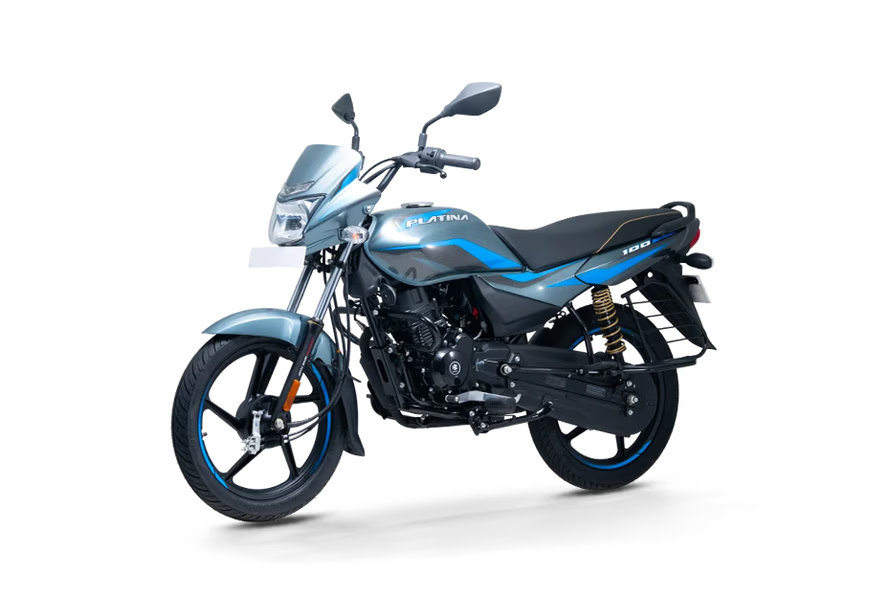
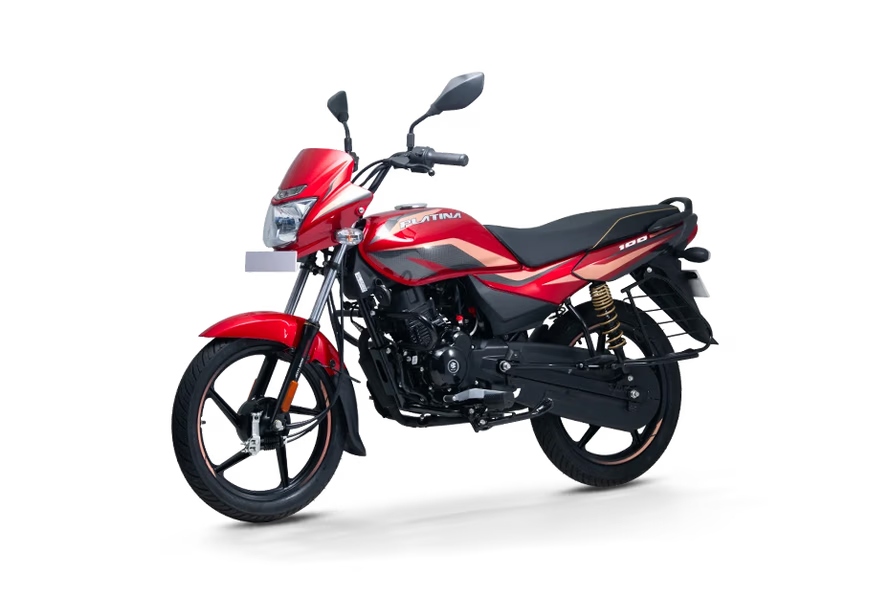
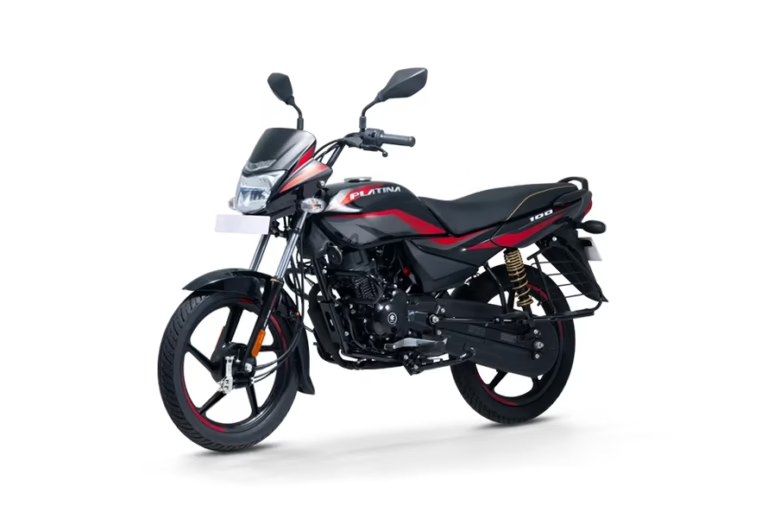
Bajaj Platina 100
14.5 pts
Unweighted: 9 advantages
EnginePerformanceDimensionsBrakesTyresFeaturesOther
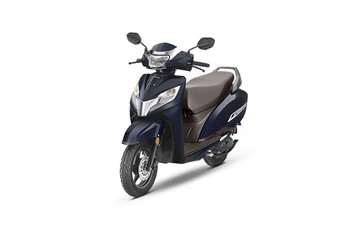
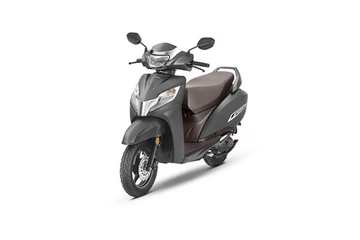
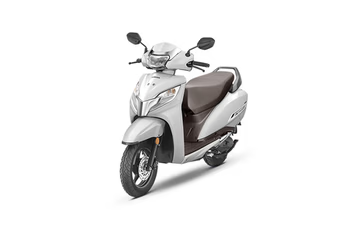
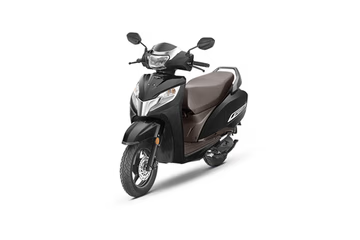
Honda Activa125 DLX
15.5 pts
Unweighted: 13 advantages
EnginePerformanceDimensionsBrakesTyresFeaturesOther
| Specification | ||
|---|---|---|
Engine Specifications |
||
| Cooling System | Air‑cooled | Air Cooled |
| Displacement | 99.59 cc | 123.92 cc |
| Engine Type | 4‑Stroke, DTS‑i, Single Cylinder | 4 stroke, SI Engine |
| Power | 8.2 PS @ 7500 rpm | 6.20 kW @ 6500 rpm |
| Torque | 8.3 Nm @ 5,500 rpm | 10.5 Nm @ 5000 rpm |
Performance & Efficiency |
||
| Fuel Tank Capacity | 11 L | 5.3 L |
| Mileage | 70 Kmpl | 47 Kmpl |
Dimensions & Weight |
||
| Kerb Weight | 117 | 107 |
| Seat Height | 807 | 765 |
Brakes & Suspension |
||
| ABS | Anti-Skid Braking System | No |
| Front Brake | 130 mm Drum | Disc - 190 mm |
| Front Suspension | 135 mm Hydraulic Telescopic | Telescopic |
| Rear Brake | 10 mm Drum | Drum - 130 mm |
| Rear Suspension | 110 mm Spring‑in‑Spring | 3 Step Adjustable Spring Loaded Hydraulic |
Tyres & Wheels |
||
| Front Tyre | 2.75 × 17 41 P Tube Type | 90/90-12 54J |
| Rear Tyre | 3.00 × 17 50 P Tube Type | 90/100-10 53J |
| Tyre Type | Tube | Tubeless |
| Wheel Type | Alloy | Alloy |
Features & Technology |
||
| Headlight | 12 V, 35/35 W HS1 with LED DRL | LED DC |
Other Specifications |
||
| Battery | 12 V 4 AH | 12 V, 5.0 Ah |
| Bike Image 1 | https://motoautiv.com/wp-content/uploads/2025/07/Black-and-White.avif | https://motoautiv.com/wp-content/uploads/2025/06/Blue-2.avif |
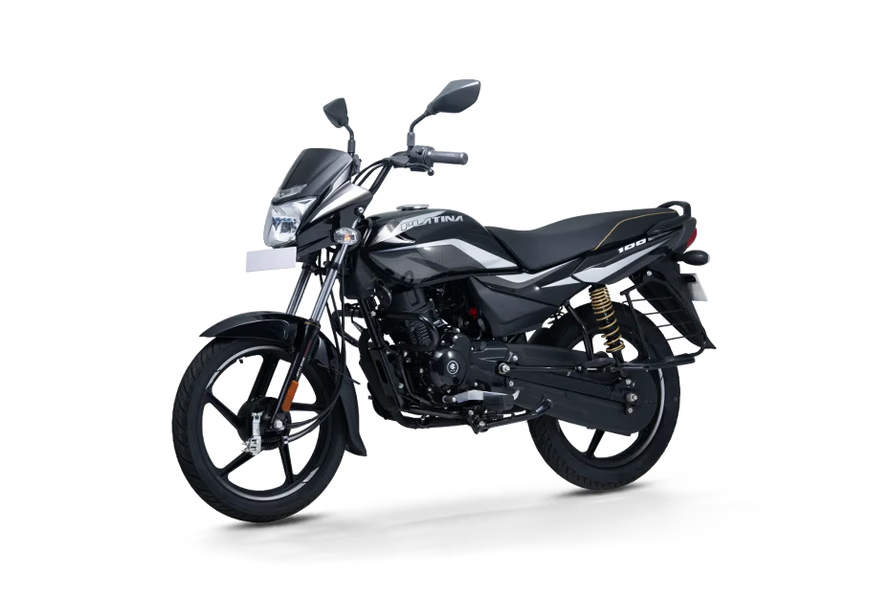
| Bike Image 2 | https://motoautiv.com/wp-content/uploads/2025/07/Blue-1.avif | https://motoautiv.com/wp-content/uploads/2025/06/Gray-3.avif |
| Bike Image 3 | https://motoautiv.com/wp-content/uploads/2025/07/Red-2.avif | https://motoautiv.com/wp-content/uploads/2025/06/White-3.avif |
| Bike Image 4 | — | https://motoautiv.com/wp-content/uploads/2025/06/Red-2.avif |
| Bike Image 5 | — | https://motoautiv.com/wp-content/uploads/2025/06/Ground-Gray.avif |
| Cluster | — | TFT Screen(4.2 Inch) |
| Color Options | Blue | #2456A6 Red | #A00000 Black and White | #111111, #F2F2EE Black and Red | #111111, #A00000 | Pearl Igneous Black | #121214 Pearl Precious White | #F3F2EC Pearl Siren Blue | #1E5FA8 Rebel Red Metallic | #B11F2A Mat Axis Gray Metallic | #64676B Pearl Deep Ground Gray | #5D6166 |
| Cons | Performance is limited, especially during highway riding and overtakes. The engine is tuned more for mileage than quick acceleration. The motorcycle does not offer sporty handling or strong high-speed stability compared to larger commuter bikes. Braking hardware feels basic, with no disc brake option available on the Platina 100. Build quality and fit-and-finish in certain plastic panels and switchgear could feel better. Some riders have reported engine noise, loose parts, or reliability issues after long-term heavy usage. The soft suspension improves comfort but can feel slightly unstable or bouncy at higher speeds and on badly broken roads. Features remain minimal compared to newer commuter motorcycles offering digital displays and connected technology. | No Smart Key System – Unlike the higher Honda Activa 125 H-Smart, the DLX variant uses a conventional key and lacks keyless convenience features. No Bluetooth Connectivity – The scooter does not offer smartphone pairing, navigation support, or app-based connected functions. Performance Remains Commuter-Focused – While stronger than the 110cc Activa, the engine is still tuned for smoothness and efficiency rather than acceleration or sporty riding. Storage Space Is Average – The under-seat compartment is practical but not among the largest in the 125cc scooter segment. Design Is Familiar Rather Than Modern – The styling follows the traditional Activa approach and may appear conservative compared to some newer rivals. Wheel Size Prioritizes City Use – The compact wheel setup contributes to agility but may feel less stable on rough roads than some larger-wheeled alternatives. Limited Feature Advantage Over Some Rivals – Competitors such as the TVS Jupiter 125 and TVS Ntorq 125 offer additional convenience and connected-tech features. |
| Detailed Overview | The Bajaj Platina 100 is built around one simple priority making everyday commuting comfortable, affordable, and fuel efficient. Unlike motorcycles that try to attract buyers with sporty styling or performance-focused tuning, the Platina 100 follows a more practical approach where comfort and low running cost become the main focus. This makes the motorcycle especially popular among riders who travel daily for work, office commuting, or routine city use where reliability and mileage matter more than speed or aggressive performance. The motorcycle is powered by a 102cc single-cylinder, air-cooled engine paired with a 4-speed gearbox. The engine produces modest power figures, but its tuning is aimed mainly at smooth low-speed riding and fuel efficiency rather than quick acceleration. In real-world traffic conditions, the engine feels calm and predictable, which helps make the motorcycle easy to ride for both experienced and beginner riders. Throttle response remains gentle, and the lightweight nature of the bike further improves maneuverability in crowded streets and narrow roads. Highway performance is limited because the motorcycle is not designed for high-speed touring, but for everyday urban commuting, the engine feels relaxed and economical. Fuel efficiency remains one of the strongest reasons people consider the Platina 100. Real-world mileage generally stays around 65–75 km/l depending on traffic conditions, maintenance, and riding habits. Combined with the 11-litre fuel tank, the motorcycle can cover long distances without frequent fuel stops, which helps reduce running costs over time. Ride comfort is another area where the Platina 100 focuses heavily. Bajaj uses its Comfortec technology, which mainly refers to the suspension tuning and seat design developed to improve comfort on uneven roads. The motorcycle uses telescopic front forks along with Nitrox rear suspension designed to absorb potholes, speed breakers, and rough surfaces more softly than many basic commuter bikes. The long and wide seat further adds to comfort, especially during longer daily commutes or while carrying a pillion rider. The riding posture remains upright and relaxed, with a naturally positioned handlebar and footpegs that reduce strain during regular commuting. The lightweight chassis also helps the bike remain easy to balance at lower speeds and while parking. Since the motorcycle weighs around 117 kg, handling feels manageable even in heavy traffic conditions. In terms of design, the Platina 100 keeps things simple and commuter-focused. The body panels, graphics, and fuel tank styling are designed more around practicality than sporty appearance. The motorcycle uses alloy wheels fitted with tubeless tyres, which improve convenience during punctures compared to older tube-type setups. Braking duties are handled by drum brakes at both ends. The braking setup is basic but suitable for the motorcycle’s intended low-speed commuter role. Feature-wise, the Platina 100 avoids unnecessary complexity. The instrument cluster remains simple and easy to read, while electric start functionality improves convenience during daily use. Unlike premium commuter motorcycles that now include Bluetooth connectivity and digital displays, the Platina focuses more on keeping maintenance costs low and operation straightforward. The overall riding character of the motorcycle feels soft, relaxed, and commuter-oriented. The suspension setup prioritizes comfort over sporty handling, and the engine tuning focuses on smoothness and efficiency rather than strong acceleration. These characteristics make the bike particularly suited for city commuting, office travel, and regular day-to-day transportation. Overall, the Bajaj Platina 100 combines high fuel efficiency, comfort-focused suspension, simple mechanical design, and low running costs into a motorcycle developed mainly for practical and economical everyday commuting. | The Honda Activa 125 DLX is a commuter scooter that sits between the standard Activa range and the more feature-rich H-Smart variant. It uses a larger engine than the regular Activa 110 and includes several convenience-focused features, but its overall purpose remains centered on everyday transportation. The scooter is designed for riders who spend a significant amount of time commuting and want a balance of practicality, comfort, and ease of use. The most noticeable difference between the Activa 125 DLX and the smaller Activa models is the engine. It is powered by a 123.92cc single-cylinder, air-cooled engine that uses fuel injection for fuel delivery. Fuel injection allows the engine to manage fuel more precisely than older carburetor systems, helping maintain consistent performance in different weather and riding conditions. The engine produces around 8.2 bhp and 10.3 Nm of torque, providing a slight increase in performance compared to the 110cc Activa. In everyday riding, this additional torque is often felt during acceleration from traffic lights, carrying a passenger, or riding up inclines. The engine is paired with a continuously variable transmission, commonly known as a CVT. This automatic transmission system removes the need for manual gear changes, allowing the rider to control the scooter using only the throttle and brakes. This setup is particularly useful in congested urban environments where frequent stopping and starting are part of daily travel. Honda has incorporated its Enhanced Smart Power (eSP) technology into the engine package. This includes engineering measures aimed at reducing friction and improving efficiency. An Idling Stop System is also included. When the scooter remains stationary for a short period, the engine can automatically switch off. Once the throttle is twisted, the engine restarts and the scooter moves off normally. This feature is intended to reduce fuel consumption during traffic stops. The scooter is built around an underbone frame that supports the familiar step-through design commonly associated with scooters. This layout allows riders to mount and dismount easily while also creating room for storage and practical features. The chassis is designed to remain compact and manageable in crowded urban environments. Suspension duties are handled by telescopic front forks and a rear shock absorber. The suspension setup is tuned to cope with everyday road conditions such as speed breakers, uneven surfaces, and potholes. The emphasis is on maintaining comfort and stability during regular commuting rather than delivering sporty handling characteristics. Braking is managed by a front disc brake and a rear drum brake. Honda’s Combined Braking System (CBS) works alongside the braking setup to distribute braking force more evenly when the rear brake is applied. This system is intended to provide balanced braking performance during normal riding situations. The Activa 125 DLX has a kerb weight of approximately 109 kg and a seat height of around 712 mm. These figures place it within the typical range for a 125cc commuter scooter. A 5.3-litre fuel tank supplies fuel to the engine, while an external fuel-filler cap allows refuelling without opening the seat. Under-seat storage provides space for carrying daily essentials such as documents, groceries, or personal belongings. The instrument cluster combines analogue and digital elements. Information such as speed, fuel level, trip data, mileage indicators, and service reminders are displayed in a straightforward layout. The overall styling remains consistent with the Activa family, featuring smooth body panels, restrained graphics, and a practical design that focuses on daily usability. Overall, the Honda Activa 125 DLX combines a fuel-injected 125cc engine, automatic transmission, front disc brake, commuter-oriented chassis, and convenience features into a scooter developed primarily for routine city and suburban transportation. |
| Expert Review | The Bajaj Platina 100 is designed with a very clear purpose, keeping daily commuting simple, comfortable, and economical. The motorcycle does not try to feel sporty or premium, and instead focuses heavily on ride comfort and fuel efficiency. Its lightweight chassis and smooth low-speed behavior make it easy to ride in crowded city conditions, while the soft Comfortec suspension helps absorb rough roads and potholes reasonably well for a commuter bike. The 102cc engine is tuned more for mileage and relaxed riding than performance, which means the motorcycle feels calm and predictable during everyday use but less energetic on highways. The long seat and upright ergonomics further strengthen its commuter-friendly nature, especially for riders covering long distances daily. At the same time, the basic braking setup, minimal feature list, and simple overall build remind you that the Platina 100 is focused mainly on practicality and affordability rather than modern technology or sporty performance., 4.2, MotoAutiv Team | The Honda Activa 125 DLX takes the familiar Activa formula and adds a slightly larger engine along with a few extra convenience features, but its overall character remains rooted in everyday practicality. The additional engine capacity is noticeable in routine riding situations such as carrying a passenger, climbing flyovers, or maintaining city speeds, where the scooter feels a little less strained than the 110cc version. The power delivery is smooth and predictable, the riding position is comfortable for daily commuting, and the suspension is tuned to handle typical urban road conditions without drawing attention to itself. Features such as the front disc brake, external fuel filler, and semi-digital instrument cluster add functionality without making the scooter feel overly complicated. At the same time, the DLX variant remains focused on simplicity, which means it avoids advanced connected features and keyless technology. The overall experience is defined by ease of use, consistency, and everyday usability rather than performance, technology, or sporty riding dynamics., 4.3, MotoAutiv Team |
| FAQ (Manual Override) | Q: What engine does the Bajaj Platina 100 use? A: The motorcycle uses a 102cc single-cylinder, air-cooled engine. Q: What is the mileage of the Bajaj Platina 100? A: Real-world mileage generally stays around 65–75 km/l depending on riding conditions and maintenance. Q: What is the top speed of the Bajaj Platina 100? A: The motorcycle has an approximate top speed of around 85–90 km/h. Q: Does the Bajaj Platina 100 have electric start? A: Yes, selected variants come with electric start functionality. Q: What type of brakes does the Platina 100 use? A: The motorcycle uses drum brakes at both the front and rear. Q: Does the Bajaj Platina 100 have a disc brake option? A: No, the Platina 100 currently does not offer a front disc brake option. Q: What suspension setup does the Bajaj Platina 100 use? A: The motorcycle uses telescopic front forks and Nitrox rear suspension. Q: What is Comfortec technology in the Platina 100? A: Comfortec refers to Bajaj’s comfort-focused suspension and seat setup designed to improve ride quality on rough roads. Q: What is the fuel tank capacity of the Bajaj Platina 100? A: The motorcycle comes with an 11-litre fuel tank. Q: What is the kerb weight of the Bajaj Platina 100? A: The bike weighs approximately 117 kg. Q: Is the Bajaj Platina 100 suitable for long rides? A: It can handle moderate highway and daily rides comfortably, though it is mainly designed for city commuting and fuel-efficient travel. Q: Is the Bajaj Platina 100 beginner-friendly? A: Yes, the lightweight body, smooth power delivery, and comfortable ergonomics make it suitable for beginner riders and daily commuters. | Q: Is Honda Activa 125 DLX worth buying for daily commuting? A: The Honda Activa 125 DLX is designed primarily for daily commuting and offers a balance of fuel efficiency, comfort, and ease of use with a larger engine than the standard Activa 110. Q: What is the real mileage of Honda Activa 125 DLX? A: The real-world mileage of the Honda Activa 125 DLX typically ranges between 45 km/l and 55 km/l, depending on traffic conditions, riding habits, and maintenance. Q: What is the top speed of Honda Activa 125 DLX? A: The Honda Activa 125 DLX can reach a top speed of approximately 90 km/h, depending on rider weight and road conditions. Q: Does Honda Activa 125 DLX have a disc brake? A: Yes, the Honda Activa 125 DLX comes equipped with a front disc brake and a rear drum brake. Q: Does Honda Activa 125 DLX have Bluetooth connectivity? A: No, the Honda Activa 125 DLX does not offer Bluetooth connectivity, smartphone pairing, or turn-by-turn navigation. Q: Does Honda Activa 125 DLX have Smart Key technology? A: No, Smart Key functionality is available only on the Honda Activa 125 H-Smart variant. Q: What is the fuel tank capacity of Honda Activa 125 DLX? A: The Honda Activa 125 DLX has a 5.3-litre fuel tank. Q: What is the kerb weight of Honda Activa 125 DLX? A: The scooter weighs approximately 109 kg in running condition. Q: What is the seat height of Honda Activa 125 DLX? A: The Honda Activa 125 DLX has a seat height of approximately 712 mm. Q: Is Honda Activa 125 DLX suitable for beginners? A: Yes, the Honda Activa 125 DLX is beginner-friendly due to its automatic transmission, manageable weight, predictable handling, and comfortable riding position. Q: Is Honda Activa 125 DLX good for long rides? A: The Honda Activa 125 DLX can handle occasional long-distance rides and highway use, but it is primarily designed for urban and suburban commuting. Q: Which is better: Honda Activa 125 DLX or Suzuki Access 125? A: The Honda Activa 125 DLX focuses on a familiar commuter experience and practicality, while the Suzuki Access 125 is often preferred for its refinement and slightly stronger performance. Q: Which is better: Honda Activa 125 DLX or TVS Jupiter 125? A: The Honda Activa 125 DLX emphasizes simplicity and comfort, whereas the TVS Jupiter 125 focuses heavily on storage capacity and convenience-oriented features. Q: Does Honda Activa 125 DLX have an external fuel-filler cap? A: Yes, the Honda Activa 125 DLX includes an external fuel-filler cap, allowing refuelling without opening the seat. |
| Fuel System | Electronic Injection | Fuel Injection |
| Price Variants | STD | 68711 | | 93775 |
| Pros | The biggest strength of the Platina 100 is fuel efficiency. Real-world mileage figures often stay around 65–75 km/l, which makes it one of the most economical commuter motorcycles for daily use. Ride comfort is another strong area. The soft Comfortec suspension setup and long seat help the motorcycle handle potholes, speed breakers, and rough city roads more comfortably than many basic commuter bikes. The lightweight chassis makes the bike easy to maneuver in traffic, narrow roads, and crowded market areas, especially for newer riders and daily commuters. Maintenance costs are generally low, and spare parts are widely available across India, which helps reduce long-term ownership expenses. The engine feels smooth and relaxed during normal city riding speeds, making the motorcycle practical for everyday commuting and office travel. The upright riding posture and wide seat help reduce fatigue during regular daily rides. Pricing remains affordable compared to many other commuter motorcycles in the segment. | More Powerful Than the Standard Activa – The 123.92cc fuel-injected engine produces more torque than the 110cc Activa, making the scooter feel more relaxed when carrying a passenger or riding on flyovers and inclines. Smooth Engine Performance – Power delivery is linear and predictable, which helps the scooter feel easy to manage in everyday traffic conditions. Comfort-Oriented Riding Position – The wide seat, upright handlebars, and spacious floorboard create a comfortable posture for daily commuting. Good Fuel Efficiency for a 125cc Scooter – Despite the larger engine, the combination of fuel injection, eSP technology, and the Idling Stop System helps maintain economical fuel consumption. Front Disc Brake Available – The DLX variant offers a front disc brake, providing stronger braking performance than drum-only setups. External Fuel Filling System – Refuelling can be done without opening the seat, improving convenience during regular use. Digital-Analogue Instrument Cluster – The console displays information such as fuel level, trip meter readings, mileage indicators, and service reminders. Refined City Riding Experience – The scooter is designed to remain smooth and easy to ride in stop-and-go traffic, where most owners are likely to use it. |
| Starter | Electric (ES variant) & Kick | Self/Kick |
| Transmission | Manual | Automatic |