Quick Analysis
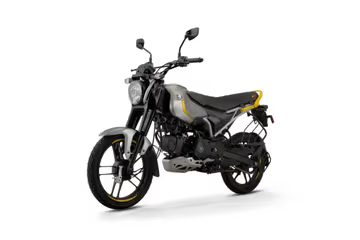
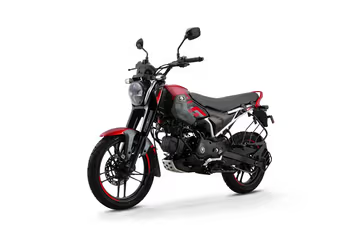
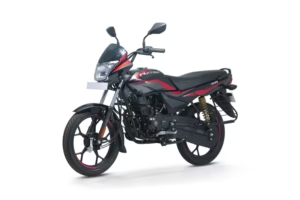
Bajaj Freedom 125 CNG (new)
6.5 pts
Unweighted: 7 advantages
EnginePerformanceDimensionsBrakesTyresFeaturesOther
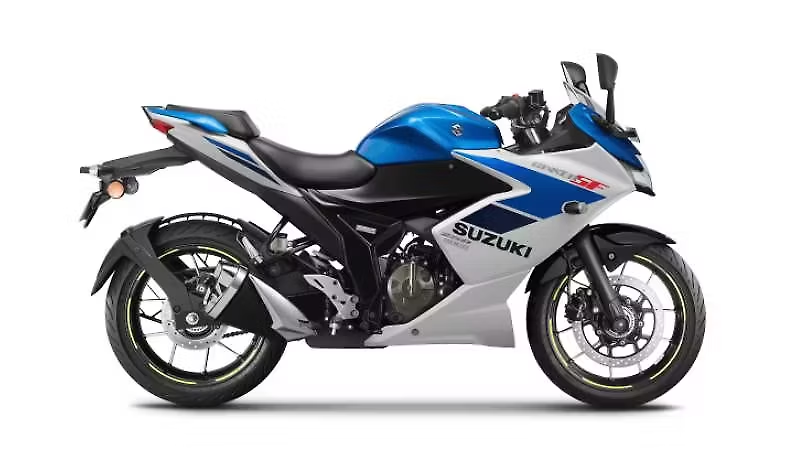
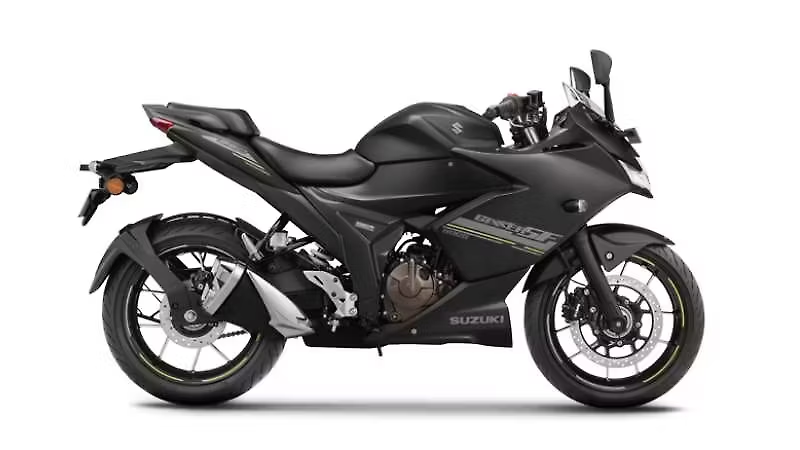
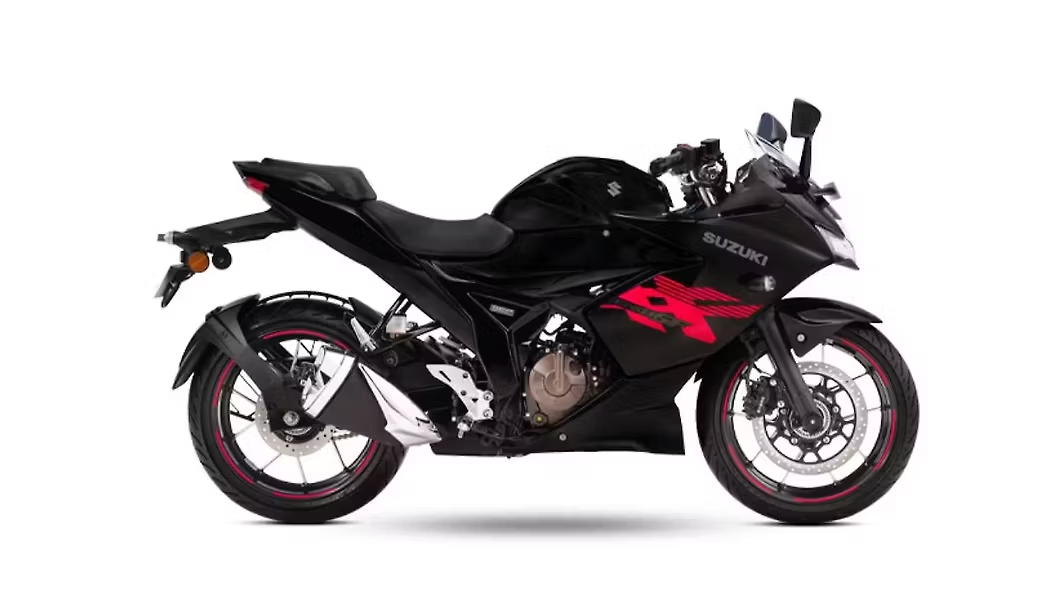
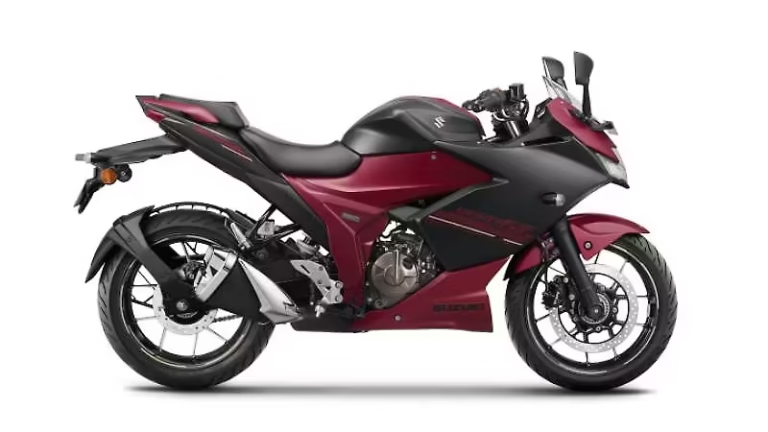
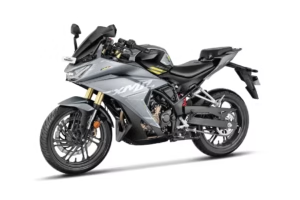
SUZUKI GIXXER SF 250/ GIXXER 250
24.0 pts
Unweighted: 16 advantages
EnginePerformanceDimensionsBrakesTyresFeaturesOther
| Specification | ||
|---|---|---|
Engine Specifications |
||
| Cooling System | Air‑cooled | Oil Cooled |
| Displacement | 124.58 cc | 249cc |
| Engine Type | 4‑Stroke, Single Cylinder | 4-Cycle, 1-cylinder, Oil cooled |
| Power | 9.5 PS @ 8,000 rpm | 26.13 bhp @ 9300 rpm |
| Torque | 9.7 Nm @ 5,000 rpm | 22.2 Nm @ 7,300 rpm |
Performance & Efficiency |
||
| Fuel Tank Capacity | 2 kg CNG + 2 L Petrol | 12 L |
| Mileage | 65 Kmpl | 38 kmpl |
Dimensions & Weight |
||
| Kerb Weight | 147.8 | 156-161 |
| Seat Height | 825 | 740-805 |
Brakes & Suspension |
||
| ABS | — | Dual Channel |
| Front Brake | 240 mm Disc / 130 mm Drum | Disc 300 mm Front 2 Piston |
| Front Suspension | Telescopic, Dia 30 Inner, Stroke 125 | Telescopic |
| Rear Brake | 130 mm Drum / 110 mm Drum | Disc 220 mm Real 1 Piston |
| Rear Suspension | Monoshox With Linkages, Stroke 120 | Monoshock |
Tyres & Wheels |
||
| Front Tyre | 90/80‑17 Tubeless | 110/70R17M/C 54S |
| Rear Tyre | 120/70-16 Tubeless | 150/60R17M/C 66S |
| Tyre Type | Tubeless | Tubeless |
| Wheel Type | Alloy | Alloy |
Features & Technology |
||
| Headlight | LED | LED |
Other Specifications |
||
| Battery | — | Maintenance free, 12V 6Ah |
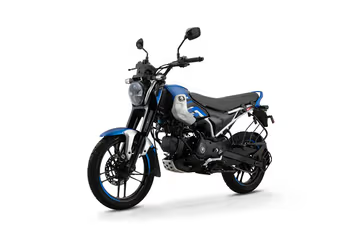
| Bike Image 1 | https://motoautiv.com/wp-content/uploads/2025/07/Blue-2.avif | https://motoautiv.com/wp-content/uploads/2025/12/Triton-Blue.avif |
| Bike Image 2 | https://motoautiv.com/wp-content/uploads/2025/07/Grey.avif | https://motoautiv.com/wp-content/uploads/2025/12/Matte-Black.avif |
| Bike Image 3 | https://motoautiv.com/wp-content/uploads/2025/07/Red-4.avif | https://motoautiv.com/wp-content/uploads/2025/12/Glass-Sparkle-Black.avif |
| Bike Image 4 | https://motoautiv.com/wp-content/uploads/2025/07/WHite-2.avif | https://motoautiv.com/wp-content/uploads/2025/12/Pearl-Glacier-White.avif |
| Cluster | Fully Digital LCD with Bluetooth | — |
| Color Options | Cyber White | #F2F2EE Racing Red | #B00000 Caribbean Blue | #1E5AA8 Pewter Grey | #6E7378 Ebony Black | #111111 | Met Triton Blue | #1F4FA3 Pearl Glacier White | #F2F2F2 Glass Sparkle Black | #0D0D0F Metallic Matte Black | #1C1C1C Met Mat Bordeaux Red/Metallic Matte Black | #6A1F2B, #1C1C1C |
| Cons | The additional CNG hardware adds weight, making the motorcycle feel heavier than many conventional 125cc commuters. Boot space and underbody packaging are naturally affected because of the placement of the CNG cylinder. Performance feels adequate rather than sporty, especially when compared to some 125cc motorcycles that focus more on acceleration. CNG availability can still be limited in certain regions compared to petrol stations. Refueling CNG generally takes longer than a regular petrol refill. The design is more functional than aggressive, which may not appeal to buyers looking for a sporty appearance. The motorcycle introduces a new technology package, so long-term ownership data is still developing compared to more established commuter models. Highway overtakes require more planning when compared to larger-capacity motorcycles. | Fuel tank capacity is modest, which limits long-distance range between fill-ups. It’s not built for rough off-road or hardcore touring - more suited for smooth roads and occasional rough patches. As a 250-class bike, performance is modest compared to larger motorcycles - may feel underpowered for those seeking outright speed or heavy touring. Rear suspension setup and seat may feel basic for very long rides or heavy pillion + luggage combos. Fuel efficiency and mileage will depend heavily on riding style - aggressive riding can reduce the “balanced” efficiency benefit. |
| Detailed Overview | The Bajaj Freedom 125 enters the commuter motorcycle segment with a concept that has not been seen before in the Indian market. At a time when most motorcycles rely entirely on petrol, the Freedom introduces a factory-developed dual-fuel system that allows it to run on both CNG and petrol. While this is the feature that immediately grabs attention, the motorcycle itself has been designed to function like a regular commuter in day-to-day use rather than feeling like an experimental product. From a distance, the Freedom does not look dramatically different from a conventional commuter motorcycle. It carries a straightforward design with practical bodywork, a sculpted fuel tank area, alloy wheels and a long seat. The overall shape prioritizes functionality, but there are a few distinctive details, particularly around the frame and side panels, where the packaging of the CNG system influences the motorcycle’s appearance. Instead of hiding the technology completely, Bajaj has integrated it into the design in a way that becomes part of the motorcycle’s identity. At the centre of the motorcycle is a 124.58cc single-cylinder engine that has been developed to operate on both fuels. The rider can switch between CNG and petrol through a handlebar-mounted switch, making the transition simple during everyday riding. The engine produces around 9.5 PS of power and 9.7 Nm of torque, figures that place it firmly within the commuter category. The focus is on smooth and predictable performance rather than rapid acceleration. Whether navigating traffic, carrying a passenger, or maintaining steady speeds on open roads, the engine delivers power in a gradual and easy-to-manage manner. The packaging of the fuel system is one of the more interesting aspects of the motorcycle. A 2 kg CNG cylinder is positioned within the frame structure, while a separate 2-litre petrol tank serves as a backup fuel source. This arrangement allows the motorcycle to continue operating even when CNG is unavailable. Riders travelling through areas with limited CNG infrastructure can simply switch to petrol mode and continue their journey. The combined range from both fuel sources also reduces the frequency of refuelling stops during regular use. Comfort has clearly been given considerable attention. The Freedom features one of the longest seats available in its category, providing a generous amount of space for both rider and pillion. The riding posture remains upright and relaxed, with a naturally positioned handlebar and footpegs. This setup helps reduce fatigue during long hours of commuting and allows riders to maintain a comfortable posture in stop-and-go traffic. The motorcycle uses telescopic front forks and a rear monoshock suspension. Together, they are tuned to handle the mixed road conditions commonly encountered in daily riding, including potholes, speed breakers and uneven surfaces. The suspension focuses on maintaining ride comfort while keeping the motorcycle stable at normal commuting speeds. Braking duties are handled by either a front disc and rear drum combination or drum brakes at both ends, depending on the variant. Combined Braking System (CBS) is included to assist with braking balance. The motorcycle rides on alloy wheels fitted with tubeless tyres, a setup that has become common in the commuter segment because of its practicality and ease of maintenance. The Freedom also includes a digital instrument cluster that provides information such as speed, fuel status and trip details. Since the motorcycle carries two different fuel sources, the display plays an important role in helping riders monitor fuel usage and operating mode during everyday journeys. Rather than being defined by a single specification, the Bajaj Freedom 125 is shaped by the way its dual-fuel technology is integrated into an otherwise familiar commuter motorcycle package. The engine, seating layout, suspension setup and fuel system all work together to create a machine intended for routine transportation while introducing a different approach to everyday fuel usage. | The Suzuki Gixxer 250 and Gixxer SF 250 are built around a 249cc single-cylinder, oil-cooled engine that produces around 26.5 PS of power and 22.2 Nm of torque. The engine uses Suzuki’s oil-cooling system instead of a full liquid-cooling setup, which helps in maintaining temperature while keeping the overall design simpler. In real use, the power delivery feels linear, meaning it builds gradually rather than coming in sudden bursts, which makes the bike easier to ride in mixed conditions like city traffic and highways. The engine is paired with a 6-speed gearbox, and the gear ratios are spaced in a way that supports both low-speed riding and steady cruising. At city speeds, the bike doesn’t feel stressed, and on highways, it can maintain a consistent pace without frequent gear changes. The throttle response is predictable, which helps in smoother riding, especially for those who prefer a controlled feel over aggressive acceleration. In terms of chassis, both bikes use a diamond-type frame, which is designed to balance rigidity and comfort. The suspension setup includes telescopic front forks and a rear monoshock. This setup is tuned more towards everyday road use rather than sporty or off-road riding. It absorbs regular road imperfections reasonably well, but sharper bumps and potholes are still noticeable, especially at higher speeds. Braking is handled by disc brakes at both ends, supported by dual-channel ABS. This adds a layer of safety during sudden braking or slippery conditions. The tyres are wide enough to provide decent grip on normal roads, though they are not specifically designed for aggressive cornering or track use. The main difference between the two versions lies in their design and riding posture. The Gixxer 250 is a naked motorcycle with a more upright seating position, making it feel slightly more relaxed in daily use. The Gixxer SF 250, on the other hand, comes with full fairing and clip-on style handlebars, which give it a slightly forward-leaning posture. However, it is not as aggressive as a typical supersport bike, so it remains manageable for longer rides. The bike comes with a fully digital instrument cluster that displays essential information such as speed, gear position, fuel level, and trip details. It also includes LED lighting for both headlamp and tail lamp. The fuel tank capacity is around 12 litres, which is average for this segment, offering a usable range for both city and occasional highway riding. Overall, the Gixxer 250 and SF 250 are built with a focus on simple engineering and usable performance, with specifications that aim to balance daily riding needs and occasional longer journeys. |
| Expert Review | The Bajaj Freedom 125 approaches commuting from a different angle by focusing on fuel flexibility rather than chasing performance or premium features. At first glance it feels like a conventional commuter motorcycle, but the integration of both petrol and CNG systems changes the ownership experience significantly. The 125cc engine provides smooth and predictable performance for daily riding, while the comfortable seat, upright ergonomics, and softly tuned suspension help the motorcycle handle long hours of commuting with ease. The additional weight from the CNG setup is noticeable during low-speed maneuvering, yet the motorcycle remains manageable in regular traffic conditions. The ability to switch between petrol and CNG adds practicality for riders who travel substantial distances, while the large overall riding range reduces the frequency of refueling stops. The motorcycle's design and engineering focus more on efficiency, comfort, and everyday usability than outright speed or sporty handling, which gives it a distinct position within the commuter segment., 4.4, MotoAutiv Team | The Suzuki Gixxer 250 and Gixxer SF 250 come across as motorcycles that have been tuned with Indian usage clearly in mind, rather than chasing outright performance figures. The 249cc engine feels smooth and predictable, which makes a difference in daily traffic where sudden power isn’t always useful. What stands out is how easy the bike is to ride without demanding too much attention from the rider, whether in the city or on short highway runs. The ergonomics are fairly practical, even on the faired version, so it doesn’t feel uncomfortable over longer durations. At the same time, the suspension and overall setup feel more suited to regular roads than aggressive riding or rough conditions., 4.2, MotoAutiv Team |
| FAQ (Manual Override) | Q: What makes the Bajaj Freedom 125 different from other 125cc motorcycles? A: The Freedom 125 is India's first mass-produced CNG motorcycle. It comes with a factory-fitted dual-fuel system that allows the rider to use both CNG and petrol, switching between them as needed. Q: How much CNG can the Bajaj Freedom 125 store? A: The motorcycle has a 2 kg CNG tank integrated into the frame along with a 2-litre petrol tank for backup fuel supply. Q: Can I switch between CNG and petrol while riding? A: Yes. A handlebar-mounted switch allows the rider to change between CNG and petrol without stopping the motorcycle. Q: What happens if the CNG tank becomes empty? A: The rider can switch to petrol mode and continue riding normally. The petrol tank acts as a backup fuel source when CNG is unavailable or depleted. Q: What is the claimed range of the Bajaj Freedom 125? A: Bajaj claims a combined range of over 330 km when both the CNG and petrol tanks are filled, though actual range depends on riding style, traffic, terrain, and load. Q: Is the performance different in CNG and petrol modes? A: Yes. The motorcycle generally feels slightly more responsive in petrol mode, while CNG mode prioritizes fuel economy and lower running costs. For normal commuting, the difference is relatively small. Q: Is the CNG cylinder safe in case of an accident? A: Bajaj states that the motorcycle underwent multiple safety tests, including impact, truck-runover, and crash evaluations. The CNG cylinder is housed within a protective trellis frame structure and is designed to meet regulatory safety standards. Q: How long does it take to fill the CNG tank? A: Filling time depends on station pressure and equipment, but it usually takes only a few minutes, similar to filling CNG in passenger vehicles. Q: Does the Bajaj Freedom 125 require special maintenance because of the CNG system? A: The motorcycle follows normal service intervals, but the CNG system and associated components are inspected during scheduled servicing to ensure proper operation and safety. Q: What engine does the Bajaj Freedom 125 use? A: It is powered by a 124.58cc single-cylinder, air-cooled engine that is specifically calibrated to operate on both CNG and petrol. Q: What is the top speed of the Bajaj Freedom 125? A: The motorcycle has a top speed of approximately 90–95 km/h, depending on fuel mode, road conditions, and rider weight. Q: Does the Freedom 125 have ABS? A: No. The motorcycle does not offer ABS. It uses a Combined Braking System (CBS) for braking assistance. Q: What type of brakes does the Freedom 125 use? A: Depending on the variant, the motorcycle is available with either a front disc brake and rear drum brake setup or drum brakes at both ends, supported by CBS. Q: What is the seat height of the Bajaj Freedom 125? A: The motorcycle has a seat height of approximately 825 mm, making it accessible to a wide range of riders. Q: Is the Bajaj Freedom 125 suitable for long-distance commuting? A: The upright riding posture, long seat, comfort-focused suspension, and large combined fuel range make it suitable for riders who cover substantial distances regularly. Q: Where can I refill the CNG tank? A: The CNG tank can be refilled at standard automotive CNG stations that serve CNG-powered vehicles. Availability depends on local CNG infrastructure in your area. Q: What happens if there are no CNG stations nearby? A: The motorcycle can continue operating on petrol using the separate petrol tank, allowing the rider to complete the journey even when CNG is unavailable. | Q: Is the Suzuki Gixxer 250 good for daily use in India? A: Yes, the Suzuki Gixxer 250 is commonly used for daily riding because the engine is smooth and the riding posture is manageable. It doesn’t feel too aggressive, which helps in city traffic. Q: What is the real mileage of the Suzuki Gixxer 250? A: In real Indian riding conditions, the Suzuki Gixxer 250 usually gives around 30–35 km/l, depending on traffic and riding style. Q: Is the Suzuki Gixxer SF 250 comfortable for long rides? A: The Suzuki Gixxer SF 250 has a slightly leaned-forward posture, but it is not extreme. Many riders find it comfortable for short to medium highway rides. Q: Does the Suzuki Gixxer 250 feel underpowered? A: The Suzuki Gixxer 250 is not built for aggressive performance. It focuses more on smooth and usable power, so it may feel calm rather than fast. Q: What is the top speed of the Suzuki Gixxer SF 250? A: The Suzuki Gixxer SF 250 can reach around 140–150 km/h under ideal conditions, though real-world speeds depend on road and riding conditions. Q: Is the Suzuki Gixxer 250 better than Yamaha R15 in daily use? A: The Suzuki Gixxer 250 is generally more comfortable and relaxed for daily riding, while the Yamaha R15 is more focused on sporty performance. Q: Does the Suzuki Gixxer 250 have heating issues? A: The Suzuki Gixxer 250 is generally well-managed in terms of heat, but like most bikes, some heat can be felt in heavy traffic. Q: What is the difference between Suzuki Gixxer 250 and Gixxer SF 250? A: The Suzuki Gixxer 250 is a naked bike, while the Suzuki Gixxer SF 250 is a fully faired version with slightly more wind protection. Q: Is the Suzuki Gixxer 250 good for beginners? A: Yes, the Suzuki Gixxer 250 is considered beginner-friendly because of its predictable power delivery and easy handling. |
| Fuel System | — | Fuel Injection |
| Price Variants | NG04 Drum | 91566 NG04 Drum LED | 104117 NG04 Disc LED | 109852 | STD | 181517 Special Edition | 181976 |
| Pros | Bajaj freedom has dual-fuel setup, allowing the motorcycle to run on both CNG and petrol. This gives riders the flexibility to switch fuels depending on availability and running costs. Running expenses can be significantly lower when using CNG compared to petrol, making the motorcycle attractive for riders who cover long distances every day. The combined riding range is impressive. With both fuel tanks available, the motorcycle can travel long distances before needing refueling. The 125cc engine delivers enough performance for city commuting and everyday transportation while remaining easy to ride for a wide range of users. The long seat is one of the largest in the segment and provides generous space for both rider and pillion. The upright riding posture and comfortable ergonomics make daily commuting less tiring, especially during extended periods in traffic. Suspension tuning focuses on comfort and absorbs potholes, speed breakers, and uneven roads reasonably well. The switch between petrol and CNG is simple and can be done while riding, adding convenience to everyday use. The motorcycle introduces a unique concept to the Indian market while maintaining the familiarity of a conventional commuter bike. | Smooth and manageable 249 cc engine - good balance of enough power for city and highway without being intimidating. Light, nimble handling and reasonable kerb weight make it easy to maneuver in traffic and tight spaces. Comfortable seat height and posture for both city rides and longer journeys. Suspension does a decent job of absorbing bumps and uneven surfaces, giving a comfortable ride even on rough roads. Disc brakes front and rear with dual-channel ABS provide dependable stopping power and added safety. A good balance of sporty feel and everyday usability - suitable for daily commutes as well as occasional spirited rides. |
| Starter | Electric only (ISG) | ELECTRIC |
| Transmission | 5‑speed (1 Down, 4 Up) | 6- speed |