Quick Analysis
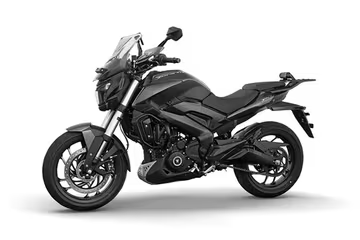
Bajaj Dominar 400
20.0 pts
Unweighted: 14 advantages
EnginePerformanceDimensionsBrakesTyresFeaturesOther
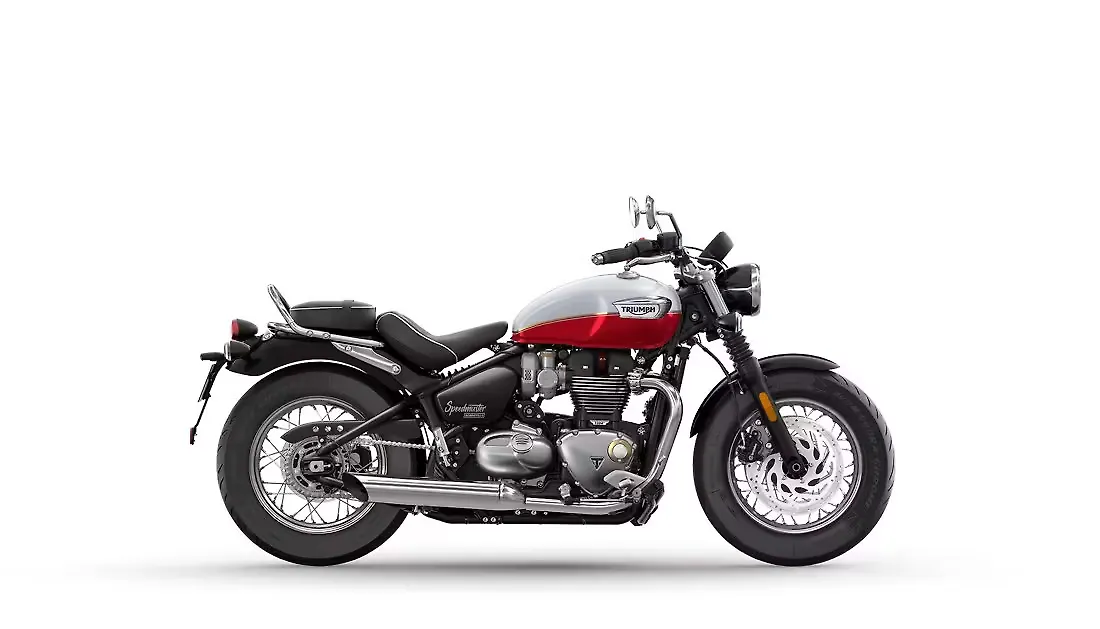
TRIUMPH BONNEVILLE SPEEDMASTER
12.5 pts
Unweighted: 9 advantages
EnginePerformanceDimensionsBrakesTyresFeaturesOther
| Specification | ||
|---|---|---|
Engine Specifications |
||
| Cooling System | Liquid‑cooled | Liquid cooled |
| Displacement | 349.13 cc | 1200 cc |
| Engine Type | Single cylinder, DOHC, 4‑valve, Fuel Injected | 8 valve, SOHC, 270° crank angle parallel twin |
| Power | 40.6 PS @ 9000 rpm | 78 PS / 76.9 bhp (57.5 kW) @ 6100 rpm |
| Torque | 33.2 Nm @ 7500 rpm | 106 Nm @ 4000 rpm |
Performance & Efficiency |
||
| Fuel Tank Capacity | 13 L | 12 L |
| Mileage | — | 22 kmpl |
Dimensions & Weight |
||
| Kerb Weight | 190 | 263 |
| Seat Height | 800 | 705 |
Brakes & Suspension |
||
| ABS | Dual‑channel ABS | Dual Channel ABS |
| Front Brake | Disc (320 mm) with dual-channel ABS | Twin Ø310mm disc, Brembo 2-piston sliding axial calipers, ABS |
| Front Suspension | Telescopic, 43 mm USD Fork, Wheel Travel - 135 mm | Ø 47 mm Showa cartridge forks |
| Rear Brake | Disc (230 mm) with dual-channel ABS | Single Ø255mm disc, Nissin single piston sliding axial caliper, ABS |
| Rear Suspension | Multi-step Adjustable Mono Shock with Nitrox, Wheel Travel - 110 mm | Mono-shock RSU with linkage and preload adjustment |
Tyres & Wheels |
||
| Front Tyre | 110/70‑17 tubeless | MT 90 B16 |
| Rear Tyre | 150/60‑17 tubeless | 150/80 R16 |
| Tyre Type | Tubeless | Tubeless |
| Wheel Type | Alloy | Spoke |
Features & Technology |
||
| Headlight | Full‑LED with Auto Headlamp On (AHO) | DRLs LED |
Other Specifications |
||
| Battery | 12 V, 8 Ah VRLA | — |
| Bike Image 1 | https://motoautiv.com/wp-content/uploads/2025/07/D400-Green.avif | https://motoautiv.com/wp-content/uploads/2025/11/bonnevillespeedmasterpacificbluesilverice.webp |
| Bike Image 2 | — | https://motoautiv.com/wp-content/uploads/2025/11/bonnevillespeedmasterjetblack.webp |
| Bike Image 3 | — | https://motoautiv.com/wp-content/uploads/2025/11/bonneville-speedmaster_my25_icon-edition_rhs_629px.webp |
| Cluster | Bonded digital LCD with turn‑by‑turn navigation | — |
| Color Options | Aurora Green | #4A5D23 Charcoal Black | #232323 | Snowdonia / Cranberry Red | #F4F4F4, #8B1E2D Aluminium Silver Sapphire Black | #C0C0C0, #0F1A2B Jet Black | #0A0A0A Pacific Blue / Silver Ice | #1F3A5F, #D9D9D9 |
| Cons | Heavy Kerb Weight – The motorcycle remains noticeably heavier than many rivals, especially during parking manoeuvres, low-speed riding, and congested city traffic. Heat Felt in Slow Traffic – The larger liquid-cooled engine can generate noticeable heat around the rider's legs during prolonged stop-and-go conditions. Fuel Efficiency Lower Than Smaller Motorcycles – Compared to 250cc and commuter-oriented motorcycles, fuel consumption is relatively higher, particularly during aggressive riding. Less Agile in Urban Conditions – While highly stable on highways, the motorcycle can feel less nimble than lighter street bikes in tight traffic situations. 13-Litre Fuel Tank Could Be Larger for Touring – Riders covering long highway distances may prefer a larger fuel tank to reduce the frequency of refuelling stops. Weight May Challenge New Riders – The motorcycle's size, power output, and kerb weight can take time to get used to for inexperienced riders. Premium Maintenance Costs – Tyres, brake components, and routine servicing generally cost more than those of smaller-capacity motorcycles. Advanced Electronics Still Limited – Some competitors now offer ride-by-wire throttles, TFT displays, multiple riding modes, and traction control systems that are absent on the Dominar 400. Suspension Setup Prioritizes Stability Over Agility – The motorcycle focuses more on highway comfort and stability than sharp cornering responsiveness. | Low ground clearance & limited suspension travel: On bad or uneven surfaces, its cruiser geometry and low clearance can be a drawback, especially in markets with rough roads. Heavy weight / less agility in tight scenarios: While stable at speed, the mass and cruiser chassis make it less nimble than lighter motorcycles, especially in traffic or tighter corners. Suspension setup may feel firm/stiff: Some reviewers mention that the suspension, tuned for style and load, can feel a bit firm or less compliant than ideal for rough surfaces. Premium cost and ownership aspects: As a premium bike in its class, purchase price, maintenance and parts/spares may cost more than simpler alternatives. |
| Detailed Overview | Long highway stretches are where the Bajaj Dominar 400 feels most at home. Unlike motorcycles that focus primarily on urban commuting or outright sport riding, the Dominar 400 is built around the idea of covering distance while maintaining comfort and stability. Its substantial dimensions, muscular fuel tank, upright riding posture, and touring-oriented equipment create a motorcycle that is equally capable of handling daily travel and extended weekend rides. At the heart of the motorcycle is a 349cc single-cylinder, liquid-cooled DOHC engine that produces around 40 PS of power and 33.2 Nm of torque. Paired with a six-speed gearbox, the engine delivers performance across a broad rev range, allowing riders to accelerate confidently, maintain highway cruising speeds, and overtake slower traffic without frequent downshifts. The liquid-cooling system helps regulate engine temperatures during demanding riding conditions, while fuel injection contributes to smooth throttle response and consistent power delivery. The motorcycle’s overall design reflects its touring-focused nature. A compact windscreen sits above the LED headlamp, helping reduce wind pressure on the rider during highway travel. The sculpted fuel tank, split-seat arrangement, and exposed perimeter frame give the motorcycle a muscular appearance, while LED lighting throughout the motorcycle adds a modern touch. The bodywork remains functional rather than overly aggressive, prioritizing rider comfort and practicality over track-inspired styling. Supporting the engine is a perimeter frame chassis combined with upside-down front forks and a rear monoshock suspension system. This setup is designed to provide stability at higher speeds while maintaining comfort across varying road conditions. Whether travelling on smooth highways or encountering uneven road surfaces, the suspension works to absorb impacts and maintain composure. The motorcycle’s relatively long wheelbase further contributes to its planted feel during long-distance riding. Stopping power comes from disc brakes at both ends, assisted by dual-channel ABS. The braking system is intended to provide controlled deceleration while reducing the chances of wheel lock-up under hard braking conditions. An assist-and-slipper clutch is also included, helping reduce clutch effort in everyday riding and improving stability during rapid downshifts. Technology and convenience features form another important part of the package. The digital instrument cluster displays essential riding information, including speed, fuel level, trip readings, gear position, and navigation-related data. Bluetooth connectivity allows integration with compatible smartphones for call alerts, message notifications, and turn-by-turn navigation. These features are aimed at riders who spend extended periods on the road and require easy access to travel information. Comfort remains central to the riding experience. A wide handlebar, upright seating position, and spacious seat help reduce fatigue during longer journeys. The 800 mm seat height accommodates a broad range of riders, while the 13-litre fuel tank provides a practical riding range between fuel stops. Together, these elements create a motorcycle that combines touring capability, modern technology, and everyday usability within the premium sports tourer segment. | The Triumph Bonneville Speedmaster is the kind of motorcycle that looks like it belongs to an older era, but once you start looking at the specs, you realise it’s built with modern parts underneath. It runs on a 1200 cc parallel-twin engine that makes around 78 PS and 106 Nm. What this means in real life is that the bike feels strong at low speeds. You don’t have to keep changing gears again and again in traffic, and even on highways it moves in a smooth and relaxed way rather than feeling aggressive. The riding position is very different from regular bikes. You sit low, with your legs stretched forward, and your hands on wide handlebars. It feels comfortable when the road is open, but in city traffic it can take some time to get used to, especially when you have to stop and start often. The seat height is quite low, around 705 mm, so most riders can easily place their feet on the ground, which helps when handling such a heavy bike. Talking about the hardware, the Speedmaster uses a steel frame with front telescopic forks and a rear monoshock that is hidden to keep that classic look. The suspension is tuned more for comfort, so it works fine on normal roads, but sharp bumps and bad patches are still clearly felt. The bike rides on a 16-inch front and rear wheel setup, which adds to its low and stretched design. Braking is handled by a disc at the front and rear, along with dual-channel ABS, so braking feels controlled and predictable in normal riding conditions. This is not a light bike by any means. It weighs around 263 kg, so you will notice the weight when moving it around or riding at low speeds. Once the bike is moving, it feels more stable and planted. The fuel tank is about 12 litres, which means you may need to plan fuel stops on longer rides. In real-world conditions, mileage usually stays around 18 to 22 km/l, depending on how you ride. On the feature side, the Speedmaster keeps things simple but modern enough. It gets a semi-digital instrument cluster with an analogue speedometer and a small digital screen for details like gear position, fuel level, and trip info. It also comes with riding modes, traction control, and cruise control, which can be useful on highways. There is no focus on flashy tech or connectivity, and the bike sticks to a straightforward setup. |
| Expert Review | Built around an updated 349cc single-cylinder, liquid-cooled DOHC engine, the Bajaj Dominar 400 continues to focus on long-distance touring capability while balancing everyday usability. The engine delivers strong mid-range performance and relaxed highway cruising characteristics, supported by a 6-speed gearbox and assist-and-slipper clutch. Its perimeter frame, upside-down front forks, and well-balanced chassis contribute to stable high-speed behaviour, while the upright riding position and spacious seating arrangement enhance rider comfort during extended journeys. Touring-oriented elements such as the windshield, wide handlebar, and luggage compatibility further reinforce its highway-focused nature. Modern features including LED lighting, Bluetooth connectivity, navigation support, and digital instrumentation add practicality for daily riding and touring alike. The motorcycle's heavier kerb weight improves stability at speed but can feel noticeable during low-speed manoeuvres and dense traffic conditions. Overall, the Dominar 400 combines strong touring ability, refined performance, premium hardware, and everyday practicality within the sports tourer motorcycle segment., 4.5, MotoAutiv Team | With the Bonneville Speedmaster, the focus is clearly on a calm and steady riding experience rather than speed. The 1200 cc engine feels strong at low speeds, so riding in traffic doesn’t require constant gear changes, and on highways it stays smooth at a relaxed pace. The riding position is stretched out with forward footpegs, which feels natural on open roads but less convenient in crowded areas. Because of its weight, slow-speed handling needs some effort, especially in tight turns or parking. The suspension is set for comfort, but bad roads and sharp bumps are still felt. It gets basic modern features like ride modes and traction control, without too much focus on advanced electronics. In everyday conditions, it feels more suited to easy rides than regular heavy usage., 4.3, MotoAutiv Team |
| FAQ (Manual Override) | Q: What is the engine capacity of the Bajaj Dominar 400? A: The latest Dominar 400 is powered by a 349cc single-cylinder, liquid-cooled, DOHC engine paired with a 6-speed gearbox. Q: Is the Bajaj Dominar 400 suitable for touring? A: Yes. The motorcycle is designed with touring in mind and offers comfortable ergonomics, stable highway manners, a windshield, and support for touring accessories. Q: What mileage does the Dominar 400 deliver? A: Most owners can expect a real-world fuel efficiency of approximately 28–35 kmpl, depending on riding style, speed, and road conditions. Q: What is the fuel tank capacity of the Dominar 400? A: The motorcycle comes with a 13-litre fuel tank. Q: Does the Dominar 400 have dual-channel ABS? A: Yes. Dual-channel ABS is offered as standard equipment. Q: What is the seat height of the Bajaj Dominar 400? A: The seat height is approximately 800 mm, making it accessible to a wide range of riders. Q: Does the Dominar 400 have Bluetooth connectivity and navigation? A: Yes. Recent versions include Bluetooth connectivity and turn-by-turn navigation through the digital instrument console. Q: What is the top speed of the Dominar 400? A: Under suitable conditions, the motorcycle can achieve approximately 150–160 km/h, depending on rider weight, weather, and road conditions. Q: Is the Dominar 400 comfortable for long highway rides? A: Yes. The upright riding position, spacious seat, windscreen, and stable chassis make it suitable for covering long distances. Q: Does the Dominar 400 have a slipper clutch? A: Yes. An assist-and-slipper clutch is provided to reduce clutch effort and improve stability during downshifts. Q: Is the Dominar 400 beginner-friendly? A: Riders with some experience can adapt to it comfortably, but its weight and performance may require a learning period for complete beginners. Q: How does the Dominar 400 differ from the Dominar 250? A: The Dominar 400 offers a larger and more powerful engine, stronger acceleration, and enhanced highway performance, while sharing a similar touring-focused design philosophy. Q: What type of motorcycle is the Bajaj Dominar 400? A: It is classified as a sports tourer motorcycle, combining long-distance comfort, highway stability, and everyday usability. Q: Are spare parts and service support easily available? A: Yes. Bajaj's widespread dealership and service network across India generally ensures convenient maintenance and spare parts availability. Q: Does the Dominar 400 support luggage and touring accessories? A: Yes. The motorcycle is commonly fitted with saddle stays, top racks, luggage carriers, tank bags, and other touring accessories, making it suitable for long-distance travel. | Q: What engine does the Bonneville Speedmaster have? A: It uses a 1,200 cc liquid-cooled, 8-valve, parallel-twin engine with a 270° crank, producing around 78 PS at 6,100 rpm and 106 Nm of torque at 4,000 rpm. Q: What is the seat height and wet weight for the Speedmaster in India? A: The seat height is approximately 705 mm and the wet weight is listed at about 263 kg (according to specification data) for the model in India. Q: What is the fuel tank capacity and what mileage can one expect? A: The fuel tank capacity is 12 litres. Real-world mileage is around ~18-20 km/l on mixed use in Indian conditions as per reviews. Q: What features and rider aids come with the Speedmaster? A: The Speedmaster comes with dual riding modes (Rain & Road), ABS, switchable traction control, cruise control, LED lighting, ride-by-wire throttle and torque-assist clutch. Q: What is the price of the Speedmaster in India? A: The ex-showroom price starts from around ₹ 13,37,500 for the latest variant in India. Q: What kind of chassis and wheels does the Speedmaster use? A: It uses a tubular steel cradle frame, 16″ wire-spoked wheels (16×2.5″ front and 16×3.5″ rear) with 47 mm Showa front forks and mono-shock at the rear, twin 310 mm front discs and single 255 mm rear disc with ABS. Q: Is the Speedmaster suitable for two-up riding and touring? A: Yes, its comfortable riding position with forward foot-pegs, low seat height and cruiser-style ergonomics make it well-suited for relaxed rides. However, its 12-litre tank and cruiser setup mean it's more for relaxed touring rather than ultra-long highway blasts. Q: What is the service interval for the Speedmaster? A: The service interval is about 16,000 km (10,000 miles) or 12 months, whichever comes first. |
| Fuel System | Fuel Injection | Fuel Injection |
| Price Variants | STD | 203214 | Standard | 1287500 Icon Edition | 1367500 |
| Pros | Strong Touring Performance – The updated 349cc liquid-cooled engine delivers strong acceleration and highway cruising ability, making long-distance riding more effortless. Improved Mid-Range Power Delivery – The engine offers better tractability and stronger mid-range performance, helping with overtakes and relaxed highway riding. Excellent Highway Stability – The motorcycle feels planted at higher speeds due to its weight, chassis setup, and long wheelbase, contributing to rider confidence during touring. Comfortable Riding Ergonomics – The upright seating posture, wide handlebars, and spacious seat help reduce fatigue on extended rides. Premium Touring-Oriented Hardware – Upside-down front forks, perimeter frame, dual-channel ABS, assist and slipper clutch, and LED lighting contribute to the motorcycle's equipment package. Refined Engine Character – The liquid-cooled DOHC engine delivers smoother power delivery and better refinement across varying riding conditions. Touring-Friendly Design – The windshield, luggage mounting capability, and stable chassis make the motorcycle suitable for highway travel and touring accessories. Feature-Rich Instrumentation – Bluetooth connectivity, navigation support, digital consoles, and ride information displays add convenience for touring and everyday riding. Good High-Speed Cruising Comfort – The engine remains relaxed at cruising speeds, helping riders cover long distances with less strain. | Excellent low-end torque and ride feel: The 1200 cc twin delivers a rich, satisfying pull from low rpm, giving the Speedmaster good real-world usability. Iconic styling & credible build: It carries classic cruiser/modern-classic looks with swept-back bars, forward foot-controls and premium finishes, which many riders find appealing. Comfortable ergonomics (for many): With its low seat height (~705 mm in some markets) and cruiser-style riding position, it’s relatively accessible and suitable for relaxed rides. Modern features included: Despite its retro styling, it integrates modern tech, ride-by-wire throttle, two riding modes, ABS, traction control, cruise control and full LED lighting. |
| Starter | Electric | Self start |
| Transmission | 6‑speed manual (with slipper clutch) | 6-speed |