Quick Analysis
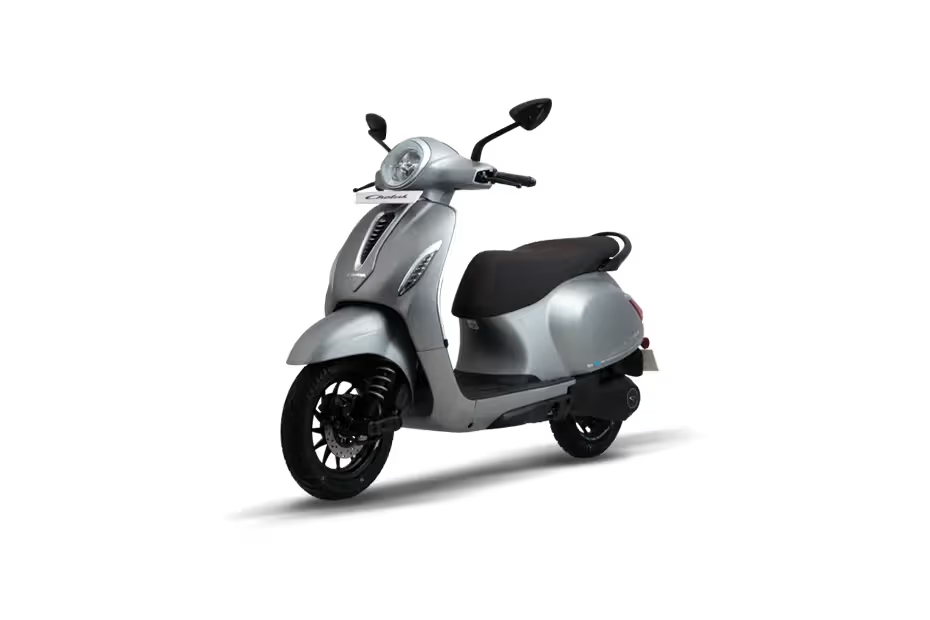
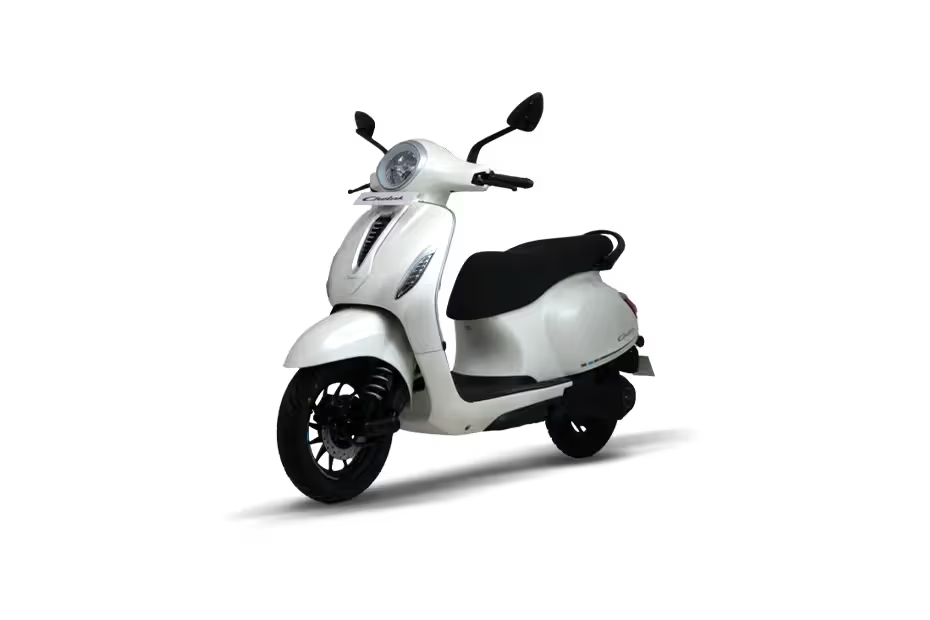
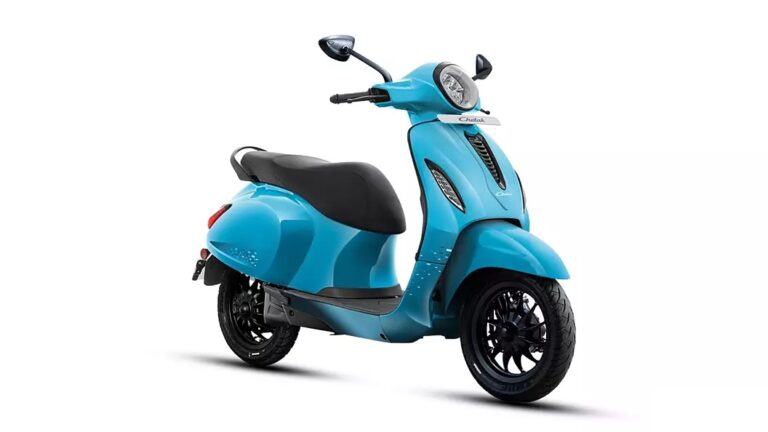
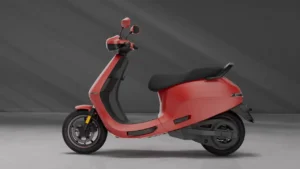
Bajaj Chetak EV
18.5 pts
Unweighted: 31 advantages
EnginePerformanceDimensionsBrakesTyresFeaturesOther
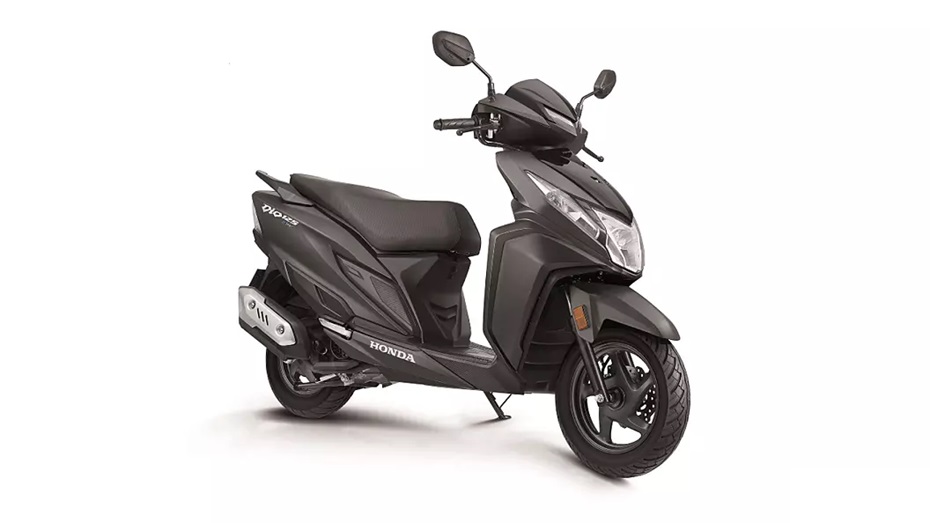
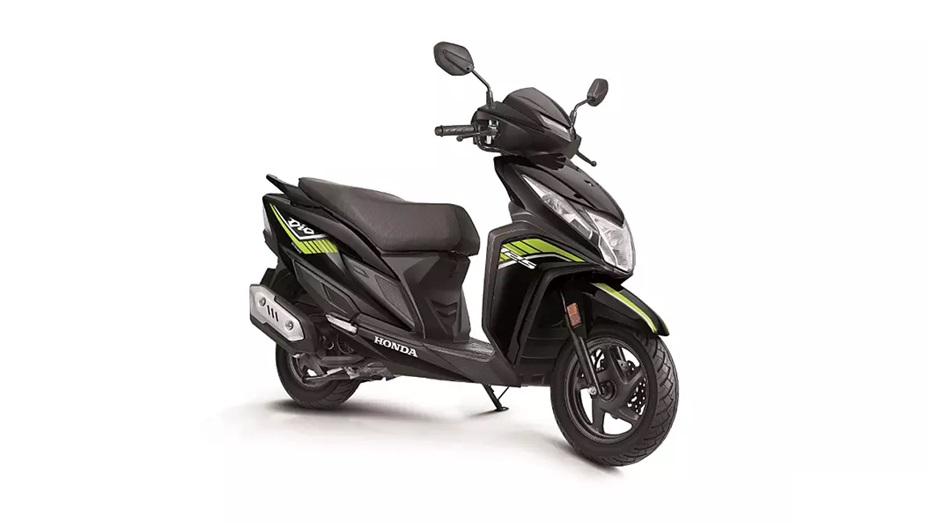
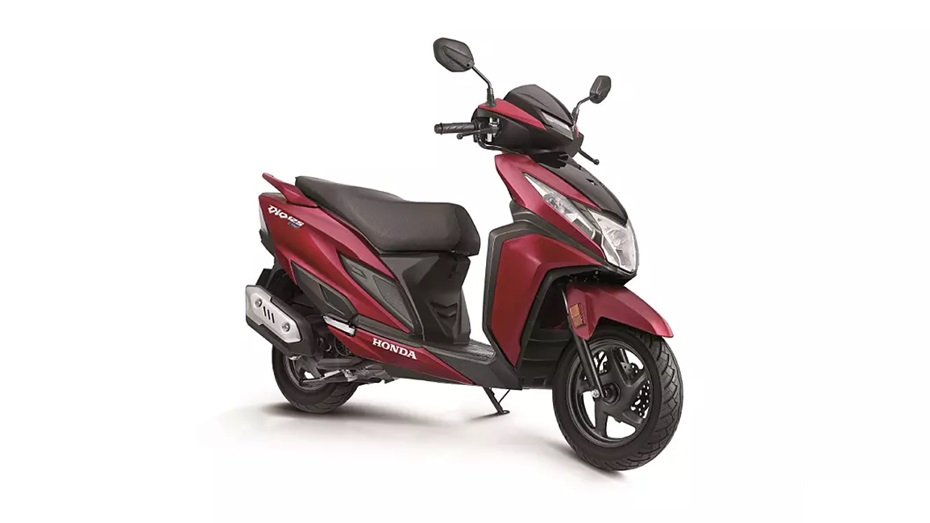
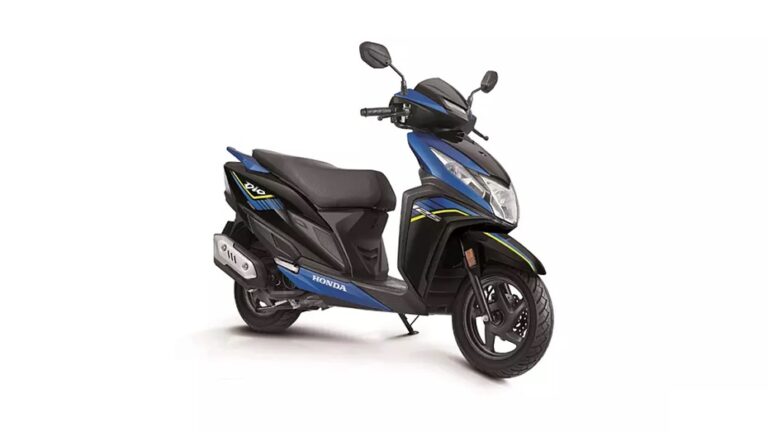
Honda Dio 125 DLX
22.5 pts
Unweighted: 11 advantages
EnginePerformanceDimensionsBrakesTyresFeaturesOther
| Specification | ||
|---|---|---|
Engine Specifications |
||
| Displacement | — | 123.92 CC |
| Engine Type | Electric motor, 3-phase permanent magnet synchronous | 4 Stroke, SI Engine, Fuel Injection |
| Power | — | 10.5 Nm @ 5000 rpm |
| Torque | 20 Nm @ 1,950 rpm | 8.30 PS @ 6250 rpm |
Performance & Efficiency |
||
| Fuel Tank Capacity | — | 5.3 L |
| Mileage | — | 48 Kmpl |
| Top Speed (km/h) | 72 | — |
Dimensions & Weight |
||
| Kerb Weight | — | 104 |
| Seat Height | 775 | 708 |
Brakes & Suspension |
||
| ABS | — | No |
| Front Brake | 130 mm Disc | Disc |
| Front Suspension | Single Sided Leading Link | Telescopic |
| Rear Brake | 130 mm Drum | Drum |
| Rear Suspension | Monoshock | 3-Step Adjustable Spring Loaded Hydraulic |
Tyres & Wheels |
||
| Front Tyre | 90/90-12 | 90/90-12 |
| Rear Tyre | 90/100-12 | 90/100-10 |
| Tyre Type | Tubeless | Tubeless |
| Wheel Type | Alloy | Alloy/Steel |
Features & Technology |
||
| Headlight | LED with DRLs (as per official visuals) | LED Headlamp |
Other Specifications |
||
| 0–40 km/h (s) | 2.8 | — |
| Anti-Theft / IoT Tracking | Yes | — |
| App Connectivity | Yes | — |
| Battery | 3.0 kWh (Series 30) / 3.5 kWh (Series 35) | 12 V, 5.0 Ah |
| Battery Capacity (kWh) | 3.5 | — |
| Battery Chemistry | Li-ion | — |
| Battery Warranty (Years) | 3 | — |
| Bike Image 1 | https://motoautiv.com/wp-content/uploads/2025/07/Brooklyn-Black.jpeg | https://motoautiv.com/wp-content/uploads/2025/06/gray-metallic.jpeg |
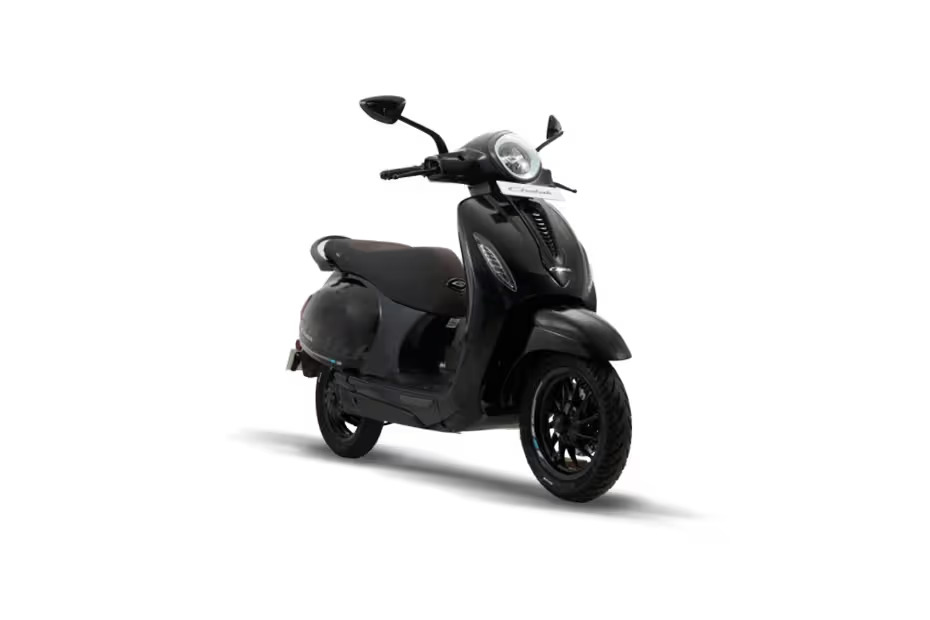
| Bike Image 10 | https://motoautiv.com/wp-content/uploads/2025/07/racing-red.jpeg | — |
| Bike Image 2 | https://motoautiv.com/wp-content/uploads/2025/07/Coarse-grey.jpeg | https://motoautiv.com/wp-content/uploads/2025/06/night-black.jpeg |
| Bike Image 3 | https://motoautiv.com/wp-content/uploads/2025/07/Cyber-white.jpeg | https://motoautiv.com/wp-content/uploads/2025/06/red-metallic.jpeg |
| Bike Image 4 | https://motoautiv.com/wp-content/uploads/2025/07/Ebony-black.jpeg | https://motoautiv.com/wp-content/uploads/2025/06/gray-1.jpeg |
| Bike Image 5 | https://motoautiv.com/wp-content/uploads/2025/07/hazel-nut.jpeg | https://motoautiv.com/wp-content/uploads/2025/06/Siren-blue.jpeg |
| Bike Image 6 | https://motoautiv.com/wp-content/uploads/2025/07/Indigo-blue.jpeg | https://motoautiv.com/wp-content/uploads/2025/06/sports-red.jpeg |
| Bike Image 7 | https://motoautiv.com/wp-content/uploads/2025/07/Lime-yellow.jpeg | — |
| Bike Image 8 | https://motoautiv.com/wp-content/uploads/2025/07/Matt-grey.jpeg | — |
| Bike Image 9 | https://motoautiv.com/wp-content/uploads/2025/07/Pista-green.jpeg | — |
| Built-in GPS Navigation | Yes | — |
| Charger Output Power (kW) | 0.95 | — |
| Charging Port Type | Proprietary | — |
| Charging Time (Standard) | 3 h 25 mins | — |
| Cluster | Fully digital colored LCD, Bluetooth‑linked, with navigation capability (Series 35) | TFT |
| Color Options | Brooklyn Black | #1A1A1A Hazelnut | #8A6A4A Indigo Metallic | #2F4F8F Matte Scarlett Red / Scarlet Red | #A32028 Racing Red | #C1121F Pista Green | #A8C66C Lime Yellow | #C9D300 Azure Blue | #4A8EDB Cyber White | #F4F4F0 Matte Coarse Grey | #6C7075 Matt Grey | #707070 Moon White | #F5F5F2 | Mat Axis Gray Metallic | #64676B Mat Marvel Blue Metallic | #2F4F7A Mat Sangria Red Metallic | #7B2431 Pearl Deep Ground Gray | #5D6166 Pearl Night Star Black | #121214 Pearl Siren Blue | #1E5FA8 Sports Red | #C21E2A |
| Connectivity Features | Bluetooth, Smartphone Connectivity, Navigation, Call Alerts, Music Control, Ride Statistics | — |
| Cons | No Fast Charging Support – Charging times remain longer than some rivals because DC fast charging is not supported. Battery Is Non-Removable – Users living in apartments without dedicated charging access may find charging less convenient. Performance Focuses on Smoothness Rather Than Aggression – Riders seeking rapid acceleration or sporty performance may find the scooter relatively relaxed. Top Speed Lower Than Some Performance EV Rivals – Competing electric scooters in the segment offer higher top speeds and quicker acceleration. Premium Pricing Compared to Petrol Scooters – Initial purchase cost remains higher than many conventional scooters despite lower running expenses. Limited Highway Suitability – While capable of short highway stretches, the scooter is primarily optimized for city commuting. Service and Charging Infrastructure Still Expanding – EV infrastructure and specialized service support continue to grow but may vary depending on location. Storage Space Still Less Than Some Rivals – Although improved, underseat storage may still feel limited compared to certain family-oriented scooters. | Performance Remains Commuter-Oriented – The engine is tuned for smoothness and efficiency rather than strong acceleration, which may disappoint riders seeking a more performance-focused scooter. Ride Quality Can Feel Firm on Broken Roads – Sharp potholes and rough surfaces are transmitted more noticeably than on some comfort-oriented rivals. Underseat Storage Is Average – Storage space is adequate for daily essentials but not among the largest in the segment. No Bluetooth Connectivity – Unlike some competitors, the DLX variant does not offer smartphone connectivity, call alerts, or navigation integration. Pillion Seat Space Is Limited – The rear section is suitable for daily commuting but may feel compact for larger passengers. Small Fuel Tank Capacity – The 5.3-litre tank is sufficient for city use but smaller than what some competing scooters offer. High-Speed Stability Is Not a Primary Focus – The scooter feels most comfortable in urban conditions rather than extended high-speed highway riding. |
| Detailed Overview | Few electric scooters on the market place as much emphasis on build quality and design as the Bajaj Chetak EV. While many modern electric scooters adopt sharp styling and futuristic bodywork, the Chetak follows a more timeless approach inspired by the iconic Chetak scooters of the past. Rounded body panels, clean lines, and extensive use of metal give it a distinctive identity, helping it stand apart in an increasingly crowded electric scooter segment. At the same time, the scooter incorporates modern technology, connected features, and an electric powertrain designed for everyday urban mobility. The latest generation Chetak is powered by a 3.5 kWh lithium-ion battery pack paired with an electric motor that delivers smooth and immediate acceleration. Unlike conventional petrol-powered scooters that require gear changes or engine revs to build speed, the electric motor provides instant torque from a standstill, making stop-and-go city traffic easier to navigate. The scooter offers a claimed riding range of up to 153 km on a single charge under IDC testing conditions, while real-world range varies depending on riding style, traffic, terrain, and selected riding mode. Charging is handled through a home charging solution supplied with the scooter. The battery can be charged from 0 to 80 percent in approximately three and a half hours, making overnight charging or workplace charging practical for most users. The battery pack is integrated into the chassis and is not removable, allowing Bajaj to maximize storage space and maintain structural rigidity. The battery also benefits from modern thermal management and protection systems designed to support durability and long-term reliability. One of the major highlights of the Chetak is its all-metal body construction. While many electric scooters rely heavily on plastic body panels, the Chetak uses metal across much of its exterior structure, contributing to a solid feel and premium finish. The fit and finish of body panels, switchgear, and controls are designed to create a refined ownership experience while maintaining the scooter’s retro-inspired aesthetic. The scooter is equipped with a digital instrument cluster that provides access to speed, battery status, riding information, trip data, and connectivity functions. Depending on the variant, smartphone integration enables features such as call alerts, message notifications, navigation assistance, vehicle tracking, ride statistics, and software updates. Over-the-air update capability allows supported systems to receive feature enhancements and improvements without requiring a workshop visit. Ride quality is another area that receives attention in the scooter’s overall setup. The suspension system is tuned for urban conditions and works to absorb potholes, speed breakers, and uneven road surfaces commonly encountered in daily commuting. The chassis and wheelbase contribute to stable handling characteristics, while the scooter’s compact dimensions make it manageable in congested traffic and parking situations. Practicality remains an important part of the package. The latest Chetak offers approximately 35 litres of underseat storage, providing space for everyday items such as a helmet, bag, or personal belongings. The flat floorboard further improves utility by allowing riders to carry additional small items when required. Comfortable seating, a relaxed riding position, and intuitive controls make the scooter accessible to a broad range of riders, including those transitioning from conventional petrol-powered scooters. By combining a modern electric drivetrain, connected technology, premium metal construction, practical storage solutions, and a design that blends heritage-inspired styling with contemporary features, the Bajaj Chetak EV is positioned as an urban-focused electric scooter built around comfort, convenience, and everyday usability. | The Honda Dio 125 DLX is a scooter designed mainly for everyday commuting. It combines a 125cc engine with features that are commonly expected in modern scooters, while keeping the overall package compact and easy to use. Unlike motorcycles that require gear changes, the Dio 125 DLX uses an automatic transmission, which allows the rider to focus only on throttle and braking inputs during daily travel. The scooter is powered by a 123.92cc single-cylinder, air-cooled engine. This engine uses fuel injection, which helps control fuel delivery more accurately than older carburetor-based systems. The engine produces around 8.2 bhp and 10.4 Nm of torque, figures that are typical for a 125cc commuter scooter. Power is delivered through a CVT (Continuously Variable Transmission), which automatically adjusts gear ratios while riding. This setup allows smooth acceleration without the rider needing to shift gears manually. Honda has equipped the Dio 125 DLX with its Enhanced Smart Power (eSP) technology. This includes measures aimed at improving efficiency and reducing friction within the engine. The scooter also features an Idling Stop System. When the scooter remains stationary for a short period, such as at a traffic signal, the engine automatically switches off. Twisting the throttle restarts the engine, helping reduce fuel consumption during frequent stops. The chassis uses Honda’s underbone frame architecture. This type of frame is commonly found in scooters because it allows a step-through design, making it easier for riders to get on and off the vehicle. The suspension setup consists of telescopic forks at the front and a rear monoshock. Together, these components absorb bumps and road irregularities encountered during normal city riding. Braking duties are handled by a front disc brake and a rear drum brake. The scooter also uses Honda’s Combined Braking System (CBS), which distributes braking force between both wheels when the rear brake is applied. This system is designed to provide more balanced braking during everyday use. The Dio 125 DLX rides on alloy wheels fitted with tubeless tyres. Tubeless tyres are widely used because they generally lose air more slowly after a puncture and are easier to repair compared to tube-type tyres. The scooter weighs approximately 104–105 kg, which places it among the lighter options in the 125cc category. The relatively low weight contributes to easy handling during low-speed riding, parking, and navigating through traffic. In terms of dimensions, the seat height is around 708 mm, allowing riders of different heights to reach the ground comfortably. The fuel tank capacity is 5.3 litres, which is typical for a scooter in this segment. Storage space is available beneath the seat for carrying everyday items, while an external fuel filler cap allows refuelling without opening the seat compartment. The DLX variant includes a fully digital instrument cluster. The display shows information such as speed, fuel level, trip meter readings, average fuel efficiency, and service reminders. LED lighting is used for several components, contributing to visibility and reducing power consumption. Visually, the Dio 125 DLX follows a sporty design theme. The front section features sharp styling lines, angular body panels, and a compact overall shape. Despite its sporty appearance, the scooter remains focused on everyday transportation requirements. Its specifications combine a fuel-injected engine, automatic transmission, digital instrumentation, and commuter-oriented chassis components into a package intended for regular urban and suburban use. |
| Drive Modes | Eco, Sports | — |
| Expert Review | Among the growing number of electric scooters on Indian roads, the Bajaj Chetak takes a noticeably different approach. Rather than chasing the highest top speed or the longest feature list, it focuses on delivering a polished day-to-day riding experience. The metal body panels give the scooter a solid feel, while the electric motor provides smooth and predictable acceleration that suits urban traffic conditions well. Ride quality remains comfortable over broken roads, and the scooter feels stable and easy to control even for first-time EV users. The larger battery pack and improved storage space enhance practicality, while smartphone connectivity, navigation support, and OTA updates bring modern functionality to the package. The absence of fast charging and a removable battery may be considerations for some buyers, but the overall experience revolves around refinement, comfort, build quality, and ease of ownership rather than outright performance figures., 4.4, MotoAutiv Team | The Dio 125 DLX follows a fairly straightforward approach within the 125cc scooter segment. Rather than trying to be the most feature-packed or the most performance-oriented option, it focuses on the fundamentals of daily commuting while retaining the sporty styling that has long been associated with the Dio name. The 123.92cc engine is tuned for smooth and predictable operation, making the scooter easy to ride in traffic and during frequent stop-and-go conditions. Its relatively low weight and compact dimensions contribute to quick steering responses and easy manoeuvrability, particularly in crowded urban environments. The riding position remains neutral and accessible, while the digital instrument cluster and external fuel filler add convenience to everyday use. At the same time, the scooter's priorities become evident when riding over rough roads or at sustained higher speeds, where comfort and stability are not emphasized to the same extent as they are on some larger or more comfort-focused scooters. The overall package reflects a scooter designed primarily around urban transportation, with styling and ease of use playing a larger role than outright performance or touring capability., 4.1, MotoAutiv Team |
| FAQ (Manual Override) | Q: What is the battery capacity of the Bajaj Chetak EV? A: The latest Chetak 3501 is equipped with a 3.5 kWh lithium-ion battery pack. Q: What is the claimed range of the Bajaj Chetak EV? A: Bajaj claims an IDC-certified range of approximately 153 km on a full charge. Q: What is the real-world range of the Chetak EV? A: Depending on riding conditions, speed, terrain, and usage patterns, most riders can expect around 110–130 km in real-world conditions. Q: How long does it take to charge the Bajaj Chetak EV? A: The battery can be charged from 0–80% in approximately 3 hours 25 minutes using the standard charger. Q: Does the Bajaj Chetak EV support fast charging? A: No. The current Chetak range does not support DC fast charging. Q: Is the battery removable? A: No. The battery is integrated into the scooter and cannot be removed for charging. Q: What is the top speed of the Bajaj Chetak EV? A: The latest Chetak 3501 has a top speed of approximately 73 km/h. Q: Does the Chetak EV have smartphone connectivity? A: Yes. It supports smartphone connectivity through the Chetak mobile application. Q: Does the scooter offer navigation features? A: Yes. Turn-by-turn navigation and map-related functions are available through the connected system. Q: Does the Bajaj Chetak EV receive OTA updates? A: Yes. Software updates can be delivered over the air for supported features and system improvements. Q: How much storage space does the Chetak EV offer? A: The latest generation provides approximately 35 litres of underseat storage, making it more practical than previous versions. Q: Is the Bajaj Chetak EV suitable for daily commuting? A: Yes. Its smooth power delivery, comfortable ride quality, practical range, and low running costs make it well suited to everyday urban use. Q: What type of battery chemistry does the Chetak use? A: The scooter uses a Lithium Iron Phosphate (LFP) battery, known for durability and thermal stability. Q: Does the Bajaj Chetak EV have anti-theft features? A: Yes. Connected variants offer vehicle tracking, security alerts, and anti-theft functions through the companion application. Q: What type of scooter is the Bajaj Chetak EV? A: It is classified as a premium electric scooter, designed primarily for urban commuting and everyday transportation. | Q: What engine powers the Dio 125 DLX? A: It uses a 123.92cc, single-cylinder, air-cooled, fuel-injected engine paired with a CVT automatic transmission. Q: What is the power output? A: The engine produces approximately 8.2 bhp and 10.4 Nm of torque. Q: Does the Dio 125 DLX have fuel injection? A: Yes. The scooter uses Honda's PGM-FI fuel-injection system. Q: Does it have a digital instrument cluster? A: Yes. The DLX variant comes with a fully digital display showing speed, fuel level, trip information, mileage indicators, and service reminders. Q: Does the Dio 125 DLX have Bluetooth connectivity? A: No. Bluetooth and smartphone connectivity are not offered on the DLX variant. Q: Does it have Honda Smart Key? A: No. The Smart Key system is reserved for the higher Honda Dio 125 Smart variant. Q: What is the fuel tank capacity? A: The scooter has a 5.3-litre fuel tank. Q: What is the kerb weight? A: The Honda Dio 125 DLX weighs approximately 104–105 kg, depending on model year and specifications. Q: Does it have an Idling Stop System? A: Yes. Honda's automatic engine start-stop system is included to help reduce fuel consumption during traffic stops. Q: What type of brakes does it use? A: The scooter features a front disc brake, rear drum brake, and Honda's Combined Braking System (CBS). Q: What is the seat height? A: The seat height is approximately 708 mm. Q: Is the Dio 125 DLX suitable for highway use? A: It can comfortably handle occasional highway rides, but it is primarily designed for city commuting and urban transportation. Q: What mileage does the Dio 125 DLX deliver? A: Real-world fuel efficiency typically ranges between 45 and 55 km/l, depending on traffic, riding style, and maintenance. Q: How is the Dio 125 DLX different from the Dio 125 Smart? A: The main difference is that the Smart variant adds Honda's Smart Key system and keyless operation features, while the DLX uses a conventional key setup. Q: How is the Dio 125 DLX different from the Activa 125? A: The Dio 125 DLX adopts sportier styling and a more youthful design, whereas the Activa 125 emphasizes practicality, comfort, and family-oriented usage. |
| Final Drive Type | belt | — |
| Fuel System | — | Fuel Injection |
| Ingress Protection (IP Rating) | IP67 | — |
| Motor Power (Peak, kW) | 4.2 | — |
| Motor Type | PMSM | — |
| OTA Updates | Yes | — |
| Price Variants | C3001 | 110006 C3503 | 120605 C3502 | 134104 C3501 | 146305 | | 86733 |
| Pros | Premium Metal Body Construction – Unlike many electric scooters that use fibre panels, the Chetak uses metal body panels that contribute to a solid and premium feel. Smooth and Silent Riding Experience – The electric motor delivers seamless acceleration with minimal vibrations and almost silent operation, especially in city traffic. Good Real-World Urban Range – The larger battery pack offers sufficient range for daily commuting, office travel, and regular city usage without frequent charging. Excellent Ride Quality – The suspension setup is tuned for comfort and absorbs potholes and uneven roads effectively during urban riding. Retro-Modern Design – The rounded body panels, curved styling, and clean design give the scooter a distinctive appearance that stands apart from aggressive-looking EVs. Refined Performance Delivery – Throttle response remains predictable and smooth, making the scooter beginner-friendly and comfortable in congested traffic. Feature-Rich Connectivity – Features such as smartphone connectivity, navigation support, call alerts, ride statistics, and OTA updates add convenience for everyday use. Large Underseat Storage – The newer Chetak platform offers improved storage practicality compared to earlier versions. Low Running Costs – Electricity costs and routine maintenance expenses are generally lower than petrol-powered scooters. | Refined 125cc Engine – The fuel-injected 123.92cc engine delivers smooth power delivery and predictable throttle response, making the scooter easy to ride in everyday traffic conditions. Lightweight and Easy to Manoeuvre – At just over 100 kg, the Dio 125 DLX feels agile in congested urban environments, whether filtering through traffic or parking in tight spaces. Sporty Styling – The sharp bodywork, split grab rail design, aggressive front apron, and LED lighting give the scooter a more youthful appearance than many family-oriented alternatives. Fully Digital Instrument Cluster – The display provides fuel level, trip information, mileage indicators, service reminders, and other riding data in a clear layout. External Fuel Filling System – Refuelling can be done without lifting the seat, improving convenience during daily use. Good Fuel Efficiency – The combination of fuel injection and Honda's eSP technology helps maintain economical fuel consumption in city riding. Comfortable Urban Ergonomics – The riding position is upright and natural, making the scooter easy to use during frequent stop-and-go commuting. Wide Service Network – Honda's extensive dealership and service infrastructure simplifies maintenance and spare-parts availability. Engine Start/Stop System – The Idling Stop System helps reduce unnecessary fuel consumption when waiting at traffic signals. |
| Range (Claimed, km) | 152 | — |
| Range (Real World, km) | 120 | — |
| Starter | Push Button Start | Self/Kick |
| Transmission | Single-speed reduction gear | Automatic |
| Vehicle Warranty (Years) | 3 | — |