Quick Analysis
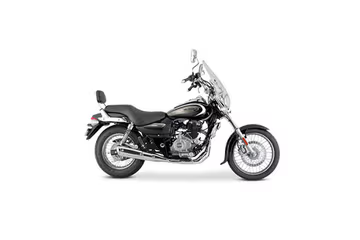
Bajaj Avenger Cruise 220
11.5 pts
Unweighted: 6 advantages
EnginePerformanceDimensionsBrakesTyresFeaturesOther
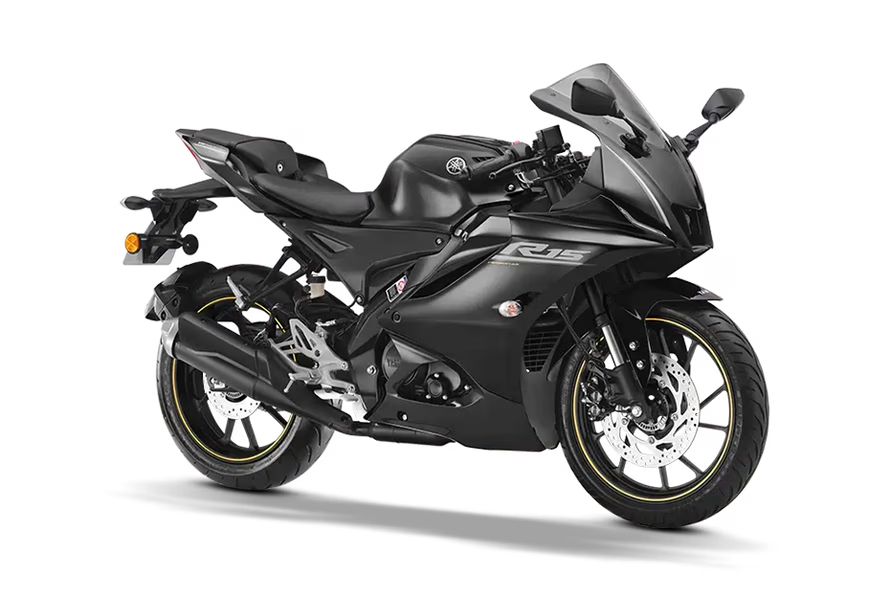
YAMAHA R15 V4
23.0 pts
Unweighted: 22 advantages
EnginePerformanceDimensionsBrakesTyresFeaturesOther
| Specification | ||
|---|---|---|
Engine Specifications |
||
| Cooling System | Oil‑cooled | Liquid Cooled |
| Displacement | 220 cc | 155 CC |
| Engine Type | Single cylinder, Twin Spark DTS-i , Fuel Injected, 4 stroke, SOHC, 2 valve | Liquid-cooled, 4-stroke, SOHC, 4-valve |
| Power | 13.99 kW (19.03 PS) @ 8500 rpm | 13.5kW(18.4PS)/10000 RPM |
| Torque | 17.55 Nm @ 7000 rpm | 14.2 Nm (1.4 kgfm) @7,500 RPM |
Performance & Efficiency |
||
| Fuel Tank Capacity | 13 L | 11 L |
| Mileage | 40 Kmpl | 45 Kmpl |
Dimensions & Weight |
||
| Kerb Weight | 163 | 141 |
| Seat Height | 737 | 815 |
Brakes & Suspension |
||
| ABS | Single‑channel ABS | Dual Channel |
| Front Brake | 280 mm Disc ABS | Disc brake 282 mm |
| Front Suspension | Telescopic with double anti friction bush | Telescopic Upside Down Fork (USD Fork) |
| Rear Brake | 130 mm Drum | Disc brake 220 mm |
| Rear Suspension | 5 step adjustable Twin shock absorber | Linked-Type Monocross Suspension |
Tyres & Wheels |
||
| Front Tyre | 90/90-17 Tubeless | 100/80-17M/C 52P |
| Rear Tyre | 130/90-15 Tubeless | 140/70R17M/C 66H |
| Tyre Type | Tube | Tubeless |
| Wheel Type | Spoke | Alloy |
Features & Technology |
||
| Headlight | Bi‑functional LED projector with LED DRLs | Bi-functional LED (Class D) |
Other Specifications |
||
| Battery | 12V, 8Ah VRLA | 12 V, 4.0 Ah |
| Bike Image 1 | https://motoautiv.com/wp-content/uploads/2025/07/Moon-white.avif | https://motoautiv.com/wp-content/uploads/2025/05/Dark-Knight.avif |
| Bike Image 2 | — | https://motoautiv.com/wp-content/uploads/2025/05/Icon-performance.avif |
| Bike Image 3 | — | https://motoautiv.com/wp-content/uploads/2025/05/Intesity-White.avif |
| Bike Image 4 | — | https://motoautiv.com/wp-content/uploads/2025/05/Metallic-Grey.avif |
| Bike Image 5 | — | https://motoautiv.com/wp-content/uploads/2025/05/Metallic-red.avif |
| Bike Image 6 | — | https://motoautiv.com/wp-content/uploads/2025/05/Moto-GP.avif |
| Bike Image 7 | — | https://motoautiv.com/wp-content/uploads/2025/05/Pearl-White.avif |
| Bike Image 8 | — | https://motoautiv.com/wp-content/uploads/2025/05/Racing-Blue.avif |
| Cluster | Fully digital LCD with Bluetooth & navigation | Digital |
| Color Options | Moon White | #F2F2EE Auburn Black | #2A1A16 | Racing Blue | #1B4FAF Dark Knight | #1A1A1C Metallic Black | #121214 Intensity White | #F3F5F7 Matte Pearl White | #F0F1EB Metallic Red | #B3262E Icon Performance | #F2F3F5, #1B4FAF MotoGP Edition | #1B4FAF, #121214 Metallic Grey | #5C6166 |
| Cons | Basic Feature Set – The motorcycle lacks features commonly found on many modern rivals, such as Bluetooth connectivity, navigation, ride modes, traction control, or a fully digital instrument cluster. Rear Drum Brake – Despite its touring-oriented nature, the motorcycle continues to use a rear drum brake rather than a rear disc brake. Limited Cornering Clearance – The low-slung cruiser design can cause footpegs or lower components to touch the road earlier during aggressive cornering. Performance Focuses on Cruising Rather Than Speed – The engine is tuned for relaxed riding and torque delivery, which may not satisfy riders seeking aggressive acceleration or sporty performance. Noticeable Weight at Low Speeds – Manoeuvring the motorcycle in tight parking spaces or congested traffic may require additional effort compared to lighter commuter motorcycles. Windscreen Effectiveness Varies by Rider Height – While the windscreen offers protection, some riders may still experience wind turbulence depending on their height and seating position. Less Practical in Dense Traffic – The wide handlebars and cruiser ergonomics can feel less convenient in very tight urban traffic conditions. Aging Platform Compared to Newer Rivals – Although updated over the years, the motorcycle's overall hardware and feature package remain relatively conventional compared with some newer alternatives in the segment. | Aggressive Riding Position – The low clip-on handlebars and rear-set footpegs can become tiring during long city commutes and heavy traffic conditions. Limited Pillion Comfort – The compact rear seat is designed more around styling and sportbike proportions than passenger comfort. Performance Requires Higher RPMs – Riders often need to keep the engine in the upper rev range to extract its full performance potential. Firm Ride on Poor Roads – The suspension setup prioritizes handling precision, which means sharp bumps and rough surfaces can be felt more clearly. Small Engine Compared to Some Rivals – While technologically advanced, the 155cc engine competes against motorcycles with significantly larger engine capacities. Underseat Storage Is Minimal – Practical storage space is extremely limited, as expected from a fully-faired sportbike. |
| Detailed Overview | Classic cruiser styling, relaxed ergonomics, and a focus on long-distance comfort define the Bajaj Avenger Cruise 220. Designed for riders who prefer a laid-back riding experience, the motorcycle combines traditional cruiser elements with modern fuel-injection technology and essential touring-oriented features. It occupies a unique position in the Indian motorcycle market, offering a cruiser-style riding posture and highway-friendly characteristics in a relatively accessible package. The visual identity of the Avenger Cruise 220 is built around traditional cruiser design cues. A large front windscreen, chrome-finished components, low-slung bodywork, and wide handlebars contribute to its distinctive appearance. The motorcycle also features a teardrop-shaped fuel tank, alloy wheels styled to resemble spokes, and a long wheelbase that enhances its stretched-out profile. LED daytime running lights integrated into the headlamp assembly add a contemporary touch while maintaining the motorcycle’s classic cruiser character. Unlike sporty street motorcycles that emphasize aggressive styling, the Avenger Cruise 220 adopts a more relaxed and timeless design approach. Powering the motorcycle is a 220cc single-cylinder, fuel-injected, oil-cooled engine paired with a five-speed gearbox. The engine produces approximately 19 PS of power and 17.5 Nm of torque. Fuel injection technology helps provide consistent throttle response and efficient fuel delivery across varying riding conditions, while the oil-cooling system assists in maintaining stable engine temperatures during extended rides. The engine’s performance characteristics focus on smooth power delivery and strong low- and mid-range torque, allowing riders to cruise comfortably at moderate highway speeds without requiring frequent gear changes. The Avenger Cruise 220 is built around a chassis designed to complement its cruiser-oriented riding philosophy. Suspension duties are handled by telescopic front forks and twin rear shock absorbers. This setup is intended to absorb road imperfections while prioritizing ride comfort over sporty handling characteristics. The long wheelbase contributes to straight-line stability, particularly on highways, while the overall geometry provides predictable and relaxed handling suitable for everyday riding and touring. Braking performance comes from a front disc brake and a rear drum brake, supported by single-channel ABS. The anti-lock braking system operates on the front wheel and helps reduce the likelihood of wheel lock-up during emergency braking situations. Tubeless tyres mounted on alloy wheels further contribute to convenience and practicality during regular ownership. A defining feature of the motorcycle is its rider-focused ergonomics. The low seat height of approximately 737 mm allows riders of varying heights to comfortably place their feet on the ground when stationary. Forward-set footpegs, a wide handlebar, and a generously cushioned seat create a natural cruiser-style riding position that reduces strain on the knees, wrists, and lower back. The pillion seat is also designed with comfort in mind and includes a supportive backrest for additional passenger convenience during longer journeys. The motorcycle is equipped with a semi-digital instrument cluster that combines an analogue speedometer with a digital display for essential ride information. A 13-litre fuel tank supports extended riding by reducing the frequency of refuelling stops, making the motorcycle suitable for both daily commuting and weekend touring. With its 220cc oil-cooled engine, touring-oriented windscreen, comfortable cruiser ergonomics, and traditional styling, the Bajaj Avenger Cruise 220 is designed to deliver a relaxed riding experience. Its combination of practical features, approachable performance, and long-distance comfort continues to make it a distinctive option within India’s entry-level cruiser motorcycle segment. | The Yamaha R15 V4 is a fully-faired sport motorcycle that occupies a unique position in the Indian motorcycle market. It is designed to offer styling, technology, and riding characteristics inspired by larger supersport motorcycles while using a smaller-displacement engine. As the fourth generation of the R15 series, the motorcycle incorporates updates to its design, electronics, and chassis package while continuing to focus on sporty riding dynamics. Powering the motorcycle is a 155cc single-cylinder, liquid-cooled engine. The engine features Yamaha’s Variable Valve Actuation (VVA) technology, which changes valve operation at different engine speeds to improve performance across the rev range. This system helps the engine maintain usable low- and mid-range performance while also supporting power delivery at higher RPMs. The engine produces approximately 18.4 PS of power and 14.2 Nm of torque and is paired with a six-speed gearbox. An assist-and-slipper clutch is included as part of the transmission package. The assist function reduces clutch lever effort during normal riding, while the slipper mechanism helps manage rear-wheel stability during aggressive downshifts. Selected variants also feature a quickshifter, allowing riders to perform clutchless upshifts while the motorcycle is in motion. The R15 V4 uses Yamaha’s Deltabox frame, a chassis design that has been associated with the company’s performance motorcycles for many years. The frame is intended to provide a balance between rigidity and agility, contributing to the motorcycle’s handling characteristics. Combined with the motorcycle’s relatively low weight, the frame helps create a responsive riding experience that suits both urban riding and cornering-focused roads. Suspension duties are handled by upside-down front forks and a rear monoshock. The upside-down fork arrangement increases front-end rigidity and contributes to steering precision, while the rear suspension supports stability and rider comfort. The suspension setup is tuned to complement the motorcycle’s sport-oriented nature, placing emphasis on control and handling feedback. Braking is managed by disc brakes at both the front and rear wheels. Dual-channel ABS is provided as standard equipment, allowing both wheels to benefit from anti-lock braking functionality. The braking system is designed to work alongside the motorcycle’s chassis and tyre setup to provide controlled stopping performance in a variety of riding situations. One of the major updates introduced with the R15 V4 is its expanded technology package. Depending on the variant, the motorcycle includes traction control, Bluetooth connectivity through Yamaha’s Y-Connect system, and a digital instrument cluster capable of displaying connected-bike information. The display can provide details such as call alerts, message notifications, fuel economy data, gear position, trip information, and service reminders. The riding position reflects the motorcycle’s supersport inspiration. Clip-on handlebars are mounted below the upper triple clamp, while rear-set footpegs position the rider in a forward-leaning stance. This arrangement supports aerodynamic efficiency and rider control during cornering, although it is more aggressive than the seating position found on typical commuter motorcycles. The seat height is approximately 815 mm, while kerb weight varies between 141 and 142 kg depending on the variant. The motorcycle’s styling is heavily influenced by Yamaha’s larger R-series models. The aerodynamic fairing, central LED projector headlamp, LED position lights, sculpted fuel tank, and compact tail section contribute to its supersport appearance. LED lighting is used throughout the motorcycle, further reinforcing its modern design. Overall, the Yamaha R15 V4 combines a 155cc VVA-equipped engine, six-speed gearbox, Deltabox frame, dual-channel ABS, advanced electronics, and sportbike-inspired ergonomics into a motorcycle designed to deliver a lightweight supersport experience while remaining accessible to a wide range of riders. |
| Expert Review | Built around a classic cruiser philosophy, the Bajaj Avenger Cruise 220 combines a 220cc single-cylinder, fuel-injected, oil-cooled engine with ergonomics focused on comfort and relaxed touring. The engine delivers smooth power and strong low- to mid-range torque, allowing the motorcycle to cruise comfortably without requiring frequent gear changes. A low seat height, forward-set footpegs, wide handlebars, and a well-cushioned seat create a laid-back riding position that remains comfortable over longer distances. The tall windscreen provides additional wind protection during highway travel, while the long wheelbase contributes to straight-line stability. Suspension duties are handled by telescopic front forks and twin rear shock absorbers, tuned to prioritize ride comfort across varying road conditions. Features such as LED daytime running lights, a semi-digital instrument console, and single-channel ABS provide essential modern functionality, though the overall equipment list remains relatively simple compared to newer motorcycles in the segment. The Avenger Cruise 220 focuses on comfortable cruising, predictable road manners, and everyday usability while retaining the traditional styling and riding characteristics associated with entry-level cruiser motorcycles., 4.2, MotoAutiv Team | The Yamaha R15 V4 stands out for the way it combines sportbike-focused engineering with a relatively small-displacement engine. Rather than chasing outright power, the motorcycle places considerable emphasis on chassis balance, handling precision, and rider engagement. The 155cc VVA-equipped engine rewards riders who enjoy working through the gearbox and exploring the higher end of the rev range, while the Deltabox frame and USD forks contribute to a planted and confidence-inspiring feel through corners. The riding position, fairing design, and overall ergonomics clearly reflect the motorcycle's supersport intentions, making it feel closer to a scaled-down sportbike than a conventional commuter motorcycle. Features such as traction control, Bluetooth connectivity, assist-and-slipper clutch, and dual-channel ABS add modern functionality, but the motorcycle's core identity remains rooted in its handling and riding dynamics. While comfort and practicality are not its primary focus, the R15 V4 delivers an experience that emphasizes precision, control, and a strong connection between rider and machine., 4.5, MotoAutiv Team |
| FAQ (Manual Override) | Q: What is the engine capacity of the Bajaj Avenger Cruise 220? A: The motorcycle is powered by a 220cc single-cylinder, fuel-injected, oil-cooled engine paired with a 5-speed gearbox. Q: Is the Avenger Cruise 220 suitable for long-distance touring? A: Yes. The relaxed riding posture, tall windscreen, comfortable seat, and highway-friendly engine characteristics make it suitable for touring and weekend rides. Q: What mileage does the Avenger Cruise 220 deliver? A: Most owners report real-world fuel efficiency in the range of 35–45 kmpl, depending on riding style, road conditions, and maintenance. Q: What is the seat height of the Avenger Cruise 220? A: The motorcycle has a low seat height of approximately 737 mm, making it accessible to a wide range of riders. Q: Does the Avenger Cruise 220 have ABS? A: Yes. It comes equipped with single-channel ABS for improved braking safety. Q: What is the fuel tank capacity of the Avenger Cruise 220? A: The motorcycle features a 13-litre fuel tank, helping riders cover longer distances between fuel stops. Q: Is the Avenger Cruise 220 comfortable for shorter riders? A: Yes. The low seat height and relaxed cruiser ergonomics allow most riders to place both feet comfortably on the ground. Q: Does the Avenger Cruise 220 come with a windscreen? A: Yes. A tall factory-fitted windscreen is included and helps reduce wind blast during highway riding. Q: Is the Avenger Cruise 220 suitable for daily commuting? A: Yes. Although designed as a cruiser, the motorcycle remains manageable for everyday city use thanks to its predictable power delivery and comfortable riding position. Q: Does the Avenger Cruise 220 have Bluetooth connectivity or navigation? A: No. The motorcycle does not offer Bluetooth connectivity, smartphone integration, or turn-by-turn navigation. Q: What is the top speed of the Bajaj Avenger Cruise 220? A: Under suitable conditions, the motorcycle can achieve approximately 120–130 km/h, depending on rider weight and road conditions. Q: How does the Avenger Cruise 220 differ from the Avenger Street 160? A: The Cruise 220 offers a larger engine, windscreen, spoke-style wheels, and a more touring-oriented setup, whereas the Street 160 focuses more on urban riding and simpler styling. Q: Does the Avenger Cruise 220 have a rear disc brake? A: No. The motorcycle uses a rear drum brake along with a front disc brake and single-channel ABS. Q: What type of motorcycle is the Avenger Cruise 220? A: It is classified as a cruiser motorcycle, designed to prioritize comfort, relaxed ergonomics, and highway cruising capability. Q: Are spare parts and service support easily available? A: Yes. Bajaj's widespread dealership and service network across India generally ensures good spare parts availability and maintenance support. | Q: Is Yamaha R15 V4 a good bike for daily use? A: Yes, the Yamaha R15 V4 can be used daily, although its sporty riding position may feel less comfortable in heavy traffic compared to commuter motorcycles. Q: What is the real mileage of Yamaha R15 V4? A: The real-world mileage of the Yamaha R15 V4 generally ranges between 40 km/l and 50 km/l, depending on riding conditions and riding style. Q: What is the top speed of Yamaha R15 V4? A: The Yamaha R15 V4 can achieve a top speed of approximately 140 km/h under suitable conditions. Q: What is the engine capacity of Yamaha R15 V4? A: The motorcycle is powered by a 155cc liquid-cooled, single-cylinder engine with Variable Valve Actuation (VVA). Q: How much power does the Yamaha R15 V4 produce? A: The engine produces approximately 18.4 PS of power and 14.2 Nm of torque. Q: Does Yamaha R15 V4 have a quickshifter? A: The quickshifter is available on selected variants of the Yamaha R15 V4 and comes as standard on the Yamaha R15M. Q: Does Yamaha R15 V4 have traction control? A: Yes, traction control is available on the Yamaha R15 V4. Q: Does Yamaha R15 V4 have Bluetooth connectivity? A: Yes, Bluetooth connectivity is available through Yamaha's Y-Connect system on supported variants. Q: What is the fuel tank capacity of Yamaha R15 V4? A: The Yamaha R15 V4 comes with an 11-litre fuel tank. Q: What is the kerb weight of Yamaha R15 V4? A: The motorcycle weighs approximately 141–142 kg, depending on the variant. Q: What is the seat height of Yamaha R15 V4? A: The Yamaha R15 V4 has a seat height of approximately 815 mm. Q: Is Yamaha R15 V4 comfortable for long rides? A: The motorcycle can handle long-distance riding, but the aggressive ergonomics may become tiring over extended periods for some riders. Q: Which is better: Yamaha R15 V4 or KTM RC 200? A: The Yamaha R15 V4 focuses on refinement, fuel efficiency, and handling balance, while the KTM RC 200 offers stronger outright performance due to its larger engine. Q: Which is better: Yamaha R15 V4 or Bajaj Pulsar RS200? A: The Yamaha R15 V4 offers a more modern electronics package and lighter handling, whereas the Bajaj Pulsar RS200 provides more displacement and stronger highway performance. Q: Does Yamaha R15 V4 have dual-channel ABS? A: Yes, the Yamaha R15 V4 comes equipped with dual-channel ABS. |
| Fuel System | Fuel Injection | Fuel Injection |
| Price Variants | STD | 131723 | Metallic Red | 171100 Intensity White Without Quickshifter | 171100 Metallic Black | 171100 Dark Knight | 172000 Vivid Magenta Metallic | 174019 Intensity White With Quickshifter | 175700 Matte White Pearl | 175700 Racing Blue | 175700 Metallic Grey | 184307 MotoGP Edition | 187500 Icon Performance | 196100 |
| Pros | Relaxed Cruiser Ergonomics – The low seat height, forward-set footpegs, and wide handlebars create a laid-back riding position that remains comfortable during daily rides and long highway journeys. Comfortable for Long-Distance Touring – Features such as the tall windscreen, well-cushioned seat, and backrest-equipped pillion seat help reduce fatigue during extended rides. Strong Low-End and Mid-Range Torque – The 220cc engine delivers usable torque at lower RPMs, allowing smooth acceleration and effortless cruising without frequent gear changes. Excellent Rider Accessibility – With a seat height of approximately 737 mm, riders of different heights can comfortably place both feet on the ground when stationary. Good Highway Stability – The long wheelbase and cruiser-oriented geometry provide a planted feel at cruising speeds and help maintain stability on open roads. Distinctive Cruiser Styling – Chrome accents, a large windscreen, spoke-style wheels, and classic cruiser proportions give the motorcycle a traditional touring-inspired appearance. Refined and Proven Engine Platform – The 220cc engine has been in Bajaj's lineup for several years and is familiar to many owners and service technicians. Wide Service Network – Bajaj's extensive dealership and service infrastructure makes maintenance and spare parts availability relatively convenient across India. | Excellent Handling Characteristics – The Deltabox frame, balanced chassis, and USD front forks help the R15 V4 deliver precise steering and confidence-inspiring cornering ability. Refined 155cc VVA Engine – The liquid-cooled engine with Variable Valve Actuation provides a broad powerband, making the motorcycle feel responsive across different engine speeds. Sportbike-Inspired Design – The styling closely resembles Yamaha's larger R-series motorcycles, with aerodynamic bodywork, LED lighting, and a sharp front fascia. Feature-Rich for the Segment – Depending on the variant, features include traction control, Bluetooth connectivity, quickshifter, dual-channel ABS, and a fully digital instrument cluster. Strong Fuel Efficiency – Despite its sporty nature, the engine is capable of delivering competitive fuel economy figures in everyday riding. High-Speed Stability – The fairing, chassis setup, and riding position contribute to a planted feel at highway speeds. Premium Build Quality – Fit and finish levels are among the strongest in the 150cc sportbike segment. Assist and Slipper Clutch – This helps reduce clutch effort and improves stability during aggressive downshifts. |
| Starter | Electric | Electric starter |
| Transmission | 5‑speed manual | Constant mesh, 6-speed |