Quick Analysis
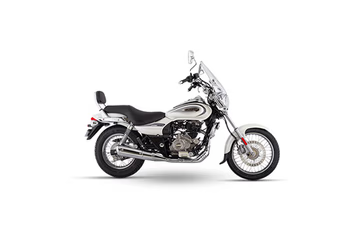
Bajaj Avenger Cruise 220
20.0 pts
Unweighted: 13 advantages
EnginePerformanceDimensionsBrakesTyresFeaturesOther
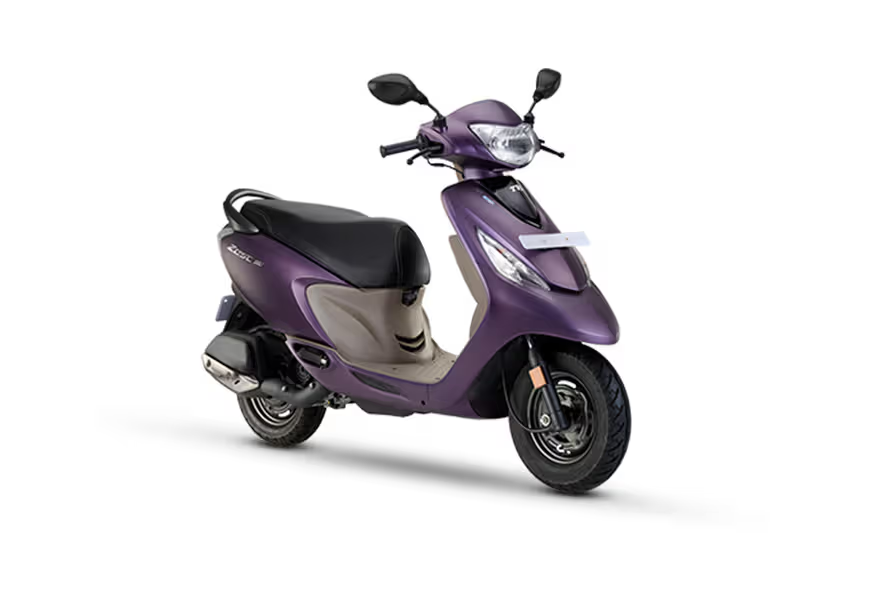
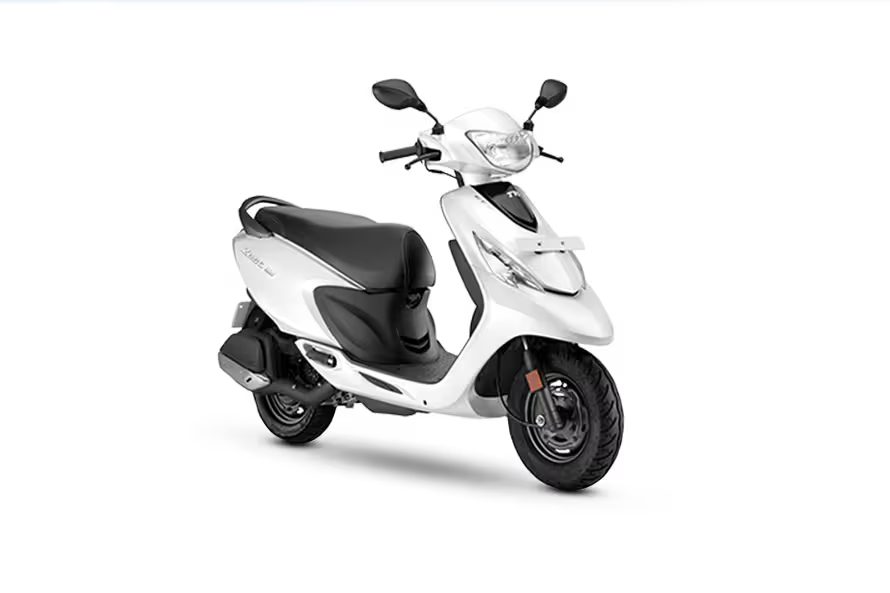
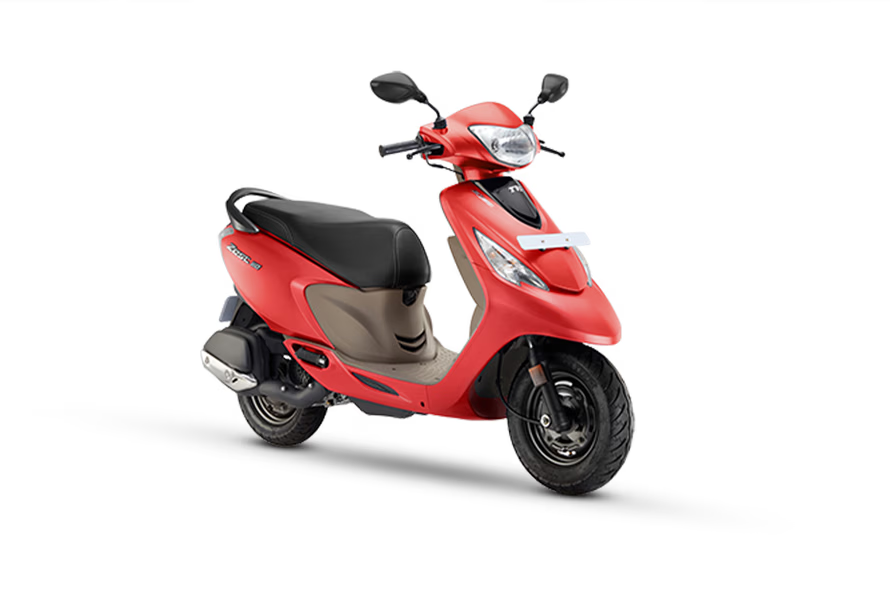
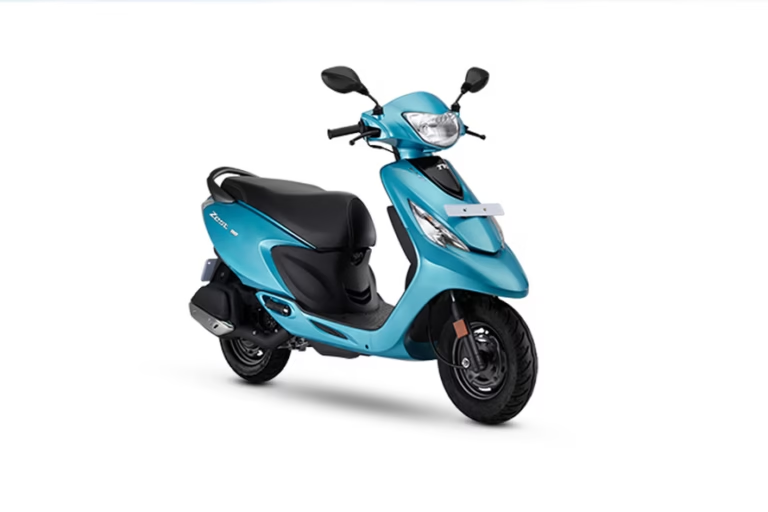
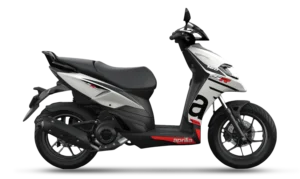
TVS Zest 110
12.0 pts
Unweighted: 13 advantages
EnginePerformanceDimensionsBrakesTyresFeaturesOther
| Specification | ||
|---|---|---|
Engine Specifications |
||
| Cooling System | Oil‑cooled | Air-cooled |
| Displacement | 220 cc | 109.7 cc |
| Engine Type | Single cylinder, Twin Spark DTS-i , Fuel Injected, 4 stroke, SOHC, 2 valve | Single-cylinder, 4-stroke, air-cooled, SI |
| Power | 13.99 kW (19.03 PS) @ 8500 rpm | 7.81 PS @ 7500 rpm |
| Torque | 17.55 Nm @ 7000 rpm | 8.8 Nm @ 5,500 rpm |
Performance & Efficiency |
||
| Fuel Tank Capacity | 13 L | 4.9 L |
| Mileage | 40 Kmpl | 48 Kmpl |
Dimensions & Weight |
||
| Kerb Weight | 163 | 103 |
| Seat Height | 737 | 760 |
Brakes & Suspension |
||
| ABS | Single‑channel ABS | — |
| Front Brake | 280 mm Disc ABS | Drum (110 mm) |
| Front Suspension | Telescopic with double anti friction bush | Telescopic hydraulic fork |
| Rear Brake | 130 mm Drum | Drum (130 mm) |
| Rear Suspension | 5 step adjustable Twin shock absorber | Double Rated Hydraulic Mono Shock |
Tyres & Wheels |
||
| Front Tyre | 90/90-17 Tubeless | 90/100–10 tubeless |
| Rear Tyre | 130/90-15 Tubeless | 90/90–10 tubeless |
| Tyre Type | Tube | Tubeless |
| Wheel Type | Spoke | Alloy |
Features & Technology |
||
| Headlight | Bi‑functional LED projector with LED DRLs | 35/35 W halogen with LED DRL |
Other Specifications |
||
| Battery | 12V, 8Ah VRLA | 12 V, 5 Ah lead‑acid |
| Bike Image 1 | https://motoautiv.com/wp-content/uploads/2025/07/Moon-white.avif | https://motoautiv.com/wp-content/uploads/2025/07/Purple.avif |
| Bike Image 2 | — | https://motoautiv.com/wp-content/uploads/2025/07/Pearl-White.avif |
| Bike Image 3 | — | https://motoautiv.com/wp-content/uploads/2025/07/Matte-Red.avif |
| Bike Image 4 | — | https://motoautiv.com/wp-content/uploads/2025/07/Matte-Blue.avif |
| Bike Image 5 | — | https://motoautiv.com/wp-content/uploads/2025/07/matte-black.avif |
| Bike Image 6 | — | https://motoautiv.com/wp-content/uploads/2025/07/Graphite-Grey.avif |
| Bike Image 7 | — | https://motoautiv.com/wp-content/uploads/2025/07/Bold-Black.avif |
| Cluster | Fully digital LCD with Bluetooth & navigation | Analogue speedometer + digital odometer & fuel gauge |
| Color Options | Moon White | #F2F2EE Auburn Black | #2A1A16 | Pearl White | #F2F2EE Turquoise Blue | #1CA3A3 Matte Red | #A11B1B Purple | #6B3F8D Matte Black | #1A1A1A Matte Blue | #315C9B Bold Black | #111111 Graphite Grey | #666A6D |
| Cons | Basic Feature Set – The motorcycle lacks features commonly found on many modern rivals, such as Bluetooth connectivity, navigation, ride modes, traction control, or a fully digital instrument cluster. Rear Drum Brake – Despite its touring-oriented nature, the motorcycle continues to use a rear drum brake rather than a rear disc brake. Limited Cornering Clearance – The low-slung cruiser design can cause footpegs or lower components to touch the road earlier during aggressive cornering. Performance Focuses on Cruising Rather Than Speed – The engine is tuned for relaxed riding and torque delivery, which may not satisfy riders seeking aggressive acceleration or sporty performance. Noticeable Weight at Low Speeds – Manoeuvring the motorcycle in tight parking spaces or congested traffic may require additional effort compared to lighter commuter motorcycles. Windscreen Effectiveness Varies by Rider Height – While the windscreen offers protection, some riders may still experience wind turbulence depending on their height and seating position. Less Practical in Dense Traffic – The wide handlebars and cruiser ergonomics can feel less convenient in very tight urban traffic conditions. Aging Platform Compared to Newer Rivals – Although updated over the years, the motorcycle's overall hardware and feature package remain relatively conventional compared with some newer alternatives in the segment. | Braking performance feels average, especially during sudden stops. Instrument cluster design looks dated compared to newer scooters in the segment. Highway performance remains limited due to the small engine and lightweight setup. Some owners have reported issues related to brake shoes, clutch assembly, and belt durability over time. Ride quality can feel slightly basic on rough roads at higher speeds. Feature list is simpler compared to more modern scooters with digital connectivity features. Mileage consistency varies depending on riding conditions and maintenance. |
| Detailed Overview | Classic cruiser styling, relaxed ergonomics, and a focus on long-distance comfort define the Bajaj Avenger Cruise 220. Designed for riders who prefer a laid-back riding experience, the motorcycle combines traditional cruiser elements with modern fuel-injection technology and essential touring-oriented features. It occupies a unique position in the Indian motorcycle market, offering a cruiser-style riding posture and highway-friendly characteristics in a relatively accessible package. The visual identity of the Avenger Cruise 220 is built around traditional cruiser design cues. A large front windscreen, chrome-finished components, low-slung bodywork, and wide handlebars contribute to its distinctive appearance. The motorcycle also features a teardrop-shaped fuel tank, alloy wheels styled to resemble spokes, and a long wheelbase that enhances its stretched-out profile. LED daytime running lights integrated into the headlamp assembly add a contemporary touch while maintaining the motorcycle’s classic cruiser character. Unlike sporty street motorcycles that emphasize aggressive styling, the Avenger Cruise 220 adopts a more relaxed and timeless design approach. Powering the motorcycle is a 220cc single-cylinder, fuel-injected, oil-cooled engine paired with a five-speed gearbox. The engine produces approximately 19 PS of power and 17.5 Nm of torque. Fuel injection technology helps provide consistent throttle response and efficient fuel delivery across varying riding conditions, while the oil-cooling system assists in maintaining stable engine temperatures during extended rides. The engine’s performance characteristics focus on smooth power delivery and strong low- and mid-range torque, allowing riders to cruise comfortably at moderate highway speeds without requiring frequent gear changes. The Avenger Cruise 220 is built around a chassis designed to complement its cruiser-oriented riding philosophy. Suspension duties are handled by telescopic front forks and twin rear shock absorbers. This setup is intended to absorb road imperfections while prioritizing ride comfort over sporty handling characteristics. The long wheelbase contributes to straight-line stability, particularly on highways, while the overall geometry provides predictable and relaxed handling suitable for everyday riding and touring. Braking performance comes from a front disc brake and a rear drum brake, supported by single-channel ABS. The anti-lock braking system operates on the front wheel and helps reduce the likelihood of wheel lock-up during emergency braking situations. Tubeless tyres mounted on alloy wheels further contribute to convenience and practicality during regular ownership. A defining feature of the motorcycle is its rider-focused ergonomics. The low seat height of approximately 737 mm allows riders of varying heights to comfortably place their feet on the ground when stationary. Forward-set footpegs, a wide handlebar, and a generously cushioned seat create a natural cruiser-style riding position that reduces strain on the knees, wrists, and lower back. The pillion seat is also designed with comfort in mind and includes a supportive backrest for additional passenger convenience during longer journeys. The motorcycle is equipped with a semi-digital instrument cluster that combines an analogue speedometer with a digital display for essential ride information. A 13-litre fuel tank supports extended riding by reducing the frequency of refuelling stops, making the motorcycle suitable for both daily commuting and weekend touring. With its 220cc oil-cooled engine, touring-oriented windscreen, comfortable cruiser ergonomics, and traditional styling, the Bajaj Avenger Cruise 220 is designed to deliver a relaxed riding experience. Its combination of practical features, approachable performance, and long-distance comfort continues to make it a distinctive option within India’s entry-level cruiser motorcycle segment. | Compact dimensions and lightweight handling are among the main characteristics that define the TVS Zest 110. The scooter is designed primarily for urban commuting, where easy maneuverability and simple usability matter more than aggressive performance or advanced technology. Its overall structure remains small and manageable, making it suitable for crowded roads, narrow lanes, and frequent stop-and-go traffic conditions commonly seen in cities. The low kerb weight also helps riders move the scooter around parking areas with less effort. The TVS Zest 110 is powered by a 109.7cc single-cylinder, air-cooled engine paired with a CVT automatic transmission. The engine produces around 7.7 bhp of power and approximately 8.8 Nm of torque. Power delivery is tuned mainly for smooth low-speed riding rather than quick acceleration, which makes the scooter feel calm and predictable during everyday commuting. Throttle response remains easy to control, especially in traffic conditions where repeated acceleration and braking are common. The automatic gearbox further simplifies riding by removing the need for manual gear shifts. Fuel efficiency is another important aspect of the scooter’s setup. Under regular riding conditions, mileage figures generally stay around the mid-40s km/l range, depending on traffic, maintenance, and riding habits. The scooter comes with a fuel tank capacity of around 5 litres, which supports decent range for routine commuting and daily travel needs. Its lightweight body also contributes to maintaining fuel efficiency during city usage. The riding posture is upright and relaxed, with a wide seat that provides enough room for both rider and pillion during short and medium-distance rides. The seat height is relatively accessible, helping riders place their feet on the ground comfortably at traffic stops. The floorboard area offers enough space for carrying small bags or daily-use items, while the under-seat storage compartment adds practicality for storing essentials such as documents, groceries, or personal belongings. Suspension duties are handled by telescopic front forks and a rear hydraulic shock absorber setup. This configuration is tuned mainly for city comfort, helping the scooter absorb speed breakers and uneven roads at normal commuting speeds. Since the scooter is lightweight, handling feels agile and easy during quick turns and traffic filtering. However, the suspension setup focuses more on comfort and ease of use rather than sporty handling characteristics. For braking, the scooter uses drum brakes at both the front and rear along with synchronized braking technology. The braking feel is designed to remain predictable for everyday riding conditions. The scooter rides on alloy wheels fitted with tubeless tyres, which improve convenience during punctures and regular maintenance. The smaller wheelbase and compact chassis also help the scooter maintain easy low-speed control. Feature-wise, the TVS Zest 110 keeps things fairly simple and commuter-focused. It uses an analogue-style instrument cluster with basic information such as speed, fuel level, and odometer readings. The overall design avoids overly complex technology and instead focuses on straightforward functionality. Styling elements include curved body panels, dual-tone color options, and compact proportions aimed at giving the scooter a youthful and approachable appearance without becoming overly aggressive. Overall, the TVS Zest 110 combines lightweight construction, smooth city-friendly performance, comfortable ergonomics, and practical everyday usability into a scooter developed mainly for regular urban commuting and easy day-to-day riding. |
| Expert Review | Built around a classic cruiser philosophy, the Bajaj Avenger Cruise 220 combines a 220cc single-cylinder, fuel-injected, oil-cooled engine with ergonomics focused on comfort and relaxed touring. The engine delivers smooth power and strong low- to mid-range torque, allowing the motorcycle to cruise comfortably without requiring frequent gear changes. A low seat height, forward-set footpegs, wide handlebars, and a well-cushioned seat create a laid-back riding position that remains comfortable over longer distances. The tall windscreen provides additional wind protection during highway travel, while the long wheelbase contributes to straight-line stability. Suspension duties are handled by telescopic front forks and twin rear shock absorbers, tuned to prioritize ride comfort across varying road conditions. Features such as LED daytime running lights, a semi-digital instrument console, and single-channel ABS provide essential modern functionality, though the overall equipment list remains relatively simple compared to newer motorcycles in the segment. The Avenger Cruise 220 focuses on comfortable cruising, predictable road manners, and everyday usability while retaining the traditional styling and riding characteristics associated with entry-level cruiser motorcycles., 4.2, MotoAutiv Team | The TVS Zest 110 is designed mainly for simple and easy urban commuting, with a strong focus on lightweight handling and rider convenience. Its compact dimensions and low kerb weight make it easy to maneuver through traffic and parking spaces, especially for new riders. The 109.7cc engine delivers smooth low-speed performance suitable for daily rides, while the relaxed seating posture and soft suspension setup help maintain comfort on regular city roads. Practical elements like under-seat storage and utility hooks add to everyday usability. However, the scooter keeps things basic in terms of features and design, and its performance feels limited at higher speeds. Overall, the Zest 110 follows a comfort-oriented and user-friendly approach aimed mainly at routine urban travel rather than sporty riding or advanced technology., 4.1, MotoAutiv Team |
| FAQ (Manual Override) | Q: What is the engine capacity of the Bajaj Avenger Cruise 220? A: The motorcycle is powered by a 220cc single-cylinder, fuel-injected, oil-cooled engine paired with a 5-speed gearbox. Q: Is the Avenger Cruise 220 suitable for long-distance touring? A: Yes. The relaxed riding posture, tall windscreen, comfortable seat, and highway-friendly engine characteristics make it suitable for touring and weekend rides. Q: What mileage does the Avenger Cruise 220 deliver? A: Most owners report real-world fuel efficiency in the range of 35–45 kmpl, depending on riding style, road conditions, and maintenance. Q: What is the seat height of the Avenger Cruise 220? A: The motorcycle has a low seat height of approximately 737 mm, making it accessible to a wide range of riders. Q: Does the Avenger Cruise 220 have ABS? A: Yes. It comes equipped with single-channel ABS for improved braking safety. Q: What is the fuel tank capacity of the Avenger Cruise 220? A: The motorcycle features a 13-litre fuel tank, helping riders cover longer distances between fuel stops. Q: Is the Avenger Cruise 220 comfortable for shorter riders? A: Yes. The low seat height and relaxed cruiser ergonomics allow most riders to place both feet comfortably on the ground. Q: Does the Avenger Cruise 220 come with a windscreen? A: Yes. A tall factory-fitted windscreen is included and helps reduce wind blast during highway riding. Q: Is the Avenger Cruise 220 suitable for daily commuting? A: Yes. Although designed as a cruiser, the motorcycle remains manageable for everyday city use thanks to its predictable power delivery and comfortable riding position. Q: Does the Avenger Cruise 220 have Bluetooth connectivity or navigation? A: No. The motorcycle does not offer Bluetooth connectivity, smartphone integration, or turn-by-turn navigation. Q: What is the top speed of the Bajaj Avenger Cruise 220? A: Under suitable conditions, the motorcycle can achieve approximately 120–130 km/h, depending on rider weight and road conditions. Q: How does the Avenger Cruise 220 differ from the Avenger Street 160? A: The Cruise 220 offers a larger engine, windscreen, spoke-style wheels, and a more touring-oriented setup, whereas the Street 160 focuses more on urban riding and simpler styling. Q: Does the Avenger Cruise 220 have a rear disc brake? A: No. The motorcycle uses a rear drum brake along with a front disc brake and single-channel ABS. Q: What type of motorcycle is the Avenger Cruise 220? A: It is classified as a cruiser motorcycle, designed to prioritize comfort, relaxed ergonomics, and highway cruising capability. Q: Are spare parts and service support easily available? A: Yes. Bajaj's widespread dealership and service network across India generally ensures good spare parts availability and maintenance support. | Q: What is the engine capacity of the TVS Zest 110? A: The TVS Zest 110 comes with a 109.7cc single-cylinder, air-cooled engine. Q: What mileage does the TVS Zest 110 give? A: The scooter delivers around 45–48 km/l depending on riding conditions and maintenance. Q: What is the top speed of the TVS Zest 110? A: The TVS Zest 110 has an approximate top speed of 80 km/h. Q: Is the TVS Zest 110 suitable for beginners? A: Yes, its lightweight body, compact dimensions, and automatic transmission make it beginner-friendly. Q: What is the fuel tank capacity of the TVS Zest 110? A: The scooter comes with a fuel tank capacity of around 5 litres. Q: Does the TVS Zest 110 have tubeless tyres? A: Yes, the scooter is equipped with tubeless tyres at both front and rear. Q: What type of brakes are used in the TVS Zest 110? A: The scooter uses drum brakes at both ends along with synchronized braking technology. Q: What is the kerb weight of the TVS Zest 110? A: The kerb weight of the scooter is approximately 102–103 kg. Q: Does the TVS Zest 110 have a digital instrument cluster? A: No, the scooter uses a mainly analogue instrument console with basic ride information. Q: Is the TVS Zest 110 good for city commuting? A: Yes, the scooter is mainly designed for lightweight urban commuting and regular daily use. |
| Fuel System | Fuel Injection | — |
| Price Variants | STD | 131723 | Gloss Series | 67050 Matte Series | 70850 SXC | 74150 |
| Pros | Relaxed Cruiser Ergonomics – The low seat height, forward-set footpegs, and wide handlebars create a laid-back riding position that remains comfortable during daily rides and long highway journeys. Comfortable for Long-Distance Touring – Features such as the tall windscreen, well-cushioned seat, and backrest-equipped pillion seat help reduce fatigue during extended rides. Strong Low-End and Mid-Range Torque – The 220cc engine delivers usable torque at lower RPMs, allowing smooth acceleration and effortless cruising without frequent gear changes. Excellent Rider Accessibility – With a seat height of approximately 737 mm, riders of different heights can comfortably place both feet on the ground when stationary. Good Highway Stability – The long wheelbase and cruiser-oriented geometry provide a planted feel at cruising speeds and help maintain stability on open roads. Distinctive Cruiser Styling – Chrome accents, a large windscreen, spoke-style wheels, and classic cruiser proportions give the motorcycle a traditional touring-inspired appearance. Refined and Proven Engine Platform – The 220cc engine has been in Bajaj's lineup for several years and is familiar to many owners and service technicians. Wide Service Network – Bajaj's extensive dealership and service infrastructure makes maintenance and spare parts availability relatively convenient across India. | Lightweight body makes the scooter very easy to handle in city traffic and tight parking spaces. Comfortable seat and relaxed riding posture suit daily commuting and short rides well. Smooth throttle response and peppy 110cc engine feel suitable for urban riding conditions. Compact dimensions help new riders and learners feel more confident while riding. Under-seat storage and utility hooks improve day-to-day practicality. Maintenance cost is generally considered affordable by many owners. Good maneuverability and agile handling make it convenient for crowded city roads. |
| Starter | Electric | Electric & kick-start |
| Transmission | 5‑speed manual | CVT automatic |