VS

Quick Analysis

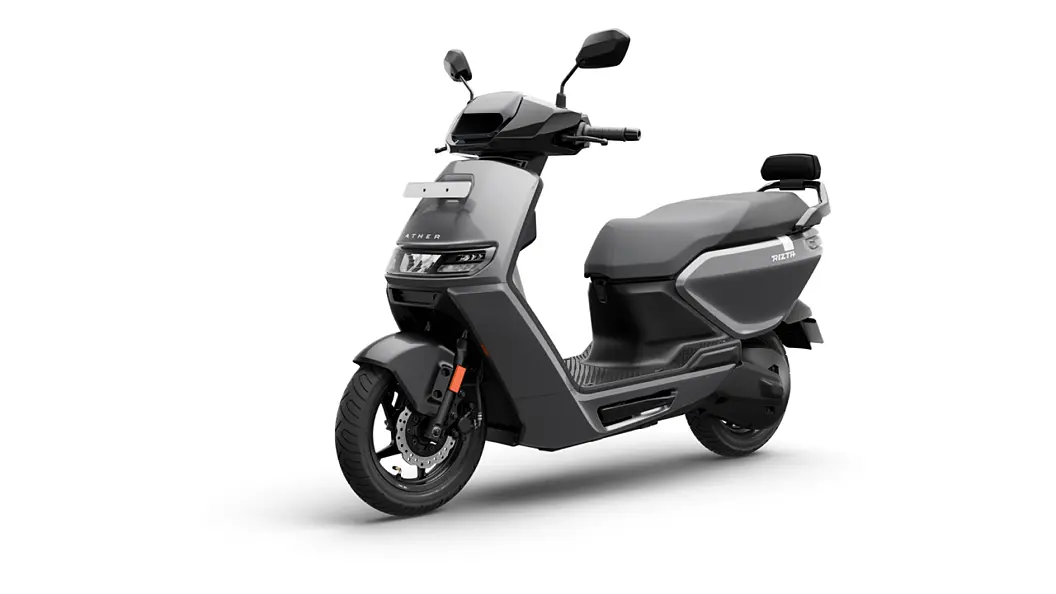
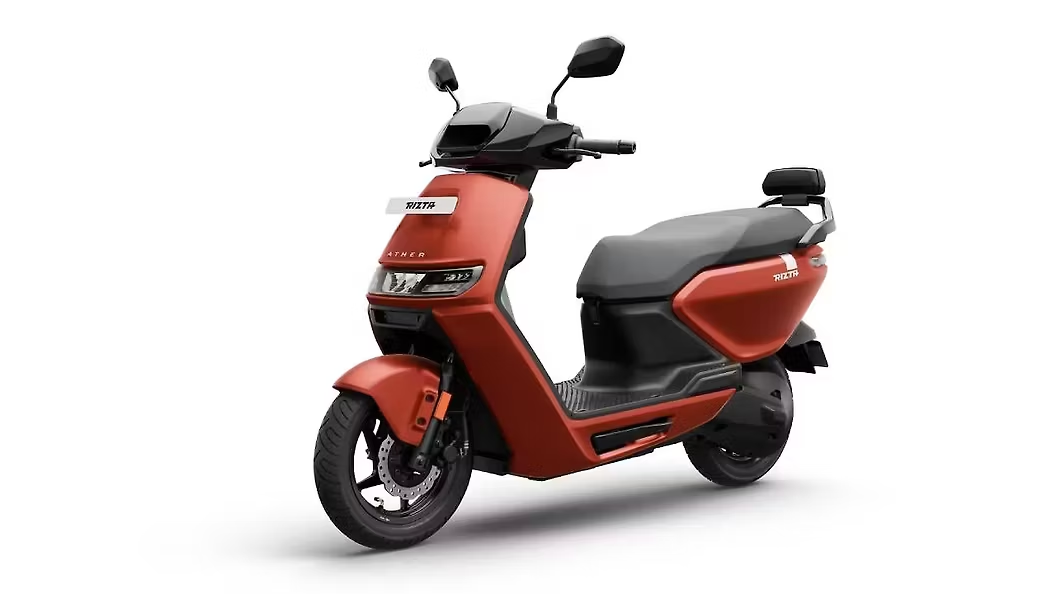
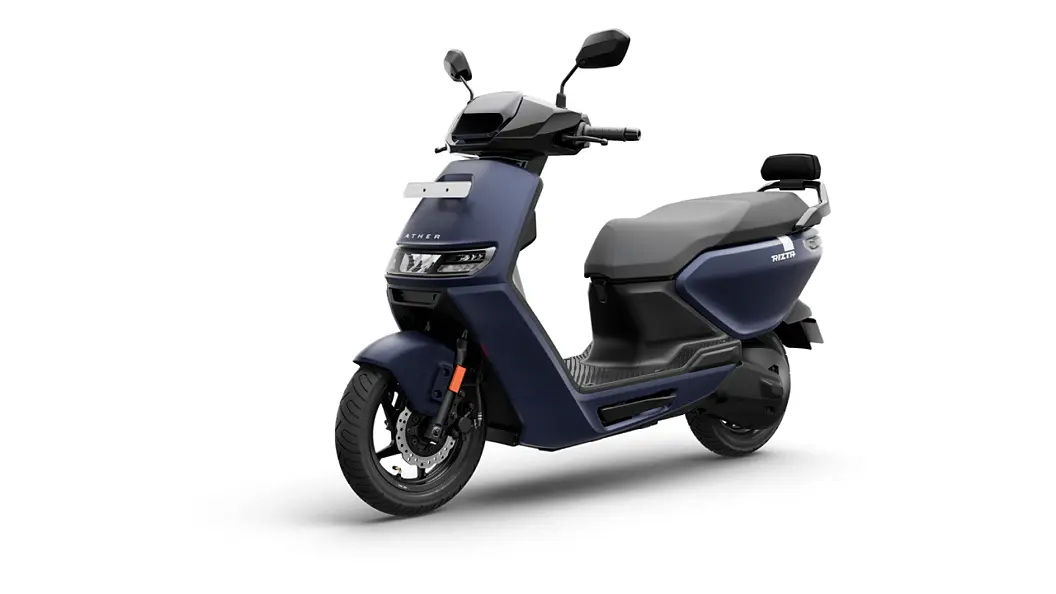
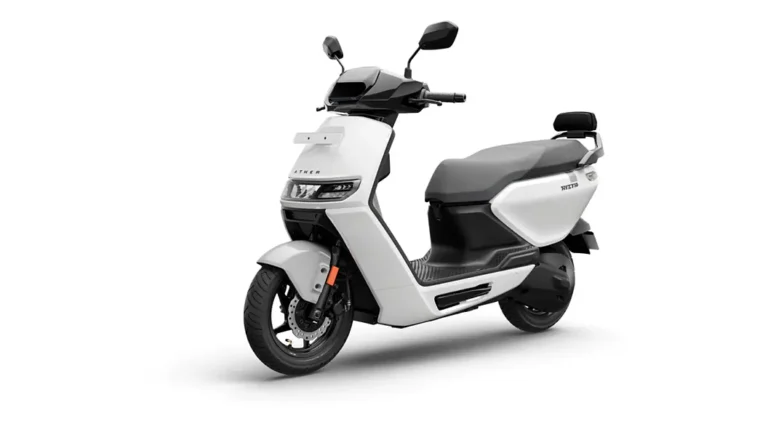
ATHER RIZTA

3.5 pts
Unweighted: 4 advantages
EnginePerformanceDimensionsBrakesTyresOther

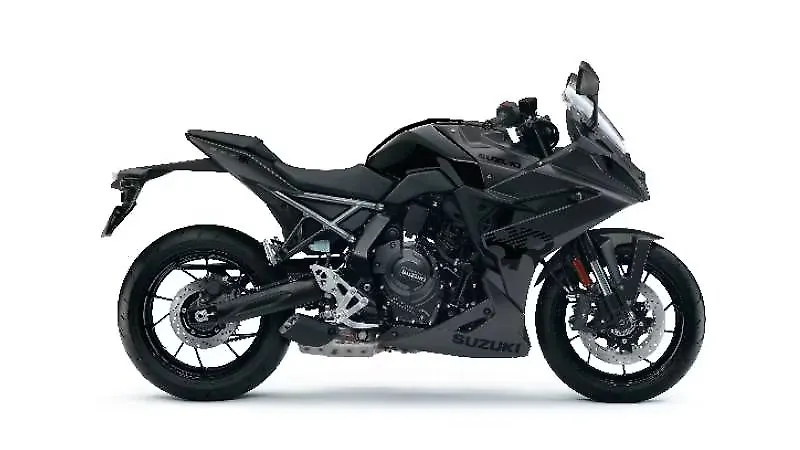
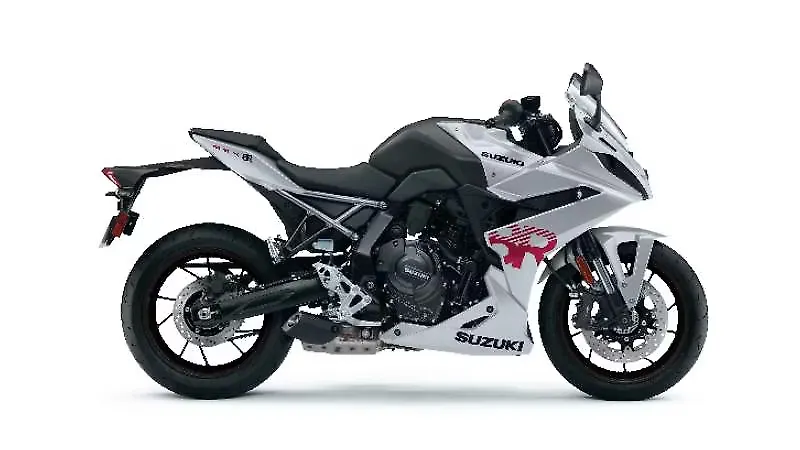
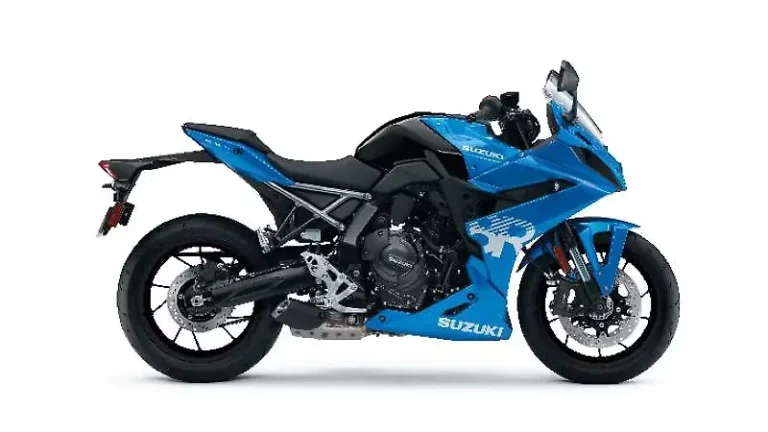
SUZUKI GSX-8R

30.0 pts
Unweighted: 17 advantages
EnginePerformanceDimensionsBrakesTyresOther
Specification
ATHER RIZTA
ATHER RIZTA
Ather
SUZUKI GSX-8R
SUZUKI GSX-8R
Suzuki

Engine Specifications

Displacement 776 cm3
Engine Type 4-stroke, 2-cylinder, liquid-cooled, DOHC
Power 4.3 kW 81.8 bhp @ 8500 rpm
Torque 22 Nm 78 Nm @ 6800 rpm

Performance & Efficiency

Fuel Tank Capacity 14 L
Mileage 23.8 kmpl

Dimensions & Weight

Kerb Weight 125 kg 205 kg
Seat Height 780 mm 810 mm

Brakes & Suspension

ABS Dual Channel
Front Brake Disc 200 mm Disc 310 mm Caliper - Front 4 Piston
Front Suspension Telescopic Forks Inverted telescopic, coil spring, oil damped
Rear Brake Drum 130 mm Disc Caliper - Rear 1 Piston
Rear Suspension Monoshock Absorbers Link type, coil spring, oil damped

Tyres & Wheels

Front Tyre 90/90 - 12 120/70ZR17M/C (58W)
Rear Tyre 100/80 - 12 180/55ZR17M/C
Tyre Type Tubeless Tubeless
Wheel Type Alloy Alloy

Other Specifications

Bike Image 1 https://motoautiv.com/wp-content/uploads/2025/12/Rizta-Pangong-Blue-mono-on-road-price-scaled.webp https://motoautiv.com/wp-content/uploads/2025/11/gsx8rmetallicmattblack.webp
Bike Image 2 https://motoautiv.com/wp-content/uploads/2025/12/riztadeccangrey.webp https://motoautiv.com/wp-content/uploads/2025/11/gsx8rmetallicmattswordsilver.webp
Bike Image 3 https://motoautiv.com/wp-content/uploads/2025/12/Rizta-Siachen-White-mono-on-road-price-scaled.webp
Color Options Deccan Grey - Mono Siachen White - Mono Pangong Blue - Super Matte Terracotta Red - Super Matte Metallic Matt Black Metallic Matt Sword Silver Metallic Triton Blue
Cons Rear drum brake feels basic compared to full disc setups. Ride can feel firm on rough or broken roads. Top speed is limited for highway or long-distance usage. Higher initial price than many petrol scooters. Charging time requires planning if you ride frequently. Some premium features may require optional add-on packs. Doesn’t deliver the high-revving top-end excitement of inline-4 supersport motorcycles. Wind protection at very high speeds is modest and can feel tiring on long highway rides. Suspension tuning leans slightly firm, which can feel bumpy on rough roads. Weight is on the heavier side, noticeable at low speeds or during tight maneuvers. Not designed for hardcore track riders seeking extreme performance or razor-sharp handling. Fuel economy drops significantly when ridden aggressively.
Detailed Overview When you swing your leg over the Rizta, you instantly sense that this is not about performance show-offs but about everyday comfort and sensible practicality. Its 4.3 kW permanent-magnet electric motor quietly hums into life, ready to push you smoothly through city lanes. With 22 Nm of torque on tap, the scooter has enough grunt to handle regular urban traffic — merging, overtaking and climbing gentle slopes without drama. Its top speed of about 80 km/h is more than adequate for everyday city commutes or suburban trips, ensuring you’re not painfully slow relative to other traffic. What matters for many riders is battery and range, and Rizta offers flexibility there. Depending on the variant you pick, you get either a 2.9 kWh battery pack or a larger 3.7 kWh pack. On a full charge, the claimed range is 123 km for the smaller pack and up to 159 km for the bigger one — generous for a scooter, especially if your daily run is modest. In practical terms, this means you could probably go a week or more between charges if you’re only doing commutes, errands and short rides. The battery pack is sealed in a waterproof and dust-resistant casing, which should give some peace of mind in monsoon or dusty road conditions. Charging the scooter is fairly convenient too. With the standard charger at home, you can get a full charge typically in a few hours. If you have access to a fast-charging point (for example through a public network that supports the scooter), topping up for a short ride becomes easy — good for city dwellers who prefer flexibility. Space and comfort are clearly a priority for the Rizta. The seat is long and spacious, making rides comfortable for rider and pillion — a real advantage when you’re carrying family or frequently have a passenger. Under-seat storage is generous, and you also get the option of an additional front trunk (frunk), which together give about 56 litres of carrying capacity. That kind of storage can swallow helmets, bags, groceries or small shopping hauls — a big plus if you use the scooter for errands, family rides or regular shopping. The floorboard is roomy too, so even taller riders won’t feel cramped. On the ride quality front, the front uses telescopic forks while the rear runs a monoshock suspension. This setup aims to deliver a comfortable ride over typical city roads and mild road roughness. For everyday traffic — potholes, speed breakers, uneven surfaces — it hits a balance: softer than sporty bikes, but not so soft that you lose ride stability. For many users that makes it a pleasant daily commuter. Braking is handled via a front disc brake and a rear drum brake. For the speeds and use-cases this scooter is designed for — city traffic, suburban rides, moderate speeds — this arrangement is adequate. The disc brake up front gives reliable stopping power, while the drum at the back keeps things simple and cost-effective. It won’t give you sport-bike level bite, but for a family-oriented urban scooter, it is sensible and functional. Beyond the mechanicals, Rizta trades on convenience and thoughtful touches. The digital console — a clean, modern display — keeps all vital information at a glance. It offers ride-mode selection, battery and range readouts, and other indicators that help you stay informed. Features such as automatic hold on slopes (so you don’t roll back when stopped on an incline), a reverse mode to help with tight parking spots, and a comfortable pillion backrest add up to make daily riding easier and more stress-free. Safety and smart-features are also part of the package. There’s a traction control like system (often referred to as “SkidControl”) that helps manage torque delivery in slippery or low-grip conditions — a thoughtful addition for rainy or sandy roads. Add in theft/tow alerts, emergency-stop signalling (tail-light flashing under sudden braking), and connected-scooter features (like navigation and mobile integration), and the Rizta feels designed for a modern urban rider’s needs. What this all means when you actually ride it: The Rizta comes across as a dependable, practical scooter for daily life. It won’t thrill those who crave sporty acceleration or high-speed cornering, but it doesn’t pretend to. Instead, it quietly delivers what many Indian riders need: comfortable commuting, easy handling in traffic, ample storage, decent range and minimal hassle. For a city commuter, a student, a small family or anyone who wants a low-maintenance electric ride for regular day-to-day use — it’s a well-rounded, sensible choice. In the mix of rising electric scooters, Rizta doesn’t scream “look at me,” but it delivers solidly where it counts: convenience, usability and reliability. If you’re not chasing performance but want an electric scooter that fits into real life — errands, rides to work or college, city errands, occasional family rides, and straightforward maintenance — the Rizta can offer that balance almost exactly right. Riding the GSX-8R feels like Suzuki’s attempt to give you a middleweight sportbike that’s equally at home in everyday traffic, curvy mountain roads and spirited weekend runs. It packs a 776 cc liquid-cooled, 4-stroke parallel-twin engine with DOHC and a 270-degree crank. That means it’s not just about straight-line speed — the 270° crank gives the engine a throaty, V-twin–like rumble and a broad, usable torque band instead of a peaky, high-revving nature typical of many sport-bikes. The “cross-balancer” Suzuki uses helps keep vibration in check, meaning that even on longer rides or in stop-and-go city traffic, the engine stays smooth and more comfortable than you might expect from a half-litre-plus street-fighter. The motor is rated to produce around 81–82 bhp at about 8,500 rpm and a healthy 78 Nm of torque at around 6,800 rpm. In real-life terms, you get strong mid-range punch — meaning overtakes on highways or quick accelerations from a traffic light feel confident without needing to wring the engine out to the redline. That balance makes the GSX-8R versatile: capable of quick, enthusiastic blasts when you want sporty fun, but also manageable in city commutes or everyday riding. The 6-speed gearbox helps you extract that torque smoothly, and the bike comes with a bi-directional quick-shift system built in. In practice that means you can shift up or down without pulling in the clutch — a real bonus if you like brisk, crisp gear changes during sporty riding or just want ease while navigating traffic. Suzuki hasn’t compromised on the chassis: a steel frame built around the engine keeps the bike slim, compact, and well-balanced, while an aluminum swingarm adds to nimble handling and stability. The geometry — with a wheelbase of 1,465 mm, moderate rake/trail (25° / 104 mm), and a curb weight of 205 kg — positions the GSX-8R in that sweet spot where it feels stable at speed yet flickable enough when carving through corners. Suspension plays a big part in how the bike behaves on real roads. Up front there are inverted telescopic forks from SHOWA (oil-damped, coil-spring), and at the back a link-type mono-shock. That setup gives you a controlled, firm ride when pushing hard — helpful for sporty riding — but also enough compliance to absorb bumps, potholes or rough patches you might encounter on Indian roads or during longer rides. The balance leans toward sporty control without making the ride harsh. When it comes to tyres and wheels, the GSX-8R runs on 17-inch cast-aluminum wheels with 120/70 ZR17 front and 180/55 ZR17 rear tyres — high-performance radials from Dunlop (RoadSport 2) with good wet-grip and durability. That means cornering, braking and overall grip feel confident — even if road conditions are not ideal. The braking setup — twin discs up front and a rear disc, with ABS — helps ensure your stopping power matches the bike’s punch. As for packaging, the GSX-8R isn’t overly bulky: at 2,155 mm long, 770 mm wide, and 1,135 mm tall, with a seat height of 810 mm, it manages a sporty footprint without feeling unwieldy. For many riders, that translates into reasonably manageable maneuverability in city traffic or narrow roads — though at 810 mm seat-height and 205 kg weight, taller riders will feel more at home; beginners or shorter riders may find the seat quite firm and the weight noticeable when stationary. Fuel-wise, a 14-litre tank gives a decent range, and the bike returns, according to official WMTC figures, about 23.8 km per litre under mixed usage. That’s respectable for a middleweight sportbike — meaning for many of your urban rides, weekend joyrides or moderate touring, the fuel economy remains fairly practical rather than thirsty. The electronics and rider aids make a strong case for the GSX-8R being more than just raw hardware. A 5-inch colour TFT display serves as the meter console, giving essential info at a glance. The throttle is ride-by-wire, giving smooth control over power delivery, and there’s a selectable riding-mode system (with Active, Basic and Comfort modes) that lets you tailor throttle response and torque delivery to conditions — useful when switching between city traffic, wet roads, or spirited riding. Add in traction-control (adjustable), low-rpm assist to ease traffic starts, and an easy-start button — and you have a package that aims for practicality without stripping away sportiness. Styling and ergonomics matter too, and Suzuki seems to have paid attention. The GSX-8R carries a sharp, modern sportbike stance — aggressive fairing and front design, slim rear, exposed seat rails, compact proportions — that signals performance without going overboard. The riding position is slightly sporty: the forward-positioned “hip point” and mildly aggressive handlebars let you lean into corners confidently — but it’s not so extreme that city commuting becomes uncomfortable. Putting all this together — power, chassis, suspension, electronics and practicality — the GSX-8R feels like Suzuki’s answer for someone wanting a “do-it-all” middleweight bike: capable of daily commuting, fun weekend rides, spirited canyon runs or moderate touring without forcing you to compromise too much. It isn’t the most powerful in its class — but the balance it strikes, especially with torque-rich engine, rider aids, handling and usability, may make it a very compelling all-rounder, especially in markets like India where roads, fuel economy and versatility matter. Lastly, in terms of cost, the bike is priced at around ₹ 9.25 lakh (ex-showroom, for the base/standard variant). That positions it quite competitively in the mid-range sportbike segment, offering a lot of modern features and a usable engine without the premium price tag that heavy superbikes carry. If I were telling a friend which kind of rider this bike suits best: the GSX-8R is ideal for someone who wants a sporty, engaging ride — but not at the cost of everyday usability. If you commute, do city traffic, occasional highway runs, weekend joyrides or light touring, this one fits beautifully. If you’re after raw top-end speed or hardcore track performance, it might not blow away everything — but as a balanced, real-world sportbike, it’s one of the stronger contenders in its class right now.
Expert Review MotoAutiv Team MotoAutiv Team
FAQ (Manual Override) Q: What is the range of the Ather Rizta? A: The claimed range (IDC) is 123 km with the 2.9 kWh battery and 159 km with the 3.7 kWh battery. Q: What is the top speed of the Ather Rizta? A: The top speed is about 80 km/h. Q: What is the motor specification of the Ather Rizta? A: It uses a PMSM (permanent magnet synchronous motor) with peak power of 4.3 kW and peak torque of 22 Nm. Q: How long does it take to charge the Ather Rizta? A: For 2.9 kWh variants, 0–80% takes about 5 hr 45 min (or 6 hr 30 min with some chargers); 0–100% around 8–8.5 hours. For 3.7 kWh variant, 0–80% takes about 4 hr 30 min and full charge around 5–6 hours. Q: Does the Ather Rizta support fast charging or quick top-up? A: Yes — it supports quick recharges: you can get around 15 km of range with a short 10-minute top-up on a compatible charger. Q: What are the braking and wheel/tyre specs on the Ather Rizta? A: The front uses a disc brake (200 mm), the rear a drum brake (130 mm), and it runs on 12-inch alloy wheels with tubeless tyres (front 90/90-12, rear 100/80-12). Q: What kind of suspension does the Ather Rizta have? A: It has telescopic forks in front and a monoshock at the rear. Q: What is the storage capacity or boot space on the Ather Rizta? A: It offers about 56 litres total storage: 34 L under-seat and an optional 22 L front “frunk.” Q: What safety / convenience / smart features does the Ather Rizta offer? A: It includes features such as traction-control-like SkidControl™, emergency-stop signal, tow & theft alerts, “Find My Scooter” function, turn-by-turn navigation (on Z variants), a digital/TFT instrument cluster and a variety of connected-scooter/phone-integration features. Q: How many variants does Ather Rizta come in and what are the battery options? A: There are two primary trims — Rizta S and Rizta Z. Both trims are offered with a 2.9 kWh battery, and the Z trim also gets a 3.7 kWh battery option Q: What is the mileage? A: The mileage is about 23.8 km/l under mixed riding conditions. Q: What is the fuel-tank capacity? A: It has a 14-litre fuel tank. Q: What is the engine displacement? A: The engine displacement is 776 cc. Q: What type of engine does it have? A: It uses a liquid-cooled, 4-stroke, DOHC parallel-twin engine with a 270° crank. Q: What kind of transmission does it use? A: It has a 6-speed constant-mesh manual gearbox. Q: What are the tyre sizes? A: The front tyre size is 120/70 ZR17 and the rear is 180/55 ZR17. Q: What kind of suspension does it have? A: Up front there's an inverted telescopic fork (oil-damped, coil spring), and at the rear a link-type mono-shock (oil-damped, coil spring). Q: What is the kerb weight? A: The kerb weight is 205 kg. Q: What braking setup does it use? A: It features twin disc brakes at the front, a disc brake at the rear, and includes ABS. Q: What kind of electronics / riding aids does it offer? A: It includes ride-by-wire throttle, selectable riding modes, digital instrumentation, and rider-assist features for better control and usability.
Fuel System Electric Fuel injection
Price Variants S | 114546 Z | 134047 | 988550
Pros Smooth and silent electric motor makes city riding stress-free. Strong low-end torque helps with quick getaways and overtakes in traffic. Practical real-world range suitable for everyday commutes. Spacious seat and excellent storage capacity, making it very family-friendly. Telescopic front suspension and monoshock rear offer stable, predictable ride quality. Front disc brake provides good stopping power for urban speeds. Smart features like reverse mode, hill-hold, navigation and connectivity enhance daily usability. Skid-control style traction assistance improves confidence on slippery surfaces. Affordable running costs thanks to low maintenance and no fuel expenses. Quiet, vibration-free performance adds to comfort on longer commutes. Strong and usable mid-range torque that makes the bike easy to ride in the city and lively on open roads. Smooth engine character thanks to the 270° crank, giving a refined feel even at higher speeds. Comfortable yet sporty riding posture that works for daily use as well as weekend rides. Agile handling with good stability, making it confidence-inspiring for both new and experienced riders. Modern electronics like riding modes, traction control, ride-by-wire, and quick-shifter add convenience and safety. High-quality build and attractive, modern styling with a sharp fairing and sleek proportions. Versatile enough for commuting, spirited cornering, and even moderate touring.
Transmission 6 Speed Manual