Quick Analysis
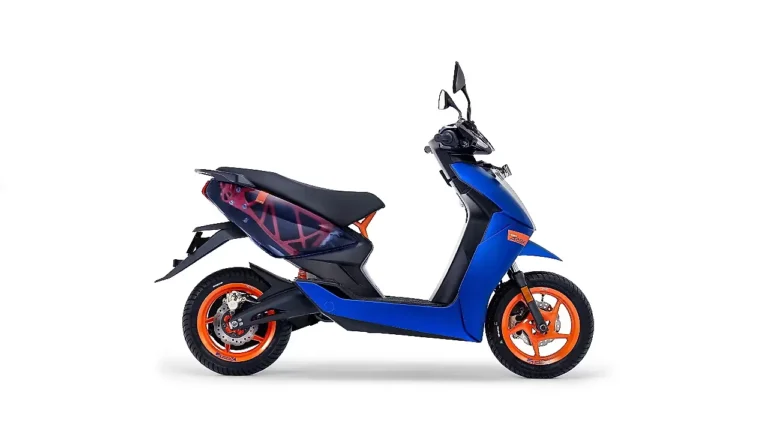
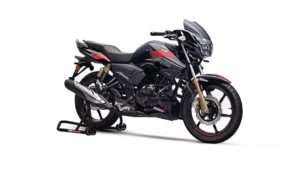
ATHER 450 Apex
4.0 pts
Unweighted: 4 advantages
EngineDimensionsBrakesTyresFeaturesOther
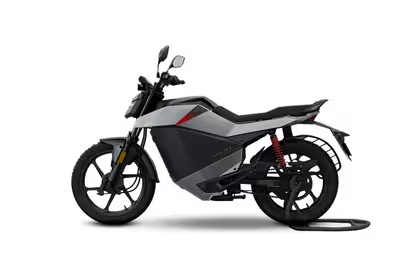
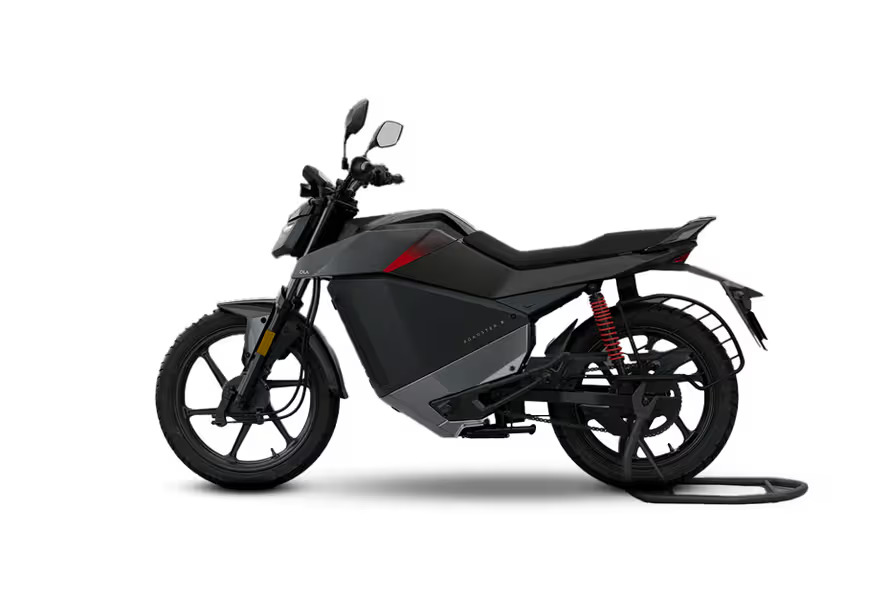
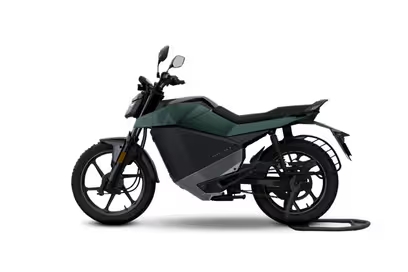
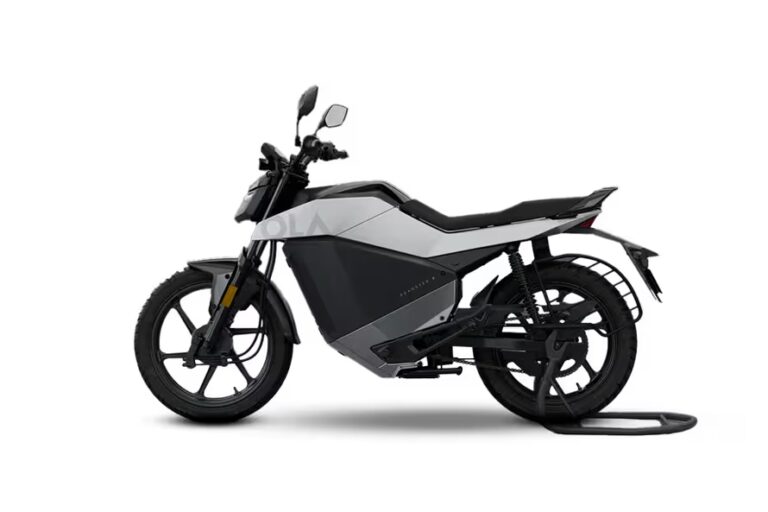
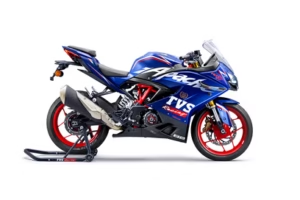
OLA Roadster X+
16.5 pts
Unweighted: 17 advantages
EngineDimensionsBrakesTyresFeaturesOther
| Specification | ||
|---|---|---|
Engine Specifications |
||
| Power | 7.0 kW | 11 kw |
| Torque | 26 Nm | 58 Nm |
Dimensions & Weight |
||
| Kerb Weight | 111.6 kg | 131.4 |
| Seat Height | 780 mm | 777 mm |
Brakes & Suspension |
||
| Front Brake | Hydraulically actuated triple-piston calliper disc | Disc Brake and Brake by Wire |
| Front Suspension | Telescopic forks | Telescopic Fork |
| Rear Brake | Hydraulically actuated single-piston calliper disc | Drum |
| Rear Suspension | Symmetrically mounted progressive monoshock | Twin Shock Absorber |
Tyres & Wheels |
||
| Front Tyre | 90/90 - 12 | 80/100 - 18 |
| Rear Tyre | 100/80 - 12 | 110/80 - 17 |
| Tyre Type | Tubeless | Tubeless |
| Wheel Type | Alloy | Alloy |
Features & Technology |
||
| Headlight | LED | LED |
Other Specifications |
||
| 0–40 km/h (s) | — | 2.7 |
| Battery | 3.7 kWh Lithium-ion | — |
| Battery Capacity (kWh) | — | 9.1 |
| Bike Image 1 | — | https://motoautiv.com/wp-content/uploads/2025/12/roadsterxplusstellarblue.webp |
| Bike Image 2 | — | https://motoautiv.com/wp-content/uploads/2025/12/roadsterxpluspinegreen.webp |
| Bike Image 3 | — | https://motoautiv.com/wp-content/uploads/2025/12/roadsterxplusceramicwhite.webp |
| Charger Output Power (kW) | — | 11 |
| Cluster | — | Digital |
| Color Options | Edium Blue | Ceramic White|#fafbfc Metallic Black|#4f4f4f Pine Green|#688f86 Industrial Silver|#969696 Stellar Blue|#2a8bbf |
| Cons | Relatively expensive — might feel like overkill if you only need basic commuting. Suspension and ride comfort may feel a bit firm on rough or potholed roads. Storage and seating/space may feel limited if you need more room or are a taller rider. Real-world range drops noticeably with aggressive riding or heavy load — and reliability depends on having charging access. The premium features and extra cost may not feel “worth it” for riders who don’t use them often. | Real-world range and performance will likely be lower than claimed — heavy use, frequent stops, speed variations, and load (pillion, luggage) will eat into efficiency. Charging infrastructure & time: if you don’t have easy access to a charger (or fast charger), long-range EVs can become inconvenient — charging from home or available points may not always be smooth. Ride/comfort trade-offs: compared to a petrol bike or premium EV bike, suspension, build or ergonomics may feel basic — this might show on rough roads or during long rides. Limited storage/practical baggage space compared with scooters — less convenient if you often need to carry luggage or do frequent errands. Uncertainty over long-term maintenance/battery life: with any new EV bike, battery degradation over years and real-world wear can be a concern — long-term durability isn’t yet proven. |
| Detailed Overview | From the moment you swing a leg over the Ather 450 Apex, you quickly realize this isn’t just another electric scooter — it’s meant for people who care about performance, control and smart urban commuting. The heart of the ride is a well-tuned 7.0 kW Permanent Magnet Synchronous Motor (PMSM). Thanks to that, the Apex produces up to 26 Nm of torque and delivers brisk acceleration. The numbers are impressive on paper — 0 to 40 km/h in about 2.9 seconds — but on the road that translates to a quick launch off the traffic light, a feeling of immediacy and confidence in start-stop city traffic. What really stands out is the top-end power: the Apex can push beyond the 100 km/h mark, which is rare for an electric scooter in everyday commuter territory. That means the scooter doesn’t just shine in stop-and-go traffic — it’s also capable enough for longer rides, smoother expressway bursts, or overtaking with composure, rather than relying on brute throttle. Under the floorboard lies a 3.7 kWh lithium-ion battery pack. According to the maker, a full charge delivers a certified “IDC” range of up to 157 km — though real-world results will depend heavily on riding style, mode selected, and load (rider + pillion + cargo). In everyday mixed use, you might see somewhere between 110–130 km on a charge if riding moderately, or closer to 75–95 km if you’re leaning on the scooter’s performance edge with aggressive acceleration or using “Warp+” mode. That makes the Apex genuinely practical for daily commuting and occasional long-ish rides. Recharging doesn’t take forever either: with the standard home charger, going from zero to full takes roughly 5¾ hours. For many users, that means a single overnight charge can give you more than a day’s worth of commuting — convenient and low-friction. Of course, power is nothing without control — and on that front, the Apex doesn’t disappoint. Braking is handled by disc brakes at both the front and rear, paired with a combined braking system plus regenerative braking. The regenerative braking is enhanced via a feature called “Magic Twist”: simply releasing the throttle initiates deceleration and regeneration, which smoothens urban rides and helps squeeze out a bit more from the battery. That also means less reliance on brake levers for everyday slowing, making riding more intuitive — especially in stop-heavy traffic. Ride quality strikes a balance between agility and comfort. The suspension setup — telescopic front forks and a monoshock rear — combined with relatively light kerb weight (about 111.6 kg) and compact 12-inch wheels, makes the scooter nimble and easy to manoeuvre through crowded lanes or narrow city roads. For you, that translates into easy overtakes, nippy turns, and less stress when weaving through traffic, while the suspension does enough to absorb most urban bumps and potholes without jarring you. Practicality isn’t ignored either: there’s an under-seat storage of generous 22 litres — handy for a helmet, groceries or a backpack — and seat height is accessible for most riders. In real life, that means you don’t have to worry about where to stash your stuff, and mounting or dismounting remains easy even in everyday use. But what really makes the Apex feel like a “modern scooter of 2025” is how connected and smart it is. A sharp 7-inch touchscreen dashboard offers smartphone connectivity, navigation (via Google Maps), music and call controls, notifications and more. You don’t need to dig out your phone for directions — just glance at the dash. Features such as auto-cancel indicators, “guide-me-home” lights, emergency stop signal, and even “infinite cruise” (cruise-like comfort for longer trips) lend the scooter a layer of convenience and modernity that gets appreciated in day-to-day life. For many riders, having multiple ride modes — ranging from Smart Eco and Eco to Sport and the aggressive Warp+ — is a big plus. It means you can tailor the ride depending on traffic, terrain or mood: ride efficiently during daily commutes, or unlock full power when you want a spirited ride. What this all adds up to — in simple human terms — is an electric scooter that doesn’t force compromises. You get the zippy agility and ease of a scooter tailored for city roads, combined with enough punch, speed, and sophistication to make longer or faster rides genuinely reasonable. Whether you’re weaving through street traffic in tight lanes, commuting to work, or taking a leisurely evening ride out of town, the Ather 450 Apex feels ready for it. | The Ola Roadster X+ feels like a serious attempt to marry modern electric-bike practicality with real-world performance — and on paper, it does enough to make you sit up and take notice. Under its sleek bodywork lies an 11 kW mid-drive electric motor that delivers a quick, smooth surge of power the moment you twist the throttle. That punch, combined with the lighter electric driveline and chain drive, gives the bike enough zest to tackle city traffic smartly or even stretch its legs on open roads. On the top-end 9.1 kWh variant, the claimed 0-to-40 km/h time is just 2.7 seconds and top speed around 125 km/h — not sport-bike blistering, but more than adequate for busy Indian roads and the occasional highway run. Where Roadster X+ really tries to shine is in the battery-and-range equation. If you pick the smaller 4.5 kWh pack, you get a claimed range around 252 km — handy for daily commuting and regular errands. But go for the large 9.1 kWh battery, and the claimed “IDC” range jumps to a striking 501 km on a charge. That number (which assumes ideal conditions) suggests the bike could cover long stretches between charges, reducing range anxiety and making it more practical for longer commutes or sporadic weekend rides. Naturally, real-world range will vary based on speed, load, terrain and throttle usage — but the generous battery gives a buffer that many electric two-wheelers don’t. Comfort and rideability appear to have been given thoughtful consideration. The bike rides on a conventional telescopic front fork and twin-shock rear suspension, built on a sturdy double-cradle steel frame. For daily city traffic, mixed-speed roads, potholes and uneven patches — common across Indian towns — this setup should deliver a stable, predictable ride. The kerb weight and geometry are such that maneuvering through congested lanes, filtering traffic or parking in narrow spots won’t feel overly burdensome. Ground clearance and tyre-/wheel specs also help it adapt to typical road conditions without undermining stability. Rider convenience and modern-bike niceties haven’t been ignored. Roadster X+ gets a 4.3-inch full-colour digital display that runs on the manufacturer’s proprietary OS, bringing in features like ride modes (Eco, Normal, Sport), reverse assist (handy in tight parking), cruise-control, tyre-pressure alerts, geo/time-fencing, energy-insights, OTA updates, and more. LED lighting, tubeless alloy wheels, digital instrumentation — they give the bike a contemporary feel, helping it stand out versus legacy petrol bikes and some other EV two-wheelers. The under-seat storage and ergonomics are more utility-focused than sporty, which matches the bike’s practical-commuter intent. Price-wise, Roadster X+ positions itself as a premium-ish but still attainable EV bike. Compared to traditional petrol motorcycles of similar displacement or other EV rivals, the combination of performance, battery capacity, and tech makes it appealing especially for someone looking to switch to electric without compromising too much on usability. The high-end 9.1 kWh variant, with its long-range claim and balanced performance, seems aimed at riders who want an EV that feels closer to a regular bike than a low-speed city scooter. That said, nothing electric or new is completely “issue-free.” Real-world conditions — especially heavy traffic, frequent start-stops, potholes, mixed roads — will likely reduce the ideal range and may strain battery & motor more than a stable test loop. Charging convenience becomes a factor if you lack home charging or nearby chargers; charging time for the big battery on AC still takes hours, which means planning is needed before long rides. And while the suspension/ride setup is practical, it’s unlikely to deliver plush comfort on badly pocked rural roads. In essence, Ola Roadster X+ isn’t about flashy superbike performance or luxury-bike refinement. It aims to be a balanced, thoughtful electric motorcycle for modern Indian commuting: powerful enough to keep traffic flowing, roomy enough in battery to cut charging woes, simple and robust for everyday use, and smart enough with tech features to feel like a 2025-era ride. For someone in a city or well-connected semi-urban area who wants to step into electric mobility without sacrificing too much on real-world ride, the X+ could very well hit a sweet spot. |
| Expert Review | MotoAutiv Team | Ola Roadster X+ is loved for its sporty design, impressive range, and value for money, but has frequent frustration reported from users due to charging malfunctions, software glitches, and poor after-sales service support, 3, MotoAutiv Team |
| FAQ (Manual Override) | Q: What is the top speed of the Ather 450 Apex? A: The top speed is around 100 km/h. Q: How fast does the Ather 450 Apex accelerate from 0–40 km/h? A: It accelerates from 0–40 km/h in about 2.9 seconds. Q: What is the battery capacity of the Ather 450 Apex? A: It comes with a 3.7 kWh lithium-ion battery. Q: What is the real-world range of the Ather 450 Apex? A: You can typically expect around 110–130 km in mixed riding, and about 75–95 km in hard riding. Q: What is the certified range of the Ather 450 Apex? A: The official IDC-certified range is up to 157 km per charge. Q: How long does it take to charge the Ather 450 Apex? A: A full charge through the home charger takes roughly 5.75 hours. Q: What kind of motor does the Ather 450 Apex use? A: It uses a 7.0 kW PMSM motor that produces up to 26 Nm of torque. Q: Does the Ather 450 Apex have fast charging? A: It supports Ather fast charging, letting you top up quickly on compatible chargers. Q: What ride modes are available on the Ather 450 Apex? A: Modes include SmartEco, Eco, Ride, Sport, and Warp+. Q: What type of brakes does the Ather 450 Apex have? A: It has disc brakes at both front and rear, with combined braking and regenerative braking. Q: What is Magic Twist on the Ather 450 Apex? A: Magic Twist is a regenerative braking system that slows the scooter when you release the throttle. Q: How much does the Ather 450 Apex weigh? A: It weighs around 111.6 kg. Q: What is the under-seat storage capacity? A: It offers 22 litres of under-seat storage. Q: Does the Ather 450 Apex have navigation? A: Yes, it has onboard navigation integrated into the touchscreen display. Q: What size is the instrument display? A: It has a 7-inch touchscreen dashboard. | Q: What battery options are available for Roadster X+? A: Roadster X+ is offered with a 4.5 kWh battery pack and a 9.1 kWh battery pack. Q: What is the claimed range on a full charge? A: The 4.5 kWh variant is claimed to give up to 252 km per charge; the 9.1 kWh variant claims up to 501 km per charge. Q: What motor power does Roadster X+ have? A: The Roadster X+ uses an 11 kW mid-drive motor. Q: What is the top speed of Roadster X+? A: The top speed is claimed to be 125 km/h. Q: How quick is the acceleration (0–40 km/h)? A: Roadster X+ can sprint from 0 to 40 km/h in approximately 2.7 seconds. Q: What kind of braking and wheels does it have? A: It has a front disc brake, a rear drum brake, and uses tubeless tyres with alloy wheels. Q: What suspension and frame setup does Roadster X+ use? A: It uses a double-cradle steel frame, telescopic front forks, and twin-shock adjustable rear suspension. Q: What sort of display and electronic features does it come with? A: It has a 4.3-inch colour LCD display and supports multiple ride modes (Eco, Normal, Sport), plus features like regenerative braking, reverse assist, and other smart-bike features. Q: What is the charging time for Roadster X+? A: The 9.1 kWh battery variant takes around 8 hours for full charge (0–80% charging time as per official spec sheet). Q: What is the curb weight and seat height (for 9.1 kWh variant)? A: The kerb weight is listed at ~148.3 kg and the seat height is about 777 mm. |
| Fuel System | — | Electric |
| Price Variants | | 189999 | 9.1 kWh|189999 4.5 kWh|129999 |
| Pros | Strong, responsive acceleration — fun and confident around city traffic or during quick overtakes. Good top speed for an electric scooter, making it usable not just for city commutes but occasional longer or faster rides. Smart, modern features and a connected dashboard — adds convenience, navigation, and a premium feel. Adequate real-world battery range for daily commuting and moderate longer rides. Low maintenance compared with petrol scooters — simpler upkeep, no fuel hassles. | Strong performance: the 11 kW motor gives brisk acceleration and top-end speed, making the ride feel lively even with a full load. Good range (especially on 9.1 kWh version): the large battery lets you cover long distances between charges — useful for daily commuting and occasional longer rides. Modern features & electronics: digital display, ride modes, smart-bike style features (like regen braking, possibly app connectivity and convenience features, depending on variant) make it feel more up-to-date than a basic commuter bike. Practical for city + occasional highway: with decent speed and torque, it works well in urban traffic, but can also handle open roads when needed, giving flexibility. Good choice for EV-minded buyers: being electric, operating costs (fuel, oil, frequent maintenance) are lower than a petrol bike, which may save money over time. |
| Range (Claimed, km) | — | 501 |