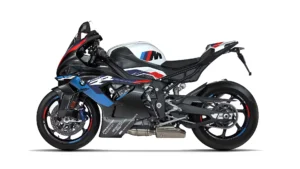
VS

Quick Analysis

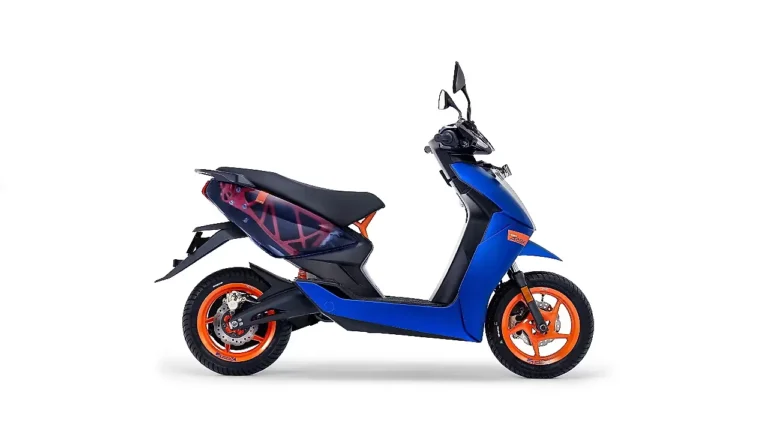
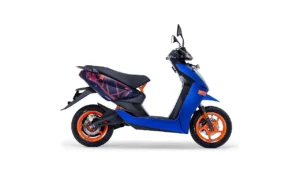
ATHER 450 Apex

0.0 pts
Unweighted: 0 advantages
EnginePerformanceDimensionsBrakesTyresFeaturesOther

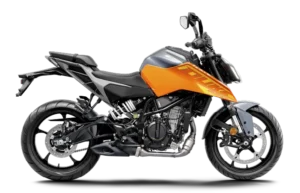
KTM 390 DUKE

31.5 pts
Unweighted: 21 advantages
EnginePerformanceDimensionsBrakesTyresFeaturesOther
Specification
ATHER 450 Apex
ATHER 450 Apex
Ather
KTM 390 DUKE
KTM 390 DUKE
KTM

Engine Specifications

Cooling System Liquid cooling with radiator
Displacement 398.63 cc
Engine Type Single Cylinder, Liquid Cooled, DOHC, FI Engine
Power 7.0 kW 46 PS @ 8500 rpm
Torque 26 Nm 39 Nm @ 6500 rpm

Performance & Efficiency

Fuel Tank Capacity 15 L
Mileage 30 kmpl

Dimensions & Weight

Kerb Weight 111.6 kg 168.3 kg
Seat Height 780 mm 800 mm

Brakes & Suspension

ABS Dual-channel ABS with SUPERMOTO mode
Front Brake Hydraulically actuated triple-piston calliper disc 320 mm Disc with Radially mounted calliper
Front Suspension Telescopic forks 5-click Compression & Rebound adjustable, Open Cartridge, WP APEX USD forks, 43mm diameter
Rear Brake Hydraulically actuated single-piston calliper disc 240 mm Disc with Floating calliper
Rear Suspension Symmetrically mounted progressive monoshock Adjustable WP APEX Monoshock, 5-step Rebound damping, 10-step preload adjustable

Tyres & Wheels

Front Tyre 90/90 - 12 110/70 - ZR17
Rear Tyre 100/80 - 12 150/60 - ZR17
Tyre Type Tubeless Tubeless
Wheel Type Alloy Alloy

Features & Technology

Headlight LED Full Split LED Headlamp

Other Specifications

Battery 3.7 kWh Lithium-ion 12 V, 8 AH MF battery
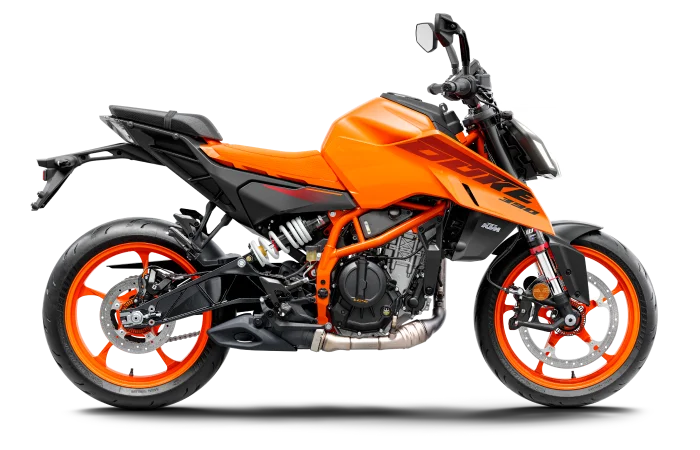
Bike Image 1 https://motoautiv.com/wp-content/uploads/2025/11/KTM-390-Duke-Electric-orange.webp
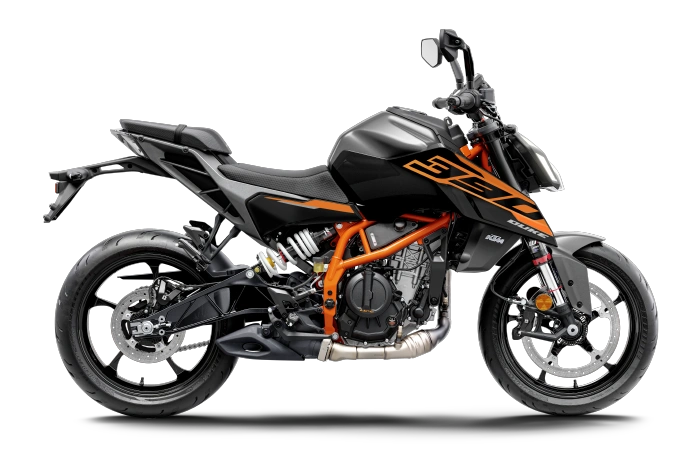
Bike Image 2 https://motoautiv.com/wp-content/uploads/2025/11/KTM390DukeBlack_Booking.webp
Cluster 5" TFT dash display
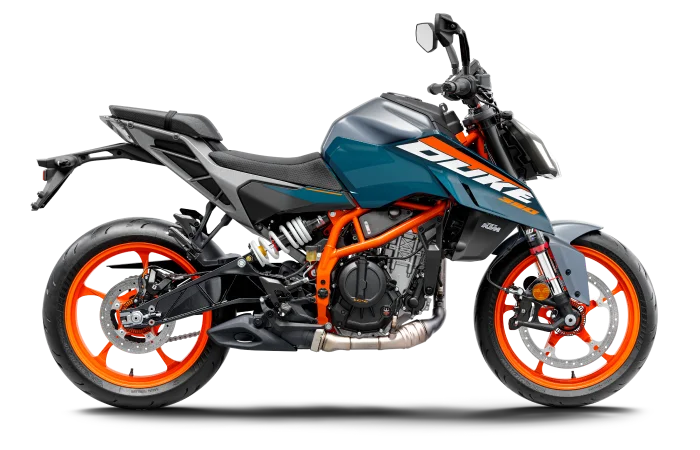
Color Options Edium Blue GUN METAL GREY ELECTRONIC ORANGE ATLANTIC BLUE
Cons Relatively expensive — might feel like overkill if you only need basic commuting. Suspension and ride comfort may feel a bit firm on rough or potholed roads. Storage and seating/space may feel limited if you need more room or are a taller rider. Real-world range drops noticeably with aggressive riding or heavy load — and reliability depends on having charging access. The premium features and extra cost may not feel “worth it” for riders who don’t use them often. Firm (harsh) ride: The suspension can feel stiff over potholes or uneven surfaces, which may be tiring for long rides. Limited wind protection: Being a naked bike, you feel a lot of wind at highway speeds, making long-distance touring less comfortable. Engine heat: In slow or stop-go traffic, the radiator fan can dump hot air toward the rider’s legs, which many find uncomfortable. Seat comfort: The stock seat can feel firm and less comfortable for long rides; also, pillion comfort is limited. Vibration: Some riders report noticeable vibrations in certain RPM ranges, especially between ~4,500–6,000 rpm. Reliability concerns: There are occasional reports of reliability issues or quality control, especially in older models.
Detailed Overview From the moment you swing a leg over the Ather 450 Apex, you quickly realize this isn’t just another electric scooter — it’s meant for people who care about performance, control and smart urban commuting. The heart of the ride is a well-tuned 7.0 kW Permanent Magnet Synchronous Motor (PMSM). Thanks to that, the Apex produces up to 26 Nm of torque and delivers brisk acceleration. The numbers are impressive on paper — 0 to 40 km/h in about 2.9 seconds — but on the road that translates to a quick launch off the traffic light, a feeling of immediacy and confidence in start-stop city traffic. What really stands out is the top-end power: the Apex can push beyond the 100 km/h mark, which is rare for an electric scooter in everyday commuter territory. That means the scooter doesn’t just shine in stop-and-go traffic — it’s also capable enough for longer rides, smoother expressway bursts, or overtaking with composure, rather than relying on brute throttle. Under the floorboard lies a 3.7 kWh lithium-ion battery pack. According to the maker, a full charge delivers a certified “IDC” range of up to 157 km — though real-world results will depend heavily on riding style, mode selected, and load (rider + pillion + cargo). In everyday mixed use, you might see somewhere between 110–130 km on a charge if riding moderately, or closer to 75–95 km if you’re leaning on the scooter’s performance edge with aggressive acceleration or using “Warp+” mode. That makes the Apex genuinely practical for daily commuting and occasional long-ish rides. Recharging doesn’t take forever either: with the standard home charger, going from zero to full takes roughly 5¾ hours. For many users, that means a single overnight charge can give you more than a day’s worth of commuting — convenient and low-friction. Of course, power is nothing without control — and on that front, the Apex doesn’t disappoint. Braking is handled by disc brakes at both the front and rear, paired with a combined braking system plus regenerative braking. The regenerative braking is enhanced via a feature called “Magic Twist”: simply releasing the throttle initiates deceleration and regeneration, which smoothens urban rides and helps squeeze out a bit more from the battery. That also means less reliance on brake levers for everyday slowing, making riding more intuitive — especially in stop-heavy traffic. Ride quality strikes a balance between agility and comfort. The suspension setup — telescopic front forks and a monoshock rear — combined with relatively light kerb weight (about 111.6 kg) and compact 12-inch wheels, makes the scooter nimble and easy to manoeuvre through crowded lanes or narrow city roads. For you, that translates into easy overtakes, nippy turns, and less stress when weaving through traffic, while the suspension does enough to absorb most urban bumps and potholes without jarring you. Practicality isn’t ignored either: there’s an under-seat storage of generous 22 litres — handy for a helmet, groceries or a backpack — and seat height is accessible for most riders. In real life, that means you don’t have to worry about where to stash your stuff, and mounting or dismounting remains easy even in everyday use. But what really makes the Apex feel like a “modern scooter of 2025” is how connected and smart it is. A sharp 7-inch touchscreen dashboard offers smartphone connectivity, navigation (via Google Maps), music and call controls, notifications and more. You don’t need to dig out your phone for directions — just glance at the dash. Features such as auto-cancel indicators, “guide-me-home” lights, emergency stop signal, and even “infinite cruise” (cruise-like comfort for longer trips) lend the scooter a layer of convenience and modernity that gets appreciated in day-to-day life. For many riders, having multiple ride modes — ranging from Smart Eco and Eco to Sport and the aggressive Warp+ — is a big plus. It means you can tailor the ride depending on traffic, terrain or mood: ride efficiently during daily commutes, or unlock full power when you want a spirited ride. What this all adds up to — in simple human terms — is an electric scooter that doesn’t force compromises. You get the zippy agility and ease of a scooter tailored for city roads, combined with enough punch, speed, and sophistication to make longer or faster rides genuinely reasonable. Whether you’re weaving through street traffic in tight lanes, commuting to work, or taking a leisurely evening ride out of town, the Ather 450 Apex feels ready for it. The **KTM 390 Duke** has long been celebrated as a high-performance yet lightweight streetfighter, offering a compelling mix of power, agility, and modern technology that makes it a favorite for both urban commuting and spirited weekend rides. The latest (Gen-3) 390 Duke takes this formula further, built on a newly designed trellis frame with a die-cast aluminium sub-frame that improves rigidity and handling. Under the hood, the 2024 model is powered by a liquid-cooled, single-cylinder “LC4c” engine now displacing **399 cc**, which bumps up the performance to roughly **46 PS of power and 39 Nm of torque** in the Indian spec. One of the most striking traits of the 390 Duke is its lightness: the new model continues to boast sporty handling thanks to its steel trellis frame and a compact, aggressive footprint. The WP APEX 43 mm upside-down front fork and a preload-adjustable WP APEX mono-shock at the rear provide a finely tuned suspension setup that balances comfort on city roads with precision in the corners. Braking is handled by a 320 mm front disc with a radial calliper and a 230 mm rear disc, supported by Bosch cornering ABS, giving reliable and controllable stopping performance. On the feature front, the 2024 Duke 390 is truly packed. It includes ride modes (Street, Rain, Track), launch control, SuperMoto ABS, a quickshifter+, and a slipper clutch. The ride-by-wire throttle ensures smooth power delivery and precise control, especially when transitioning between modes. Its 5-inch TFT display supports smartphone connectivity (via Bluetooth) for turn-by-turn navigation, calls, and media, making it a very usable bike for daily commuting. Ergonomically, the 390 Duke offers a sporty but accessible riding position. The seat height is around **800 mm** in the Indian variant, with an optional 820 mm seat available, making it relatively manageable for a variety of rider heights. The fuel tank is reasonably sized (KTM lists about 13.4 litres), which balances enough capacity for daily use without compromising on agility. In terms of usability, the 390 Duke shines in city traffic thanks to its light weight, responsive throttle, and nimble chassis. At the same time, its torque and power allow for satisfying highway stretches and sporty ride-outs. However, as some users note, the high-revving single cylinder can vibrate noticeably at lower RPMs, and the engine tends to heat up in slow, stop-go traffic — a common character point for small high-performance singles. On long highway rides, wind protection is minimal due to the naked nature, and though the electronics are rich, some may feel the bike’s seat and fuel range are not optimized for extended touring. Reliability-wise, many long-term owners report good durability when properly maintained. One rider, after 29,000 km, said he never faced major breakdowns and appreciated the bike’s consistent performance. That said, some others have expressed concern about vibration and the need for regular maintenance given the sporty nature of the engine. Overall, the **KTM 390 Duke** is a brilliant all-rounder in the 300–400 cc naked category. It offers serious performance, modern electronics, and a lightweight chassis, but it doesn’t compromise on practicality. For someone looking for a fun, aggressive bike that can do daily duties and weekend thrills, the 390 Duke remains one of the most compelling choices in its class.
Expert Review MotoAutiv Team MotoAutiv Team
FAQ (Manual Override) Q: What is the top speed of the Ather 450 Apex? A: The top speed is around 100 km/h. Q: How fast does the Ather 450 Apex accelerate from 0–40 km/h? A: It accelerates from 0–40 km/h in about 2.9 seconds. Q: What is the battery capacity of the Ather 450 Apex? A: It comes with a 3.7 kWh lithium-ion battery. Q: What is the real-world range of the Ather 450 Apex? A: You can typically expect around 110–130 km in mixed riding, and about 75–95 km in hard riding. Q: What is the certified range of the Ather 450 Apex? A: The official IDC-certified range is up to 157 km per charge. Q: How long does it take to charge the Ather 450 Apex? A: A full charge through the home charger takes roughly 5.75 hours. Q: What kind of motor does the Ather 450 Apex use? A: It uses a 7.0 kW PMSM motor that produces up to 26 Nm of torque. Q: Does the Ather 450 Apex have fast charging? A: It supports Ather fast charging, letting you top up quickly on compatible chargers. Q: What ride modes are available on the Ather 450 Apex? A: Modes include SmartEco, Eco, Ride, Sport, and Warp+. Q: What type of brakes does the Ather 450 Apex have? A: It has disc brakes at both front and rear, with combined braking and regenerative braking. Q: What is Magic Twist on the Ather 450 Apex? A: Magic Twist is a regenerative braking system that slows the scooter when you release the throttle. Q: How much does the Ather 450 Apex weigh? A: It weighs around 111.6 kg. Q: What is the under-seat storage capacity? A: It offers 22 litres of under-seat storage. Q: Does the Ather 450 Apex have navigation? A: Yes, it has onboard navigation integrated into the touchscreen display. Q: What size is the instrument display? A: It has a 7-inch touchscreen dashboard. Q: What engine does the KTM 390 Duke have? A: It uses a single-cylinder, liquid-cooled, DOHC engine. Q: What is the displacement, power & torque of the 390 Duke? A: The displacement is about 398.6 cc. In the newer versions, it produces around 46 PS at 8,500 rpm and 39 Nm of torque at 6,500 rpm. Q: What is the seat height and weight of the 390 Duke? A: The seat height is 800 mm (or optionally 820 mm) depending on the version. The kerb weight is about 168.3 kg per KTM’s specification. Q: What is the fuel tank capacity and what is the mileage like? A: The fuel tank capacity is 15 litres in many versions. According to some sources, real-world fuel efficiency is around 25–30 km/l, depending on riding style. Q: What brakes and suspension does it use? A: It comes with WP APEX 43 mm upside-down front forks and a WP APEX monoshock at the rear. For brakes, there is a 320 mm front disc and a 240 mm rear disc, with a radially mounted caliper up front. Q: What is the ground clearance of the 390 Duke? A: The ground clearance is around 183 mm according to KTM India specifications. Q: What is the seat configuration and ergonomics like? A: It has a two-part seat design, with a slightly aggressive but comfortable rider position thanks to its upright handlebars. There’s also a “Supermoto mode” which lets you limit ABS intervention to the front brake — great for sliding control. Q: Does the 390 Duke come with smartphone connectivity? A: Yes — some variants support KTM MY RIDE via the 5-inch TFT dash, allowing for calls, music, and navigation integration.
Price Variants | 189999 Standard | 297443
Pros Strong, responsive acceleration — fun and confident around city traffic or during quick overtakes. Good top speed for an electric scooter, making it usable not just for city commutes but occasional longer or faster rides. Smart, modern features and a connected dashboard — adds convenience, navigation, and a premium feel. Adequate real-world battery range for daily commuting and moderate longer rides. Low maintenance compared with petrol scooters — simpler upkeep, no fuel hassles. Excellent performance for its class: The 390 Duke’s single-cylinder engine delivers punchy acceleration and strong mid-range performance. Lightweight & nimble: With a relatively low kerb/wet weight, its chassis is very agile, making it easy to flick through corners and manoeuvre in traffic. Advanced electronics suite: Comes equipped with ride modes, traction control (MTC), cornering ABS, supermoto ABS, quickshifter, and a modern TFT display. Adjustable suspension: The front and rear suspension are adjustable (WP APEX), allowing riders to tune the setup depending on road conditions or riding style. Sharp styling & design: Features such as an exposed steel trellis frame, LED headlight, and aggressive design make it visually striking. Good build quality: Reviews note improved fit and finish on newer models, giving a premium feel. Decent fuel efficiency: Compared to its performance, it offers reasonable fuel efficiency for sporty riding.
Transmission 6 Speed Manual