Quick Analysis
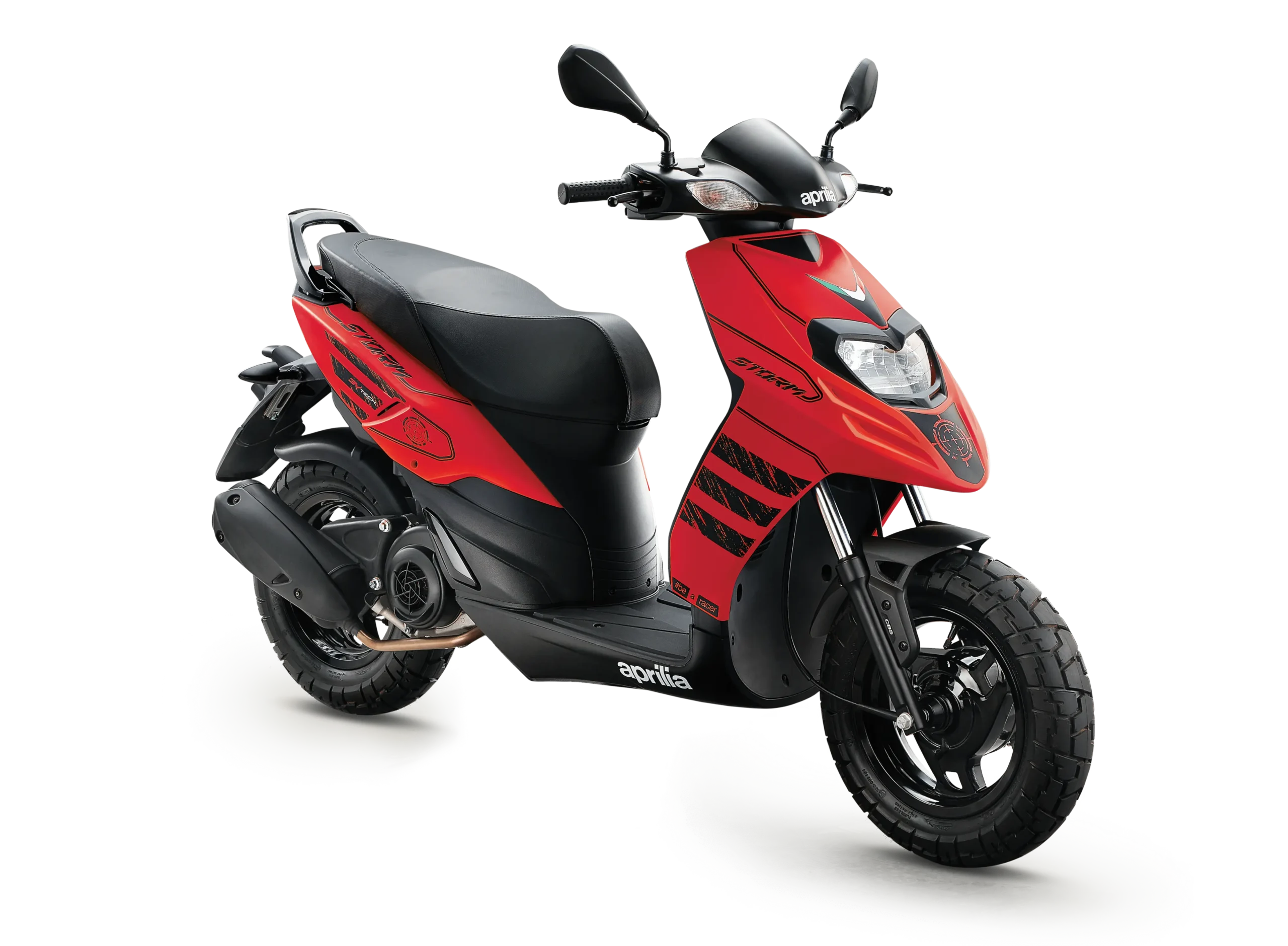
Aprilia Storm 125
12.0 pts
Unweighted: 8 advantages
EnginePerformanceDimensionsBrakesTyresFeaturesOther
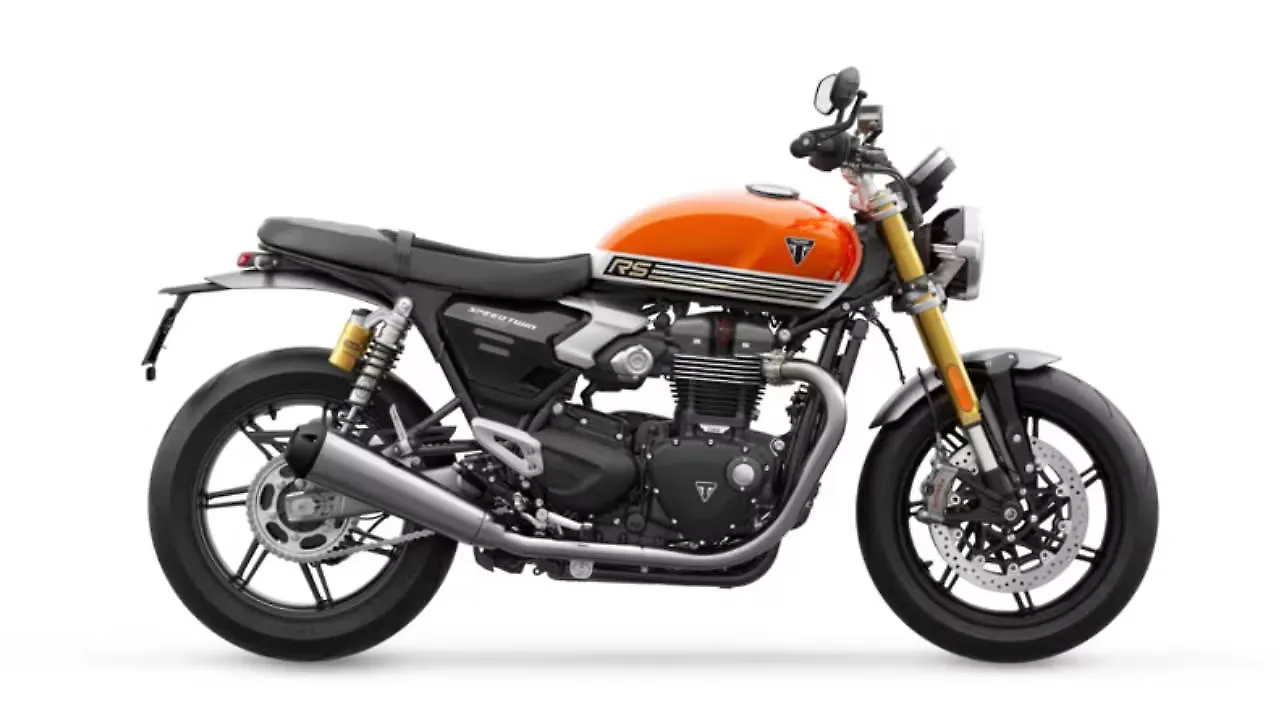
TRIUMPH SPEED TWIN 1200 RS
22.0 pts
Unweighted: 15 advantages
EnginePerformanceDimensionsBrakesTyresFeaturesOther
| Specification | ||
|---|---|---|
Engine Specifications |
||
| Cooling System | Air‑cooled | Liquid-cooled parallel twin |
| Displacement | 124.45 cc | 1200 cc |
| Engine Type | Single‑cylinder, 4‑stroke, air‑cooled, 3‑valve | 8 valve, SOHC, 2700 firing order |
| Power | 9.92 PS @ 7700 rpm | 105 PS / 103.5 bhp (77.2 kW) @ 7,750 rpm |
| Torque | 9.7 Nm @ 6000 rpm | 112 Nm @ 4,250 rpm |
Performance & Efficiency |
||
| Fuel Tank Capacity | 6.5 L | 14.5 L |
| Mileage | 40 kmpl | 19.60 Kmpl |
Dimensions & Weight |
||
| Kerb Weight | 118 | 216 |
| Seat Height | 780 | 810 |
Brakes & Suspension |
||
| ABS | No, CBS | Dual Channel ABS |
| Front Brake | Ø 220 mm disc with hydraulic control assisted by CBS | Twin Ø 320mm floating discs, Brembo Stylema M4.30 radial calipers, OCABS |
| Front Suspension | Hydraulic double-telescopic fork | Ø 43mm USD Marzocchi forks, 120mm travel |
| Rear Brake | Ø 140 mm drum brake | Single Ø 220mm disc, Nissin 2-piston floating caliper, OCABS |
| Rear Suspension | Mono Shock Absorber | Twin Öhlins RSUs with external reservoirs, adjustable for pre-load, compression and rebound damping. 123 mm wheel travel |
Tyres & Wheels |
||
| Front Tyre | 120/80‑12 | 120/70 R17 |
| Rear Tyre | 130/80‑12 | 160/60 R17 |
| Tyre Type | Tubeless | Tubeless |
| Wheel Type | Alloy | Aluminium Alloy |
Features & Technology |
||
| Headlight | LED | DRLs LED |
Other Specifications |
||
| Battery | 12 V / 5 Ah | — |
| Bike Image 1 | https://motoautiv.com/wp-content/uploads/2025/12/sr_storm_yellow-scaled.webp | — |
| Bike Image 2 | — | https://motoautiv.com/wp-content/uploads/2025/11/speedtwin1200sapphireblack.webp |
| Cluster | Analogue + digital console | — |
| Color Options | Matte Red | #e3292f Matte Yellow| #ffff00 | Sapphire Black Baja Orange and Sapphire Black |
| Cons | The seat is firm and compact, which can feel less comfortable on longer rides or with a pillion. The suspension is firm, so rough or pothole-laden roads transmit more bumps to the rider. Fuel tank capacity is modest at 6.5 litres, limiting range for longer trips. Storage space is limited, restricting the ability to carry larger items or full-face helmets comfortably. Being a smaller-displacement scooter, highway cruising is limited, and top speeds are moderate. | Price premium & diminishing returns for everyday use: Reviewers note that while the RS gets the “best bits”, you pay significantly more and might not utilise all of them unless you ride aggressively. Some ergonomics & weight issues: At over 200 kg and with a sportier riding position (for the RS), it may feel less comfortable in heavy traffic or for shorter riders. Also the seat could become firm on long rides. Feature trade-offs & tyre choices: Some reviews mention that the sport tyres and certain component choices (for the RS) might not suit everyday urban or wet weather riding perfectly. Service/maintenance cost & availability: As a premium bike with high-spec parts and brand positioning, ownership costs (parts, servicing) and dealer network may be less favourable compared to mass market bikes. (General observation from premium-bike feedback) |
| Detailed Overview | The Aprilia Storm 125 is positioned as a 125cc scooter that combines everyday usability with a slightly rugged and sporty design approach. At its core, it uses a 124.45cc, single-cylinder, air-cooled engine that produces close to 10 PS of power and around 9.7 Nm of torque. This engine is paired with a CVT automatic transmission, which keeps the riding experience simple and smooth, especially in city traffic. The throttle response feels linear, and while it is not tuned for aggressive performance, it delivers enough power for regular commuting, short bursts of acceleration, and occasional overtakes. One of the distinguishing aspects of the Storm 125 is its design and tyre setup. Unlike most scooters in this segment, it features chunkier, wider tyres that are intended to offer better grip on uneven or broken roads. This, combined with its slightly upright riding stance, gives the scooter a more planted feel when riding over rough patches or poorly maintained streets. The suspension setup consists of telescopic forks at the front and a monoshock at the rear, which is tuned to handle typical urban road conditions. It manages bumps reasonably well, although sharper potholes can still be felt depending on speed. The overall dimensions and weight make it manageable for a wide range of riders. Its lightweight construction helps with maneuverability in traffic and makes it easier to handle at low speeds. The seat height is accessible, and the riding posture is neutral, allowing riders to sit upright without putting too much strain on the back or wrists. This makes it suitable for daily commutes, short errands, and general urban usage. In terms of braking, the Storm 125 comes with a front disc brake and a rear drum brake, supported by a combined braking system (CBS). This setup provides adequate stopping power for city riding conditions and helps maintain stability during braking. The 12-inch wheels also contribute to balance and control, especially when navigating through crowded streets. The feature list on the Storm 125 is relatively simple compared to some of its competitors. It includes a semi-digital instrument cluster that displays essential information such as speed, fuel level, and trip details. The lighting setup is conventional, and there are no advanced connectivity features like Bluetooth or navigation. Storage space is also fairly standard, with under-seat storage that is enough for basic daily items but not particularly spacious. From a practical standpoint, the scooter focuses on ease of use and straightforward functionality. The fuel tank capacity is around 6.5 litres, which, combined with its efficiency, provides a reasonable riding range for city use. Maintenance requirements are similar to other scooters in this category, and the mechanical simplicity helps keep things uncomplicated for everyday ownership. Overall, the Aprilia Storm 125 presents itself as a scooter that blends a slightly rugged design with city-friendly performance and handling, offering a different approach compared to more feature-focused or comfort-oriented options in the 125cc segment. | The Triumph Speed Twin 1200 RS is a modern-retro motorcycle that combines classic design with a strong focus on performance and high-quality components. It is powered by a 1200cc parallel-twin engine that produces around 103.5 bhp and 112 Nm of torque, which means it delivers strong pulling power from low speeds and continues to feel responsive through the mid-range. The engine uses fuel injection and an electronic throttle, paired with a 6-speed gearbox and a slip-and-assist clutch, making gear shifts smoother and more controlled. The bike is built on a tubular steel frame with an aluminium swingarm, which helps maintain a balance between strength and handling. It comes with 17-inch alloy wheels at both ends and is fitted with performance-oriented tyres that provide good grip on the road. The suspension setup is one of its key highlights, featuring fully adjustable upside-down front forks from Marzocchi and twin Öhlins rear shock absorbers. This allows the rider to adjust the suspension based on riding style or road conditions, which is useful for both regular riding and more spirited use. Braking is handled by high-spec components, including dual front disc brakes with Brembo Stylema calipers and a rear disc brake with ABS. This setup is designed to offer strong and controlled stopping power. The bike also includes modern electronics such as riding modes (Road, Rain, and Sport), traction control, cornering ABS, and a quickshifter, which allows clutchless gear shifts for smoother acceleration and deceleration. In terms of dimensions, the seat height is around 810 mm, making it accessible for many riders, while the fuel tank capacity of about 14.5 litres supports both city rides and longer journeys. The wet weight is approximately 216 kg, which gives it a planted feel on the road but can make it feel heavier at low speeds. The riding posture is slightly forward-leaning compared to traditional retro bikes, with lower handlebars and rear-set footpegs, which adds to its sporty character. The overall design keeps a classic look with elements like a sculpted fuel tank, twin exhausts, and minimal bodywork, while also integrating modern touches such as LED lighting and a TFT-integrated display. The combination of traditional styling and modern hardware defines its overall character, making it a bike that blends old-school appearance with current technology and performance-focused components. |
| Expert Review | The Aprilia Storm 125 comes across as a sporty-looking 125cc scooter that focuses more on rugged styling and everyday usability than outright performance. It is powered by a 124cc three-valve engine producing around 9.5–10 PS, which feels smooth and refined for city riding, though not the quickest when compared to rivals like the Ntorq. Acceleration is decent for daily traffic, but it requires a bit of throttle input to feel lively, especially during overtakes. The standout element is its chunkier tyres and upright riding stance, which give it better grip and confidence on rough or broken roads, making it slightly more versatile than typical scooters. Suspension is tuned for comfort, and the lightweight body helps with easy handling in urban conditions. However, the feature list remains basic, with a simple semi-digital console and no advanced connectivity, while practicality is average with limited storage space., 4, MotoAutiv Team | The Triumph Speed Twin 1200 RS is a modern-retro roadster that combines classic styling with a more performance-focused setup. It is powered by a 1200cc parallel-twin engine that delivers strong and smooth power, especially in the low and mid-range, making it feel responsive without being difficult to control. The bike features upgraded components like fully adjustable suspension and high-spec brakes, which improve stability and give it a sharper feel while cornering or riding at higher speeds. The riding posture is slightly more aggressive than typical retro bikes, with a forward-leaning stance that adds to its sporty character but may feel less relaxed in slow traffic. Handling is precise and confidence-inspiring, though the firmer suspension can make rough roads feel more noticeable. The build quality and finish are in line with its premium positioning, with attention to detail in both design and materials. It also includes modern electronics like riding modes, traction control, and cornering ABS, adding to overall control. In everyday use, the weight and firmer setup can make it feel less comfortable in city conditions, but on open roads, it offers a more engaging and controlled riding experience., 4.0, MotoAutiv Team |
| FAQ (Manual Override) | Q: What is the mileage of the Aprilia Storm 125? A: The scooter offers a real-world mileage of around 35–40 km/l, depending on traffic and riding style. Q: Is the Aprilia Storm 125 good for daily commuting? A: Yes, it works well for city commuting due to its smooth engine, lightweight body, and easy handling in traffic. Q: How is the performance of the Aprilia Storm 125? A: The 124cc engine produces around 10 PS and offers decent performance for city use, though it is not the quickest in its segment. Q: What makes the Aprilia Storm 125 different from other scooters? A: Its chunky tyres and slightly rugged design give it better grip and confidence on uneven or rough roads compared to typical scooters. Q: Is the Aprilia Storm 125 comfortable for long rides? A: It is more suited for short to medium rides, as the seat and overall setup are designed mainly for city use rather than long-distance comfort. Q: What is the top speed of the Aprilia Storm 125? A: The scooter has a top speed of around 90 km/h, which is adequate for urban riding. Q: Does the Aprilia Storm 125 come with modern features? A: It gets a semi-digital console and basic features, but it lacks advanced connectivity or smart features seen in some rivals. Q: Is the Aprilia Storm 125 suitable for beginners? A: Yes, it is easy to ride with automatic transmission and predictable performance, making it beginner-friendly. | Q: What is the fuel tank capacity and claimed mileage? A: The tank capacity is 14.5 litres. Real-world mileage figures cited are around ~16 km/l depending on riding style. Q: What is the engine capacity of the Triumph Speed Twin 1200 RS? A: The Triumph Speed Twin 1200 RS comes with a 1200cc, liquid-cooled, parallel-twin engine. Q: How much power does the Triumph Speed Twin 1200 RS produce? A: The Triumph Speed Twin 1200 RS produces around 103.5 bhp and 112 Nm of torque, with strong performance in the low and mid-range. Q: Is the Triumph Speed Twin 1200 RS suitable for daily commuting? A: The Triumph Speed Twin 1200 RS can be used for city riding, but its weight, heat, and slightly aggressive ergonomics make it less comfortable in heavy traffic compared to smaller bikes. Q: What makes the Triumph Speed Twin 1200 RS different from the standard Speed Twin 1200? A: The Triumph Speed Twin 1200 RS gets upgraded components like fully adjustable Öhlins rear suspension, Marzocchi front forks, Brembo brakes, and a more aggressive riding position. Q: Does the Triumph Speed Twin 1200 RS have riding modes and electronics? A: Yes, the Triumph Speed Twin 1200 RS comes with multiple riding modes, traction control, cornering ABS, and electronic throttle control. Q: What is the weight of the Triumph Speed Twin 1200 RS? A: The Triumph Speed Twin 1200 RS has a wet weight of around 216 kg (476 lbs). Q: Is the Triumph Speed Twin 1200 RS beginner-friendly? A: The Triumph Speed Twin 1200 RS is not ideal for beginners due to its high power output and performance-focused setup. Q: What type of riding is the Triumph Speed Twin 1200 RS best suited for? A: The Triumph Speed Twin 1200 RS is best suited for spirited road riding and highway use rather than slow city commuting. Q: Does the Triumph Speed Twin 1200 RS have a quickshifter? A: Yes, the Triumph Speed Twin 1200 RS comes with an up-and-down quickshifter as standard. Q: What is the fuel tank capacity of the Triumph Speed Twin 1200 RS? A: The Triumph Speed Twin 1200 RS has a fuel tank capacity of around 14.5 litres. |
| Fuel System | Petrol, fuel‑injected | Fuel Injection |
| Price Variants | STD | 107196 | Standard | 1383800 RS | 1677600 MY24 | 1109000 |
| Pros | The Storm 125 has nimble and agile handling, making it easy to weave through city traffic and park in tight spaces. Its sporty and aggressive design stands out, giving it a premium, performance-oriented look compared with regular scooters. The engine delivers smooth, usable performance, with enough punch for urban commuting and occasional highway bursts. Front disc and rear drum brakes with CBS provide reliable stopping power and enhance rider confidence. Automatic CVT transmission makes it very easy to ride in stop-and-go traffic without the hassle of manual gear changes. LED lighting and combined analogue-digital cluster improve visibility and modernize the riding experience. Lightweight (118 kg) and compact dimensions make the scooter easy to maneuver, even for newer riders. | Premium components & sharp handling: The RS gets high-end kit such as adjustable suspension and Brembo front calipers, which reviewers say significantly improve the bike’s composure and road manners. Strong engine character: The 1200cc twin delivers a good mix of usable mid-range torque and fun revs, making the bike enjoyable in a variety of riding situations. Neo-classic styling with premium finish: Many reviewers comment on the quality of materials, aesthetic detail and the overall “looks” factor of the RS variant. Versatile usability: Despite its premium nature, the bike is described as one you could ride daily, not just on weekends, the ergonomics and build allow for commuting and spirited rides alike. |
| Starter | Kick + Electric self‑start | Self Start |
| Transmission | Automatic | 6-speed |