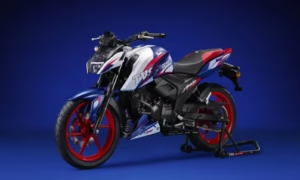
Quick Analysis
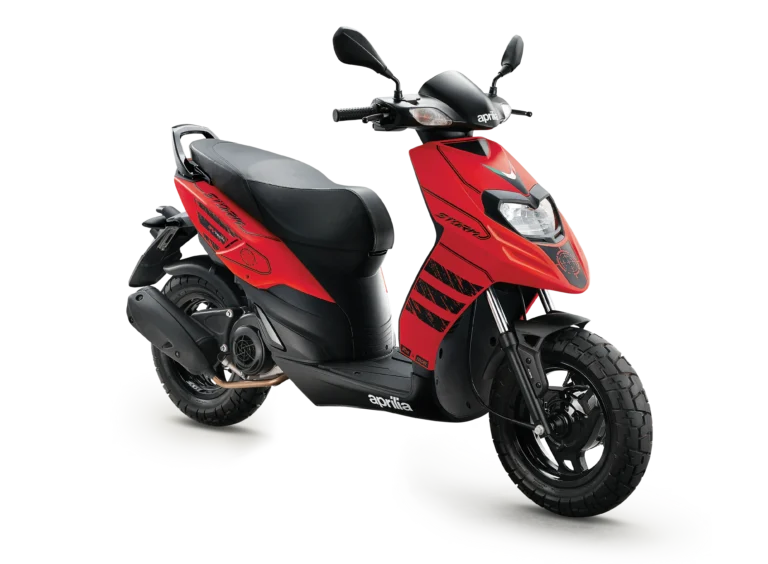
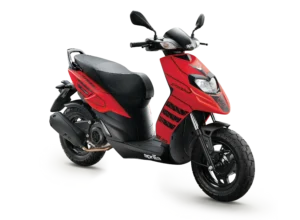
Aprilia Storm 125
5.0 pts
Unweighted: 4 advantages
EnginePerformanceDimensionsBrakesTyresFeaturesOther
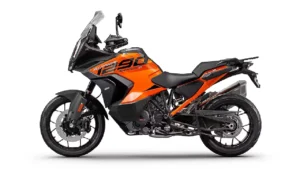
KTM 390 DUKE
24.0 pts
Unweighted: 16 advantages
EnginePerformanceDimensionsBrakesTyresFeaturesOther
| Specification | ||
|---|---|---|
Engine Specifications |
||
| Cooling System | Air‑cooled | Liquid cooling with radiator |
| Displacement | 124.45 cc | 398.63 cc |
| Engine Type | Single‑cylinder, 4‑stroke, air‑cooled, 3‑valve | Single Cylinder, Liquid Cooled, DOHC, FI Engine |
| Power | 9.92 PS @ 7700 rpm | 46 PS @ 8500 rpm |
| Torque | 9.7 Nm @ 6000 rpm | 39 Nm @ 6500 rpm |
Performance & Efficiency |
||
| Fuel Tank Capacity | 6.5 l | 15 L |
| Mileage | 40 kmpl | 30 kmpl |
Dimensions & Weight |
||
| Kerb Weight | 118 | 168.3 kg |
| Seat Height | 780 mm | 800 mm |
Brakes & Suspension |
||
| ABS | — | Dual-channel ABS with SUPERMOTO mode |
| Front Brake | Disc brake (220 mm) | 320 mm Disc with Radially mounted calliper |
| Front Suspension | Hydraulic double-telescopic fork | 5-click Compression & Rebound adjustable, Open Cartridge, WP APEX USD forks, 43mm diameter |
| Rear Brake | Drum brake (140 mm) | 240 mm Disc with Floating calliper |
| Rear Suspension | Hydraulic shock | Adjustable WP APEX Monoshock, 5-step Rebound damping, 10-step preload adjustable |
Tyres & Wheels |
||
| Front Tyre | 120/80‑12 | 110/70 - ZR17 |
| Rear Tyre | 130/80‑12 | 150/60 - ZR17 |
| Tyre Type | Tubeless | Tubeless |
| Wheel Type | Alloy | Alloy |
Features & Technology |
||
| Headlight | LED | Full Split LED Headlamp |
Other Specifications |
||
| Battery | 12 V / 5 Ah | 12 V, 8 AH MF battery |
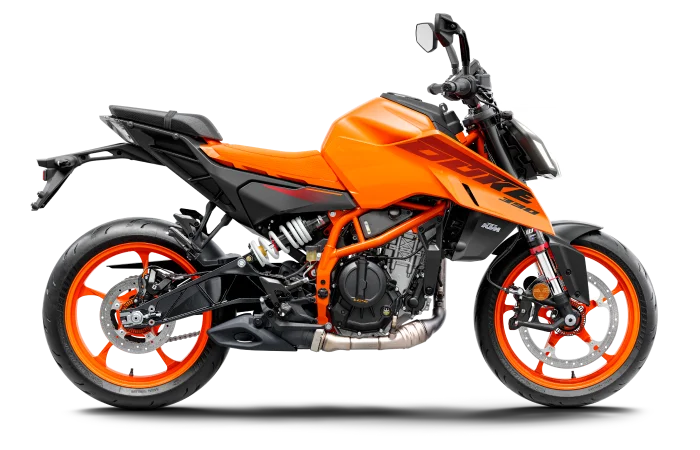
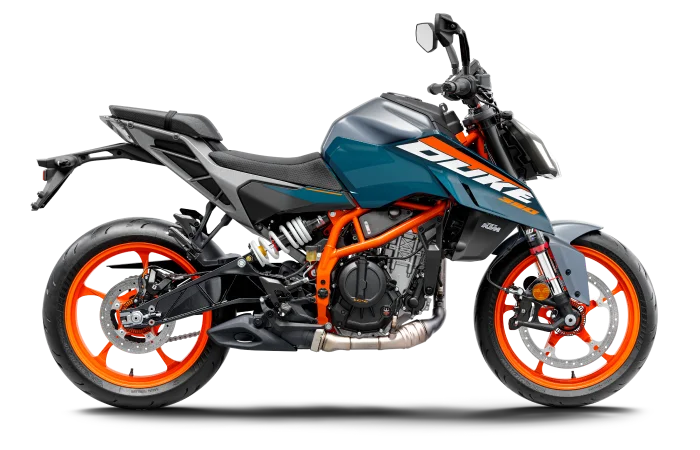
| Bike Image 1 | https://motoautiv.com/wp-content/uploads/2025/12/sr_storm_yellow-scaled.webp | https://motoautiv.com/wp-content/uploads/2025/11/KTM-390-Duke-Electric-orange.webp |
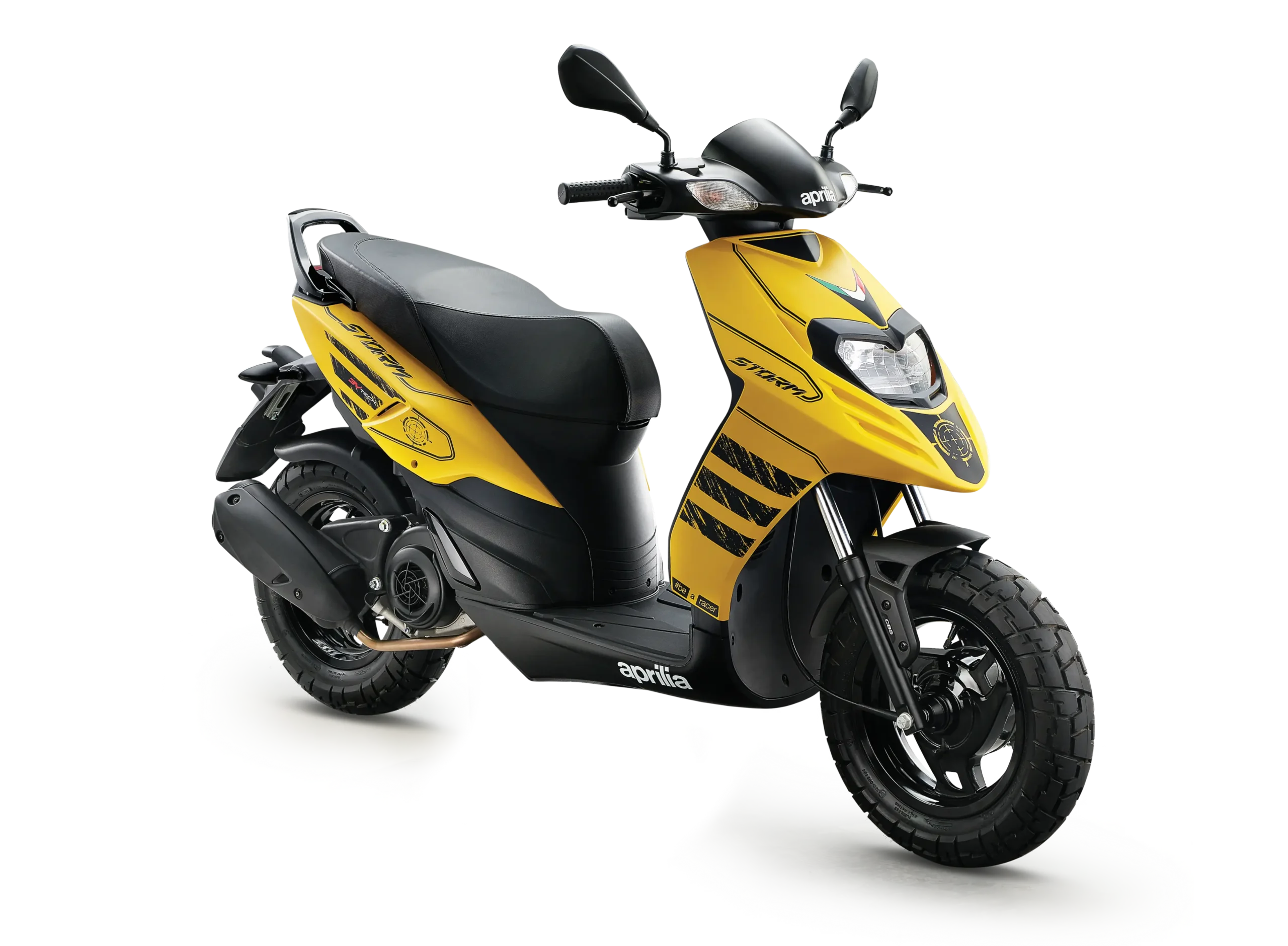
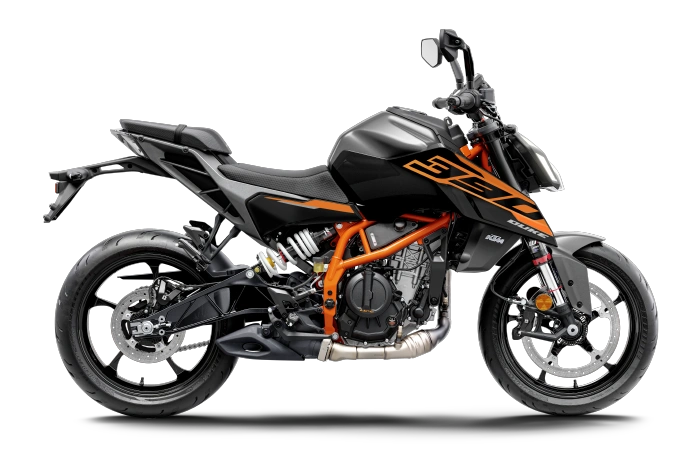
| Bike Image 2 | — | https://motoautiv.com/wp-content/uploads/2025/11/KTM390DukeBlack_Booking.webp |
| Cluster | Analogue + digital console | 5" TFT dash display |
| Color Options | Matte Red |#e3292f Matte Yellow|#ffff00 | GUN METAL GREY ELECTRONIC ORANGE ATLANTIC BLUE |
| Cons | The seat is firm and compact, which can feel less comfortable on longer rides or with a pillion. The suspension is firm, so rough or pothole-laden roads transmit more bumps to the rider. Fuel tank capacity is modest at 6.5 litres, limiting range for longer trips. Storage space is limited, restricting the ability to carry larger items or full-face helmets comfortably. Being a smaller-displacement scooter, highway cruising is limited, and top speeds are moderate. | Firm (harsh) ride: The suspension can feel stiff over potholes or uneven surfaces, which may be tiring for long rides. Limited wind protection: Being a naked bike, you feel a lot of wind at highway speeds, making long-distance touring less comfortable. Engine heat: In slow or stop-go traffic, the radiator fan can dump hot air toward the rider’s legs, which many find uncomfortable. Seat comfort: The stock seat can feel firm and less comfortable for long rides; also, pillion comfort is limited. Vibration: Some riders report noticeable vibrations in certain RPM ranges, especially between ~4,500–6,000 rpm. Reliability concerns: There are occasional reports of reliability issues or quality control, especially in older models. |
| Detailed Overview | Riding the Aprilia SR Storm 125 gives you a sense of having a sporty, nimble scooter beneath you — its heart is a 124.49 cc, air‑cooled, single‑cylinder engine with a 3‑valve head and fuel injection. That sounds modest, but in the context of urban and everyday commuting it’s tuned to deliver consistent, usable performance. With about 9.92 PS of power at 7,700 rpm and 9.7 Nm of torque at 6,000 rpm, the Storm 125 doesn’t offer wild acceleration, but it provides smooth, predictable acceleration that’s more than enough to dart through city traffic or handle daily errands without fuss. The automatic CVT + belt‑drive means you don’t need to worry about shifting — just twist and go, which is ideal for traffic, frequent stops or unpredictable stop‑and‑go conditions. Underneath, the Storm rides on a tubular steel frame, supported up front by a telescopic fork (with a 30 mm inner tube) and at the rear by a mono‑shock absorber. The wheels are 12‑inch alloys, wrapped with tubeless tyres — 120/80‑12 at the front and 130/80‑12 at the rear. That combination gives the scooter a compact footprint, making it easier to weave through traffic or negotiate narrow lanes. The smaller wheels and higher‑profile tyres help soften the ride over potholes or rough stretches compared with low‑profile tyres: while it won’t ride like a large cruiser, the Storm feels more forgiving over broken or uneven roads than a typical performance‑oriented small scooter might. Braking is handled via a 220 mm disc at the front and a 140 mm drum at the rear, with a Combined Braking System (CBS) to help distribute braking force — which means braking is stable and weighted rather than sudden, useful in city conditions or when a quick stop is needed. That front disc gives enough bite for confident stopping without fuss. In terms of size, the Storm stretches about 1,985 mm in length, with a wheelbase of 1,365 mm — compact enough to feel agile but long enough to give reasonable stability. Seat height sits at about 780 mm, which tends to be manageable for most riders, making stops or mounting/dismounting easier in day‑to‑day use. The kerb weight is roughly 118 kg: light enough to manoeuvre easily in tight traffic, yet with enough heft to stay planted at moderate speeds or on uneven surfaces. A 6.5‑litre fuel tank sits under the fuel cap. That size isn’t huge, but paired with the modest engine and decent fuel efficiency (official figures suggest around 38–40 km/l — real‑world numbers will vary with riding style), it offers a practical range for daily commuting, errands, or short-to-medium rides before needing a refill. On the features front, Storm 125 doesn’t try to be flashy — it keeps things practical. You get a simple analogue + digital instrument cluster that shows speed, fuel level, trip info, etc. The headlight and tail/indicator lighting are LED (or partially LED, depending on the variant), which helps with visibility. There’s under‑seat storage, a passenger footrest, a low‑fuel warning lamp, and a USB charging port in some variants — helpful touches if you use the scooter for errands, short trips, or commuting with a phone/GPS in tow. Starting is achieved via kick as well as electric self‑start — handy for reliability or if the battery is low. What this all adds up to in real life is a scooter that’s built to be practical, economical, and easy to live with — but with a twist of sportiness and style. The Storm 125 doesn’t try to pretend it’s a high‑power motorcycle; rather, it leans into being a user-friendly, agile, and fairly efficient daily rider with a more aggressive look and feel than a basic commuter. It is especially suited for those who navigate busy city streets, need easy parking and manoeuvrability, and want a scooter that’s simple to ride, easy to maintain, and functional for everyday needs — but with a bit more character than a plain‑Jane scooter. | The **KTM 390 Duke** has long been celebrated as a high-performance yet lightweight streetfighter, offering a compelling mix of power, agility, and modern technology that makes it a favorite for both urban commuting and spirited weekend rides. The latest (Gen-3) 390 Duke takes this formula further, built on a newly designed trellis frame with a die-cast aluminium sub-frame that improves rigidity and handling. Under the hood, the 2024 model is powered by a liquid-cooled, single-cylinder “LC4c” engine now displacing **399 cc**, which bumps up the performance to roughly **46 PS of power and 39 Nm of torque** in the Indian spec. One of the most striking traits of the 390 Duke is its lightness: the new model continues to boast sporty handling thanks to its steel trellis frame and a compact, aggressive footprint. The WP APEX 43 mm upside-down front fork and a preload-adjustable WP APEX mono-shock at the rear provide a finely tuned suspension setup that balances comfort on city roads with precision in the corners. Braking is handled by a 320 mm front disc with a radial calliper and a 230 mm rear disc, supported by Bosch cornering ABS, giving reliable and controllable stopping performance. On the feature front, the 2024 Duke 390 is truly packed. It includes ride modes (Street, Rain, Track), launch control, SuperMoto ABS, a quickshifter+, and a slipper clutch. The ride-by-wire throttle ensures smooth power delivery and precise control, especially when transitioning between modes. Its 5-inch TFT display supports smartphone connectivity (via Bluetooth) for turn-by-turn navigation, calls, and media, making it a very usable bike for daily commuting. Ergonomically, the 390 Duke offers a sporty but accessible riding position. The seat height is around **800 mm** in the Indian variant, with an optional 820 mm seat available, making it relatively manageable for a variety of rider heights. The fuel tank is reasonably sized (KTM lists about 13.4 litres), which balances enough capacity for daily use without compromising on agility. In terms of usability, the 390 Duke shines in city traffic thanks to its light weight, responsive throttle, and nimble chassis. At the same time, its torque and power allow for satisfying highway stretches and sporty ride-outs. However, as some users note, the high-revving single cylinder can vibrate noticeably at lower RPMs, and the engine tends to heat up in slow, stop-go traffic — a common character point for small high-performance singles. On long highway rides, wind protection is minimal due to the naked nature, and though the electronics are rich, some may feel the bike’s seat and fuel range are not optimized for extended touring. Reliability-wise, many long-term owners report good durability when properly maintained. One rider, after 29,000 km, said he never faced major breakdowns and appreciated the bike’s consistent performance. That said, some others have expressed concern about vibration and the need for regular maintenance given the sporty nature of the engine. Overall, the **KTM 390 Duke** is a brilliant all-rounder in the 300–400 cc naked category. It offers serious performance, modern electronics, and a lightweight chassis, but it doesn’t compromise on practicality. For someone looking for a fun, aggressive bike that can do daily duties and weekend thrills, the 390 Duke remains one of the most compelling choices in its class. |
| Expert Review | Aprilia Storm 125 has rugged, sporty design and gives confident handling, but is frequently criticized for its stiff suspension, lack of modern features (like LED lights and digital tech) by the users., 4, MotoAutiv Team | MotoAutiv Team |
| FAQ (Manual Override) | Q: What is the engine type? A: The engine is a single-cylinder, 4-stroke, air-cooled, 3-valve unit. Q: What is the engine displacement? A: The displacement is 124.49 cc. Q: What is the power output? A: The power output is approximately 9.92 PS at 7700 rpm. Q: What is the torque? A: The torque is about 9.7 Nm at 6000 rpm. Q: What is the mileage? A: The mileage is around 38–40 km/l depending on riding conditions. Q: What type of cooling system does it have? A: It has an air-cooled system. Q: What type of transmission does it use? A: The scooter comes with an automatic CVT. Q: What type of fuel system does it have? A: It uses fuel injection with petrol. Q: What are the front and rear brakes? A: The front brake is a 220 mm disc, and the rear brake is a 140 mm drum. Q: Does it have ABS? A: It has a Combined Braking System (CBS), not ABS. Q: What is the front suspension? A: The front suspension is a hydraulic telescopic fork. Q: What is the rear suspension? A: The rear suspension is a hydraulic shock absorber. Q: What are the tyre sizes? A: The front tyre is 120/80-12, and the rear tyre is 130/80-12, both tubeless. Q: What type of wheels does it have? A: The scooter has 12-inch alloy wheels. Q: What is the kerb weight? A: The kerb weight is approximately 118 kg. Q: What is the seat height? A: The seat height is 780 mm. Q: What is the fuel tank capacity? A: The fuel tank capacity is 6.5 litres. Q: What type of headlight does it have? A: The scooter comes with LED headlight and LED tail/indicator lights. Q: What type of starter does it have? A: It has both electric and kick start. Q: What type of instrument cluster does it have? A: It has a combined analogue and digital console displaying speed, fuel level, trip meter, and low-fuel warning. Q: Is the Aprilia SR Storm 125 suitable for city commuting? A: Yes, its compact size, light weight, automatic transmission, and agile handling make it ideal for urban traffic. Q: Does it have under-seat storage? A: Yes, there is under-seat storage suitable for small items or a helmet. | Q: What engine does the KTM 390 Duke have? A: It uses a single-cylinder, liquid-cooled, DOHC engine. Q: What is the displacement, power & torque of the 390 Duke? A: The displacement is about 398.6 cc. In the newer versions, it produces around 46 PS at 8,500 rpm and 39 Nm of torque at 6,500 rpm. Q: What is the seat height and weight of the 390 Duke? A: The seat height is 800 mm (or optionally 820 mm) depending on the version. The kerb weight is about 168.3 kg per KTM’s specification. Q: What is the fuel tank capacity and what is the mileage like? A: The fuel tank capacity is 15 litres in many versions. According to some sources, real-world fuel efficiency is around 25–30 km/l, depending on riding style. Q: What brakes and suspension does it use? A: It comes with WP APEX 43 mm upside-down front forks and a WP APEX monoshock at the rear. For brakes, there is a 320 mm front disc and a 240 mm rear disc, with a radially mounted caliper up front. Q: What is the ground clearance of the 390 Duke? A: The ground clearance is around 183 mm according to KTM India specifications. Q: What is the seat configuration and ergonomics like? A: It has a two-part seat design, with a slightly aggressive but comfortable rider position thanks to its upright handlebars. There’s also a “Supermoto mode” which lets you limit ABS intervention to the front brake — great for sliding control. Q: Does the 390 Duke come with smartphone connectivity? A: Yes — some variants support KTM MY RIDE via the 5-inch TFT dash, allowing for calls, music, and navigation integration. |
| Fuel System | Petrol, fuel‑injected | — |
| Price Variants | | 112869 | Standard | 297443 |
| Pros | The Storm 125 has nimble and agile handling, making it easy to weave through city traffic and park in tight spaces. Its sporty and aggressive design stands out, giving it a premium, performance-oriented look compared with regular scooters. The engine delivers smooth, usable performance, with enough punch for urban commuting and occasional highway bursts. Front disc and rear drum brakes with CBS provide reliable stopping power and enhance rider confidence. Automatic CVT transmission makes it very easy to ride in stop-and-go traffic without the hassle of manual gear changes. LED lighting and combined analogue-digital cluster improve visibility and modernize the riding experience. Lightweight (118 kg) and compact dimensions make the scooter easy to maneuver, even for newer riders. | Excellent performance for its class: The 390 Duke’s single-cylinder engine delivers punchy acceleration and strong mid-range performance. Lightweight & nimble: With a relatively low kerb/wet weight, its chassis is very agile, making it easy to flick through corners and manoeuvre in traffic. Advanced electronics suite: Comes equipped with ride modes, traction control (MTC), cornering ABS, supermoto ABS, quickshifter, and a modern TFT display. Adjustable suspension: The front and rear suspension are adjustable (WP APEX), allowing riders to tune the setup depending on road conditions or riding style. Sharp styling & design: Features such as an exposed steel trellis frame, LED headlight, and aggressive design make it visually striking. Good build quality: Reviews note improved fit and finish on newer models, giving a premium feel. Decent fuel efficiency: Compared to its performance, it offers reasonable fuel efficiency for sporty riding. |
| Starter | Kick + Electric self‑start | — |
| Transmission | Automatic | 6 Speed Manual |