Quick Analysis
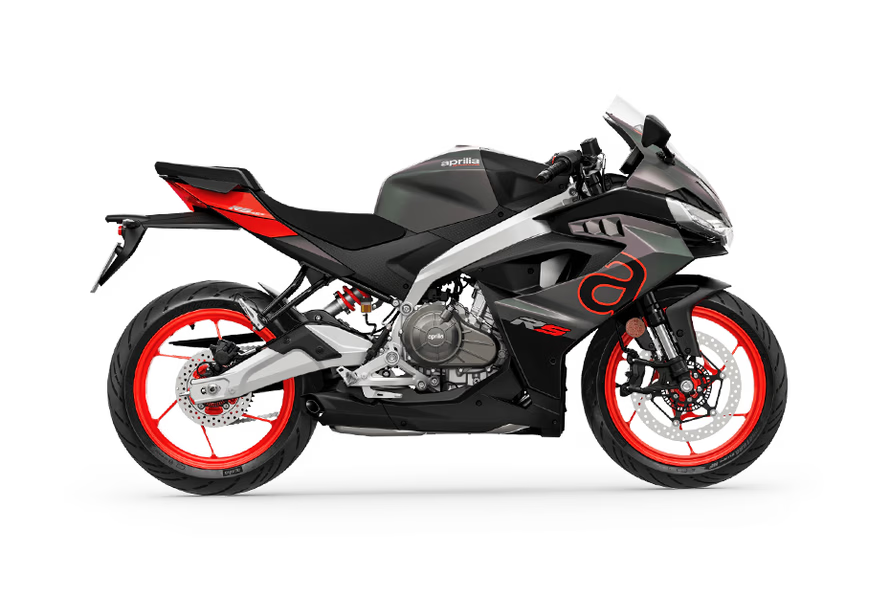
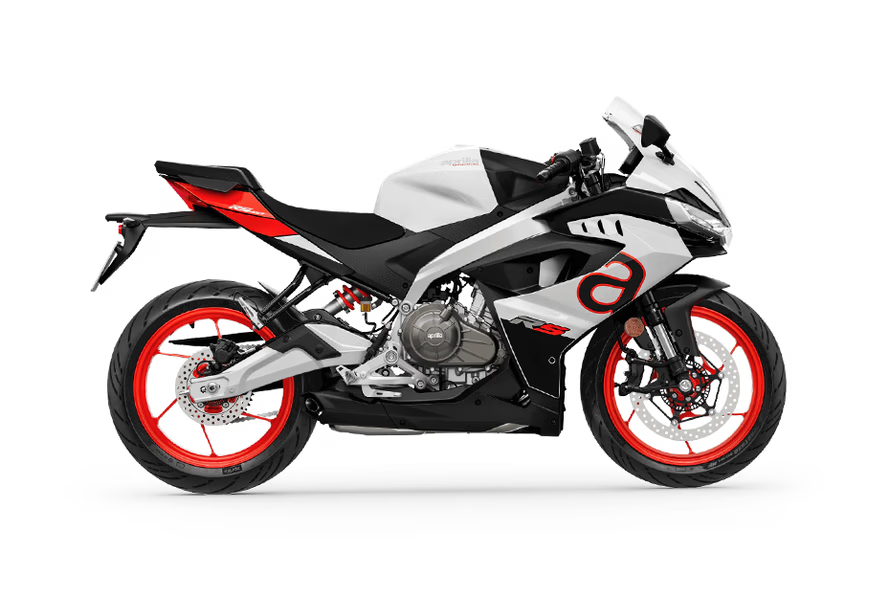
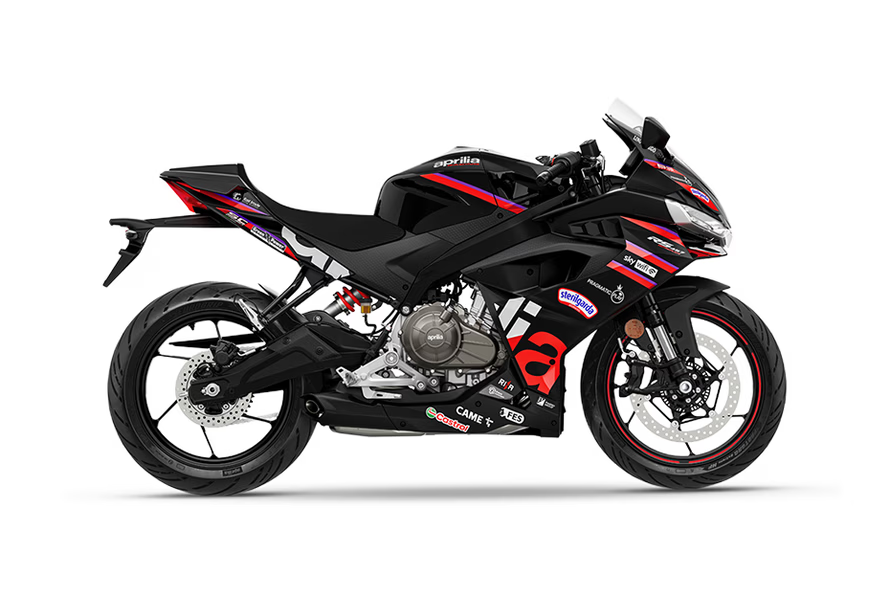
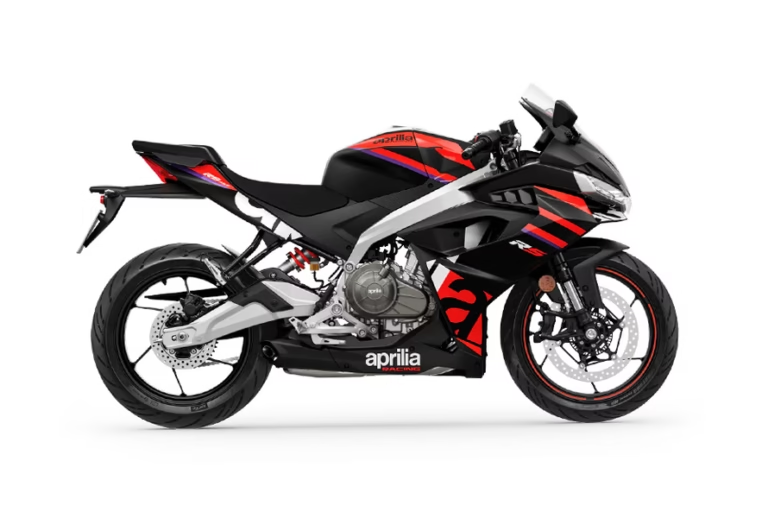
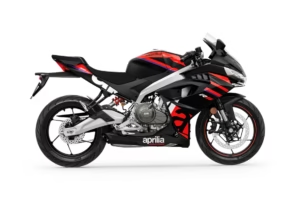
Aprilia RS 457
35.0 pts
Unweighted: 25 advantages
EnginePerformanceDimensionsBrakesTyresFeaturesOther
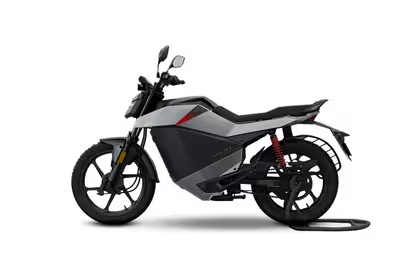
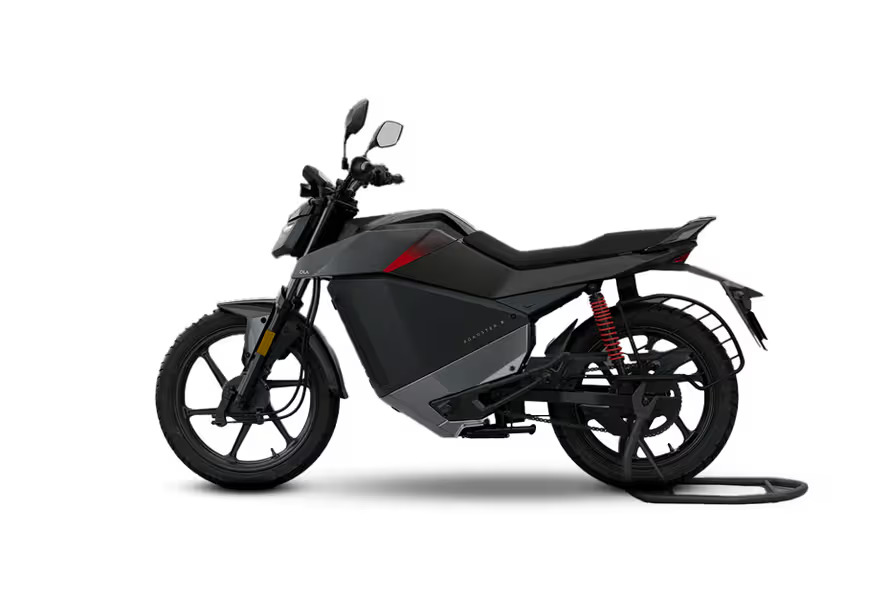
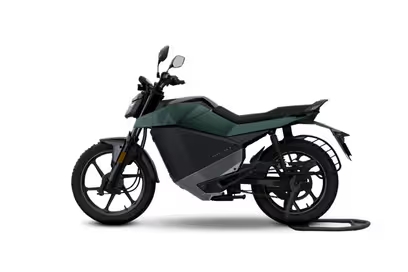
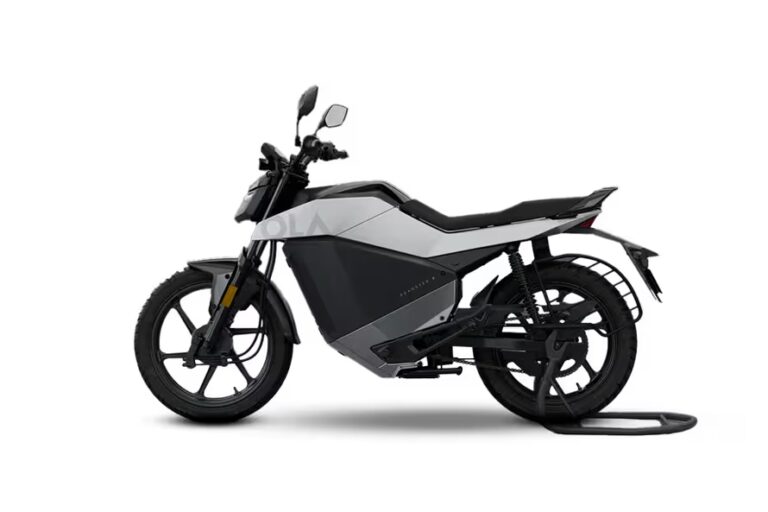
OLA Roadster X+
5.5 pts
Unweighted: 8 advantages
EnginePerformanceDimensionsBrakesTyresFeaturesOther
| Specification | ||
|---|---|---|
Engine Specifications |
||
| Cooling System | Liquid-cooled | — |
| Displacement | 457 cc | — |
| Engine Type | 2 parallel forward-facing cylinders, 4 valves per cylinder | — |
| Power | 47.6 PS (≈ 35 kW) at 9,400 rpm | 11 kw |
| Torque | 43.5 Nm at 6,700 rpm | 58 Nm |
Performance & Efficiency |
||
| Fuel Tank Capacity | 13L | — |
| Mileage | 30 kmpl | — |
Dimensions & Weight |
||
| Kerb Weight | 175 | 131.4 |
| Seat Height | 800 | 777 mm |
Brakes & Suspension |
||
| ABS | Dual Channel | — |
| Front Brake | Disc 320 mm 4 Piston | Disc Brake and Brake by Wire |
| Front Suspension | 41mm upside-down fork, adjustable preload, 120mm travel | Telescopic Fork |
| Rear Brake | Disc 220 mm 1 Piston | Drum |
| Rear Suspension | Monoshock, adjustable preload, 130 mm wheel travel | Twin Shock Absorber |
Tyres & Wheels |
||
| Front Tyre | 110/70 - 17 | 80/100 - 18 |
| Rear Tyre | 150/60 - 17 | 110/80 - 17 |
| Tyre Type | Tubeless | Tubeless |
| Wheel Type | Alloy | Alloy |
Features & Technology |
||
| Headlight | LED | LED |
Other Specifications |
||
| 0–40 km/h (s) | — | 2.7 |
| Battery | 12v MF | — |
| Battery Capacity (kWh) | — | 9.1 |
| Bike Image 1 | https://motoautiv.com/wp-content/uploads/2026/04/Prismatic-Dark.avif | https://motoautiv.com/wp-content/uploads/2025/12/roadsterxplusstellarblue.webp |
| Bike Image 2 | https://motoautiv.com/wp-content/uploads/2026/04/Opalescent-light.avif | https://motoautiv.com/wp-content/uploads/2025/12/roadsterxpluspinegreen.webp |
| Bike Image 3 | https://motoautiv.com/wp-content/uploads/2026/04/GP-Replica.avif | https://motoautiv.com/wp-content/uploads/2025/12/roadsterxplusceramicwhite.webp |
| Bike Image 4 | https://motoautiv.com/wp-content/uploads/2026/04/Coral-Snake-blue.avif | — |
| Bike Image 5 | https://motoautiv.com/wp-content/uploads/2026/04/Arsenic-yellow.avif | — |
| Charger Output Power (kW) | — | 11 |
| Cluster | — | Digital |
| Color Options | Racing Stripes | #0F0F10, #C1121F Prismatic Dark | #1C1C1E, #6E6E73 Opalescent Light | #F5F5F5 GP Replica | #0B0B0C, #5A2CA0 Coral Snake blue | #1F3A93, #C1121F Arsenic yellow | #D4AF37, #6E6E73 | Ceramic White|#fafbfc Metallic Black|#4f4f4f Pine Green|#688f86 Industrial Silver|#969696 Stellar Blue|#2a8bbf |
| Cons | Seat height is a bit tall, may be challenging for shorter riders to place feet flat at stops. Mileage tends to be modest (around 30–35 kmpl), especially if ridden hard not ideal for those seeking fuel economy. Fuel tank capacity is moderate may require frequent refuelling on long rides or at high speeds. You'll need regular maintenance (for twin-cylinder engine, etc.) more involved than simple commuter bikes. Riding posture and engine character lean sporty less relaxed comfort compared to cruiser-style bikes or scooters. Insurance, maintenance, and running costs will be higher compared to smaller, entry-level bikes. | Real-world range and performance will likely be lower than claimed — heavy use, frequent stops, speed variations, and load (pillion, luggage) will eat into efficiency. Charging infrastructure & time: if you don’t have easy access to a charger (or fast charger), long-range EVs can become inconvenient — charging from home or available points may not always be smooth. Ride/comfort trade-offs: compared to a petrol bike or premium EV bike, suspension, build or ergonomics may feel basic — this might show on rough roads or during long rides. Limited storage/practical baggage space compared with scooters — less convenient if you often need to carry luggage or do frequent errands. Uncertainty over long-term maintenance/battery life: with any new EV bike, battery degradation over years and real-world wear can be a concern — long-term durability isn’t yet proven. |
| Detailed Overview | The Aprilia RS 457 is a fully faired motorcycle built around a 457cc parallel-twin engine. This engine produces around 47 PS of power and 43.5 Nm of torque, and it uses liquid cooling to maintain stable temperatures during regular riding. The engine is paired with a 6-speed gearbox, and the overall power delivery is designed to be smooth and predictable, which helps riders manage it in both city and highway conditions. The bike also comes with ride-by-wire throttle, which allows different riding modes to adjust how the engine responds. In terms of design, the RS 457 follows a typical supersport layout with a full fairing, a sharp front section, and a slightly aggressive riding posture. The aluminium frame helps keep the overall weight low, with a kerb weight of around 175 kg. The fuel tank capacity is about 13 litres, which is practical for daily use as well as weekend rides. The seat height is around 800 mm, making it accessible for a wide range of riders, although the forward-leaning position may take some getting used to. The suspension setup includes upside-down front forks and a rear monoshock, both tuned to provide stability at higher speeds. The setup leans slightly towards the firmer side, which can make bumps and uneven roads more noticeable, especially on typical Indian road conditions. The braking system includes a front disc and a rear disc, supported by dual-channel ABS, which helps maintain control during braking. The bike also uses wide radial tyres that offer grip in different riding situations. The Aprilia RS 457 comes with a modern electronics package that includes traction control and multiple riding modes. These features adjust parameters like throttle response to suit different riding conditions. All important information is displayed on a digital TFT screen, which shows speed, gear position, fuel level, and other details in a clear format. Some variants also offer a quickshifter as an option, allowing clutchless gear changes. The riding position is slightly committed, with clip-on handlebars and rear-set foot pegs, which gives it a sporty feel. At the same time, the overall size and weight make it manageable compared to larger supersport bikes. The bike is designed to offer a balance between performance and everyday usability, although factors like traffic conditions, road quality, and riding style will influence how it feels in regular use in India. | The Ola Roadster X+ feels like a serious attempt to marry modern electric-bike practicality with real-world performance — and on paper, it does enough to make you sit up and take notice. Under its sleek bodywork lies an 11 kW mid-drive electric motor that delivers a quick, smooth surge of power the moment you twist the throttle. That punch, combined with the lighter electric driveline and chain drive, gives the bike enough zest to tackle city traffic smartly or even stretch its legs on open roads. On the top-end 9.1 kWh variant, the claimed 0-to-40 km/h time is just 2.7 seconds and top speed around 125 km/h — not sport-bike blistering, but more than adequate for busy Indian roads and the occasional highway run. Where Roadster X+ really tries to shine is in the battery-and-range equation. If you pick the smaller 4.5 kWh pack, you get a claimed range around 252 km — handy for daily commuting and regular errands. But go for the large 9.1 kWh battery, and the claimed “IDC” range jumps to a striking 501 km on a charge. That number (which assumes ideal conditions) suggests the bike could cover long stretches between charges, reducing range anxiety and making it more practical for longer commutes or sporadic weekend rides. Naturally, real-world range will vary based on speed, load, terrain and throttle usage — but the generous battery gives a buffer that many electric two-wheelers don’t. Comfort and rideability appear to have been given thoughtful consideration. The bike rides on a conventional telescopic front fork and twin-shock rear suspension, built on a sturdy double-cradle steel frame. For daily city traffic, mixed-speed roads, potholes and uneven patches — common across Indian towns — this setup should deliver a stable, predictable ride. The kerb weight and geometry are such that maneuvering through congested lanes, filtering traffic or parking in narrow spots won’t feel overly burdensome. Ground clearance and tyre-/wheel specs also help it adapt to typical road conditions without undermining stability. Rider convenience and modern-bike niceties haven’t been ignored. Roadster X+ gets a 4.3-inch full-colour digital display that runs on the manufacturer’s proprietary OS, bringing in features like ride modes (Eco, Normal, Sport), reverse assist (handy in tight parking), cruise-control, tyre-pressure alerts, geo/time-fencing, energy-insights, OTA updates, and more. LED lighting, tubeless alloy wheels, digital instrumentation — they give the bike a contemporary feel, helping it stand out versus legacy petrol bikes and some other EV two-wheelers. The under-seat storage and ergonomics are more utility-focused than sporty, which matches the bike’s practical-commuter intent. Price-wise, Roadster X+ positions itself as a premium-ish but still attainable EV bike. Compared to traditional petrol motorcycles of similar displacement or other EV rivals, the combination of performance, battery capacity, and tech makes it appealing especially for someone looking to switch to electric without compromising too much on usability. The high-end 9.1 kWh variant, with its long-range claim and balanced performance, seems aimed at riders who want an EV that feels closer to a regular bike than a low-speed city scooter. That said, nothing electric or new is completely “issue-free.” Real-world conditions — especially heavy traffic, frequent start-stops, potholes, mixed roads — will likely reduce the ideal range and may strain battery & motor more than a stable test loop. Charging convenience becomes a factor if you lack home charging or nearby chargers; charging time for the big battery on AC still takes hours, which means planning is needed before long rides. And while the suspension/ride setup is practical, it’s unlikely to deliver plush comfort on badly pocked rural roads. In essence, Ola Roadster X+ isn’t about flashy superbike performance or luxury-bike refinement. It aims to be a balanced, thoughtful electric motorcycle for modern Indian commuting: powerful enough to keep traffic flowing, roomy enough in battery to cut charging woes, simple and robust for everyday use, and smart enough with tech features to feel like a 2025-era ride. For someone in a city or well-connected semi-urban area who wants to step into electric mobility without sacrificing too much on real-world ride, the X+ could very well hit a sweet spot. |
| Expert Review | The Aprilia RS 457 fits into the entry-level performance segment in India, where many riders are moving from smaller bikes to higher capacity machines. Its 457cc twin-cylinder engine feels smooth and manageable, but in daily city traffic, the riding posture and heat can still be noticeable. The suspension and chassis are set up for sporty riding, which means rough roads may feel slightly uncomfortable. It also comes with modern electronics that may take some time for new riders to fully understand. The service network is still growing, which can affect ownership experience in some cities. It is more suited for riders looking for performance-oriented riding rather than regular commuting., 4.1, MotoAutiv Team | Ola Roadster X+ is loved for its sporty design, impressive range, and value for money, but has frequent frustration reported from users due to charging malfunctions, software glitches, and poor after-sales service support, 3, MotoAutiv Team |
| FAQ (Manual Override) | Q: What mileage does the Aprilia RS 457 give in real riding conditions? A: Most riders can expect around 25–30 km/l depending on traffic and riding style. Q: Is the Aprilia RS 457 a good upgrade from bikes like R15 or RC 200? A: Yes, many riders consider it as a next step because of the twin-cylinder engine and higher power, but the jump in performance is noticeable. Q: Is the Aprilia RS 457 beginner-friendly? A: It can be handled by beginners with care, but it may feel powerful for someone with no prior riding experience. Q: Does the Aprilia RS 457 heat up in traffic? A: Yes, like most sport bikes, engine heat is noticeable in slow-moving traffic. Q: Is the Aprilia RS 457 comfortable for long rides? A: It is manageable on highways, but the sporty seating position may cause discomfort on longer trips. | Q: What battery options are available for Roadster X+? A: Roadster X+ is offered with a 4.5 kWh battery pack and a 9.1 kWh battery pack. Q: What is the claimed range on a full charge? A: The 4.5 kWh variant is claimed to give up to 252 km per charge; the 9.1 kWh variant claims up to 501 km per charge. Q: What motor power does Roadster X+ have? A: The Roadster X+ uses an 11 kW mid-drive motor. Q: What is the top speed of Roadster X+? A: The top speed is claimed to be 125 km/h. Q: How quick is the acceleration (0–40 km/h)? A: Roadster X+ can sprint from 0 to 40 km/h in approximately 2.7 seconds. Q: What kind of braking and wheels does it have? A: It has a front disc brake, a rear drum brake, and uses tubeless tyres with alloy wheels. Q: What suspension and frame setup does Roadster X+ use? A: It uses a double-cradle steel frame, telescopic front forks, and twin-shock adjustable rear suspension. Q: What sort of display and electronic features does it come with? A: It has a 4.3-inch colour LCD display and supports multiple ride modes (Eco, Normal, Sport), plus features like regenerative braking, reverse assist, and other smart-bike features. Q: What is the charging time for Roadster X+? A: The 9.1 kWh battery variant takes around 8 hours for full charge (0–80% charging time as per official spec sheet). Q: What is the curb weight and seat height (for 9.1 kWh variant)? A: The kerb weight is listed at ~148.3 kg and the seat height is about 777 mm. |
| Fuel System | Fuel injection | Electric |
| Price Variants | STD | 422229 GP Replica | 437228 | 9.1 kWh|189999 4.5 kWh|129999 |
| Pros | Powerful 457 cc parallel-twin engine delivers strong acceleration and good mid-range punch. Smooth 6-speed gearbox with slipper clutch makes shifting crisp and rider-friendly. Dual-channel ABS and strong disc brakes (front + rear) give good stopping confidence, even in wet or tricky conditions. Upside-down front forks and adjustable rear suspension provide a good balance of comfort and handling, suitable for both city streets and open roads. 17" alloy wheels with wide tyres give excellent grip and stability during cornering or highway cruising. Full-LED lighting and 5" TFT digital instrument cluster offer modern feel and better visibility / readouts. Riding modes and traction control add versatility for different road conditions (city, rain, highways). Relatively manageable wet weight for a twin-cylinder bike makes it more nimble in traffic than heavier big bikes. | Strong performance: the 11 kW motor gives brisk acceleration and top-end speed, making the ride feel lively even with a full load. Good range (especially on 9.1 kWh version): the large battery lets you cover long distances between charges — useful for daily commuting and occasional longer rides. Modern features & electronics: digital display, ride modes, smart-bike style features (like regen braking, possibly app connectivity and convenience features, depending on variant) make it feel more up-to-date than a basic commuter bike. Practical for city + occasional highway: with decent speed and torque, it works well in urban traffic, but can also handle open roads when needed, giving flexibility. Good choice for EV-minded buyers: being electric, operating costs (fuel, oil, frequent maintenance) are lower than a petrol bike, which may save money over time. |
| Range (Claimed, km) | — | 501 |
| Starter | Self start | — |
| Transmission | 6-speed manual | — |